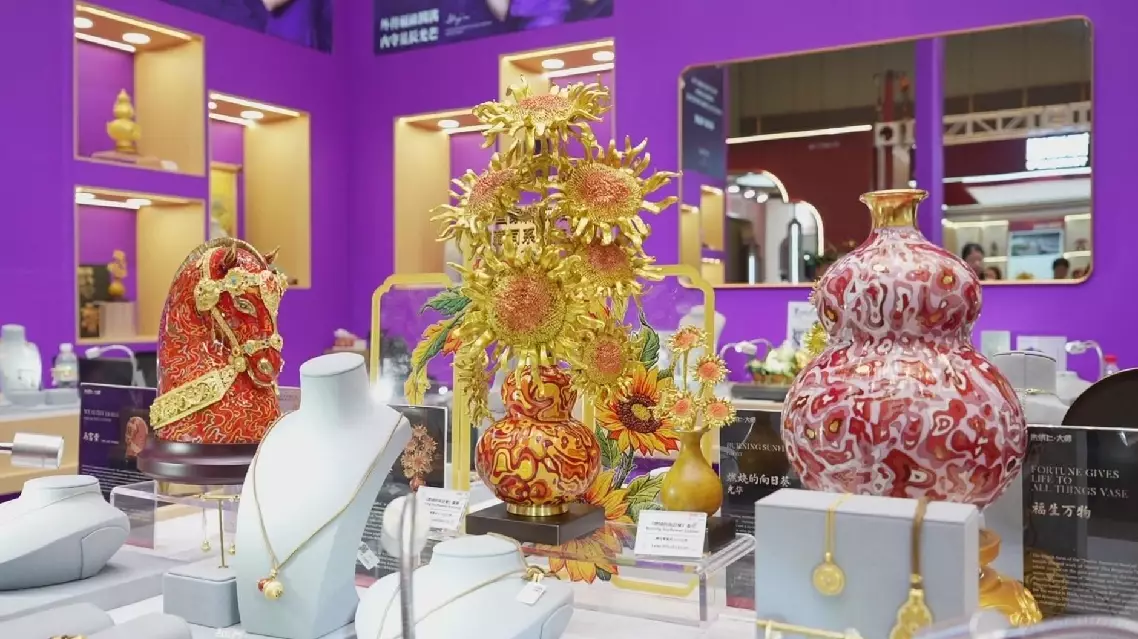
Chinese exhibitors have integrated intangible cultural heritage and Eastern aesthetics into the small manufactured goods they are showcasing at the 140th China Import and Export Fair, also known as the Canton Fair.
In the home gifts exhibition area, Daoming bamboo weaving has returned to the Canton Fair for the second time in 70 years. The practice is recognized at a national level as part of China's intangible cultural heritage.
Moving beyond traditional baskets, the exhibits feature creative uses for the technique, including woven jewelry and weave-covered porcelain.
"From product sales to cultural output, we are not only pushing bamboo products to the world, but also hope to introduce Chinese aesthetics and the Chinese lifestyle to friends around the world," said Bai Jingbo, a Daoming bamboo weaving artisan.
According to prospective global buyers at the fair, the sincere cultural stories behind the crafts will make them highly attractive to international consumers.
"A lot of effort goes into hand making this. I think they're very beautiful. I think they do a great job of putting modern and ancient China together. It's China, [as we call porcelain] abroad and also the bamboo. So I think it's a great gift," said Julia Pacheco, a U.S. buyer.
In the Fashion Jewelry Zone, pieces blending intangible cultural heritage techniques are drawing significant interest.
A Brazilian buyer was impressed by a copper-carved brooch, and quickly reached a purchasing intention after trying it on.
"I feel so impressed how well it fit like the mix between the Chinese heritage with the Western lifestyle. I have been doing sourcing in China for over 10 years and every time I find some interesting product, I would like to introduce it to my clients overseas. Production like this and balance, the tradition with the modern luxury, to reach also the younger generations, to carry out this traditional Chinese heritage moving forward. So it's a really, really great job," said John Leal, a Brazilian buyer.
According to Zhang Jie, vice president of the China Chamber of Commerce for Import and Export of Light Industrial Products and Arts-Crafts, the focus on design and brand transformation is paying off.
"At this Canton Fair, many small commodity foreign trade enterprises are paying great attention to design and brand transformation. The innovative transformation of Eastern aesthetics has become a new highlight. Product designs are more integrated with modern consumer scenarios, giving products a unique recognition in markets such as Europe, the U.S., Southeast Asia, and the Middle East. Culturally empowered products like these can more effectively enhance added value and open up new growth tracks for light industrial exports," Zhang said.
The 140th Canton Fair runs in three phases in Guangzhou through Nov. 4. Over nearly seven decades, it has grown into China's largest and longest-running international trade event, with the widest product range, the biggest buyer attendance and the highest transaction volume.
Cultural heritage brings new life to Chinese small products at Canton Fair