
A bagpiper in a kilt led hundreds of Azusa Pacific University students and the school president into the Cougars' stadium before kickoff against Whittier College earlier this season, a sun-splashed celebration of what once were two of the biggest brands in California small-college football.
Azusa Pacific had dropped the sport in 2020 after 55 years and Whittier in 2022 after 115 years, mainly for financial reasons.
Click to Gallery
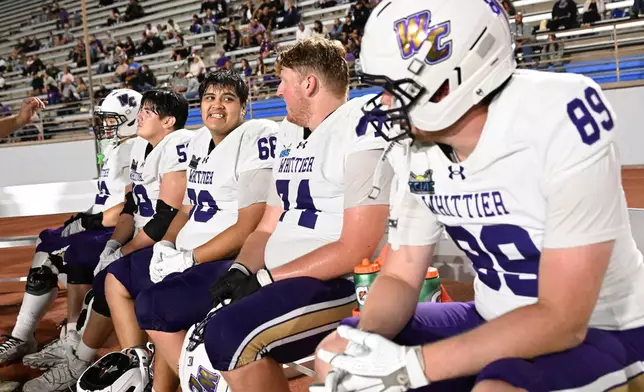
Players from Whittier College take a break during an NCAA Division III college game against Azusa Pacific, Sept. 19, 2026, in Glendora, Calif. (AP Photo/Wally Skalij)
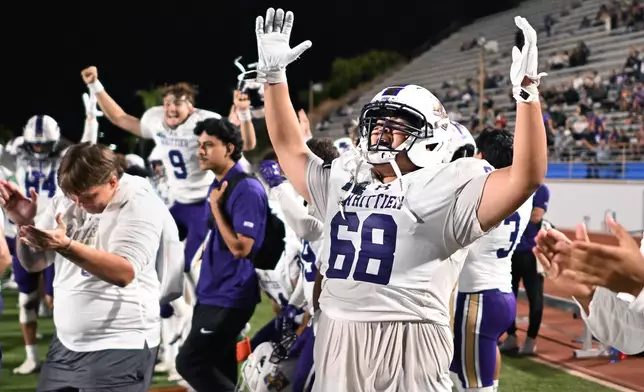
Whittier College lineman Isaac Ruiz (68) celebrates a touchdown against Azusa Pacific during an NCAA Division III college football game on Saturday, Sept. 19, 2026, in Glendora, Calif. (AP Photo/Wally Skalij)
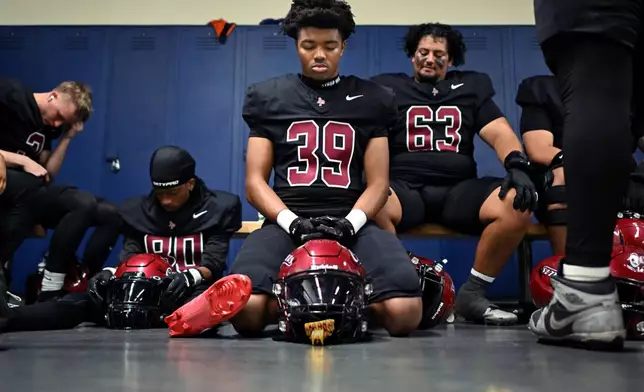
Azusa Pacific's Damar Smith (39) concentrates before an NCAA Division III college football game against Whittier College, Sept. 19, 2026, in Glendora, Calif. (AP Photo/Wally Skalij)

Players from Azusa Pacific warm up before an NCAA Division III college football game against Whittier College, Sept. 19, 2026, in Glendora, Calif. (AP Photo/Wally Skalij)
The two are back on the field, not in a full reembrace of the sport's tradition and what it can do to enhance campus culture, but for another reason: Administrators saw an opportunity to bump shrinking enrollment numbers, a problem shadowing hundreds of colleges and universities across the country. Football rosters, after all, can number about 100 players and the sport is seen as a popular marketing anchor.
The two schools are among 10 four-year colleges and universities that started or restarted programs this season, the most in a single year since 2013, according to the National Football Foundation. Seven schools have announced plans to start programs in 2027 or later.
Azusa Pacific won the 1998 NAIA Division I championship and became a full NCAA Division II member in 2013. The Cougars made playoff appearances in 2016 and ’18, but a decline in the number of West Coast Division II football schools made travel too costly.
School president Adam Morris said he first approached athletic director Gary Pine about restarting football five years ago. A $1 million private gift funded startup costs, and the school moved from Division II to Division III and joined a Southern California-based conference. APU will begin competition in women’s flag football in the spring.
“Yes, it’s an opportunity to grow enrollment and there is some financial upside to the decision,” Morris said. “Really, it’s a great opportunity to touch the lives of 110 young men who will leave this place to go out into this community and have an impact in a significant way.”
APU’s on-campus fall enrollment is 1,900, down 46% from 3,359 in fall 2020. APU brought in 652 freshmen (49 were on the football roster) and transfer students to campus this fall, up 19% from a year ago. The school’s online learning program raises total enrollment to about 6,000.
On the same day Azusa Pacific and Whittier returned to the field, Mount Mercy University in Iowa played its first-ever home game. More than a thousand fans showed up, many tailgating in the parking lots before and after and, in a nod to the Mustangs' NAIA champion men's bowling team, some wore T-shirts reading: "Mount Mercy. A bowling school with football.”
As much as any small college, Mount Mercy has used athletics to drive enrollment, which numbers 1,450 this fall. Some 60-70% of the student body participates in one of 22 sports Mount Mercy offers.
The football team brought about 100 more male students to campus. A local family foundation provided startup costs, including $2.1 million for a 9,000-square-foot football building that includes a weight room, athletic training space, coaches' offices and meeting rooms. The facility rates among the best in the NAIA.
While administrators describe how a football team can bring a sense of community to a campus and enhance student life, athletic director Paul Gavin acknowledged the underlying motivation was to generate revenue, whether from students who want to play for the Mustangs or from those who want to attend a college that has a team.
“There’s no doubt if football is done right, if you stay within budgets and financial constraints and scholarship limitations, it’s a cash cow from a tuition revenue and then from auxiliary income from housing and meal plans, not to mention philanthropy,” Gavin said. “If you do it right, people will come. If you don’t, you can have the adverse aspect. I don’t want to think about that or have to deal with that.”
U.S. high school graduation peaked at an estimated 3.9 million in 2025, according to the Western Interstate Commission for Higher Education. It's projected to decrease by 2041 to an estimated 3.4 million, a drop of nearly 13%, because of a falling birth rate. College enrollment is projected to follow suit. Many small private colleges already have been been hit by severe enrollment drops coming out of the pandemic.
A number of schools have added sports in hopes of boosting enrollment — Adrian College in Michigan launched more than two dozen a generation ago and is now up to more than 50 — but football is often considered an anchor sport. It is also expensive.
Research has shown that adding football may not be the solution colleges hope it will be.
A 2024 University of Georgia study looked at 36 small colleges that added football between 2004-16. Researchers examined how starting a program affected enrollment, demographics and net tuition and fee revenue compared with schools that did not start a program.
Aside from a one-year jump in male enrollment tied to bringing in football players, overall enrollment patterns were similar to those at non-football schools. Factoring in costs of operating the program, tuition revenue per student did not increase even the first year at the new football schools. The study did find positive impacts on student life.
Welch Suggs, one of the study’s authors and an associate professor of journalism and mass communication at Georgia, noted the study was done over a period of growth in higher education.
“What it says to me is if a school is adding football right now, it’s one of several last-ditch efforts to try to maintain enough enrollment to keep the doors open, because this year’s graduating high school class is going to be the smallest in a generation in terms of sending students to college,” Suggs said.
In all, 62 four-year college football programs have been added or restarted in the last decade. The net gain is 56 because three of those programs shut down and three of the schools closed.
In the 10 years before that, from 2006-16, a total of 10 four-year schools with football closed and three dropped their programs, according to the NFF.
The return of football at Azusa Pacific and Whittier has been greeted with much fanfare by alumni who remember the schools' heydays.
Christian Okoye, the 250-pound “Nigerian Nightmare,” played for APU in the 1980s before he became a beloved Kansas City Chiefs running back and the 1989 NFL rushing leader. Pro Football Hall of Fame coaches George Allen and Don Coryell started their careers at Whittier, and President Richard Nixon was a lineman for the Poets.
Whittier's original football program dated to 1907, and the move to drop football along with lacrosse and golf in 2020 saved money but cost the school many of the 120 athletes who were affected.
When school President Kristine Dillon arrived in 2023, alumni immediately asked for football's return and raised more than $800,000 in initial funding. The reintroduction of football has helped increase enrollment from 764 in 2024 to 905 this fall, with 41% of students playing a sport.
Dillon noticed a change in the campus vibe once the fall semester started. Her house is on campus, and she started noticing cheerleaders outside her window practicing almost every night.
“We've got more students as a percentage living on campus, so the level of activity in clubs and our version of fraternities and sororities is growing,” Dillon said. “I'll give at least some credit to the growth football has had, not just for enrollment but for the sense of a lively campus.”
Sign up for Top 25 poll alerts here, visit the Top 25 here and see AP’s full college football coverage here
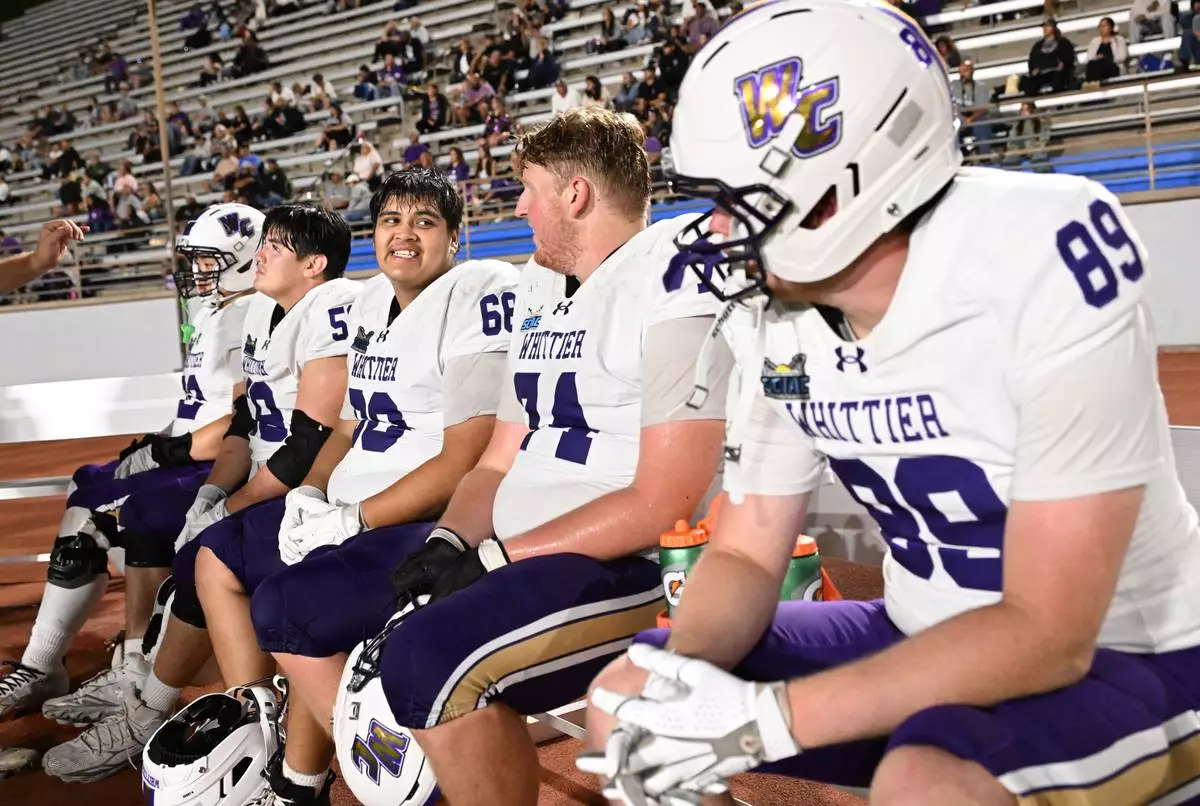
Players from Whittier College take a break during an NCAA Division III college game against Azusa Pacific, Sept. 19, 2026, in Glendora, Calif. (AP Photo/Wally Skalij)
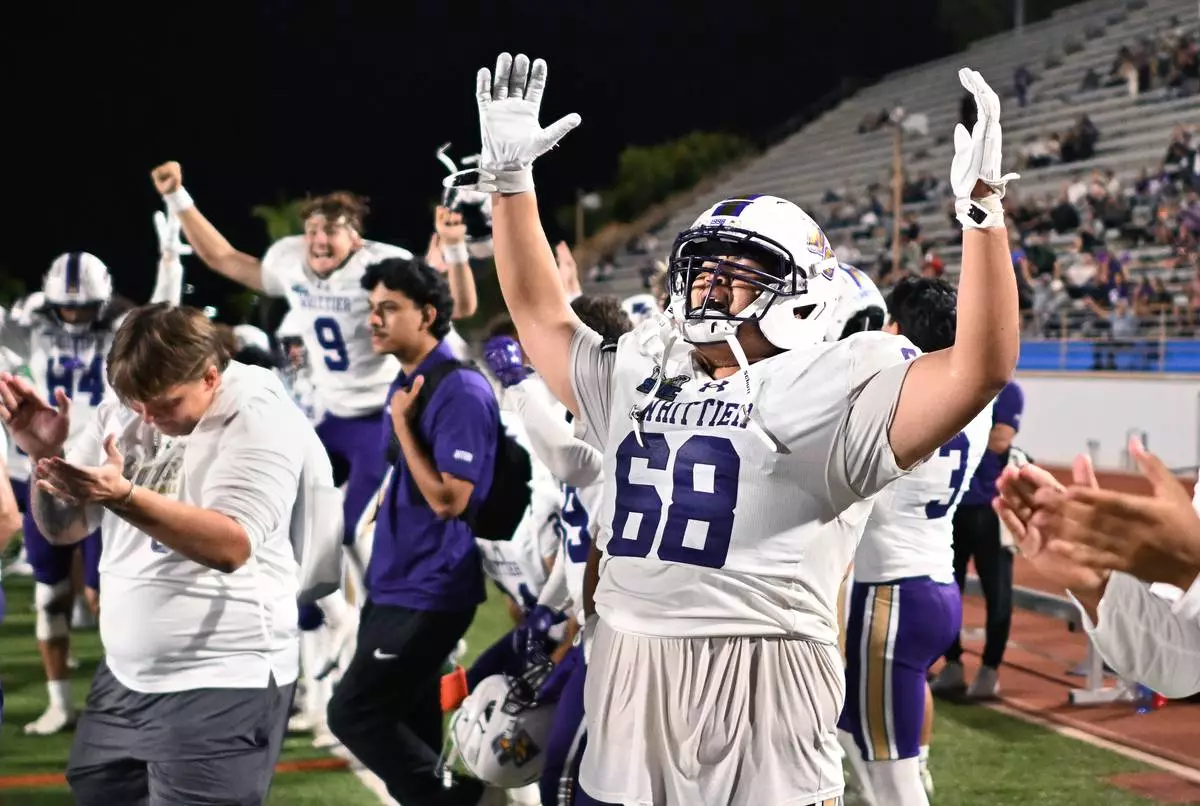
Whittier College lineman Isaac Ruiz (68) celebrates a touchdown against Azusa Pacific during an NCAA Division III college football game on Saturday, Sept. 19, 2026, in Glendora, Calif. (AP Photo/Wally Skalij)
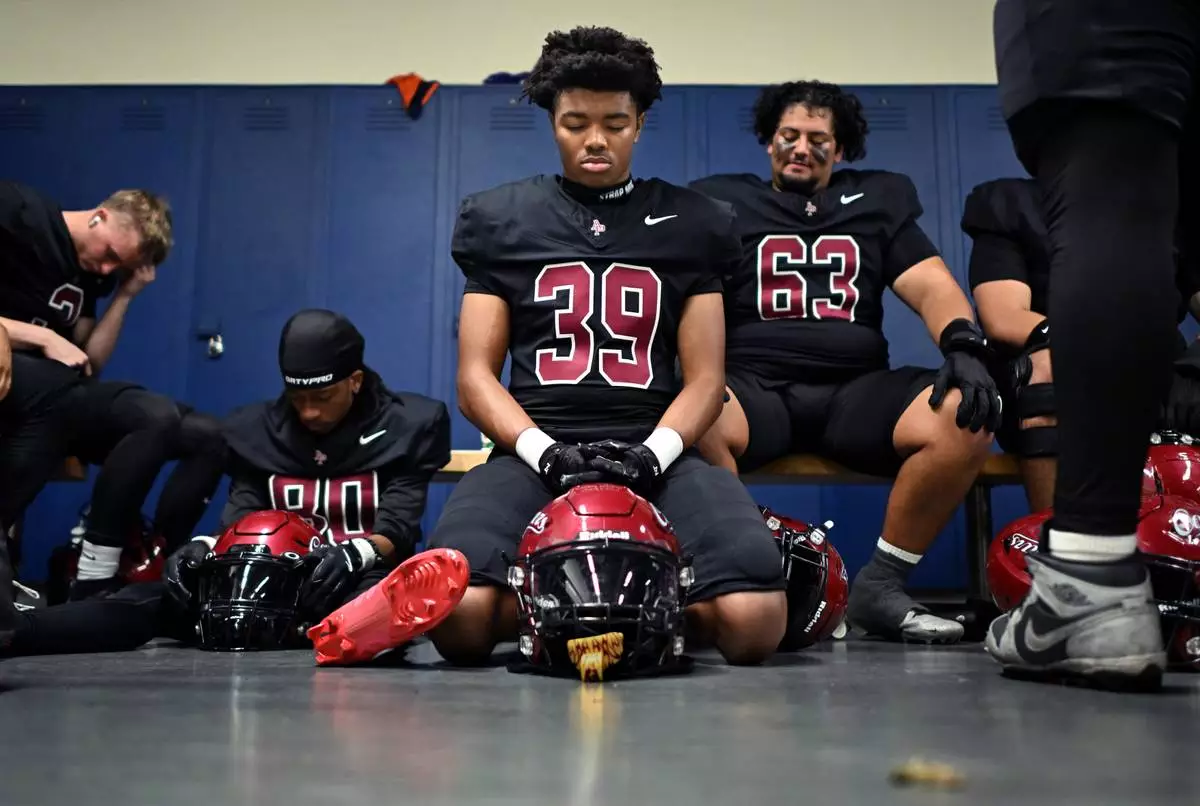
Azusa Pacific's Damar Smith (39) concentrates before an NCAA Division III college football game against Whittier College, Sept. 19, 2026, in Glendora, Calif. (AP Photo/Wally Skalij)

Players from Azusa Pacific warm up before an NCAA Division III college football game against Whittier College, Sept. 19, 2026, in Glendora, Calif. (AP Photo/Wally Skalij)