SAN FRANCISCO--(BUSINESS WIRE)--Oct 27, 2026--
Parallel Bio, an AI biology company pioneering human-first drug discovery, today announced the appointment of Jason Lew as Chief AI Officer (CAIO). Lew will lead the company’s AI strategy end to end, from the robotics that run its automated lab to the data infrastructure and AI models built on its human immune data.
This press release features multimedia. View the full release here: https://www.businesswire.com/news/home/20261027875609/en/
More than 95% of drugs that clear animal testing fail in human trials, about the same odds as betting on a single number in roulette. Although animal models are poor proxies of human biology, most AI models for drug discovery are still trained on their data, along with unreproducible published human research and mutated cell lines that don’t respond to a drug the way living tissue does. Parallel Bio is fixing that by generating proprietary human data at scale and training AI models on it. The new CAIO role puts both responsibilities under one leader, so every experiment makes the models smarter, and smarter models choose better experiments.
Parallel Bio grows immune organoids, miniature human immune systems, from a biobank of diverse donors. Unlike animal models, the organoids respond to drugs the way people’s immune systems do. A robotics-driven lab runs experiments on them at scale, and the platform is available to partners through an API and an MCP server, so their AI agents can request experiments and iterate on the results.
“Frontier models have been trained on more biology than any scientist could ever read, but much of it comes from mice or irreproducible public data. No amount of scale fixes that, but our lab does,” said Robert DiFazio, co-founder of Parallel Bio. “Jason has spent his career at the forefront of the pieces we’re putting together. He programmed factory robots that mass-produced Apple’s iPhones, built a proprietary device lab at MightySignal that produced data no one else had, and was building on LLMs before ChatGPT existed.”
Lew has spent more than 15 years building products and the engineering teams behind them, and has been building products using large language models since 2020, before they went mainstream. He most recently built the technical org from zero and served as Head of Engineering at a stealth AI startup, where he led evals, agentic harness engineering, and also trained models. In 2020, he founded SkillMagic to build applied AI products on LLMs, with backing from investors including Village Global. Earlier, he co-founded and served as Chief Technology Officer of MightySignal, whose team was acquired by Instacart and whose business was acquired by Xenon Partners. At Instacart, Lew founded and led the Growth Acquisition team as Director of Engineering, doubling the company’s paid marketing acquisition efficiency. He began his career at Apple as an engineer on the teams that shipped the iPhone 4S and iPad 2. Lew holds a bachelor’s degree from Duke University and a master’s degree from Cornell University, both in Electrical and Computer Engineering.
“Data is the bottleneck in drug discovery. Drugs spend years in development before anyone knows how people will respond,” said Juliana Hilliard, co-founder of Parallel Bio. “We flip that, starting with human data instead of ending with it. Every experiment tests a drug on real human immune systems, teaching our AI how disease works, and every insight designs the next drug. Jason is here to scale that loop and build AI models that uncover new disease biology and design the drugs to treat it.”
“The outcome we’re after is a big one: knowing which drugs will work in people before they ever reach a trial,” said Lew. “Every great outcome I’ve seen came from exceptional culture, passion, and mission, so that’s what I’m building: an AI-first culture where AI shapes how every person works, and a team driven by a mission to use AI to cure diseases for their fellow humans. There are few better places to pursue that than a lab growing living human immune systems.”
Numerous pharmaceutical companies, including five Fortune 500 companies, are now using Parallel Bio’s platform to test drugs, and the company is also using it to discover new drugs for cancer and autoimmune disease. Named a 2026 World Economic Forum Technology Pioneer, Parallel Bio has its U.S. headquarters in the San Francisco Bay Area and its E.U. headquarters in Vienna, Austria.
About Parallel Bio
Parallel Bio is pioneering human-first drug discovery by creating the first map of human biology. The company generates data using groundbreaking biological and computational tools that track real clinical outcomes, enabling earlier, more reliable decisions about disease biology and drug discovery. The platform overcomes the core limitations of traditional animal testing, which almost always fails to predict how drugs will behave in people. Parallel Bio is building its own drug discovery pipeline in cancer and autoimmune disease while collaborating with pharmaceutical companies to evaluate therapies directly in human systems before costly and risky clinical trials. Founded in 2021 by two scientists with deep expertise in cutting-edge human models, Parallel Bio is backed by leading investors in AI and biotech, including Y Combinator, AIX Ventures, Marc Benioff, and Jeff Dean. Learn more at parallel.bio.
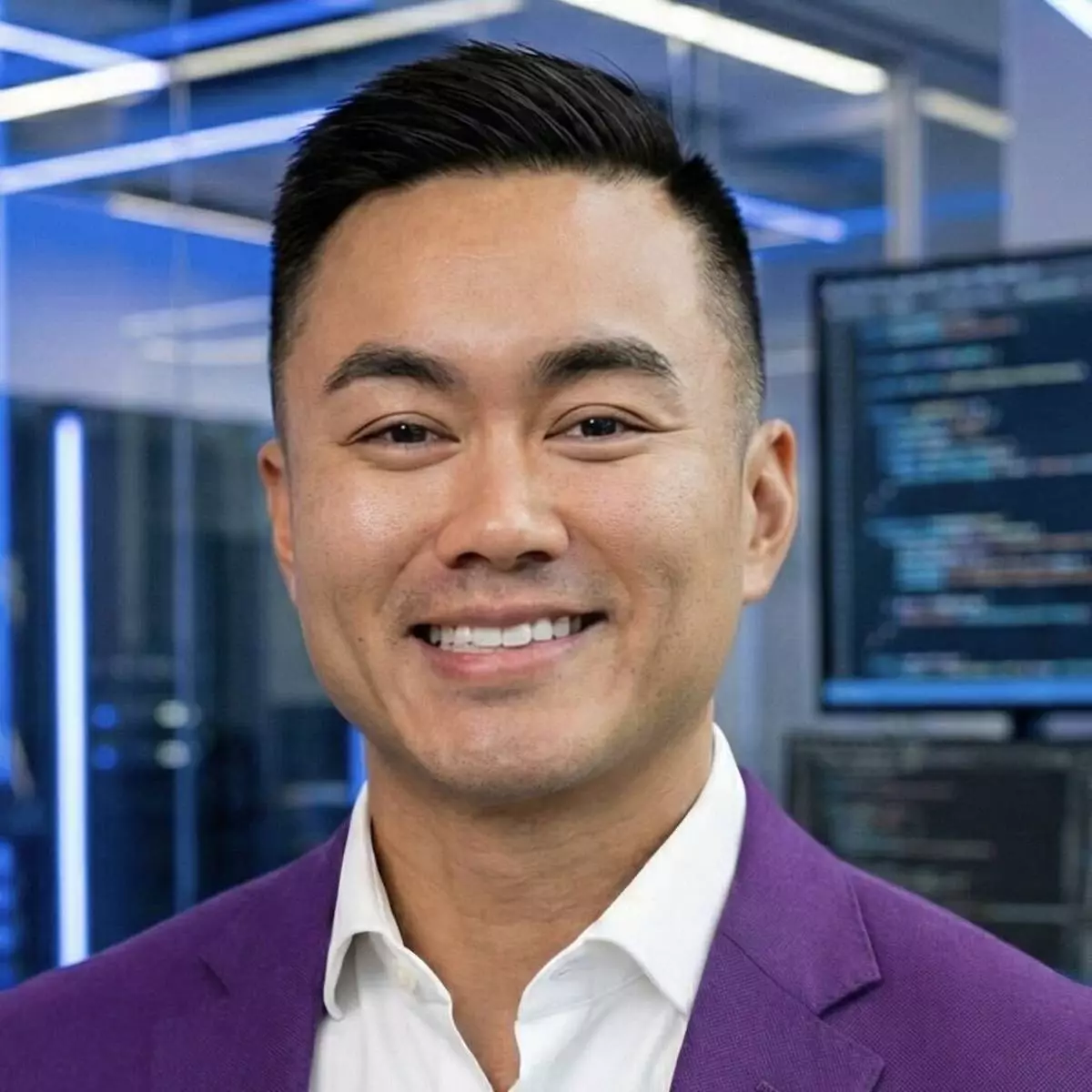
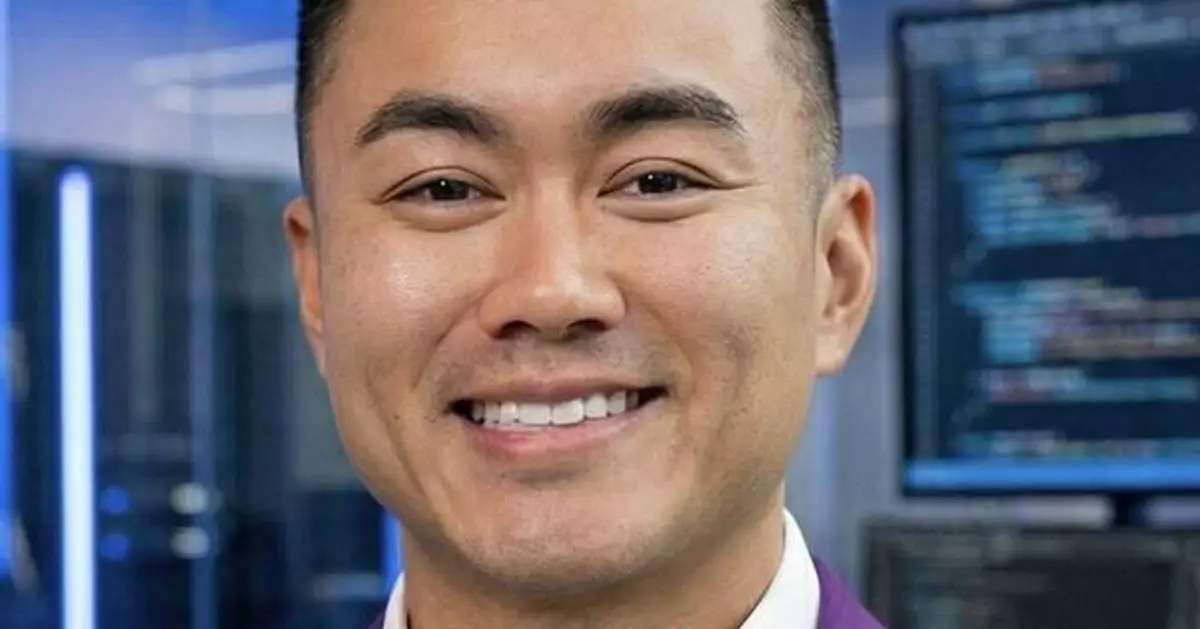
Jason Lew, Chief AI Officer of Parallel Bio
President Donald Trump takes his midterm campaign blitz to Texas, where Senate candidate Ken Paxton is locked in a tight race against Democrat James Talarico. And Secretary of State Marco Rubio will join Trump to show off a newly arrived oil tanker filled with Venezuelan crude to be processed in Texas refineries, according to a congressional aide and two U.S. officials.
Meanwhile, the Iran war, which Trump often describes as a “little detour,” has emerged as an unforced liability for a president who promised to keep the U.S. out of foreign wars. Republican strategists privately acknowledge it’s severely damaging party efforts to retain control of Congress as gasoline price hikes drive up costs across the economy and new hostilities emerge.
And two former FBI officials charged with lying to Congress about investigations involving Hunter Biden have a preliminary hearing Tuesday. Lawyers for Nikki Floris and Bradley Benavides call the charges baseless and politically motivated, the latest in a series of splashy investigative actions by the Justice Department as Americans go to vote.
Here's the Latest:
The president confirmed while on his way to Texas for a campaign rally Tuesday that he’ll make a stop to welcome the arrival of a Venezuelan oil tanker to the United States.
“We’re going to accept a million barrels of oil, and I’m going to give it to you people to use it the way you want,” Trump said.
Secretary of State Marco Rubio is expected to join Trump. The Venezuelan crude is expected to be processed at Texas refineries. Trump said the oil was given to the U.S. by Venezuelan government as a “gift.”
The U.S. president ordered a military operation in January that led to the arrest of President Nicolás Maduro, now held in New York on federal charges including drug trafficking.
The report from the Democratic leadership of the Joint Economic Committee released Tuesday made clear how hard it is for cybercam victims to get their money back, despite the quickening pace of announced seizures. Americans reported nearly $18 billion in cyberfraud losses to the FBI last year, far exceeding reported recoveries.
Citing findings from a yearlong investigation into global scams by The Associated Press and FRONTLINE, the report urges a coordinated federal strategy, centralized victim support and stronger partnerships with private industry. It also raises concern about the impact of cuts to overseas aid on the global fight against scams.
“Transnational criminal organizations run massive compounds that exploit U.S. technology, including AI, to carry out scams against Americans with devastating consequences,” Sen. Maggie Hassan said in an email.
▶ Read more
Ahead of the UN’s annual vote condemning the U.S. embargo on Cuba, representatives from Washington and Havana exchanged barbs on the floor of the General Assembly.
In a stunning break from diplomatic decorum, Cuban Foreign Minister Bruno Rodríguez walked up to the podium while U.S. ambassador Mike Waltz was speaking about what he called the communist government’s corruption.
“You are a liar!” Rodríguez yelled.
Waltz responded, “You understand who you’re dealing with? This is America. Back up.”
Federal prosecutors said Edwin Brant Frost IV, 69, ran a Ponzi scheme that defrauded more than 300 victims of more than $76 million. He pleaded guilty to wire fraud after First Liberty Building and Loan collapsed.
“I have messed up a lot of good people’s lives,” Frost said at his sentencing on Monday, The Atlanta Journal-Constitution reported.
Investing in First Liberty was often pitched on talk shows hosted by conservatives, including Erick Erickson, Hugh Hewitt and Charlie Kirk. Frost, an evangelical powerbroker, promised returns of up to 16% while skimming $17 million for himself, his relatives and their affiliated companies, and loaned millions more that borrowers never repaid, a U.S. Securities and Exchange Commission lawsuit said.
The firm’s collapse rocked the religious and political networks that fed cash to the business. Investigators said Frost spent $570,000 from investor funds on political contributions as he and his family favored far-right candidates in Georgia.
Texans gave Libertarian Ted Brown only 2.3% of the vote in 2024, when Republican Sen. Ted Cruz easily glided to another term. But this year’s Democratic nominee James Talarico is in a tight face off against Republican Texas Attorney General Ken Paxton.
And Wayne Hamilton, a former executive director of the Texas Republican Party, said Paxton’s history of legal and ethical problems could have some conservatives looking to the Libertarian this time as they cast a protest vote.
With a budget of about $30,000, Brown is under no illusions he can compete with Paxton and Talarico in a race drawing a combined advertising total of roughly $390 million since the May 26 primary, according to the ad-tracking firm AdImpact. But he dismisses the criticism that he’s merely a spoiler.
“They could avoid that problem by nominating a better candidate,” he said.
In Ohio, former Libertarian Party national chairman Bill Redpath could potentially pull enough votes from Republican Sen. Jon Husted to enable Democratic former Sen. Sherrod Brown to win.
An organization with Republican ties is trying to counter that possibility by distributing fliers promoting a socialist candidate in apparent effort to pull support from Brown.
Enough Promises Ohio PAC, which sent out the fliers, received $2.5 million from Conservative Americans PAC, according to federal disclosure reports.
Republicans are particularly concerned in Texas, Ohio, Kansas and Iowa, where even a few percentage points for a third party could swing the outcome.
Some GOP strategists fear more conservatives could cast protest ballots over the unpopular war with Iran and Trump’s expansion of executive power. Both issues grate on an anti-establishment slice of the American right and could fuel the Libertarian Party’s message of nonintervention and limited centralized authority.
“Libertarians, we believe, could draw enough votes to affect the outcome in a number of these races,” said Republican former Ohio state lawmaker Gene Krebs, who is working on a project to diminish the impact of spoiler candidates.
Trump just appeared in Kansas and is scheduled to hold rallies in Texas on Tuesday, Ohio on Wednesday and Iowa on Sunday.
Keeping the U.S. out of “forever wars” was a central tenet of the Republican leader’s “America First” campaign pledge.
Sean O’Brien, 21, a student at Auburn University in Alabama, said Trump’s decision to wage war against Iran left him “very disillusioned.”
O’Brien even attended the Conservative Political Action Conference, a major gathering for the political right, earlier this year. Now, he’s rethinking his allegiances.
“At the moment, I expect to vote Democratic,” said O’Brien, who considers himself an independent.
Early in the summer, five Republican strategists involved in key races or advising campaign leadership told The Associated Press they’d begun seeing warning signs that the war could hurt their candidates if it didn’t wind down soon.
Trump appeared more confident in June after forging an interim ceasefire agreement with Tehran, but the deal quickly unraveled.
At that point, campaign officials in some battleground races became more forceful during internal conversations about how House districts Trump won easily were becoming competitive, said the Republican strategists, who were not authorized to comment publicly on the internal party data and spoke on condition of anonymity.
By Labor Day, they said internal campaign polling showed voters were more frequently tying the war to higher prices for groceries and travel, and that while Trump dismisses the affordability crisis as a hoax, his argument has not resonated with voters.
Diesel prices continue to hover near all-time highs in the U.S., yet Trump has consistently downplayed the conflict’s economic impact. For months, he’s been insisting that the war’s end is near, only to threaten now that a new round of bombing could very well be in the offing once the election passes.
And he dismisses elevated gas prices as a temporary inconvenience, worth paying to defang Iran. At a weekend rally in Michigan, Trump said said he has no regrets.
“Somebody said, ‘If you had it to do again ... ,’” Trump told the friendly audience. “I said, ‘Are you kidding?’ I thought gas would be double or triple. And it’s a small price to pay for taking a nuclear weapon away from maniacs.”
Nearly eight months in to a war that Trump predicted would last a matter of weeks, high energy costs and voter fatigue are weighing heavily on Republican candidates.
Regardless of the outcome of the Nov. 3 elections, an AP-NORC poll published last week found that voters from both major political parties want the next Congress to focus on making life more affordable and ending the Iran war, which has had enormous ramifications for the global economy.
The situation has only become more complicated as Republicans make their case to voters. The conflict has spread, with Iran-backed Houthi rebels carrying out attacks on Saudi Arabia’s oil infrastructure and airports. Now the State Department is reducing staffing at four U.S. embassies in the Middle East after receiving intelligence that Iran has stepped up efforts to target Americans.
GOP strategists privately acknowledge that the Iran war is severely damaging their push to retain control of Congress for the final two years of Trump’s presidency.
They point to voters like Noor Dubow, who says he’s regularly voted for Republicans who align with his economic views, even though he’s never been a fan of Donald Trump or the president’s dehumanizing rhetoric toward immigrants. Not this year — Dubow says his early midterm election ballot tipped more toward Democrats because of his frustration over Trump’s war with Iran.
“Where are the Republicans in Congress?” asked Dubow, 44, a dispatcher at a trucking logistics firm in Columbus, Ohio, where he has a bird’s eye view of the surging fuel prices disrupting the economy. “Why aren’t the Republicans holding Trump accountable?”
▶ Read more
The billionaire Democrat, who is on the cusp of reelection and considering a 2028 presidential bid, is directing some last-minute campaign spending on Senate Democratic nominees in traditionally Republican states.
Pritzker’s Ready for the Fight PAC is making a $1 million ad buy for Scott Colom against Republican Sen. Cindy Hyde-Smith in Mississippi and spending $500,000 for Adam Hamilton against GOP incumbent Roger Marshall in Kansas.
Shared first with The Associated Press, the plan also includes money for voter turnout in Mississippi and South Carolina, where Democrat Annie Andrews wants to unseat Sen. Darline Graham. All three would be upsets as Democrats seek to flip the Senate.
Meanwhile, Illinois first lady MK Pritzker said she donated $500,000 to Democrat Amy Acton’s gubernatorial campaign in Ohio because of her opponent’s controversial ad featuring her estranged mother.
With spending on campaign ads now reaching $11.21 billion, the 2025-2026 midterms have become the most expensive ever, according to AdImpact, which tracks media spending.
A week out from Election Day, total spending and reservations has topped the $11.20 billion spent in 2023-2024 period, which included the presidential contest.
The latest figure has not been adjusted for inflation.
The president says he’ll appeal a federal judge’s order putting a temporary hold on his plans to renovate a Washington golf course.
“The Development of this World Championship Public Facility must begin, immediately, if it is to be completed in a timely and seasonal manner,” he posted on social media.
Trump said the East Potomac Golf Course could hold major events once renovated and would remain public with reduced rates for residents of the nation’s capital.
Judge Ana Reyes’ preliminary injunction temporarily bars the removal or damage of any more trees on the course, ordering the administration to give 10 days’ notice in writing before making any “irreparable modification” to any of the course’s “forms or features.”
“The Court earlier stated, ‘I am not the Lorax. I do not speak for the trees.’ The Court still does not speak for the trees. It speaks only for the rule of law,” Reyes wrote.
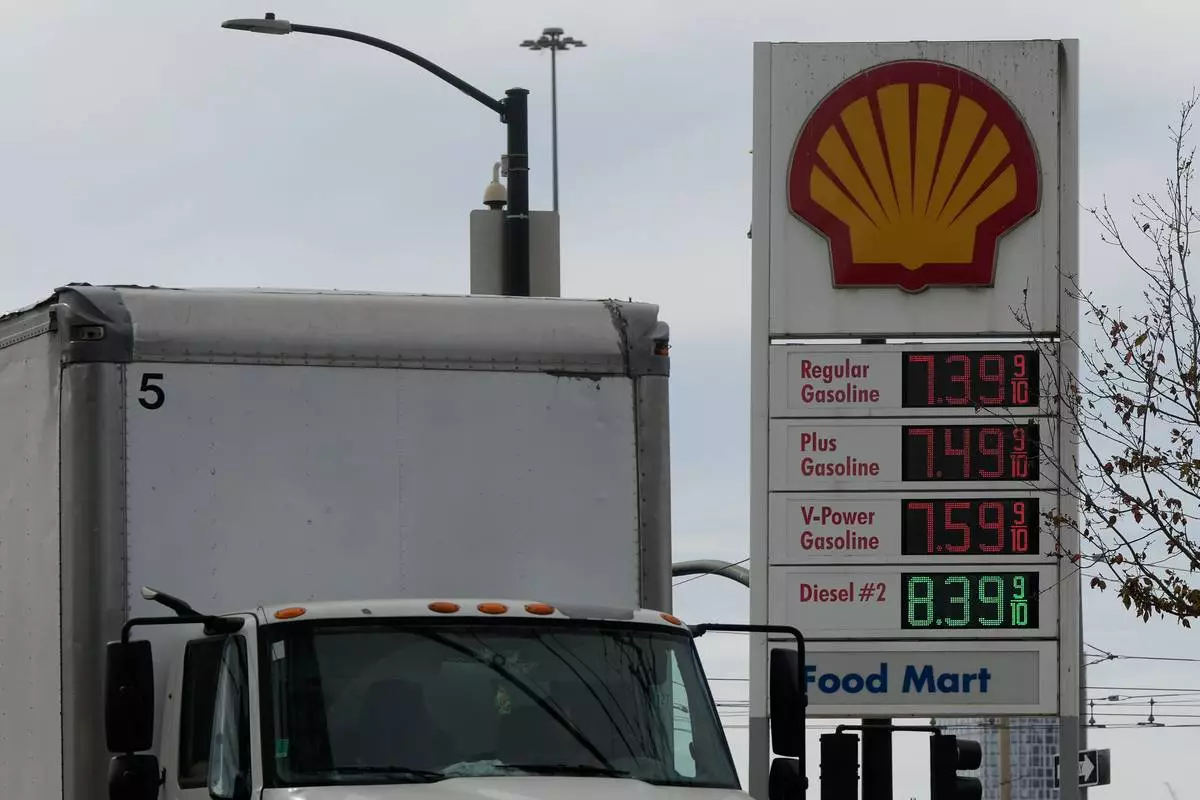
A truck drives past a fuel price board for gasoline and diesel at a gas station on Tuesday, Oct. 20, 2026, in San Francisco. (AP Photo/Jeff Chiu)
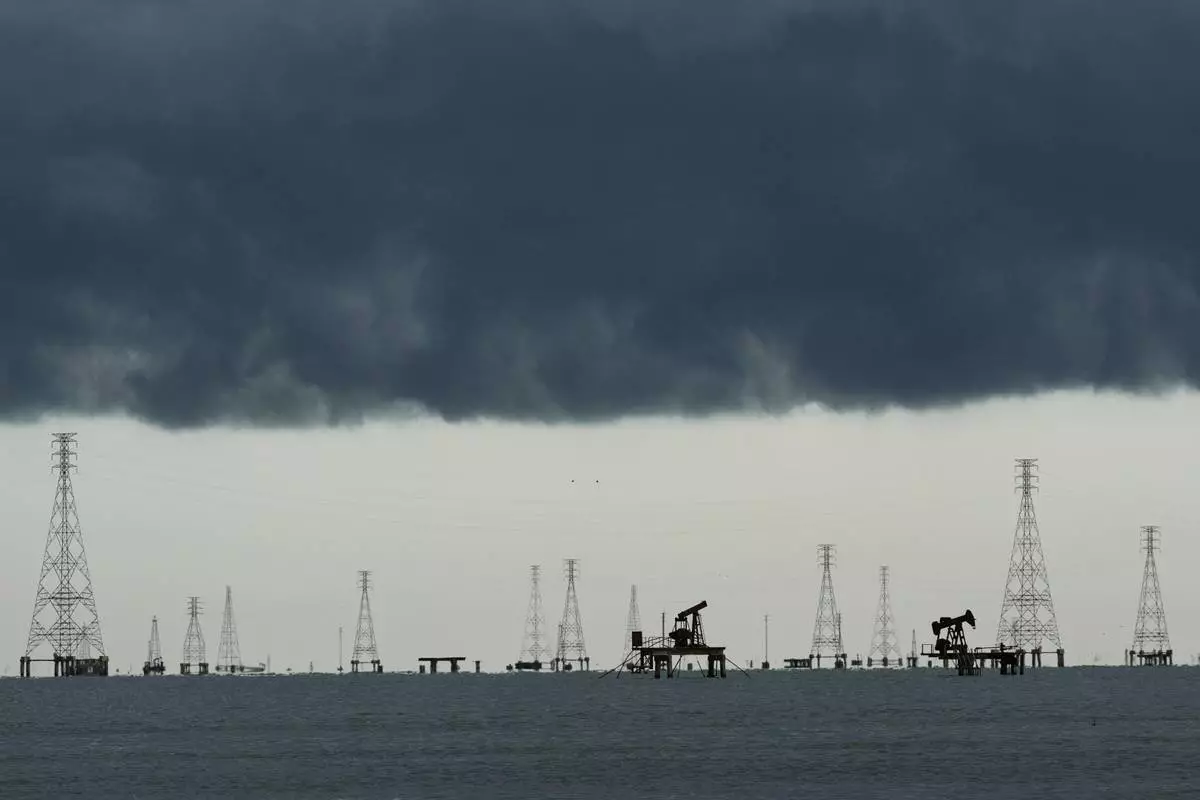
FILE - Clouds form over pumpjacks and power transmission towers on Lake Maracaibo in Cabimas, Venezuela, Sept. 1, 2026. (AP Photo/Ariana Cubillos, File)
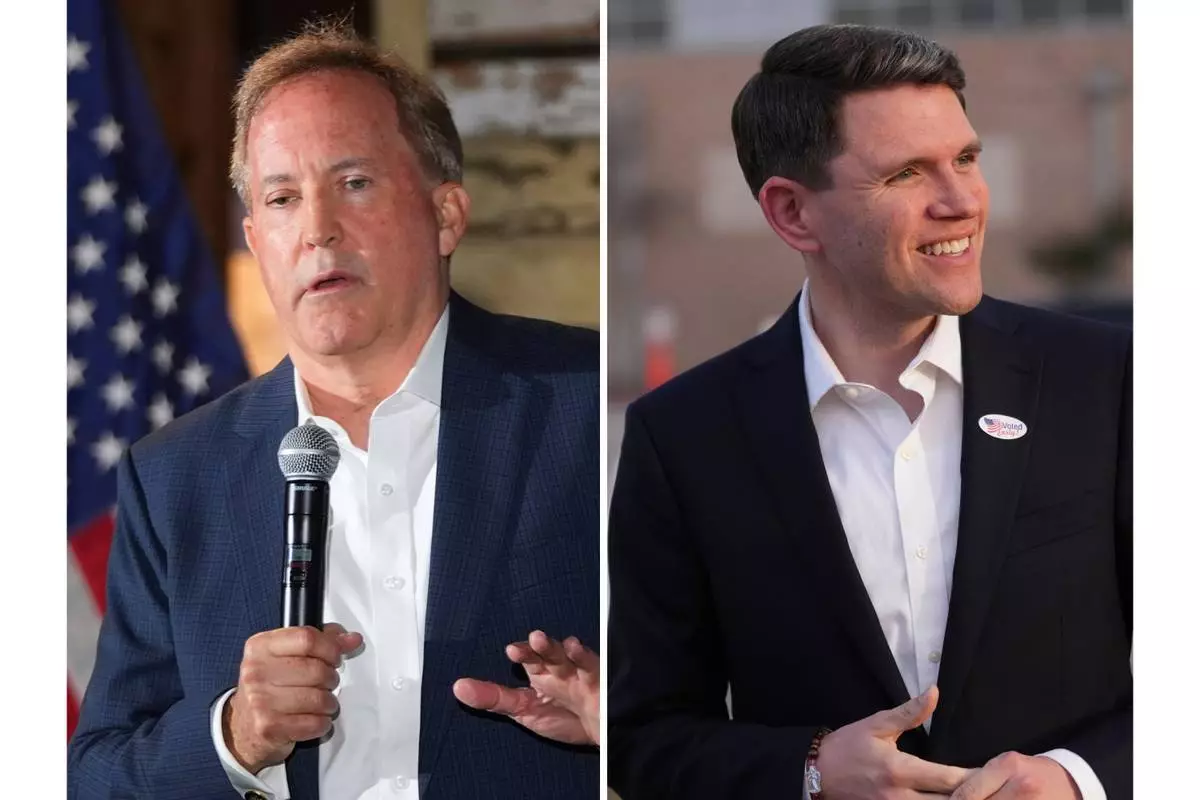
FILE - At left, Texas Attorney General Ken Paxton speaks in McKinney, Texas, May 19, 2026, and at right, Texas state Rep. James Talarico, after voting, in Austin, Texas, Feb. 17, 2026. (AP Photo/LM Otero and Eric Gay,File)
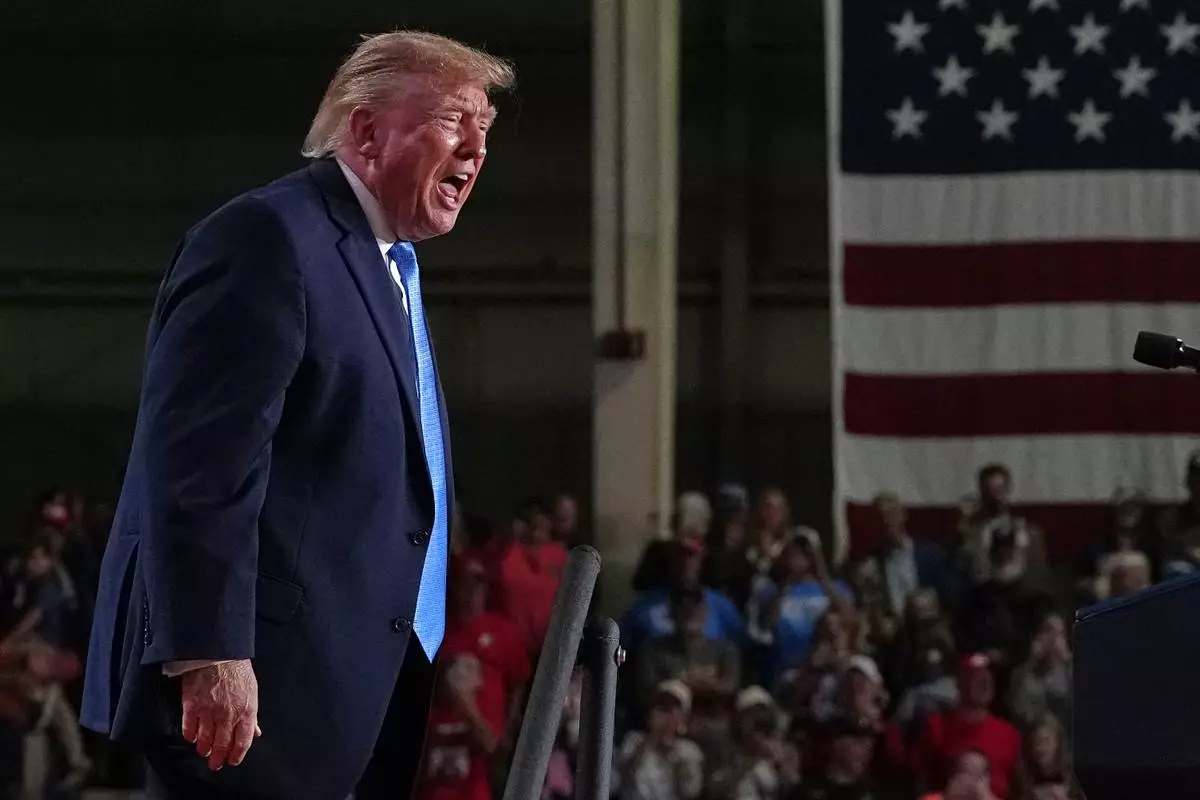
President Donald Trump yells after speaking at a campaign rally at Crossroads Arena, in Corinth, Miss., Monday, Oct. 26, 2026. (AP Photo/Jacquelyn Martin)