SAN DIEGO--(BUSINESS WIRE)--Oct 27, 2026--
California’s election is being decided at the kitchen table. Seven in ten likely voters name an economic issue as the state’s top problem — cost of living (38%), housing (19%), and the economy and jobs (12%) — and their ballot choices suggest they want the bill sent to the top, according to a new poll by AIMSA, distributed by Quadratín California.
This press release features multimedia. View the full release here: https://www.businesswire.com/news/home/20261027904374/en/
The survey of 2,000 likely voters, conducted October 19–24, finds a consistent pattern on the ballot. Proposition 3, which extends taxes on high incomes, has 56% support; Proposition 37, loans for middle-income homebuyers, 59%; and Proposition 1, affordable housing bonds, 54%. At the same time, 50% back Proposition 42, which would ban state taxes on personal property. The pattern suggests voters favor measures whose cost falls on a narrow group of taxpayers or that expand access to housing, and resist taxes that could reach their own households.
“The message from California voters is clear: affordability and economic opportunity come first,” said Tayde Aburto, President of the Hispanic Chamber of E-Commerce (HISCEC). “Behind these numbers are families working to make ends meet and small business owners navigating rising costs.”
The most closely watched measure, Proposition 40, a one-time tax on billionaires, leads 50% to 44%, a margin the report places within the poll’s range of error. Its outcome is likely to resonate well beyond California.
Politically, the poll reveals a paradox: only 45% of voters say the state is headed in the right direction, yet Democrat Xavier Becerra leads Republican Steve Hilton 58% to 34%. President Donald Trump’s approval among the state’s likely voters is just 29%, compared with 50% for Governor Gavin Newsom, suggesting the race is being shaped as much by views of Washington as of Sacramento. The race appears largely settled: 24% have already voted and only 13% say they could change their minds.
For voters of Mexican origin, the affordability squeeze crosses the border. Seventy-one percent of Latino voters were born in the U.S., yet 29% send remittances to their country of origin and 34% chose to answer in Spanish: for nearly three in ten, one household budget supports two economies. Mexican-origin voters back Becerra 66% to 25%, while Latinos of other origins vote almost exactly like the state as a whole (58% to 32%). And while 52% of Latino voters approve of Mexican President Claudia Sheinbaum, only 41% approve of the U.S.–Mexico relationship.
Leo Espinoza, President of Quadratín California, said the findings place the voices of Latino and Mexican-origin voters — a community with strong ties to Mexico — at the center of the conversation about the state’s future.
A second wave of the AIMSA survey, in the field since October 26, will show whether the billionaire tax and other close measures move in the final stretch. The full report, with results by region, age, sex and party, all 14 propositions, and the module on Latino and Mexican-origin voters, is available to journalists. Jesús Javier García Ruiz, Director of AIMSA, is available for interviews.
Methodology
AIMSA independently directed, conducted and financed the study; Quadratín California is the media partner and HISCEC supports outreach. The survey combines 1,200 SMS-to-web interviews linked to the voter file and 800 online panel interviews, in English and Spanish, across seven regions, with an oversample of 800 Latino voters. The 95% credibility interval is ±3 points statewide and ±4.5 among Latinos, larger for subgroups such as voters of Mexican origin. Results are not a forecast.
About HISCEC
Founded in 2008, the Hispanic Chamber of E-Commerce advances entrepreneurship, digital innovation, financial education and economic opportunity for small businesses.
About Quadratín California
Part of the Quadratín news network, Quadratín California provides Spanish-language coverage of issues affecting California and the binational community.
About AIMSA
AIMSA is a public opinion research organization responsible for survey design, fieldwork, weighting and analysis.
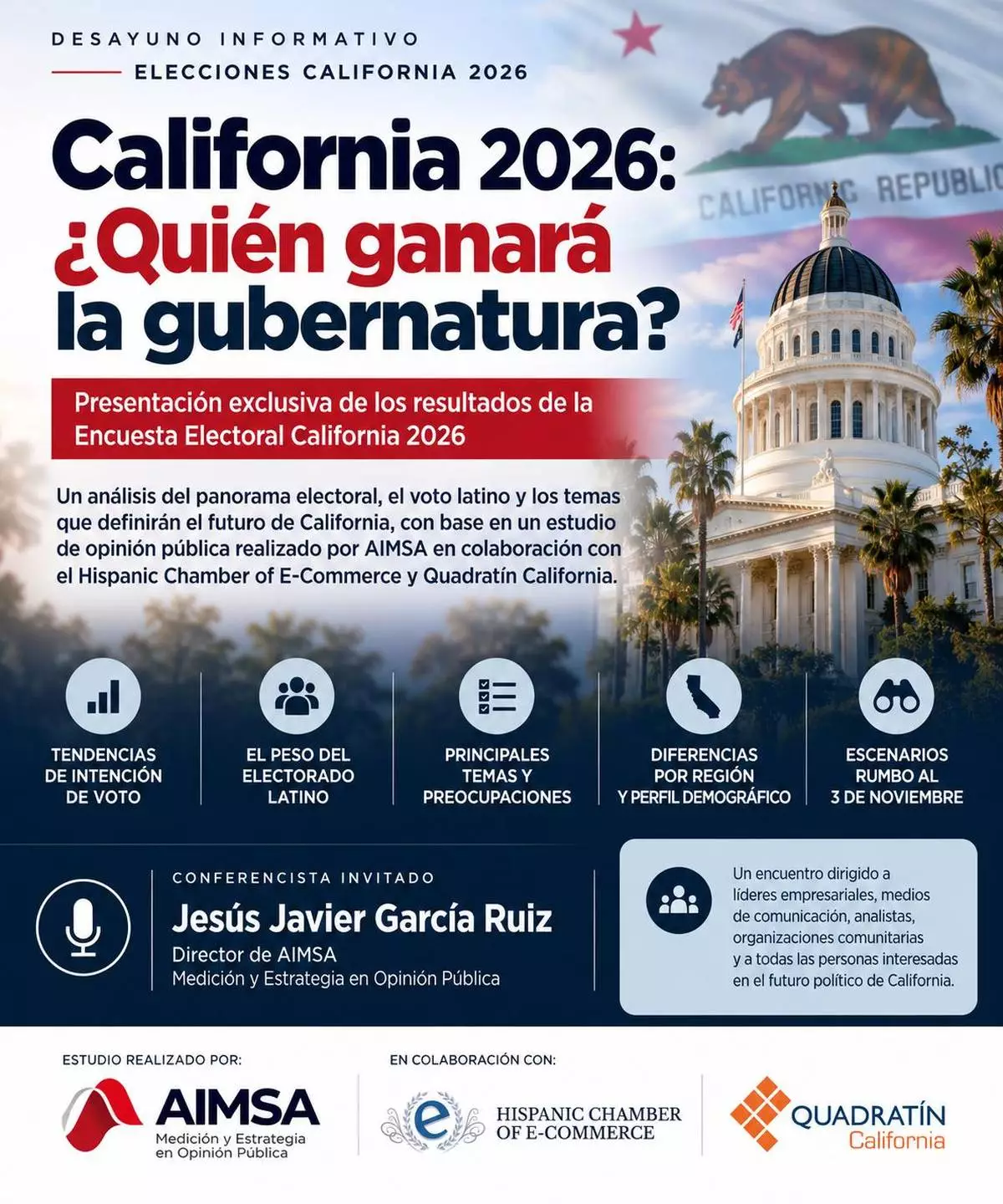
The poll results will be presented this morning to San Diego business owners at a breakfast briefing at the University Club in downtown San Diego, hosted by Quadratin California in collaboration with the Hispanic Chamber of E-Commerce, where AIMSA Director Jesús Javier García Ruiz will walk through the findings.
JERUSALEM (AP) — Israelis appear to have handed a rebuke to Prime Minister Benjamin Netanyahu in national elections, but what’s next is uncertain as exit polls suggest there's no clear winner and no obvious path to a governing majority.
The election was widely seen as a referendum on Netanyahu, the country’s longest-serving prime minister, who gave a defiant speech to his supporters just after 3 a.m. on Wednesday in Jerusalem.
His party, Likud, appears to have gotten the most votes. But the exit polls by major Israeli TV stations indicate that support for his religious-national coalition dropped significantly.
The exit polls suggested his opponents — led by Netanyahu’s chief rival, Gadi Eisenkot, who also rallied exuberant supporters in Tel Aviv early on Wednesday — could secure a solid majority in the next parliament. But whether those disparate parties, which include Arab-led parties, can form a government is uncertain. It would likely take weeks of haggling or possibly new elections.
Here are some key points to know on Wednesday morning, hours after the polls closed in Israel.
In Israel, voters choose not individuals but parties. Since no party has ever captured a parliamentary majority on its own, party leaders must agree to come together in a governing coalition.
Exit polls indicate that Netanyahu's bloc of supporters won about 51 seats in parliament, approximately the same as the bloc led by Eisenkot, a former military chief of staff. That would leave each side well below the 61 seats needed to form a government with a parliamentary majority.
The exit polls suggested that Arab-led parties captured the remaining 19 seats.
With just under a third of the ballots counted early on Wednesday morning, Israel’s Central Elections Committee reported 22.02% of the vote went to Likud, the party led by Netanyahu, and 15.46% to Eisenkot's Yashar party. The count does not indicate how many seats each party will win in the parliament.
Final official results aren't expected until later this week and they may vary from the exit polls, which, like all surveys, are subject to potential error.
If the Arab parties do as well as the exit polls suggest, they could play a decisive role in selecting Israel's next prime minister.
In his election night speech, Netanyahu repeated his refusal to create a government relying on Arab parties. Eisenkot has signaled he is ready to work with them under certain conditions, but that could risk alienating some of his partners.
Israelis are largely opposed to a Palestinian state. No major candidate advocated a return to the long-moribund peace process.
Even Mansour Abbas, a Palestinian Arab politician who leads Ra’am, the first Arab-led party to join a governing coalition in 2021, focused his campaign on concerns about crime in Arab communities.
As exit polls were shown on a screen at an Abbas election night event in Sakhnin, an Arab city in northern Israel, supporters of the small Arab-led party Ra’am erupted in celebration.
This election was held against the background of the enduring trauma of the Hamas-led attack on Oct. 7, 2023, when militants killed 1,200 people, mostly civilians, and abducted 251 others, and the ensuing wars in Gaza and beyond.
The deadliest day in Israel’s history featured prominently in the campaigns. Israelis have focused on the security failures surrounding Oct. 7 and the enormous burden on their society, rather than on the humanitarian situation in war-devastated Gaza.
Netanyahu has rejected an investigation into Oct. 7 and blamed the army for the failures that day. His supporters say he led the country back from that difficult day and scored important achievements in wars in Gaza, Lebanon and Iran.
Netanyahu’s opponents said he should be held accountable for the security failures that occurred on his watch and have demanded a commission of inquiry.
The country has also been deeply divided by exemptions from military service granted to ultra-Orthodox males. These exemptions are especially contentious after three years of wars.
Netanyahu’s governing coalitions have long relied on ultra-Orthodox Jewish parties that have demanded these exemptions remain in place.
Eisenkot — who lost his son and two nephews to combat in Gaza — has vowed to end the de facto exemptions. He repeated that promise speaking to supporters on Wednesday morning.
The exit polls, which also indicated a drop in support for ultra-Orthodox parties, signaled voter unhappiness over these exemptions.
The final update from Israel’s Central Elections Committee put voter turnout at 77.7% of eligible voters as polls closed Tuesday night.
That’s the highest turnout since 1999, and just over seven percentage points higher than in the previous election in 2022, reflecting the high stakes of the election.
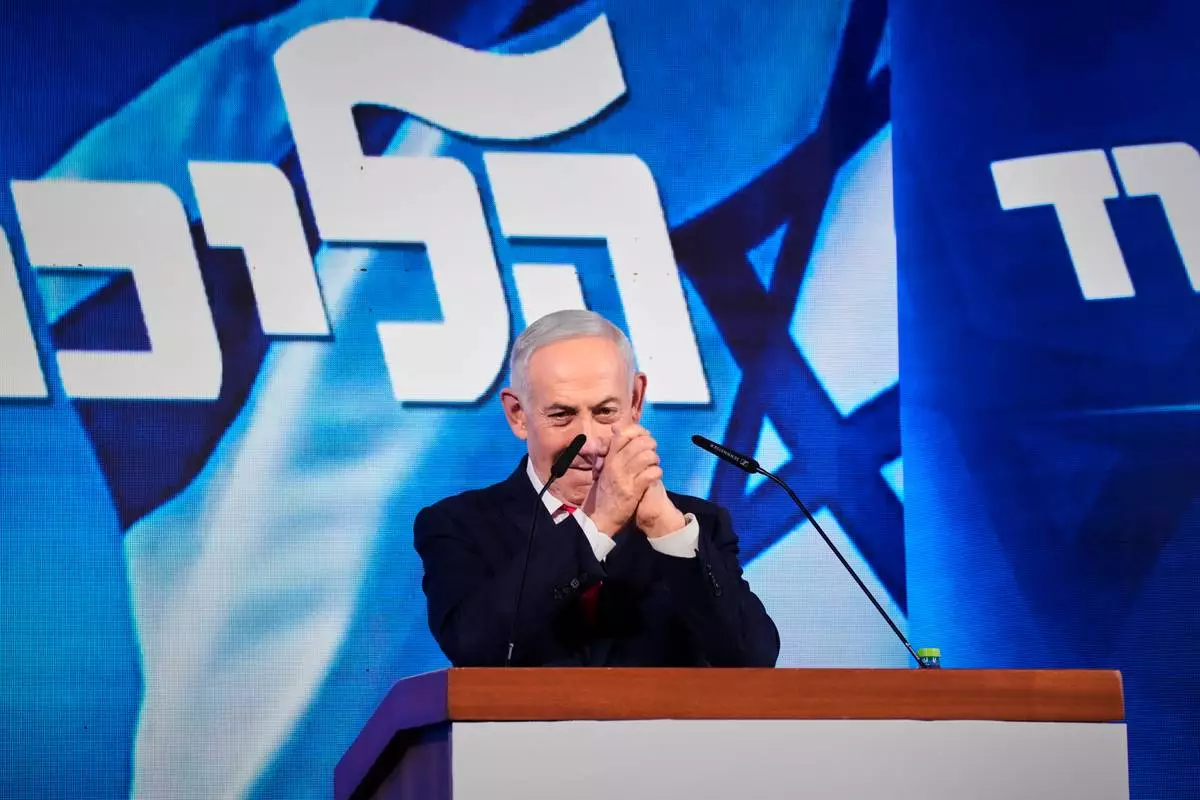
Israeli Prime Minister Benjamin Netanyahu greets his supporters at Likud party headquarters in Jerusalem after the release of the first exit poll results in Israel's general election, Wednesday, Oct. 28, 2026. (AP Photo/Ohad Zwigenberg)
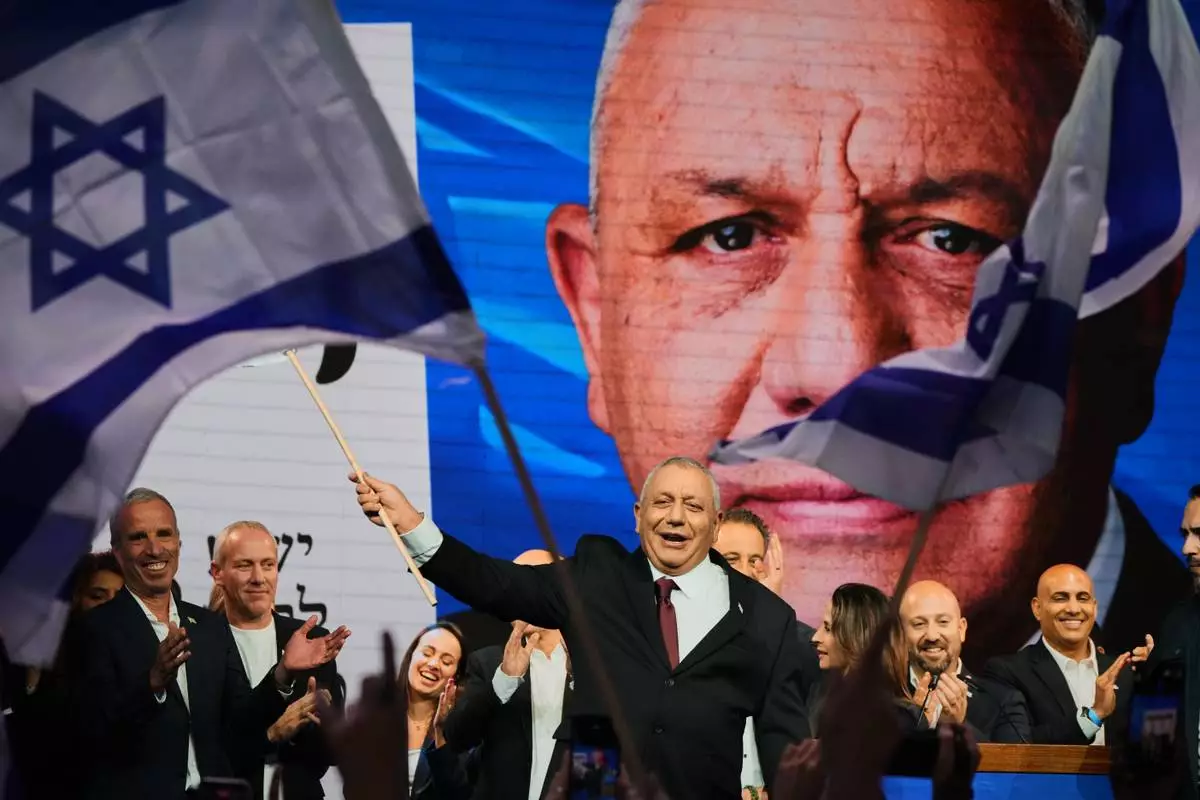
Gadi Eisenkot, leader of the Yashar ("Straight") party, waves an Israeli flag onstage following the release of the first exit poll results in Israel's general election in Tel Aviv, Israel, Wednesday, Oct. 28, 2026. (AP Photo/Ariel Schalit)

Supporters of Israeli lawmaker Mansour Abbas's Raam party applaud and wave party flags after the release of the first exit poll results in Israel's general election, in Sakhnin, Israel, Tuesday, Oct. 27, 2026. (AP Photo/Mahmoud Illean)
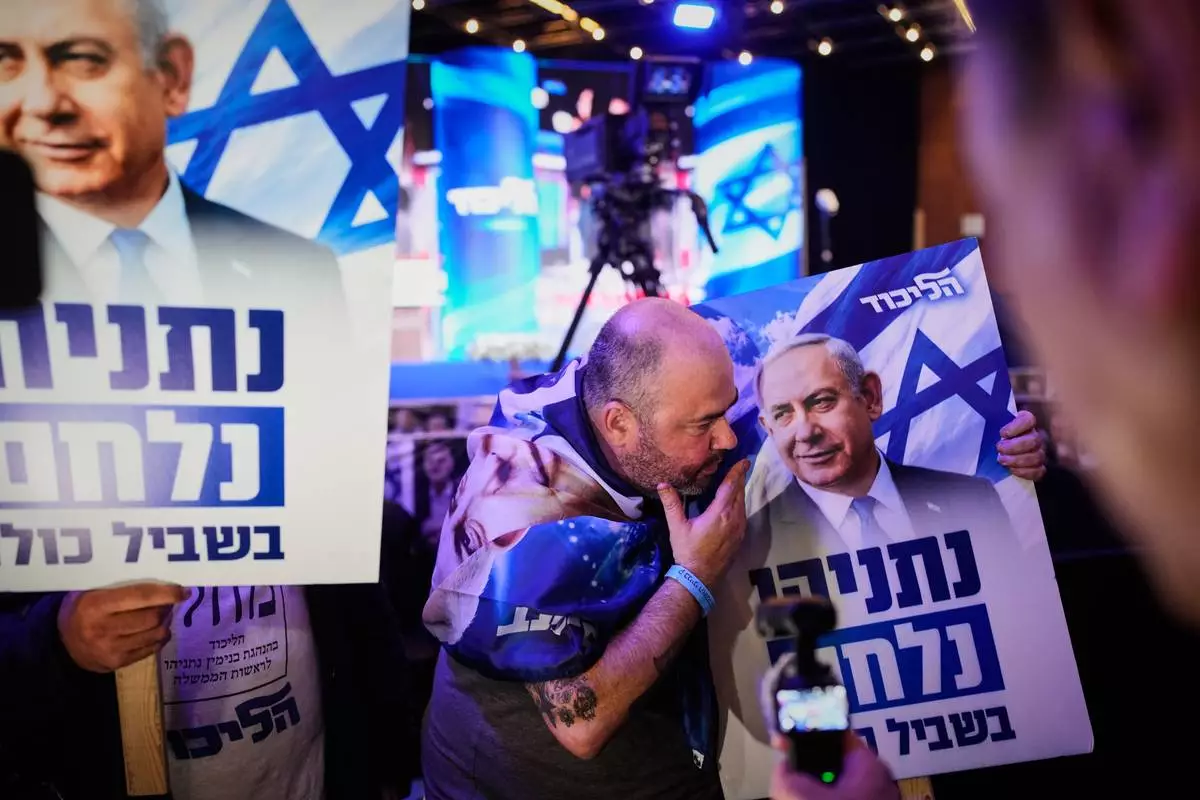
Supporters of Israeli Prime Minister Benjamin Netanyahu react to the release of the first exit poll results in Israel's general election in Jerusalem on Tuesday, Oct. 27, 2026. (AP Photo/Ohad Zwigenberg)
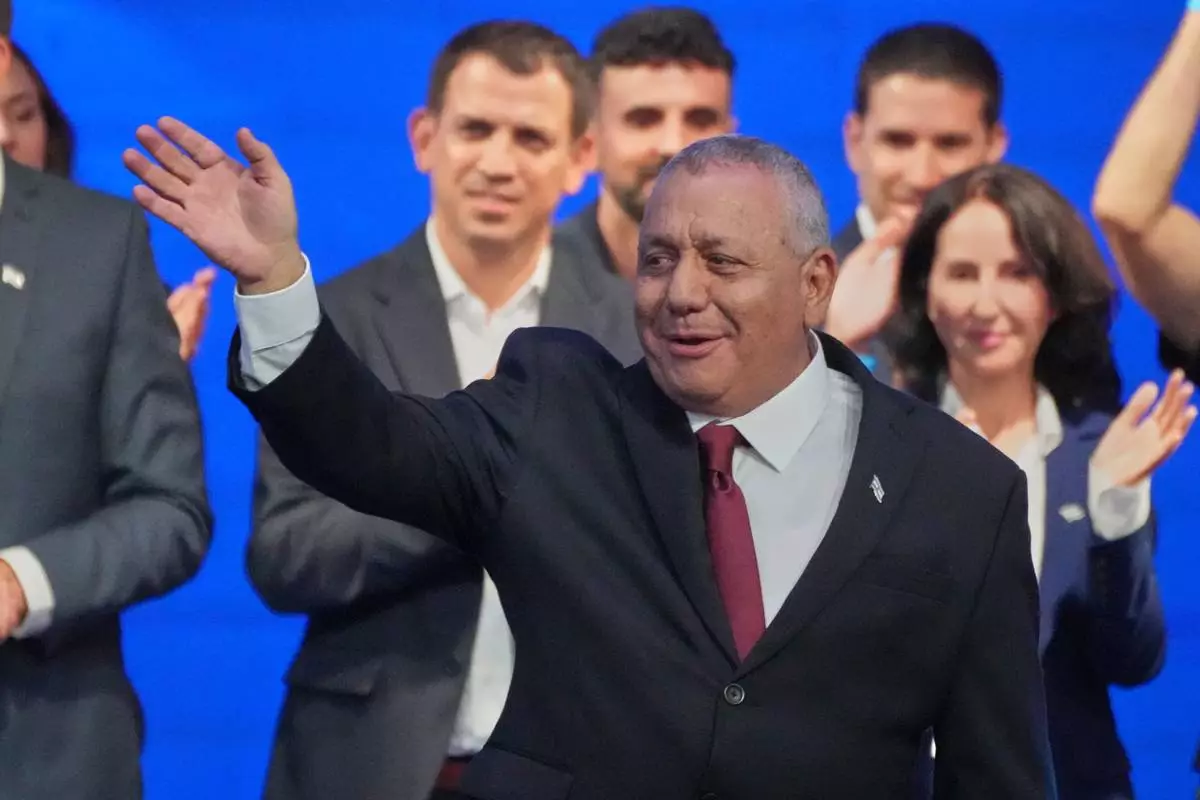
Gadi Eisenkot, leader of the Yashar ("Straight") party, waves to supporters after the release of the first exit poll results in Israel's general election in Tel Aviv, Israel, Tuesday, Oct. 27, 2026. (AP Photo/Ariel Schalit)

Gadi Eisenkot, leader of the Yashar party, is partially obscured by Israeli flags as he greets supporters after the release of the first exit poll results in Israel's general election in Tel Aviv, Israel, Tuesday, Oct. 27, 2026. (AP Photo/Ariel Schalit)

People embrace and wave flags amid falling confetti as they celebrate early exit poll results for Israel's general election in Tel Aviv, Israel, Tuesday, Oct. 27, 2026. (AP Photo/Oded Balilty)

Supporters of Gadi Eisenkot, leader of the Yashar ("Straight") party, react after the release of the first exit poll results in Israel's general election in Tel Aviv, Tuesday, Oct. 27, 2026. (AP Photo/Ariel Schalit)
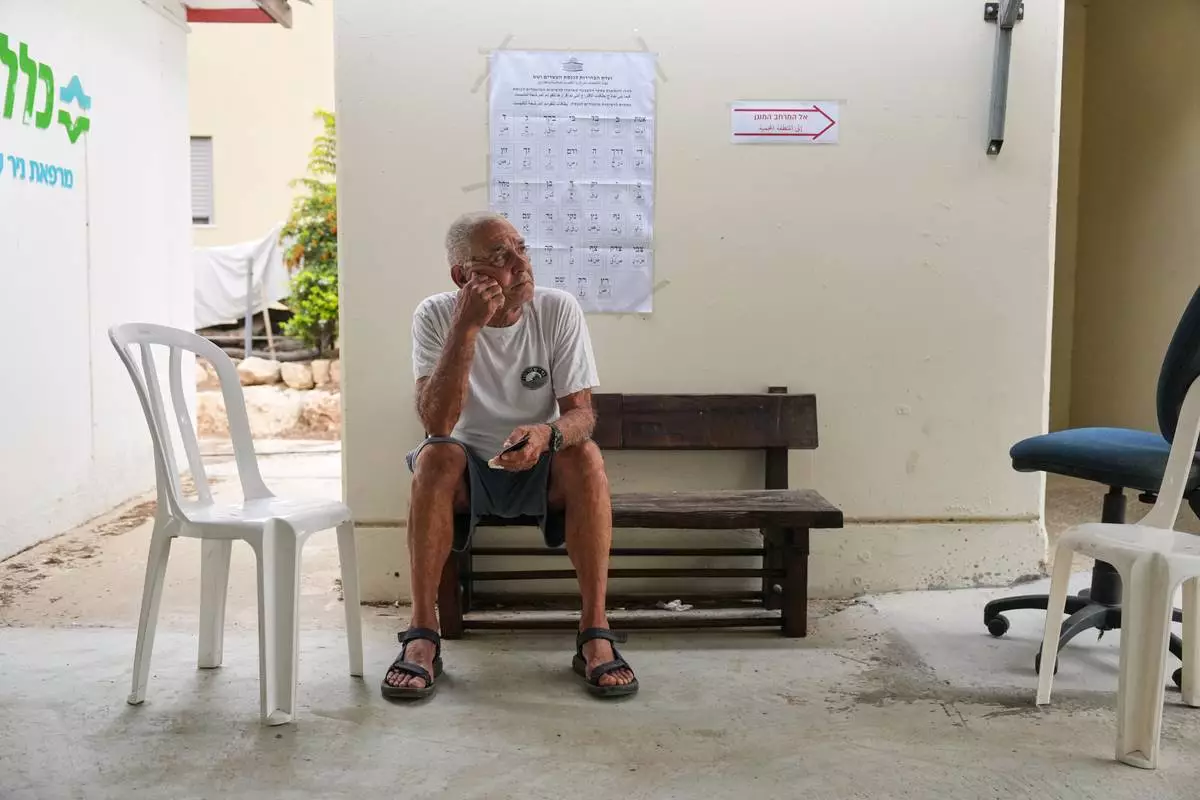
Former Israeli hostage Gadi Moses waits to cast his ballot during Israel's general election at a polling station in Kibbutz Nir Oz, southern Israel, Tuesday, Oct. 27, 2026. (AP Photo/Ariel Schalit)
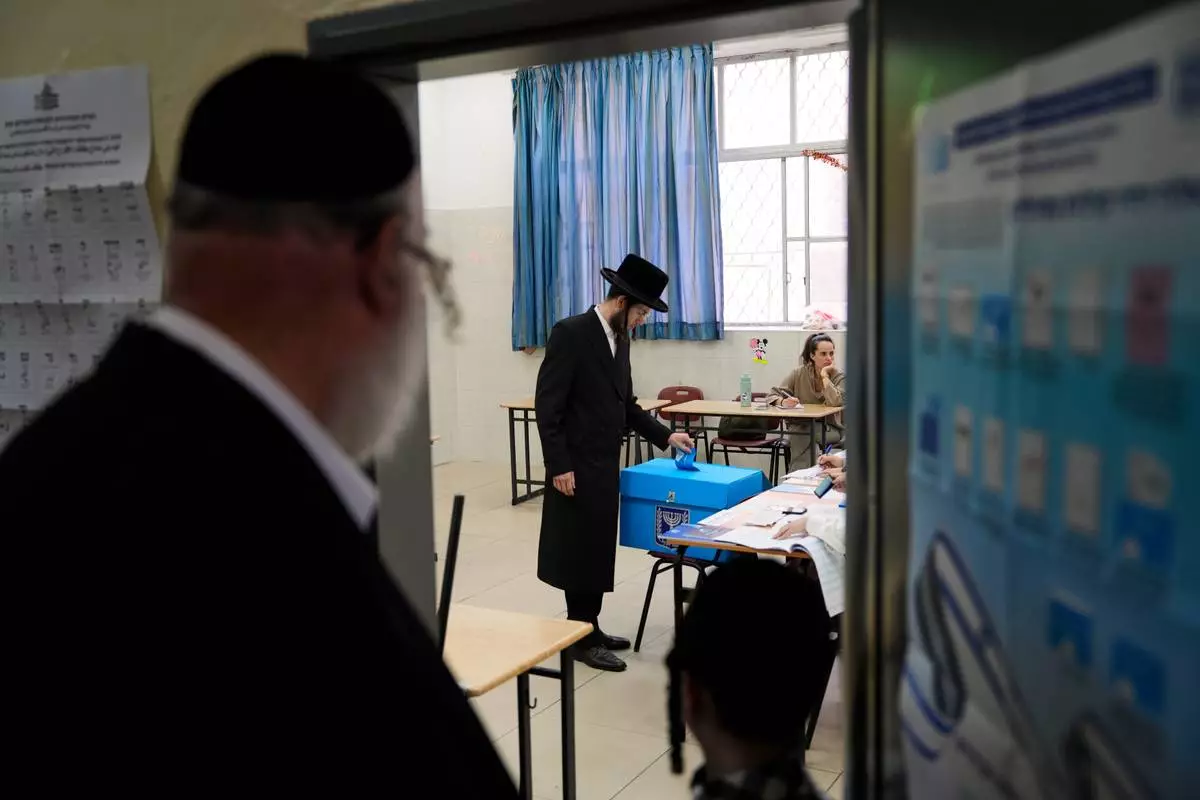
A man casts his ballot at a polling station during Israel's general election in Haifa, Israel, Tuesday, Oct. 27, 2026. (AP Photo/Baz Ratner)
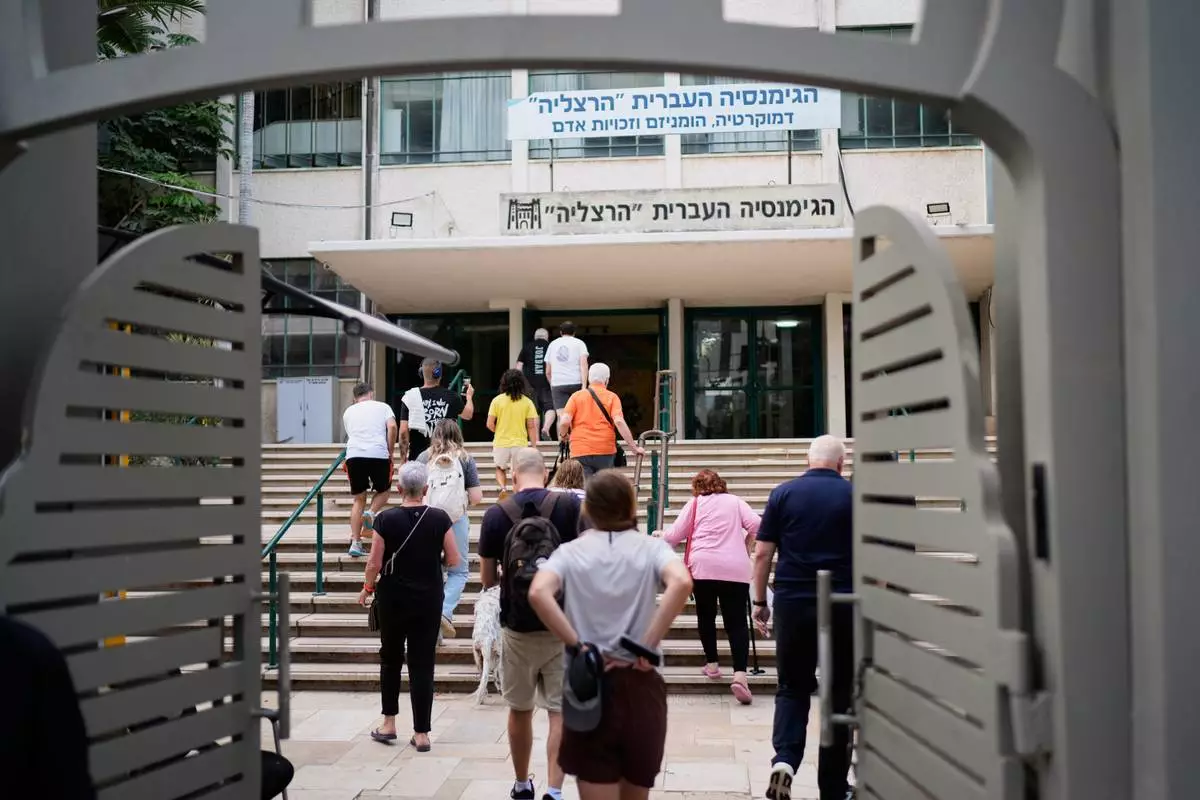
Voters arrive at a school used as a polling station during Israel's general election in Tel Aviv, Israel, Tuesday, Oct. 27, 2026. (AP Photo/David Goldman)
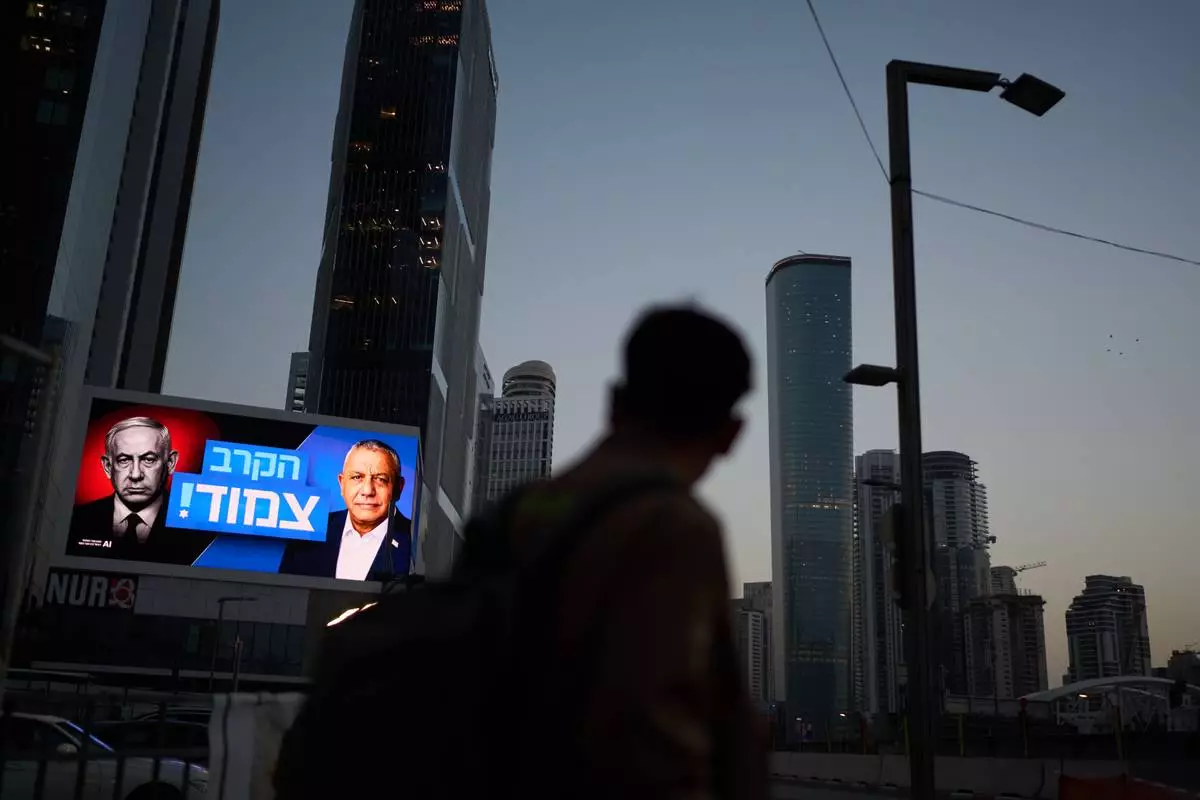
A pedestrian passes a campaign billboard featuring Israeli Prime Minister Benjamin Netanyahu, left, and his main rival, opposition candidate Gadi Eisenkot, with a message in Hebrew that reads "The race is tight," Friday, Oct. 23, 2026, in Tel Aviv, Israel. (AP Photo/David Goldman)

A woman walks past a Likud Party campaign billboard featuring U.S. President Donald Trump and Israeli Prime Minister Benjamin Netanyahu, with a Hebrew message reading, "We have one opportunity to win," in Tel Aviv, Israel, Monday, Oct. 26, 2026. (AP Photo/Oded Balilty)