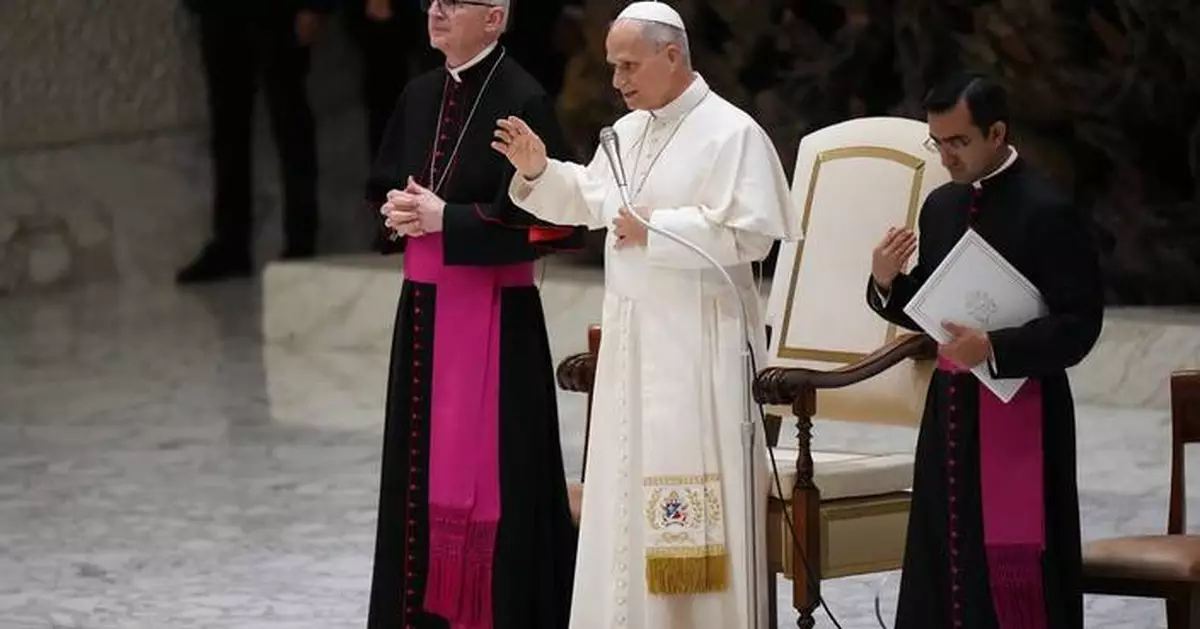
ROME (AP) — Pope Leo XIV on Tuesday denounced any religious justification for wars raging around the world, saying “there is no such thing as a holy war.”
“Only peace is holy,” Leo said in a video-message to a gathering of religious leaders in the Italian hilltop town of Assisi.
The American pope was supposed to have presided over the gathering in person, but had to cancel his participation as he recovers from Oct. 13 lung cancer surgery.
Instead, Leo sent a videotaped message that was broadcast to the delegates, who included the Archbishop of Canterbury Sarah Mullally, spiritual leader of the worldwide Anglican Communion, as well as Muslim, Buddhist and other Christian leaders.
They were in Assisi, the birthplace of the peace-loving St. Francis, to mark the 40th anniversary of a landmark interfaith peace meeting called by St. John Paul II. That encounter, controversial at the time because it featured leaders of different faiths praying together, spawned a movement of interreligious peace appeals and gatherings.
In his message, the American pope denounced the “troubling revival of war as an instrument of international politics” and its religious justifications by leaders.
“Precisely in these times marked by a culture of power, there is a need to cultivate the spirit of Assisi,” he said. “War can never be waged in the name of God,” he said. “We must rebuild peace everywhere, not prepare for more wars.”
Russia’s Orthodox Church has justified Russia’s invasion of Ukraine as a “holy war” against a Western world it considers has fallen into evil.
Leaders on all sides of the Iran war have used religion to justify their actions. U.S. officials, especially Defense Secretary Pete Hegseth, have invoked their Christian faith to cast the war as a Christian nation trying to vanquish its foes with military might.
Leo has consistently rejected such justifications as a perversion of religion itself, most stridently in his first encyclical “Magnificent Humanity” in which he said fighting in the name of religion “means attacking religion itself.”
The Assisi gathering came as the Vatican is accelerating its humanitarian efforts for Ukraine following the entry into effect of a localized cease-fire in the devastated southern Ukrainian city of Oleshky. The pope’s chief almsgiver, Monsignor Luis Marín de San Martín, on Tuesday began a three-day visit to Ukraine and was bringing several trucks worth of winter clothes, blankets and food to Kyiv for distribution.
Marín de San Martín was planning to visit Kyiv, Zaporizhzhia, Dnipro and Fastiv, Vatican News said.
Leo had called for a cease-fire and the delivery of food and medicine in Oleshky, and the safe and voluntary evacuation of its people during an Oct. 16 phone call with Russian President Vladimir Putin, which the pontiff initiated from the hospital where he was recovering from surgery.
Leo followed up three days later, back at the Vatican, with a call to Ukrainian President Volodymyr Zelenskyy. According to the Vatican, Leo noted his appeal for a cease-fire to Putin and “expressed the hope that cooperation between both parties will allow for the delivery of food and medical aid, and for the voluntary and safe evacuation of the civilian population.”
The White House said the cease-fire in Oleshky was secured by first lady Melania Trump. Asked Tuesday, the Vatican foreign minister, Archbishop Paul Richard Gallagher, said the Vatican wasn't aware of the first lady's role but also dismissed any polemics over who was ultimately responsible.
“I think it’s one of those situations in which it doesn’t matter who actually brought it about or who takes the credit, it’s the fact that hopefully it is real, it will last, it will allow for evacuation and it will allow the arrival of humanitarian aid to help the people who are left behind.”
The Vatican initiatives took place after Italian Cardinal Matteo Zuppi, the papal envoy for the Ukraine-Russia war, finished his third mission to Moscow on Sept. 30 and the first under Leo’s pontificate. Zuppi has focused his initiatives on humanitarian issues, especially reuniting Ukrainian children taken by Russia with their families, and Gallagher said for now neither Russia nor Ukraine wants the Holy See to take on a greater mediation or facilitation role.
Associated Press religion coverage receives support through the AP’s collaboration with The Conversation US, with funding from Lilly Endowment Inc. The AP is solely responsible for this content.
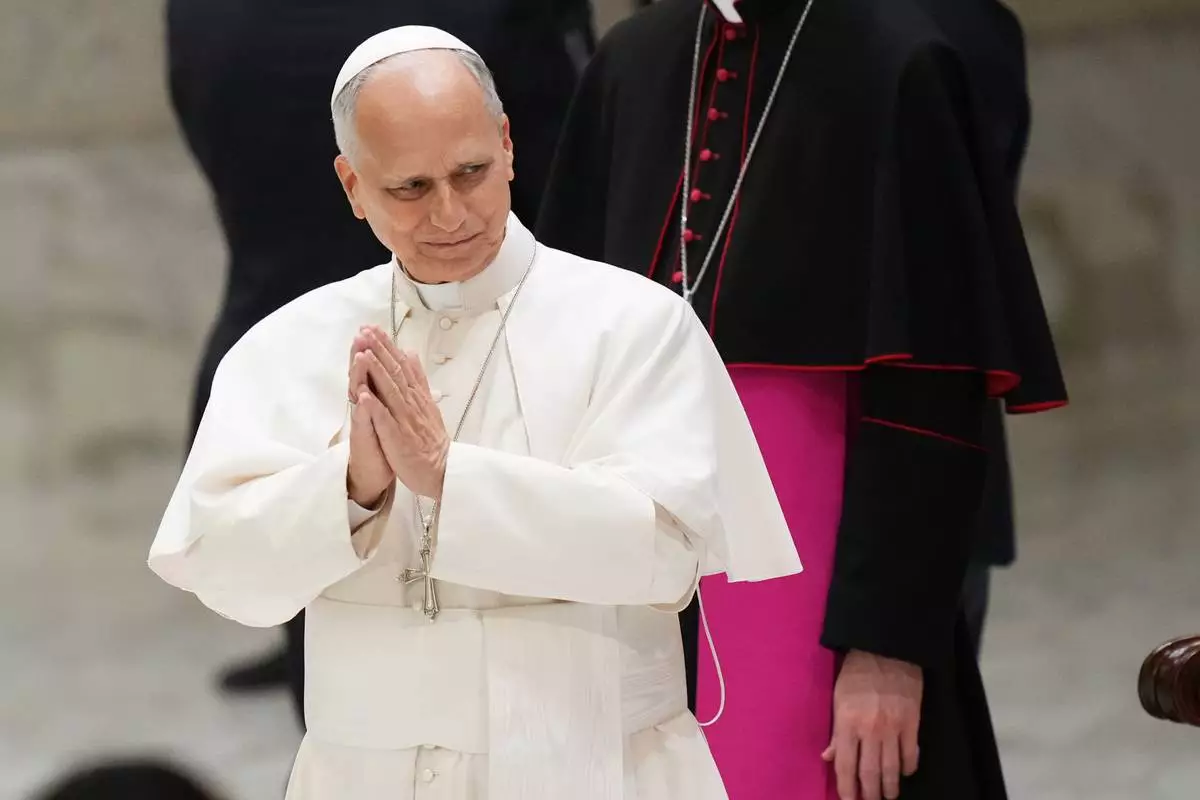
Pope Leo XIV greets participants in an audience with the Jesus Youth International Conference in the Paul VI Hall at the Vatican, Saturday, Oct. 24, 2026. (AP Photo/Alessandra Tarantino)
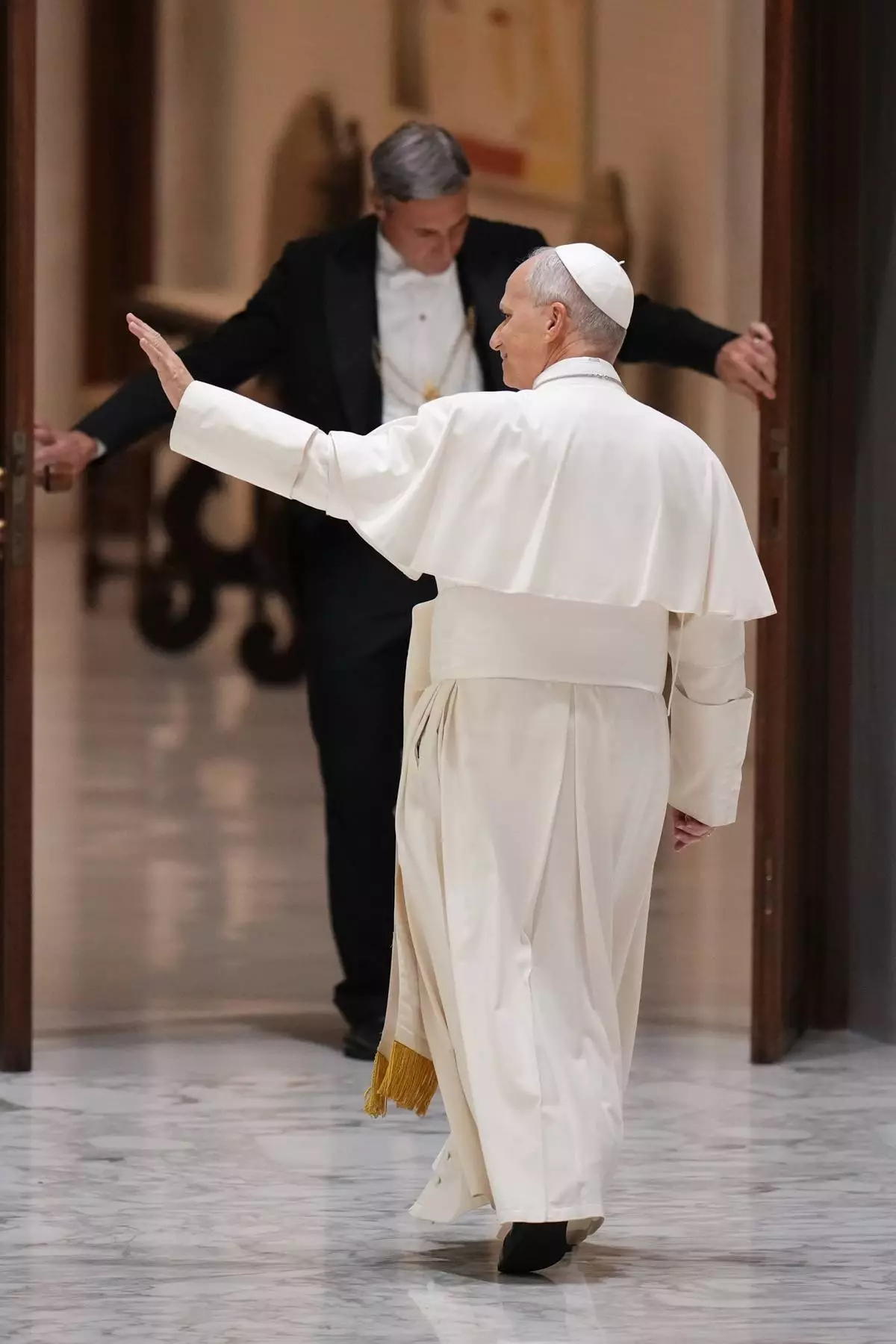
Pope Leo XIV leaves at the end of an audience with participants of the Jesus Youth International Conference in the Paul VI Hall at the Vatican, Saturday, Oct. 24, 2026. (AP Photo/Alessandra Tarantino)
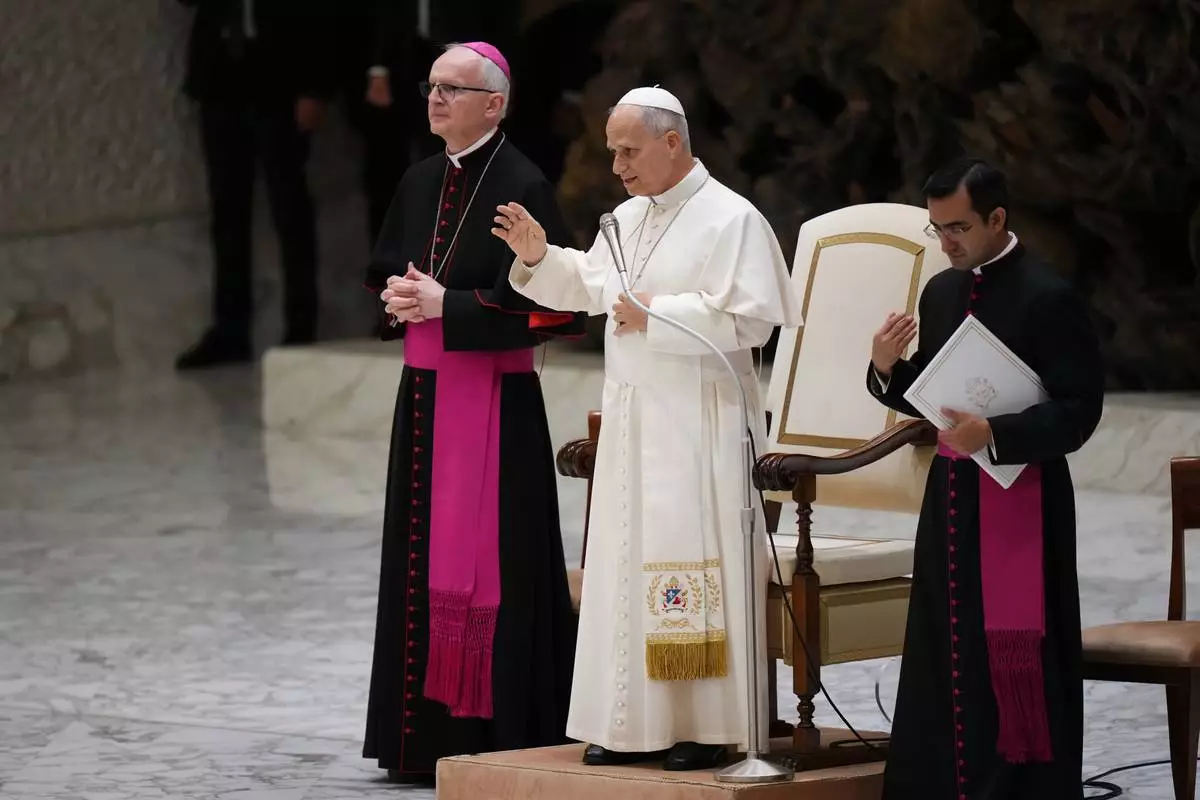
Pope Leo XIV blesses faithful during an audience with participants of the Jesus Youth International Conference in the Paul VI Hall at the Vatican, Saturday, Oct. 24, 2026. (AP Photo/Alessandra Tarantino)
WASHINGTON (AP) — A federal judge on Tuesday scolded the Justice Department for its unorthodox handling of a criminal case against two former FBI officials accused of making false statements to Congress about their knowledge of a laptop the Justice Department says belonged to Hunter Biden, the son of former President Joe Biden.
U.S. Magistrate Zia Faruqui struck from the record an amended criminal complaint filed overnight by the Justice Department that added a new obstruction charge against the two former officials, Nikki Floris and Bradley Benavides, after concluding that it was improperly submitted.
Such charging documents require sign-off from a judge that probable cause exists to believe a crime was committed by a defendant, but this complaint was filed straight to the docket with no court approval.
The development was an embarrassing setback for a Justice Department that has employed unusual maneuvers during a series of splashy and politically charged investigative actions before next week’s midterm elections. Newly unsealed documents in a separate case, for instance, revealed that prosecutors are attempting to again prosecute former FBI Director James Comey, an outspoken critic of President Donald Trump, in a manner that Comey's lawyers say is legally invalid.
Faruqui said he had never before seen a prosecutor file an unsigned criminal complaint, describing it as “inappropriate” given defendants’ presumption of innocence. He ticked off several atypical aspects of the case, including the decision to charge the former FBI officials via criminal complaint, which the judge noted is more often used when the government has disrupted an active crime or needs to take a defendant into custody immediately because of a potential danger to society.
“Everything is a little sideshow on top of a sideshow,” the judge said, telling prosecutors that they appeared to be throwing “gas” on defendants’ assertions that there is nothing typical about this case.
Assistant U.S. Attorney John Borchert defended the prosecutors’ move, saying they believed court rules allowed for the filing of the new complaint despite no sign-off from the judge because the government isn’t seeking to arrest the former FBI officials.
Faruqui was unmoved. “It is not our court’s practice — and I think it is appropriately not our practice — that unsigned complaints are filed on the docket,” Faruqui said.
He later added: “I want to know why the United States is reticent or averse to putting before me a probable cause determination that you must believe is righteous. Why today on this one case have you changed the entire history of how you charge cases?”
Mary Dohrmann, an attorney for Floris, told the judge that whether it was the result of “incompetence, recklessness or cruelty,” it was inexcusable for prosecutors to file a criminal complaint without a probable-cause sign-off from a magistrate judge.
Describing that as the “elephant in the room,” Dohrmann told the judge that “evidence is mounting that this prosecution is about some political football.”
Even so, the judge proceeded with a preliminary hearing Tuesday.
The case, announced Friday, accuses the former officials of falsely playing down their knowledge about a laptop the Justice Department says Hunter Biden abandoned at a computer repair shop in 2019.
Prosecutors say they claimed to have no independent insight into the FBI's recovery of the laptop while being interviewed in 2023 in a separate congressional Republican investigation into the Biden family. In reality, according to the criminal complaint, the two participated in numerous discussions about the laptop in their capacity as leaders of the since-disbanded FBI Foreign Influence Task Force that was set up to monitor foreign influence.
The Justice Department contends that the defendants' professed lack of knowledge misled the congressional investigation and impeded their efforts to scrutinize Biden family business dealings.
But Ronald Safer, a lawyer for Benavides, challenged that assertion during the hearing Tuesday as he questioned an FBI agent who investigated the case against the former officials. He also pointed out that Benavides, in 2023, was asked about events that occurred several years earlier, casting doubt on whether anything his client said was intentionally false.
“What evidence have you uncovered that in September of 2023, Mr. Benavides remembered the correct answers, in your view, to the questions asked about Hunter Biden but gave knowingly incorrect answers?” Safer asked.
The prosecution, a rare Justice Department criminal case against a former employee, revisits a tangled saga that roiled the final weeks of the 2020 race after the New York Post revealed the existence of a laptop it said had been dropped off by the younger Biden at a Delaware computer repair shop about a year earlier.
The Post said it had obtained a hard drive of the laptop from Rudy Giuliani, a close ally of President Donald Trump, and reported on some of the contents of the computer, including emails that appeared to show some of Hunter Biden's foreign business dealings.
The curious circumstances of the laptop’s discovery raised concerns among Democrats and former intelligence officials about the possibility of Russian involvement, particularly when the Trump administration’s own intelligence community had assessed that Moscow was attempting to undermine the candidacy of Democratic nominee Joe Biden, who went on to defeat Trump in 2020, and as Giuliani had traveled abroad looking for dirt on the Bidens.
But Trump's then-national intelligence director, John Ratcliffe, quickly sought to quell speculation about the laptop's provenance by saying there were no signs it had anything to do with Russian actors. The FBI said it had nothing to add to Ratcliffe's statement and investigated the younger Biden on gun and tax charges that later resulted in felony convictions. President Joe Biden pardoned his son in late 2024.
The FBI officials under scrutiny, Floris and Benavides, were leaders of the Foreign Influence Task Force, which was established in the first Trump administration to police influence campaigns staged by Russia and other nations aimed at sowing discord, undermining democracy and spreading disinformation.
In that capacity, the FBI officials briefed Republican Sens. Chuck Grassley and Ron Johnson in August 2020 as the lawmakers were doing their own investigation into Hunter Biden’s work in Ukraine. News of the briefing leaked, and the senators lashed out at the FBI, saying their efforts to scrutinize the Biden family had been discredited and falsely linked to Russian disinformation.
The criminal complaint accuses them of lying to lawmakers in 2023 by denying contemporaneous knowledge of the Biden laptop or participating in internal FBI conversations about it. Their lawyers have denied any allegations of wrongdoing.
The task force was disbanded in February 2025 by then-Attorney General Pam Bondi.
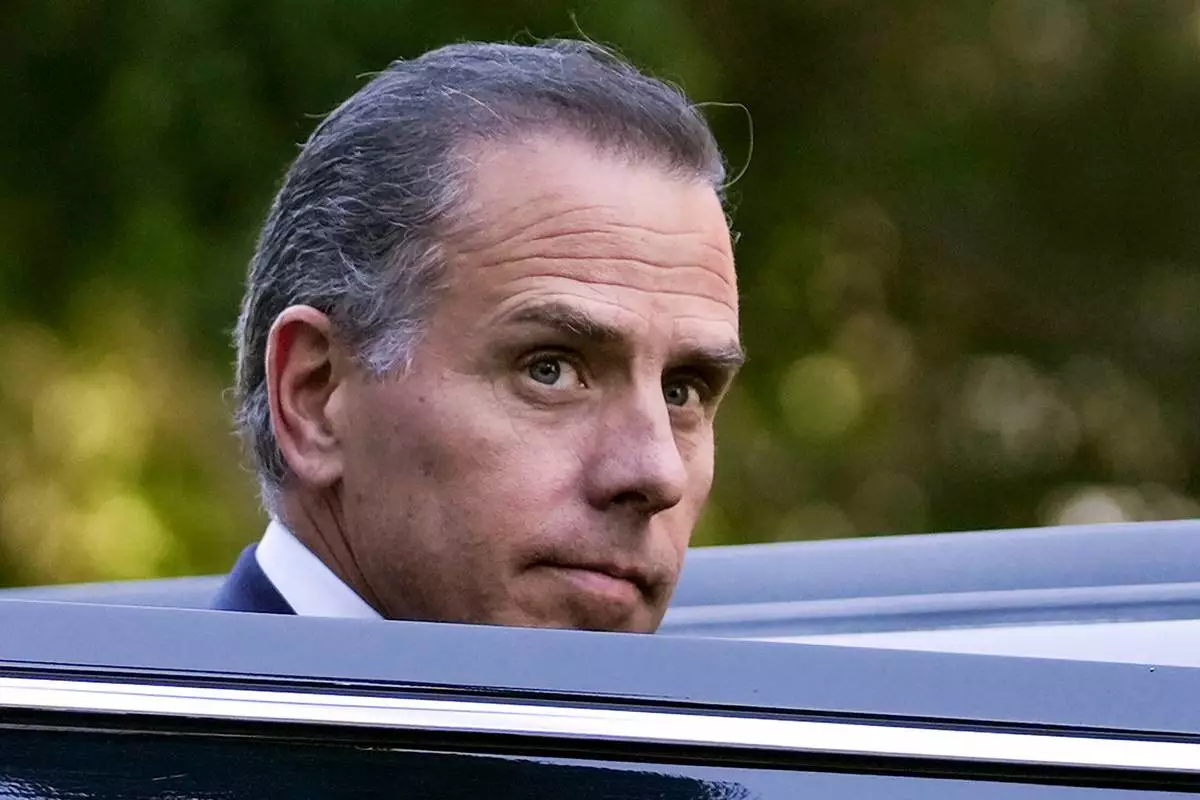
FILE - Hunter Biden steps into a vehicle as he leaves federal court, Sept. 5, 2024, in Los Angeles. (AP Photo/Eric Thayer, File)
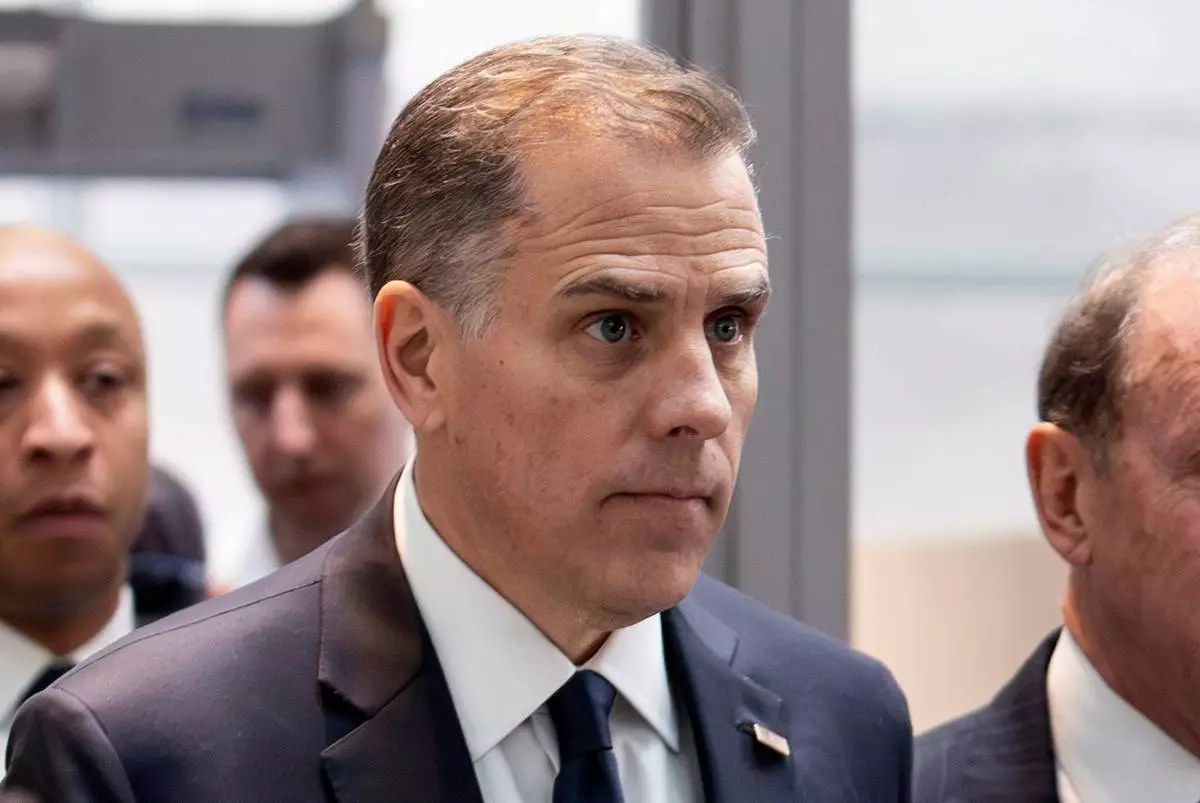
FILE - Hunter Biden arrives for a closed-door deposition on Capitol Hill in Washington, Feb. 28, 2024. AP Photo/J. Scott Applewhite, File)
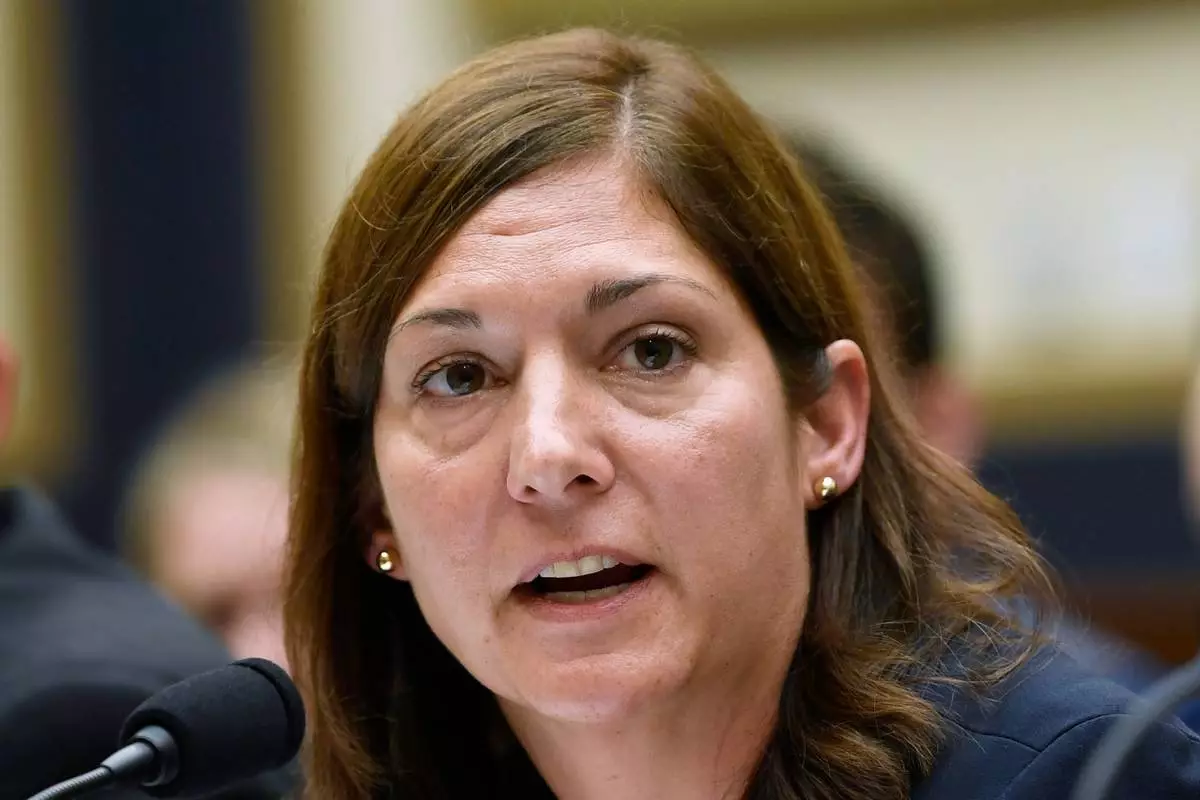
FILE - Deputy Assistant Director for Counterterrorism at the FBI Nikki Floris, testifies before the House Judiciary Committee hearing on Capitol Hill in Washington, Oct. 22, 2019. (AP Photo/Susan Walsh, File)