Los Angeles (AP) — A federal judge on Tuesday said he was considering appointing a special master to evaluate claims by the Trump administration that California has some 20,000 noncitizens on its voter rolls and to determine whether counties would be able to separate any ballots belonging to ineligible voters.
U.S. District Judge David O. Carter was overseeing a hearing in a lawsuit filed by the Justice Department, which is seeking to prevent California from counting ballots from thousands of people it alleges are noncitizens.
Carter said it would be too rushed to make a decision without an independent special master who could evaluate the substance of both sides’ claims. He said that could be completed before the state’s Dec. 11 deadline to certify the election results.
It is not clear what would happen if a special master did find a substantial number of noncitizen voters on the federal government's list or whether it would affect the certification of California's election results. The 20,000 people on the DOJ's list constitute only a small fraction of California's 23 million voters.
Voting has been well underway for weeks in California in the midterm election that concludes next Tuesday. Alleged voting by noncitizens has been a key focus of President Donald Trump's administration with control of Congress at stake, though available data indicates occurrences are exceedingly rare.
The Republican administration sued election officials in California in mid-October, accusing them of failing to meet a 48-hour deadline to review its list of 20,000 people it alleged were likely noncitizens on the state’s voter rolls.
The Justice Department made a similar request in Washington state this week for the state to sequester ballots submitted by hundreds of people it suspects are not U.S. citizens. Meanwhile, another lawsuit filed in Alaska last week seeks to delay certification of the vote if the Republican incumbent running for U.S. Senate doesn’t win. All three states have House or Senate races that will help determine the balance of power in the nation's Capitol.
Although Carter said he was open to appointing a special master, he said he will not issue an official order until Wednesday.
The judge said he wanted to vet the federal government’s list. He emphasized his concerns that siding with the federal government at this stage could mean illegally making substantial changes to election procedure while voting is underway.
But he said the special master also could investigate California’s claims that it could not logistically separate the ballots in time for the election certification deadline in December, an assertion the federal government has contested.
Carter rarely spoke throughout the hearing, but he did express skepticism about why the federal government was suing California rather than seeking to address alleged noncitizen voting through criminal prosecutions. He referenced the federal government's recent arrest in October of 28 people across California accused of illegally registering to vote.
“You got a remedy for goodness sakes — go out and indict,” Carter said from the bench.
Prosecutors with the federal government argued that the U.S. had an interest in preventing noncitizens from voting in the first place.
"We want to stop the illegal voting,” First Assistant U.S. Attorney Bill Essayli said. “We don’t want to chase it later.”
Carter also seemed to respond to warnings that local county clerks who don't heed the federal government's demands could be criminally prosecuted.
"This court believes it would be wise that any threats to state and county election employees cease immediately,” Carter said before abruptly leaving the courtroom.
Essayli argued Tuesday that the Justice Department’s demands would not significantly disrupt the ongoing election.
“We have not asked to void any ballots,” he said. Instead, the government was seeking to work with California officials to “safeguard” the election.
He said testimony would explain how the government's list of 20,000 names was compiled.
“The case rises and falls on the credibility” of the flagged names, he told the judge, arguing the state has an obligation to investigate before counting those voters' ballots.
California officials previously argued that once a completed mail ballot is returned, it is separated from the envelope that contains voters' identification. That would make it impossible to separate ballots that have already been submitted, the state said. More than 3 million ballots have already been returned.
Lawyers for California and Los Angeles County said the federal government has not specified how or when it obtained the voter file, leaving open the possibility the list was inaccurate or outdated. They specifically questioned the government’s reliance on a private, third-party service to determine Social Security numbers used in their effort.
M. Patrick Moore, a lawyer for the Los Angeles County registrar's office, also argued that the county would cooperate if the federal government wanted to criminally prosecute noncitizens who illegally voted.
“If an individual who is a noncitizen votes, there will be record of that, and the county will provide that record” to the federal courts, Moore said in court Tuesday.
He added that if the federal government believes the election was compromised, there are legal processes for contesting the outcome.
Tuesday's hearing largely revolved around the reliability of the federal government's list. Los Angeles County officials found that a small sample of people on it were indeed citizens.
The federal agent who conducted the investigation — which required roughly 800 federal employees who manually checked each name — said in an affidavit that the county's findings were false. The filing did concede that some names of citizens could have been mistakenly included.

Homeland Security Investigations task force officers escort a suspect accused of illegally registering to vote to a processing facility at Federal Building in Los Angeles, Monday, Oct. 19, 2026. (AP Photo/Jae C. Hong)

FILE - Ballots are sorted the day after California's primary election at the LA County Ballot Processing Center, June 3, 2026, in City of Industry, Calif. (AP Photo/Jae C. Hong, File)

FILE - The U.S. Department of Justice logo is seen on a podium before a news conference, May 4, 2026, in Washington. (AP Photo/Julia Demaree Nikhinson, File)
JERUSALEM (AP) — Israelis appear to have handed a rebuke to Prime Minister Benjamin Netanyahu in national elections, exit polls indicated. But what’s next is uncertain as there's no clear winner and no obvious path to a governing majority.
The election was widely seen as a referendum on Netanyahu, the country’s longest-serving prime minister, who gave a defiant speech to his supporters just after 3 a.m. on Wednesday in Jerusalem.
His party, Likud, appears to have gotten the most votes. But the exit polls by major Israeli TV stations indicate that support for his religious-national coalition dropped significantly.
The exit polls suggested his opponents — led by Netanyahu’s chief rival, Gadi Eisenkot, who also rallied exuberant supporters in Tel Aviv early on Wednesday — could secure a solid majority in the next parliament. But whether those disparate parties, including Arab-led parties, can form a government is uncertain, and will likely take weeks of haggling or possibly new elections.
Here are some key points to know on Wednesday morning, hours after the polls closed in Israel.
In Israel, voters choose not individuals but parties. Since no party has ever captured a parliamentary majority on its own, party leaders must agree to come together in a governing coalition.
Exit polls indicated that Netanyahu's bloc of supporters won about 50-51 seats in parliament, while the bloc led by his main challenger, former military chief of staff Gadi Eisenkot, won 51-52. That would leave each side well below the 61 seats needed to form a government with a parliamentary majority.
The exit polls suggested that Arab-led parties captured the remaining 19 seats.
With 16.6% of the 7.3 million eligible voters’ ballots counted, Israel’s Central Elections Committee reported 23.36% of the vote went to Likud, the party led by Prime Minister Benjamin Netanyahu, and 15.74% to Yashar, the party of his chief rival, former military chief of staff Gadi Eisenkot. The count does not indicate how many seats each party will win in the parliament.
Final official results aren't expected until later this week and they may vary from the exit polls, which, like all surveys, are subject to potential error.
If the Arab parties do as well as the exit polls suggest, they could play a decisive role in selecting Israel's next prime minister.
In his election night speech, Netanyahu repeated his refusal to create a government relying on Arab parties. Eisenkot has signaled he is ready to work with them under certain conditions, but this could risk alienating some of his partners.
Israelis are largely opposed to a Palestinian state. No major candidate advocated a return to the long-moribund peace process.
Even Mansour Abbas, a Palestinian Arab politician who leads Ra’am, the first Arab-led party to join a governing coalition in 2021, centered his campaign on concerns about crime in Arab communities.
As exit polls were shown on a screen at an Abbas election night event in Sakhnin, an Arab city in northern Israel, supporters of the small Arab-led party Ra’am erupted in celebration.
This election was held against the background of the enduring trauma of the Hamas-led attack on Oct. 7, 2023, when militants killed 1,200 people, mostly civilians, and abducted 251 others, and the ensuing wars in Gaza and beyond.
The deadliest day in Israel’s history featured prominently in the campaigns. Israelis have focused on the security failures surrounding Oct. 7 and the enormous burden on their society, rather than on the humanitarian situation in war-devastated Gaza.
Netanyahu has rejected an investigation into Oct. 7 and blamed the army for the failures that day. His supporters say he led the country back from that difficult day and scored important achievements in wars in Gaza, Lebanon and Iran.
Netanyahu’s opponents said he should be held accountable for the security failures that occurred on his watch and have demanded a commission of inquiry.
The country has also been deeply divided by exemptions from military service granted to ultra-Orthodox males. These exemptions are especially contentious after three years of wars.
Netanyahu’s governing coalitions have long relied on ultra-Orthodox Jewish parties that have demanded these exemptions remain in place.
Netanyahu’s rival Eisenkot — who lost his son and two nephews to combat in Gaza — has vowed to end the de facto exemptions. He repeated that promise speaking to supporters on Wednesday morning.
The exit polls, which also indicated a drop in support for ultra-Orthodox parties, signaled voter unhappiness over these exemptions.
The final update from Israel’s Central Elections Committee put voter turnout at 77.7% of eligible voters by the time polls closed.
That’s the highest turnout at that hour since 1999, and just over seven percentage points higher than at the same time in the previous election in 2022. The elections saw high turnout all day, reflecting the high stakes of the election.
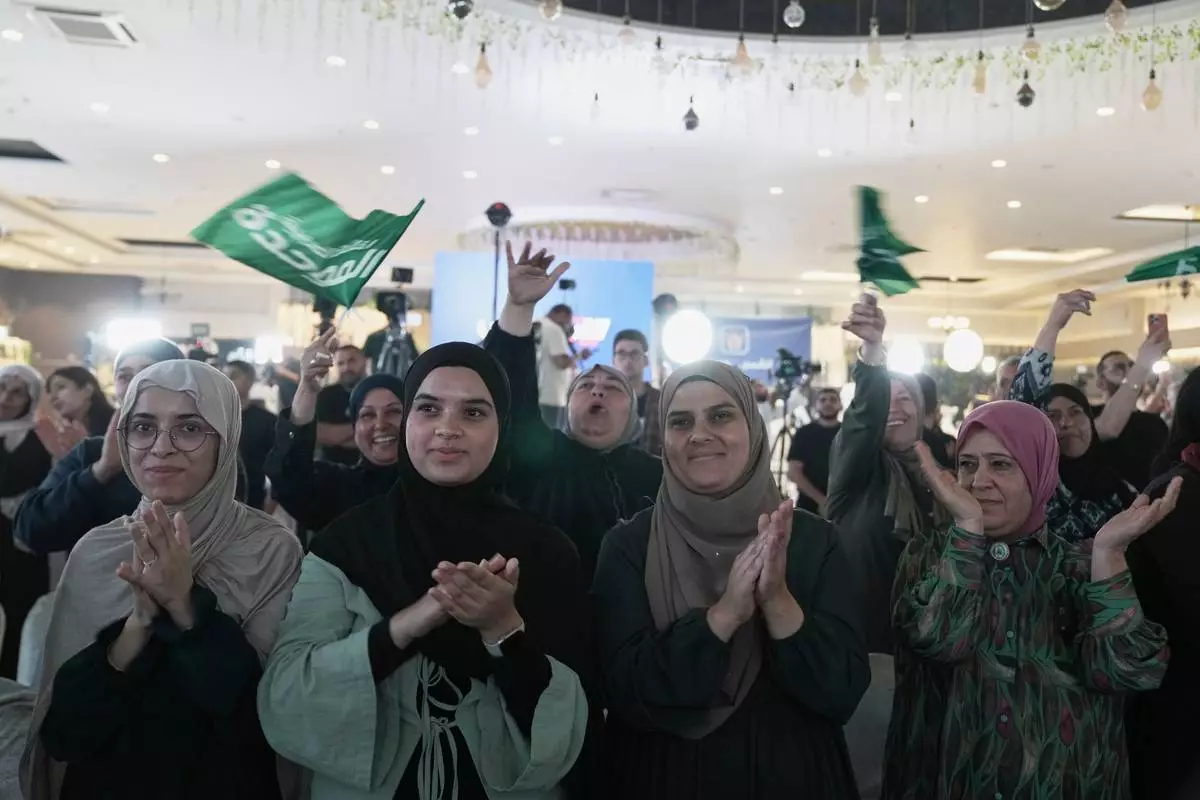
Supporters of Israeli lawmaker Mansour Abbas's Raam party applaud and wave party flags after the release of the first exit poll results in Israel's general election, in Sakhnin, Israel, Tuesday, Oct. 27, 2026. (AP Photo/Mahmoud Illean)
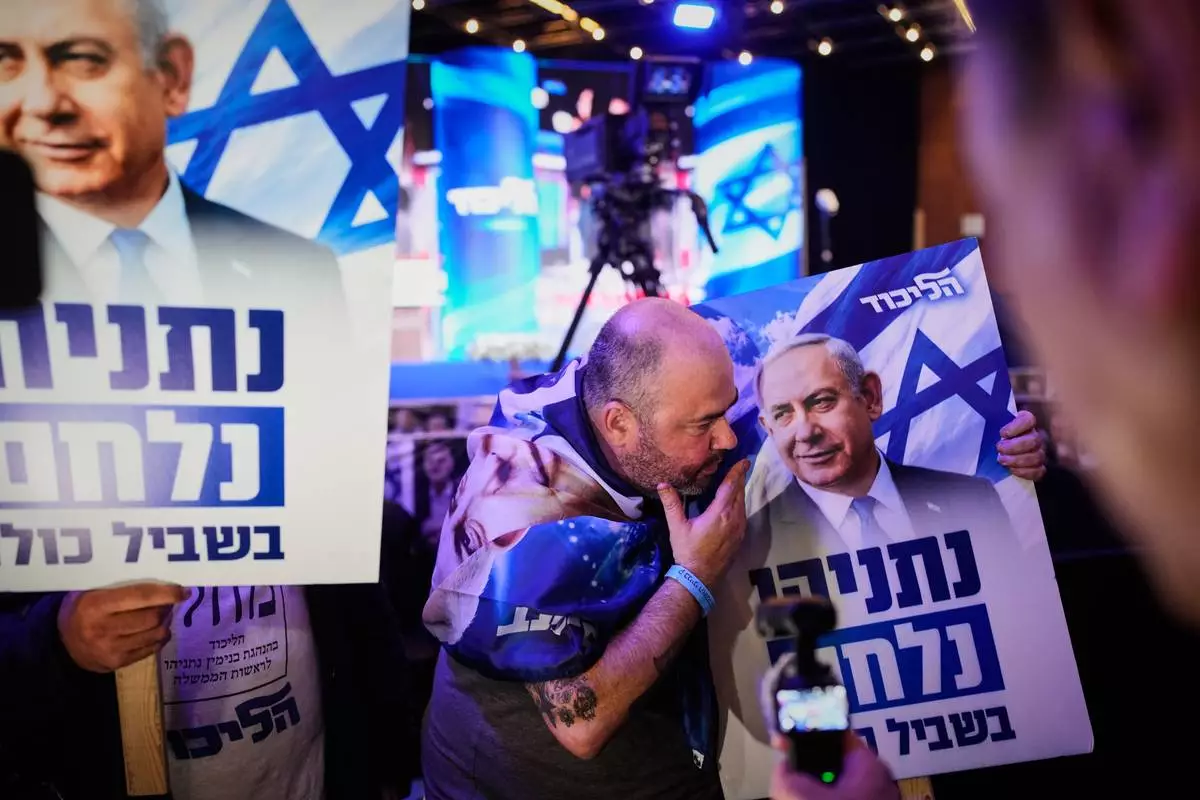
Supporters of Israeli Prime Minister Benjamin Netanyahu react to the release of the first exit poll results in Israel's general election in Jerusalem on Tuesday, Oct. 27, 2026. (AP Photo/Ohad Zwigenberg)
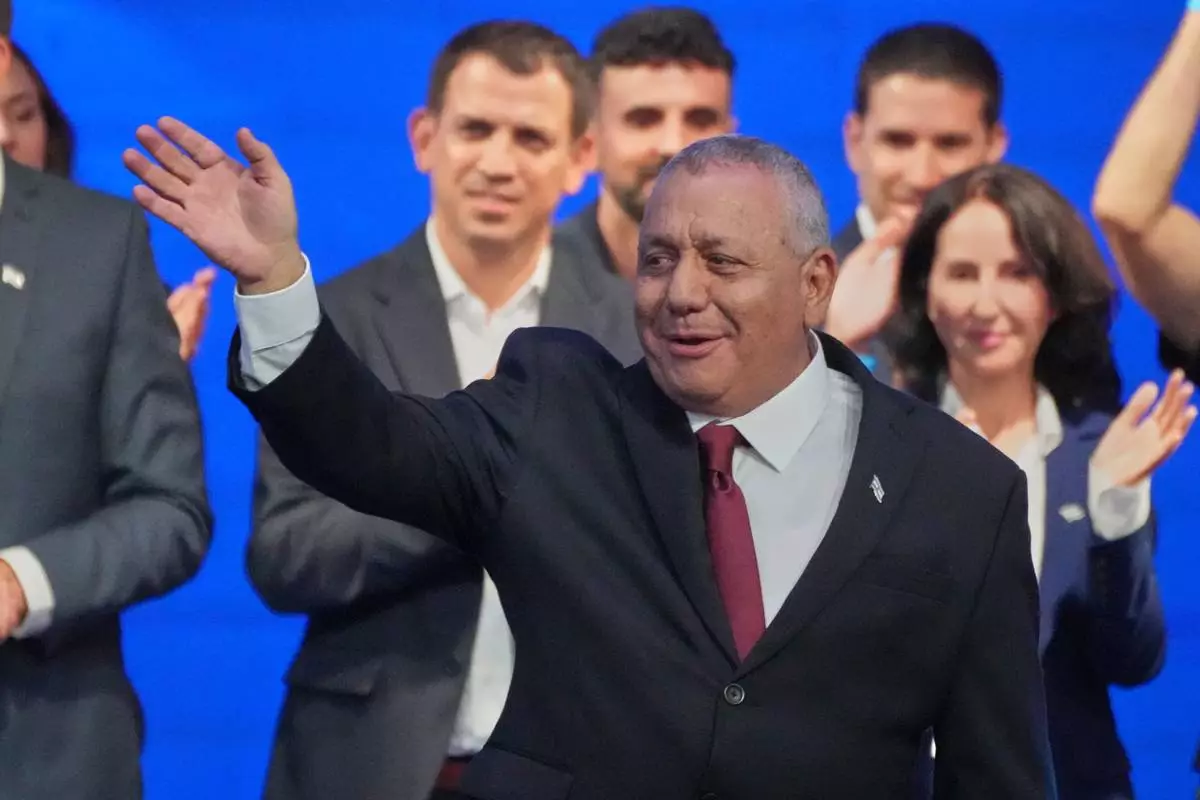
Gadi Eisenkot, leader of the Yashar ("Straight") party, waves to supporters after the release of the first exit poll results in Israel's general election in Tel Aviv, Israel, Tuesday, Oct. 27, 2026. (AP Photo/Ariel Schalit)
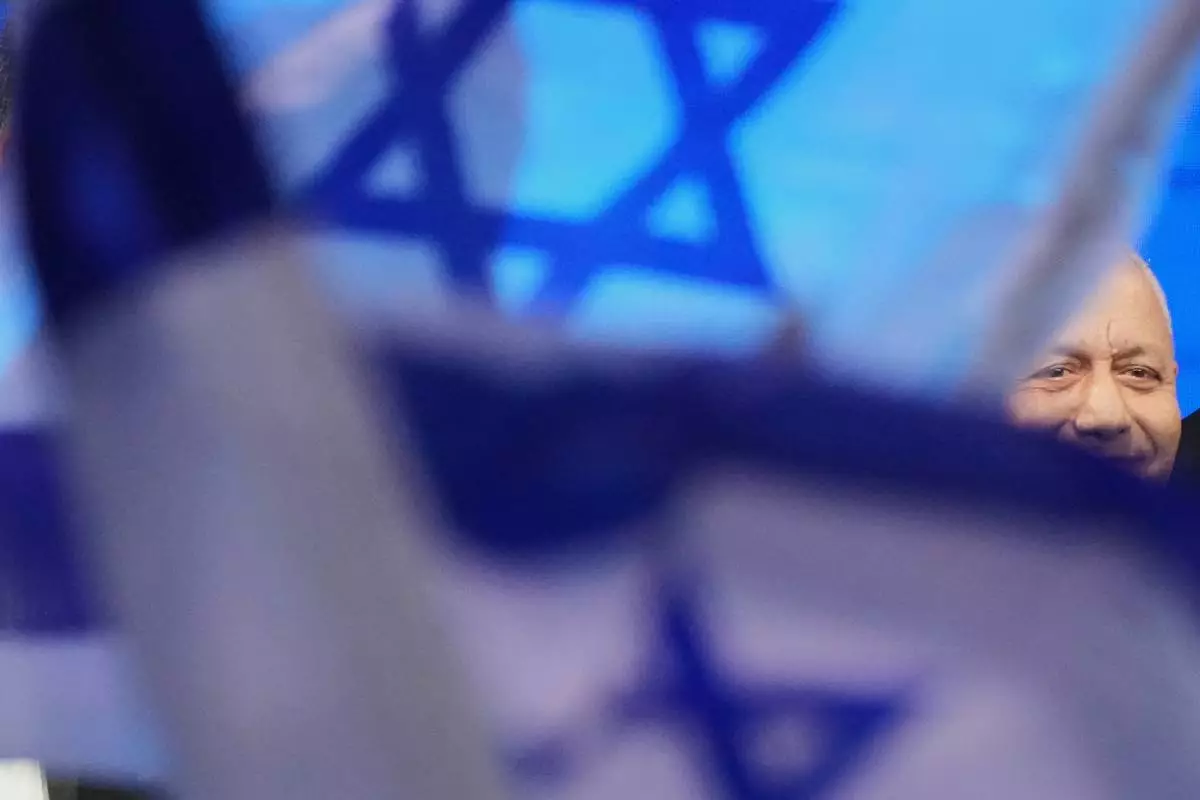
Gadi Eisenkot, leader of the Yashar party, is partially obscured by Israeli flags as he greets supporters after the release of the first exit poll results in Israel's general election in Tel Aviv, Israel, Tuesday, Oct. 27, 2026. (AP Photo/Ariel Schalit)
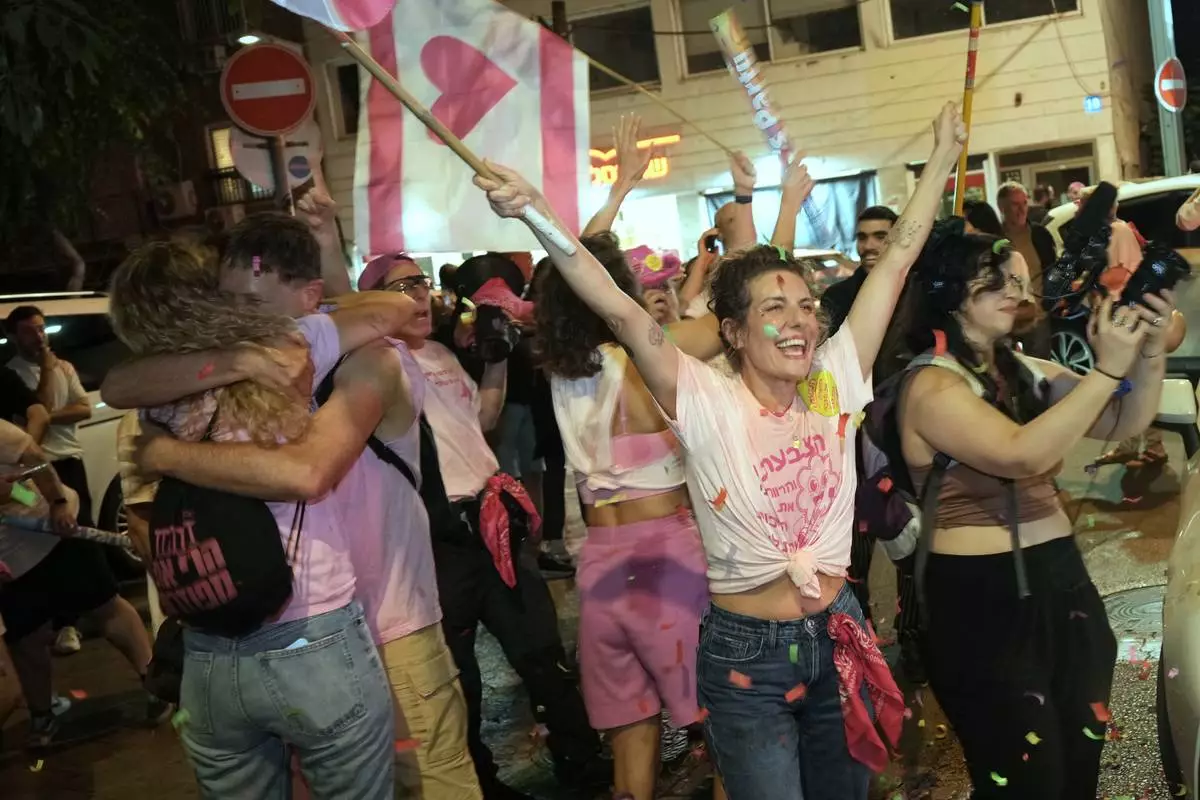
People embrace and wave flags amid falling confetti as they celebrate early exit poll results for Israel's general election in Tel Aviv, Israel, Tuesday, Oct. 27, 2026. (AP Photo/Oded Balilty)
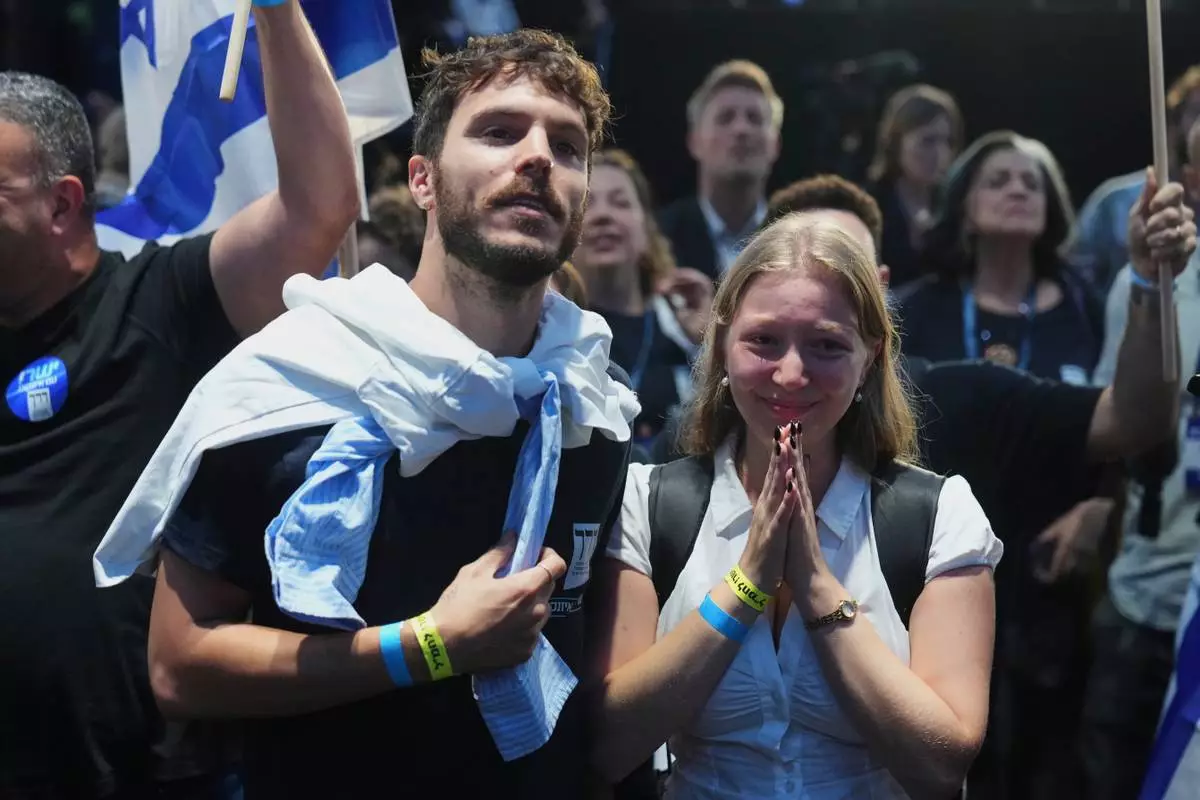
Supporters of Gadi Eisenkot, leader of the Yashar ("Straight") party, react after the release of the first exit poll results in Israel's general election in Tel Aviv, Tuesday, Oct. 27, 2026. (AP Photo/Ariel Schalit)
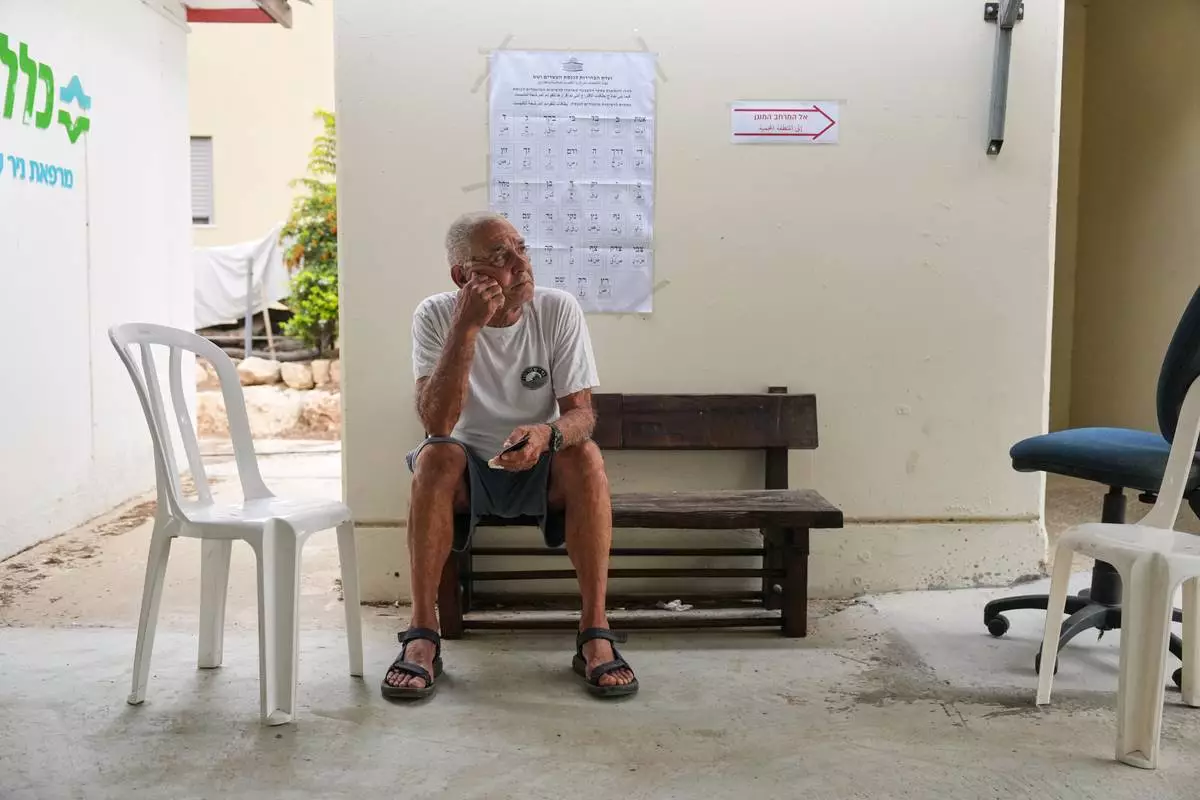
Former Israeli hostage Gadi Moses waits to cast his ballot during Israel's general election at a polling station in Kibbutz Nir Oz, southern Israel, Tuesday, Oct. 27, 2026. (AP Photo/Ariel Schalit)
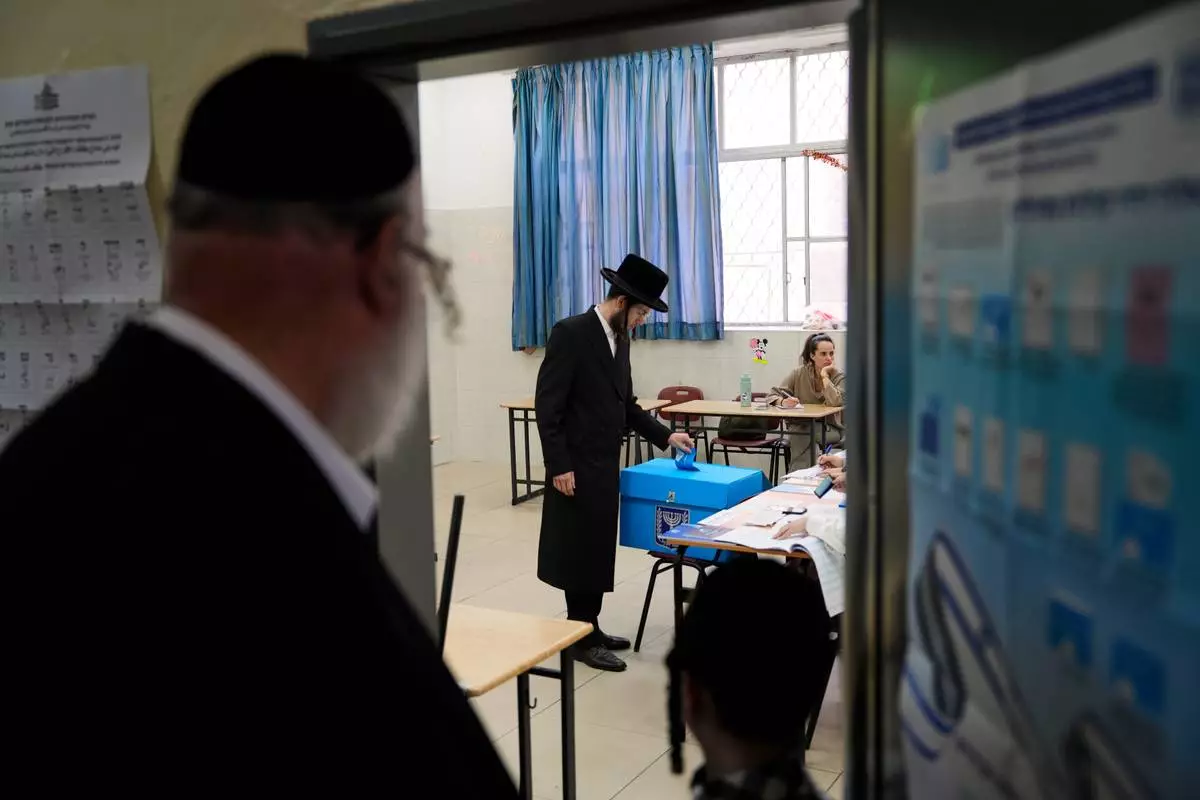
A man casts his ballot at a polling station during Israel's general election in Haifa, Israel, Tuesday, Oct. 27, 2026. (AP Photo/Baz Ratner)
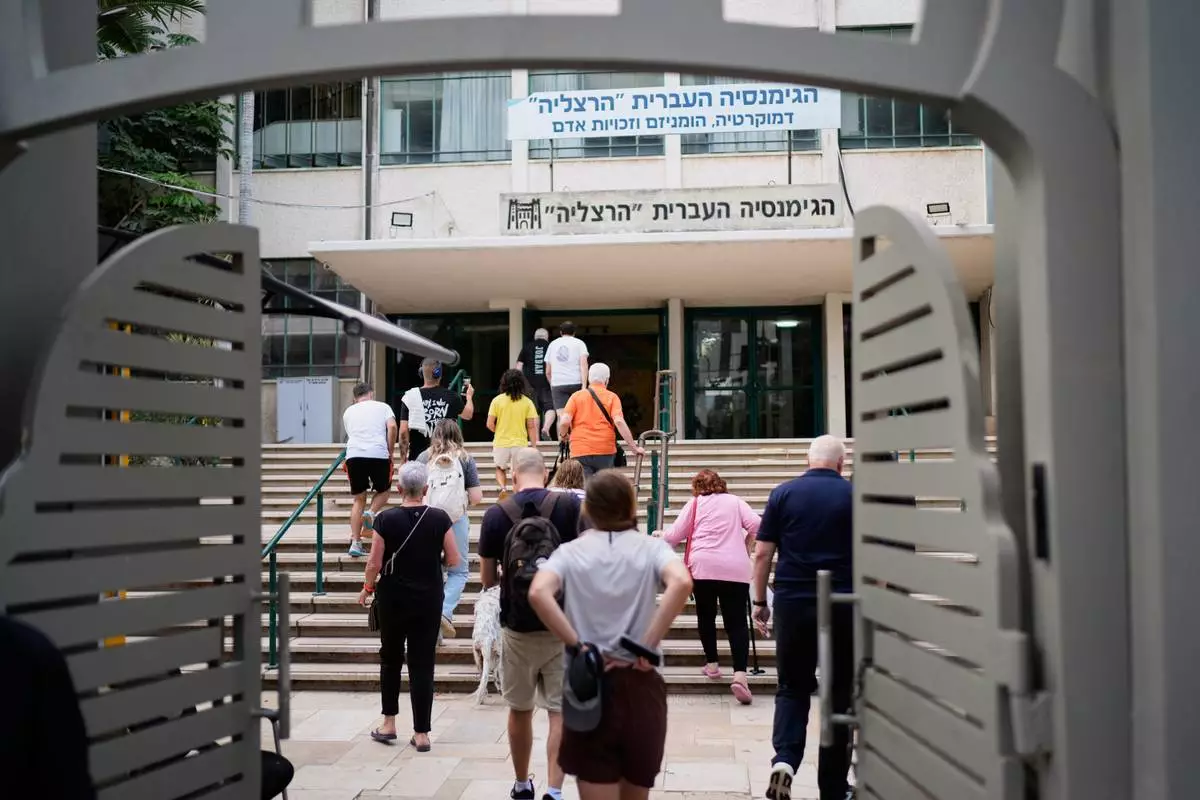
Voters arrive at a school used as a polling station during Israel's general election in Tel Aviv, Israel, Tuesday, Oct. 27, 2026. (AP Photo/David Goldman)
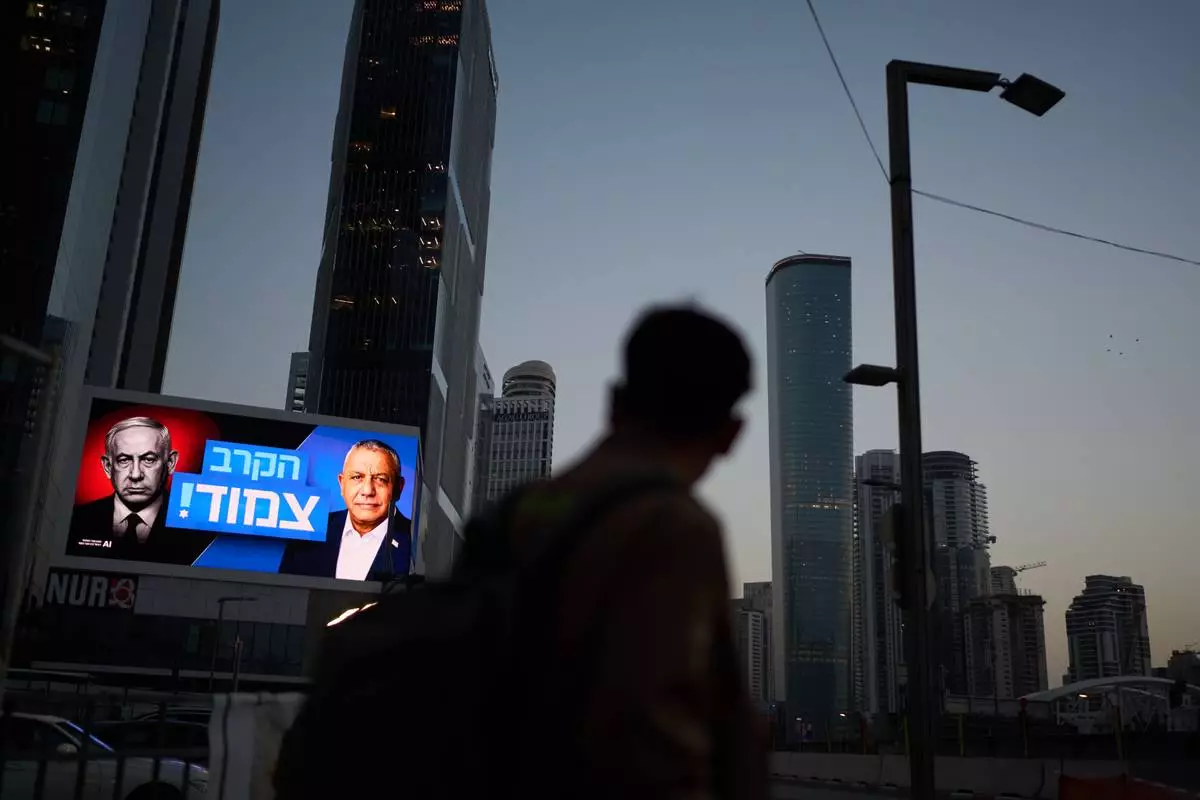
A pedestrian passes a campaign billboard featuring Israeli Prime Minister Benjamin Netanyahu, left, and his main rival, opposition candidate Gadi Eisenkot, with a message in Hebrew that reads "The race is tight," Friday, Oct. 23, 2026, in Tel Aviv, Israel. (AP Photo/David Goldman)
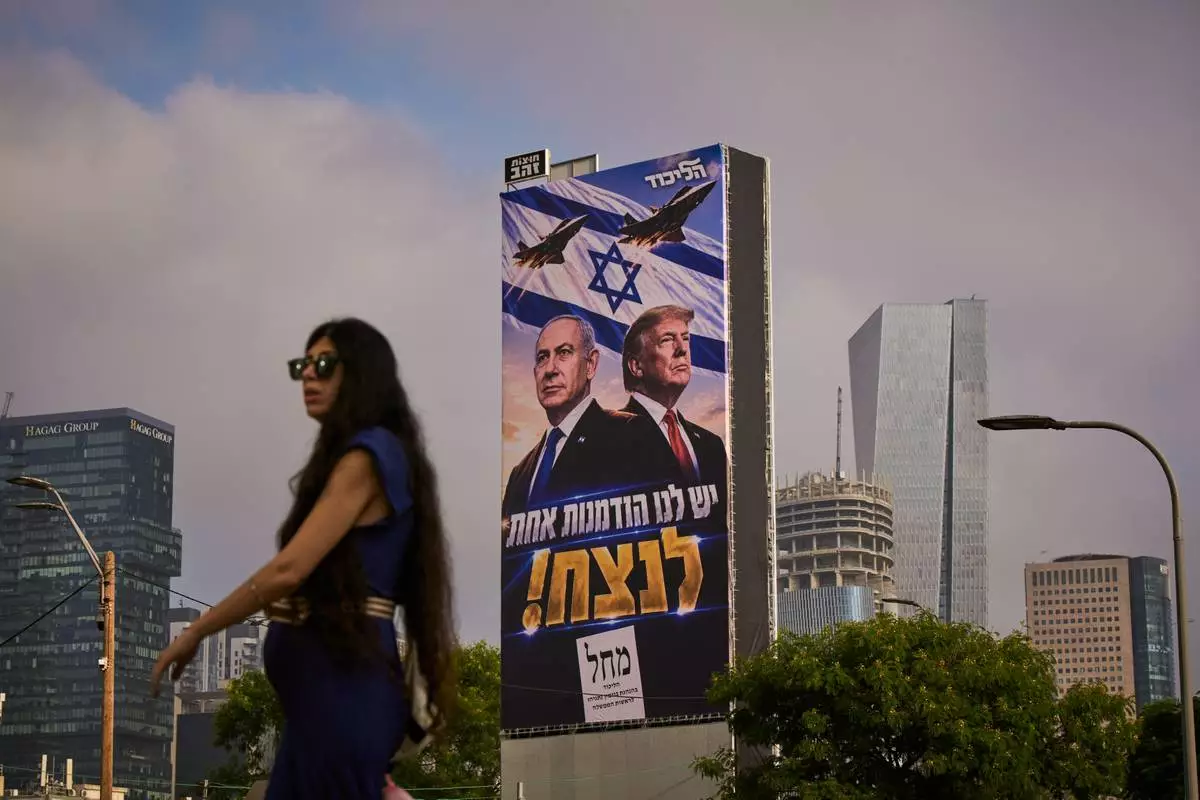
A woman walks past a Likud Party campaign billboard featuring U.S. President Donald Trump and Israeli Prime Minister Benjamin Netanyahu, with a Hebrew message reading, "We have one opportunity to win," in Tel Aviv, Israel, Monday, Oct. 26, 2026. (AP Photo/Oded Balilty)