The Environmental Protection Agency's response to the disastrous 2023 East Palestine train derailment will be investigated after local residents of the small town on the Ohio-Pennsylvania border and Vice President JD Vance pressed for the review.
The Inspector General of the EPA announced the investigation Tuesday to assess the agency's response to the worst rail disaster in more than a decade and the subsequent health and environmental concerns that have developed despite the EPA's assurances to the public that no toxic levels of chemicals lingered in the community weeks and months later.
An assortment of chemicals spilled and caught fire after the failed bearing sent the Norfolk Southern train careening off the tracks late one Friday night in February 2023. Residents evacuated as officials decided three days later to blow open five rail cars and burn the vinyl chloride inside.
The National Transportation Safety Board determined the “vent and burn” move that generated a massive black plume of smoke and sent chemicals drifting across several states was unnecessary. But at the time, the officials in charge of the emergency response worried the tank cars might explode and do even more harm.
Jami Wallace and other East Palestine residents have been pushing for this investigation — much like they pressed the EPA initially to test for whether cancer-causing dioxins were released in their hometown — so she said “I'm going to cry” when she heard the news. Since the derailment, Wallace has kept track of more than 80 people who live in the area and have developed cancer, although it's difficult to prove that every illness is directly linked to the derailment.
“It’s like we’ve had to push them along the way for every single thing they did, and then they didn’t even do it right,” said Wallace, who promised never to give up the fight. “We’re not going to stop when you poison our kids.”
The recent request from Vance and the head of the EPA helped get the investigation started. But multiple complaints from residents and whistleblowers have also been made in the years since the derailment.
The Inspector General's office said this investigation will determine whether the EPA fulfilled its responsibilities and whether the EPA had “sufficient data to support the agency's public communications” assuring residents they were safe to return home and live in the small town. Testing experts questioned whether the test data EPA shared with the public obscured the risks and whether the agency could determine just how dangerous it is to be exposed to this cocktail of chemicals. Health standards are generally based only on exposure to a single chemical.
Wallace said she's not sure how much good might come out of this investigation, but it will continue to put a bit of light on the lingering concerns around East Palestine.
“If nothing else, at least we’re getting attention again,” Wallace said. “And people know that we’re here and that we are not OK.”
Norfolk Southern agreed to a $600 million class action settlement with residents, but that money has been largely tied up in the courts and questions about the initial settlement administrator mishandling the funds. A group of residents has also sued because they argue the class action attorneys misled them and pressured them into signing the deal.
A separate federal settlement that includes a $15 million fine for the railroad and $55 million to pay for decades of medical exams and groundwater testing has been under review for more than two years without a judge approving it.
Norfolk Southern is seeking to merge with Union Pacific and create the nation's first transcontinental railroad. But that $85 billion deal still faces an extensive review by the Surface Transportation Board.
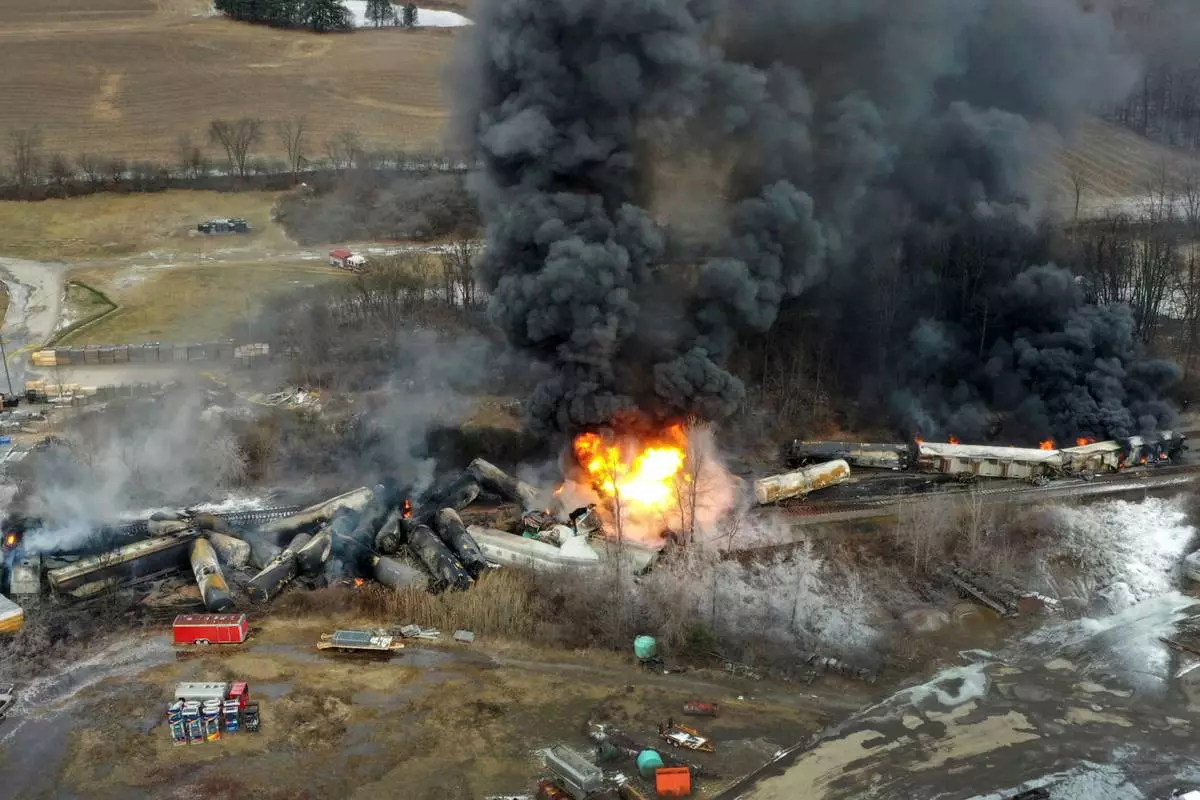
FILE - This photo taken with a drone shows portions of a Norfolk and Southern freight train, Feb. 4, 2023, that derailed in East Palestine, Ohio. (AP Photo/Gene J. Puskar, File)
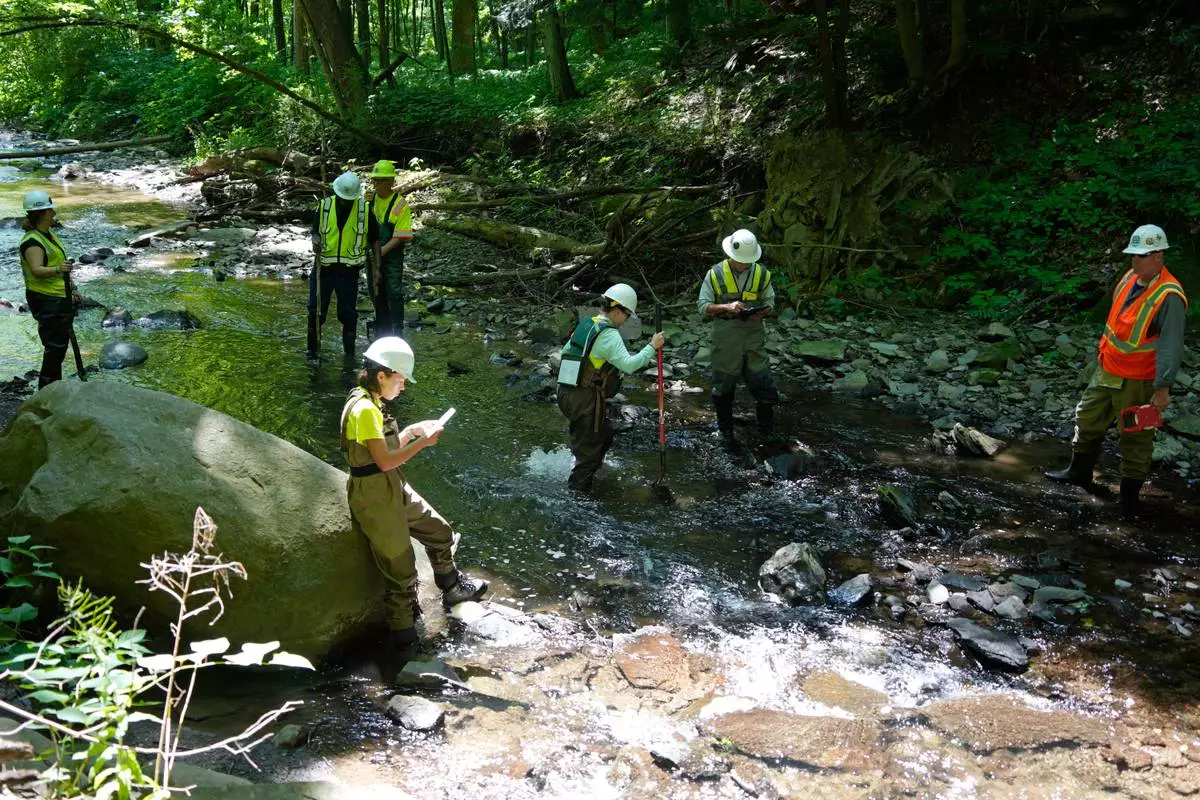
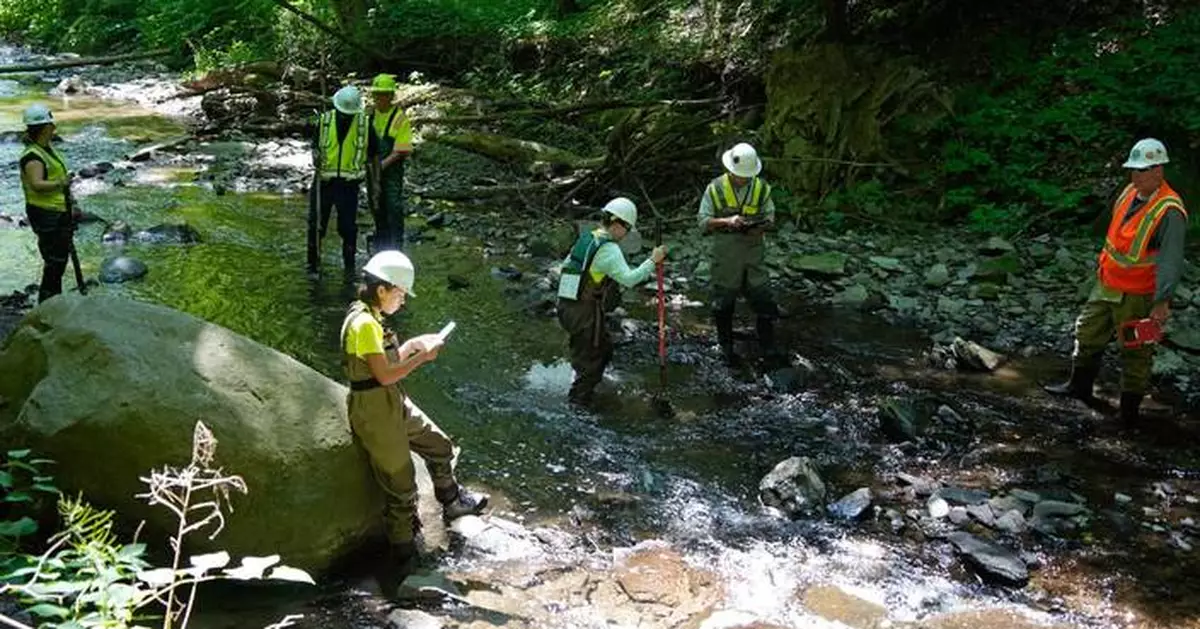
FILE - Environmental Protection Agency workers survey Leslie Run in East Palestine, Ohio, on June 12, 2024. (AP Photo/Gene J. Puskar, File)
PALO ALTO, Calif.--(BUSINESS WIRE)--Oct 28, 2026--
This press release features multimedia. View the full release here: https://www.businesswire.com/news/home/20261028854882/en/
The HTEC AI Value Realization Report 2026: Financial Services & Insurance, found that among FSI respondents currently pursuing AI adoption, 88% report increasing investment over the past 12 months. Forty-two per cent describe the increase as significant, compared with 28% across all industries. Yet 44% of FSI organizations are at the scaling stage or already AI-native, exactly the same proportion as the overall sample.
The findings suggest that high levels of investment alone are not translating into a sector-wide maturity advantage. Seventy-eight per cent of FSI respondents agree that people and processes limit the value organizations derive from AI more than technology does.
“ Financial institutions are investing heavily, but technology alone does not determine whether AI creates value,” said Philip Otley, Global Managing Partner at HTEC. “ Results depend heavily on what happens around the technology: how AI is integrated into workflows, who owns the outcome, and whether employees are equipped to use it consistently.”
Better decisions, not simply lower costs
The research also points to what FSI leaders want AI investment to deliver.
Better decision quality is the most desired outcome of AI investment, cited by 31% of executives, compared with 17% who prioritize cost reduction.
The finding reinforces the importance of being able to demonstrate value beyond traditional efficiency measures. Improvements in decision quality require credible baselines, trustworthy data, and evidence connecting AI-supported decisions to business outcomes.
However, the research shows significant differences in when organizations establish and assess financial returns. Thirty-four per cent require a formal ROI model before an AI initiative is approved, while 29% assess returns only after implementation.
Together, these findings indicate that defining and measuring value throughout the AI investment lifecycle remains an important part of the maturity challenge.
AI risk measurement remains inconsistent
The research identifies a parallel challenge around governance.
Forty-two per cent of FSI respondents consider AI risk informally alongside value, while only 16% measure risk consistently across their portfolios.
As AI becomes more deeply embedded into financial services workflows, HTEC believes appropriate oversight will become increasingly important, particularly where AI supports consequential decisions within regulated operations.
“ Not every AI-assisted decision requires the same level of oversight,” said Lawrence Whittle, Chief Strategy Officer at HTEC. “ The challenge is designing review processes that are proportionate to the risk involved, while ensuring that people have enough context and authority to exercise meaningful judgment when it matters.”
Organizations are also relying more heavily on external expertise
The research suggests that the complexity of moving AI beyond individual initiatives is also affecting how FSI organizations work with external partners.
21.5% of FSI respondents report greater dependence on external partners or consultants than they had anticipated, indicating that moving AI from isolated use cases towards enterprise-wide deployment increasingly requires strategy, data, engineering, and governance to work together. Multidisciplinary teams can work alongside internal stakeholders to connect these capabilities as use cases move from roadmap to production.
Turning investment into value
Taken together, the findings suggest that the next phase of AI adoption in financial services and insurance will depend not simply on deploying more technology, but on strengthening the conditions around it.
The research points towards five areas: clear business outcomes, trustworthy data, defined ownership, consistent measurement, and proportionate governance.
For HTEC, this also changes the role of technology partners. Financial institutions increasingly need strategy and engineering to connect with implementation and organizational change, together with the transparency, safeguards, and traceability required to understand how AI-supported decisions were reached and whether they delivered the intended outcome.
About the Research
The findings are based on responses from 235 financial services and insurance C-suite executives within a global survey of 1,500. The research was commissioned by HTEC and conducted by Censuswide in July 2026.
The full HTEC AI Value Realization Report 2026: Financial Services & Insurance is available at https://htec.com/insights/reports/the-htec-ai-value-realization-report-2026-financial-services-insurance/.
About HTEC
HTEC Group Inc. HTEC is a global technology and engineering company that helps organizations build AI capabilities from silicon to outcomes. HTEC helps its customers build an adaptive, vendor-agnostic AI stack designed to evolve as technologies, models, and platforms change.
Through its forward-deployed model, HTEC works alongside customer’s teams to connect AI to business strategy and create a repeatable capability consistently and faster each time. OneLoopAi is at the heart of this approach and brings greater transparency in measuring progress and continuously improves how AI is developed and deployed. The result is a stronger path from AI investment to measurable business value and AI at scale.
With more than 15 years of experience working with AI and machine learning, HTEC combines deep engineering expertise with strategy, product, design, and data capabilities to turn AI ambition into production.

HTEC, the global AI technology and engineering leader, today released its research on AI Value realization in financial services and Insurance. Organizations in this sector are increasing AI investment more aggressively than the wider market, but the sector has yet to establish a corresponding lead in AI maturity, according to new research from HTEC.