Skip to Content Facebook Feature Image

Blue Arbor Technologies Raises $10.5 Million Series A Led by Ottobock

Business

Blue Arbor Technologies Raises $10.5 Million Series A Led by Ottobock
Business

Business

Blue Arbor Technologies Raises $10.5 Million Series A Led by Ottobock

2026-10-28 21:07 Last Updated At:21:20

ANN ARBOR, Mich.--(BUSINESS WIRE)--Oct 28, 2026--

Blue Arbor Technologies, Inc., a company developing novel neuromuscular interfaces and next-generation prosthetic control solutions for people with limb loss, today announced the close of its $10.5 million Series A financing round. The Series A was led by Blue Arbor’s strategic partner Ottobock, the global leader in prosthetics, neuro-orthotics, and wearable human bionics.

This press release features multimedia. View the full release here: https://www.businesswire.com/news/home/20261028723707/en/

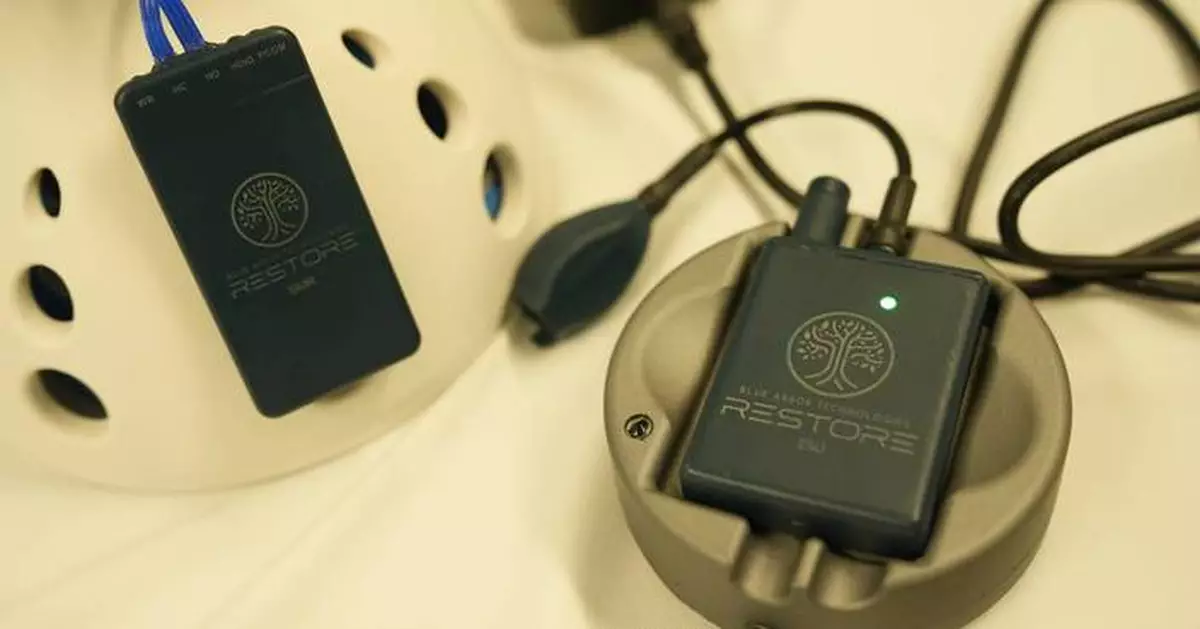
The financing will be used to fuel progress on the RESTORE™ Neuromuscular Interface System, a first-of-its kind platform that has the potential to fundamentally transform how people with limb loss control their prosthetic devices. Proceeds will be used to complete feasibility studies and to pursue FDA Investigational Device Exemption (IDE) to support clinical studies in the U.S. for the RESTORE™ ESU. In tandem, Blue Arbor will also begin development of the RESTORE™ ISU.

“Blue Arbor’s technology has the potential to set a new standard in prosthetic control,” said Oliver Jakobi, Chief Executive Officer of Ottobock. “This investment reflects our approach to deploying capital in areas that complement our core business and offer significant long-term growth potential. Together, we aim to translate pioneering research into scalable solutions that deliver meaningful value for people with limb loss.”

The RESTORE™ System is designed to enable independent and simultaneous control of the fingers, wrist, and elbow, unlocking levels of dexterity, speed, and reliability that approach natural limb movement and provide unparalleled control of today’s most advanced prostheses. Blue Arbor is developing two versions: an external sensing unit (ESU) interface and a fully implantable, next-generation internal sensing unit (ISU) interface that seamlessly integrates into the RESTORE™ System platform.

"This funding is a testament to the team, the science, and the patients driving this work,” said Tod Borton, Chief Executive Officer of Blue Arbor Technologies. “With two successful human implantations thus far, we are looking forward to helping more patients through our collaboration with Ottobock. This is a pivotal moment for Blue Arbor and for the field of prosthetic control — we are closing the gap between where the technology is today and where it needs to be for the millions of people living with limb loss."

Feasibility studies continue to advance, highlighted by a successful second-in-human procedure using the RESTORE™ ESU at the Medical University of Vienna, one of Europe's foremost centers for reconstructive and prosthetic surgery.

“We have been extremely impressed with the results of these initial surgeries, particularly how quickly and naturally patients have adapted to the technology," said Prof. Oskar Aszmann, Director of the Center for Bionic Extremity Reconstruction, Medical University of Vienna. “As doctors, it is our onus to provide solutions to improve our patients’ lives and with the RESTORE System we have been able to bring intuitive hand movement back to those who never thought they’d experience it again.”

Blue Arbor's RESTORE™ System technology was recently selected to support a clinical study led by the University of Michigan, funded by a UG3 grant from the National Institutes of Health. The study will compare the effectiveness of surface electrodes against implanted electrodes for prosthetic control. The RESTORE™ System received FDA Breakthrough Device Designation and has been accepted into the FDA’s Total Product Life Cycle (TPLC) Advisory Program (TAP) Pilot.

For more information about the RESTORE™ System and Blue Arbor Technologies, please visit https://bluearbortech.com.

About Blue Arbor Technologies

Blue Arbor Technologies is a medical device company devoted to the development of next-generation robotic control systems for people with limb loss so they can intuitively, accurately, and reliably control a prosthetic device with unparalleled degrees of freedom. The RESTORE™ System is a neuromuscular interface system that provides a direct connection between the patient’s peripheral nervous system and their robotic prosthetic limb. Blue Arbor Technologies is a privately held company located in Grass Lake, Michigan. For more information, please visit https://bluearbortech.com and connect on LinkedIn, Instagram, YouTube, and Facebook.

Legal Notice

This press release is for informational purposes only and does not constitute an offer to sell or a solicitation of an offer to buy any securities of the company, nor shall there be any sale of securities in any jurisdiction in which such offer, solicitation or sale would be unlawful prior to registration or qualification under the securities laws of any such jurisdiction. Any offer or sale of the company’s securities, if made, will be made only pursuant to an applicable exemption from registration under the U.S. Securities Act of 1933, as amended, and in accordance with applicable securities laws. This press release contains forward-looking statements, including, but not limited to, statements regarding the development, clinical and regulatory plans, potential benefits, safety and efficacy of the RESTORE™ Neuromuscular Interface System, the anticipated timing and design of current and future clinical trials, the company’s business strategy and plans, and the company’s financing and partnership activities. Forward-looking statements are based on management’s current expectations and involve inherent risks and uncertainties that could cause actual results to differ materially from those expressed or implied by such statements, including, without limitation, risks related to clinical development, regulatory review and approval, product safety, market acceptance, reimbursement, competition, intellectual property, and the company’s ability to raise additional capital on acceptable terms or at all. Forward-looking statements speak only as of the date of this press release, and the company undertakes no obligation to update any forward-looking statements contained herein, whether as a result of new information, future events or otherwise, except as required by applicable law. The RESTORE™ Neuromuscular Interface System is an investigational device and is not approved or cleared by the U.S. Food and Drug Administration or any other regulatory authority for commercial distribution in any jurisdiction.
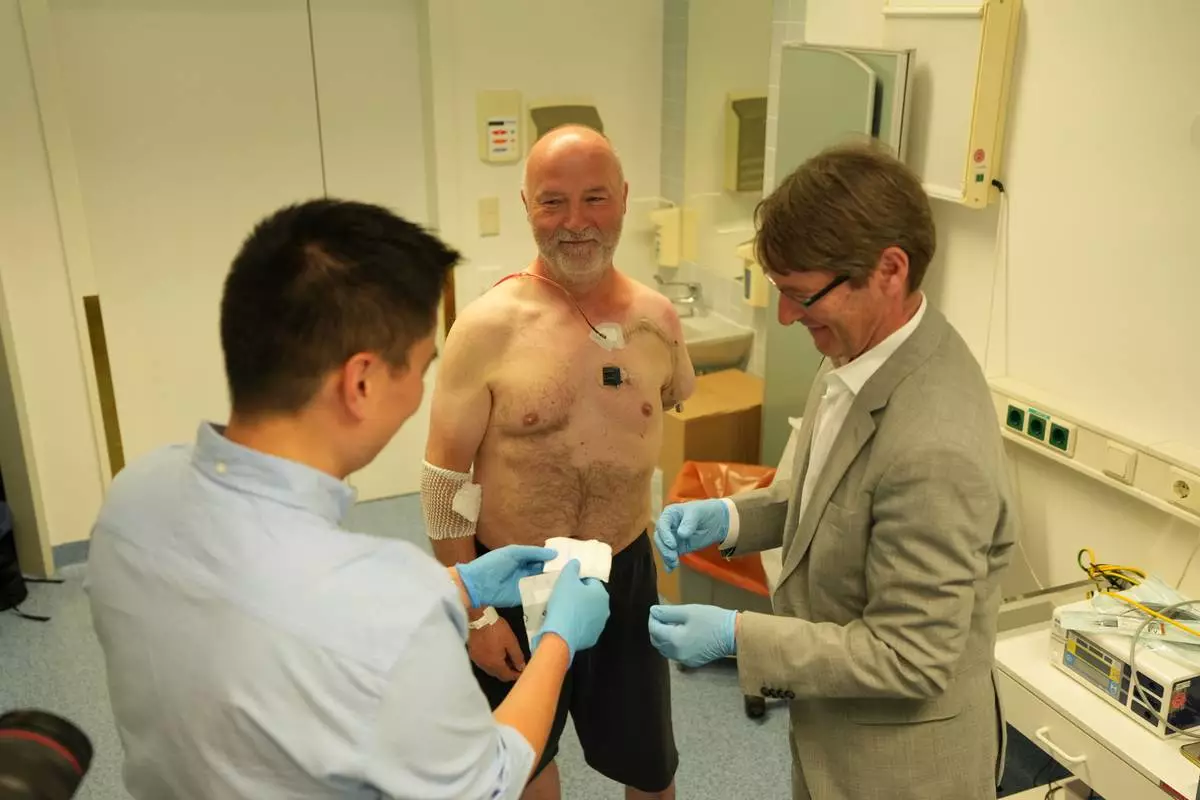
Blue Arbor Technologies' President Dr. Paul Cederna and CMO Dr. Theodore Kung calibrate the RESTORE™ System ahead of connecting the patient's Ottobock prosthetic. Photo Credit: Ottobock/Blue Arbor Technologies
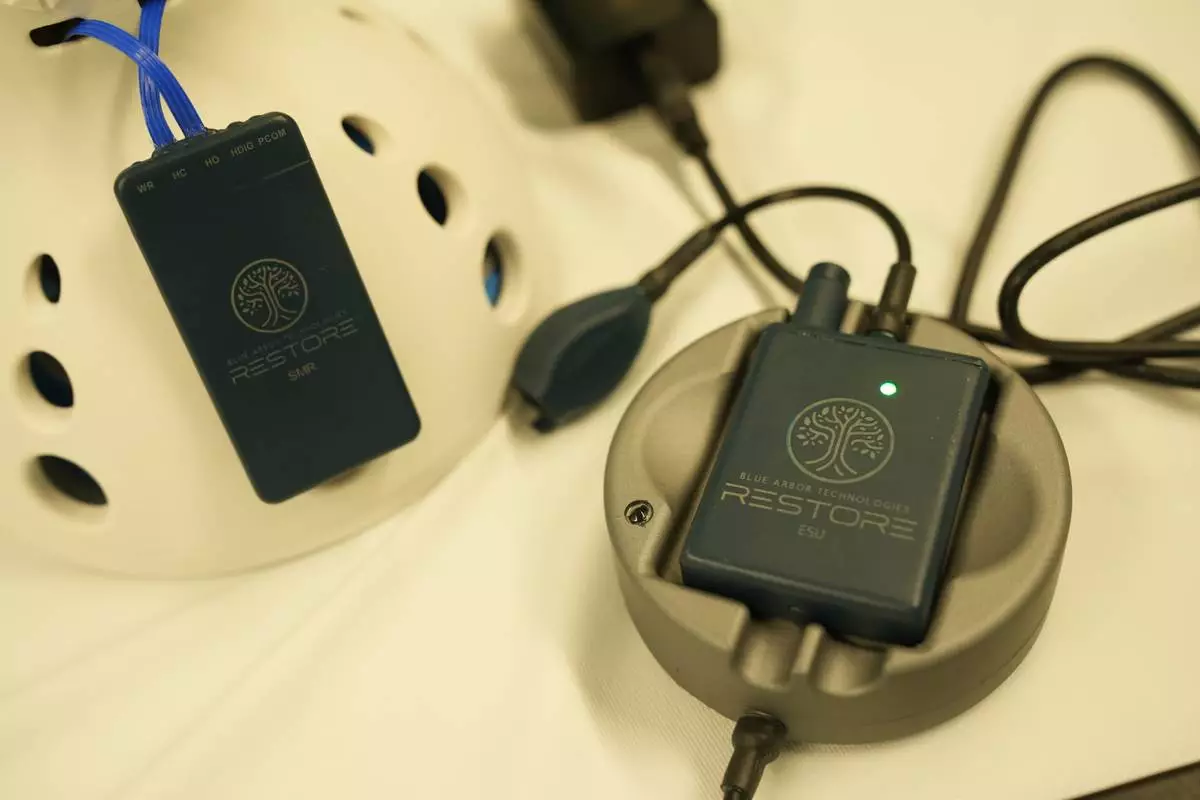
Blue Arbor Technologies' President Dr. Paul Cederna and CMO Dr. Theodore Kung calibrate the RESTORE™ System ahead of connecting the patient's Ottobock prosthetic. Photo Credit: Ottobock/Blue Arbor Technologies

Blue Arbor Technologies raises $10.5M Series A, led by Ottobock, to advance RESTORE™ System feasibility testing, U.S. clinical studies, and product development. Photo Credit: Ottobock/Blue Arbor Technologies

Blue Arbor Technologies raises $10.5M Series A, led by Ottobock, to advance RESTORE™ System feasibility testing, U.S. clinical studies, and product development. Photo Credit: Ottobock/Blue Arbor Technologies
URDA, Spain (AP) — A high-speed train slammed into the rear of another train that had stopped, derailing two cars and killing at least 64 people on Wednesday in central Spain, authorities said.

The central government’s office for Castilla La Mancha confirmed the death toll had risen.

The regional president of Castilla La Mancha, Emiliano García-Page, had said at least 80 people were injured and that the death toll “will surely rise” as rescue workers continue to search in the wreckage for survivors and bodies.

It was the second major train accident in Spain this year.

Spain’s rail system operator ADIF said the crash occurred Wednesday morning in the province of Toledo. The accident was between two high-speed trains carrying hundreds of passengers and heading in the same direction from the capital Madrid to Seville in southwestern Spain, according to Esther Padilla, spokesperson for the Castilla La Mancha region.

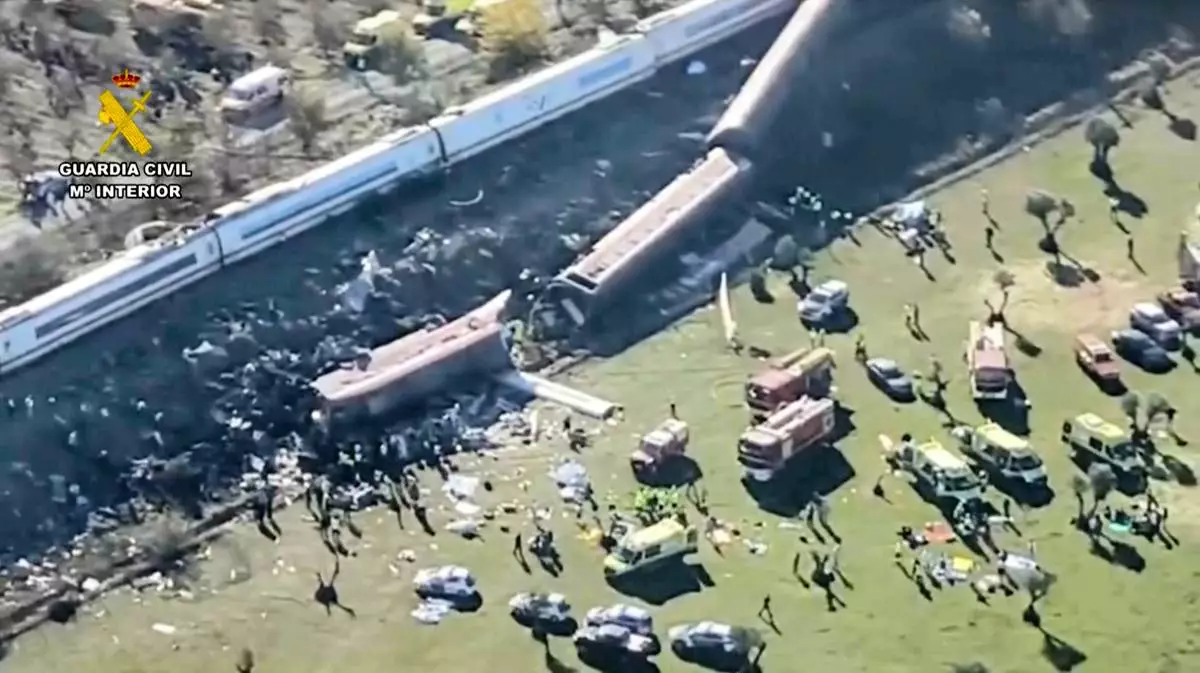
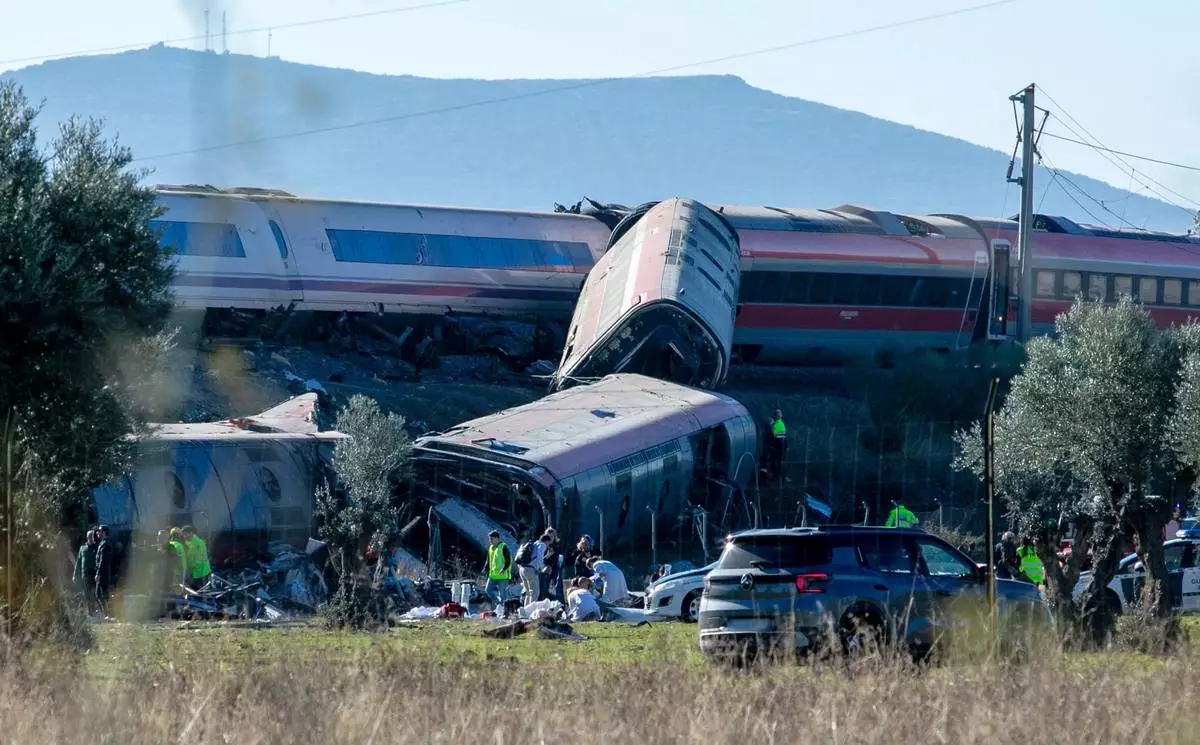
One ran into the tail of the other that had stopped, knocking two of its cars off the track.

Padilla said that the cause of the crash was not known. Rail service was suspended between Madrid, Ciudad Real and Andalusia.

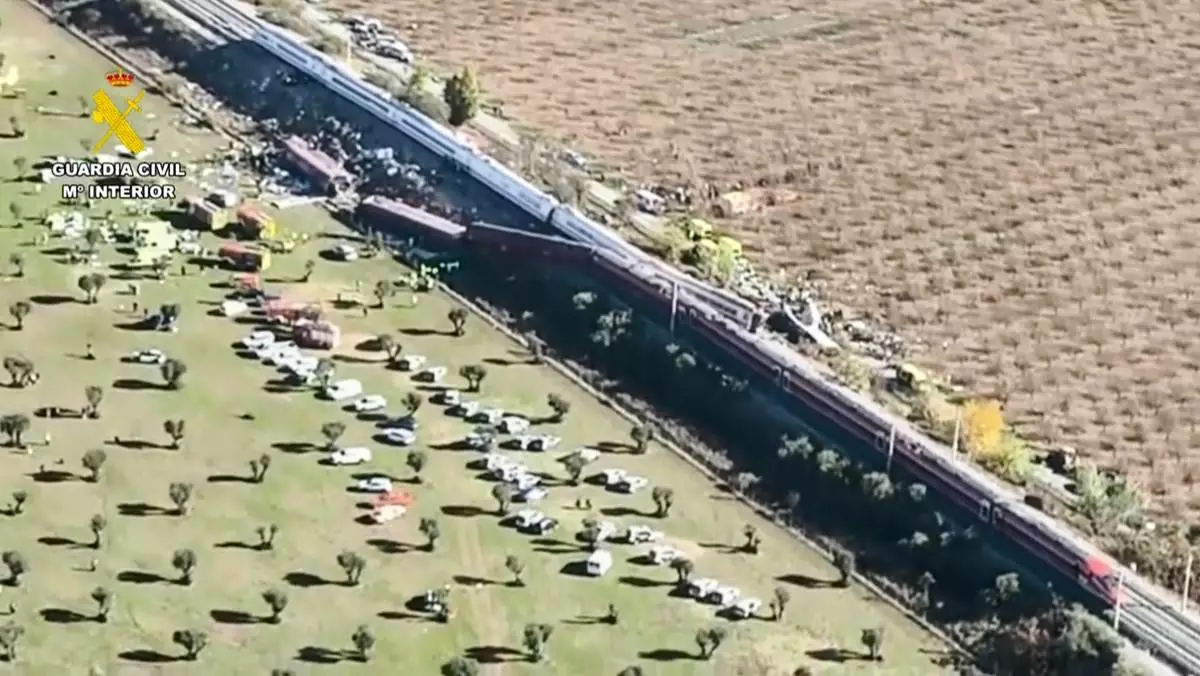
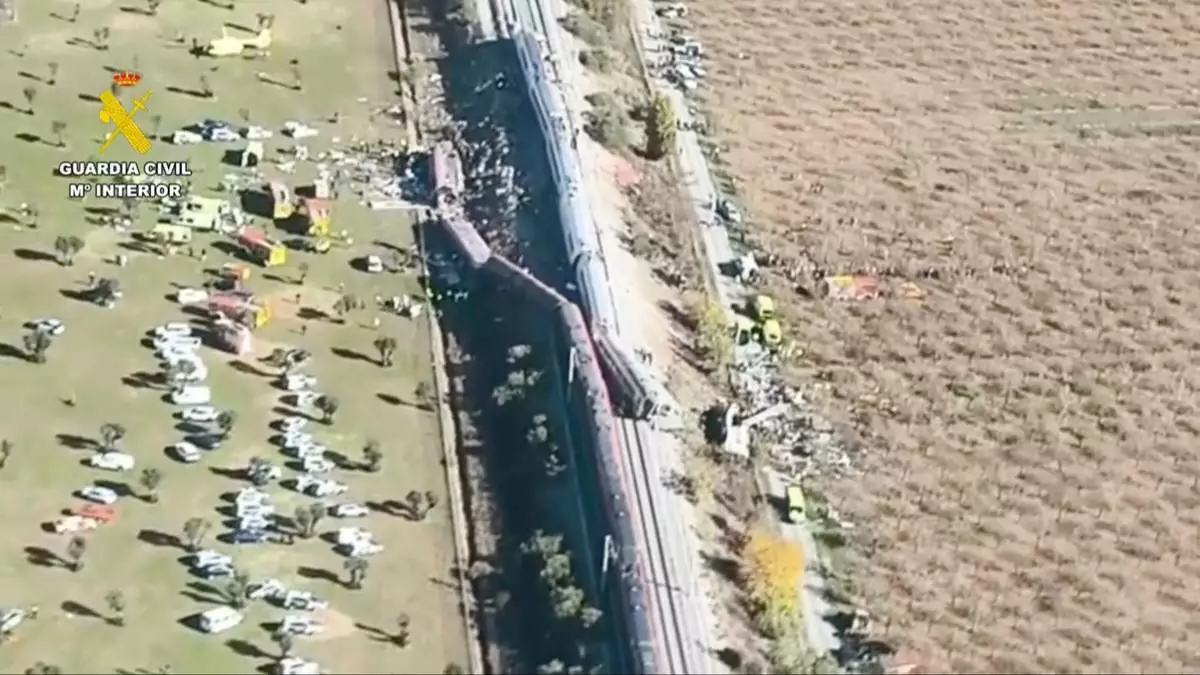
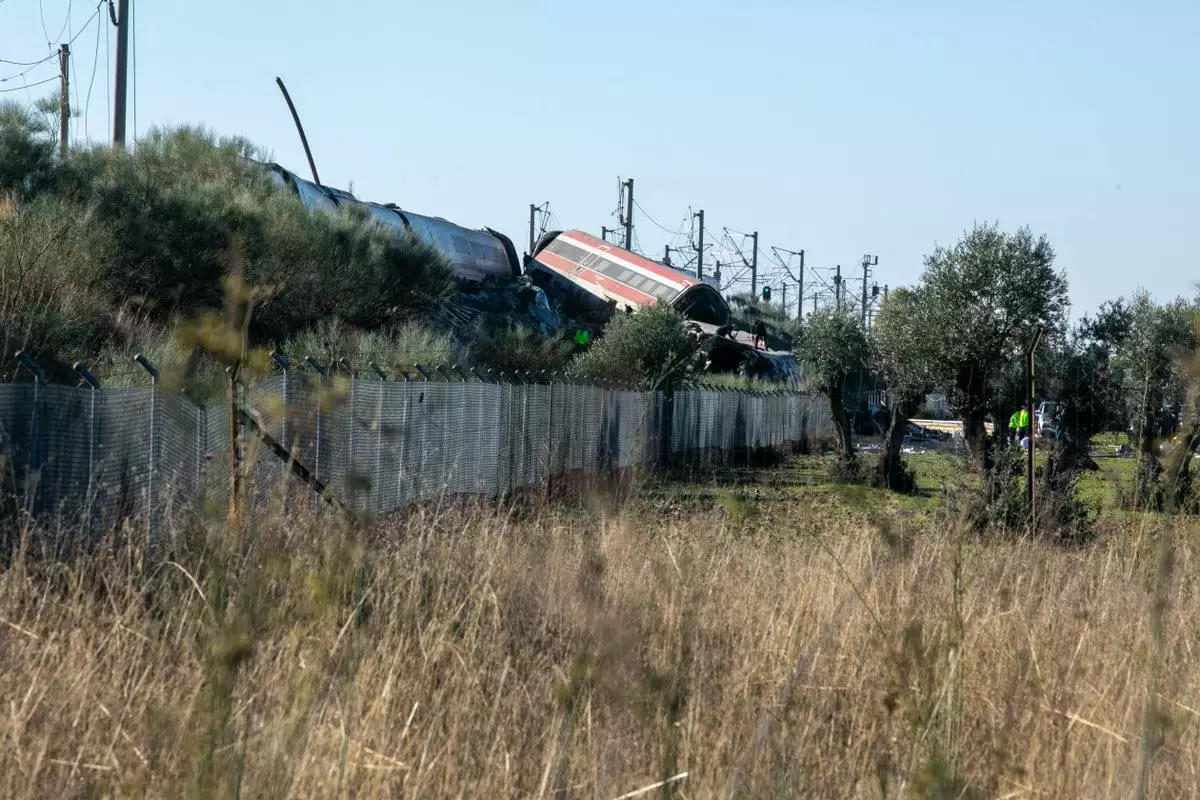
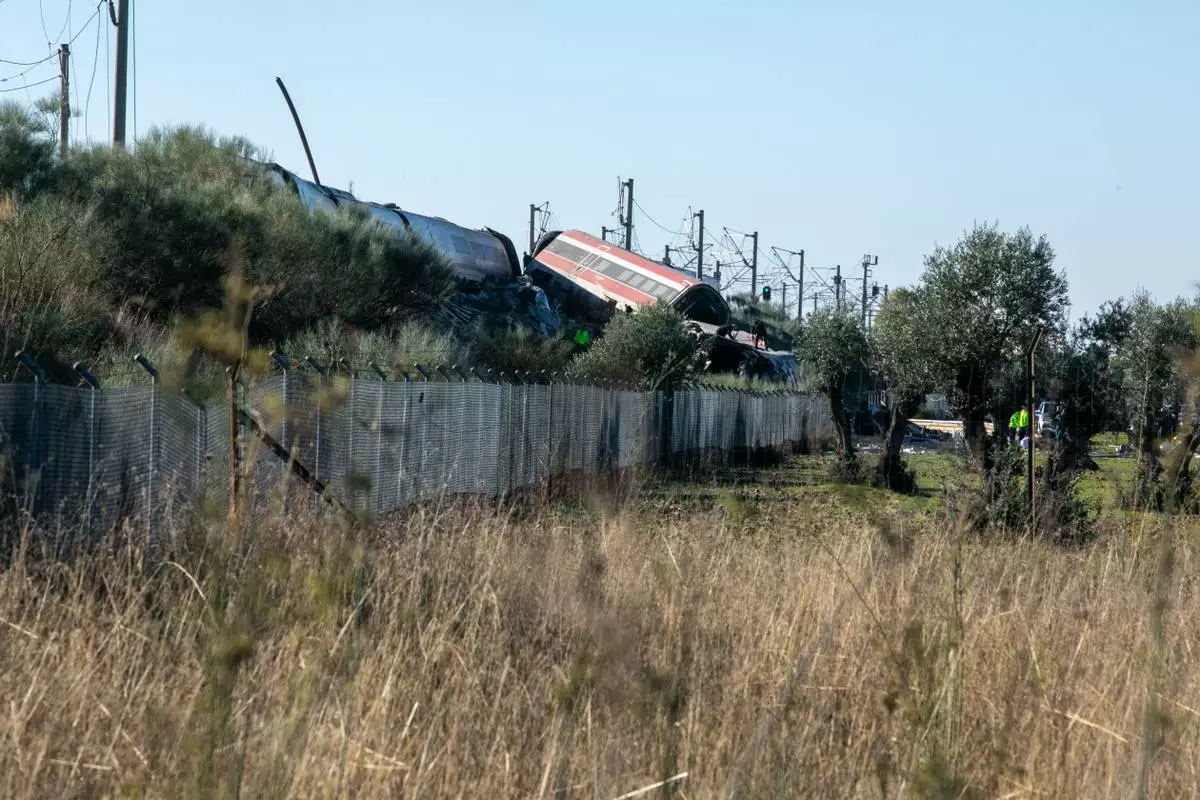
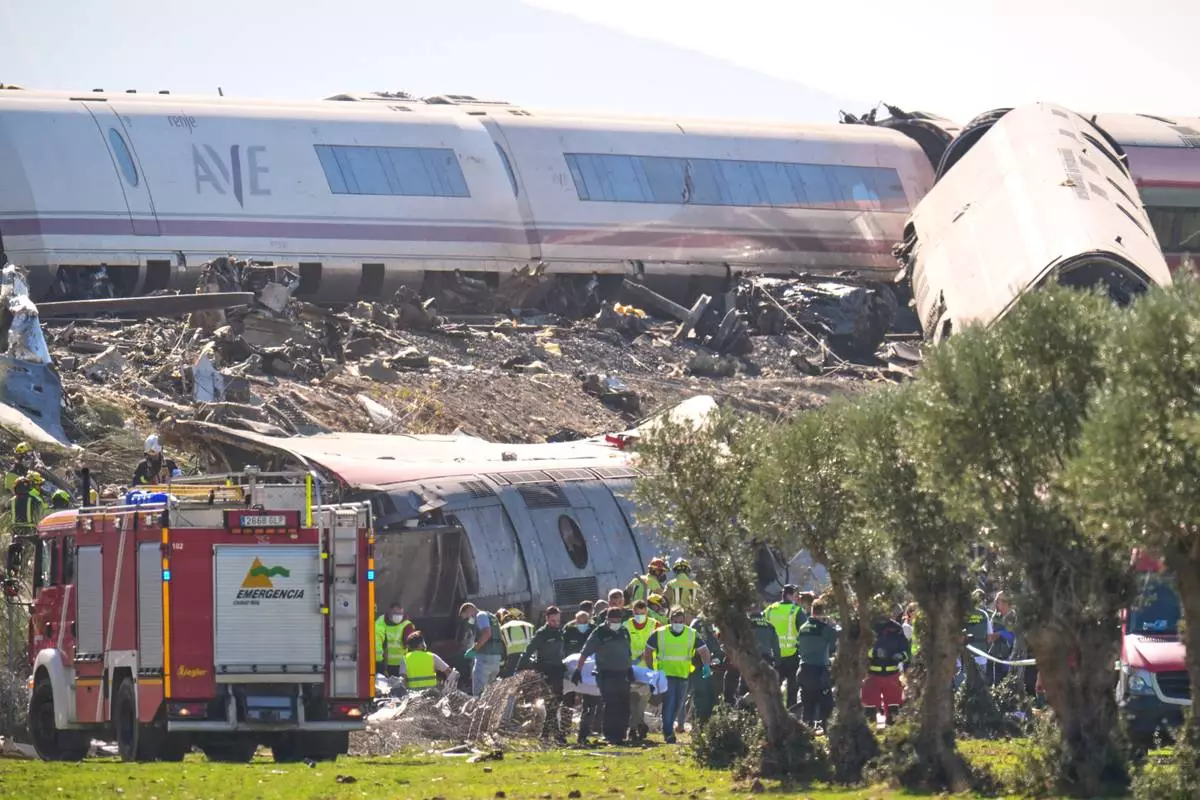
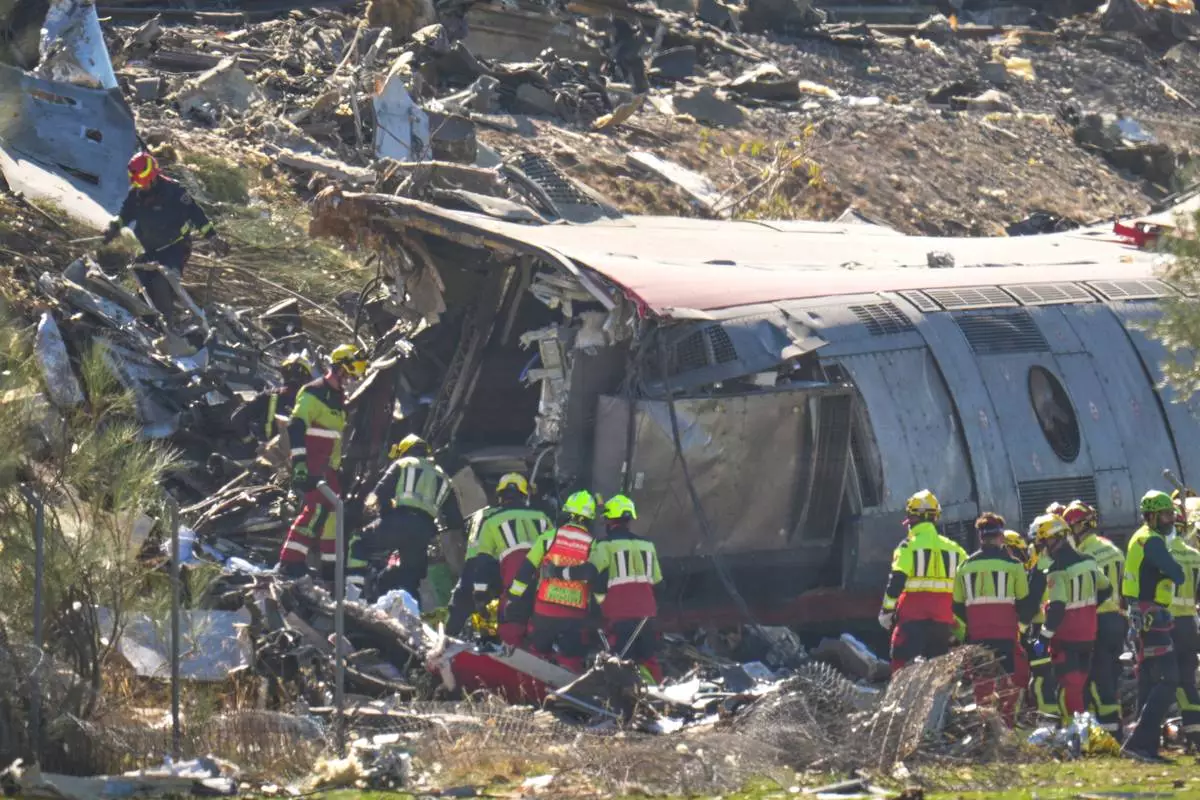
The crash, which occurred in a flat stretch surrounded by olive fields in between the towns of Urda and Los Yébenes, left one car shredded into bits of metal and other material, scattering debris down a gravel slope.

Spanish Health Minister Mónica García said that emergency workers were focusing on rescuing survivors and bodies from the two most damaged train cars. She said that the injured are being sent to different hospitals in the area.

“It was a high-speed impact, so we are expecting this to be a tragedy,” García said.

The accident involved a train from Spain’s state-owned RENFE company and the private rail company IRYO. It appeared the RENFE train rammed the IRYO train, Spanish media reported. García-Page said 24 died in the RENFE train, and six in the IRYO one.

Padilla said that 397 passengers were in the RENFE train and 147 passengers in the IRYO train.

Trains from those two companies were also involved in a deadly crash in January.

IRYO, an Italian-owned company, said in a statement that it has “activated its security protocols and is closely working with authorities.”

The mayor of the nearby town of Urda, Manuel Galán, told state broadcaster TVE that civil protection authorities had asked his town hall to prepare a sports pavilion to attend to injured passengers.

A military emergency brigade was deployed to help emergency services, firefighters and police. Ambulances and medical helicopters made trips to and from the site, while unscathed survivors were put on buses.

Spanish Prime Minister Pedro Sánchez canceled his agenda to focus on the crash. He wrote on X that he was “dismayed by the serious train accident in Toledo.”

“Emergency services are working on site to attend to the affected passengers,” wrote Sánchez, who faces a national election next month. “All my thoughts are with the victims and their families.”

Spain’s King Felipe VI and Queen Letizia said in a short statement on X that they were following news of the accident.

“We are deeply saddened and concerned by the train accident in Urda (Toledo),” the royal couple said. “We share in the grief of the families and loved ones of those who lost their lives, and we send our heartfelt support to the injured and all those affected.”

European Commission President Ursula von der Leyen said “My heart goes out to the victims’ families and loved ones. Today, Europe mourns with you.”

Spain's soccer federation postponed all 24 Copa del Rey games scheduled on Wednesday.

The wreckage of Wednesday’s crash reminded many of the aftermath of another train collision in January, when 45 people died in southern Spain when a IRYO train jumped the track and hit an oncoming RENFE train. That sent the first two cars of the impacted train plummeting down a four-meter (13-foot) slope.

That crash was the deadliest in Spain since a 2013 crash that killed 80 people.

The January incident shook confidence in the European country's extensive high-speed rail service.

Over recent decades, Spain has invested heavily in high-speed rail — which the country’s railway union defines as rails for trains going 250 kph (155 mph) and over — turning it into a world leader.

Spain has laid some 3,900 kilometers (2,400 miles) of such tracks over more than three decades for its 49 million residents. Only China, with 45,000 kilometers (28,000 miles) for its 1.4 billion people, has more high-speed track, according to the International Union of Railways.

Only recently did Spain open its rail network to private companies to compete against RENFE. IRYO started operating in Spain in 2022.

A spokesperson for Spain’s train workers’ union, Joan Rodríguez, said that the increased traffic brought by privatization has put extra strain on rail infrastructure.

“We are not convinced that the liberalization of the high-speed passenger rail service was matched by the necessary upkeep of the lines,” Rodríguez told TVE. “I am not saying it was a determining factor (in the crashes), but yes, the increase in use of the network is a factor to keep in mind.”

Wilson reported from Barcelona, Spain.

Emergency services work at the scene of a collision between two trains in Urda, Spain, Wednesday, Oct. 28, 2026. (AP Photo/Manu Fernandez)

Emergency services work at the scene of a collision between two trains in Urda, Spain, Wednesday, Oct. 28, 2026. (AP Photo/Manu Fernandez)

Emergency services work at the scene of a collision between two trains in Urda, Spain, Wednesday, Oct. 28, 2026. (AP Photo/Manu Fernandez)

Emergency services work at the scene of a collision between two trains in Urda, Spain, Wednesday, Oct. 28, 2026. (AP Photo/Manu Fernandez)

This framegrab taken from a video provided by Guardia Civil shows an aerial view of carriages and first responders on the site of a collision between two trains in Urda, Spain, Wednesday Oct. 28, 2026. (Guardia Civil via AP)

This framegrab taken from a video provided by Guardia Civil shows an aerial view of carriages and first responders on the site of a collision between two trains in Urda, Spain, Wednesday Oct. 28, 2026. (Guardia Civil via AP)

This framegrab taken from a video provided by Guardia Civil shows an aerial view of carriages and first responders on the site of a collision between two trains in Urda, Spain, Wednesday Oct. 28, 2026. (Guardia Civil via AP)

This framegrab taken from a video provided by Guardia Civil shows an aerial view of carriages and first responders on the site of a collision between two trains in Urda, Spain, Wednesday Oct. 28, 2026. (Guardia Civil via AP)

This framegrab taken from a video provided by Guardia Civil shows an aerial view of carriages and first responders on the site of a collision between two trains in Urda, Spain, Wednesday Oct. 28, 2026. (Guardia Civil via AP)

This framegrab taken from a video provided by Guardia Civil shows an aerial view of carriages and first responders on the site of a collision between two trains in Urda, Spain, Wednesday Oct. 28, 2026. (Guardia Civil via AP)

Emergency services attend to the victims at the scene of a collision between two trains in Urda, Spain, on Wednesday, Oct. 28, 2026. (Juanma Jiménez/Europa Press via AP)

Emergency services attend to the victims at the scene of a collision between two trains in Urda, Spain, on Wednesday, Oct. 28, 2026. (Juanma Jiménez/Europa Press via AP)

The scene of a collision between two trains in Urda, Spain on Wednesday, Oct. 28, 2026. (Juanma Jimenez/Europa Press via AP)

The scene of a collision between two trains in Urda, Spain on Wednesday, Oct. 28, 2026. (Juanma Jimenez/Europa Press via AP)

The scene of a collision between two trains in Urda, Spain on Wednesday, Oct. 28, 2026. (Juanma Jimenez/Europa Press via AP)

The scene of a collision between two trains in Urda, Spain on Wednesday, Oct. 28, 2026. (Juanma Jimenez/Europa Press via AP)

Recommended Articles