Wendy’s shares jumped 15% at the opening bell Wednesday after noted investor Nelson Peltz made an offer to buy the chain, which has been struggling with high beef prices and aging stores.
Peltz’s Trian Fund Management and several partners are offering Wendy’s $7.35 per share in cash, or a premium of nearly 19% over the stock’s closing price on Tuesday, in a deal that would take the company private.
Wendy's, which is based in Dublin, Ohio, declined to comment Wednesday. At the end of last year, Wendy's had 5,969 restaurants in the U.S. and 1,428 outlets in 38 countries.
Wendy's, founded in 1969 by Dave Thomas and named after his daughter, is known for its square burgers and Frosty desserts. The fast-growing chain introduced the drive-thru window in 1970 and went public in 1976. In the 1980s, as it jockeyed for sales with McDonald's and Burger King, Wendy's launched salad bars and ran its iconic “Where's the beef?” ad campaign.
But as the fast-food market grew even more competitive and rival burger-focused chains like In-N-Out and Five Guys expanded, Wendy's fell behind. Wendy's share of U.S. burger chain sales fell from 11.5% in 2019 to 10.4% last year, according to Technomic, a market research company.
In recent years, inflation has also hurt Wendy's and other U.S. fast-food chains, who have seen traffic from lower-income consumers fall as they raised prices to combat rising labor, food and packaging costs.
Wendy's has been closing outdated U.S. restaurants so it can focus on its more profitable locations. The company closed 240 restaurants in 2024 and said earlier this year that it planned to shutter up to 358 locations this year.
Then, last month, one of the largest U.S. franchisees for Wendy’s filed for bankruptcy protection after the chain tried to terminate its franchise agreement. Michigan-based Meritage Hospitality Group operates 314 Wendy’s restaurants in 15 states.
In a letter to the company’s board of directors, Peltz said going private “will deliver the best outcome for the broader stakeholder base.”
“Wendy’s sits at a critical juncture," Peltz wrote. "The external environment has become increasingly challenging given the significant pressures on the U.S. consumer, economic uncertainty, persistent commodity inflation and intensifying competition, particularly within the QSR (quick service restaurant) burger category."
Peltz has invested in companies from Procter & Gamble and Disney to DuPont. According to a regulatory document filed Wednesday, Trian’s stake in Wendy’s totals 16.3%.
Peltz considered a take-private bid for Wendy's in 2022 but told the company in January 2023 that he had decided against it, citing its improved business momentum, according to TD Cowen analyst Andrew Charles.
Charles said an independent special committee is expected to evaluate the proposal and both parties have entered into a confidentiality arrangement.
“In our view, a take-private makes sense as Wendy’s turnaround is likely to be prolonged given the challenged state of the lower-income consumer and soft state of the quick service burger category,” Charles wrote Wednesday in a note to investors.
Wendy's is scheduled to report its quarterly financial results next week. Analysts expect the company to post earnings of 9 cents per share on sales of $531 million, according to FactSet.
Shares rose 88 cents to $7.01 Wednesday. They have fallen 26% since the start of this year.
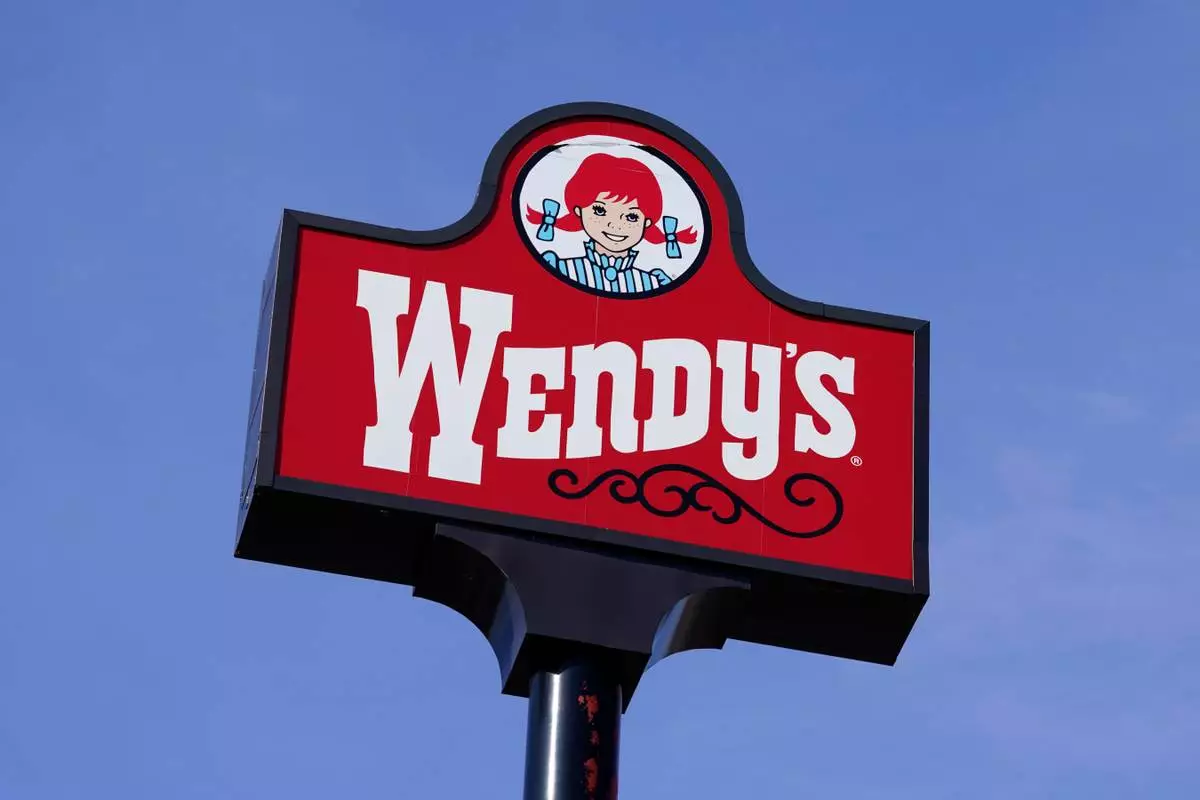
FILE - A sign stands over a Wendy's restaurant, Feb. 25, 2021, in Des Moines, Iowa. (AP Photo/Charlie Neibergall, File)
WASHINGTON (AP) — A plan to give people in the United States easier access to unproven peptide drugs favored by Health Secretary Robert F. Kennedy Jr. was opposed by most Food and Drug Administration scientific staff members, who had limited input in drafting the policy, according to six people familiar with its development.
The document posted online Wednesday by Kennedy’s Department of Health and Human Services covers a handful of injectable peptides promoted within the wellness industry for building muscle, healing injuries and boosting energy.
The effort on peptides, driven almost entirely by HHS, faced overwhelming pushback among FDA drug staffers who warned it could undermine the agency’s long-standing mission of keeping unproven health products off the U.S. market, according to the people familiar with its development.
The people spoke to The Associated Press on the condition of anonymity to discuss confidential government deliberations. An HHS spokesperson did not immediately respond to a request for comment.
The policy directs the FDA not to take action against specialty pharmacies that sell a half-dozen wellness peptides, including BPC-157, TB-500 and KPV. Under FDA rules, those chemicals would otherwise be considered illegal drugs because they have not gone through the agency’s rigorous review process for safety and effectiveness.
Some peptides occur naturally in the human body, where they trigger hormones needed for growth, metabolism and healing. Drug companies have brought several to market as medications, including mainstay treatments for diabetes and weight loss. But the chemicals subject to the new policy haven’t been approved as safe and effective by the FDA.
Kennedy has called himself a “big fan” of peptides and recently described using BPC-157 to treat a muscle injury.
The new document represents a step back from HHS' original plans, according to two of the people who discussed its development.
HHS officials initially wanted the FDA to draft an official regulation that would add BPC-157 and other peptides to a list of drug substances deemed safe for use by compounding pharmacies, specialty businesses that make customized medications.
FDA officials warned that the agency's scientific staffers had major safety concerns and would not support a regulation deeming them safe. HHS officials moved to a different approach that directs the FDA not to enforce its rules against pharmacies that compound the substances.
FDA staffers ultimately provided technical assistance in drafting the HHS plan, including guardrails intended to improve safety, such as requiring pharmacies to use peptide ingredients from FDA-registered factories.
Kennedy has said that U.S. compounding pharmacies must be allowed to sell peptides because Americans are turning to “gray market” products imported from China and other countries.
Decisions about regulating peptides and compounding pharmacies have almost always come from the FDA, which has an office dedicated to protecting U.S. consumers from unsafe or poor-quality compounded drugs.
The issue of compounding safety became a greater focus for the FDA after a deadly outbreak of fungal meningitis in 2012 was linked to contaminated injections from a Massachusetts compounding pharmacy. Once a niche business, compounding has grown into a multibillion-dollar industry, providing customized medications to doctors, clinics and hospitals.
It’s extremely rare for HHS to take the lead in drafting policies over the compounding industry, former FDA officials said. However, federal law technically gives HHS authority over essentially all drug regulations, which are then delegated to the FDA.
Many in the U.S. who are using peptides today do not deal with a doctor or a pharmacy to get the injections, but often order vials online sold by chemical manufacturers based in China. Peptide sellers often try to skirt U.S. regulations by labeling their products as “for research use only” because the FDA does not regulate research chemicals.
In 2023, the FDA added more than a dozen peptides, including BPC-157 and TB-500, to its list of substances that should not be compounded due to risks of allergic reactions, kidney damage and tumor growth.
At a meeting in July, FDA staffers reiterated that more than half a dozen peptides brought forward for reconsideration remained unproven in terms of safety and effectiveness.
The new policy from HHS avoids a direct confrontation with FDA staffers because it only directs the FDA not to enforce certain rules.
HHS ultimately included several safety measures suggested by FDA staffers, according to two of the people. Besides sourcing ingredients from FDA-registered facilities, compounders will be directed to collect information on side effects for safety analysis and verify the chemical identity of peptides.
The Associated Press’ health and science coverage receives financial support from the AP Fund for Journalism and private foundations. AP is solely responsible for all content. Find AP’s standards for working with philanthropies, a list of supporters and funded coverage areas at AP.org.
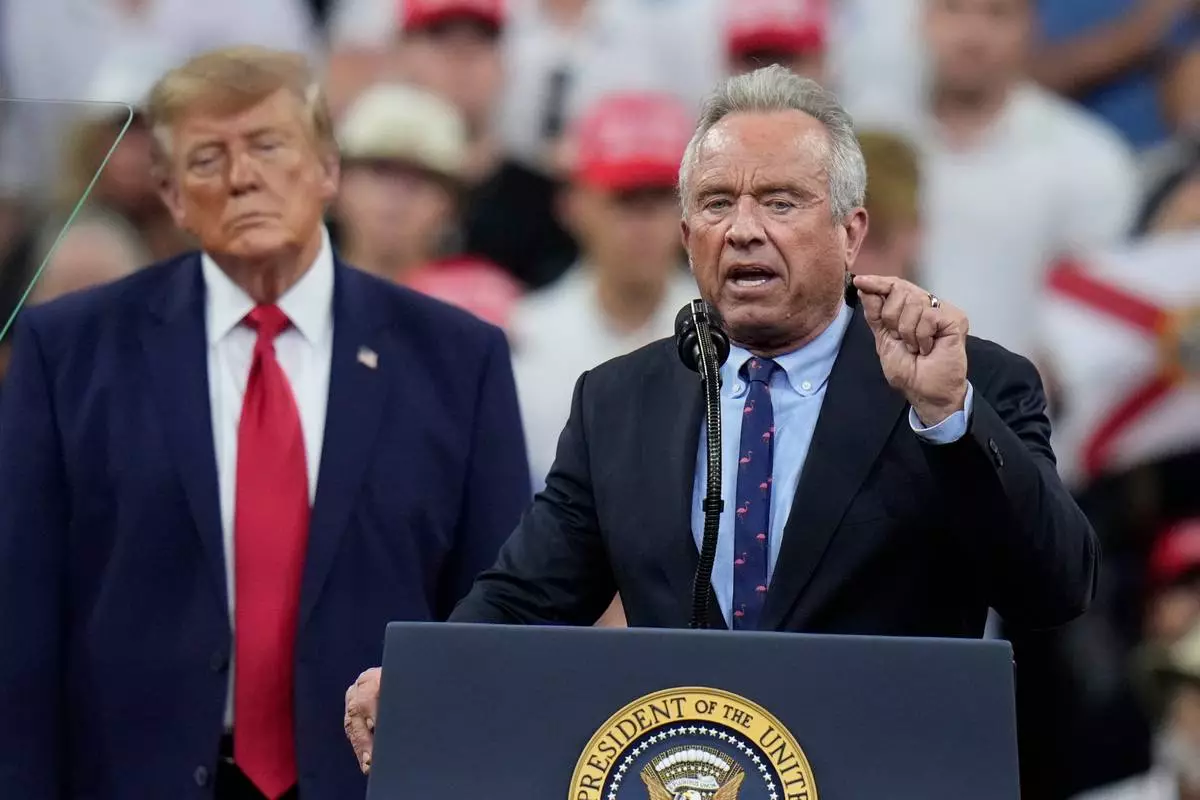
Health and Human Services Secretary Robert F. Kennedy Jr. speaks as President Donald Trump listens during a campaign rally, Friday, Oct. 23, 2026, at Alico Arena on the campus of Florida Gulf Coast University in Fort Myers, Fla. (AP Photo/Chris O'Meara)