OTTAWA, Ontario--(BUSINESS WIRE)--Oct 28, 2026--
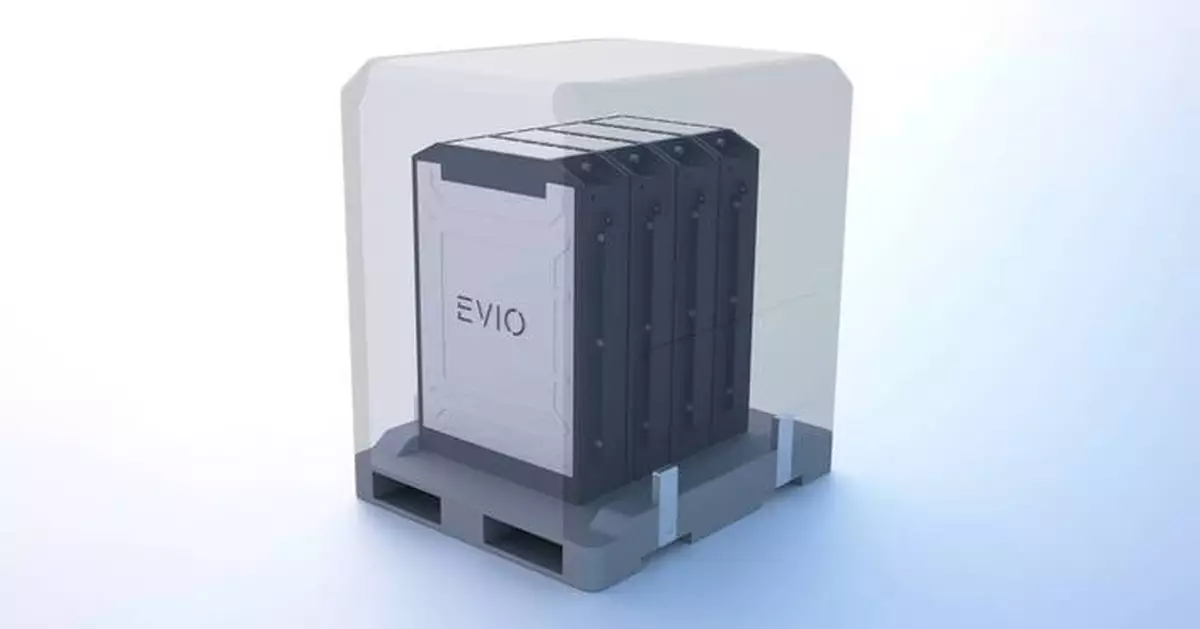
This week at the Aerospace Industries Association of Canada’s (AIAC) Aerospace Summit, EVIO unveiled the Battery Box, part of its Portable Power family—a Canadian-designed, modular battery energy storage system advancing toward prototyping for dual-use defence operations in remote, demanding environments. Drawing on high-energy-density lithium-ion battery packs developed for the EVIO 810 aircraft, this revolutionary product is designed to support dual-use customers who need substantial electrical power in a compact, rugged and transportable system.
This press release features multimedia. View the full release here: https://www.businesswire.com/news/home/20261028204643/en/
The EVIO Battery Box delivers reliable, ruggedized, deployable power for defence and security applications, from Arctic and tactical operations to naval, land and air platforms, disaster relief and remote mining. Its modular design supports extended silent operation, powering communications, sensitive sensors and essential equipment while reducing acoustic and thermal signatures, generator run-time and fuel requirements.
Designed around a 147E standard military pallet, each EVIO battery box has an unparalleled energy storage capability that is 3 to 5 times higher than any other option on the market. This configuration can accommodate four EVIO battery boxes on a 463L standard military pallet, substantially reducing logistics costs to bring power to remote points of use with unprecedented megawatt power capability.
“Defence operators need dependable power that can move with them, support demanding missions and allow periods of operation without a generator running,” said Michael Derman, Co-founder and CEO of EVIO. “The EVIO Battery Box applies the electrification expertise we are developing for the EVIO 810 hybrid-electric regional airliner program for operational defence needs. It demonstrates how investment in aerospace technology can create new dual-use capabilities for Canada across defence and other industries.”
EVIO is developing a prototype, ready for testing in the first half of 2027. The prototyping activity includes multi-physics pack engineering, cell characterization, and physical multi-cell thermal runaway testing. A fully operational product will be ready for deployment in the first quarter of 2028. Development priorities include thermal management and performance in extreme cold to address the requirements of Arctic operations.
The EVIO Battery Box is being developed in parallel with the EVIO 810, sharing core energy storage technology and highest safety standards with the aircraft. The energy storage system enables zero-emission all-electric operation for short-haul flights (under 100 nautical miles) and around airports, while using turbine engines for extended range or in-flight battery charging. With operations in Montréal, EVIO is leveraging Canada’s aerospace engineering expertise and supplier network, supported by strategic partnerships with established leaders across the aerospace, battery technology, and advanced materials sectors.
About EVIO
EVIO is developing a family of hybrid-electric regional aircraft designed to deliver superior operating economics, reduce noise and emissions, and enhance the passenger experience. Optimized for all-electric operation on short flights and hybrid operation on longer missions, the dual-class 76-seat EVIO 810 integrates advanced aircraft design with a hybrid-electric power solution to unlock new levels of performance, efficiency, and mission flexibility. The technologies underpinning the EVIO 810 also have the potential to enable critical capabilities across defence and other demanding missions. Founded in 2018, EVIO operates in Canada and the United States.
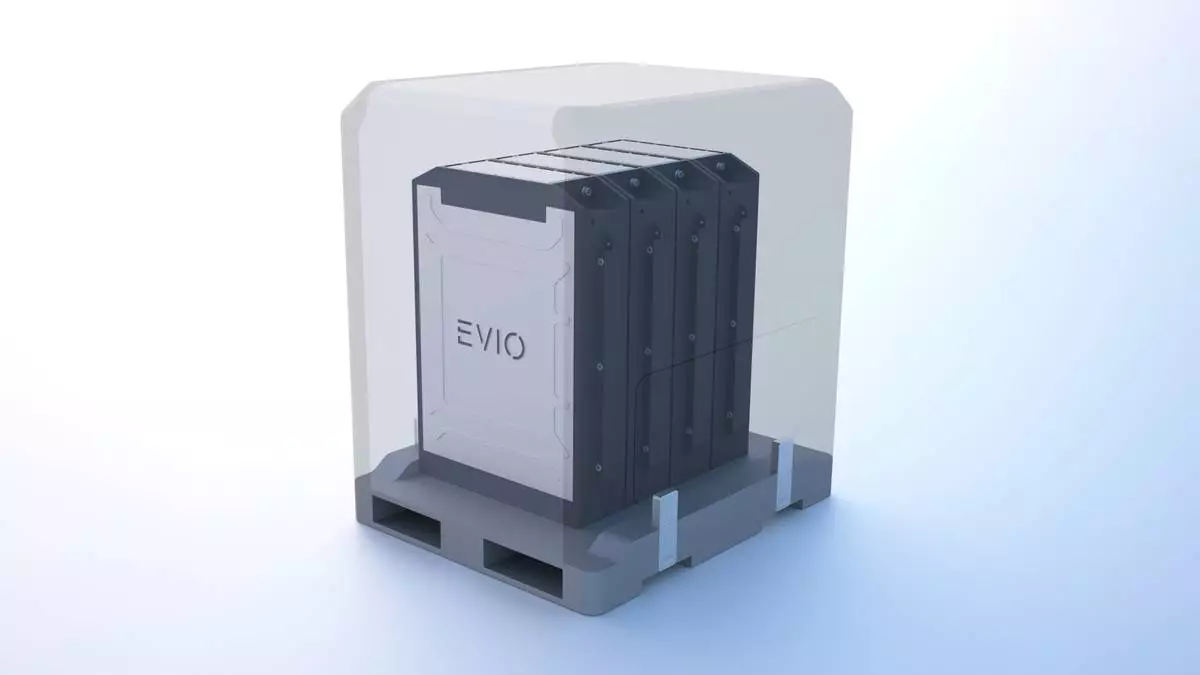
EVIO Introduces the Deployable Battery Box, Part of Its Portable Power Family, Delivering Canadian-Made Aerospace Battery Technology for Rugged, Remote Defence Power Needs
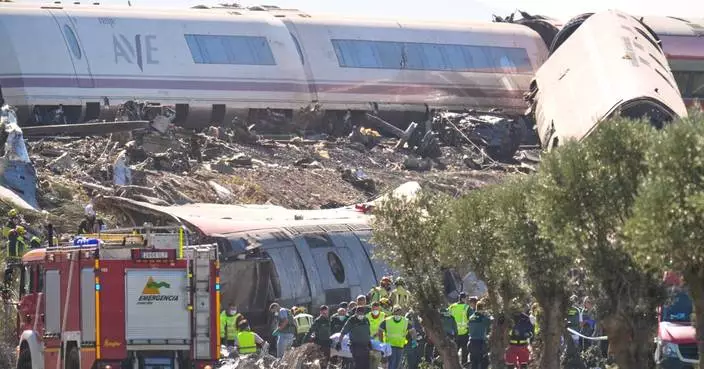
URDA, Spain (AP) — One high-speed Spanish train slammed into another that had stopped on the tracks Wednesday, killing at least 68 people and shredding carriages in the country’s second deadly rail collision this year.
The regional government for Castilla La Mancha confirmed the death toll and said another 58 people needed medical treatment in hospital. Rescue workers continue to search in the wreckage for survivors and bodies.
The accident comes with memories still fresh of another crash between high-speed trains in southern Spain in January involving trains from the same two companies.
Spain’s rail system operator ADIF said the crash occurred Wednesday morning in the province of Toledo, involving two high-speed trains carrying hundreds of passengers and heading in the same direction from the capital Madrid to Seville in southwestern Spain.
One train, run by the state-owned RENFE company, ran into the tail of the other train owned by private company IRYO that had stopped, knocking two of its cars off the track in a rural area between two villages.
David Gómez, a construction worker, was working with his brother and another colleague nearby when they heard the crash and ran to help, he told the newspaper El País.
“People were trying to get out through the windows ... We cut through some fences to access the area and treated people with the first-aid kits we had brought,” until emergency services arrived, he said. “As I was trying to pull a young woman out, there was a piece of a leg.”
Rail service was suspended between Madrid, Ciudad Real and Andalusia.
Until this year, there had been no fatal crash on Spain’s dedicated high-speed lines since the network opened in 1992. It was a source of national pride.
Spain’s Transport Minister Óscar Puente said that the accident was caused by what he called the “inexplicable” order from a central command center for Spain’s trains after a security system had failed. He said the train engineers were not to blame.
Puente said that at 8:30 a.m. the security system on a stretch of 63 kilometers (39 miles) stopped working due to a computer malfunction, causing all trains on that stretch to stop. But the central command told the RENFE train to start running again without any speed restrictions, and it ended up colliding with the stopped IRYO train at 8:53 a.m.
Puente said that the train should never have been told to start moving again since there was still a “stop signal” active that line. And if it had, at least it should have been told to go at reduced speed.
Puente said they were still studying information to see how fast the train was going, but it could have been at 200 kph (124 mph) for that stretch of the track.
“I am not attributing responsibility to anyone, I am just stating the facts,” Puente said.
The crash, which occurred in a flat stretch surrounded by olive fields in between the towns of Urda and Los Yébenes, left one car torn into bits of metal and other material, scattering debris down a gravel slope.
Spanish Health Minister Mónica García said that emergency workers were focusing on rescuing survivors and bodies from the two most damaged train cars. She said that the injured are being sent to different hospitals in the area.
“It was a high-speed impact, so we are expecting this to be a tragedy,” García said.
Passenger Ignacio Relaño was traveling on the RENFE train. He told state broadcaster TVE that the train had stopped momentarily on the line before it started again and then crashed into the IRYO.
“We all felt the train abruptly slowing down and then the impact,” he said. “The car leaned to one side like it was about to tip over. I hit my nose, everything went flying, luggage, cell phones. Everything shook.”
Another passenger recounted to Cadena Ser radio how she felt the train slam on the brakes and was thrown forward in her seat, breaking the small table in front of her. She said she saw body parts and trapped people covered in blood.
Padilla said that 397 passengers were in the RENFE train and 147 passengers in the IRYO train.
IRYO, an Italian-owned company, said in a statement that it has “activated its security protocols and is closely working with authorities.”
The mayor of the nearby town of Urda, Manuel Galán, said civil protection authorities had asked his officials to prepare a sports pavilion to receive injured passengers.
A military emergency brigade was deployed to help emergency services, firefighters and police. Ambulances and medical helicopters made trips to and from the site, while unscathed survivors were put on buses.
Spanish Prime Minister Pedro Sánchez canceled his agenda to focus on the crash. He wrote on X that he was “dismayed by the serious train accident in Toledo.”
“Emergency services are working on site to attend to the affected passengers,” wrote Sánchez, who faces a national election next month. “All my thoughts are with the victims and their families.”
Spain’s King Felipe VI visited the crash site. He and Queen Letizia said in a short statement on X that they were following news of the accident.
“We are deeply saddened and concerned by the train accident in Urda (Toledo),” the royal couple said. “We share in the grief of the families and loved ones of those who lost their lives, and we send our heartfelt support to the injured and all those affected.”
European Commission President Ursula von der Leyen said “My heart goes out to the victims’ families and loved ones. Today, Europe mourns with you.”
Spain's soccer federation postponed all 24 Copa del Rey games scheduled on Wednesday.
The wreckage of Wednesday’s crash reminded many of the aftermath of another train collision in January, when 46 people died in southern Spain when a IRYO train jumped the track and hit an oncoming RENFE train. That sent the first two cars of the impacted train plummeting down a four-meter (13-foot) slope.
That crash was the deadliest in Spain since a 2013 crash that killed 80 people.
The January incident shook confidence in the European country's extensive high-speed rail service.
Over recent decades, Spain has invested heavily in high-speed rail — which the country’s railway union defines as rails for trains going 250 kph (155 mph) and over — turning it into a world leader.
Spain has laid some 3,900 kilometers (2,400 miles) of such tracks over more than three decades for its 49 million residents. Only China, with 45,000 kilometers (28,000 miles) for its 1.4 billion people, has more high-speed track, according to the International Union of Railways.
Only recently did Spain open its rail network to private companies to compete against RENFE. IRYO started operating in Spain in 2022.
A spokesperson for Spain’s train workers’ union, Joan Rodríguez, said that the increased traffic brought by privatization has put extra strain on rail infrastructure.
“We are not convinced that the liberalization of the high-speed passenger rail service was matched by the necessary upkeep of the lines,” Rodríguez told TVE. “I am not saying it was a determining factor (in the crashes), but yes, the increase in use of the network is a factor to keep in mind.”
Wilson reported from Barcelona, Spain. Teresa Medrano contributed from Madrid.
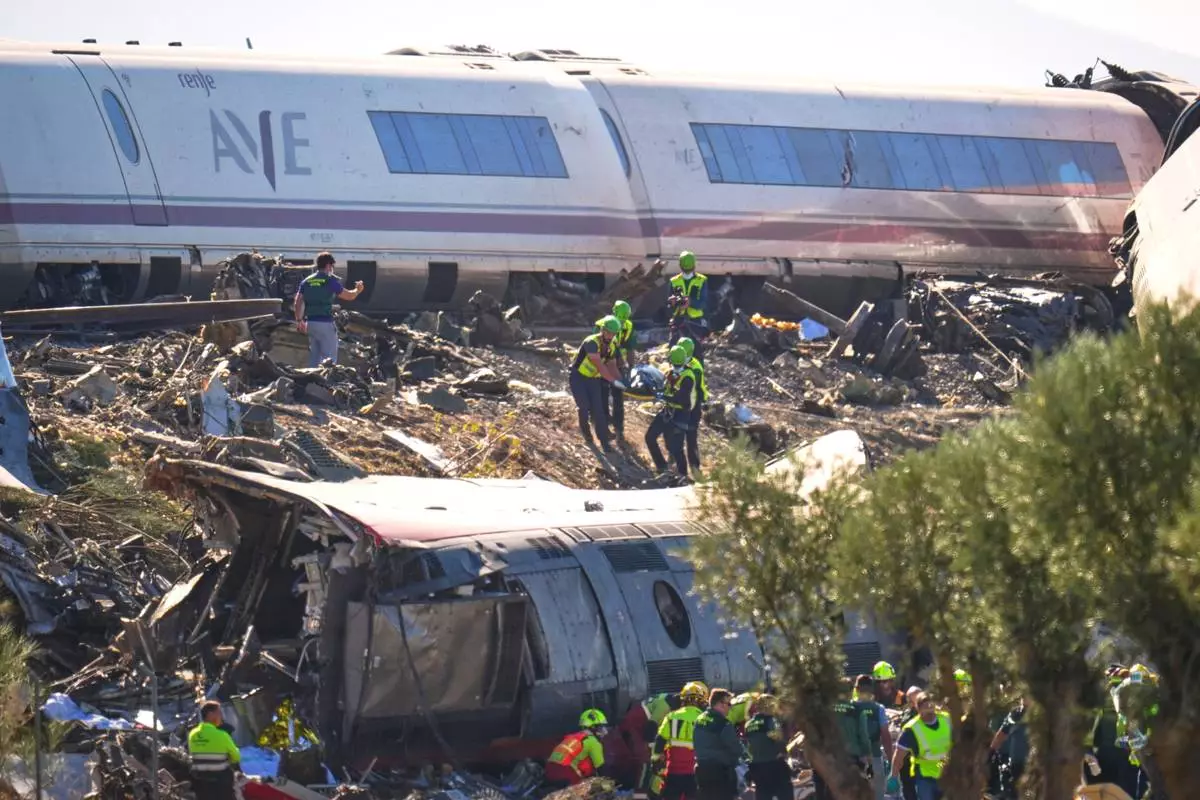
Emergency services attend to the victims at the scene of a collision between two trains in Urda, Spain, on Wednesday, Oct. 28, 2026. (AP Photo/Manu Fernandez)
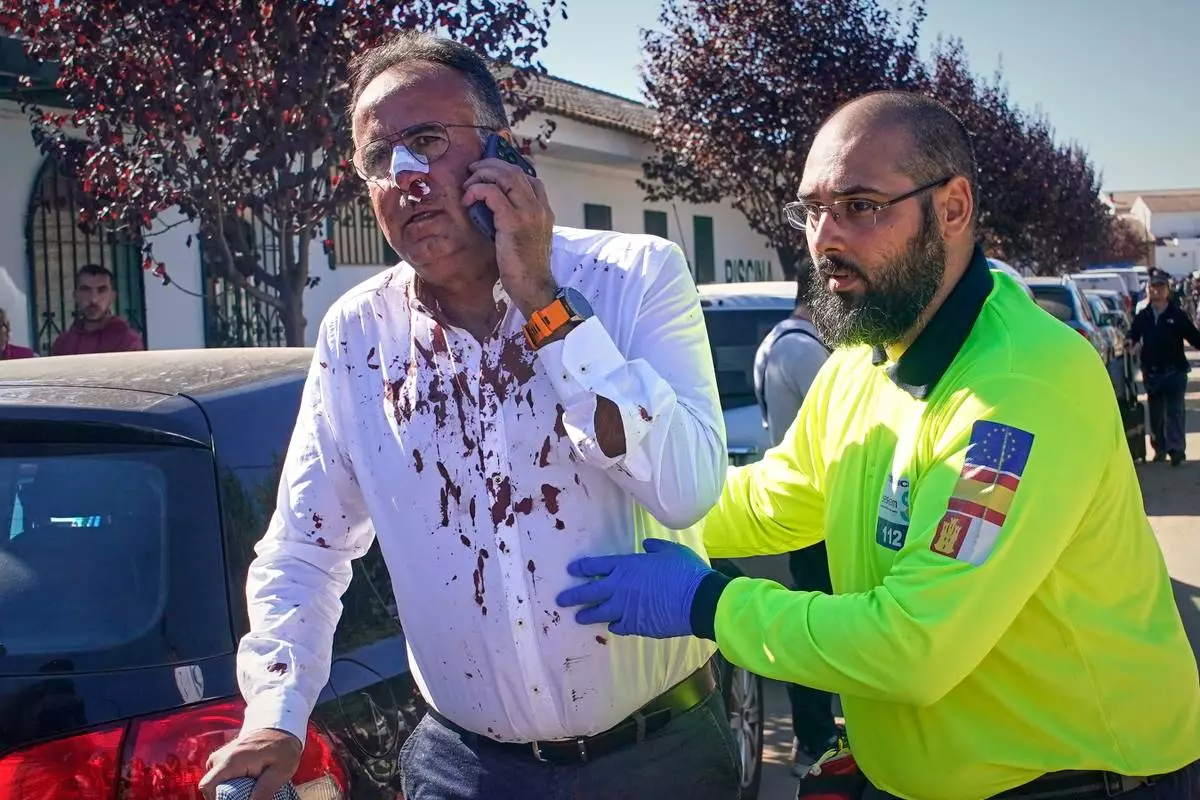
A passenger rescued from one of the trains involved in a collision arrives in Urda, Spain, Wednesday, Oct. 28, 2026. (AP Photo/Andrea Comas)
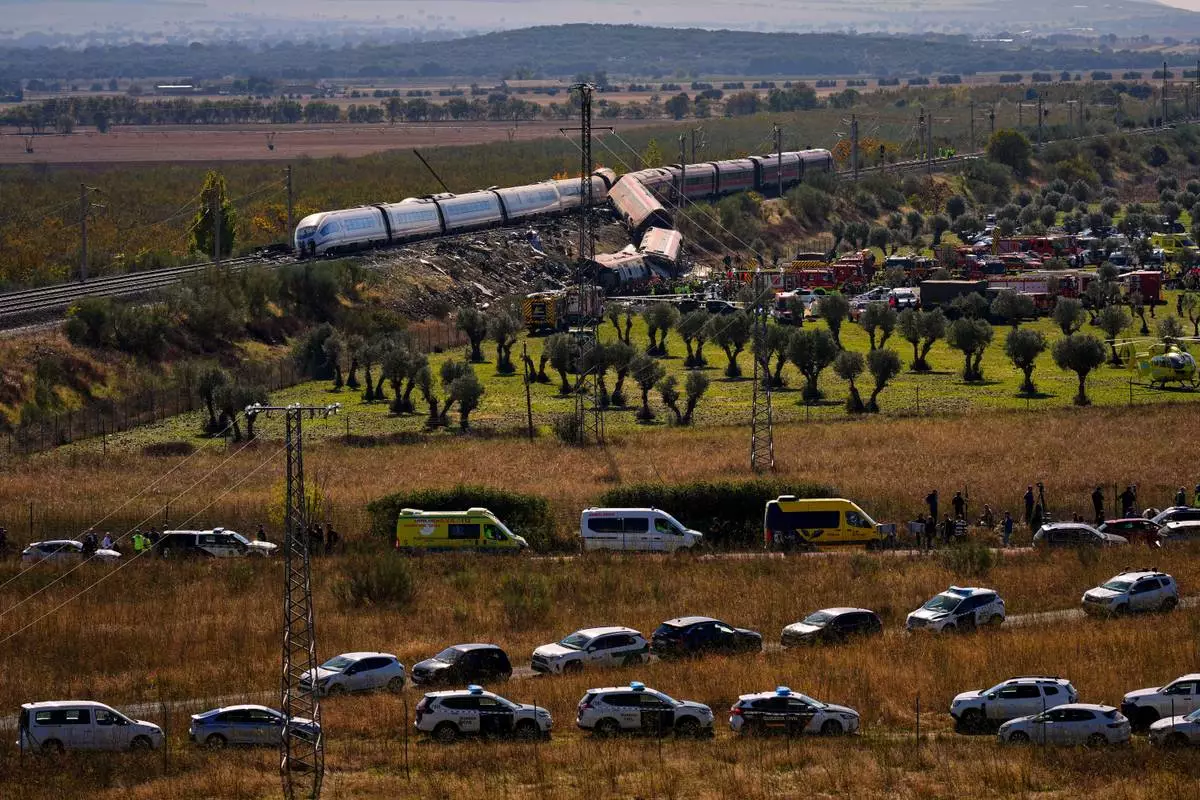
Emergency services work at the scene of a collision between two trains in Urda, Spain, on Wednesday, Oct. 28, 2026. (AP Photo/Manu Fernandez)
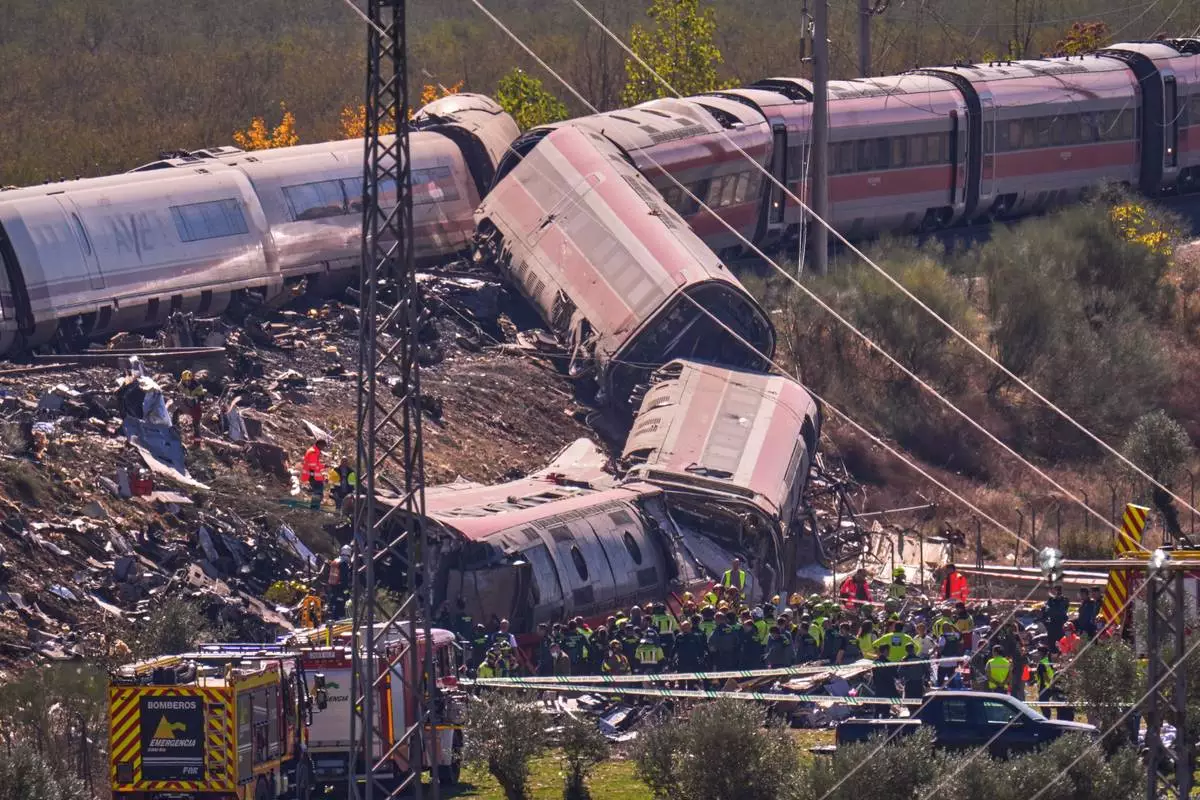
Emergency services work at the scene of a collision between two trains in Urda, Spain, on Wednesday, Oct. 28, 2026. (AP Photo/Manu Fernandez)
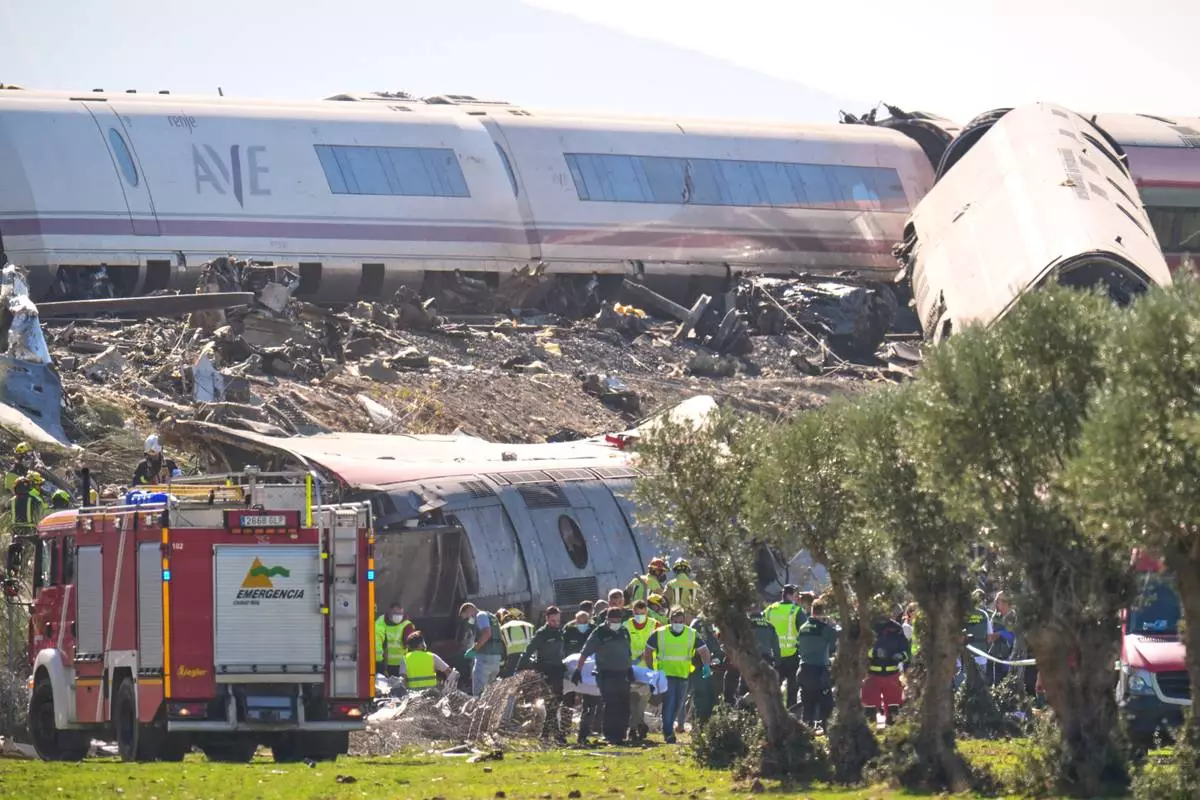
Emergency services work at the scene of a collision between two trains in Urda, Spain, Wednesday, Oct. 28, 2026. (AP Photo/Manu Fernandez)
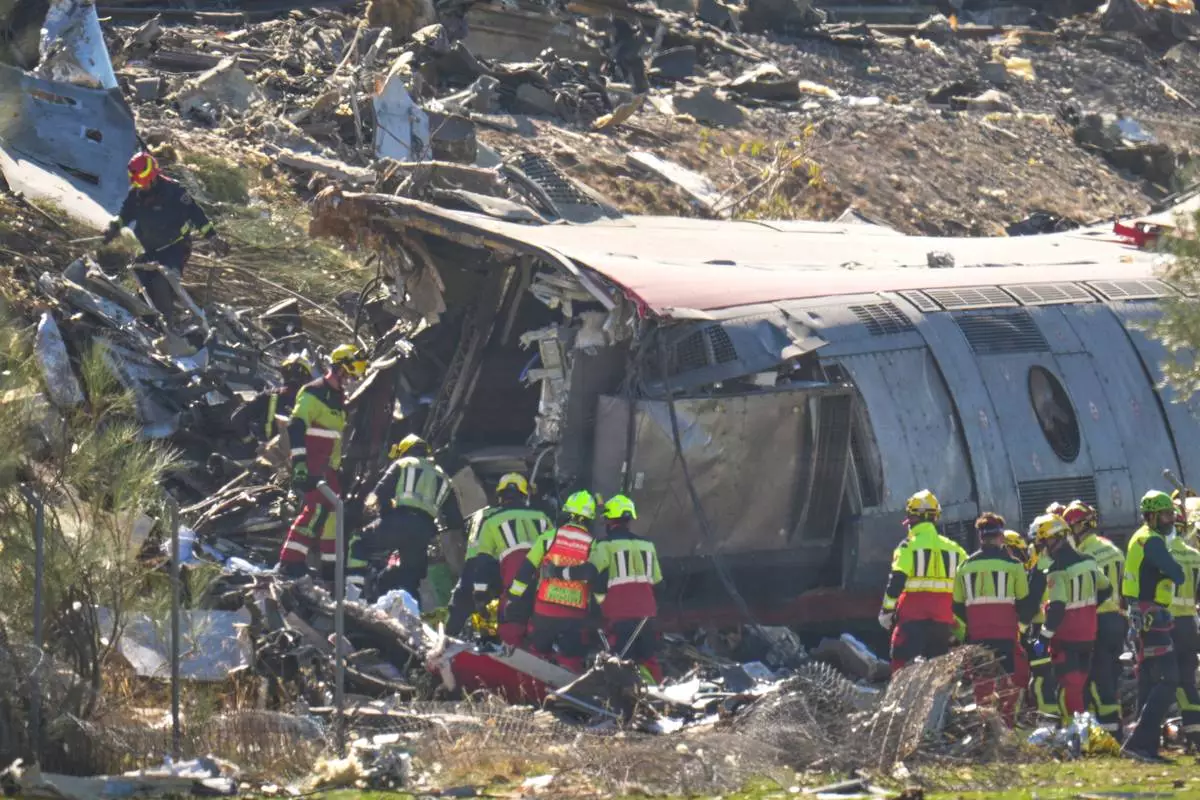
Emergency services work at the scene of a collision between two trains in Urda, Spain, Wednesday, Oct. 28, 2026. (AP Photo/Manu Fernandez)
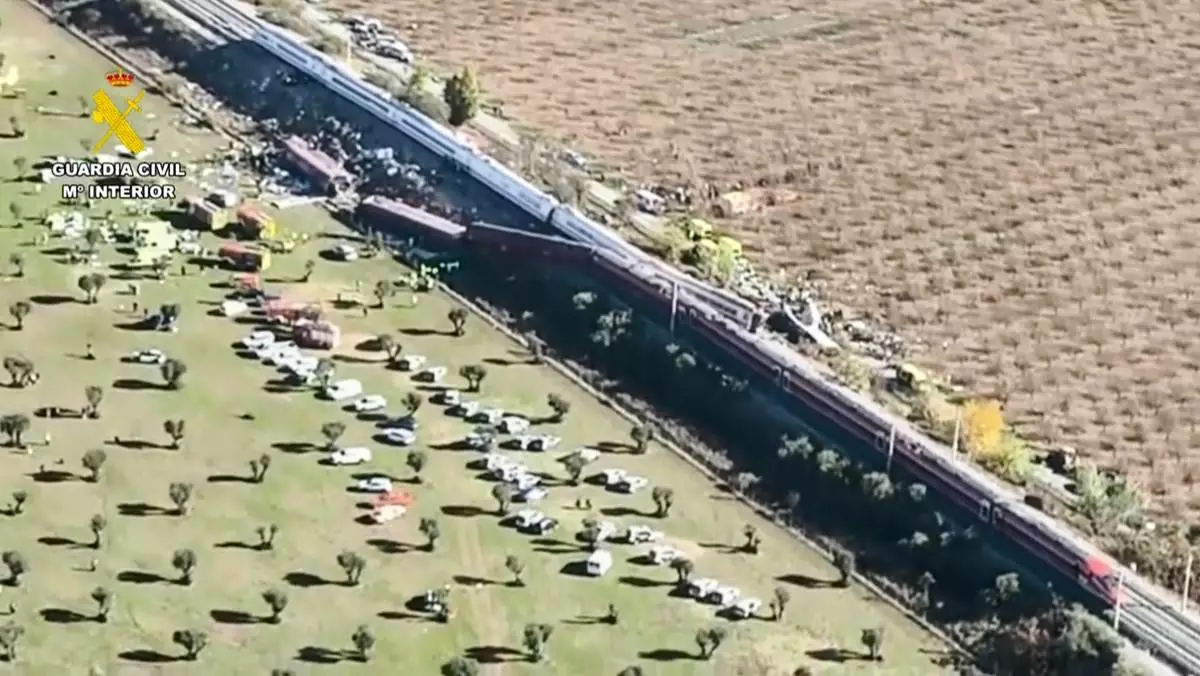
This framegrab taken from a video provided by Guardia Civil shows an aerial view of carriages and first responders on the site of a collision between two trains in Urda, Spain, Wednesday Oct. 28, 2026. (Guardia Civil via AP)
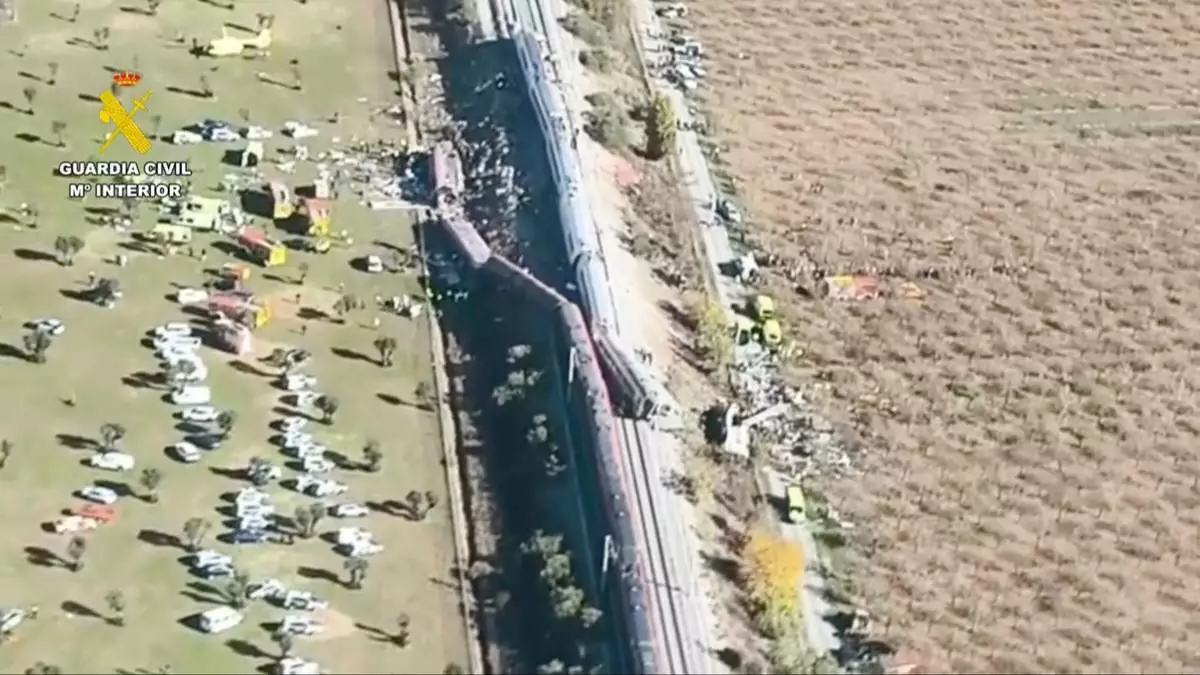
This framegrab taken from a video provided by Guardia Civil shows an aerial view of carriages and first responders on the site of a collision between two trains in Urda, Spain, Wednesday Oct. 28, 2026. (Guardia Civil via AP)
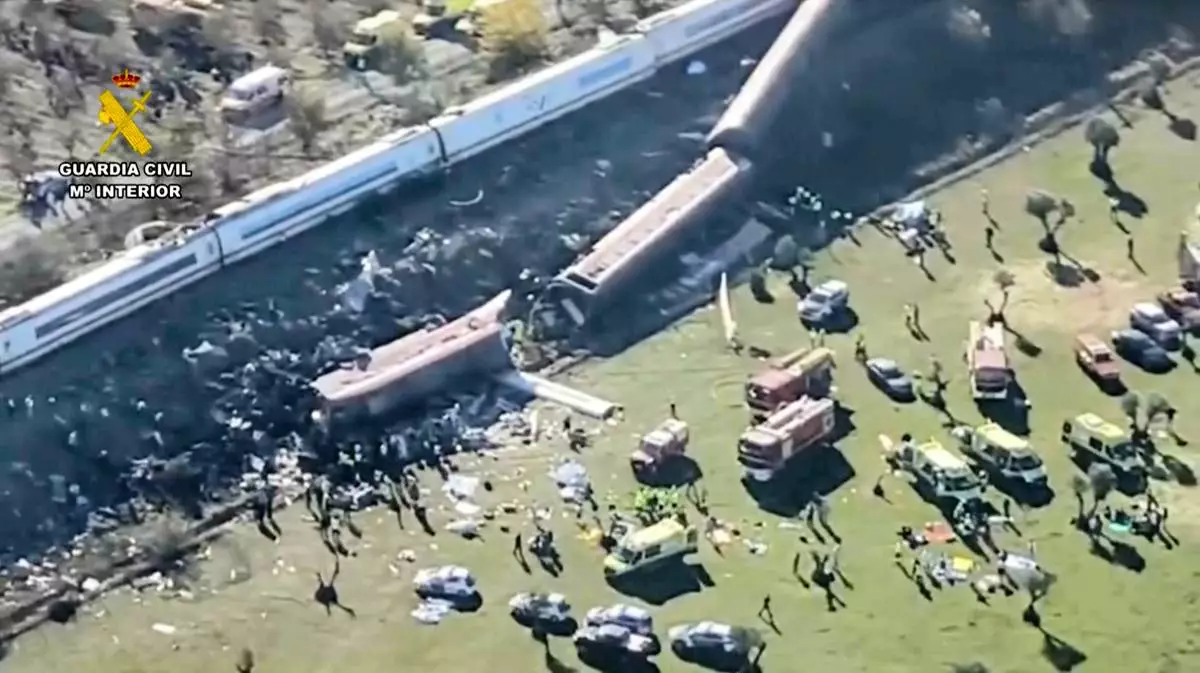
This framegrab taken from a video provided by Guardia Civil shows an aerial view of carriages and first responders on the site of a collision between two trains in Urda, Spain, Wednesday Oct. 28, 2026. (Guardia Civil via AP)
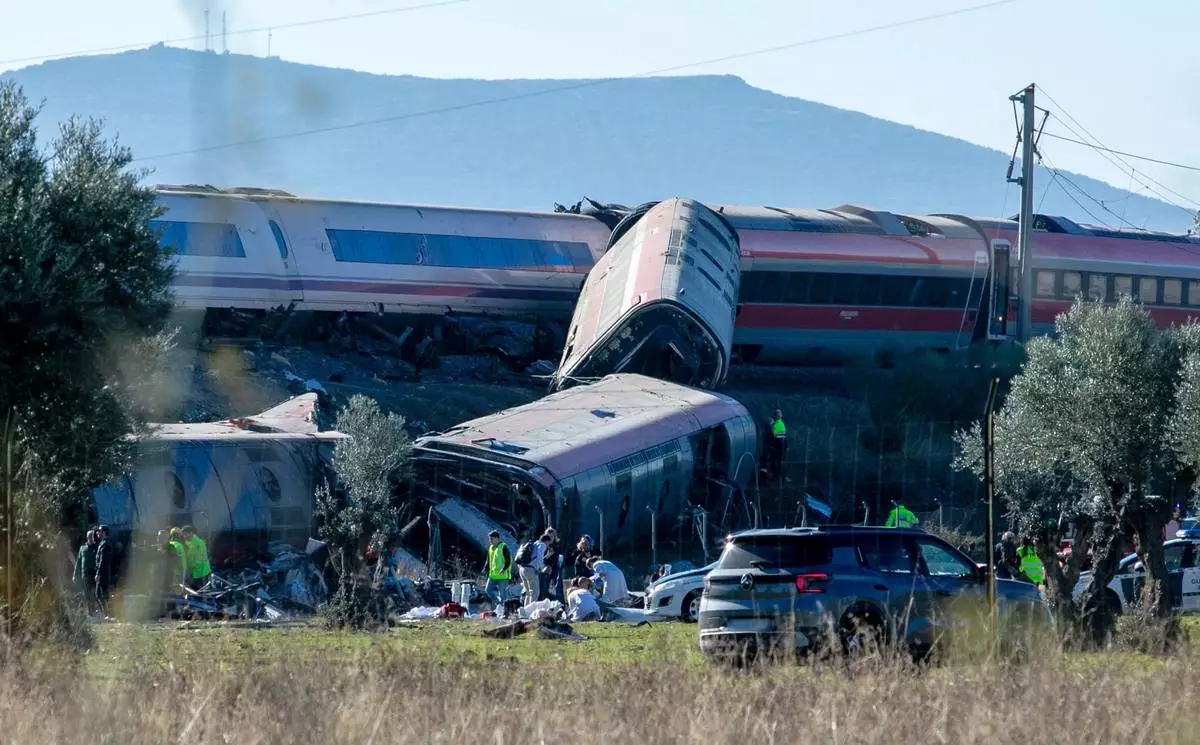
Emergency services attend to the victims at the scene of a collision between two trains in Urda, Spain, on Wednesday, Oct. 28, 2026. (Juanma Jiménez/Europa Press via AP)
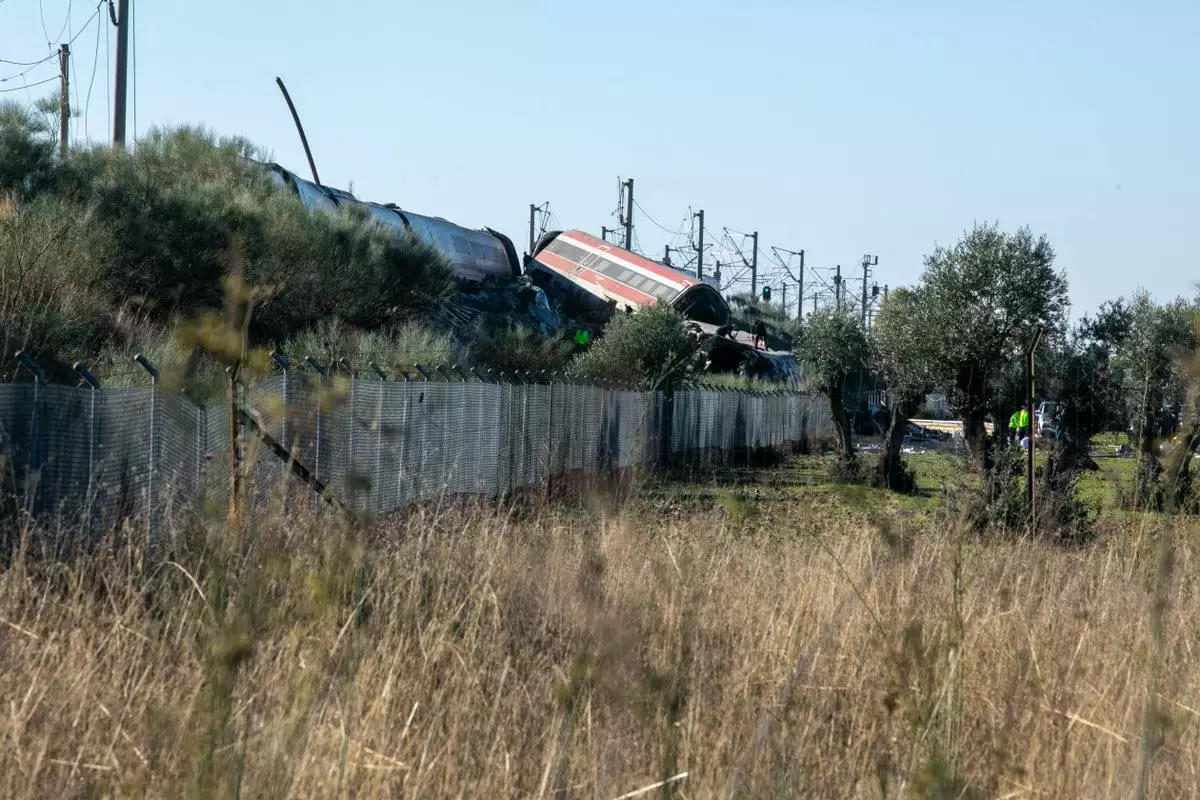
The scene of a collision between two trains in Urda, Spain on Wednesday, Oct. 28, 2026. (Juanma Jimenez/Europa Press via AP)
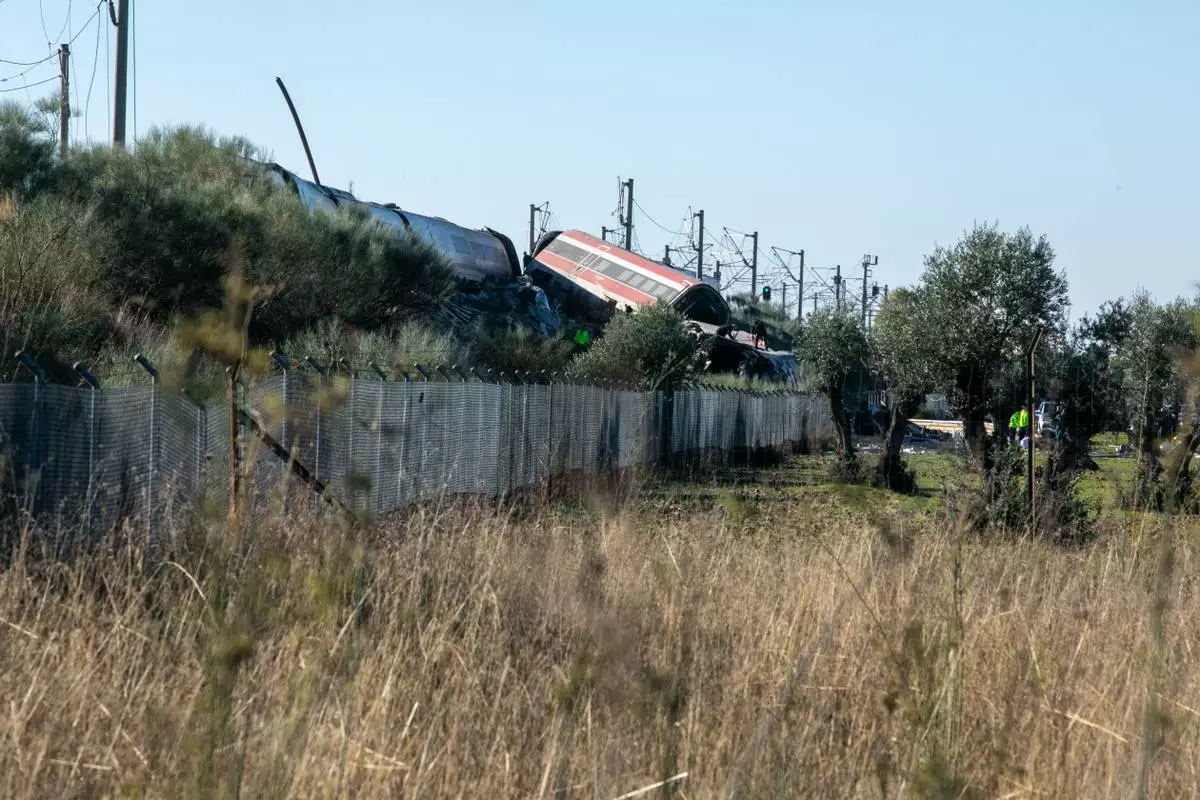
The scene of a collision between two trains in Urda, Spain on Wednesday, Oct. 28, 2026. (Juanma Jimenez/Europa Press via AP)