Skip to Content Facebook Feature Image

What to know about The AP Voter Poll

News

What to know about The AP Voter Poll
News

News

What to know about The AP Voter Poll

2026-10-29 04:11 Last Updated At:04:20

WASHINGTON (AP) — Elections are often boiled down to who won and lost, but it’s just as important to understand who voted and how, what motivated voters, and how they feel about important issues facing the country.

At The Associated Press, The AP Voter Poll by SSRS is a key part of answering those questions, explaining the voting coalitions that shaped the race for congressional control and decided key races for the Senate and governor.

Launched in 2025, The AP Voter Poll is an extensive survey of verified voters that aims to tell the story behind election results. It blends the methodologies from AP VoteCast, which was conducted in general elections from 2018-2024, and traditional exit polls. This involves interviewing voters by phone and online in all 50 states in the days leading up to the election, and collecting additional data from in-person interviews at polling places in 15 states on Election Day.

The result is a detailed snapshot of the American electorate that helps explain how major groups voted, the issues they cared about, how they felt about the candidates and why they voted the way they did.

An initial set of results from the survey will be first available at 5 p.m. Eastern time Tuesday, with additional state-level and national findings that will be published throughout election night.

The Voter Poll is conducted by SSRS, a nonpartisan research firm, for The Associated Press and ABC News, CBS News, CNN, Fox News Media, NBC News and MS Now.

The AP Voter Poll uses a combination of methods to reach voters no matter how they cast a ballot, whether that is by mail or in-person on Election Day.

Reflecting the complexity of elections, The AP Voter Poll has two separate components. One part is a comprehensive survey conducted in all 50 states from Oct. 22 to Election Day; in Alaska, the survey was fielded starting Oct. 19.

The other is an in-person survey at polling places in 15 key states on Election Day that adds depth to those states’ findings.

First, The AP Voter Poll interviews approximately 75,000 voters in the lead-up to Election Day, using mailed survey invitations, phone and text interviews, and samples drawn from probability and nonprobability-based opinion panels. This is similar to the methodology used in AP VoteCast.

To find people to participate in the survey, The AP Voter Poll draws a random sample of registered voters from state voter files. Those voters are then contacted through the mail and invited to take the survey online or by phone. Some voters are also contacted by phone if they do not respond to the initial invitation to take part in the survey.

Other voters are recruited through the probability-based SSRS Opinion Panel, which matches each respondent to the voter file.

The AP Voter Poll also conducts interviews with voters recruited through the Verasight Verified Panel, where some participants are not selected randomly but are recruited through internet advertising or other methods. The respondents’ voter registration status is verified separately and the sample is carefully combined with the other preelection data sources to make sure these additional interviews do not overrepresent or underrepresent important demographic and ideological groups.

Many voters will have already cast their ballot by the time they take the survey. If they have not yet voted, they will be recontacted on Election Day to verify their final vote choice and method.

Then, on Election Day, in-person interviews will be conducted with voters at polling places in 15 states — Alaska, Florida, Georgia, Iowa, Maine, Michigan, Minnesota, Nebraska, Nevada, New Hampshire, North Carolina, Ohio, Pennsylvania, Texas, and Wisconsin — adding approximately 25,000 interviews across those states. Interviews were also being conducted at early-vote centers in Alaska in late October.

The data from the preelection and in-person surveys are then blended to ensure the combined surveys are representative of the estimated 2026 electorate in each state where an exit poll is conducted.

The result is a comprehensive national survey that draws on interviews from all 50 states to provide a detailed snapshot of the country as a whole, as well as separate state-by-state results in every state where a statewide race for U.S. Senator or governor is taking place. Interviews conducted in the five states without a statewide race — Indiana, Missouri, North Dakota, Utah and Washington — will be included in the national survey, but will not be reported separately.

Voters are asked a standard set of demographic questions, such as their age, sex, race and ethnicity, education level and ideology. They also are asked to share their views on what they think about the country’s current leadership and direction, how they are assessing the candidates on the ballot, and what they believe are the key issues facing the country, such as crime, the economy, foreign policy, healthcare and immigration.

The questionnaire asks about voters’ choices in races for the Senate and governor, depending on where those contests are happening. This year, California voters will also be asked how they voted on Proposition 40, a proposed one-time tax on billionaires in the state.

In addition, participants in the national survey are asked if they voted for the Democratic or Republican candidate in their local House race. This national finding — often called the “generic” House ballot — sheds light on the shape of the race for Congress across the country, but does not include results from specific congressional districts.

None of this information is a replacement for the vote count, and the topline findings – how many voters overall say they supported a specific candidate or party – won’t be reported. Instead, the survey is designed to provide valuable insight into how specific groups voted, and why.

The AP Voter Poll will be an integral part of the AP’s coverage of the 2026 election, helping explain voters’ motivations and illuminate how key groups shaped the outcome.

For example, in the 2025 New Jersey governor’s election, the AP Voter Poll results showed that Democrat Mikie Sherrill won after getting support from about half of white voters in the state and having a strong showing among Black, Hispanic and Asian voters.

In the New York City mayoral race, the 2025 AP Voter Poll found that younger voters overwhelmingly voted for Democrat Zohran Mamdani in his successful campaign, while Andrew Cuomo’s coalition was much older.

The Voter Poll is also a valuable tool available to the AP Decision Team as it analyzes races on Election Night. Races are not called based solely on Voter Poll results, but the survey can shed additional light on a contest and help determine whether a winner can be declared. Other factors that the Decision Team will consider when calling a race include election results, vote history, registration and turnout data, demographic information and other data.

In some contests where one political party has an established history of lopsided victories and where other election data, such as overwhelming advantages in voter registration, advance ballot returns and preelection polling, all point to a victory by that party, results from The Voter Poll may be the final data point that allows the AP to declare a winner as soon as polls close.
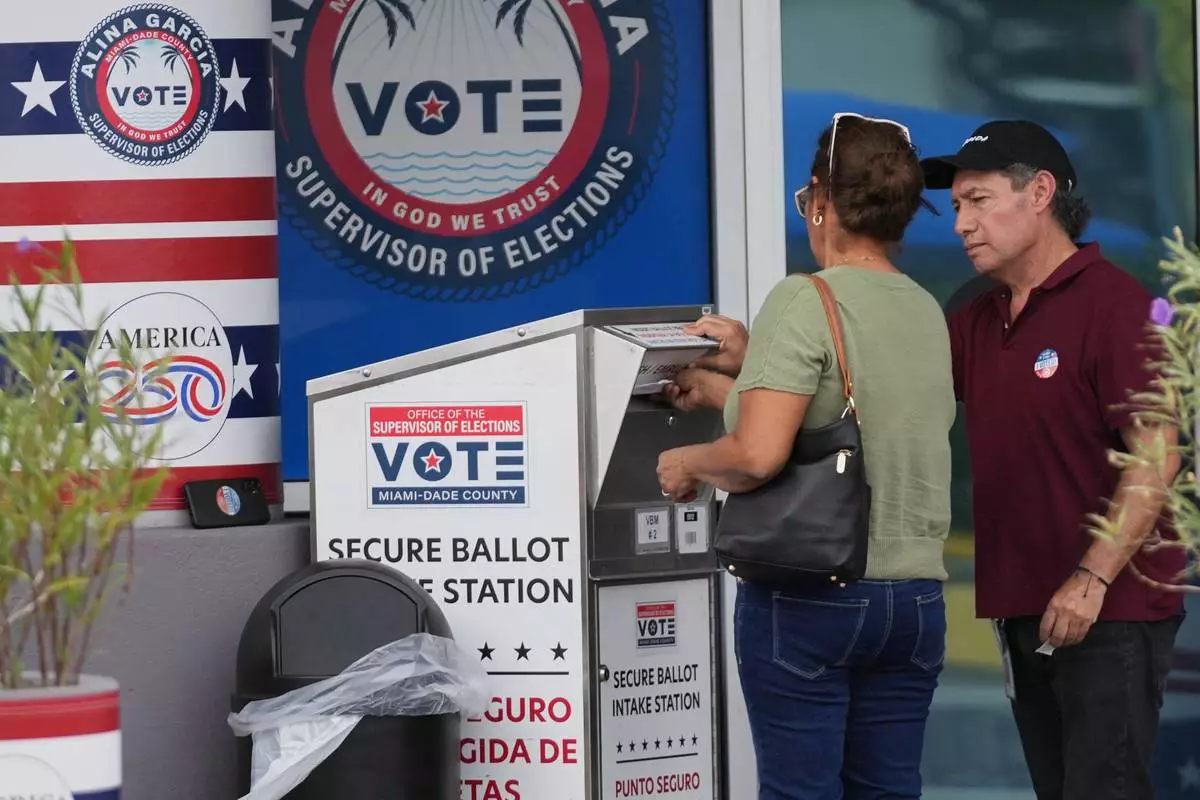
A person drops a vote-by-mail ballot in a secure ballot intake station at the Office of the Supervisor of Elections during early voting in the 2026 midterm elections, Tuesday, Oct. 27, 2026, in Doral, Fla. (AP Photo/Lynne Sladky)
A person drops a vote-by-mail ballot in a secure ballot intake station at the Office of the Supervisor of Elections during early voting in the 2026 midterm elections, Tuesday, Oct. 27, 2026, in Doral, Fla. (AP Photo/Lynne Sladky)

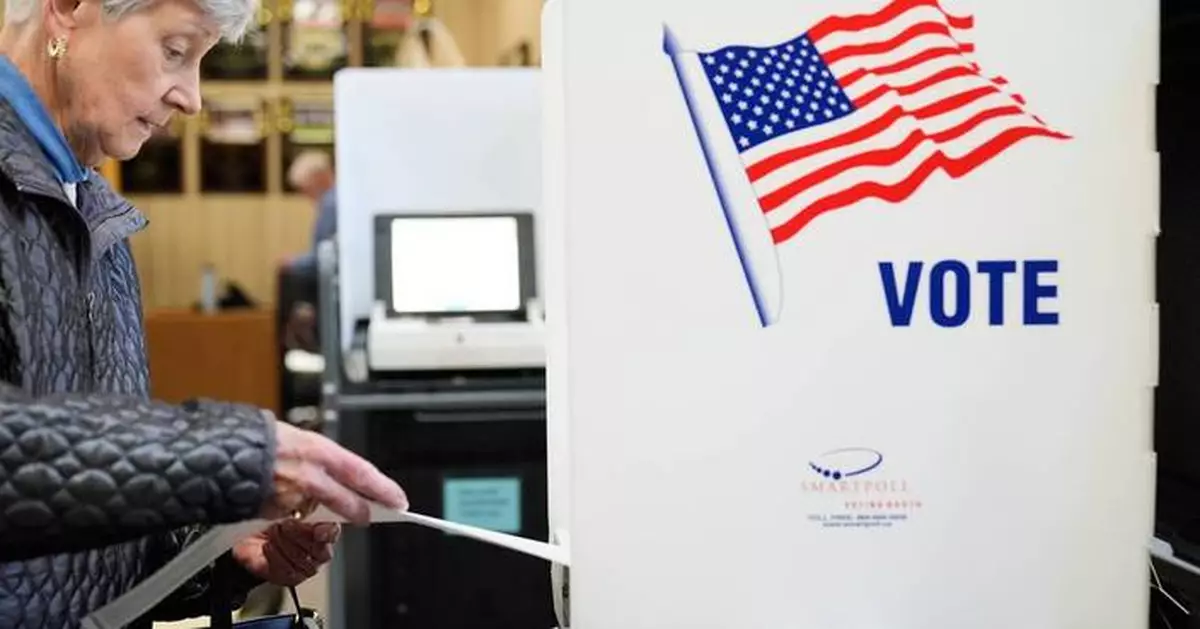
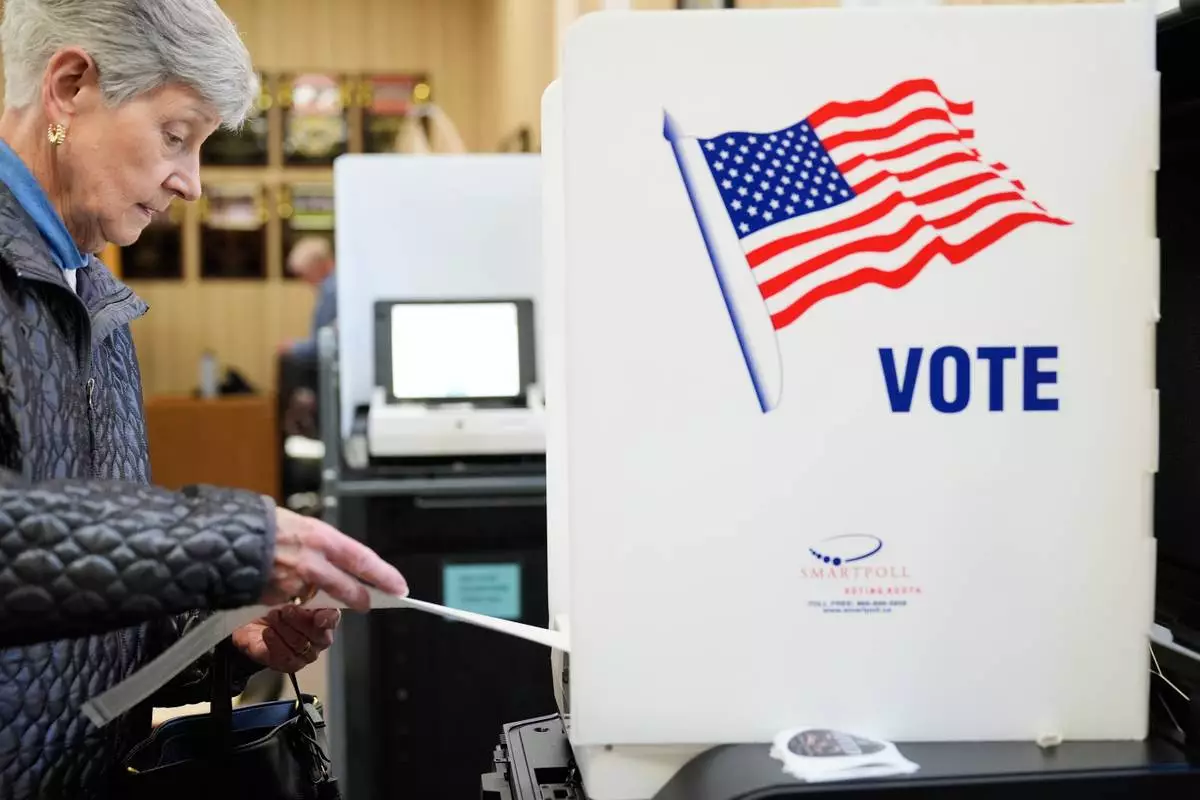
A woman feeds her ballot into a scanning machine at an early voting site in Haverstraw, N.Y., Monday, Oct. 26, 2026. (AP Photo/Seth Wenig)


A woman feeds her ballot into a scanning machine at an early voting site in Haverstraw, N.Y., Monday, Oct. 26, 2026. (AP Photo/Seth Wenig)
NEW YORK (AP) — The bond market swung Wednesday, while U.S. stocks ticked higher following the Federal Reserve ’s decision not to raise its main interest rate to bring down high inflation. The bond market’s moves indicated traders see less of a chance of hikes to rates in the future that would help ease inflation but could also hurt the economy.

The S&P 500 rose 0.3% after drifting between small gains and losses through the day, both before and after the Fed’s decision. The Dow Jones Industrial Average added 97 points, or 0.2%, and the Nasdaq composite rose 0.3%.

The action was much stronger in the bond market, where the yield on the two-year Treasury initially climbed after the Fed announced it was holding the federal funds rate steady. It got above 4.79% from 4.70% late Tuesday after the Fed said two officials actually wanted to raise the fed funds rate, only to get outvoted by their peers.

The central bank last month raised its main interest rate for the first time in three years in hopes of bringing down inflation, which has remained above the Fed’s 2% target for years and has been discouraging Americans broadly.

But the two-year Treasury yield, which closely tracks expectations for Fed action, quickly reversed course. It dropped as low as 4.69% after Fed Chairman Kevin Warsh said the central bank wanted to see how conditions play out before making its next move.

He pointed to how rates for loans have climbed and how lenders and investors have become “more discerning.” He said the overwhelming judgment among Fed officials at their meeting was that “monetary medicine” is “starting to work some.”

Along with signals that the U.S. economy continues to grow, Warsh said that “broadly, these developments go in the direction” of helping the Fed achieve its two goals of a healthy job market and relatively low inflation.

Traders on Wall Street still see further increases to rates by the Fed as likely, but they pared back bets for how many may come by next summer, according to data from CME Group.

The yield on the 10-year Treasury, which moves on expectations for inflation and economic growth in upcoming years, had its own yo-yo moves following the Fed’s meeting but was largely steadier. It rose to 5.02% from 4.99% late Tuesday.

Yields also got an upward nudge from rising oil prices as uncertainty continues about what will happen in the Middle East and the global energy industry. The price for a barrel of Brent crude, the international standard, climbed 2% to $111.64.

Higher rates push downward on stock prices, which raises the pressure on companies to deliver growth in profits to counteract that. Several companies rallied Wednesday after joining the list of those beating analysts’ expectations for the summer.

GE HealthCare Technologies climbed 6.6% after delivering both profit and revenue for the summer that surpassed analysts’ expectations. It also raised its forecasts for revenue growth and other financial measures for the full year.

Etsy rose 5.4% after its profit for the latest quarter blew past analysts’ forecasts. CEO Kruti Patel Goyal said the online marketplace saw growth in active buyers from prior-year levels for the first time in two years, while its active seller base grew at its fastest rate in two years.

Stocks in the artificial-intelligence industry were also relatively solid. They’ve stabilized this week following big swings on worries that high borrowing costs will undercut the boom in AI data centers largely built with borrowed money.

AI stocks got a boost after a major player in the industry, South Korea’s SK Hynix, soared 10.9% in Seoul following its latest profit report. The seller of memory chips said it’s in the midst of a virtuous cycle of rising AI usage, and it expects demand to continue to outpace supply through 2030.

On Wall Street, Micron Technology rose 5.9% and was the strongest force lifting the S&P 500. It also sells memory for computers.

Outside of tech, Wendy’s jumped 15.1% after Trian Fund Management, run by investor Nelson Peltz, offered to buy the chain.

That helped offset a drop for Boston Scientific, which fell 5.8% even though the seller of medical devices reported a milder drop in profit for the latest quarter than analysts expected. It gave a forecast for profit in the current quarter that fell short of analysts’ expectations.

Robinhood Markets sank 3.3% after reporting weaker profit and revenue for the latest quarter than analysts expected.

All told, the S&P 500 rose 21.38 points to 7,743.98. The Dow Jones Industrial Average added 97.53 to 52,475.10, and the Nasdaq composite climbed 72.04 to 26,549.85.

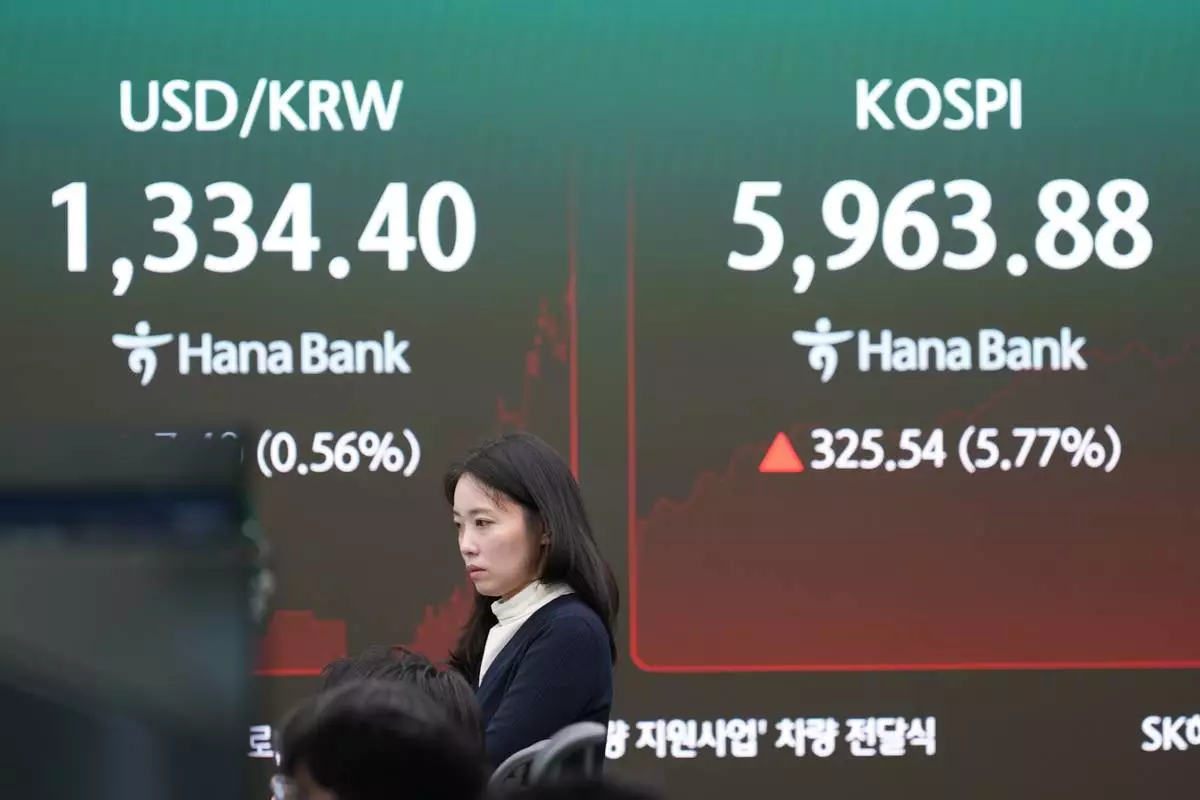
In stock markets abroad, South Korea’s Kospi jumped 6.6% following SK Hynix’s leap. Japan’s Nikkei 225 rose 1.1%, while France’s CAC 40 edged down by less than 0.1%.

AP Writer Elaine Lai contributed to this report.

A screen displays a news conference by Federal Reserve Board Chairman Kevin Warsh on the floor of the New York Stock Exchange, Wednesday, Oct. 28, 2026, in New York. (AP Photo/Yuki Iwamura)

A screen displays a news conference by Federal Reserve Board Chairman Kevin Warsh on the floor of the New York Stock Exchange, Wednesday, Oct. 28, 2026, in New York. (AP Photo/Yuki Iwamura)

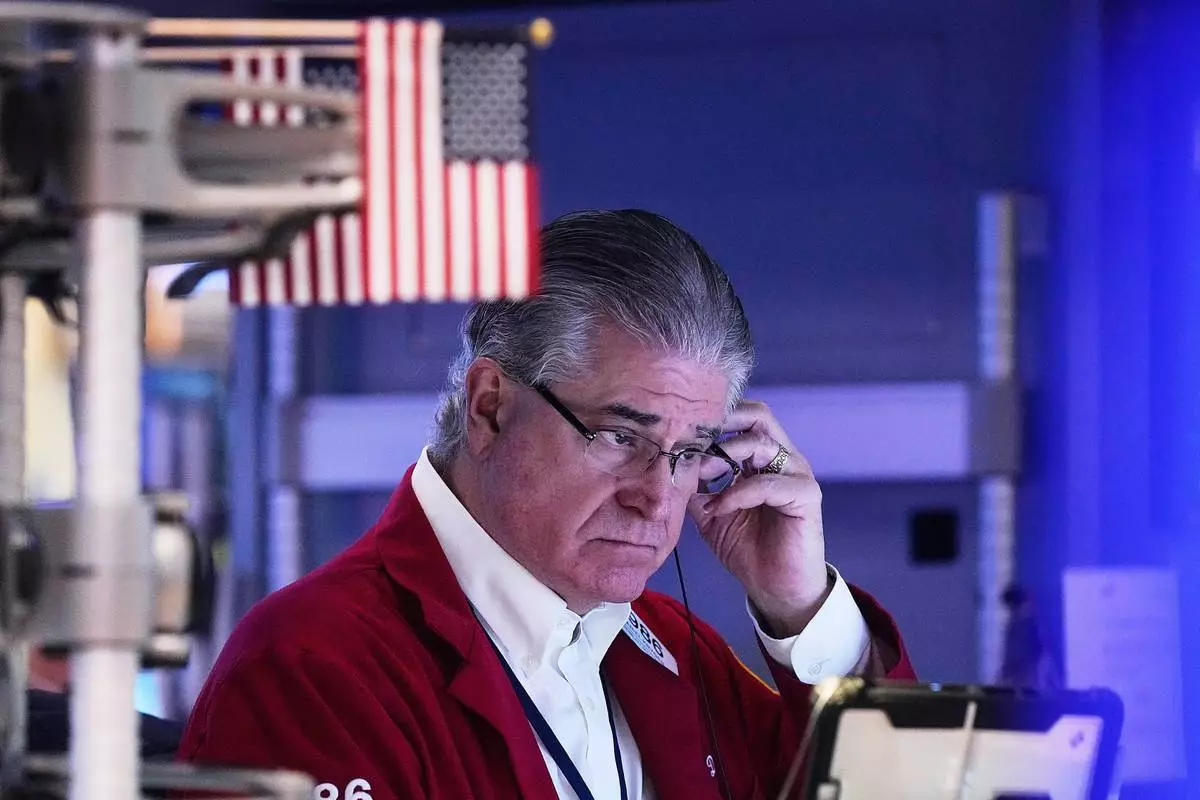
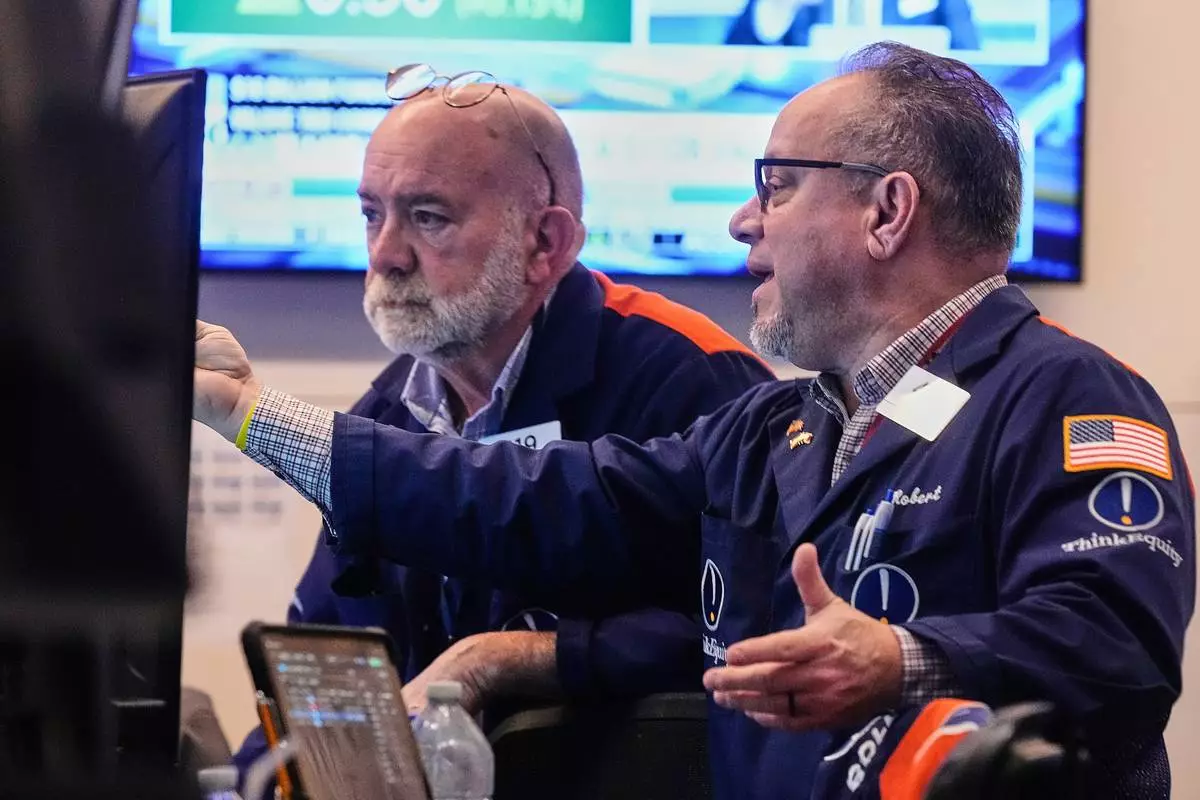
FILE - Traders Joseph Stevens, left, and Robert Arciero work on the floor of the New York Stock Exchange, Monday, Feb. 2, 2026. (AP Photo/Richard Drew, file)

FILE - Traders Joseph Stevens, left, and Robert Arciero work on the floor of the New York Stock Exchange, Monday, Feb. 2, 2026. (AP Photo/Richard Drew, file)

FILE - Trader Daniel Kryger works on the floor of the New York Stock Exchange, Monday, Feb. 2, 2026. (AP Photo/Richard Drew, File)

FILE - Trader Daniel Kryger works on the floor of the New York Stock Exchange, Monday, Feb. 2, 2026. (AP Photo/Richard Drew, File)

Employees work near the screens showing the Korea Composite Stock Price Index (KOSPI), the foreign exchange rate between the U.S. dollar and the South Korean won, and the Korea Securities Dealers Automated Quotations at a dealing room of Hana Bank in Seoul, South Korea, Wednesday, Oct. 28, 2026. (AP Photo/Lee Jin-man)

Employees work near the screens showing the Korea Composite Stock Price Index (KOSPI), the foreign exchange rate between the U.S. dollar and the South Korean won, and the Korea Securities Dealers Automated Quotations at a dealing room of Hana Bank in Seoul, South Korea, Wednesday, Oct. 28, 2026. (AP Photo/Lee Jin-man)

A dealer stands near the screens showing the Korea Composite Stock Price Index (KOSPI) and the foreign exchange rate between the U.S. dollar and the South Korean won in a dealing room of Hana Bank in Seoul, South Korea, Wednesday, Oct. 28, 2026. (AP Photo/Lee Jin-man)

A dealer stands near the screens showing the Korea Composite Stock Price Index (KOSPI) and the foreign exchange rate between the U.S. dollar and the South Korean won in a dealing room of Hana Bank in Seoul, South Korea, Wednesday, Oct. 28, 2026. (AP Photo/Lee Jin-man)

A dealer walks near the screen showing the Korea Composite Stock Price Index (KOSPI) in a dealing room of Hana Bank in Seoul, South Korea, Wednesday, Oct. 28, 2026. (AP Photo/Lee Jin-man)

A dealer walks near the screen showing the Korea Composite Stock Price Index (KOSPI) in a dealing room of Hana Bank in Seoul, South Korea, Wednesday, Oct. 28, 2026. (AP Photo/Lee Jin-man)

Recommended Articles