Skip to Content Facebook Feature Image

Everlaw Introduces Everlaw Omni and Workflows, Bringing Agentic Intelligence and Review Automation to Complex Legal Work

Business

Everlaw Introduces Everlaw Omni and Workflows, Bringing Agentic Intelligence and Review Automation to Complex Legal Work
Business

Business

Everlaw Introduces Everlaw Omni and Workflows, Bringing Agentic Intelligence and Review Automation to Complex Legal Work

2026-10-29 01:00 Last Updated At:01:10

OAKLAND, Calif.--(BUSINESS WIRE)--Oct 28, 2026--

Everlaw, the AI-powered litigation platform, announced Omni and Workflows at Everlaw Summit in San Francisco. Omni is Everlaw’s agentic AI investigation suite. It builds on Deep Dive, which legal teams already use to investigate across their full evidence set, and adds two new capabilities: the Omni Agent, which answers questions in everyday language by orchestrating a broad set of Everlaw’s features, and Case Memory, which builds a shared understanding of the matter that grows as new evidence comes in. Workflows enables review managers to design, run, and oversee complex document reviews with built-in human controls.

This press release features multimedia. View the full release here: https://www.businesswire.com/news/home/20261028984857/en/

When legal teams investigate a matter, getting to answers often means working across several tools and piecing findings together themselves. Omni reduces that manual work. In complex litigation and investigations, teams must do much more than run a single search: they need to connect communications, trace events, test competing accounts and coordinate the review that follows. Even with AI, practitioners often remain responsible for bringing that work together. Omni and Workflows address that burden from two directions: helping teams investigate the evidence and helping them manage the process, without losing the connection to the underlying record.

Law firms Bracewell LLP, Vorys, Cole, Scott & Kissane, and other Am Law firms are already using Omni through an early access program. This interest builds on Deep Dive’s rapid adoption: Everlaw customers have added more than 300 million documents and asked nearly 100,000 questions. The announcements build on Everlaw’s end-to-end approach to litigation, from legal holds and preservation through early case assessment, processing, review, and production to deposition preparation and trial. By keeping evidence and case strategy connected across that lifecycle, Everlaw helps teams carry what they learn in discovery into the decisions and arguments that follow.

Omni: Agentic Investigation, Built Into Everlaw

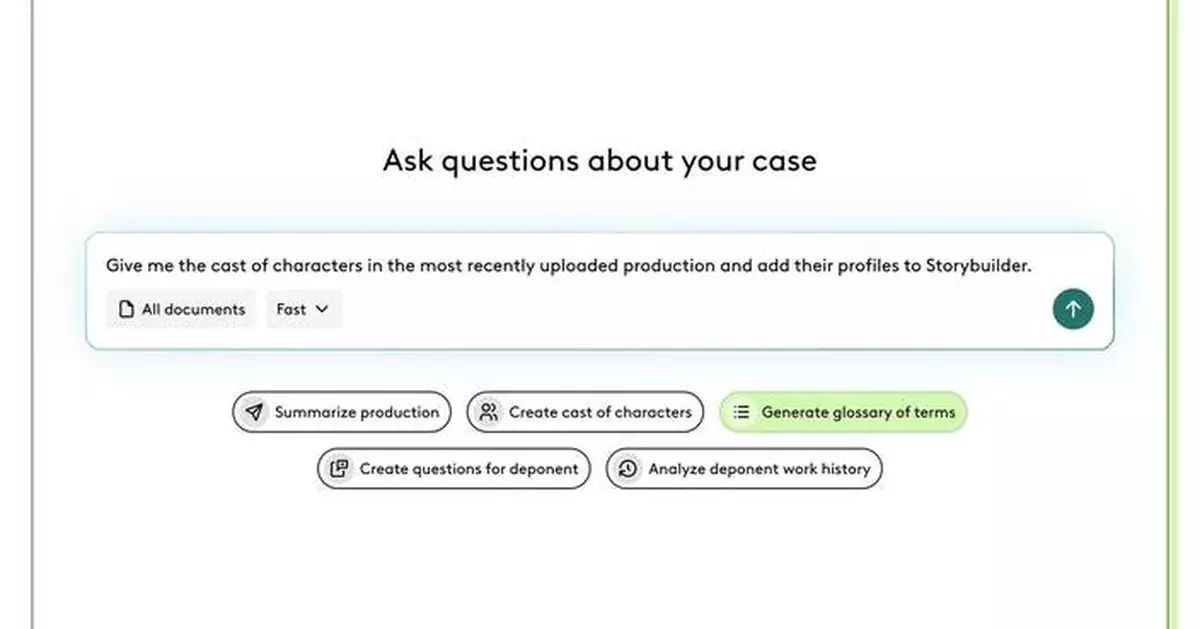
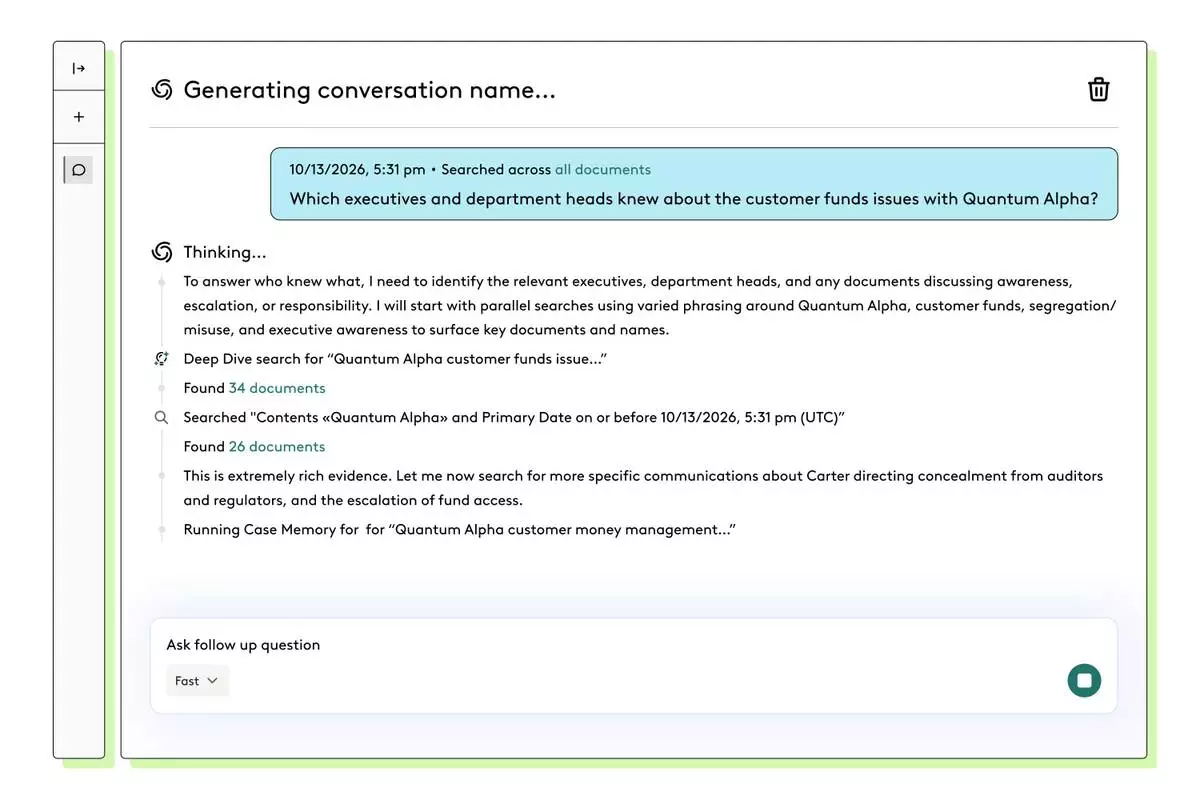
Omni is Everlaw’s native agentic experience. Users can prompt Omni with a question or task, such as “find out who was involved in the failed merger,” “create a table showing key parties to the deal,” or “establish who knew what and when.” Omni functions as an expert Everlaw user, automatically exploring the matter’s evidence and carrying out multistep work on the user’s behalf. Instead of manually combining searches and analyses, attorneys receive a unified, citation-backed result, such as a written analysis, timeline or visualization. Omni empowers less experienced users to gain the broad benefits of Everlaw by having a simple chat conversation with the documents.

“Intelligence isn't useful in a vacuum. It needs the right information at the right time. In complex litigation, that means more than just pointing a chatbot at a large pile of documents. It means using every tool at your disposal to answer your toughest questions,” said AJ Shankar, CEO and founder of Everlaw. “Omni brings agentic AI into the core of Everlaw, orchestrating a host of Everlaw's most sophisticated capabilities to find and analyze the evidence that matters, transparently and defensibly.”

Omni also introduces Case Memory, intelligence that proactively extracts facts from complaints, depositions, and other matter documents to build a central fact library. Those facts are available to populate Storybuilder and, eventually, to the Omni Agent, helping teams develop timelines, issue summaries, and evidence-backed work product without rebuilding the facts each time. Legal teams remain in control of which facts they include in their work.

Case Memory operates alongside the Omni Agent’s conversational memory. While one builds knowledge from the case record, the other retains context across the conversation, allowing for a continuous back-and-forth exchange between the agent and user.

"In a busy litigation practice, teams shouldn’t have to recreate useful work every time a new matter begins or a case changes hands. Everlaw Omni’s Case Memory points toward a future where evidence-based work is easier to build on, so lawyers can spend more time applying their judgment,” said Julie Brown, Director of Practice Technology at Vorys, Sater, Seymour & Pease LLP.

Omni’s suite of agentic capabilities are designed to operate at the scale that complex litigation demands. Omni operates within existing permissions and links insights to source documents, pages, or paragraphs for verification. Records of the tools it invokes and the actions it takes give teams a way to inspect the process as well as the answer.

“Everlaw Omni reflects a promising next step for legal AI. It helps lawyers make progress on the work in front of them, not just produce a quick answer, with the evidence and the judgment of the legal team still at the center,” said David Shargel, Partner, Bracewell LLP.

As Omni rolls out, customers with Deep Dive-enrolled databases will automatically transition to the Omni experience. Learn more about Omni here.

Introducing Workflows to Coordinate Complex Document Reviews in One Place

Review managers often have to coordinate each handoff themselves: moving documents between stages, tracking progress, and rebuilding processes for each matter. Everlaw Workflows brings those steps into one visual, repeatable process, with clear rules for how work moves and where human review is needed.

Designed for litigation support and review-management teams handling large, complex matters, Workflows connects document selection, routing, assignments, coding, and review checkpoints. Teams can manage a review from its initial document pool through the stages that prepare documents for production.

On a drag-and-drop canvas, review managers set the rules for how documents move. They can route documents based on search criteria or document properties, create assignments, apply codes, add notes and add documents to binders or Storybuilder objects. They can require teams to complete specific steps before documents move forward, or pause the process for a person’s approval. Oversight becomes part of the process.

As documents move through a workflow, managers can see progress at each stage, inspect the documents, and redirect work when a matter changes. Proven workflows can be reused in other projects, reducing setup and helping teams apply best practices consistently.

The result is less manual routing and status chasing, greater visibility into each document’s progress, and clearer control over decisions that require legal judgment. Additional AI review steps are planned for subsequent releases, extending automation within the same governed process.

Connected intelligence across the litigation lifecycle

These announcements advance Everlaw’s role as the evidence layer for legal AI: both the governed system of record and the search and analysis capabilities that help teams make sense of it. Everlaw's new agentic capabilities complement its integrations across other AI tools, allowing deeper, more autonomous functionality across the evidence layer.

Everlaw for Word, the Storybuilder Word add-in, carries the same approach into legal writing by automatically linking Bates citations to source documents in Everlaw. Future releases will bring Deep Dive into the add-in, allowing users to run searches and add relevant citations without leaving Word.

Omni is expected to be generally available in early 2027 as a premium offering, with pricing details to come. Workflows will be available in November and is included in Everlaw at no additional cost. Everlaw for Word is available now at no additional cost to organizations using Storybuilder, outside GovCloud. Learn more at Everlaw.com

About Everlaw

Everlaw, the leading AI litigation and investigation platform, transforms raw evidence into insight and insight into strategy. Operating as the evidence layer for legal AI, our platform delivers the system of record that keeps workflows organized, highly secure, and defensible, whether work happens in Everlaw or with our extensive network of AI partners. Trusted by Fortune 100 corporate counsel, 93 of the Am Law 200, leading federal agencies, and all 50 state attorneys general, Everlaw is based in Oakland, California and is funded by top-tier investors, including Andreessen Horowitz, CapitalG, HIG Growth Partners, K9 Ventures, Menlo Ventures, and TPG Growth.
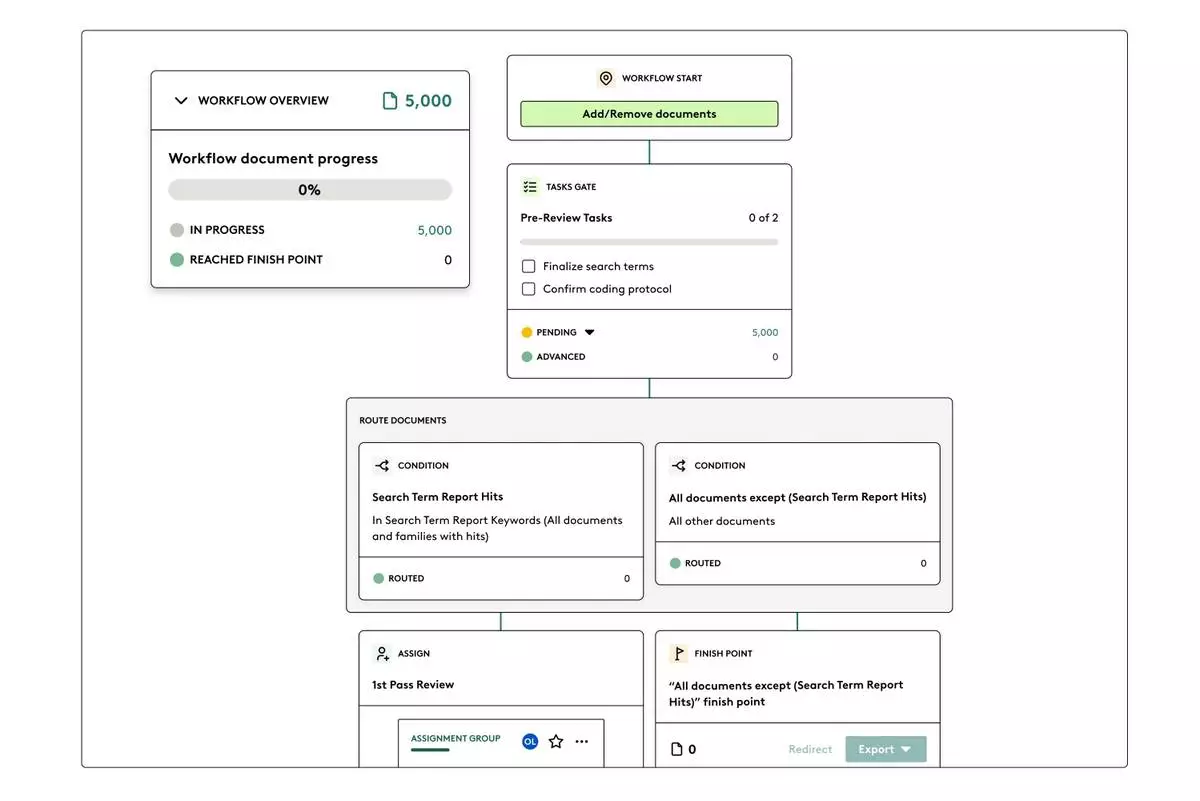
Workflows enables review managers to design, run, and oversee complex document reviews with built-in human controls.
Workflows enables review managers to design, run, and oversee complex document reviews with built-in human controls.

Omni functions as an expert Everlaw user, automatically exploring the matter’s evidence and carrying out multistep work on the user’s behalf.
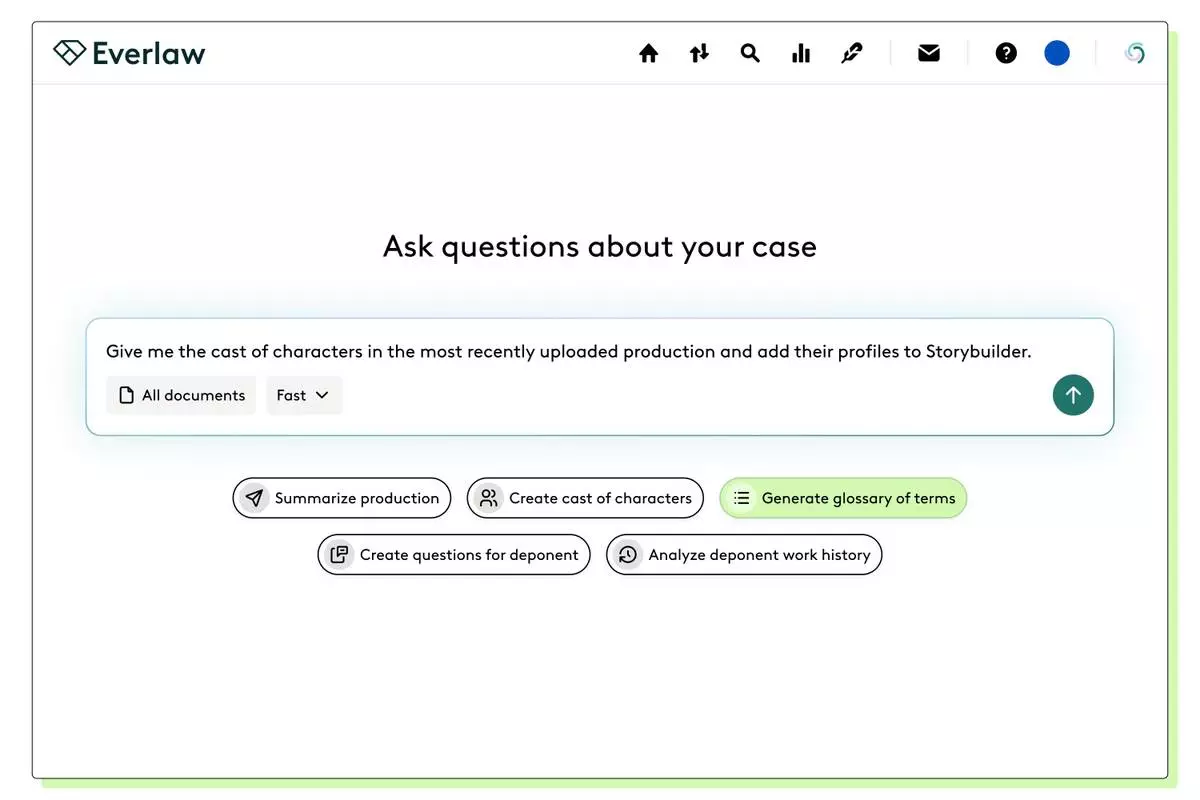
Omni functions as an expert Everlaw user, automatically exploring the matter’s evidence and carrying out multistep work on the user’s behalf.

Introducing Omni, Everlaw’s new agentic AI experience.

Introducing Omni, Everlaw’s new agentic AI experience.

JERUSALEM (AP) — Israelis faced political uncertainty Wednesday after no clear winner appeared to have emerged from a high-turnout election. The path to forming a government is fraught for Prime Minister Benjamin Netanyahu and his main opponent, and another round of elections cannot be ruled out.

The first elections since Hamas' Oct. 7, 2023, attack were seen as a pivotal moment in Israel's history, serving both as a referendum on Netanyahu's nearly unbroken 17-year rule and a choice between different visions for the country's future.

The initial results show a deeply divided electorate with multiple fault lines.

Netanyahu lost support but could remain in office. His main opponent, former military chief Gadi Eisenkot, would most likely have to partner with Arab-led parties to unseat him, a politically costly move that could alienate other opposition factions.

They could also partner with Netanyahu in a broad-based unity government, but that would be seen as a major betrayal by many of their voters after they put his ouster at the heart of their campaigns.

Final, official results are expected on Thursday or Friday, but there will likely be weeks of negotiations before a prime minister is declared — or new elections are called.

Here are the main takeaways:

Initial results show Netanyahu's religious and ultranationalist coalition falling short of a parliamentary majority of 61 seats, after reaching a peak of 68 seats in the previous parliament. Netanyahu's right-wing Likud also appears to have been whittled down from 32 seats to around 27.

That could reflect growing disillusionment with his long rule, anger at his handling of the Oct. 7 attacks and their aftermath, and his support for the exemption of ultra-Orthodox Jews from military service, an intensely divisive issue as the country is embroiled in multiple wars.

But Likud still appears to have emerged as the largest party, putting Netanyahu in the best position to be tasked first with forming a government.

He would need support from at least one opposition party, or several defectors from that side, to rule. Most have promised not to partner with Netanyahu, but the Israeli leader, a savvy political operator, could offer them concessions. He is also likely to argue that a broad-based government under his leadership is preferable to one relying on Arab-led parties — or another round of elections.

He can already claim a victory of sorts by having retained much of his support even after the deadliest security breakdown in Israel's history unfolded on his watch.

Netanyahu “manages to overcome situations that I can’t see anyone else managing to overcome,” said Tamar Hermann, senior research fellow at the Israel Democracy Institute, a Jerusalem think tank. “Politically, he is a magician.”

Initial results indicate that parties opposed to Netanyahu won a parliamentary majority. But they include Arab-led factions that have long been politically sidelined, and which some Jewish-led parties have refused to partner with.

In the face of “a politics of supremacy, racism and exclusion, we are offering a totally different alternative,” Yousef Jabareen, the head of the Arab Joint List, said on X. “The change comes through Jewish-Arab partnership, a true and equal partnership. Nothing more, nothing less.”

Only one Arab party has ever joined an Israeli governing coalition, in 2021, and that government only lasted about 18 months. The level of distrust is far higher after Oct. 7 and the resulting wars. Netanyahu is likely to exploit that by casting any partnership with Arab-led parties as illegitimate or treasonous.

Without the Arabs, Eisenkot and his Jewish allies have no clear path to forming a coalition to unseat Netanyahu, and another round of elections might further weaken their hand.

Tens of thousands of Israelis who flew in for this election may not return for another one, and Netanyahu would stay on as caretaker prime minister, giving him a platform to attack his opponents and try to expand his own coalition.

That leaves the prospect of forming a government with Netanyahu — after a campaign in which they blamed him for the failures surrounding the Oct. 7 attack, portrayed him as a threat to Israel's democratic institutions and highlighted his ongoing corruption trial.

The Arab-led parties represent Palestinians with Israeli citizenship, who make up about 20% of the country’s population. Descendants of Palestinians who remained in Israel after its creation in 1948, they are entitled to vote and serve in parliament.

While they hold senior roles in many sectors of Israeli society, they face discrimination, and many Jewish Israelis view them with suspicion because of their general support for the Palestinian cause.

Surging Arab turnout, driven in part by disgust at Netanyahu's far-right allies, may have delivered a historic victory for Arab-led parties, who could win around 19 seats in the 120-member Knesset.

That would give them significant power in any partnership with Eisenkot — potentially making such an alliance less likely. The opposition might also have to partner with hard-line Arab factions that are even more widely rejected among Jewish Israelis.

“With these numbers — there are too many Arabs to lean on, so to speak,” said Aviv Bushinsky, a political commentator and former Netanyahu adviser. “Israeli society is not ready for it, not before Oct. 7 and certainly not after it.”

The elections were an inflection point for Israel after three years of war. But they also highlighted the same divisions that have roiled the country for decades.

Netanyahu's coalition, made up of ultranationalist and ultra-Orthodox parties, supported strengthening Israel's Jewish character. It pushed for more settlement construction in the occupied West Bank and allowed for military draft exemptions for ultra-Orthodox Jews. It also attempted to push through an overhaul of the country's judiciary in 2023 that drew mass protests.

Eisenkot's camp promoted a vision where Israel's Jewish character lives in harmony with its liberal democratic ideals. It promised honest leadership and accountability for Israel's Oct. 7 failures, vowed to bolster the judiciary and end the military draft exemptions. They also promised to fix Israel's international standing, which has deteriorated because of the Gaza war and settler violence in the West Bank.

The apparently stalemated results suggest Israel's divisions are deeper than ever.

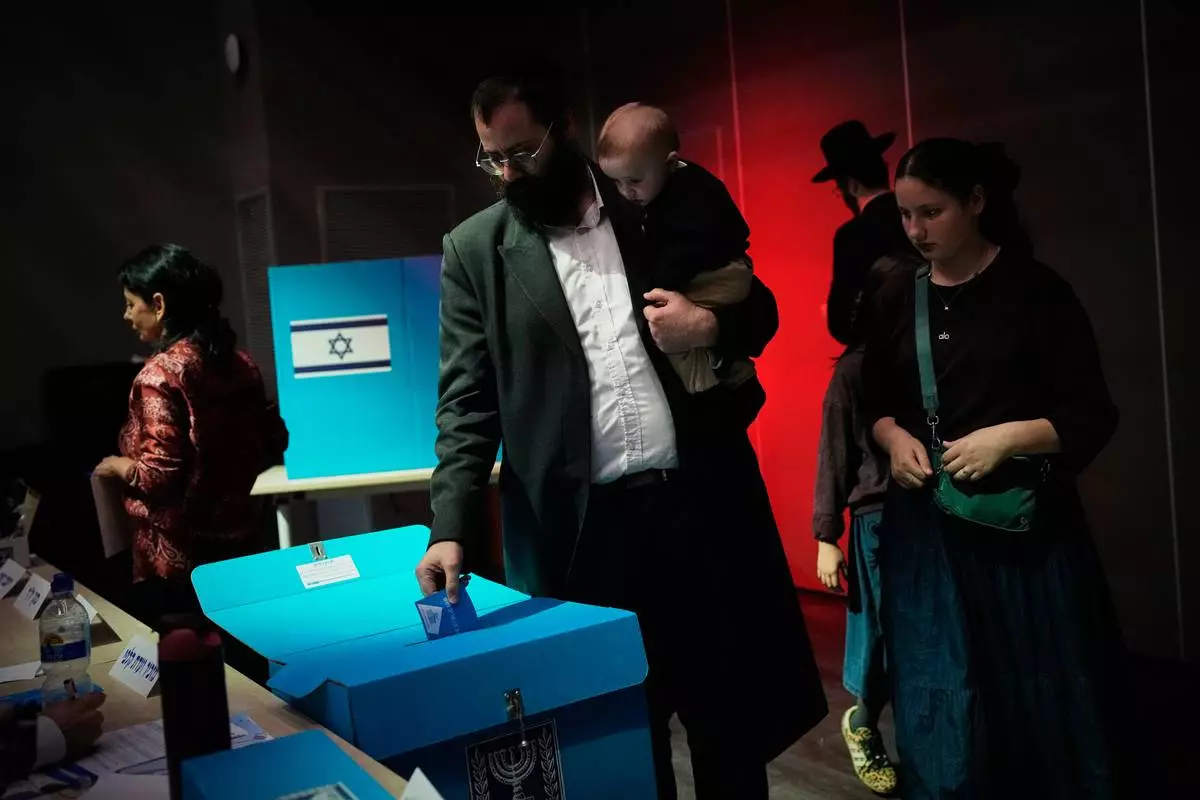
An ultra-Orthodox Jewish man holds his child as he casts his ballot at a school serving as a polling station during Israel's general election in Jerusalem, Tuesday, Oct. 27, 2026. (AP Photo/Ohad Zwigenberg)

An ultra-Orthodox Jewish man holds his child as he casts his ballot at a school serving as a polling station during Israel's general election in Jerusalem, Tuesday, Oct. 27, 2026. (AP Photo/Ohad Zwigenberg)

Supporters of Israeli lawmaker Mansour Abbas's Raam party applaud and wave party flags after the release of the first exit poll results in Israel's general election, in Sakhnin, Israel, Tuesday, Oct. 27, 2026. (AP Photo/Mahmoud Illean)

Supporters of Israeli lawmaker Mansour Abbas's Raam party applaud and wave party flags after the release of the first exit poll results in Israel's general election, in Sakhnin, Israel, Tuesday, Oct. 27, 2026. (AP Photo/Mahmoud Illean)

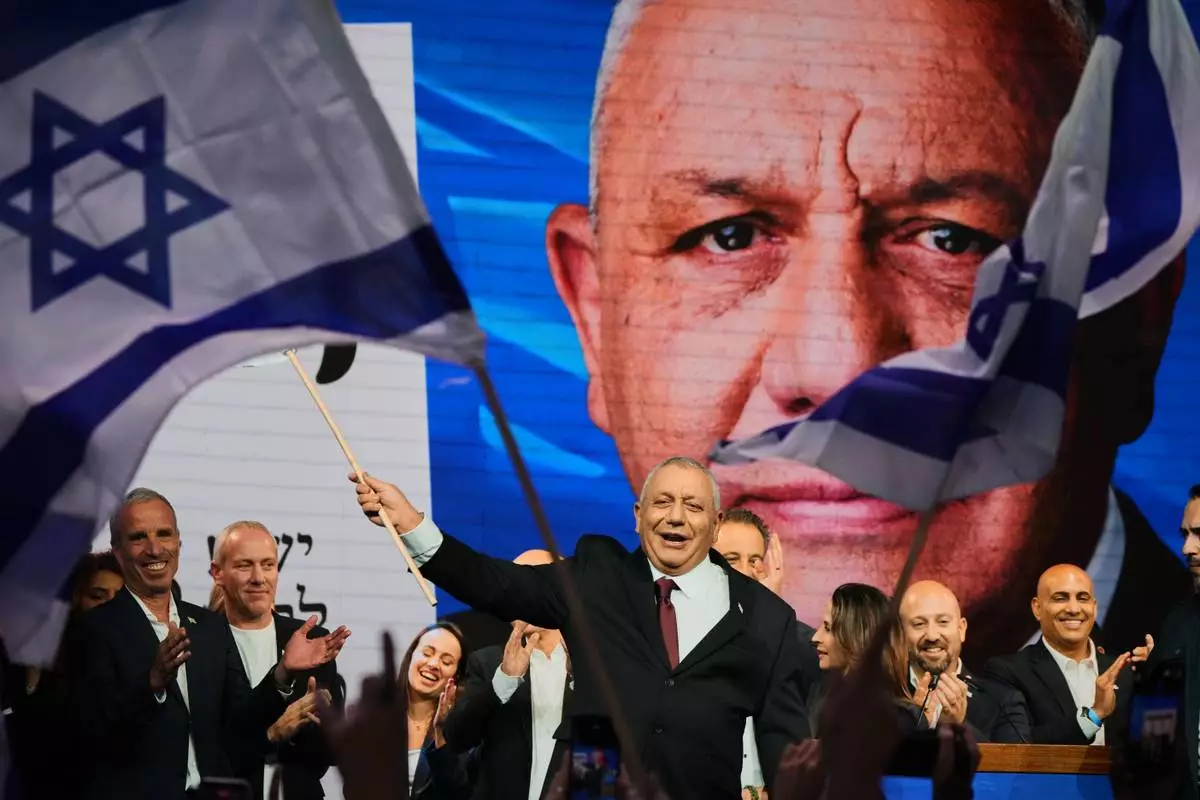
Gadi Eisenkot, leader of the Yashar ("Straight") party, waves an Israeli flag onstage following the release of the first exit poll results in Israel's general election in Tel Aviv, Israel, Wednesday, Oct. 28, 2026. (AP Photo/Ariel Schalit)

Gadi Eisenkot, leader of the Yashar ("Straight") party, waves an Israeli flag onstage following the release of the first exit poll results in Israel's general election in Tel Aviv, Israel, Wednesday, Oct. 28, 2026. (AP Photo/Ariel Schalit)

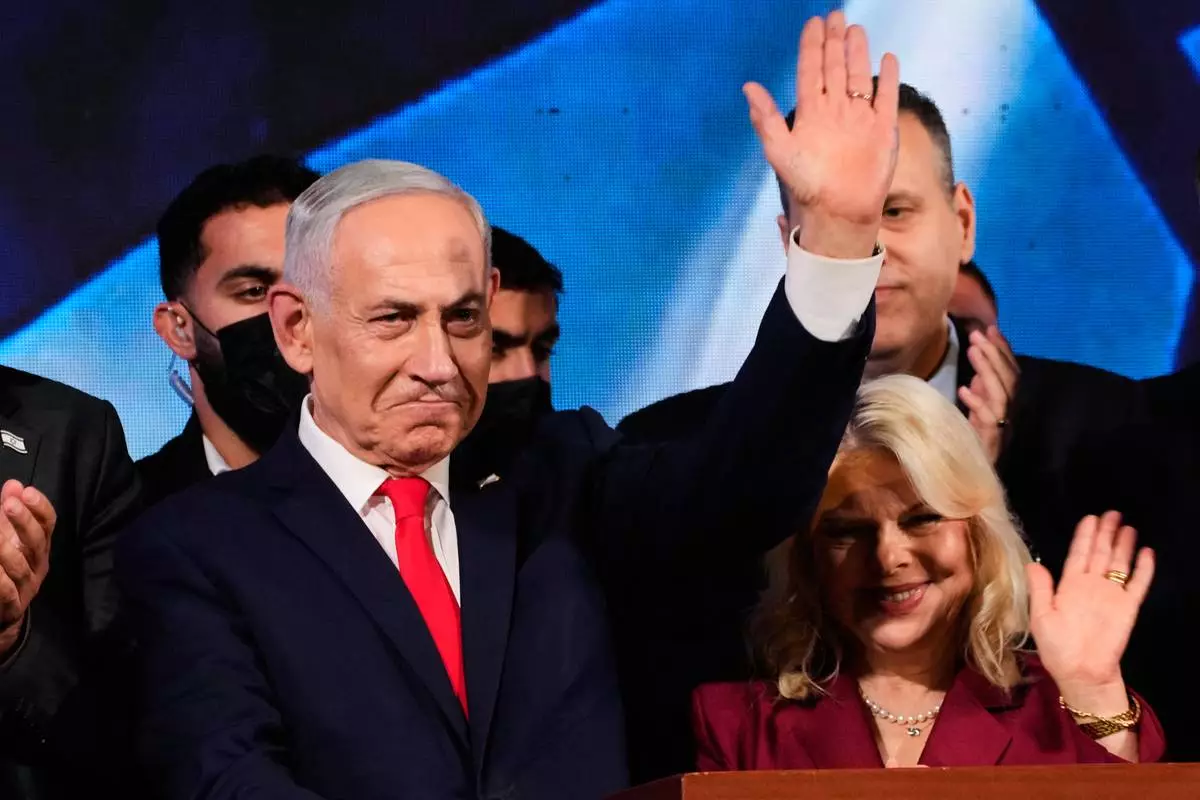
Israeli Prime Minister Benjamin Netanyahu, accompanied by his wife, Sara, waves to supporters at Likud party headquarters in Jerusalem after the release of the first exit poll results in Israel's general election, Wednesday, Oct. 28, 2026. (AP Photo/Ohad Zwigenberg)

Israeli Prime Minister Benjamin Netanyahu, accompanied by his wife, Sara, waves to supporters at Likud party headquarters in Jerusalem after the release of the first exit poll results in Israel's general election, Wednesday, Oct. 28, 2026. (AP Photo/Ohad Zwigenberg)

Recommended Articles