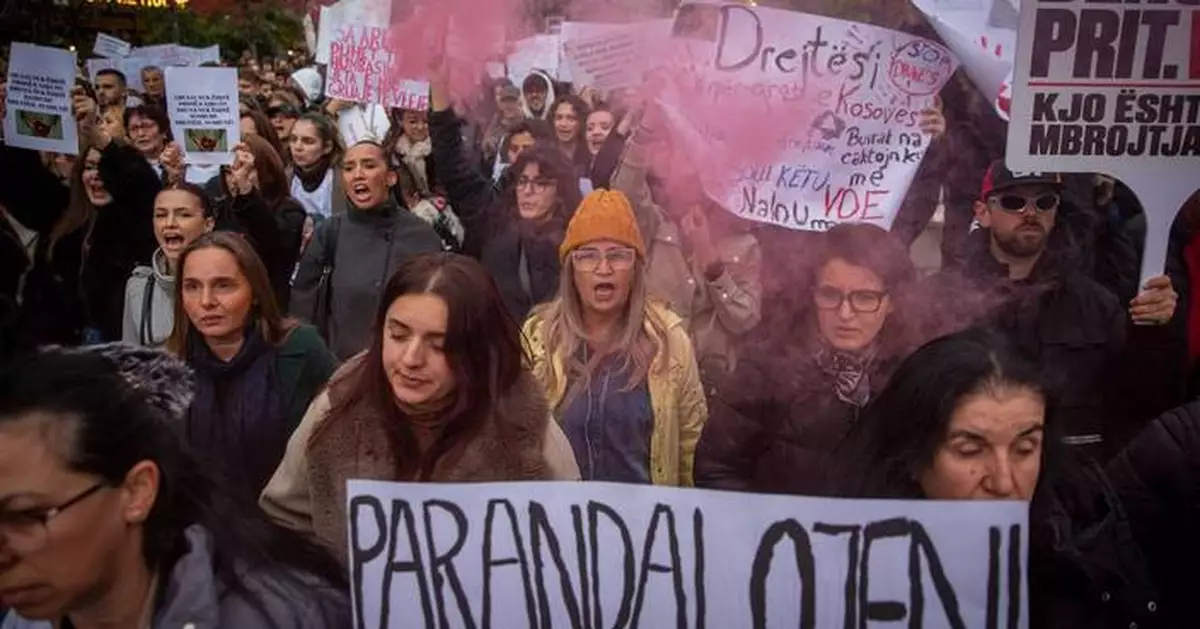
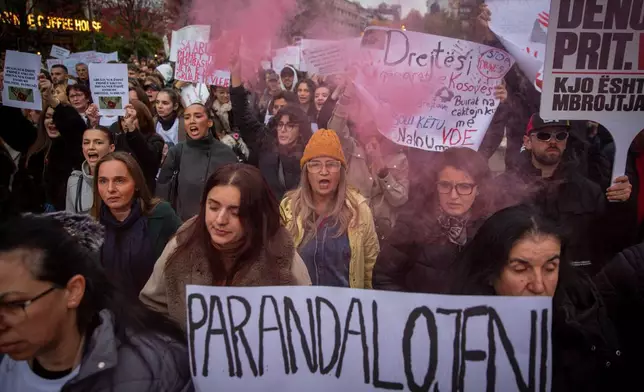
PRISTINA, Kosovo (AP) — Angry protesters in Kosovo on Wednesday demanded state action over widespread violence against women in the staunchly patriarchal Balkan country, splashing red paint on government buildings in a message to the authorities that they have blood on their hands for failing to prevent it.
Thousands of people joined the rally in the capital Pristina that was called after Arlinda Zekaj, 49, was killed by her brother-in-law on Sunday near the western town of Peja. Activists say that Zekaj became the eighth victim killed as the result of domestic violence in Kosovo this year.
Click to Gallery
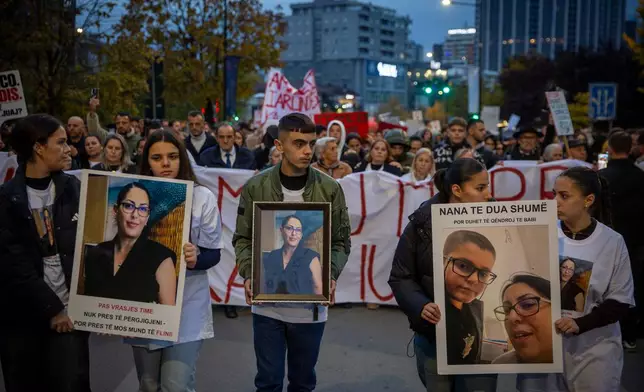
Family members of Arlinda Zekaj hold her picture during a protest in Pristina, Kosovo, as thousands gather to condemn the killing of the Kosovo-American woman, whose death sparked public outrage and renewed calls for accountability over violence against women, on Wednesday, Oct. 28, 2026. (AP Photo/Visar Kryeziu)
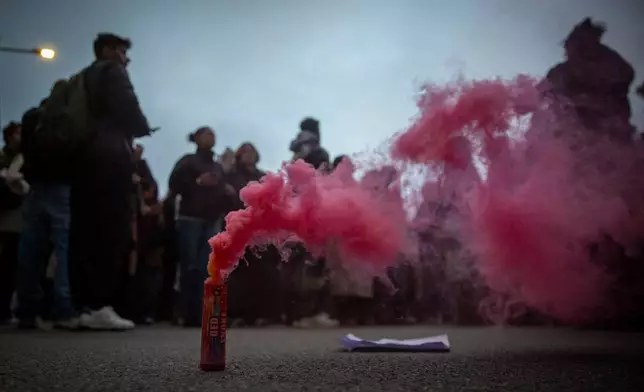
A red smoke torch lies on the ground as thousands protest the killing of Kosovo-American woman Arlinda Zekaj, whose death sparked public outrage and renewed calls for accountability over violence against women, in Pristina, Kosovo, on Wednesday, Oct. 28, 2026. (AP Photo/Visar Kryeziu)
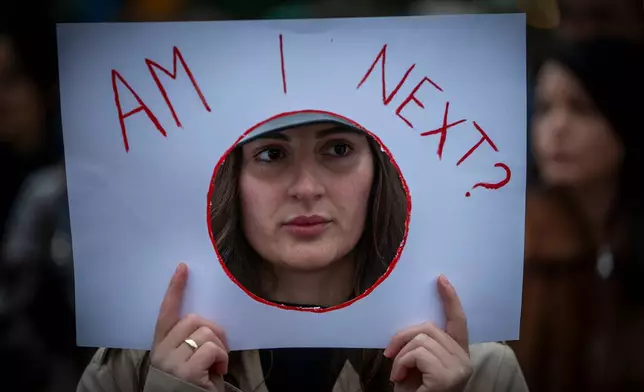
A woman holds a sign "Am I Next" as thousands of people gather in Kosovo's capital to protest the killing of a Kosovo-American woman, Arlinda Zekaj, whose death sparked public outrage and renewed calls for accountability over violence against women in capital Pristina, Kosovo, on Wednesday, Oct.28, 2026. (AP Photo/Visar Kryeziu)
Thousands protest the killing of Kosovo-American woman Arlinda Zekaj, whose death sparked public outrage and renewed calls for accountability over violence against women, in Pristina, Kosovo, on Wednesday, Oct. 28, 2026. (AP Photo/Visar Kryeziu)
“Do we have to die to be taken seriously?” read one of the banners that the protesters carried during their march. Other messages written in red paint said “Men kill women, the state stays silent” or “Down with the patriarchal system.”
Protesters also held photos of the murdered women.
Kosovo has passed several laws and regulations to combat violence against women — including life sentences for murderers — but activists say that their implementation remains inconsistent and without coordination by relevant authorities, including police, social services, prosecutors and courts.
The situation is similar throughout the Balkans, a region where male dominance is part of tradition. The problem surged following the wars in the 1990s and the political, economic and social crises that have persisted since the conflicts ended.
The death of Zekaj, who held dual U.S. and Kosovo citizenship, sparked additional public outrage because she had written to the authorities before her death, asking for help and warning she could get killed.
In her letter to the chief prosecutor's office just three days before she was killed, Zekaj said officials were “shifting responsibility from one to another” thus allowing “the danger to my life to continue.”
Zekaj had repeatedly complained of violence from her husband and had moved away to live with her parents while asking for protection.
She returned to her home after her husband was detained last weekend for family violence. Police offered no escort, and her brother-in-law killed her with an ax when she got back, according to a relative. He then fled the scene and was arrested after several days on the run for murder with a sharp object. Neither has commented on the allegations.
“This case raises serious questions about a possible failure in the chain of institutions," the Kosovo Women’s Network, one of the protest organizers, said. The group added in a statement that all institutions must act in coordination when a woman seeks help.
Kosovo's Parliament convened for an urgent session on Monday in response to Zekaj's death. Lawmakers established a parliamentary investigative committee to examine possible institutional responsibility in the case.
Prime Minister Albin Kurti joined the criticism, blaming a “systemic chain of failures by the institutions responsible for security and justice.”
“A murder preceded by such warnings that went unanswered could hardly have ended any other way," Kurti told a government session on Wednesday. “And that makes the situation even more unforgivable.”
According to the Justice Ministry, police received 2,815 reports of domestic violence in 2025 in Kosovo, a country of around 2 million people. Three men have been sentenced to life in prison for killing their partners since the punishment was introduced in 2012.
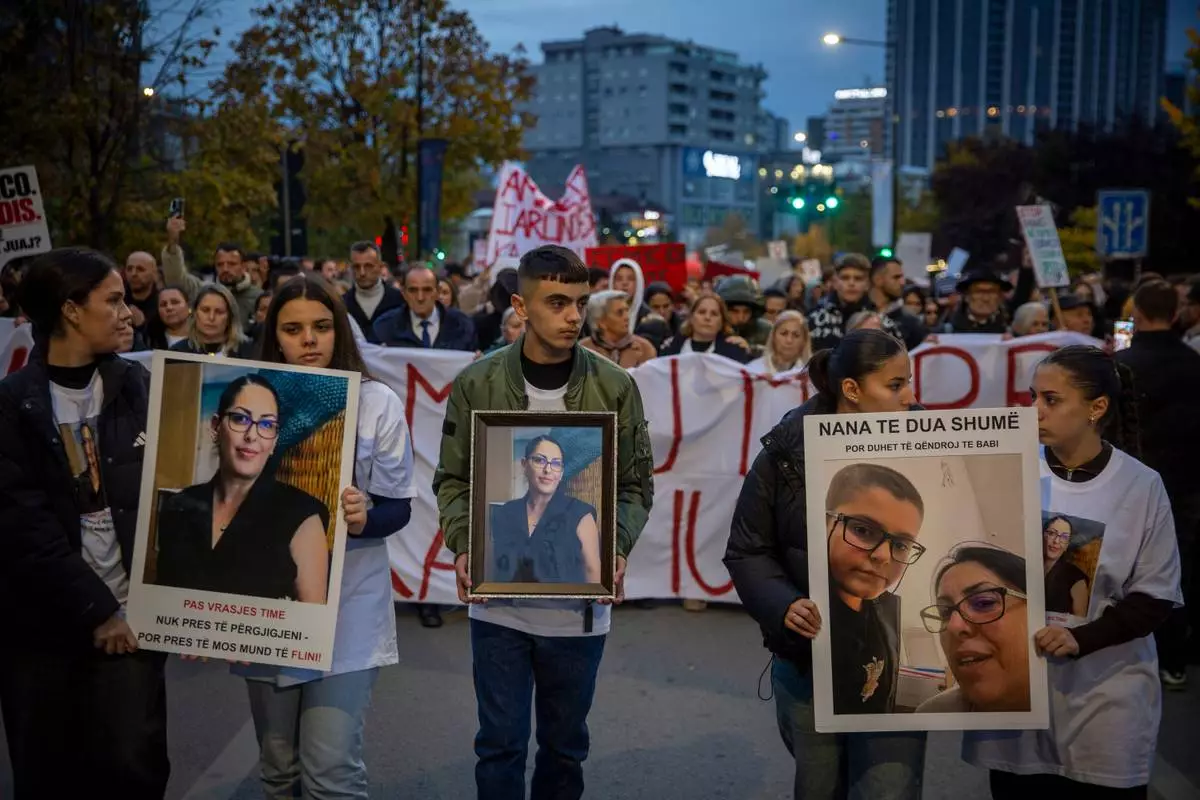
Family members of Arlinda Zekaj hold her picture during a protest in Pristina, Kosovo, as thousands gather to condemn the killing of the Kosovo-American woman, whose death sparked public outrage and renewed calls for accountability over violence against women, on Wednesday, Oct. 28, 2026. (AP Photo/Visar Kryeziu)
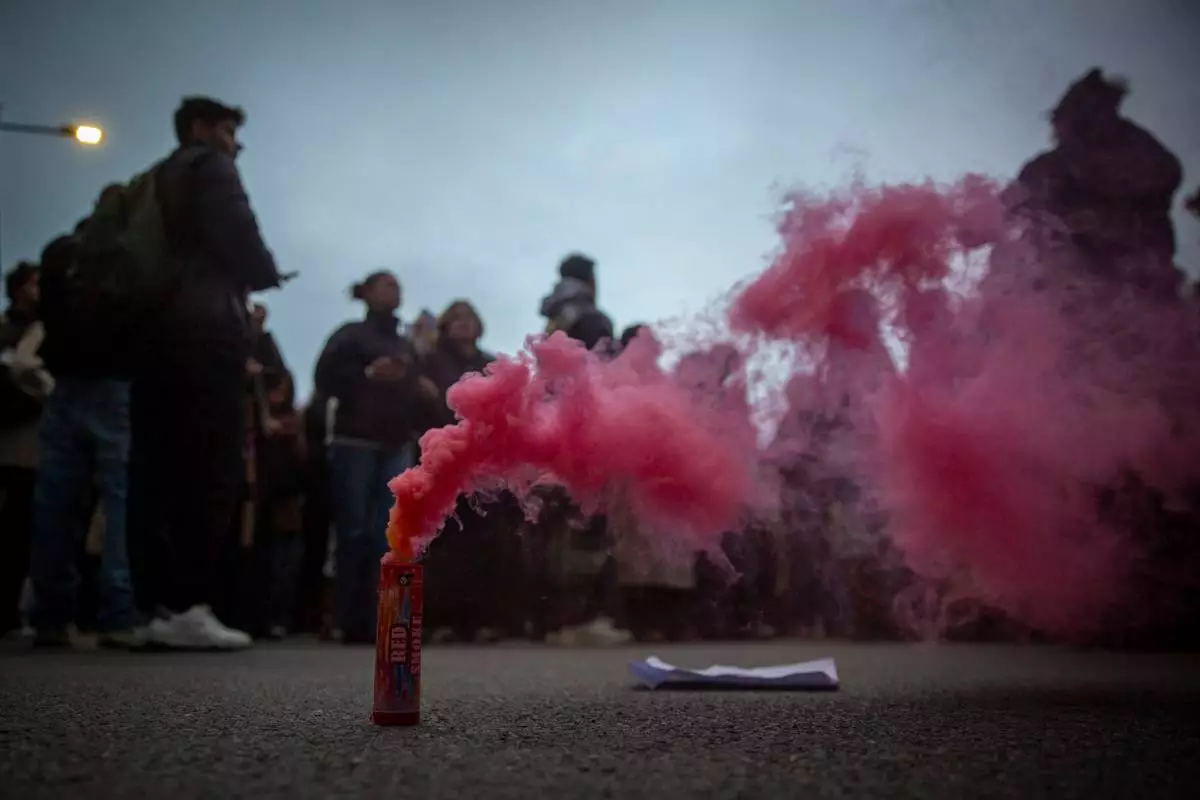
A red smoke torch lies on the ground as thousands protest the killing of Kosovo-American woman Arlinda Zekaj, whose death sparked public outrage and renewed calls for accountability over violence against women, in Pristina, Kosovo, on Wednesday, Oct. 28, 2026. (AP Photo/Visar Kryeziu)
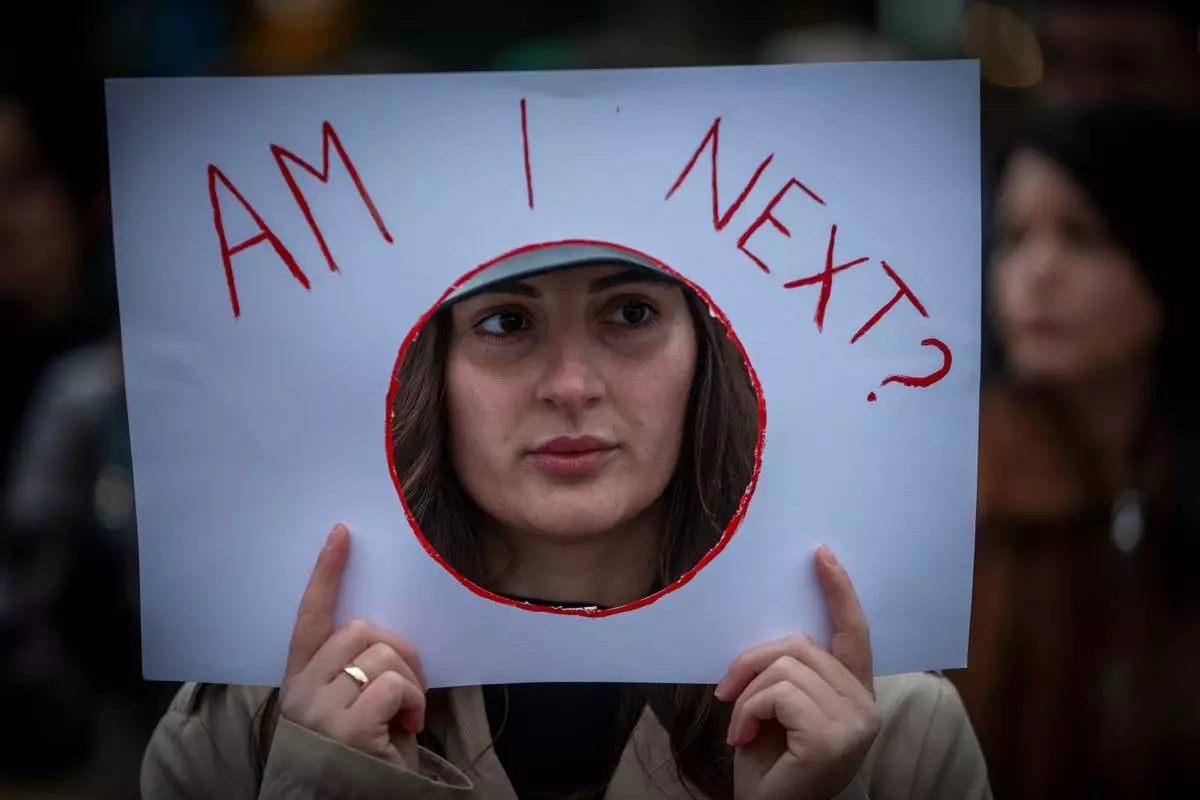
A woman holds a sign "Am I Next" as thousands of people gather in Kosovo's capital to protest the killing of a Kosovo-American woman, Arlinda Zekaj, whose death sparked public outrage and renewed calls for accountability over violence against women in capital Pristina, Kosovo, on Wednesday, Oct.28, 2026. (AP Photo/Visar Kryeziu)
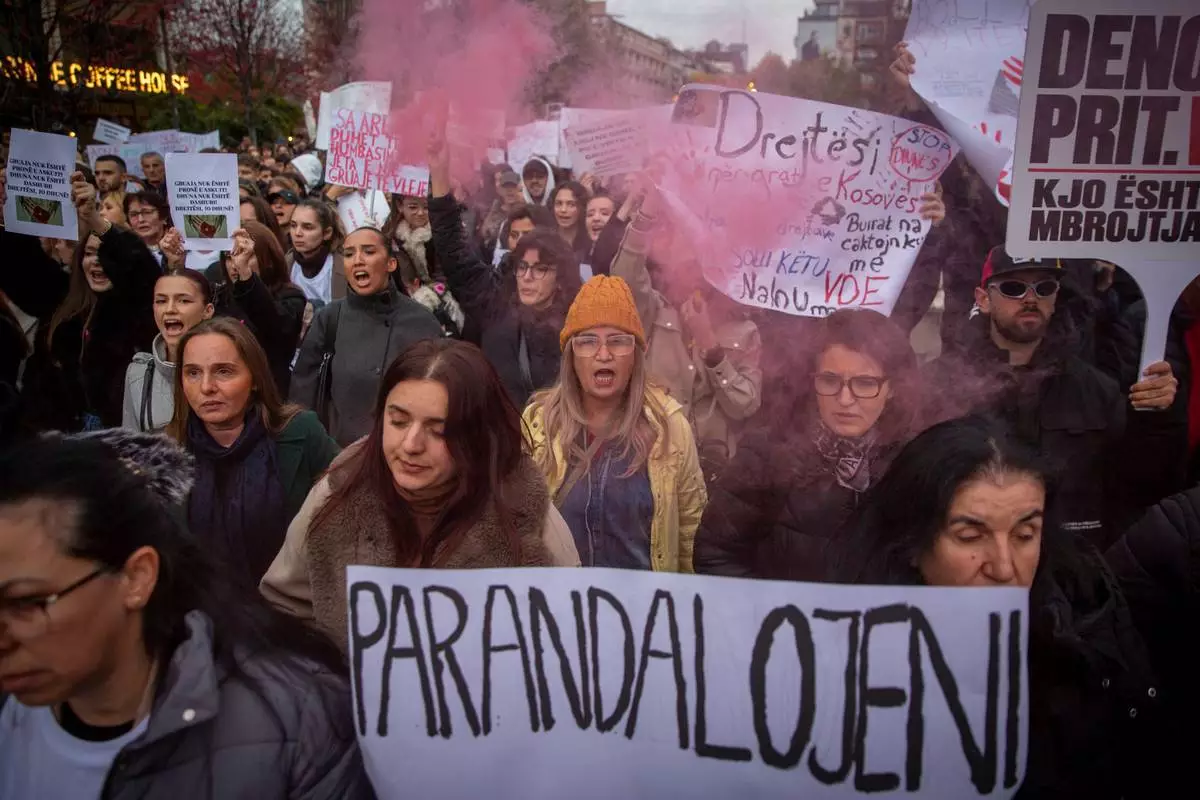
Thousands protest the killing of Kosovo-American woman Arlinda Zekaj, whose death sparked public outrage and renewed calls for accountability over violence against women, in Pristina, Kosovo, on Wednesday, Oct. 28, 2026. (AP Photo/Visar Kryeziu)
MIAMI (AP) — Defeated Brazilian presidential candidate Flávio Bolsonaro and his family arrived in Miami on Wednesday after he refused to concede the election to President Luiz Inácio Lula da Silva and fled the country.
In a circuitous journey, Bolsonaro left for Argentina on Tuesday with his wife and two daughters, then traveled to Ecuador, according to Argentine officials and flight data. The 45-year-old senator, a close ally of U.S. President Donald Trump, visited the White House in May, and the Trump administration approved U.S. visas for him and his family this week.
Bolsonaro’s father, Jair Bolsonaro, also fled to Florida after losing the 2022 presidential election to Lula before returning to Brazil three months later.
Flávio Bolsonaro is under investigation by Brazil’s Supreme Court, accused of corruption, money laundering and tax evasion. The court ordered him to hand over his regular and diplomatic passports by noon Tuesday. It remained unclear whether he complied, but allies said late Tuesday he also has an Italian passport.
On Wednesday, Bolsonaro issued his first comments on his flight in a statement on X, in which he called himself the victim of electoral fraud and political persecution, and again asked for the annulment of the Lula–Alckmin ticket.
“I want to tell not only my 60 million voters but also the Brazilian people as a whole that I am the president-elect, and that the criminals who stole Brazil’s election are part of a criminal organization that has established a tyranny,” he said. In a later version of the letter, Bolsonaro swapped the term “president-elect” for “leader.”
Dressed casually in a dark polo shirt and flanked by his wife and two daughters, Bolsonaro stepped out of the plane shortly after it landed in Miami at about 9:30 a.m. EDT. Florida is home to the largest population of Brazilians in the U.S.
The family fled Brazil late Tuesday, entered Argentina via a border checkpoint and quickly boarded a private charter plane, Argentine immigration officials said.
Flightradar24 showed the plane believed to be carrying Bolsonaro landed in Guayaquil, Ecuador, about 4 a.m. local time, then took off minutes later for Miami-Opa Locka Executive Airport.
Before the family landed in Florida, Lula, who turned 81 on Tuesday, spoke to dozens of supporters outside the presidential residence in Brasilia.
“I regret that he left Brazil, because he could have stayed here and proven that the accusations are not true,” Lula said. “This act of leaving Brazil is shameful.”
Bolsonaro’s route through Argentina could deepen diplomatic tensions between Lula’s government and Argentine President Javier Milei, another Trump ally who traveled to Brazil to assist in Bolsonaro’s campaign.
Milei has not commented directly about Bolsonaro's defeat, but Juan Pablo Carreira, a presidential spokesperson, said on social media that Milei's administration rescued Bolsonaro “from the claws of communism, which seeks to imprison all opposition figures.”
Representatives of Brazil's government have not responded to requests for comment.
Trump has said Bolsonaro is welcome in the U.S., calling him and his family “fine people.”
“The election was really strange, and I thought it was terrible,” Trump told reporters at Joint Base Andrews, Maryland, on Tuesday. Earlier, Trump also said, without evidence, that the election was “rigged.”
When asked about Bolsonaro’s assertion on Wednesday that he was the “rightful president-elect of Brazil” — a term the defeated candidate later softened to “leader of Brazil” — the U.S. president said he would not comment. Instead, Trump said he has given Bolsonaro a “pass” to come into the country.
“I won’t get involved,” Trump said, before repeating his claim that the election was “very strange."
Leaders around the world and the Organization of American States have endorsed the result and congratulated Lula, who was reelected by a margin of about 4.4 million votes in the second and final round.
The U.S. has imposed double-digit sanctions on Brazil, which boasts Latin America’s largest economy. Lula has championed Brazil’s long tradition of nonalignment, cultivating ties with competing powers. His government has deepened trade ties with China and sought greater global influence through BRICS, a group of emerging economies.
Brazil's Supreme Court ordered the defeated candidate to surrender his Brazilian passports Monday. In a video, he said he received the order outside the home where his father is serving a 27-year sentence under house arrest for his attempted coup following his 2022 election loss to Lula.
A Brazilian diplomat, who was not authorized to speak about the matter publicly, told The Associated Press that Bolsonaro used an Italian passport to enter Argentina and that Brazilians leaving the country via a land border are not scrutinized by Brazilian authorities.
The diplomat said Brazil’s federal police were not monitoring Bolsonaro when he left his home in Brasilia because the Supreme Court had not issued a warrant for his arrest.
Flávio Bolsonaro said in a video Monday that he was attempting to organize opposition to the election results among his congressional colleagues. His eight-year term as a senator expires Jan. 31, 2027. His Liberal Party released a statement saying it accepted the election results.
Brazil's Supreme Court is investigating Bolsonaro for allegedly using a sports betting company to launder fraudulent deductions from government pensions paid to senior citizens. In a separate case, he is accused of accepting millions of dollars from a disgraced banker. Bolsonaro has denied wrongdoing.
Mauricio Savarese reported from Sao Paulo. Associated Press reporters Eléonore Hughes in Rio de Janeiro, Debora Rey in Buenos Aires, Argentina and Seung Min Kim in Washington D.C. contributed.
Follow AP’s coverage of Latin America and the Caribbean at https://apnews.com/hub/latin-america
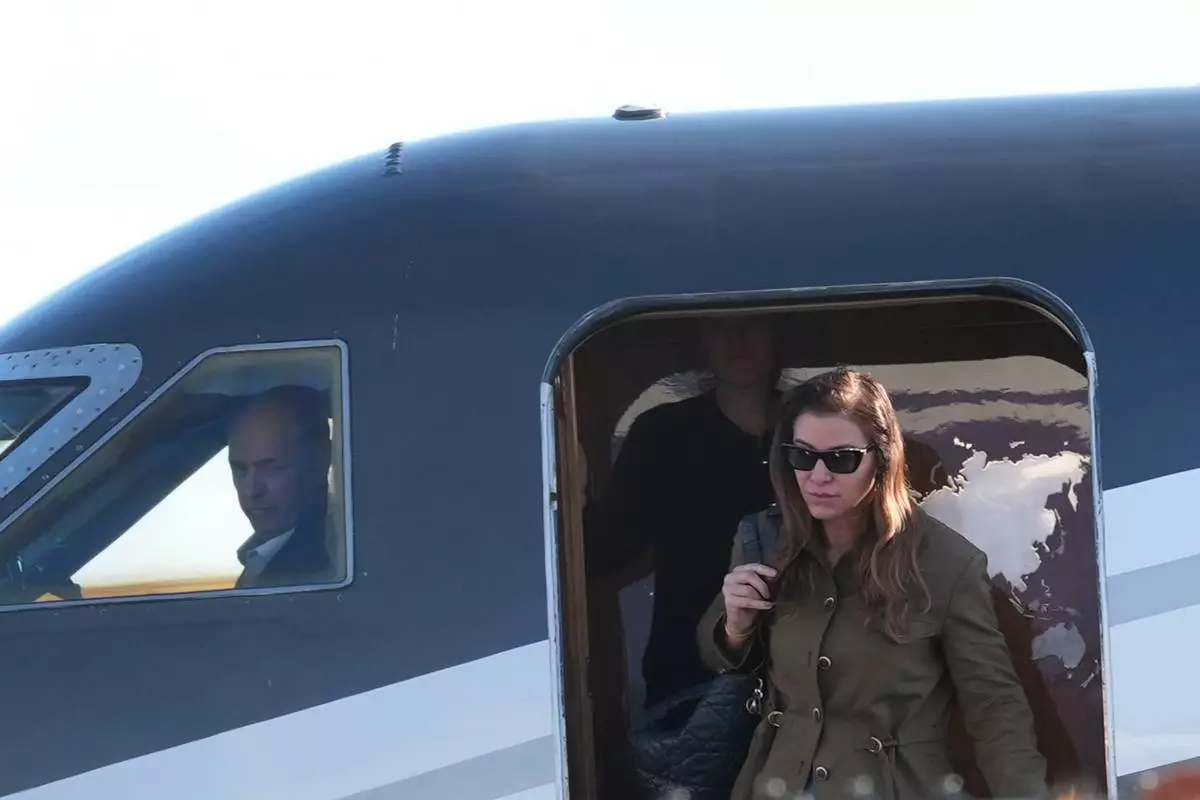
Fernanda Bolsonaro along with her husband, Flávio Bolsonaro arrive at Miami-Opa Locka Executive Airport on Wednesday, Oct. 28, 2026, in Opa-locka, Fla. (AP Photo/Marta Lavandier)
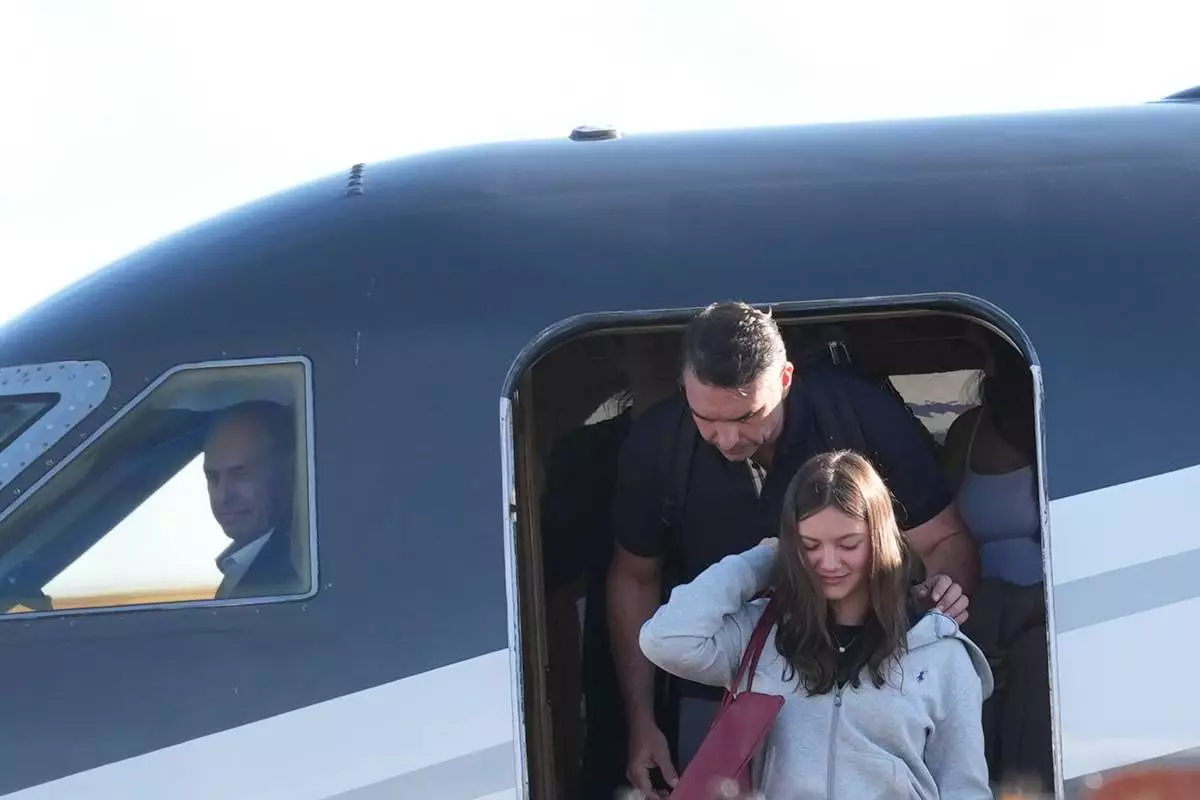
Flávio Bolsonaro arrives at Miami-Opa Locka Executive Airport on Wednesday, Oct. 28, 2026, in Opa-locka, Fla. (AP Photo/Marta Lavandier)
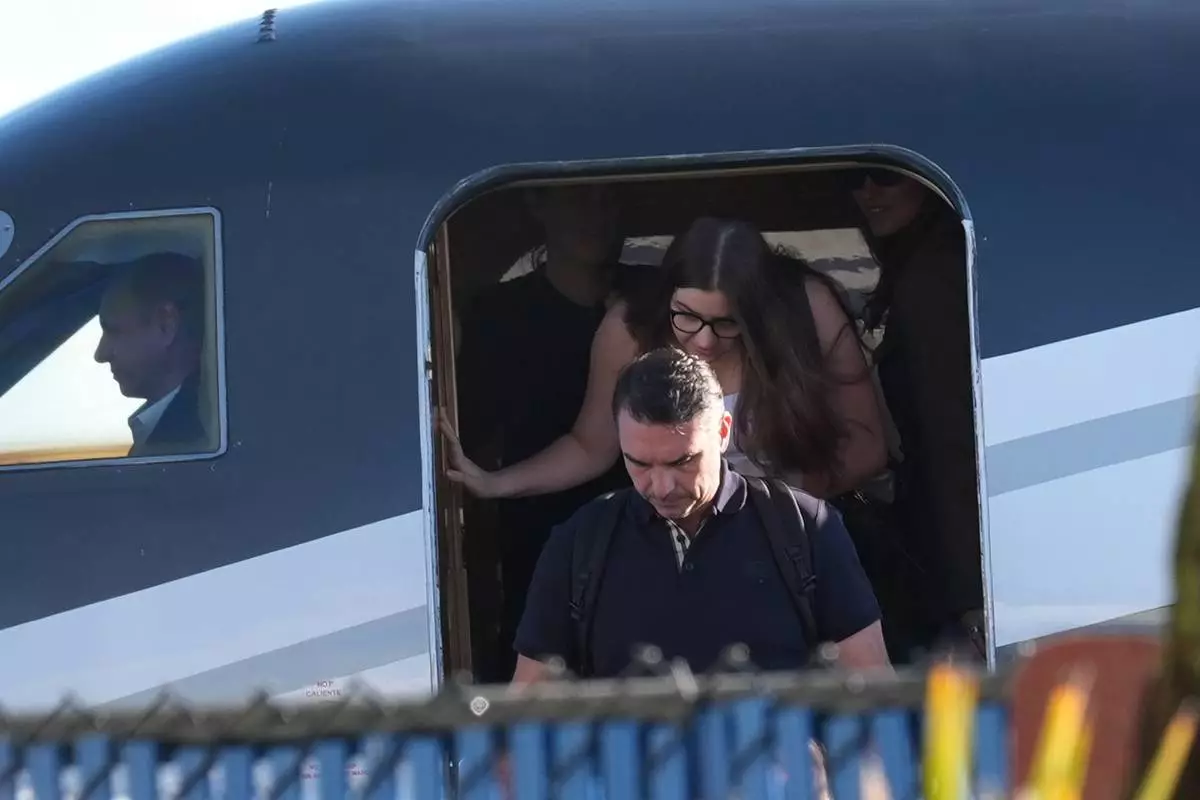
Flávio Bolsonaro arrives at Miami-Opa Locka Executive Airport on Wednesday, Oct. 28, 2026, in Opa-locka, Fla. (AP Photo/Marta Lavandier)
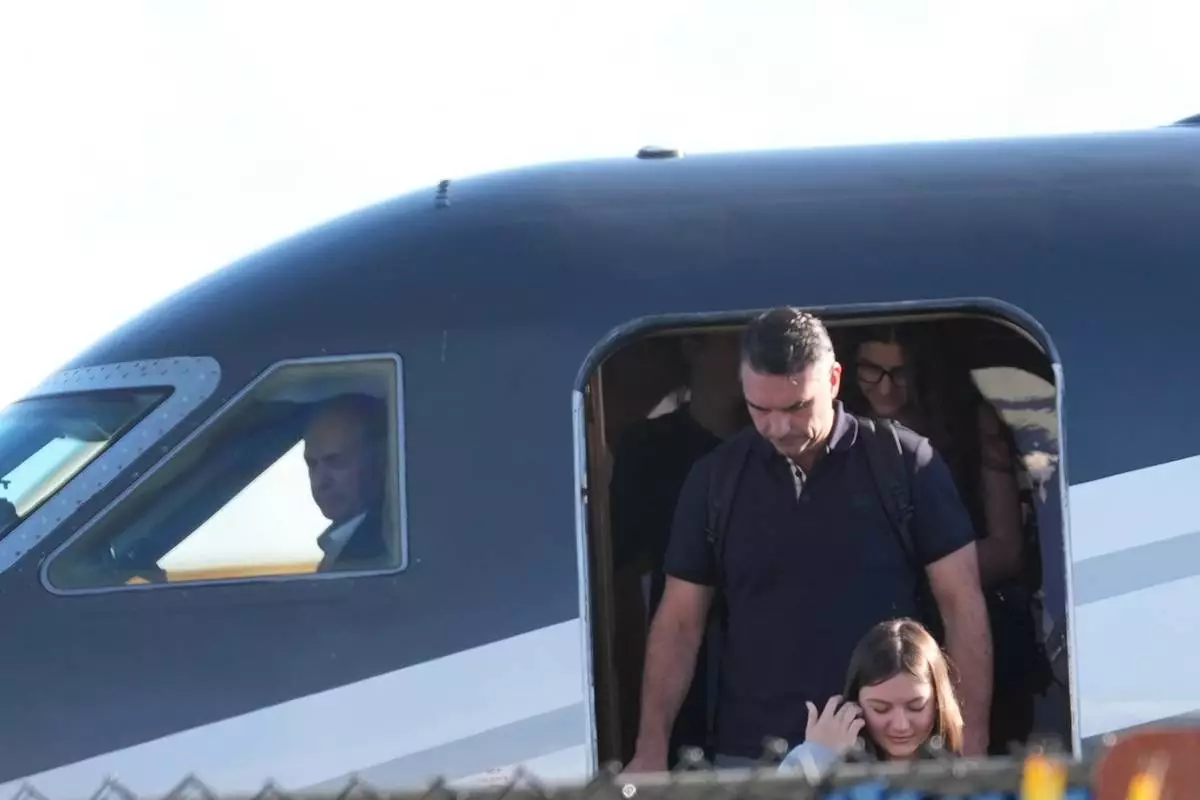
Flávio Bolsonaro arrives at Miami-Opa Locka Executive Airport on Wednesday, Oct. 28, 2026, in Opa-locka, Fla. (AP Photo/Marta Lavandier)

Flávio Bolsonaro arrives at Miami-Opa Locka Executive Airport on Wednesday, Oct. 28, 2026, in Opa-locka, Fla. (AP Photo/Marta Lavandier)
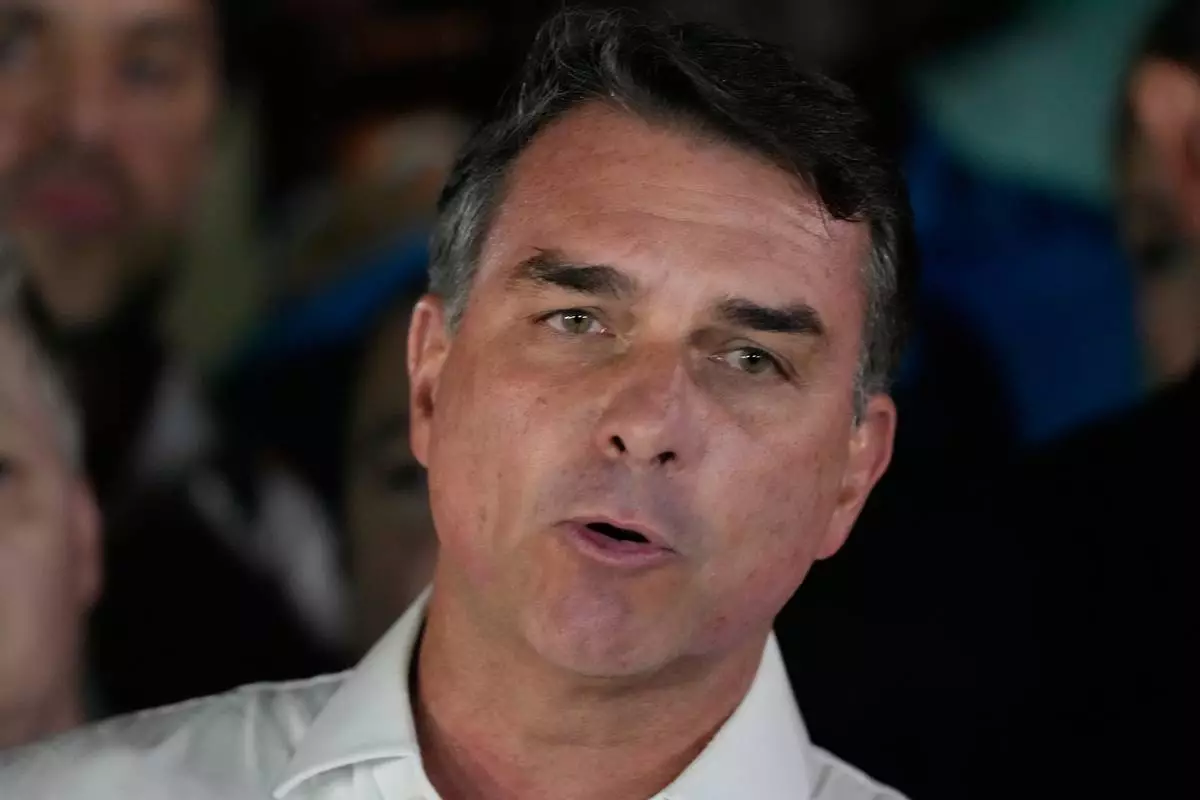
Opposition presidential candidate Sen. Flavio Bolsonaro speaks after the presidential runoff in Brasilia, Brazil, Sunday, Oct. 25, 2026. (AP Photo/Eraldo Peres)