Google parent company Alphabet Inc. came up short of Wall Street expectations despite strong revenue growth in its third-quarter results, which sent its stock falling in after-hours trading Wednesday.
The Mountain View, California-based company said its net income was $26.17 billion in the July-September period. That’s down from $34.98 billion in the same period a year earlier.
Revenue grew 25% from the same period last year to $127.58 billion, but that was shy of analysts' expectations. Analysts, on average, were expecting revenue of $127.97 billion, according to a poll by FactSet.
The company earned $2.12 per share, reflecting an $8.7 billion loss on equity investments that reduced earnings by 55 cents per share. Analyst estimates were around $3.01 per share.
Sundar Pichai, CEO of Google and Alphabet, said in a statement that the quarter was strong and that the company is “now on a half-trillion dollar revenue run rate. Our deep full stack approach is driving momentum across the business,” he said, pointing to the 25% revenue growth year-over-year.
Pichai also said the Gemini app, its artificial intelligence assistant, has reached 1 billion users, which makes it the fastest-growing product in Google’s history.
Google and Alphabet's Chief Financial Officer Anat Ashkenazi said on a call with investors Wednesday that the company continues to expect its capital expenditures to “increase significantly” in 2027, which she said will be explained in further detail during the fourth quarter call.
The company's revenue growth was driven by its Google Cloud segment, which delivered record growth. Its revenue increased 103% from last year to $30.7 billion.
Pichai said that the company's AI infrastructure and solutions are the “major drivers for cloud growth and our customers see us as the leading provider here, so there’s huge demand.”
“Alphabet was viewed as behind in the AI race not long ago, and this quarter makes a real case that it can start taking the lead from Microsoft. The problem is everything else,” said David Wagner, head of equity and portfolio manager at Aptus Capital Advisors.
Google Search and other advertising revenues increased by 12% to $63.3 billion, and advertising revenue from YouTube, which Google owns, increased 9% to $11.2 billion. These increases came in lower than some analysts expected, sparking concerns about a deceleration in growth despite Pichai saying the year-over-year query growth rate is the highest it’s been in the last five years.
“In a market worried about AI cannibalizing the franchise, investors need to see Search accelerating, not decelerating,” Wagner said in a statement.
Alphabet’s shares had fallen more than 10% to $289.95 in after-hours trading.

FILE - In this May 1, 2019, file photo a man walks past a Google sign outside with a span of the Bay Bridge at rear in San Francisco. (AP Photo/Jeff Chiu, File)
HUNTINGTON BEACH, Calif. (AP) — King tides have inundated parts of both U.S. coasts, flooding streets and sending seawater into homes and businesses in beach communities in California, Florida and the Carolinas.
The tides began with the full moon earlier this week and could cause flooding in some areas into the weekend, forecasters said. King tides are caused by the gravitational pull and alignments of the Earth, moon, and sun. They can occur several times a year and last several days.
This week's king tides have been exacerbated by additional factors, forecasters said Wednesday.
In Florida, strong high pressure to the north and low pressure over the Caribbean were causing increased swells, Chris Fisher, a National Weather Service meteorologist in Miami, said.
Along the California coast, the ongoing super El Niño has warmed the ocean, leading to an increased volume of seawater. Another factor was the occurrence of Kelvin waves, a series of pulses of warm water that lift the sea level, said Roger Gass, a meteorologist with the weather service's Bay Area forecast office in Monterey.
This week's king tides, like their name, have definitely been noticeable. Residents didn't need a beach to see the ocean. The ocean came to them.
In Southern California, Stacey Frederick snapped photos and videos of people walking in knee-deep water and paddleboarding on the Pacific Coast Highway outside a coffee shop where she works as rising tides pushed water ashore. Officials shut down traffic on a flooded portion of the four-lane highway, which winds from Orange County up through California.
King tides aren’t new, yet this was unusual, Frederick said.
“It floods a little bit, but never to this point,” said Frederick, 38, who has lived in Huntington Beach for five years.
Record high tides were set this week in Santa Barbara, San Pedro, San Diego and nearby La Jolla, according to the weather service.
In Sunset Beach, the water washed over the three layers of sandbags that Lorraine Friedman, 75, had stacked inside her garage and on the small patio outside her studio apartment. She has lived in the seaside community for nearly three decades and her apartment has flooded only once before, some 20 years ago.
“This is the second day I’ve been flooded — two days — and tomorrow I’ll get flooded again,” she said Wednesday.
In the northern part of the state, minor flooding was expected through Saturday in low-lying areas along shorelines and tidal waterways during peak high tides, the weather service said.
Gass said the coastal flooding generally occurred within 1 1/2 hours before and after high tides, which are peaking 1.9 feet (about a half-meter) above normal in Northern California.
Most of Florida’s Atlantic coast was under flood warnings through early Friday. Street flooding also was reported in South Carolina coastal cities, including Charleston and Myrtle Beach, and rip currents were possible as far north as North Carolina's Outer Banks.
“It’s been a rough beach week,” Fisher said. “We’ve had a high risk of rip currents and some high surf out there. The beach conditions are going to continue to be rough through the weekend. It’s been a good week to stay out of the water and stay away from the beaches.”
In Fort Lauderdale, Florida, getting to the multiple waterfront venues at what’s billed as the world’s largest-in-water boat show was tricky, requiring driving through flooded streets next to marinas, hotels and convention centers.
Virginia Key, a barrier island in Miami, saw its highest king tide and the third-highest water level since records were first kept going back three decades, Fisher said.
“The only times we've seen higher was during hurricanes,” Fisher said. “It's historical from a king tide perspective.”
Raby reported from Charleston, West Virginia.
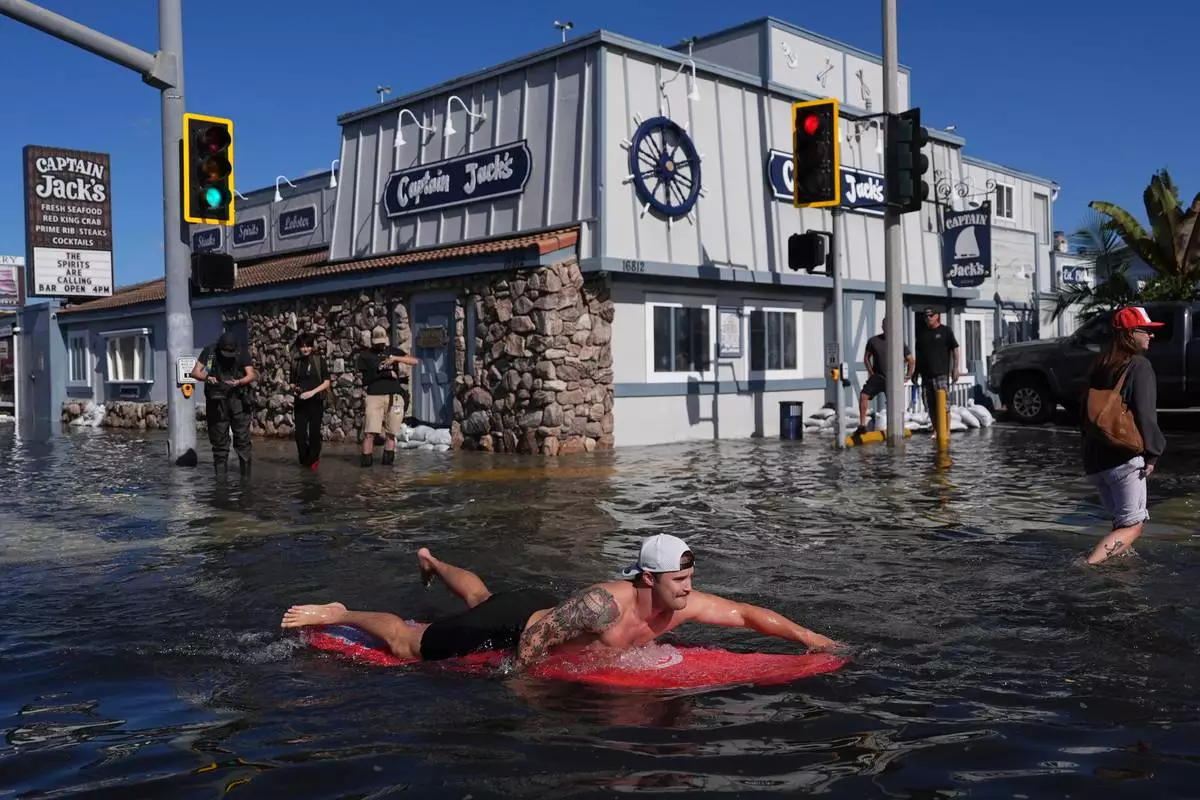
A man surfs through floodwaters in Huntington Beach, Calif., Wednesday, Oct. 28, 2026. (AP Photo/Jae C. Hong)
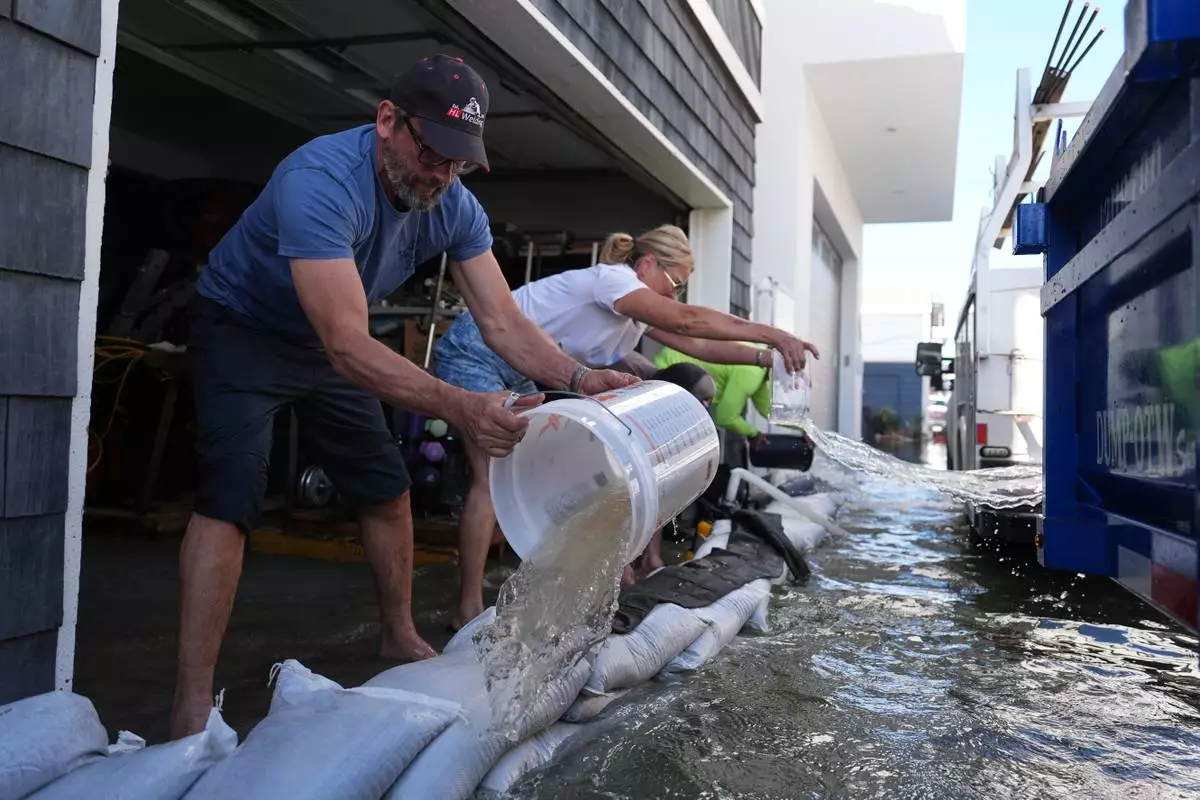
Members of the Deakins family remove floodwater from their garage in Huntington Beach, Calif., Wednesday, Oct. 28, 2026. (AP Photo/Jae C. Hong)
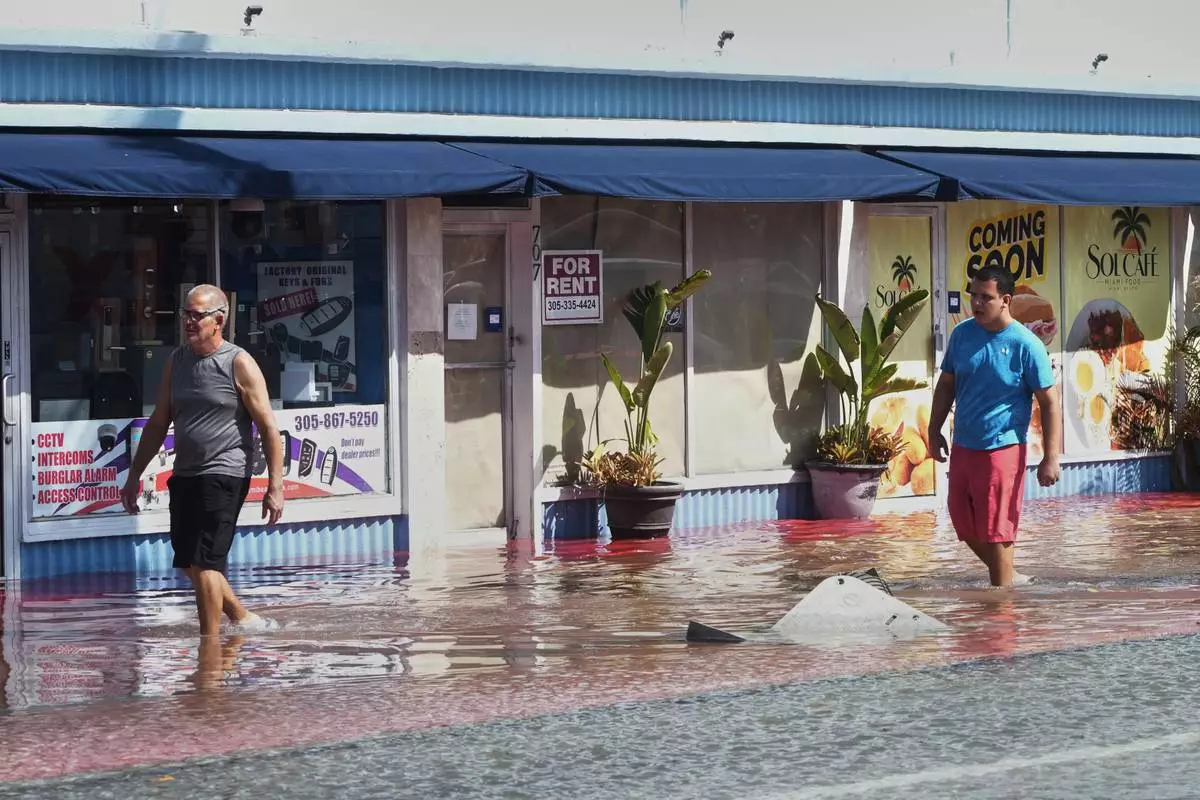
Pedestrians walk through a flooded street caused by king tides and heavy rain Wednesday, Oct. 28, 2026, in North Bay Village, Fla. (AP Photo/Marta Lavandier)
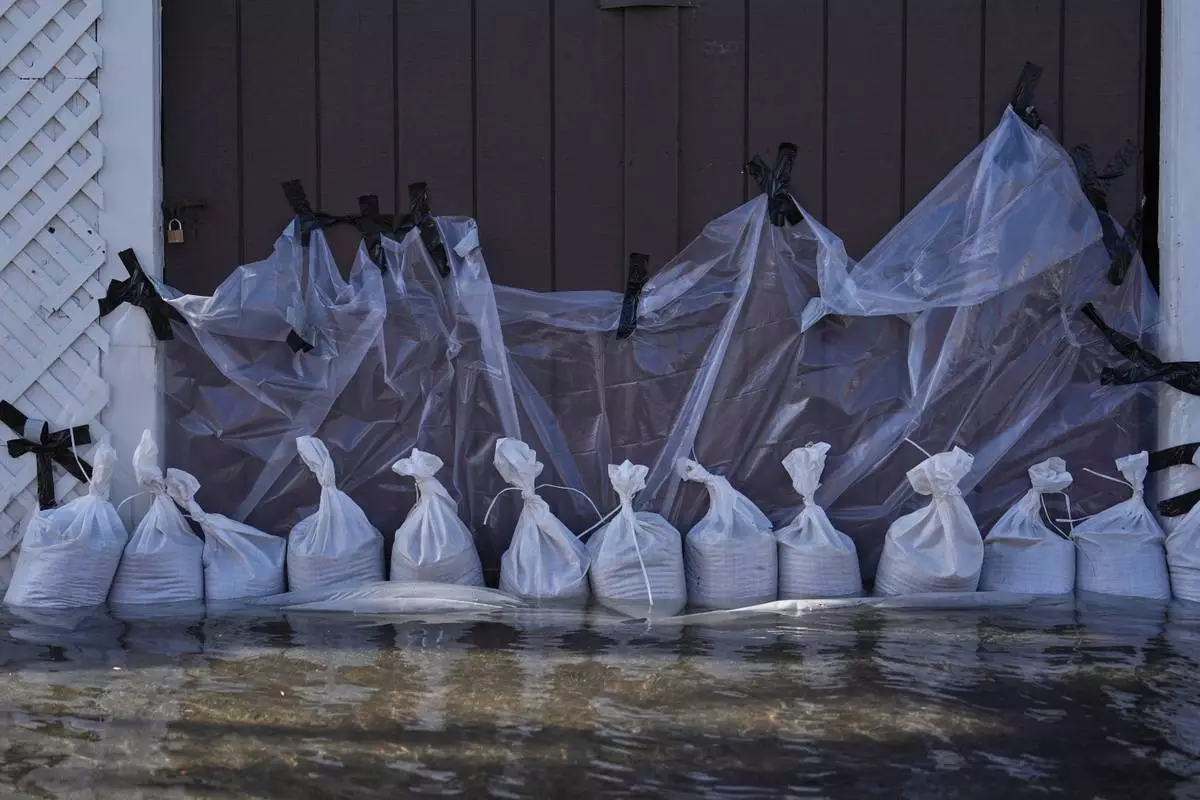
Sandbags are placed outside a home to protect it from floodwaters in Huntington Beach, Calif., Wednesday, Oct. 28, 2026. (AP Photo/Jae C. Hong)

Pedestrians walk through a flooded street caused by king tides and heavy rain in North Bay Village, Fla., Wednesday, Oct. 28, 2026, (AP Photo/Marta Lavandier)
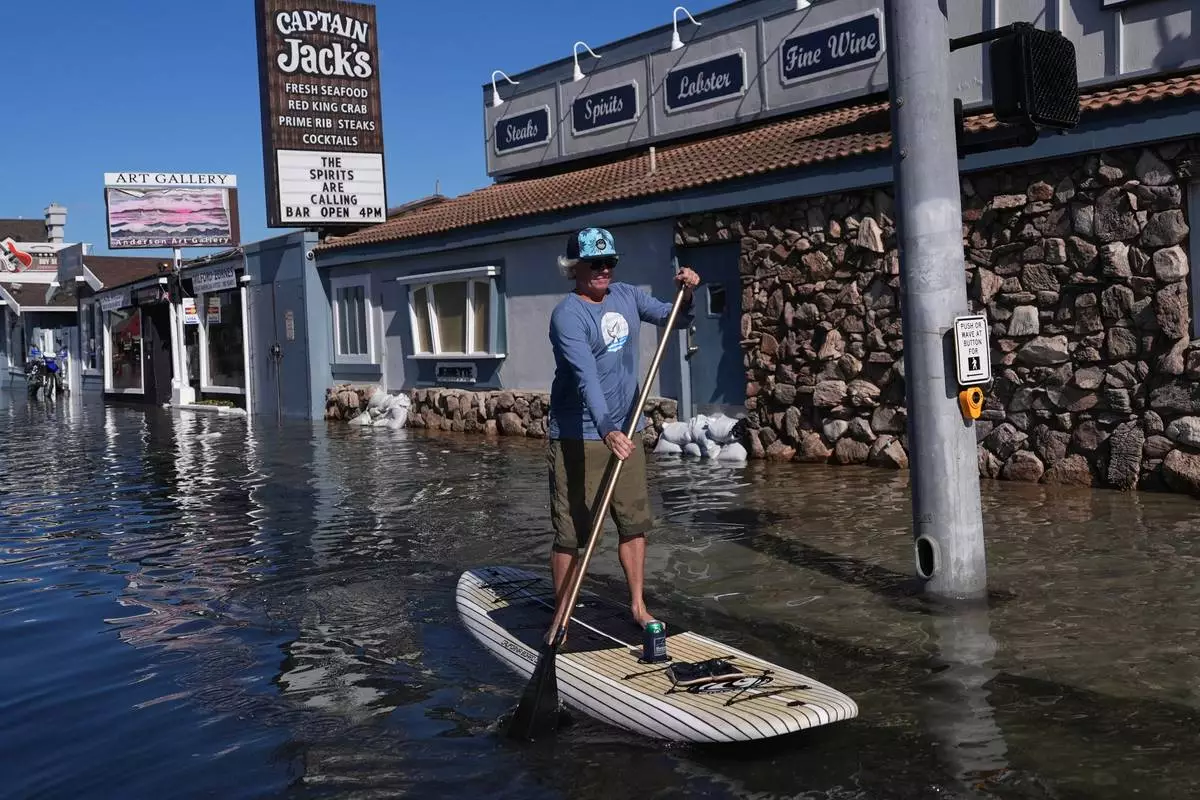
H.E. Durbin paddleboards in floodwaters in Huntington Beach, Calif., Wednesday, Oct. 28, 2026. (AP Photo/Jae C. Hong)