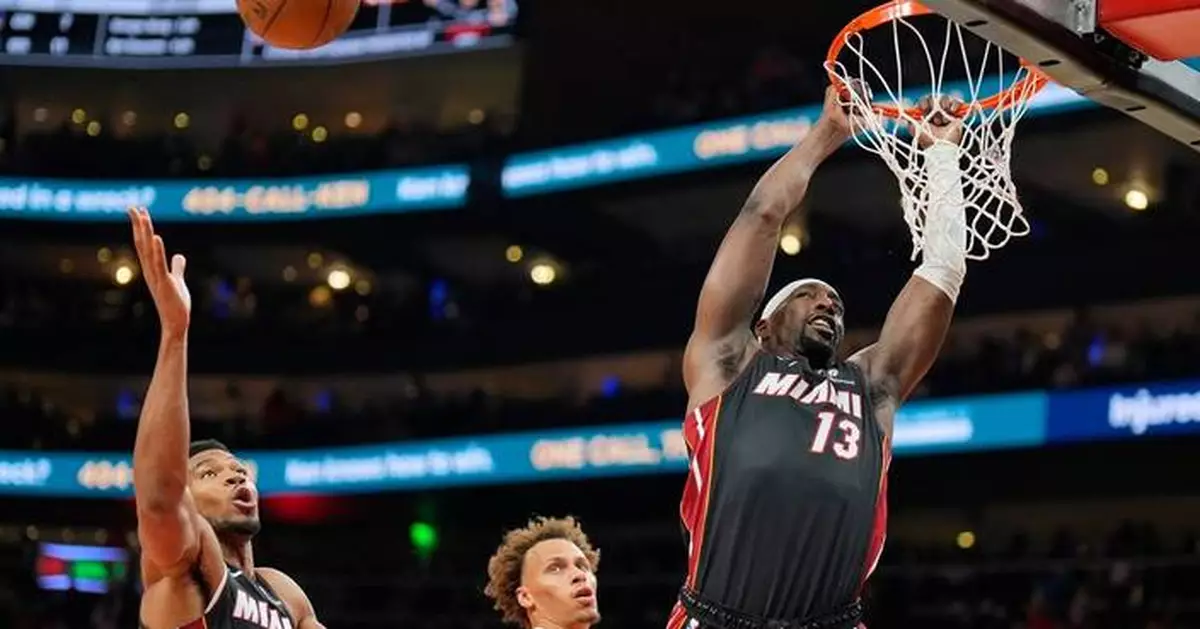
Bam Adebayo got everything he wanted Wednesday night: the first Miami win of the season, the game ball and a record he chased for years.
Adebayo is now his team's career leader in rebounds, passing Udonis Haslem for that spot in Miami's 129-117 win over the Atlanta Hawks — the first Heat victory in five tries this season. Haslem had 5,791 rebounds in his 20-season career with the Heat; Adebayo, who grabbed nine on Wednesday, now has 5,794.
“Man, I can’t really put it into words,” Adebayo said in the televised on-court postgame interview in Atlanta, as a member of the Heat staff secured the game ball to present to him. “The person I’m passing has been so close to me throughout my 10 years in this career, from the time I walked in until now.”
Haslem held the record since November 2012. He was Miami's longtime captain, a role that Adebayo assumed when Haslem retired. And now, Adebayo — who had an 83-point game last season, the second-biggest scoring effort in NBA history — has taken over for Haslem on another list as well.
“It was a really special moment in the locker room,” Heat coach Erik Spoelstra said, beaming at Adebayo's accomplishment. “So well-deserved. He’s done it with an iron will, a work ethic that’s unmatched. That’s a lot of rebounds in traffic, getting hit, banged in there. To be able to do it and break the record of his brother, UD, that's a really special moment.”
Adebayo is No. 2 on Miami's scoring list behind Hall of Famer Dwyane Wade, No. 3 in assists, No. 3 in steals and No. 5 in blocked shots. Only nine players have grabbed more rebounds since 2017-18, Adebayo's first season in the NBA after the Heat took him with the No. 14 pick out of Kentucky in the 2017 draft.
“I came into this league just wanting to make an impact, leave a mark,” Adebayo said. “And to pass some of the people who have been with me on this journey, can’t do anything but thank God but also appreciate the people that have been around me.”
See AP’s full NBA coverage here
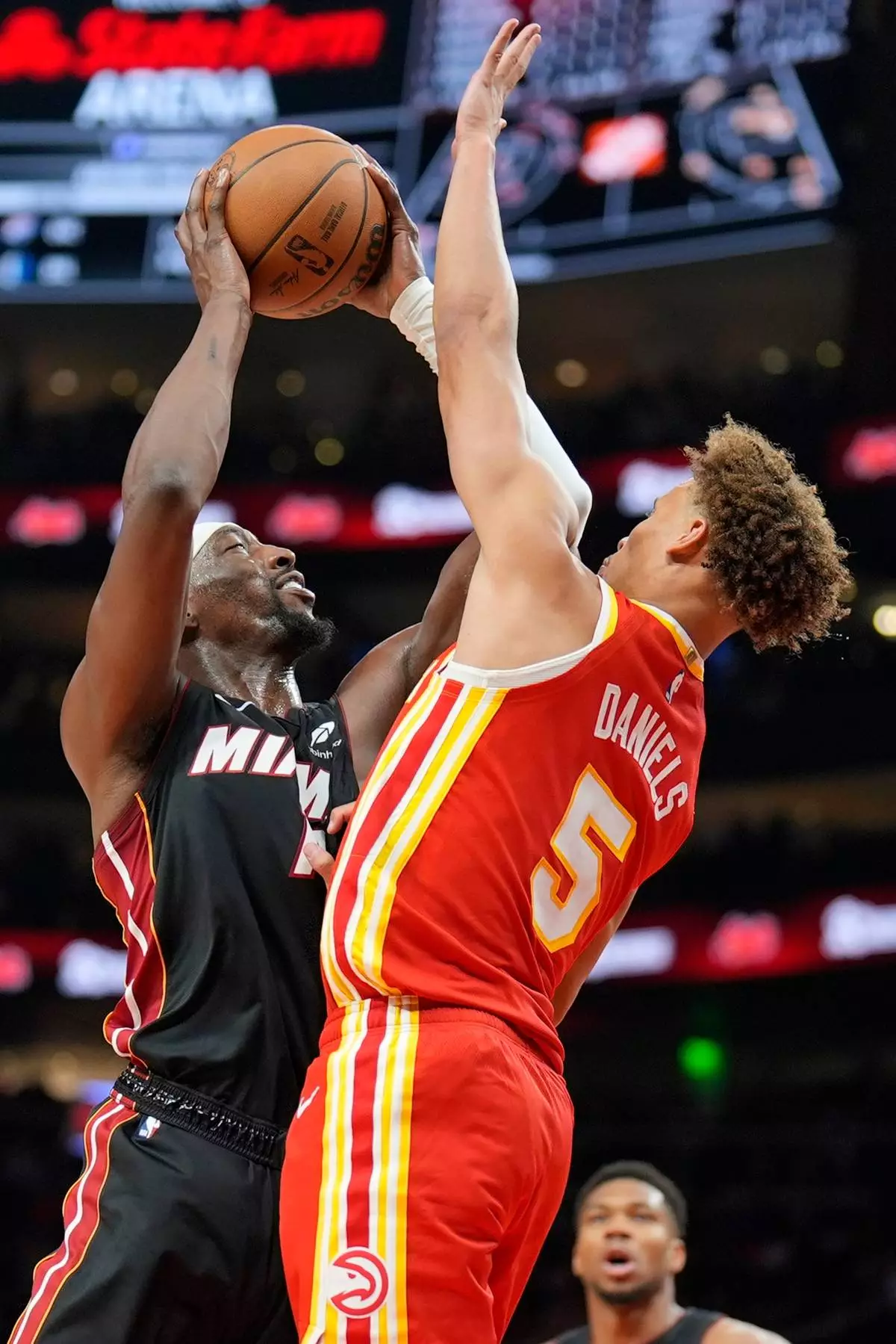
Miami Heat center Bam Adebayo (13) shoots against Atlanta Hawks guard Dyson Daniels (5) during the second half of an NBA basketball game, Wednesday, Oct. 28, 2026, in Atlanta. (AP Photo/Mike Stewart)
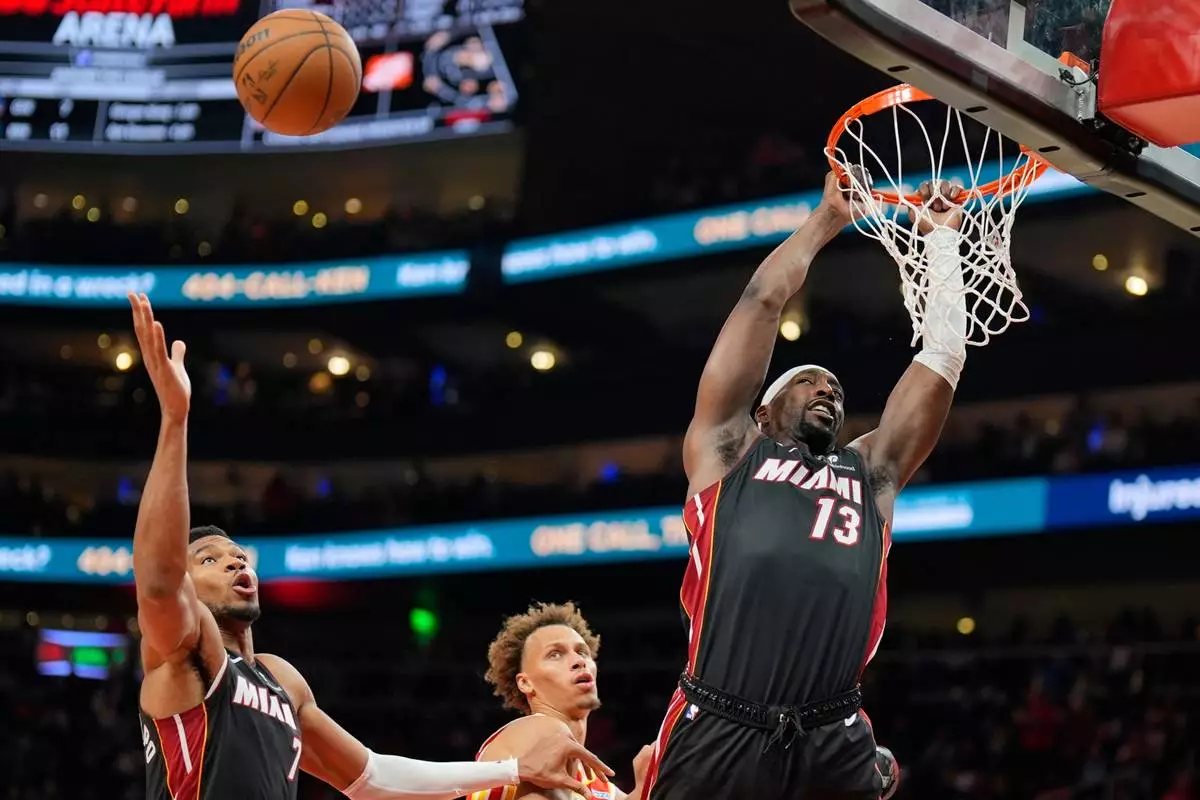
Miami Heat center Bam Adebayo (13) shoots against Atlanta Hawks guard Dyson Daniels (5) during the second half of an NBA basketball game, Wednesday, Oct. 28, 2026, in Atlanta. (AP Photo/Mike Stewart)
MINNEAPOLIS (AP) — Conservative activists James O'Keefe and Cam Higby were charged Wednesday with unlawful voting and identity theft after a Minnesota prosecutor said they gave false names to poll workers during the state's primary election. The men recorded the exchanges for a video to expose what they say are vulnerabilities in the state's voting laws.
Hennepin County Attorney Mary Moriarty announced the felony charges at a news conference. She said O'Keefe, 42, of West Palm Beach, Florida, and Higby, 26, of Covington, Washington, wore costumes and used the names of registered state voters while starting the “vouching” process in the Aug. 11 primary. The process provides a way for voters who lack proof of their current address to register and vote in their new precinct on the same day after a voter already registered in that precinct "vouches" for them.
Poll workers were suspicious and reported their behavior. Moriarty said the situation shows that “the system for identifying misconduct and responding to it functioned well during the primary.”
O'Keefe, who founded and later was ousted as leader of Project Veritas, came to notoriety by publishing undercover sting-style videos like the one made at the Minnesota polling places.
In a video and a written statement released Wednesday evening, O'Keefe said he and Higby had been acting as investigative journalists and that they never intended to complete the voucher process. He also said they were careful to say "the name is" rather than “my name is” when giving names to poll workers.
“In our report, we clearly stopped and walked out of the polling places to avoid even touching a voting ballot,” O'Keefe wrote. He later continued, “We didn't apply for a ballot; we were there talking to election clerks, posing hypotheticals and getting answers so that Americans could know what was happening in the elections.”
Higby did not immediately respond to an email requesting comment and did not have an attorney in court records. Neither of them has had an opportunity to enter a plea.
Minnesota allows registered voters to “vouch” for another voter in the same precinct by signing an oath attesting to the second person’s identity and that they live in the precinct. The person being vouched for also must verify their identity and eligibility by providing their Minnesota driver's license or identification card number or the last four digits of their Social Security number.
The process is rarely used but is most commonly done by older adults who have not updated their address on a driver’s license because they no longer drive. In the November 2024 election, fewer than 0.6% of votes cast used the process, according to the Minnesota Secretary of State’s office website.
In their video that was posted to YouTube on Aug. 13, O'Keefe, Higby and others dressed in costumes similar to attire worn by some Muslims and used fake accents while asking about the vouching process at multiple Minneapolis voting sites. Higby’s face was covered, and when talking to poll workers, O’Keefe referred to him as his wife.
Moriarty said both men “identified themselves using names of registered voters in the precinct without those voters' knowledge or permission.”
Moriarty said the poll workers noticed the “strange behavior” and flagged it to election officials, who asked police to investigate. The men stopped short of signing the oath required for vouching, but Moriarty said that giving false names and starting the process was enough to justify the felony charges.
“Free and fair elections are the bedrock of democracy, and their protection is one of our highest priorities,” Moriarty said.
O'Keefe's organization, O'Keefe Media Group, posted a statement and the video on its website and said the men presented “an intentionally extreme scenario to expose what they see as the lunacy of the state’s 'vouching' system.”
“The team wanted to determine how election workers would respond, what safeguards they would describe, and how far they would allow the vouching process to proceed,” the statement said. “Not every election worker reacted the same way. While several workers explained how the undercover team could proceed under the vouching rules, others became suspicious of the group and took issue with the investigation. Some workers communicated concerns about the team over their radios.”
David Becker, a former Justice Department official and the executive director of the Center for Election Innovation and Research, said he wasn’t aware of any examples of vouching leading to organized or widespread fraud. But he said there have been more efforts recently by those pushing voter fraud claims to commit questionable acts themselves.
“Impersonating another voter is a very serious crime,” Becker said.
Voter identification laws vary from state to state. Thirty-six states have laws requesting or requiring voters to show some form of identification at the polls, according to the National Conference of State Legislatures, but that identification can range from a photo ID to things like a utility bill or bank statement.
In the remaining 14 states and Washington, D.C., voters can cast a ballot without showing ID. They must verify their identity in various other ways, like signing an affidavit or providing personal information like birth date, name or address.
Some states, like Minnesota, allow election officials or other registered voters to vouch for people without a current ID. Alaska and New Hampshire, for instance, allow officials like a clerk or a supervisor to verify a voter’s identity if they know the voter personally. North Dakota allows people who lack identification cards because of a disability to have an attester certify that they are a qualified voter. West Virginia allows an adult who has known a voter for at least six months to sign a sworn statement verifying the voter’s identity.
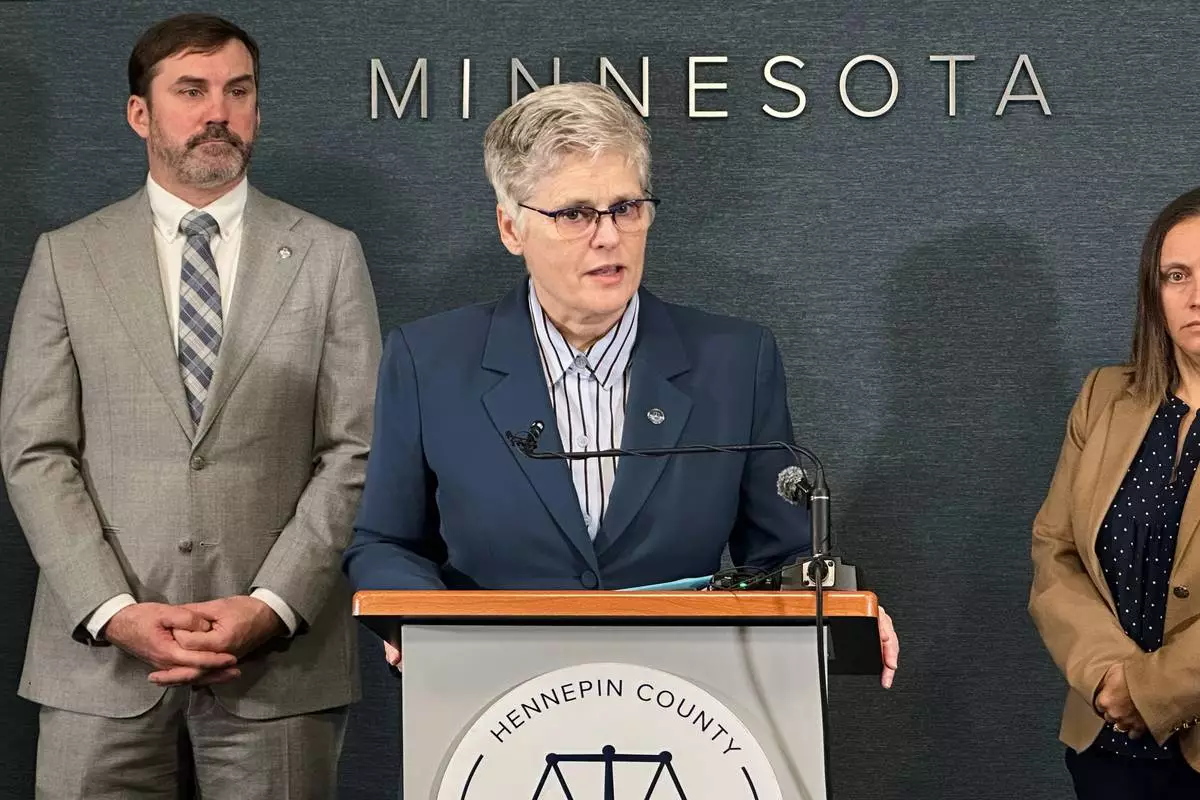
In this photo made with a smartphone, Hennepin County Attorney Mary Moriarty announces charges related to identity theft in the state's primary election Wednesday, Oct. 28, 2026, in Minneapolis. (AP Photo/Mark Vancleave)