SAN DIEGO--(BUSINESS WIRE)--Oct 29, 2026--
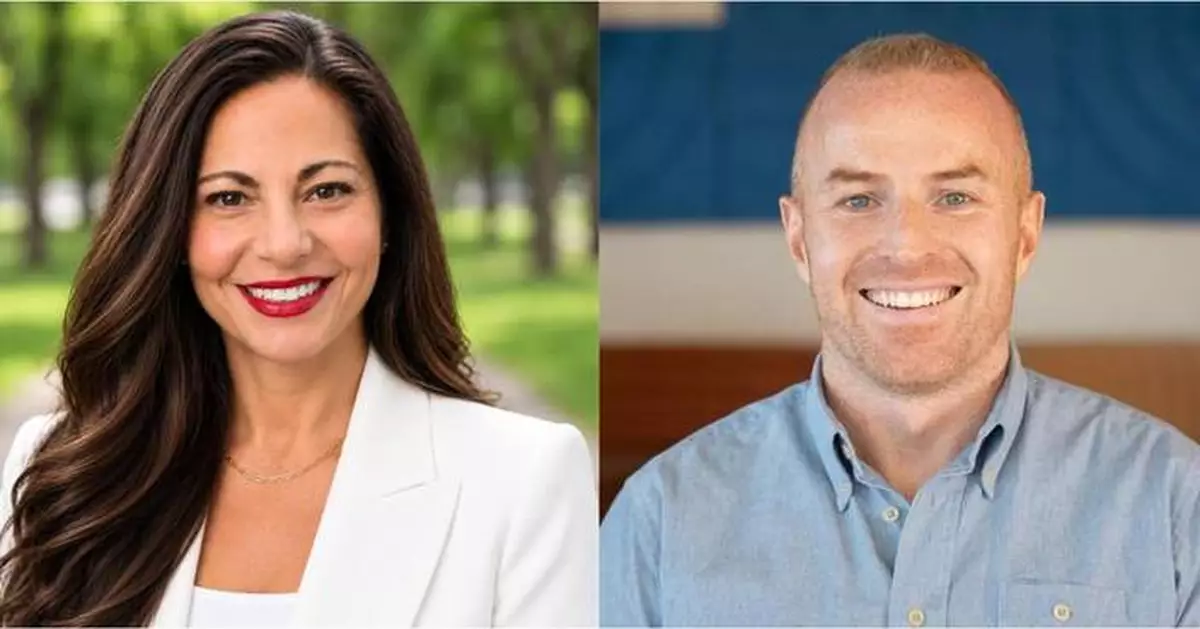
Netradyne, a leader in AI-powered technologies for smarter fleets and safer roads, today announced the appointments of Melissa Ribeiro as Chief People Officer and Brion O’Connor as Chief Marketing Officer. The appointments strengthen Netradyne’s executive leadership as the company expands its global footprint, advances its AI-powered platform, and scales its organization to support growing customer demand.
This press release features multimedia. View the full release here: https://www.businesswire.com/news/home/20261029647763/en/
“Melissa and Brion each bring proven experience scaling technology companies through periods of rapid growth,” said Avneesh Agrawal, CEO of Netradyne. “Melissa knows how to build a global organization and a culture that people want to be part of. Brion knows our market and how to build a brand that grows with the business. As we expand beyond traditional fleet safety into Physical AI and build intelligence for the physical world, strengthening our brand and global organization is critical to our next stage of growth. Together, they bring the experience and leadership to help us realize that ambition.”
The appointments come as Netradyne expands its AI capabilities and global reach. The company recently unveiled an expanded AI agent ecosystem that puts Netradyne Intelligence to work across fleet safety and operations, and was nominated for the FreightTech 100, recognizing companies driving innovation across the freight technology industry. Netradyne serves thousands of commercial fleet customers globally, with an established presence across North America, EMEA, and APAC, and continued expansion into Brazil and Mexico. The company is also extending its Physical AI capabilities beyond vehicles.
Melissa Ribeiro, Chief People Officer
Ribeiro is a global people and transformation executive with more than 25 years of experience scaling technology organizations, building high-performing teams, and leading companies through periods of significant growth and change.
Most recently, she served as Global Chief People Officer at Encora, where she was part of the executive team that more than doubled company revenue, expanded the workforce from approximately 6,000 to more than 9,000 employees worldwide, integrated multiple acquisitions, and guided the company through its acquisition by Coforge.
Previously, Ribeiro held senior leadership roles at Actian, Deluxe, Yahoo, Opera Mediaworks/AdColony, IBM, and Ingersoll Rand, bringing extensive experience leading global teams and organizational transformation.
At Netradyne, Ribeiro will lead the global People organization, focusing on attracting and developing world-class talent, strengthening leadership capabilities, and building a culture that supports the company's continued global expansion.
“Netradyne’s mission is built on trust between fleets and their drivers, and that same value shapes how the company builds its teams,” said Ribeiro. “I’m looking forward to partnering with leaders across the company to grow an organization and culture that match the scale of Netradyne’s ambitions.”
Brion O’Connor, Chief Marketing Officer
O’Connor brings 20 years of experience building and scaling marketing organizations at high-growth technology companies, with deep expertise in connected operations, fleet technology, and enterprise SaaS.
He spent four years at Samsara, where he helped build and scale the marketing organization, supported the company's evolution from a single-product offering into a broader connected operations platform, and served on the executive team through its IPO. During his tenure, Samsara grew revenue more than tenfold, reflecting the company's rapid expansion across products, customers, and markets.
Most recently, O’Connor served as Chief Marketing Officer at EvenUp, an AI-powered legal technology company, and previously held the CMO role at Gong. Earlier in his career, he held senior leadership positions at AppDirect and LinkedIn.
At Netradyne, O’Connor will lead the global marketing organization, with a focus on strengthening the company's positioning, elevating its brand, and accelerating growth across enterprise and mid-market fleets.
“Netradyne has built something truly differentiated in a market with enormous potential,” said O’Connor. “With its leadership in AI-powered fleet safety, growing Physical AI capabilities, and proven customer outcomes, the company has an incredible opportunity to build intelligence for the physical world and redefine how businesses understand and improve their operations. I’m excited to build on that foundation, elevate the brand, and help accelerate Netradyne’s global growth.”
Learn more about Netradyne at www.netradyne.com.
About Netradyne
Netradyne provides AI-powered technologies for smarter fleets and safer roads. The company is on a mission to build intelligence for the physical world, so every vehicle, worker, and operation runs safer and smarter in the moments that matter. An award-winning industry leader in driver safety and fleet management, Netradyne empowers thousands of commercial fleet customers across North America, Europe, and Asia to enhance driver performance, reduce risk, improve fuel efficiency, and optimize operations. Netradyne sets the standard among fleet operating companies for enhancing and sustaining safety and efficiency outcomes through driver trust and lasting behavior change. Using AI-vision technology to analyze 150 billion minutes and 30+ billion miles, Netradyne offers an industry-first driver and fleet scoring system that recognizes and rewards safe, fuel-efficient driving behaviors. Founded in 2015, Netradyne is headquartered in San Diego with offices in San Francisco, Nashville, and Bangalore.
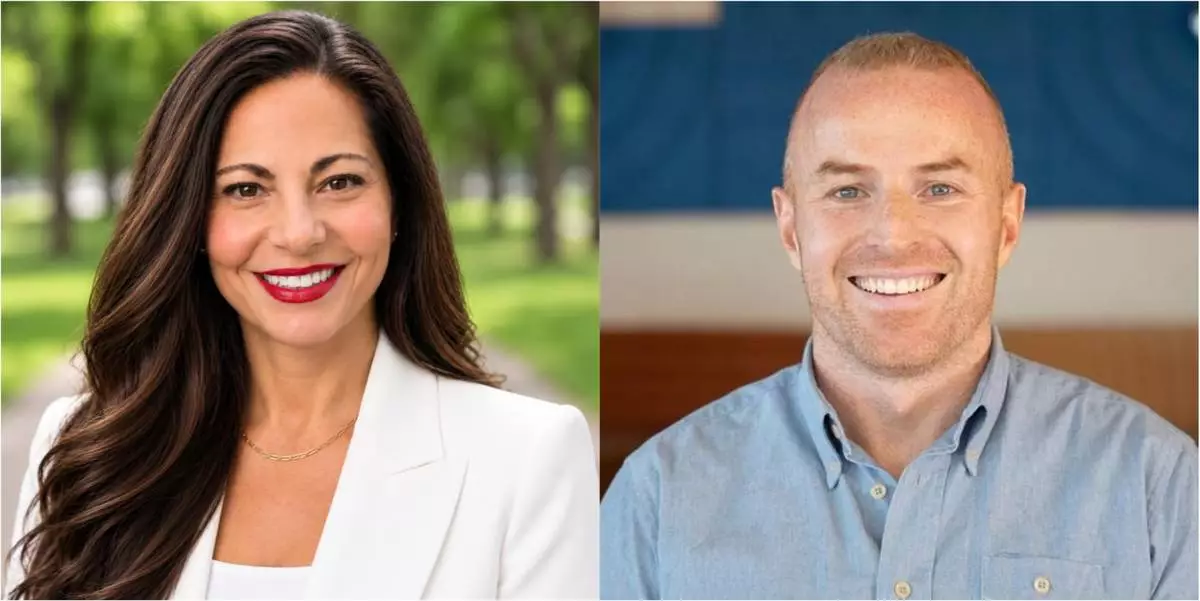
Melissa Ribeiro and Brion O’Connor strengthen Netradyne’s executive leadership as the company expands its global footprint, advances its AI-powered platform, and scales its organization to support growing customer demand.
URDA, Spain (AP) — Spain's second high-speed rail disaster this year, in which one train struck another from behind, killing 69 people, has raised fresh concerns about the safety of the country's rail network ahead of a national election.
Search teams with sniffer dogs continued to look for victims on Thursday, a day after the collision in central Spain. Cranes shifted the carriages as police and soldiers picked through the wreckage strewn down the gravel slope where at least three train carriages were tossed by the impact.
One more body was found overnight, taking the death toll to 69, according to the regional leader of Castilla La Mancha, Emiliano García-Page. He added that 50 people remained hospitalized, while officials worked with family members to identify the dead.
“As a society, we have once again suffered a devastating blow, and we must adopt measures so that this doesn’t happen again,” Spain’s King Felipe VI said after visiting injured passengers at a hospital in Toledo.
Spain’s government declared three days of mourning starting Thursday. A minute of silence was held at various points at noon, including with lawmakers outside the Parliament and by rail workers and union leaders in Madrid's main train station.
Testimonies of survivors filled Spanish television for a second day. Pablo López, who was on the train that was hit from behind, recounted the moment of impact and the horrific aftermath to state broadcaster TVE.
“The image I have in my head is of a person crawling on the ground after being shot out of the other train,” he said.
The high-speed rail network has been considered one of Spain's crowning achievements. It is the world's second-largest, after China's. Until this year, it had not experienced a deadly crash since coming into service over three decades ago.
The reputation of the Spanish railways was already tarnished when in January 46 people died after one train jumped the track and slammed into the side of another going the opposite way in southern Spain.
Then, just nine months later, came the collision Wednesday morning that turned a sleepy stretch of rail lined by olive groves near the village of Urda into a scene of carnage.
Spanish Prime Minister Pedro Sánchez pledged an investigation and improvements to restore trust in a rail system that carried 45 million travelers last year, including millions of tourists.
“It is clear that we need to reinforce the safety of our train service to rebuild the trust in our high-speed rail,” Sánchez said Wednesday. “It is not acceptable for a country like Spain to endure two high-speed train accidents in the same year.”
Sánchez called the crash a “tragedy” when he visited the crash site a second time on Thursday, promising the victims and their families that the state would be with them.
Both deadly crashes this year took place on the same rail line between Madrid and Seville, the first of Spain's high-speed network that opened in 1992. Each collision involved a train operated by state-owned RENFE and another operated by privately owned IRYO. Spain liberalized its high-speed rail service in 2021, with the Italian IRYO starting service the following year.
Sánchez had hoped to leverage a wave of discontent over housing costs and high rents when he called for early elections on Nov. 29.
He now faces questions about the safety of the railways, along with criticism from right-wing parties of his liberal migration policies and accusations of corruption against his party and his wife, which both he and his wife deny.
Sánchez's main rival, conservative Popular Party leader Alberto Núñez Feijóo, demanded a full investigation of the crash.
Alejandro Quiroga, a professor of political science at Madrid’s Complutense University, told The Associated Press that it is too early to tell if the crash will change the minds of many voters.
“This is not good news for the Socialist Party, but it may not hurt them very much because Spaniards generally don’t like it when politicians try to take advantage of tragedies,” Quiroga said. “That could be changing, but up until now it is not seen positively.”
Spain's Transport Minister Óscar Puente said Wednesday that the crash was caused by what he called the “inexplicable” order from a central command center for Spain’s trains after a security system had failed.
Puente said that at 8:30 a.m. the security system on a stretch of track stopped working due to a computer malfunction, causing all trains on that stretch to stop. At that point the IRYO train was stopped, with the RENFE train 25 kilometers (15.5 miles) behind.
But minutes later the central command told the RENFE train to start running again without any speed restrictions, and it ended up colliding with the stationary IRYO train at 8:53 a.m.
Spanish media on Thursday reproduced short audio clips of the controller ordering the train engineer to start moving.
Puente said that the train should never have been told to start moving again since a “stop signal” was still active on that line. And if it had, at least it should have been told to go at reduced speed.
Train workers held a strike on Thursday that had already been planned before the Urda crash to demand the government carry out safety improvements to the rail services that unions say were promised after the first deadly collision in January.
Union leaders questioned the minister putting all the blame on one controller and criticized the leaking of the control room’s conversations to the media.
“The focus should not be on if there was a human error, but rather what is wrong with the system, what situations must be improved so that if there is a human error we don’t find ourselves in this situation,” said Pepa Páez of the CCOO union.
A judge also declared the crash site an investigation zone.
Meanwhile, thousands of travelers were left searching for alternative transport with the high-speed line connecting Madrid and Seville shut down.
Wilson reported from Barcelona, Spain. Associated Press writer Teresa Medrano in Madrid contributed to this report.
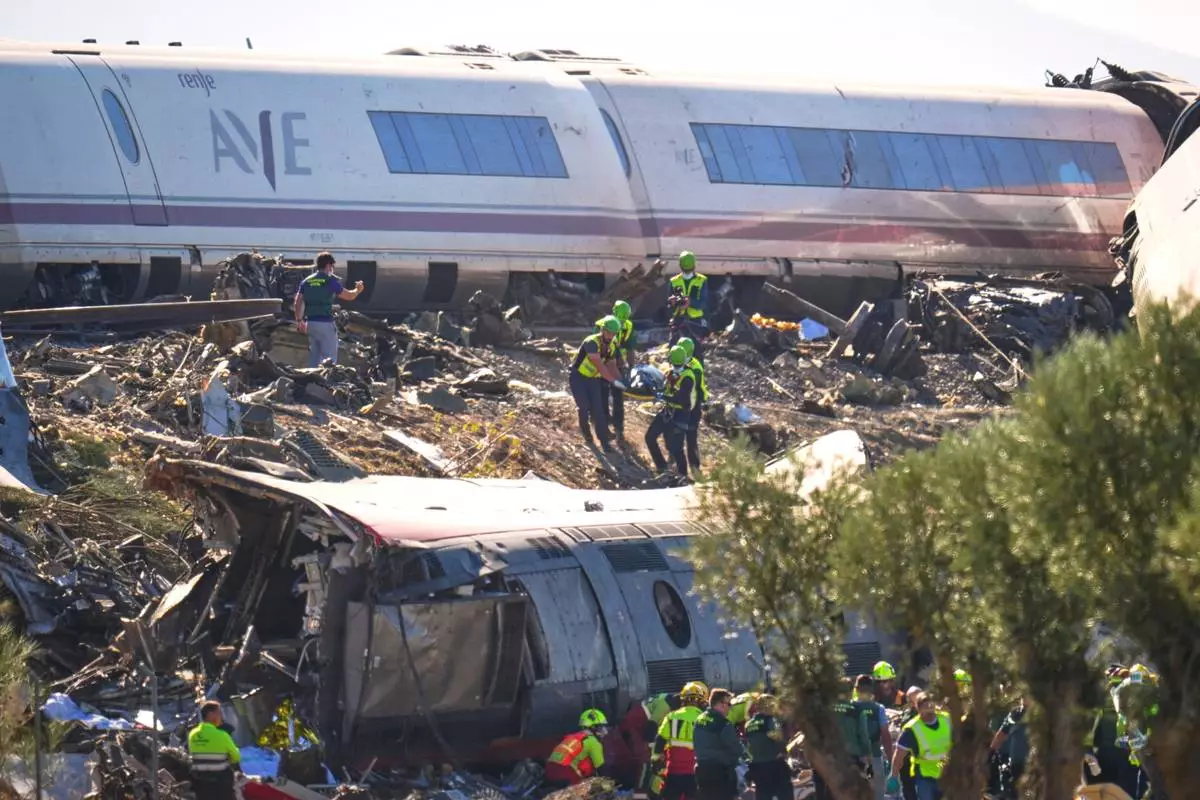
Emergency services attend to the victims at the scene of a collision between two trains in Urda, Spain, on Wednesday, Oct. 28, 2026. (AP Photo/Manu Fernandez)
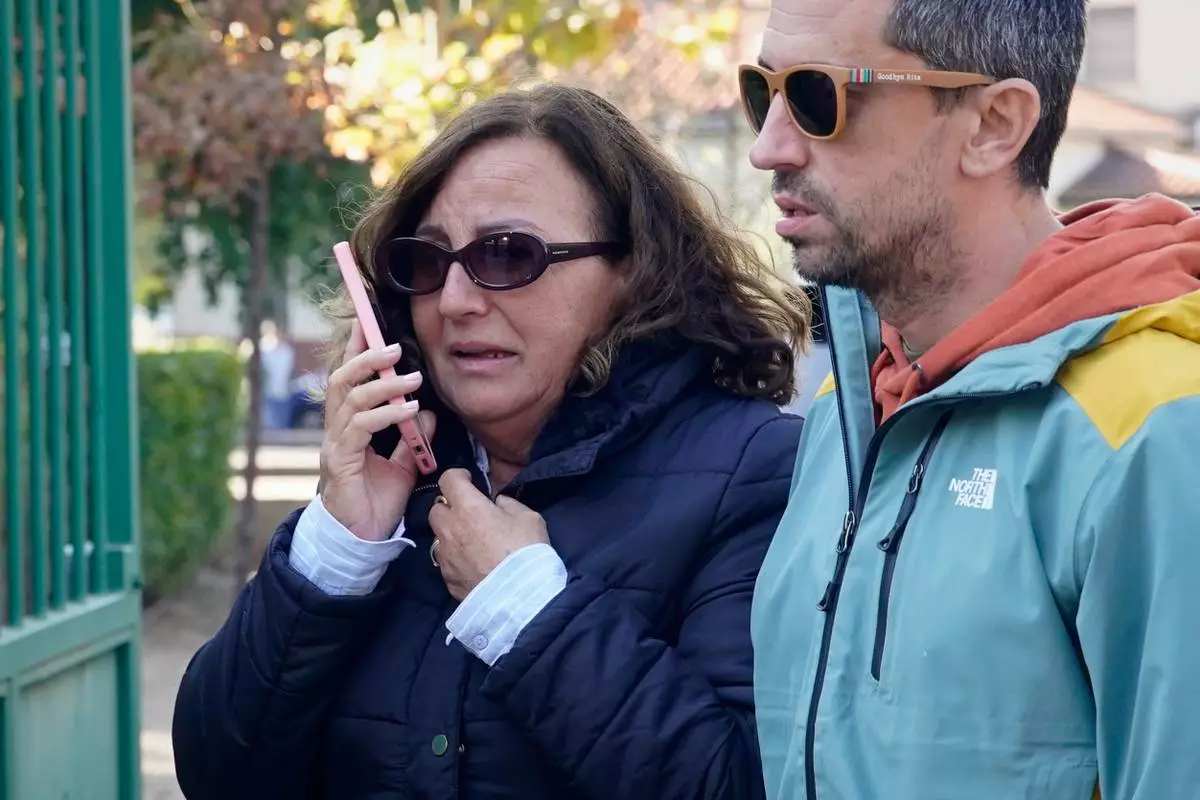
Relatives of passengers aboard the trains involved in a collision arrive at a religious residence converted into a temporary medical facility in Toledo, Spain, Thursday, Oct. 29, 2026. (AP Photo/Andrea Comas)
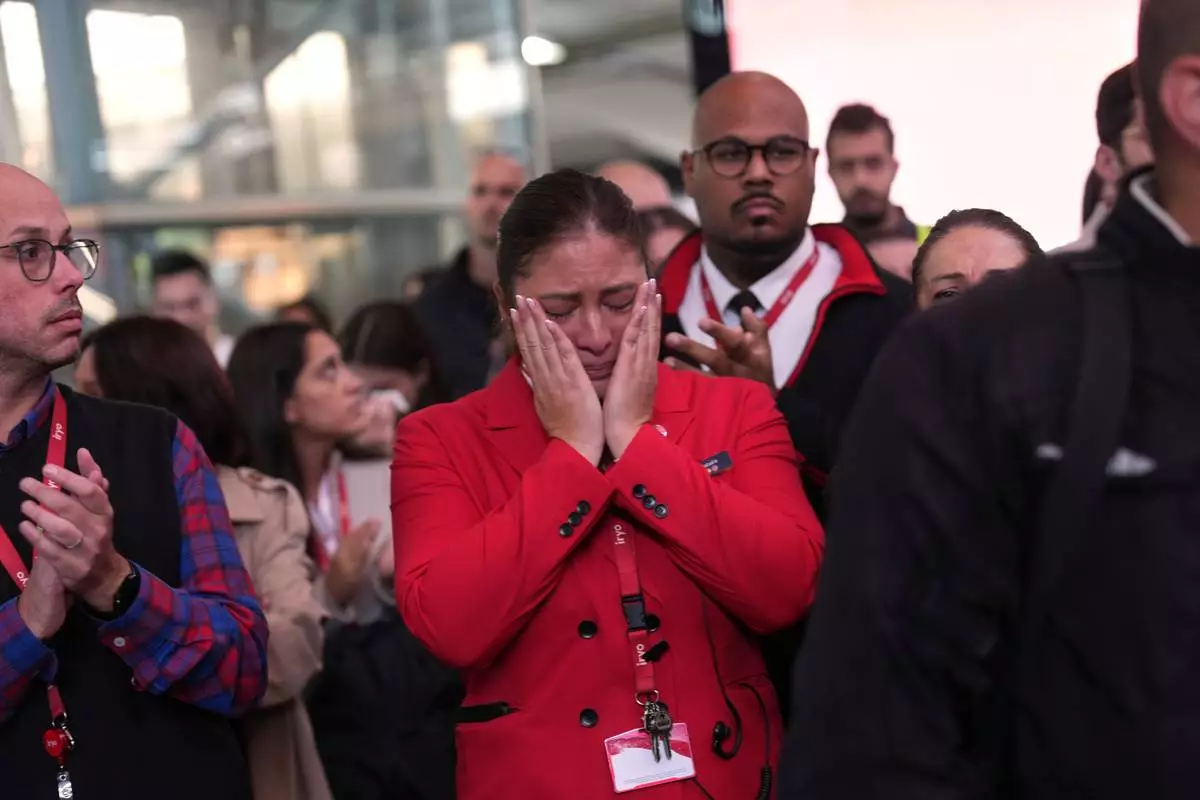
Iryo employees react after observing a minute of silence for the victims of a train collision at Atocha railway station in Madrid, Spain, Thursday, Oct. 29, 2026. (AP Photo/Bernat Armangue)
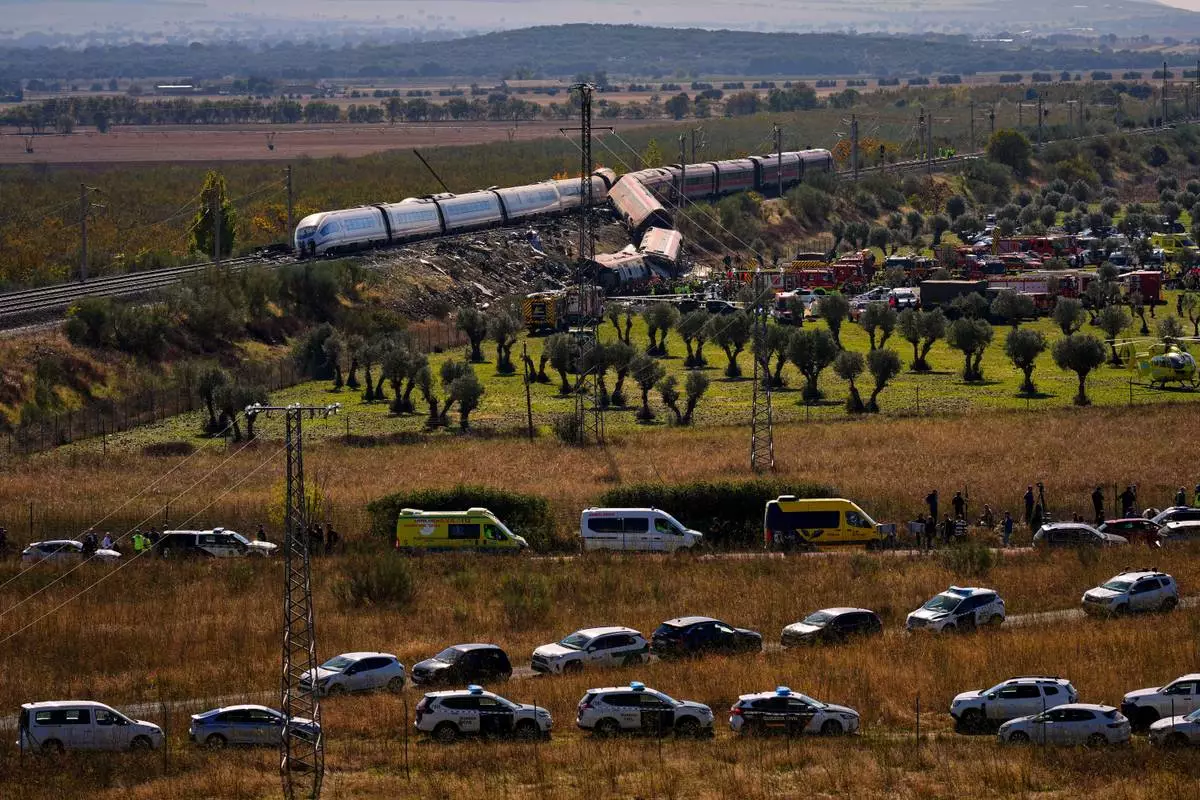
Emergency services work at the scene of a collision between two trains in Urda, Spain, on Wednesday, Oct. 28, 2026. (AP Photo/Manu Fernandez)
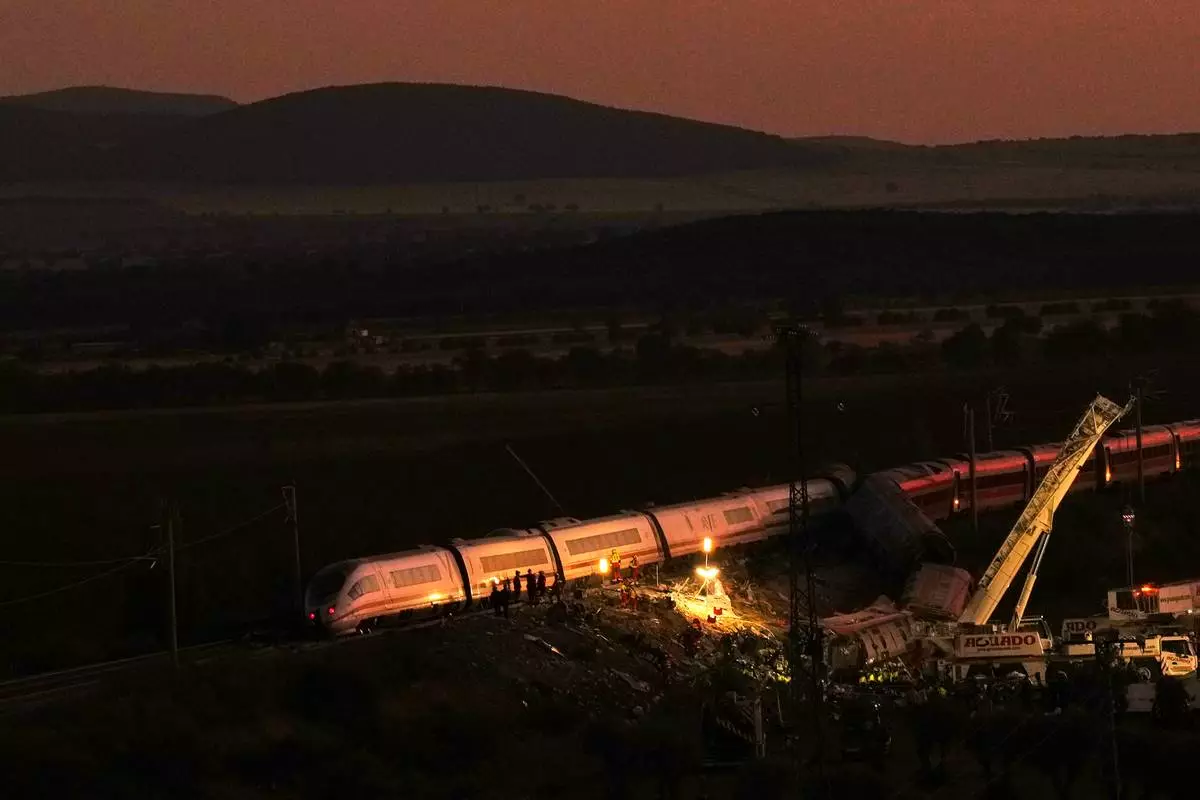
Emergency services work at the scene of a collision between two trains in Urda, Spain, on Wednesday, Oct. 28, 2026. (AP Photo/Manu Fernandez)
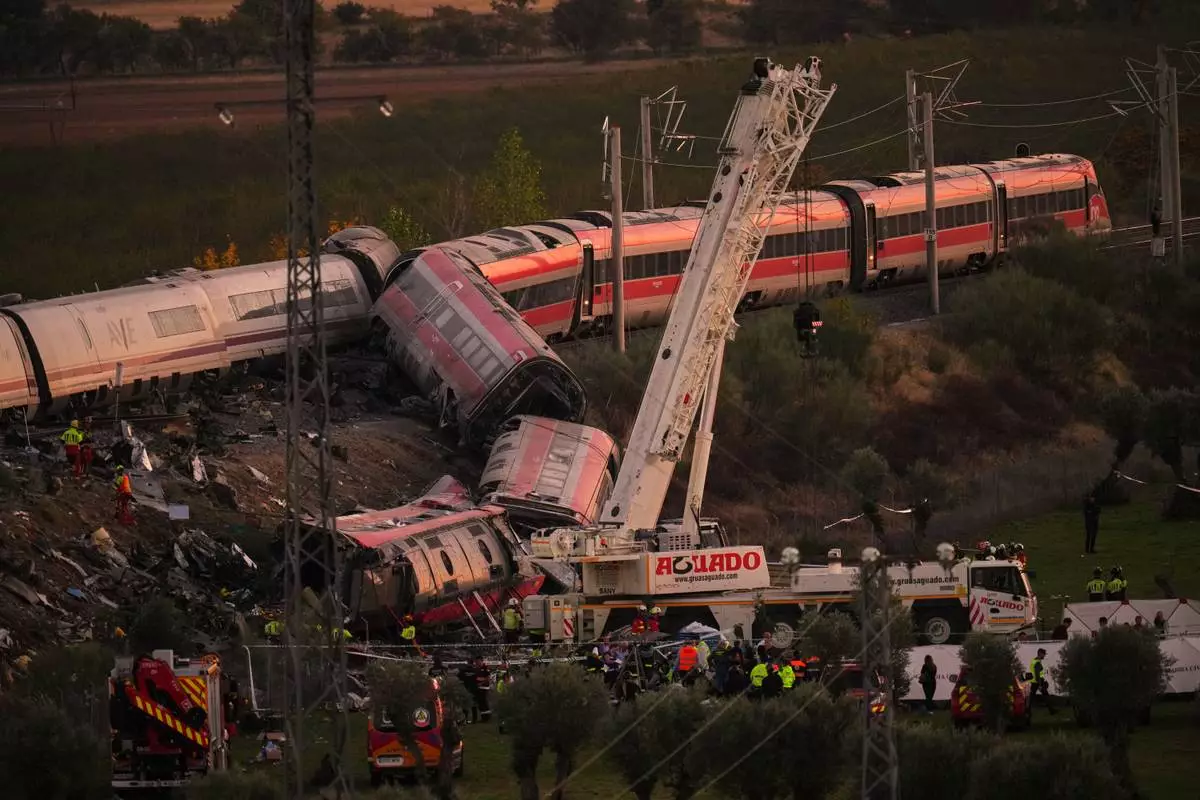
Emergency services work at the scene of a collision between two trains in Urda, Spain, on Wednesday, Oct. 28, 2026. (AP Photo/Manu Fernandez)
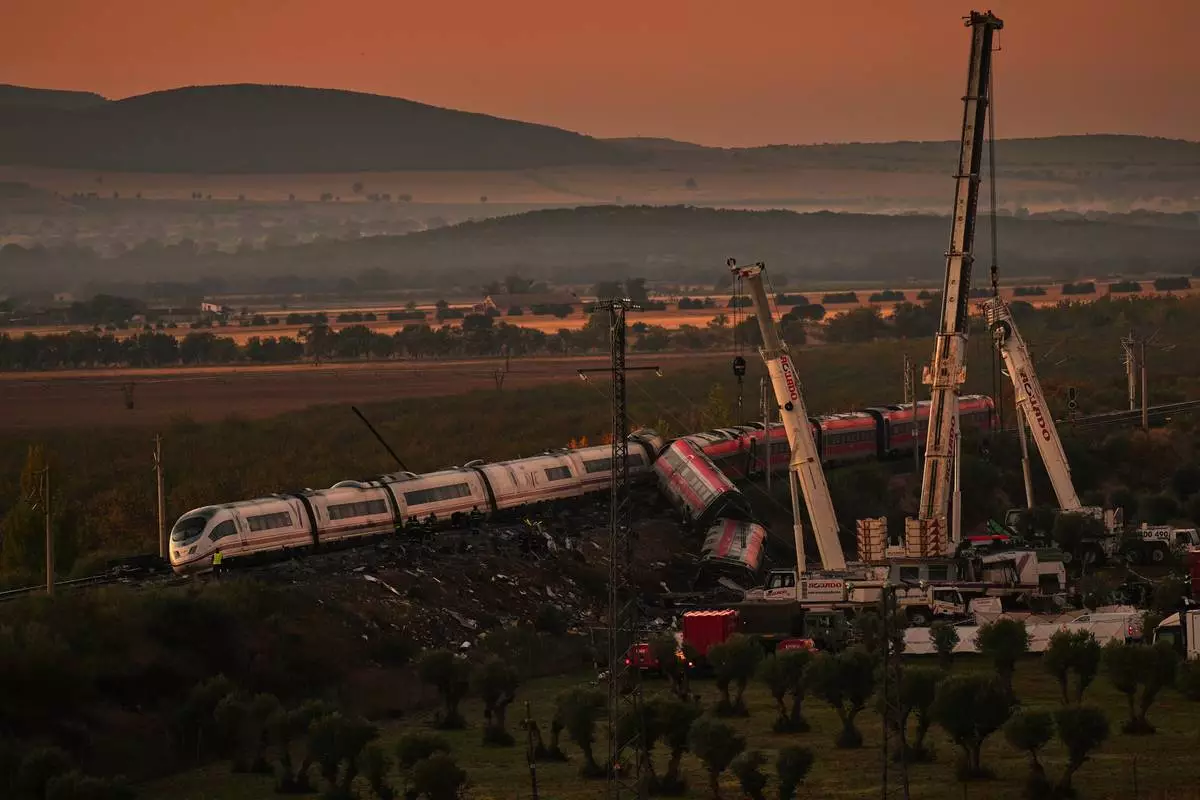
Cranes lift wrecked train carriages as rescuers search for victims following a collision between two trains in Urda, Spain, Thursday, Oct. 29, 2026. (AP Photo/Manu Fernandez)