LOS ANGELES (AP) — The U.S. Justice Department has issued subpoenas to California officials in an escalation of its scrutiny of local election administration.
The Associated Press obtained copies of three subpoenas sent Oct. 21 to employees of the Los Angeles County Registrar-Recorder, ordering them to appear in court on Nov. 4, the day after the election. The documents request any records, documents and communications related to letters sent in July and October by federal officials to state election officials outlining allegations of noncitizens on the state’s voter rolls. The subpoenas also seek information relating to the office's “methods for screening for unlawful voting by aliens” and anything about efforts to prevent noncitizen votes from being counted.
The subpoenas were being issued by all four U.S. attorneys in California, according to a person familiar with the matter who insisted on anonymity to discuss an ongoing investigation.
Dean Logan, the Los Angeles County registrar, said, “threats and intimidated have no place in elections.”
The Trump administration has sued to force California to set aside up to 20,000 ballots it suspects went to noncitizens and not count them until citizenship can be verified. A district court judge on Tuesday rejected that request, then on Thursday appointed a special master to evaluate the administration's claims.
U.S. District Judge David O. Carter did not specify the exact scope of special master Daniel B. Garrie's responsibilities, but said he would be tasked with “developing the factual record” for the court.
In a Tuesday court hearing, Carter said he wanted to vet the federal government’s list of over 20,000 alleged noncitizen voters since there has been extensive debate over its reliability and both sides have agreed that it includes an unspecified number of citizens.
Carter also said at the hearing that a special master could investigate California’s claims that it cannot logistically separate the ballots in time for the county election certification deadline on Dec. 3. The federal government has contested that assertion.
It is not clear what would happen if a special master did find a substantial number of noncitizen voters on the federal government’s list or whether it would affect the certification of California’s election results. The 20,000 people on the DOJ’s list constitute only a small fraction of California’s 23 million voters.
Meanwhile, the Trump administration asked a federal appeals court to quickly weigh in.
The Justice Department said in a late Wednesday filing that it's essential the 9th Circuit Court of Appeals issue a ruling as soon as possible due to “irreversible ballot processing occurring on an ongoing basis.”
Carter’s decision was the latest legal setback for President Donald Trump in his efforts to expand federal control over state-run elections in the midterms that will decide control of Congress for the rest of his term. The Justice Department has made similar demands in other states, including Washington. Noncitizen voting has been a central focus of Trump’s political messaging for years, although available data indicates it is exceedingly rare.
Trump blasted Carter's ruling against the federal government on Thursday morning before heading to a campaign rally in South Carolina.
“California is very corrupt. The elections are extremely corrupt. The judge should not have done that but we’ll appeal that, of course," he told reporters. Trump added without evidence that there are “hundreds of thousands” and then amended it to “millions, in my opinion” of “bad ballots” in California.
Carter, an appointee of Democratic President Bill Clinton, argued that the Justice Department's demands were a clear violation of the National Voter Registration Act, which prohibits changes to voter rolls or election procedure within 90 days of an election.
Both sides agree that an unspecified number of citizens were inadvertently included. Carter argued that separating the ballots at this point would risk disenfranchising citizens and “wreak havoc” on the election certification process.
Over 500,000 votes have already been processed in Los Angeles County alone, according to court filings. The system also protects voter privacy: Once a vote is processed, it cannot be traced back to the person who cast it.
Carter is to rule on the government’s renewed request for a preliminary injunction, which would bar the state from counting the ballots until the litigation is resolved. He said he will do so after a Nov. 13 evidentiary hearing with input from the special master.
He said that if the federal government suspected noncitizens were voting, it could continue to prosecute those cases criminally. Federal authorities have charged over two dozen foreign nationals in California as part of a statewide sweep targeting people officials allege have illegally registered or voted in U.S. elections.
The appeal will be the second time that the 9th Circuit Court of Appeals will consider the case.
The first time was just last week when the Justice Department argued before an appeals court panel that a fast ruling on its request was needed to stop any counting of the ballots.
Although the panel ruled it was premature for an appeals court to get involved before a lower-court ruling, two of the three judges wrote separate concurrences making it clear they wouldn’t support setting aside ballots at this late date. They questioned the accuracy of the federal government’s list of alleged noncitizen voters and argued that to set aside votes risks disenfranchising citizens.
One judge dissented, arguing that federal law bars noncitizens from voting and requires California to vet the potentially illegal ballots before counting them. The failure to do so, he wrote, would cause irreparable harm to the election.
__
This story has been corrected to reflect that the subpoenas were sent Wednesday, Oct. 21, not Thursday, Oct. 28.
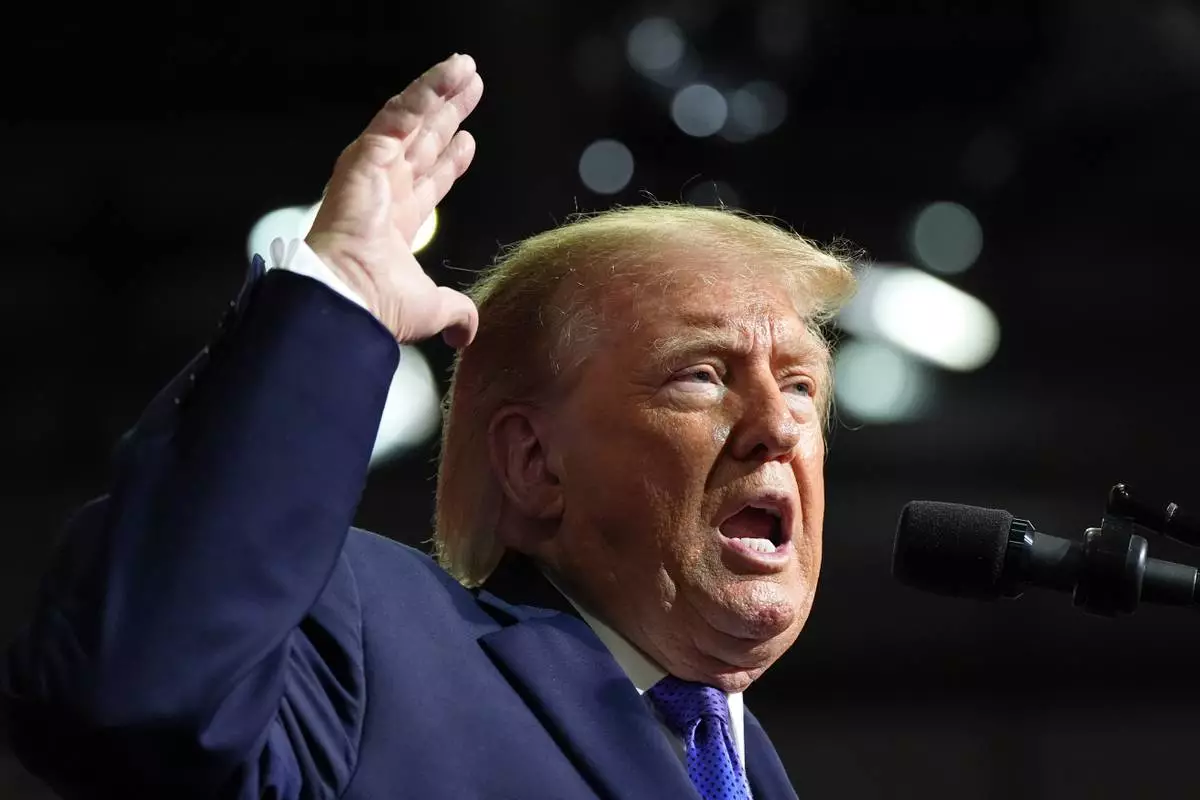
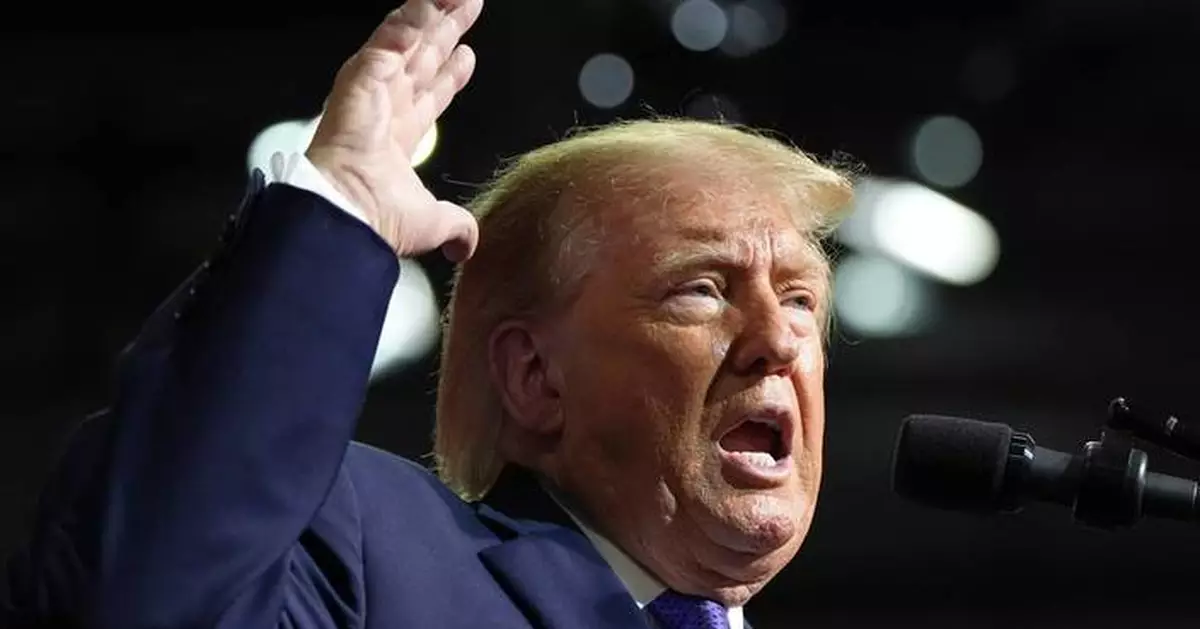
President Donald Trump speaks during a campaign rally at Rock Hill Sports and Event Center, Thursday, Oct. 29, 2026, in Rock Hill, S.C. (AP Photo/Alex Brandon)
ROCK HILL, S.C. (AP) — President Donald Trump was in South Carolina for the second time in a month Thursday, a sign of growing Republican anxiety about Darline Graham's ability to fend off a robust challenge from Democrat Annie Andrews for a critical U.S. Senate seat.
Voters in South Carolina have not sent a Democrat to the Senate in nearly three decades. But Andrews, a pediatrician who previously ran unsuccessfully for Congress, is urging voters seeking change to “try something new for once.”
That message could resonate in an election year that has come to be defined by voter frustration with the economy, gas prices and the war in Iran, putting Trump's Republican Party on defense in territory where they have rarely had to compete in recent years.
Beyond South Carolina, Republicans are entering the final days of this year's midterm elections navigating tight contests in Texas, Kansas, Ohio, Iowa and Alaska. Both parties are also closely following developments in the Mississippi Senate race.
The president, returning to the White House, projected confidence about next week's election, saying, “We're going to have a strong Tuesday night.”
Trump was adjusting his schedule, converting what his team had planned as a rally in rural, north central Kansas for GOP Sen. Roger Marshall to a tele-rally. The president also will participate in tele-rallies Thursday evening for candidates in Colorado and Montana, as part of a plan to have him hold nearly two dozen such remote events before Election Day, according to a person familiar with the operation who spoke on condition of anonymity to share internal plans and strategy.
The president's team was feeling more optimistic about Republican prospects and bullish on Kansas, where Democrat Adam Hamilton is waging a very competitive challenge to Marshall. The decision to switch to tele-rallies — where Trump tends to speak for 10 minutes instead of more than 90, as he does at in-person events — allows Trump more to hit more areas as new data becomes available, the person said.
Asked whether the change was tied to an illness, Trump denied being sick and said he's not traveling to Kansas “because he's doing very well,” an apparent reference to Marshall.
“I don’t feel I have to go to Kansas,” Trump said, adding that he still plans to travel to Florida on Friday.
In South Carolina, Graham has struggled to quickly build connections with voters. The sister of the late Sen. Lindsey Graham, she was appointed in July by Republican Gov. Henry McMaster to fill the remaining months of her brother’s term after his sudden death. In August, she became the party’s nominee to succeed him for a full six-year term.
“He was a great politician,” Trump said of Lindsey Graham, before promoting Darline Graham as his elected successor. “She’s got the gene.”
Trump also acknowledged pressing her to run at a time other Republicans were seeking the seat.
“I got you into this thing, Darline,” Trump quipped.
Speaking before Trump, Darline Graham, who planned to vote in Lexington after the event, commended the president for having “delivered what Washington promised for decades.” She warned that Andrews “would just throw it all away."
Andrews appeared in nearby Fort Mill on Wednesday, where she said that if voters elect her and become unhappy with her performance on Capitol Hill, “you can fire me in six years.”
“I promise that I won’t let you down, that I’m going to win you all over,” she said.
Andrews' success on Election Day will likely hinge on winning support from disaffected Republicans like Brent Chaplin. The 37-year-old who works in finance and accounting said he's a registered Republican, “but it's hard to be that right now.”
He said he voted for Andrews and encouraged voters to think beyond partisan politics.
“You just can't go and say I'm a Republican, I'm just going to vote Republican,” said Chaplin, who voted for Trump in 2016. “You've got to put some brainpower into it and think about it. So hopefully it is a message to the powers that be to wake up, pick better candidates.”
Benjamin Updegraft, a 32-year-old software engineer, expressed frustration that the Senate seat might stay in the Graham family.
“The Senate is not an inherited position,” he said. “This is not a country where these noble titles are passed down between families.”
Though he was in South Carolina, Trump spent part of his Thursday speech opining on contests in North Carolina, Michigan, Texas, Minnesota and Alaska.
He has been especially focused on Alaska after The New York Times reported Wednesday that the Democratic Senate candidate's campaign appeared to be involved in recruiting another candidate with the same name as Republican incumbent Dan Sullivan. The state's Republican governor has ordered an investigation.
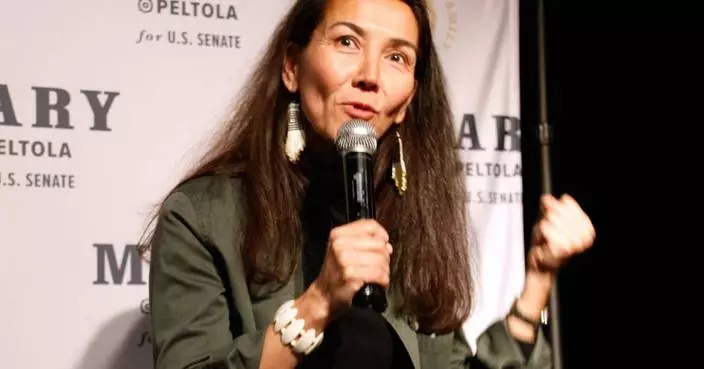
Trump called the development a “conspiracy” and called for the Democrat in the race, Mary Peltola, to be removed from the ballot. He has cast doubt on whether Peltola would be seated in the Senate even if she won the election.
Peltola’s campaign didn’t immediately respond to a message Thursday seeking comment on the governor's order. But during a campaign stop in Soldotna, Peltola, a former congresswoman, suggested the Times’ report was a “distraction” from issues such as Sen. Sullivan’s support of the war in Iran.
The revelation in Alaska was a reminder of the volatility of the midterm campaigns' final days as both parties make decisions about how to spend time and money with control of Congress on the line.
In Iowa, where Democrats are feeling optimistic about the governorship, nominee Rob Sand asked voters in a suburb of Des Moines to avoid feeling regret the day after the election by doing all they can before Nov. 3.
The message reflected years of day-after disappointment for Iowa Democrats, who have been locked out of the Iowa governor's mansion since 2010.
Sand told voters to expect a Republican Legislature and the sometimes difficult governing that can come with divided government, should he win.
“That means that the people on the far left and on the far right will both be a little bit disappointed,” he said.
__
Sloan and Kinnard reported from Washington. Associated Press writers Thomas Beaumont in Des Moines, Iowa, Hannah Fingerhut in Clive, Iowa, John Hanna in Topeka, Kansas, and Michelle L. Price and Collin Binkley in Washington contributed to this report.
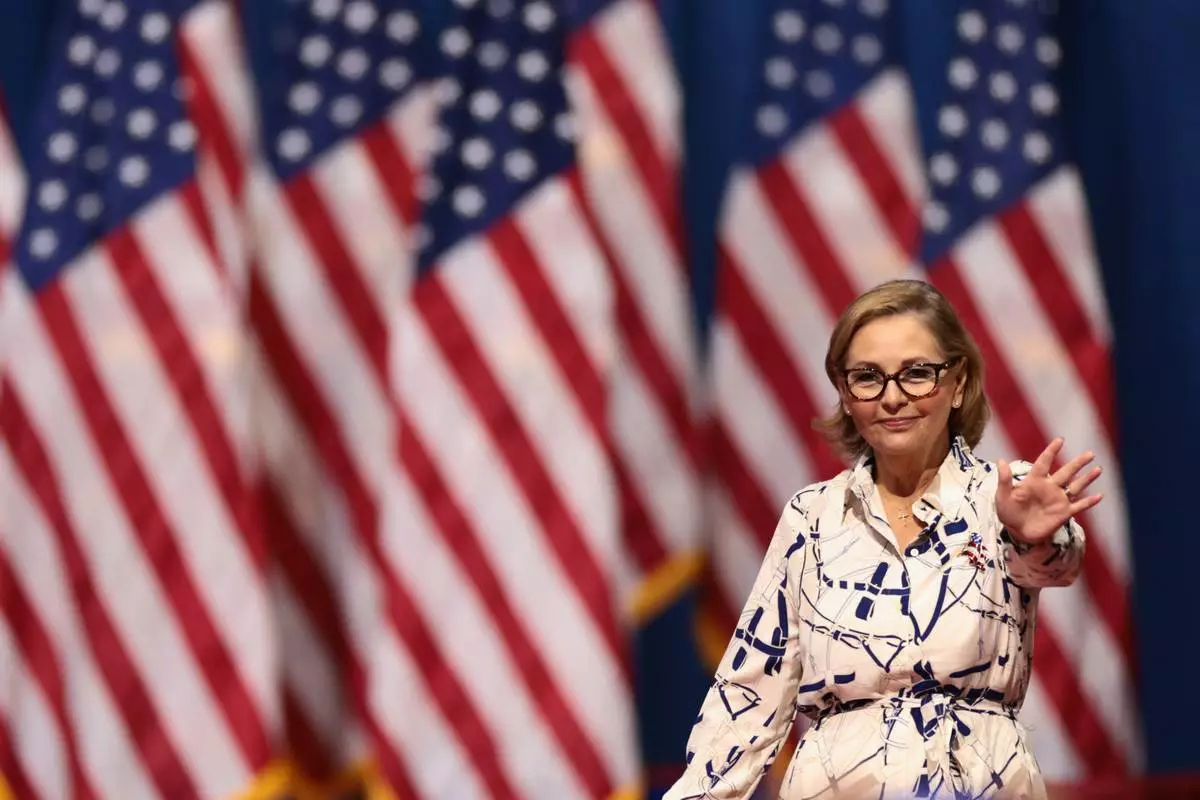
Sen. Darline Graham, R-S.C., waves during a campaign rally in Rock Hill, S.C., Thursday, Oct. 29, 2026. (AP Photo/Scott Kinser)
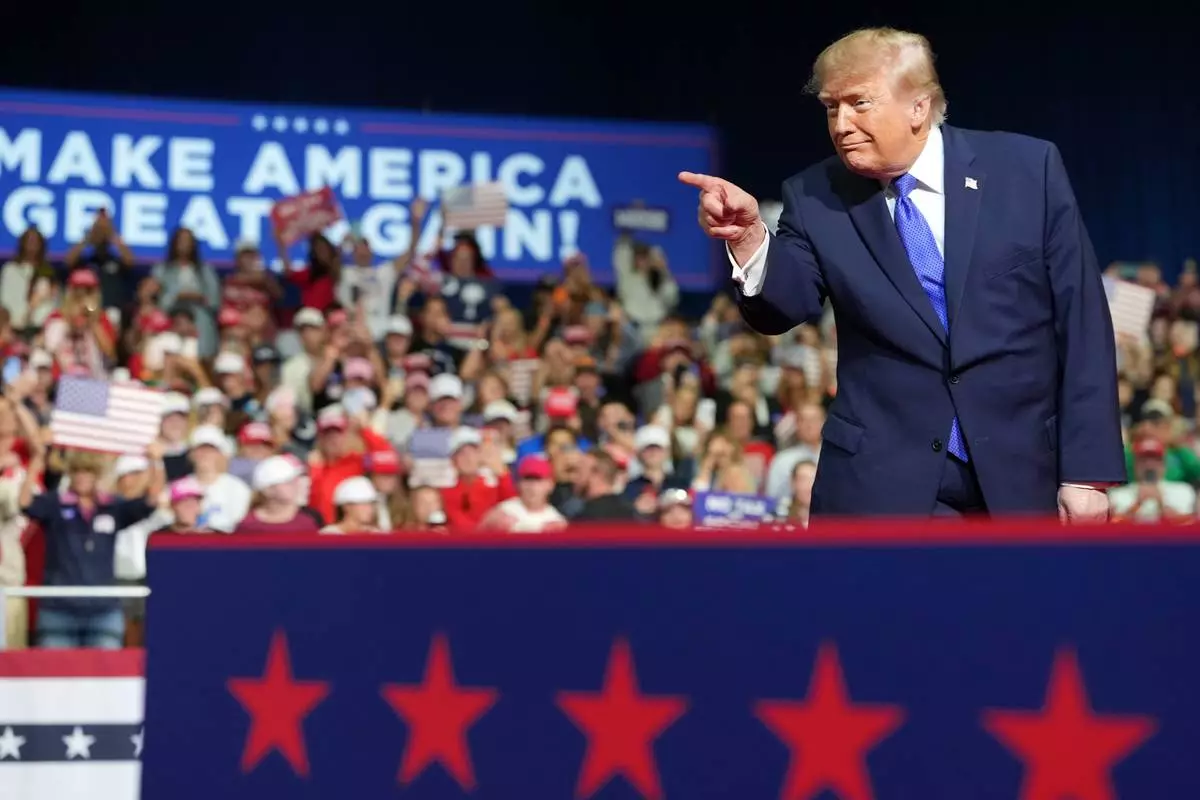
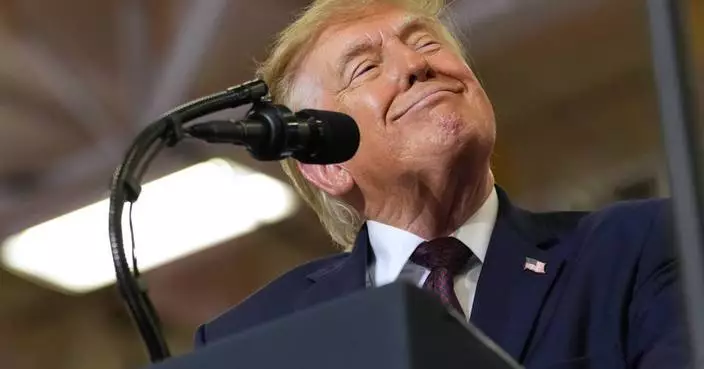
President Donald Trump arrives to speak during a campaign rally at Rock Hill Sports and Event Center, Thursday, Oct. 29, 2026, in Rock Hill, S.C. (AP Photo/Alex Brandon)
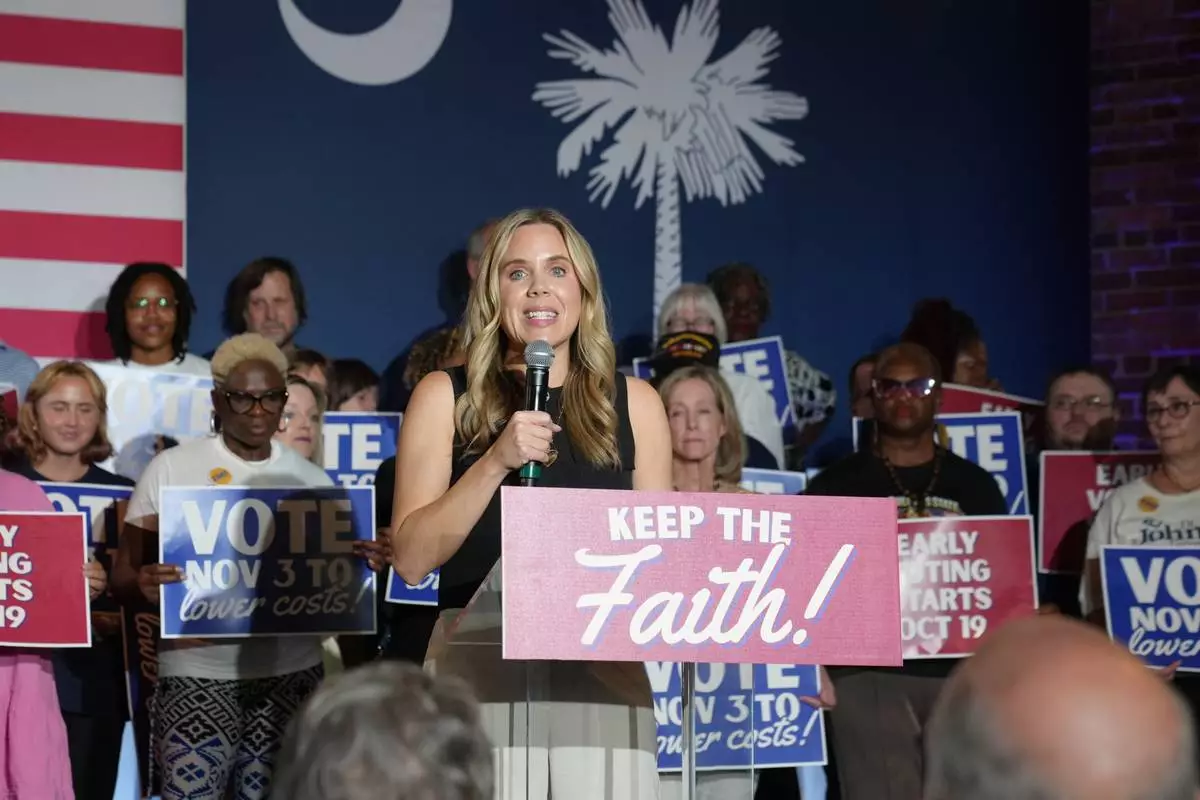
Dr. Annie Andrews, Democratic nominee for U.S. Senate, participates in a Get Out the Vote rally with other Democratic nominees in the midterm elections Friday, Oct. 16, 2026, in Columbia, S.C. (AP Photo/Meg Kinnard)
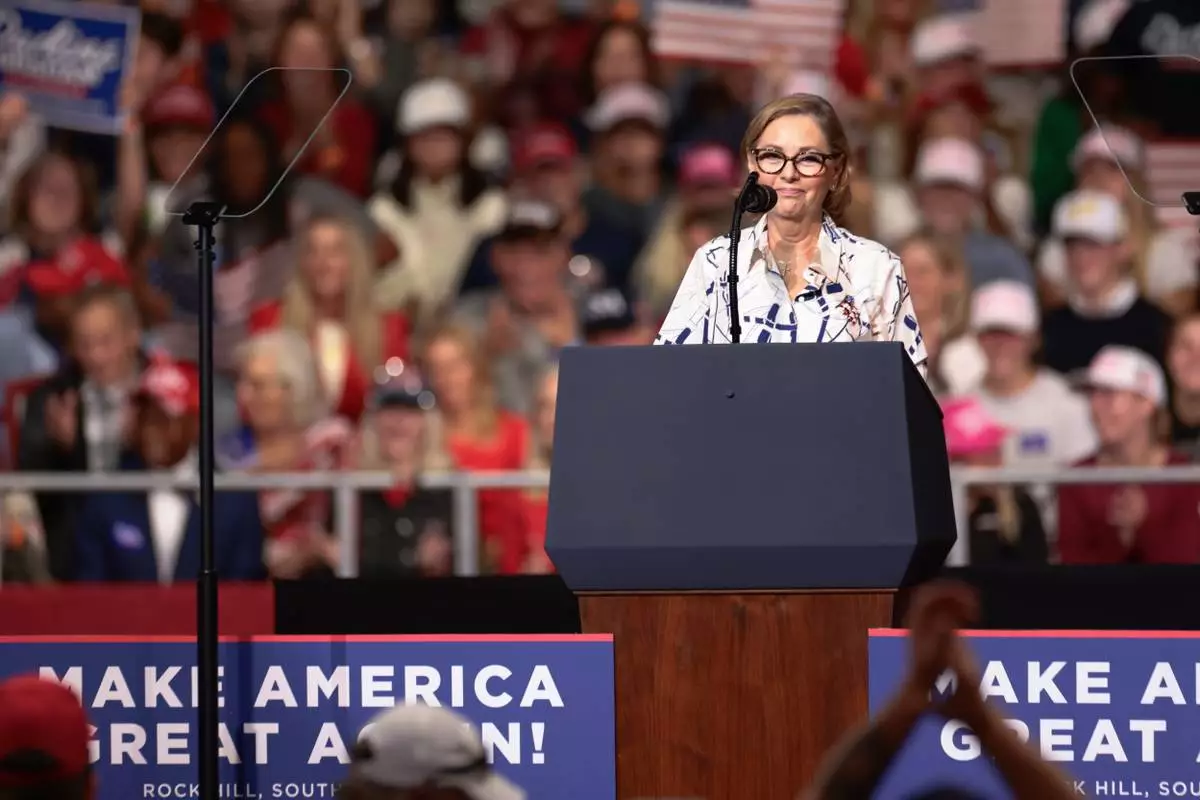
Sen. Darline Graham, R-S.C.,speaks at a campaign rally in Rock Hill, S.C., Thursday, Oct. 29, 2026. (AP Photo/Scott Kinser)