From Insight to Action: The partnership helps businesses connect fragmented marketing data with analytics and AI, including Gemini Enterprise, to drive faster, data-informed decisions and actions.
HONG KONG, Oct. 30, 2026 /PRNewswire/ -- Master Concept has partnered with Supermetrics, an AI-powered marketing intelligence platform, to help businesses connect, analyze, and activate marketing data across analytics, advertising, and AI environments.
Marketing data is often fragmented across platforms such as Google Analytics 4 (GA4), Google Ads, Meta, CRM systems, and other business applications. Bringing this data together can require significant manual effort, making it harder for teams to gain a unified view of performance and translate insights into timely action.
Supermetrics simplifies this process by connecting marketing data with the reporting, analytics, data, and AI tools businesses already use. Through the partnership, Master Concept will help customers make marketing intelligence more accessible across their organizations and move more efficiently from insight to action.
The partnership also opens new possibilities for connecting marketing data with enterprise AI. Supermetrics for Gemini Enterprise enables organizations to bring data from GA4, advertising platforms, and other marketing sources into Gemini Enterprise, where users can explore performance, investigate trends, and interact with their marketing campaigns using natural language.
"Enterprise AI creates greater value when it can connect with the data businesses already rely on," said Derek Chan, Co-Founder & CEO, Master Concept. "Together with Supermetrics, we're helping customers bridge marketing data, AI, and business action, making it easier to turn information into decisions that drive real outcomes."
As part of the partnership, customers can access an exclusive 30-day Supermetrics free trial through Master Concept, giving teams more time to explore the platform with their own marketing data.
Learn more about Supermetrics and the 30-day free trial here.
About Master Concept
Master Concept is an Enterprise AI Partner helping organizations turn technology into measurable business value. With more than 20 years of experience across Asia, Master Concept provides consulting, implementation, and services spanning enterprise AI and cloud, cybersecurity and AI governance, digital workplace, data and customer experience, and geospatial intelligence.
About Supermetrics
Supermetrics is the Marketing Intelligence Platform that gives you the confidence to do great marketing, using the best tools to build, activate, automate, and measure, with the answers you can trust to make the right decisions and take action to drive the growth your business needs.
** This press release is distributed by PR Newswire through automated distribution system, for which the client assumes full responsibility. **

Master Concept Partners with Supermetrics to Bring Marketing Intelligence into Enterprise AI
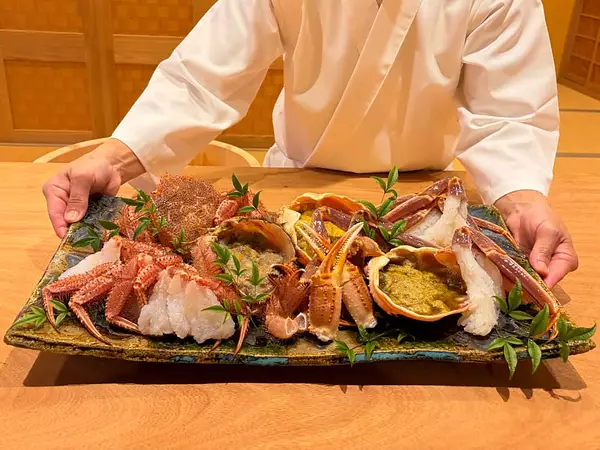
KANAZAWA, Japan, Oct. 30, 2026 /PRNewswire/ -- Kanazawa Biyori, a regional media outlet rooted in the Hokuriku region of northwestern Japan, reports not only on well-known landmarks but also on the food, culture and traditions that give Hokuriku its character. From early November to the end of December, Canisienne Kanazawa (known in Japanese as Kanijennu Kanazawa), a Nishi Chaya District restaurant specializing in live crab, will serve a winter-only course. Located in one of the city's three geisha districts, the restaurant seats just eight guests at a counter, where chefs work in full view of diners. Ahead of the winter course, Kanazawa Biyori sampled the restaurant's autumn tasting course featuring both horsehair crab and red snow crab.
A Meal That Begins With Live Crab
For many people, winter crab in Kanazawa means kōbako-gani, the female snow crab, and Kanō-gani, the regional brand name for male snow crab landed in Ishikawa Prefecture. We visited Canisienne Kanazawa after hearing that it offers a different way to enjoy crab in a city so closely tied to it. Sashimi, charcoal-grilled crab and shabu-shabu (crab swished briefly through hot broth) are among the many crab dishes served at the counter, and as crab lovers, we arrived with high expectations.
Our tasting course opened with live crab brought out in a large tub, an impressive sight in itself. The best part, however, was still to come.
A chef expertly prepared the crab right in front of us, breaking it down for each dish. For sashimi, the meat was dipped in cold water until it opened like a flower in bloom. Some pieces were grilled slowly over charcoal so they stayed moist, while others were cooked as shabu-shabu at just the right moment. We found ourselves absorbed in watching the chef transform the crab into one dish after another.
Two Crabs, Many Flavors
The sashimi paired horsehair crab with red snow crab, served with two dipping sauces so we could compare them side by side. Both had the juicy, springy texture of crab that was alive moments before, while the red snow crab in particular stood out for its sweetness. We were surprised by how different the two tasted.
Grilled over charcoal, the crab developed a rich, smoky aroma and a sweetness unlike that of the sashimi. It was served with a citrus-based ponzu sauce blended with kani miso, the crab's rich tomalley. The red snow crab claws, cooked as shabu-shabu, were wonderfully plump. In the horsehair crab shabu-shabu, a gentle sweetness gave way to the aroma of matsutake mushrooms. That the flavor could change so much with each cooking method showed just how versatile crab can be.
Another dish that stayed with us was abalone liver with kani miso, served bubbling hot. Bread dipped into the hot mixture soaked up its deep, savory flavor and sweetness. It was so satisfying that we could have happily kept eating it, and it became one of our favorites.
The course also made room for local flavors. One was an appetizer made with black abalone from Wajima on the Noto Peninsula, whelk (baigai), chestnuts and sea urchin. A seasonal platter and hasumushi, a steamed dish of grated lotus root and nodoguro (blackthroat seaperch) from Noto, were also served. Tasting Ishikawa's food beyond crab was another pleasure.
Crab Through the Final Course
The closing dishes were just as lavish. Kanitama, a crab and egg dish, was made so generously that nearly every spoonful was full of crab meat. Adding salmon roe or a little more kani miso let us change the flavor as we ate.
Next came zosui, rice simmered in broth, also filled with crab. The matsutake broth gave off a gentle aroma, and although we were already full, we could not put down our chopsticks. To finish, we had matcha and warabi mochi, a soft, jelly-like confection made from bracken starch. The warabi mochi was made by hand at the counter, and we gladly finished every last bite.
Two Hours of Sound, Scent and Flavor
For about two hours, we took in the sound of the chef preparing the crab, the scent of charcoal and a steady stream of freshly made dishes. Throughout the meal, we enjoyed the differences in the crab's sweetness and texture and savored everything it had to give. The experience engaged all five senses.
Winter Crab and the Dance of Kanazawa Geiko
When Ishikawa's snow crab season opens in November, the restaurant will introduce its Winter Crab Feast Course, which runs through the end of December. The course features horsehair crab from Noto, kōbako-gani and live Kanō-gani.
We would especially recommend the restaurant's approach to seasoned crab lovers. Our visit left us looking forward to the winter ahead more than ever.
The restaurant also has a special course in which the meal is accompanied by a dance performed by Kanazawa geiko (geisha). The combination of fine food and graceful dance would make it an elegant way to welcome guests.
Why Kanazawa Biyori Tells This Story
When people think of Kanazawa in winter, crab is often among the first things that come to mind. Canisienne Kanazawa presents it in a new light, with live crab turned into several different dishes right at the counter, along with ingredients from Wajima and the Noto Peninsula.
Kanazawa Biyori is highlighting this restaurant because it shows that even a long-familiar local delicacy can still be discovered anew. For readers planning a winter trip to the city, we hope the restaurant will offer a chance to experience the region's crab up close.
Information
Canisienne Kanazawa (Japanese name: Kanijennu Kanazawa)
Courses:
Winter Crab Feast Course (horsehair crab from Noto, kōbako-gani and live Kanō-gani): ¥49,000 (approximately US$310, tax included); available from early November to the end of December
Winter Crab Feast with a Kanazawa Geiko Performance (English rendering by Kanazawa Biyori): Minimum charge of ¥600,000 (approximately US$3,800, tax included) for a private dinner for 6–8 guests
(A separate 10% service charge applies.)
(Course contents may vary depending on the fishing season and availability.)
Hours: Lunch from noon; dinner from 6 p.m.
Seating: Eight counter seats
Location: Nishi Chaya District, 2-24-5 Nomachi, Kanazawa, Ishikawa, Japan
Reservations: Online via TableCheck at https://www.tablecheck.com/shops/canni-sienne-kanazawa/reserve
(The Winter Crab Feast with a Kanazawa Geiko Performance is not available for online booking.)
Inquiries: Kanazawa Biyori | www.kanazawabiyori.com
Information is current as of October 30, 2026, and is subject to change.
U.S. dollar figures are approximate, converted at about ¥158 to US$1 in October 2026.
Media Contact
Kanazawa Biyori Co., Ltd.
Sanpia Izumigaoka 511, 255 Fushimishinmachi, Kanazawa, Ishikawa 921-8172, Japan
Email: info@kanazawabiyori.com
** This press release is distributed by PR Newswire through automated distribution system, for which the client assumes full responsibility. **
Canisienne Kanazawa in Ishikawa: Winter Crab Takes Center Stage at an Intimate Eight-Seat Counter in the Nishi Chaya District