Collective Flourishing in the Intelligent Age
HONG KONG SAR – Media OutReach Newswire – 30 October 2026 – The third One Earth Summit (the Summit), jointly organised by the Institute of Sustainability and Technology (IST) and The Hong Kong University of Science and Technology (HKUST), took place today at Regala Skycity Hotel. The Summit brought together more than 40 speakers and over 700 participants from government, business, academia and philanthropy to explore how human wisdom can guide technological progress towards a shared vision of "Collective Flourishing in the Intelligent Age".
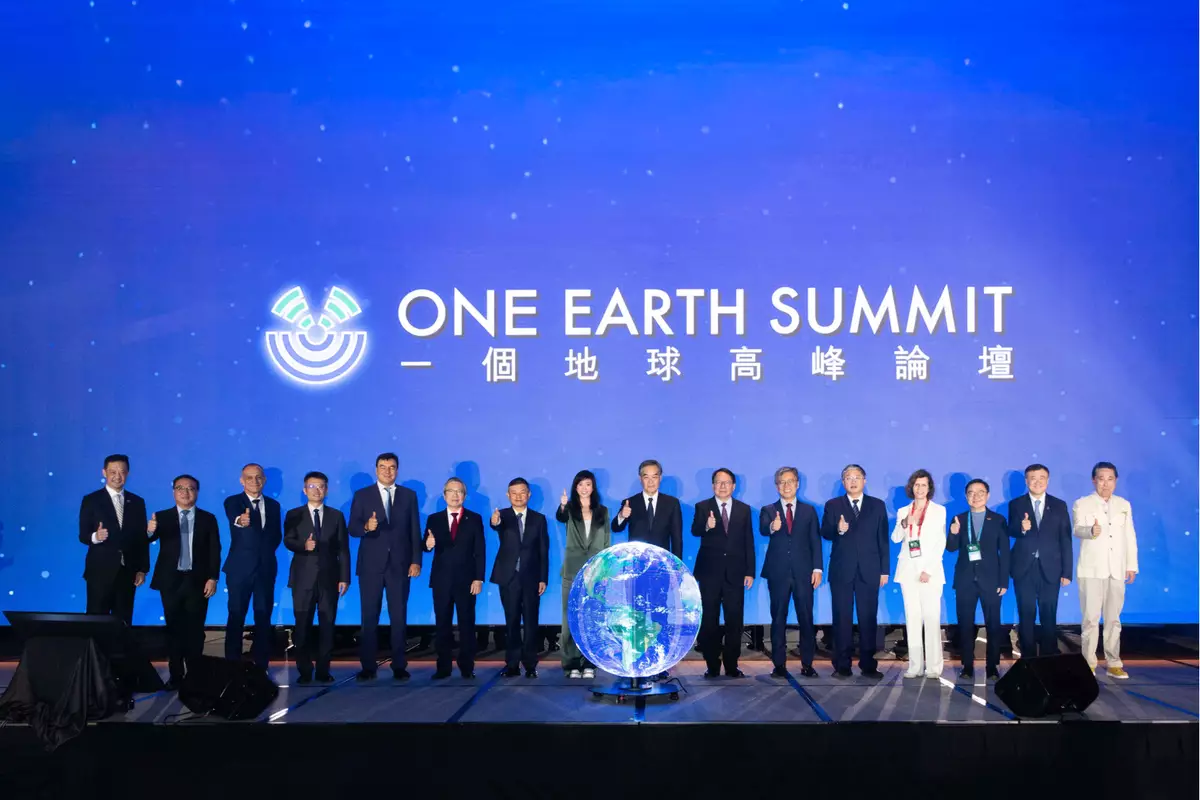
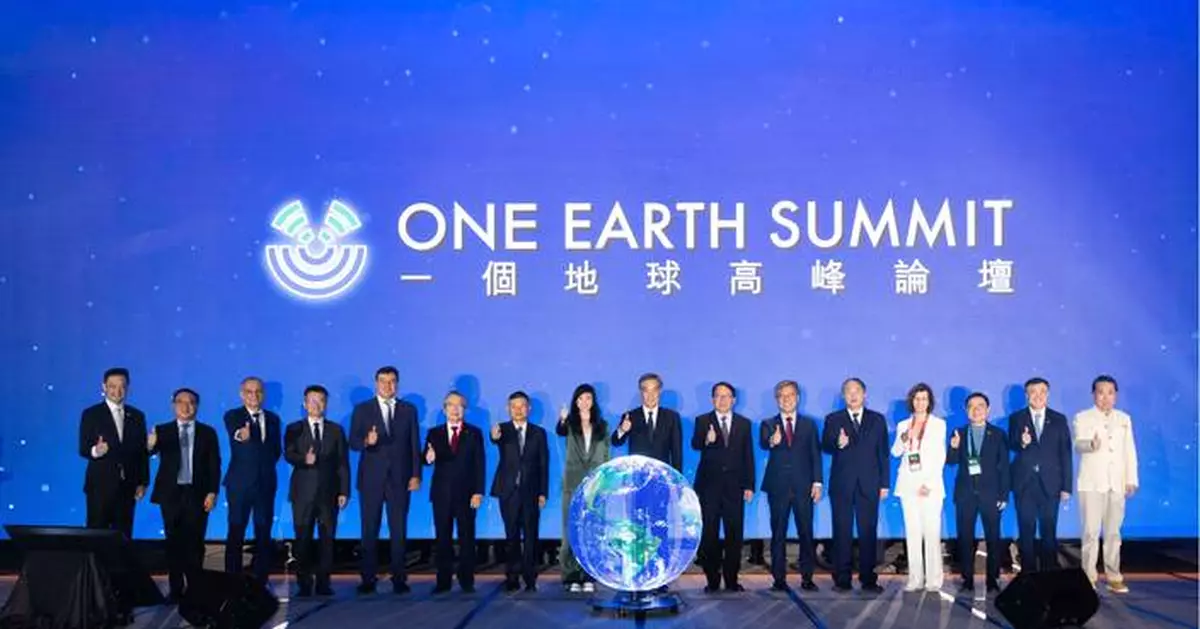
Guests, VIPs, and Speakers pose for a group photo at the opening ceremony of the One Earth Summit 2026
At the heart of the Summit was a clear conviction: in the age of AI, human wisdom, intention and values must guide the development and application of technology. By connecting leadership, capital, research and entrepreneurship, the Summit sought to harness innovation to deliver impactful solutions that benefit businesses and humanity, safeguard our mother Earth, and reach the communities that need them most.
The opening ceremony was officiated by Mr Leung Chun-ying, Vice-Chairman of the National Committee of the Chinese People's Political Consultative Conference; Mr Huang Runqiu, Minister of Ecology and Environment of the People's Republic of China; Ms Poman Lo, Founder of One Earth Initiatives; Professor Harry Shum, Council Chairman of HKUST; and Dr Eric Cheng, Chairman of Environment and Conservation Fund Committee.
In his video welcome address, Mr John Lee, Chief Executive of the Hong Kong Special Administrative Region, he said: "Climate research and technological progress in spurring concerted global action. Accelerating climate change and biodiversity loss demand results. That means bridging the gap between green capital, innovation and governance. In each of these areas, Hong Kong has much to contribute. Like the One Earth Summit, Hong Kong is committed to turning dialogue into impact. Working together, we can mobilise capital, technology and people to power sustainable growth across Asia and the world."
In her welcome remarks, Ms Poman Lo said, "As AI agents and systems become more autonomous, the window to guide their development with human wisdom is narrowing. The Intelligent Age must go beyond smarter machines—it must advance collective flourishing, where innovation serves humanity, prosperity is shared, and no one is left behind. Through One Earth Summit and our initiatives, our mission is to advance purpose-driven innovations and scale their impact through a global ecosystem of leaders across sectors, ensuring that their benefits are shared equitably in communities that need them most."
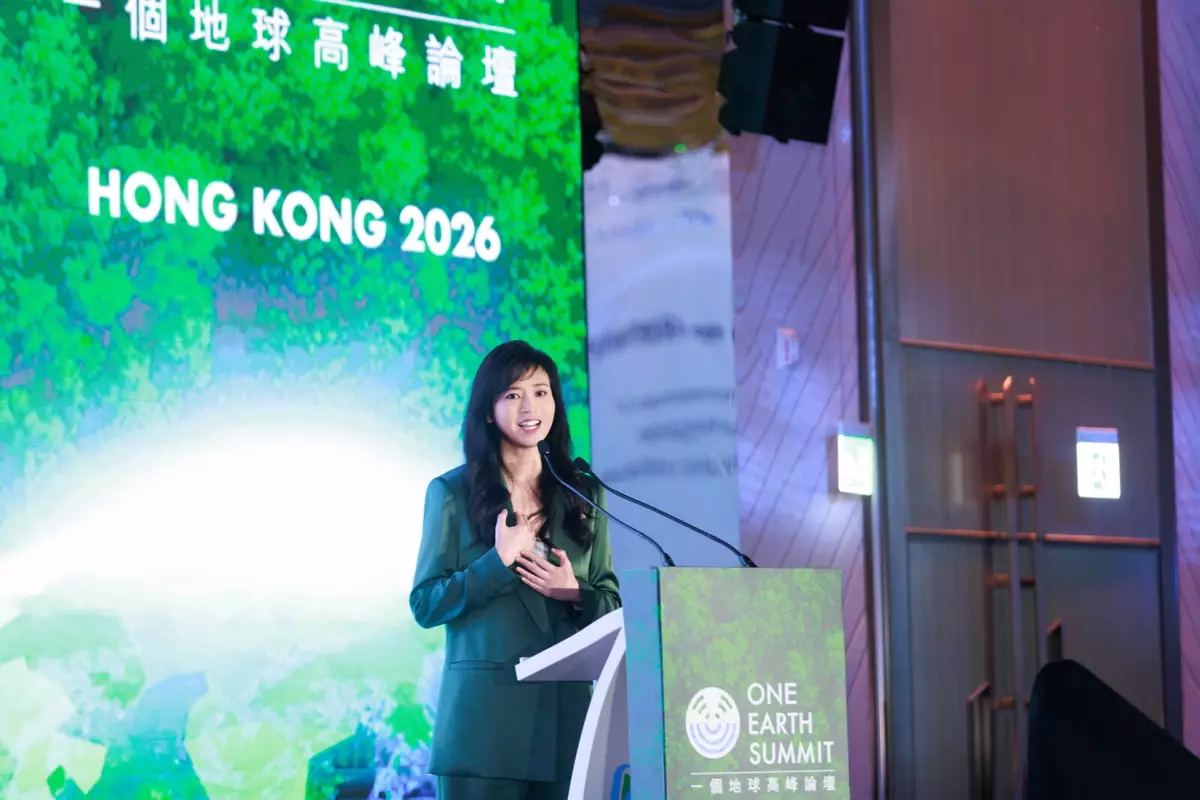
Ms. Poman Lo, Founder, One Earth Initiatives, delivers Opening Remarks
Professor Harry Shum stated, "Technological progress is not measured by capability alone, but by its capacity to foster collective flourishing, elevate human lives, and protect the planet we share. At HKUST, our responsibility is to translate that ambition into practice—through research, education, and partnerships that turn innovative ideas into real-world solutions. That means moving cutting-edge green technologies, from clean energy to climate resilience, out of the lab and into everyday life. Above all, it means nurturing the next generation by equipping them with the skills and judgment required in the era of artificial intelligence. While AI can accelerate the pace of scientific discovery, human wisdom must ultimately decide where it goes. We are preparing our people not just to master the Intelligent Age, but to become its stewards."
"Planetary health and human health are inseparable," said Mr Leung Chun-Ying. "Climate change is already putting public health at risk—from extreme heat and the spread of infectious diseases to mounting pressure on healthcare systems. We must accelerate the green transition through international cooperation, not fragment it with tariffs and market barriers. China's large-scale manufacturing of solar panels, electric vehicles and other clean-energy technologies has helped bring down costs worldwide. By keeping markets open and sharing innovation, we can make these solutions more accessible—especially to the communities most vulnerable to climate change."
Minister Huang Runqiu noted that the climate, biodiversity and pollution crises are intensifying, making the green transition an irreversible global trend. He said China has achieved the world's fastest improvement in air quality and, as the largest supplier of clean-energy equipment, is bringing affordable clean-energy solutions to the Global South through the Green Belt and Road Initiative.
He described Hong Kong as an important contributor to China's environmental progress and the global green transition and called on the city to leverage its role as an international financial centre to mobilise cross-border investment, expand international cooperation in green technology and finance, and share expertise with the Global South.
The Financial Secretary, Mr Paul Chan, said that finance should support innovation, and innovation should serve people and improve lives. Hong Kong will leverage its roles as a "super connector" and "super value-adder" to bring together capital, technology and talent, advance sustainable development through green and transition finance, and promote the translation of research into practical applications. The city will also provide a platform for testing and demonstrating innovative solutions, including AI, to accelerate their adoption in markets around the world. He stressed that investment in technology must go hand in hand with investment in people. Through its "AI Training for All" initiative and cross-sector collaboration, Hong Kong will help people acquire new skills and ensure that the benefits of technological progress are more widely shared.
Featuring twelve keynote addresses and eight panel discussions, the Summit brought together more than 40 speakers across three core themes: AI for Good, Energy and Climate, as well as Oceans and Nature.
Technology for Good
This theme explored how education can nurture AI literacy, human wisdom and responsible leadership, and how young innovators can turn ideas into practical solutions. Discussions highlighted that AI's contribution to collective flourishing depends not only on technological advances, but also on responsible deployment, equitable access and talent development. Speakers examined how education, research partnerships and cross-sector collaboration can translate innovation into wider societal benefits.
Speakers and guests included:
- Professor Yang Bin, Vice-Chairman of the University Council, Tsinghua University;
- Mr Kevin Choi, Permanent Secretary for Innovation, Technology and Industry, Hong Kong Special Administrative Region Government;
- Mr Alfred Chuang, Co-Founder and General Partner, Race Capital;
- Mr Feng Deng, Founder, Northern Light Venture Capital;
- Mr Elliott Donnelley II, Vice Chair, Synergos;
- Mr Boon Heong Ng, Executive Director and Chief Executive Officer, Temasek Foundation; and
- Professor Ya-Qin Zhang, Chair Professor of AI Science, Tsinghua University.
Energy and Climate
Discussions focused on how clean technologies, energy efficiency and investment can work together to accelerate the green transition. Speakers explored the infrastructure, partnerships and local capabilities needed to turn climate ambitions into practical projects and build more resilient communities.
Speakers and guests included:
- Ms Vivian Cheung, Chief Executive Officer, Airport Authority Hong Kong;
- Dr. Arunabha Ghosh, Founder and Former Chief Executive Officer, Council on Energy, Environment and Water;
- Mr Huang Runqiu, Minister of Ecology and Environment of the People's Republic of China;
- Mr Leung Chun-ying, Vice-Chairman of the National Committee of the Chinese People's Political Consultative Conference;
- Mr Liu Xueliang, Vice President, BYD Co Ltd.;
- Mr Jean-Pascal Tricoire, Chairman of the Board, Schneider Electric;
- Mr Terry Wong, Chief Executive Officer, Hong Kong Science and Technology Parks Corporation; and
- Mr Arthur Yuen, Deputy Chief Executive, Hong Kong Monetary Authority.
Oceans and Nature
This theme examined nature's essential role in sustaining prosperity and community resilience, and the importance of integrating environmental considerations into investment, education and development. Speakers also discussed how long-term stewardship and partnerships responsive to local needs can safeguard the foundations of wellbeing for future generations.
Key speakers and guests included:
- Mr Aziz Abdukhakimov, Adviser to the President of the Republic of Uzbekistan;
- Her Royal Highness Princess Esméralda of Belgium, President, King Leopold III Fund for Nature Exploration and Conservation;
- Ms Irina Bokova, Former Director-General, United Nations Educational, Scientific and Cultural Organization (UNESCO);
- Dr Youssef Nassef, Director, Adaptation Division, United Nations Framework Convention on Climate Change (UNFCCC) Secretariat; and
- Mr Fred Tsao, Chairman, Tsao Pao Chee Group.
From Dialogue to Action
Throughout the Summit, speakers shared their visions, progress and practical experience to advance collective flourishing in the intelligent age. IST provides a platform for exchanging ideas, connecting resources and building partnerships, helping solutions move from discussion to implementation and fostering collaboration for the wellbeing of people and the planet.
One Earth expressed its deep gratitude to every speaker, partner, supporter and participant contributing to this movement. Beyond a single gathering, the Summit serves as a catalyst for year-round collaboration, aligning human intention with technological capability to create lasting value for business, humanity and the planet.
For photo download, please visit: https://bit.ly/3UkC1kc
Hashtag: #HKUST #IST
The issuer is solely responsible for the content of this announcement.
About the One Earth Initiatives
One Earth Initiatives advance purpose-driven innovations and scale their impact to enhance the wellbeing of people and the planet. Through year-round programmes, One Earth brings together changemakers across sectors to develop new approaches, build partnerships and accelerate solutions.
Now in its third edition, One Earth Summit is one of Asia's leading forums advancing the United Nations Sustainable Development Goals. Up to date, the Summit has convened over 1,600 investors, business leaders, innovators, philanthropists, policymakers and academics from around the world. Recognised by the United Nations as a platform for building lasting impact and trust, it sets the direction for year-round collaboration. One hundred young entrepreneurs and founders of tech-for-good solutions from One Earth NextGen Innovators Program, coming from over 20 countries, join the Summit as youth delegates each year, as part of their week-long bootcamp in Hong Kong, Shenzhen, and Guangzhou. One Earth Alliance further fosters partnerships across the public, private and philanthropic sectors.
** This press release is distributed by Media OutReach Newswire through automated distribution system, for which the client assumes full responsibility. **