Skip to Content Facebook Feature Image

Difficult negotiations lie ahead in Israel after Netanyahu's bloc lost its parliamentary majority

News

Difficult negotiations lie ahead in Israel after Netanyahu's bloc lost its parliamentary majority
News

News

Difficult negotiations lie ahead in Israel after Netanyahu's bloc lost its parliamentary majority

2026-10-31 00:59 Last Updated At:01:00

JERUSALEM (AP) — Israel's final election results confirmed Prime Minister Benjamin Netanyahu and his allies lost their parliamentary majority and that weeks of difficult negotiations among very different parties, from ultra-Orthodox Jewish to secular to Arab-led, lie ahead.

The results released early Friday showed Netanyahu’s bloc won 53 seats in Tuesday's election. The main opposition bloc won 48. Arab-led parties secured the other 19, a historic showing. Now parties must meet, bargain and seek a way to team up for at least 61 seats in the 120-member Knesset.

Netanyahu, Israel’s longest-serving prime minister, remains in charge. His main opponents would most likely need to partner with the Arab-led parties to replace him.

Underscoring the fraught path ahead, Avigdor Lieberman, the leader of a right-wing anti-Netanyahu faction, on Friday appeared to rule out any partnership with Arab-led parties. That alone would make it nearly impossible for Netanyahu’s opponents to form a coalition to oust him.

Difficult decisions lie ahead. Will the main opposition parties that campaigned hard to unseat the divisive Netanyahu make the politically sensitive choice to partner with Arab-led ones? Or will they toss their vows aside to team up with Netanyahu in a potentially fractious unity government?

Israel largely shuts down on Friday for the Jewish Sabbath, and it was not clear who might be meeting with whom. Israelis debated possible coalitions and challenges, as some expressed traditional wariness around Arab parties and others insisted it was time for Jewish-led parties to embrace them.

The election results still need to be certified and submitted to the president next Wednesday. Then President Isaac Herzog will task someone with forming the new government. That could be the leader of the party that received the most votes — Netanyahu — or whoever leaders of the various parties believe is best suited.

If multiple attempts to form a government fail, Israel faces a new election early next year. Herzog this week said he will do everything in his power to avoid that scenario.

In the hours before final results were announced, Netanyahu and his Likud party amplified unsubstantiated allegations that Arab-led parties had “stolen” the election, potentially with foreign assistance.

The opposition quickly accused Netanyahu of demonizing Arab citizens, who make up 20% of the population and showed up at the polls like never before in outrage over his far-right government.

On Friday, Netanyahu again warned against forming a coalition with Arab parties.

The head of Israel’s election committee, Supreme Court Justice Noam Sohlberg, had said “serious suspicions” of foreign interference had been brought before him. In a letter to the Shin Bet security agency, Sohlberg said he could not verify the claims but asked the agency to investigate.

Israeli media reported that members of Netanyahu’s party accused Qatar of involvement, allegations the Gulf state dismissed as “ridiculous and dangerous.” Many Israelis view Qatar as a patron of Hamas, while Qatar says its relations with the militant group are part of its U.S.-backed mediation efforts in the region.

The election commission said the investigation was based on classified intelligence. Acting Director General Dean Livne did not elaborate but warned that reports about the investigation had been “entirely unfounded.”

“It does not affect the final results that will be submitted to the president, nor does it concern any particular sector of the population,” he said.

By casting doubt on the vote, Netanyahu appeared to be trying to block any potential alliance between his opponents and the Arab-led parties. Netanyahu has suggested that it would be treasonous for chief rival Gadi Eisenkot or others to join with them.

The Shin Bet, seeking to calm tensions, said its investigation was not meant to “cast aspersions” on an entire section of the population that “exercised its right to vote in a democratic and lawful manner.”

The elections committee also sounded a note of caution in a letter written to a concerned member of parliament, saying that “allegations of systematic violations of electoral integrity are baseless.”

The committee wants findings from the Shin Bet within a week.

Even as coalition negotiations begin, the new Knesset is expected to be sworn in Nov. 10. Once it convenes, Eisenkot’s bloc could join forces with the Arab parties to elect a new Knesset speaker, giving them control over the parliamentary agenda and potentially allowing them to advance and pass legislation before a new government is formed.

But Lieberman, a former Netanyahu ally now committed to ousting him, referred to the Arab parties as “supporters of terrorism” in a Facebook post, saying his Yisrael Beitenu party, which won seven seats, would not partner with them.

Arab party leaders have condemned Hamas’ Oct. 7, 2023, attack on Israel but have declined to label it a terrorist organization, in part because it would appear to justify Israel’s devastating campaign in Gaza.

Hundreds of Israelis have been holding rallies urging Eisenkot and others to join forces with the Arab-led parties, a step that has happened only once before, briefly, in 2021.

“I believe we should join forces and cooperate with the Arab parties, a legitimate population in the state of Israel,” said Miri Sklair, a resident of Jaffa.

Issa Jaber Abu-Ghosh, the former mayor of an Arab village outside Jerusalem, said “Israel all the time claims to be the only democracy in the Middle East,” but that it's not a “real democracy” if its politics remain divided between Jews and Arabs.

If Netanyahu loses office, that would set off a cascade of events that critics say he has desperately sought to avoid. He would be politically weakened as he faces an ongoing corruption trial, and an official inquiry into the security failures surrounding Hamas' Oct. 7, 2023, attack would almost certainly be launched.
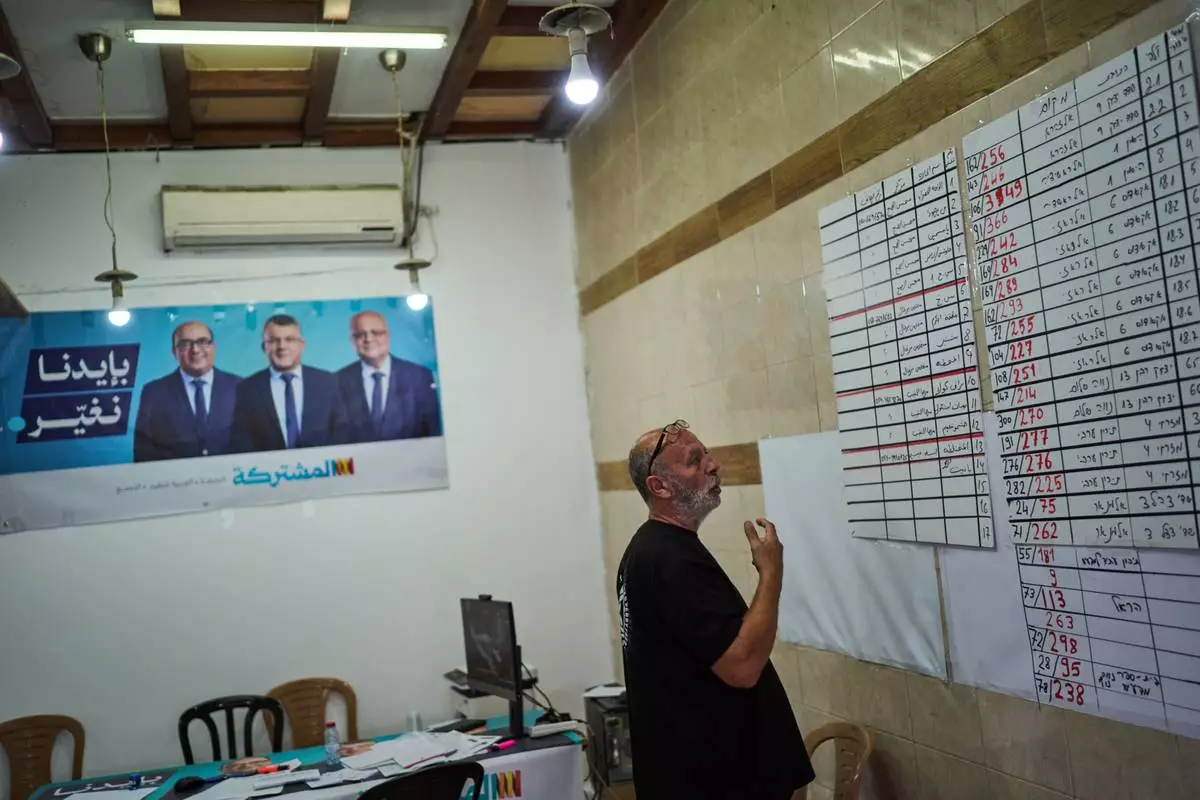
Mukhles Burghal, a volunteer with the Joint List Party, looks at a board showing election results at a campaign office in the mixed Arab-Jewish town of Lod, central Israel, Friday, Oct. 30, 2026. (AP Photo/David Goldman)
Mukhles Burghal, a volunteer with the Joint List Party, looks at a board showing election results at a campaign office in the mixed Arab-Jewish town of Lod, central Israel, Friday, Oct. 30, 2026. (AP Photo/David Goldman)

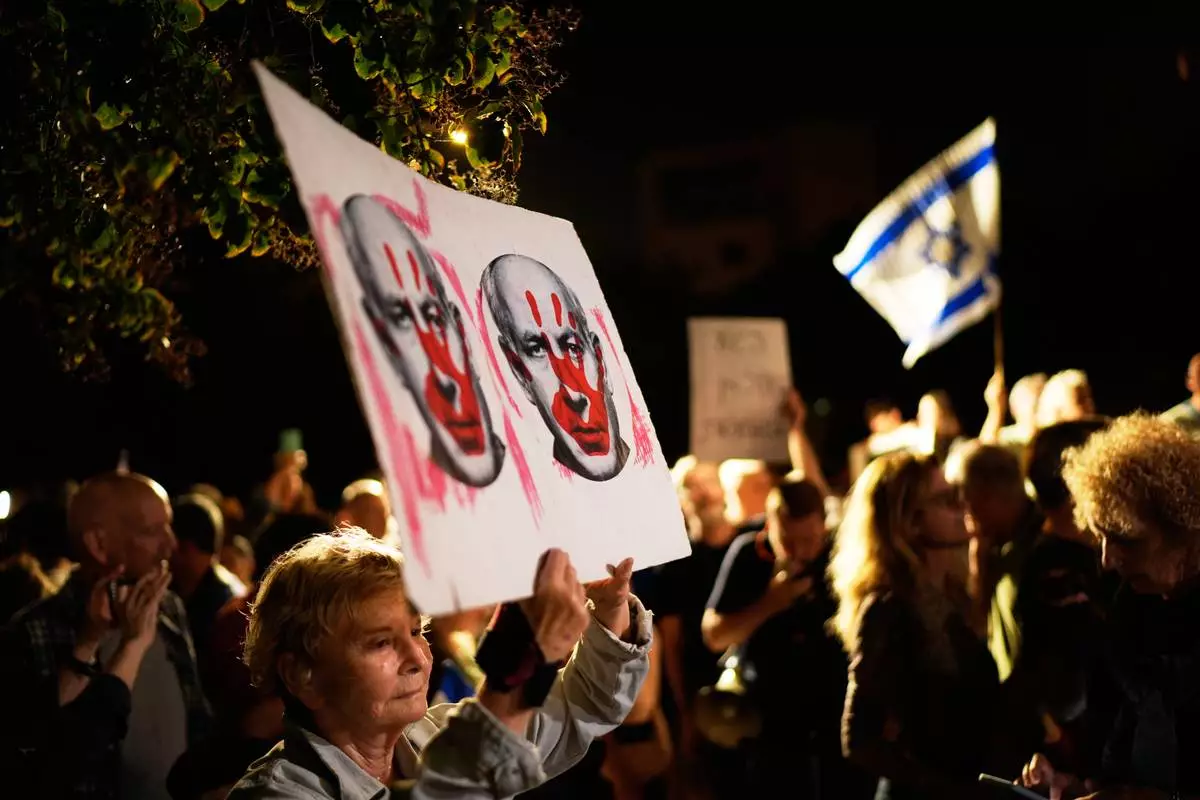
Israeli left-wing activists call for a government with Arab parties outside Yashar party leader Gadi Eisenkot's residence in Herzliya, Israel, Thursday, Oct. 29, 2026. (AP Photo/David Goldman)

Israeli left-wing activists call for a government with Arab parties outside Yashar party leader Gadi Eisenkot's residence in Herzliya, Israel, Thursday, Oct. 29, 2026. (AP Photo/David Goldman)

Supporters of Prime Minister Benjamin Netanyahu, rear, are separated by police as they argue with left-wing activists calling for a government with Arab parties outside the residence of Yashar party leader Gadi Eisenkot in Herzliya, Israel, Thursday, Oct. 29, 2026. (AP Photo/David Goldman)


Supporters of Prime Minister Benjamin Netanyahu, rear, are separated by police as they argue with left-wing activists calling for a government with Arab parties outside the residence of Yashar party leader Gadi Eisenkot in Herzliya, Israel, Thursday, Oct. 29, 2026. (AP Photo/David Goldman)
KHERSON, Ukraine (AP) — Evacuees from Russian-occupied Oleshky began the long journey out of the war-ravaged region in bus convoys Friday, on the fourth day of the most significant truce since Russia’s full-scale invasion of Ukraine 4½ years ago.

The estimated 2,000 remaining residents in the city of Oleshky were offered the choice of traveling to Ukrainian- or Russian-held territory, or remaining in the city with replenished food and medical supplies.

Ukrainian lawmaker Davyd Arakhamia said the evacuated residents bound for Ukraine were traveling to the city of Anapa in southern Russia from where they would fly to Belarus before crossing the border into northern Ukraine. Arakhamia is a member of President Volodymyr Zelenskyy’s Servant of the People party.

The shortest route from Oleshky to Anapa is about 450 kilometers (280 miles) through Russian-held Crimea.

Russia’s ombudswoman and lead representative on the mission, Yana Lantratova said buses were also carrying Oleshky residents who want to live in Russia. Lantratova said the humanitarian mission was wrapping up and that it was conducted without incident.

Russia and Ukraine have not specified how many people chose to leave the city, but U.S. first lady Melania Trump, whom the White House said helped broker the localized truce, posted on social media Friday that the convoy could safely evacuate more than 750 people.

An aid convoy of 25 buses, some ambulances, trucks and other vehicles had arrived in the stranded city earlier Friday to deliver food and medicine.

Officials from both countries worked together in the rare joint humanitarian effort, offering a brief respite in the grim war of attrition. The localized ceasefire in Ukraine’s southern Kherson region is expected to continue through Sunday evening.

The United States played a central role in the mission. Aside from the first lady's apparent role, Pope Leo XIV — the first American pontiff — also pressed Russian and Ukrainian leaders to allow aid deliveries and civilian evacuations.

“Everyone who wishes to leave Oleshky will have the opportunity to do so safely,” Russia and Ukraine said in separate but identical statements earlier Friday. “Those who choose to stay may remain and will receive all the humanitarian support they need.”

Fighting continued elsewhere, however. Russia’s Defense Ministry said air defenses downed more than 1,000 Ukrainian drones overnight, while Ukraine’s air force said Russia launched ballistic and other missiles, along with scores of drones.

A Russian drone attack on a town in northeast Ukraine has left one woman dead and eight people injured, Ukraine’s emergency services said Friday. The strike occurred in the Sumy region in the town of Shostka, near Ukraine’s border with Russia. The agency said rescue efforts were hampered by repeated air raid alerts.

The humanitarian convoy was assembled in Armiansk, a town in Russian-occupied Crimea about 85 kilometers (55 miles) south of Oleshky, said Dmytro Lubinets, Ukraine’s ombudsman and chief negotiator.

Demining of designated routes into the city was completed late Thursday, officials said. Two people were killed during that work.

Video posted by Lubinets’ office showed him meeting older residents in Oleshky. One woman tearfully hugged him as others smiled.

Ksenia Arkhipova, a volunteer who used to live in Oleshky and remains in contact with residents, said large numbers of Russian military personnel were in the city.

Associated Press writers Susie Blann and Derek Gatopoulos in Kyiv, Ukraine, and Yuras Karmanau in Tallinn, Estonia, contributed.

Follow the AP’s coverage of the war in Ukraine at https://apnews.com/hub/russia-ukraine

In this photo provided by the Office of the Ombudsman of Ukraine, Ukraine's Ombudsman Dmytro Lubinets, center right, and Russian Ombudsman Yana Lantratova speak with journalists before departing for Oleshky to evacuate local residents to a safe area during a local ceasefire linked to a humanitarian mission in Ukraine's Kherson region, Friday, Oct. 30, 2026. (Office of the Ombudsman of Ukraine via AP) CORRECTION: change position of Dmytro Lubinets from center left to center right

In this photo provided by the Office of the Ombudsman of Ukraine, Ukraine's Ombudsman Dmytro Lubinets, center right, and Russian Ombudsman Yana Lantratova speak with journalists before departing for Oleshky to evacuate local residents to a safe area during a local ceasefire linked to a humanitarian mission in Ukraine's Kherson region, Friday, Oct. 30, 2026. (Office of the Ombudsman of Ukraine via AP) CORRECTION: change position of Dmytro Lubinets from center left to center right

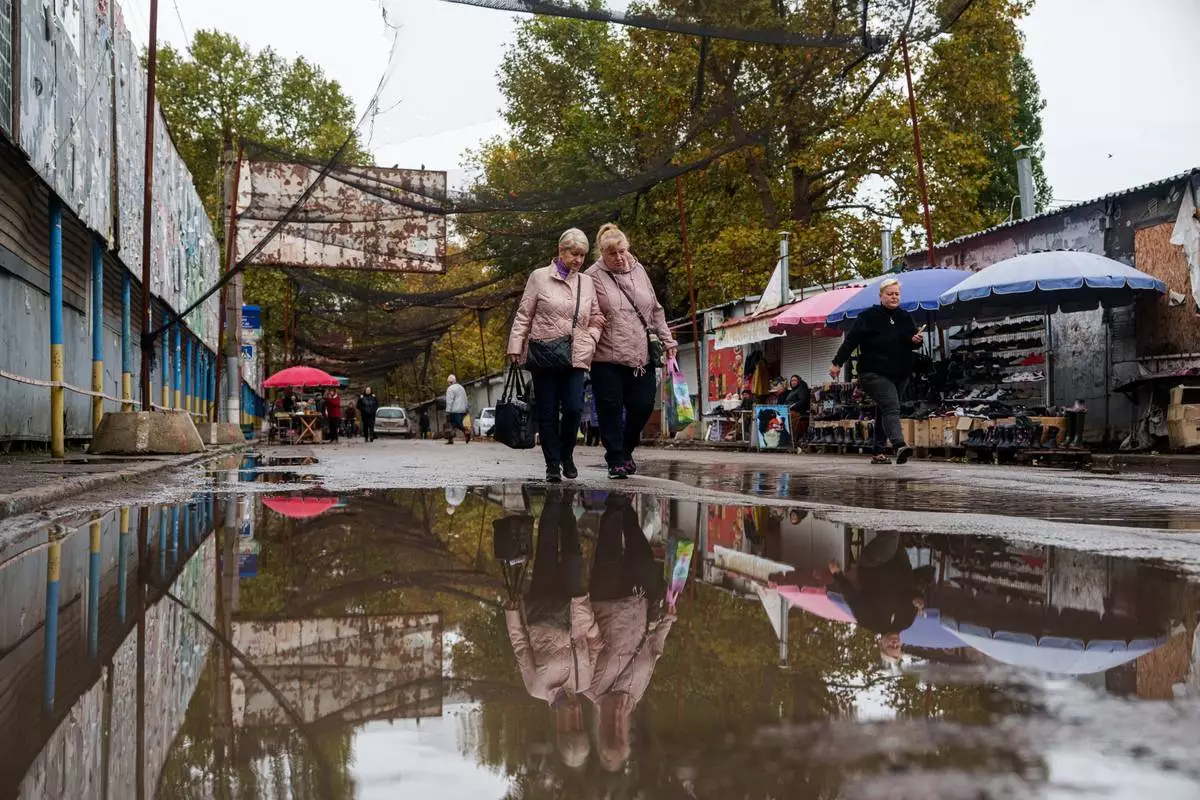
Women walk through a local market beneath anti-drone nets stretched over a street during a local ceasefire linked to a humanitarian aid mission in Oleshky, in Ukraine's Kherson region, Thursday, Oct. 29, 2026. (AP Photo/Evgeniy Maloletka)

Women walk through a local market beneath anti-drone nets stretched over a street during a local ceasefire linked to a humanitarian aid mission in Oleshky, in Ukraine's Kherson region, Thursday, Oct. 29, 2026. (AP Photo/Evgeniy Maloletka)

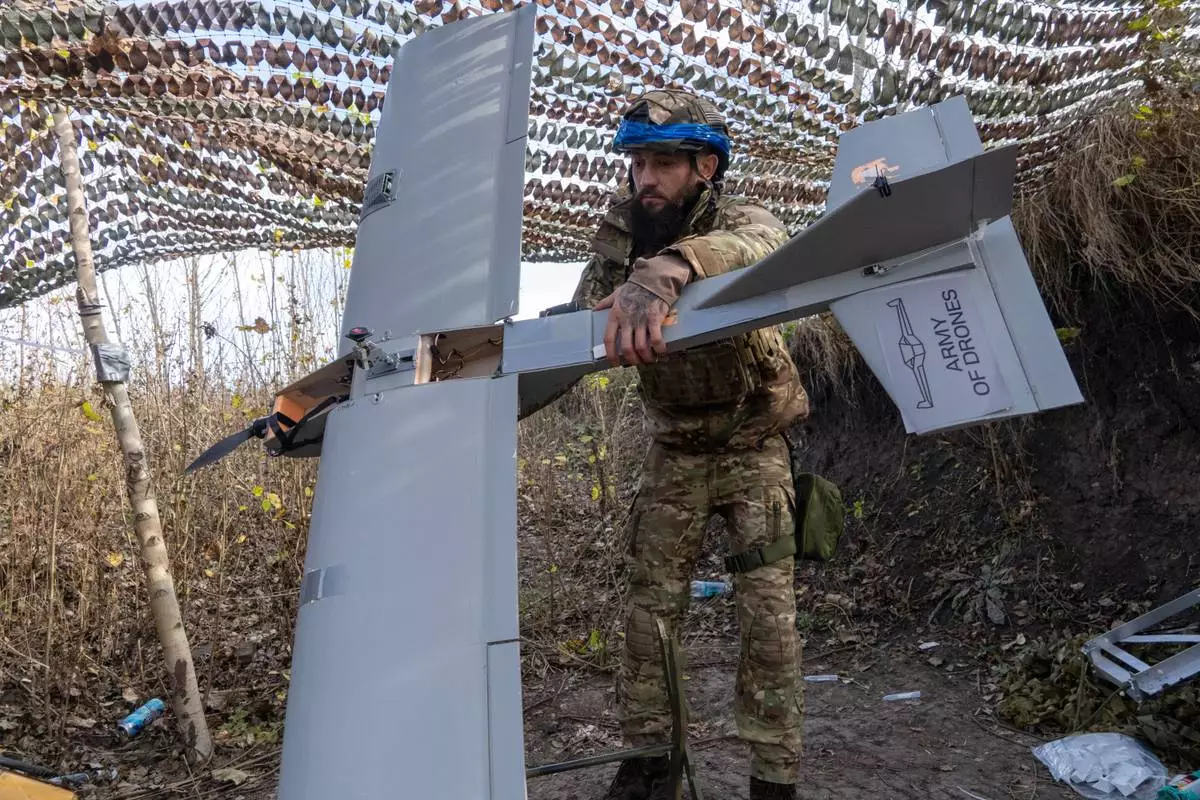
A Ukrainian soldier of Khartia brigade prepares a Ukrainian-made "Darts" drone, a multipurpose unmanned aerial vehicle used as a kamikaze drone to attack Russian forces, near Kharkiv, Ukraine, Thursday, Oct. 29, 2026. (AP Photo/Andrii Marienko)

A Ukrainian soldier of Khartia brigade prepares a Ukrainian-made "Darts" drone, a multipurpose unmanned aerial vehicle used as a kamikaze drone to attack Russian forces, near Kharkiv, Ukraine, Thursday, Oct. 29, 2026. (AP Photo/Andrii Marienko)

In this photo provided by the Office of the Ombudsman of Ukraine, Ukraine's Ombudsman Dmytro Lubinets, center left, and Russian Ombudsman Yana Lantratova speak with journalists before departing for Oleshky to evacuate local residents to a safe area during a local ceasefire linked to a humanitarian mission in Ukraine's Kherson region, Friday, Oct. 30, 2026. (Office of the Ombudsman of Ukraine via AP)

In this photo provided by the Office of the Ombudsman of Ukraine, Ukraine's Ombudsman Dmytro Lubinets, center left, and Russian Ombudsman Yana Lantratova speak with journalists before departing for Oleshky to evacuate local residents to a safe area during a local ceasefire linked to a humanitarian mission in Ukraine's Kherson region, Friday, Oct. 30, 2026. (Office of the Ombudsman of Ukraine via AP)

In this screenshot from a video provided by the Office of the Ombudsman of Ukraine, Ukraine's Ombudsman Dmytro Lubinets, left, speaks with residents of Oleshky during their evacuation to a safe area amid a local ceasefire connected to a humanitarian aid mission in Oleshky, Kherson region, Ukraine, Friday, Oct. 30, 2026. (Office of the Ombudsman of Ukraine via AP)

In this screenshot from a video provided by the Office of the Ombudsman of Ukraine, Ukraine's Ombudsman Dmytro Lubinets, left, speaks with residents of Oleshky during their evacuation to a safe area amid a local ceasefire connected to a humanitarian aid mission in Oleshky, Kherson region, Ukraine, Friday, Oct. 30, 2026. (Office of the Ombudsman of Ukraine via AP)

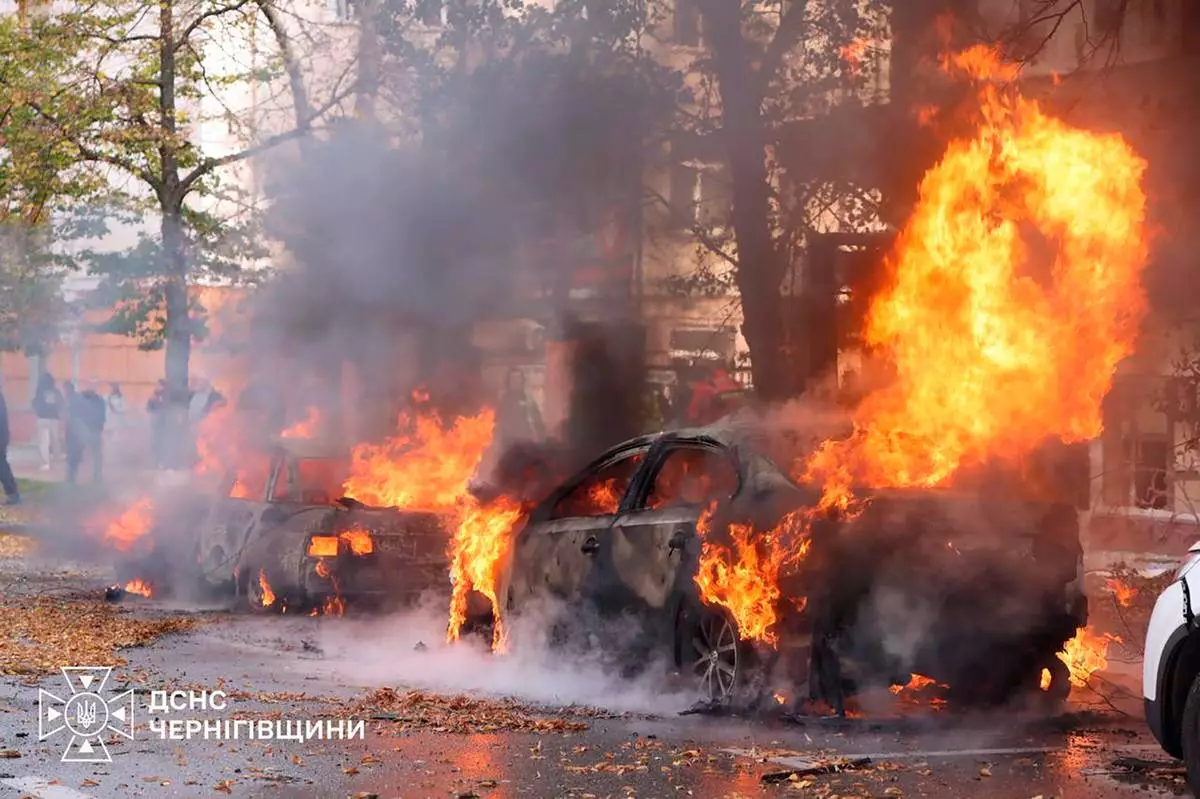
In this photo provided by the Ukrainian Emergency Service, cars are on fire following a Russian air attack in Chernyhiv, Ukraine, Thursday, Oct. 29, 2026. (Ukrainian Emergency Service via AP)

In this photo provided by the Ukrainian Emergency Service, cars are on fire following a Russian air attack in Chernyhiv, Ukraine, Thursday, Oct. 29, 2026. (Ukrainian Emergency Service via AP)

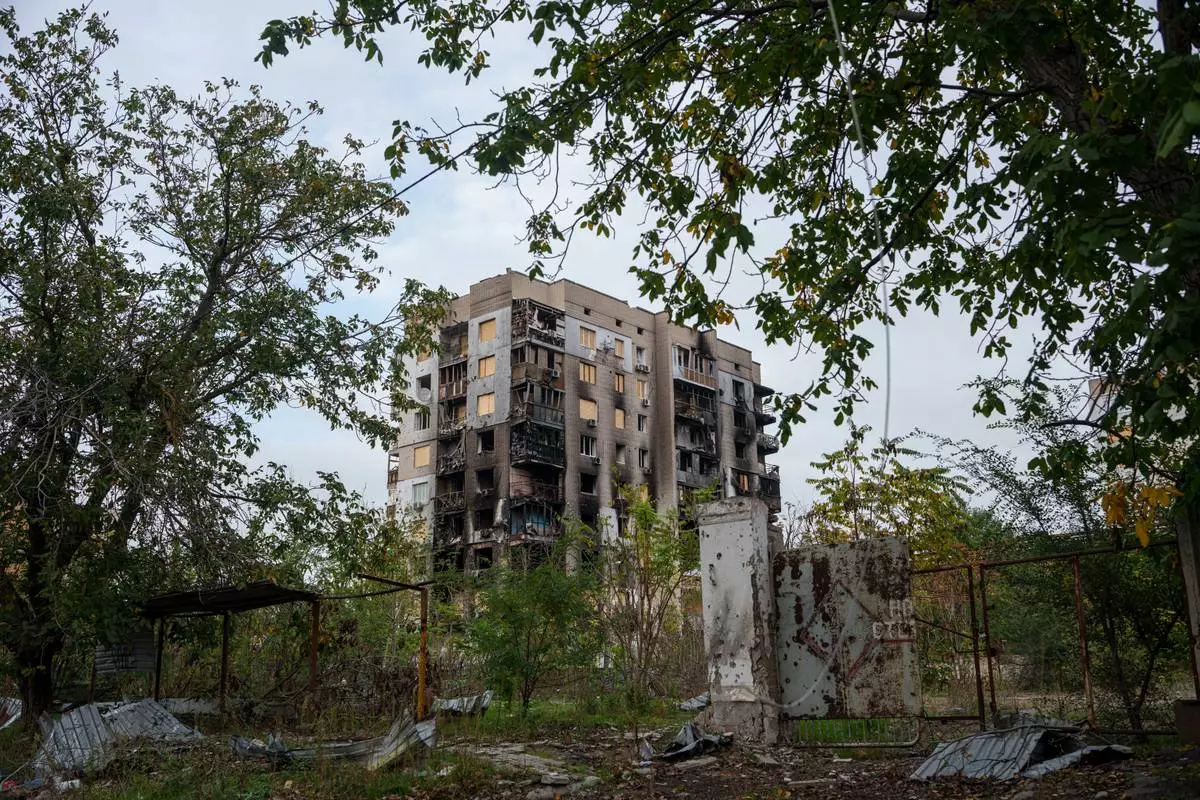
A residential building is seen damaged in Russian attacks during a local ceasefire related to a humanitarian aid mission in Oleshky, in Kherson, Ukraine, Wednesday, Oct. 28, 2026. (AP Photo/Evgeniy Maloletka)

A residential building is seen damaged in Russian attacks during a local ceasefire related to a humanitarian aid mission in Oleshky, in Kherson, Ukraine, Wednesday, Oct. 28, 2026. (AP Photo/Evgeniy Maloletka)

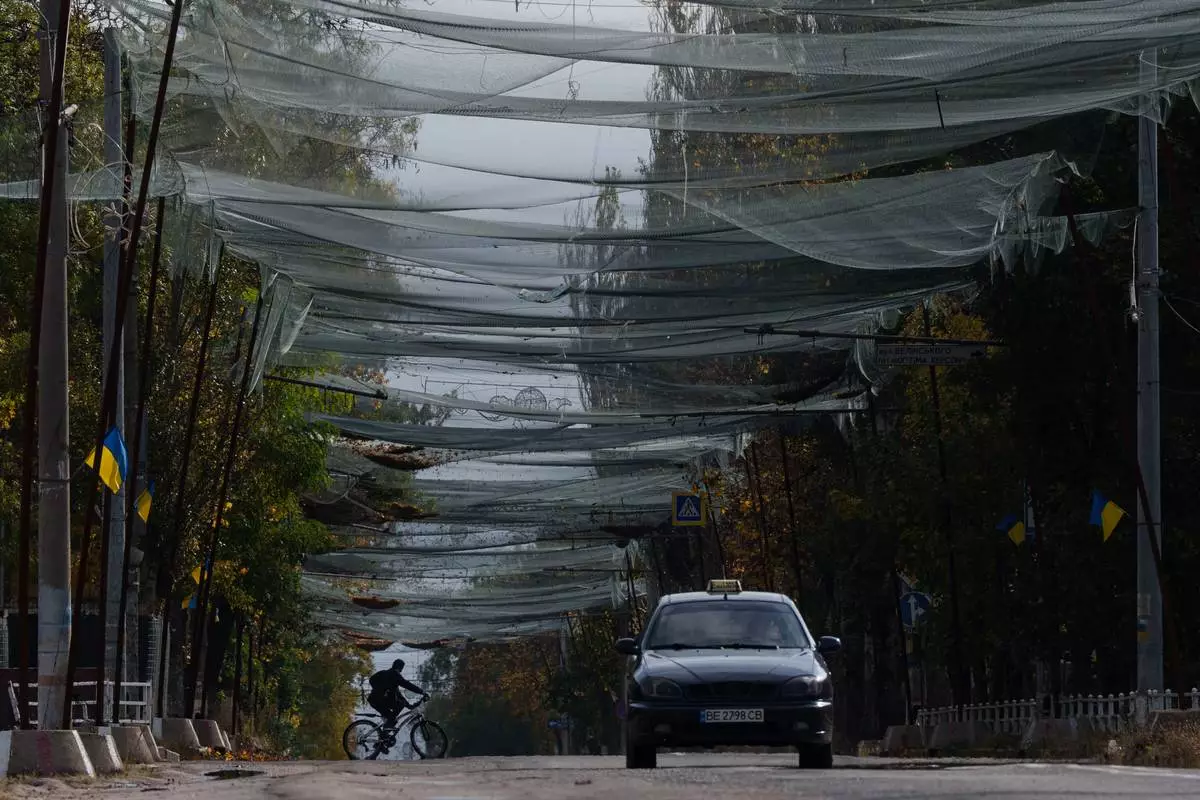
A local man rides a bicycle beneath anti-drone nets stretched over a street during a local ceasefire related to a humanitarian aid mission in Oleshky, in Kherson, Ukraine, Wednesday, Oct. 28, 2026. (AP Photo/Evgeniy Maloletka)

A local man rides a bicycle beneath anti-drone nets stretched over a street during a local ceasefire related to a humanitarian aid mission in Oleshky, in Kherson, Ukraine, Wednesday, Oct. 28, 2026. (AP Photo/Evgeniy Maloletka)

Recommended Articles