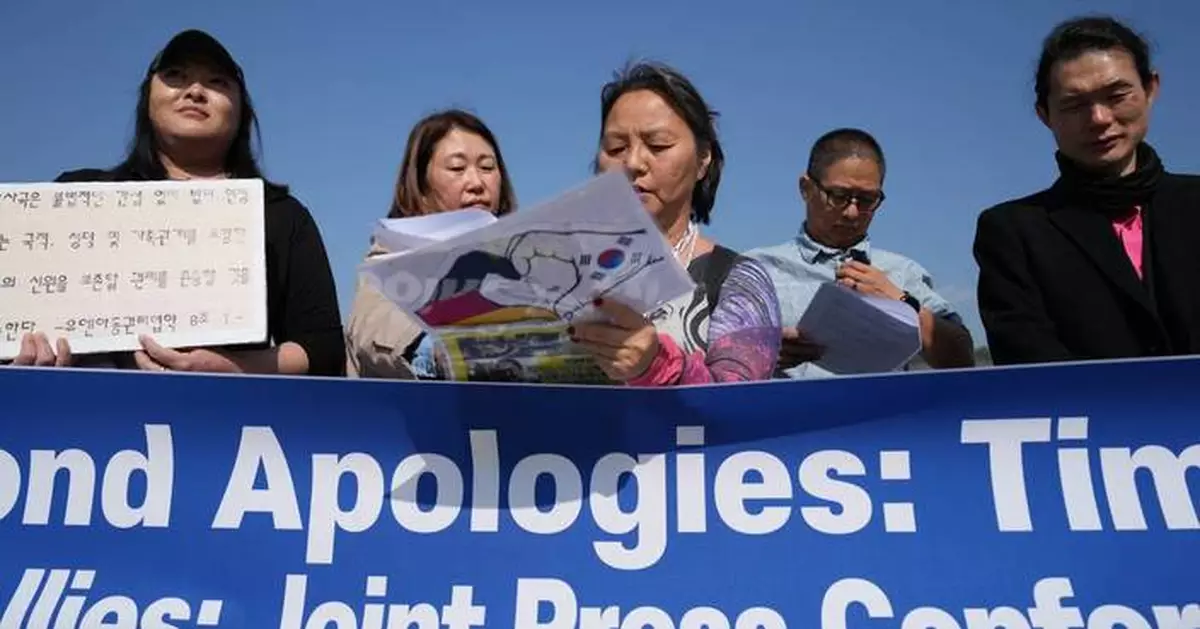
SEOUL, South Korea (AP) — South Korean adoptees from Western nations protested outside Seoul’s presidential office Friday, demanding full access to their records and better efforts to trace their biological families.
Those efforts are often derailed by inaccurate or falsified files, as their birth nation weighs an overhaul of its long-maligned post-adoption policies.
In a statement co-signed by nine adoptee organizations from Europe and the United States and human rights advocates based in South Korea, the groups called on Seoul to expand DNA testing and matching services and broaden access to administrative and residential records to improve family searches.
They also demanded new investigations into the manipulation of adoption records and child origins and wrongful child-parent separations that marred South Korea’s historic adoption program, along with clearer paths for reparations to adoptees and relatives affected by the widespread fraud and abuse.
The protest, which followed a gathering of hundreds of Korean adoptees in Seoul last week, comes as the liberal administration of President Lee Jae Myung considers major changes to the way the government handles adoptees’ requests for access to adoption records and birth-family searches.
The process is currently overseen by the National Center for the Rights of the Child, an agency under the Health and Welfare Ministry. But officials are considering giving a larger role to the Overseas Korean Agency, which falls under the Foreign Ministry and is seen as better positioned to streamline services for adoptees and coordinate with Western countries that received Korean children for adoption, though the changes could require new legislation.
Lawmakers are also debating multiple bills aimed at improving birth-family searches for adoptees, including by easing privacy restrictions so adoptees can obtain information about their birth parents unless the parents have explicitly requested that it remain confidential.
South Korea’s Truth and Reconciliation Commission concluded in 2025 that the government bears responsibility for facilitating an adoption program rife with fraud and abuse, driven by efforts to reduce welfare costs, findings that broadly aligned with earlier reporting by The Associated Press.
Acting on a recommendation by the commission, Lee apologized to adoptees and their families, saying in a Facebook post that he felt “heavy-hearted” over their suffering and urging officials to find better ways to support their efforts to locate their birth families.
Adoptee and activist groups said during Friday’s protest that officials had yet to take meaningful action a year after Lee’s apology, and that “truth-findings, remedies, and the restoration of rights can no longer be delayed.”
“They should do something to help us to find our families because time is running out and our parents (may have) passed away,” said Kee Soon Jager, who was adopted to Germany as a 4-year-old in 1976 and has been searching for her biological parents since 1991.
Angelika Lindgren, who was adopted to Sweden in 1974 and listed in papers as an abandoned child found on the streets, called for the creation of a larger DNA database to improve family searches as adoption documents are often unreliable.
“I understand it’s difficult for mothers and fathers who gave up their children and I know it wasn’t always their choice,” she said. “Maybe it was … an uncle who left the babies and maybe the parents didn’t even know.”
About 200,000 South Koreans were adopted to the United States, Europe, and Australia since the 1950s, creating what’s possibly the world’s largest diaspora of adoptees.
During the peak of adoptions in the 1970s and ’80s, thousands of South Korean children were falsely registered as abandoned to make them eligible for adoption under Western laws, even though records suggest most had known relatives.
Private adoption agencies paid hospitals and orphanages for newborns and other children, and, in some cases, switched children’s identities to keep adoptions on track when a child died, was too sick to travel or was reclaimed by birth relatives. Western governments, eager to meet domestic demand for adoptable children, overlooked widespread signs of fraud and sometimes pressured Seoul to keep children coming.
While South Korea has pursued reforms in recent years, including strengthening government and judicial oversight and declaring to end foreign adoptions by 2029, officials still have no clear plans for addressing decades of inaccurate or falsified records that fueled careless child-parent separations.
According to Health Ministry records, only 622 of the 11,300 family search requests submitted by adoptees between 2021 and September 2025 resulted in reunions. In more than 4,600 cases, officials were unable to locate the birth parents or determine whether they had consented to be connected with the adoptees.
Health Ministry officials have voiced reservations about lawmakers’ calls to guarantee adoptees access to birth-family information unless their biological parents explicitly object, warning such an approach could infringe on privacy rights.
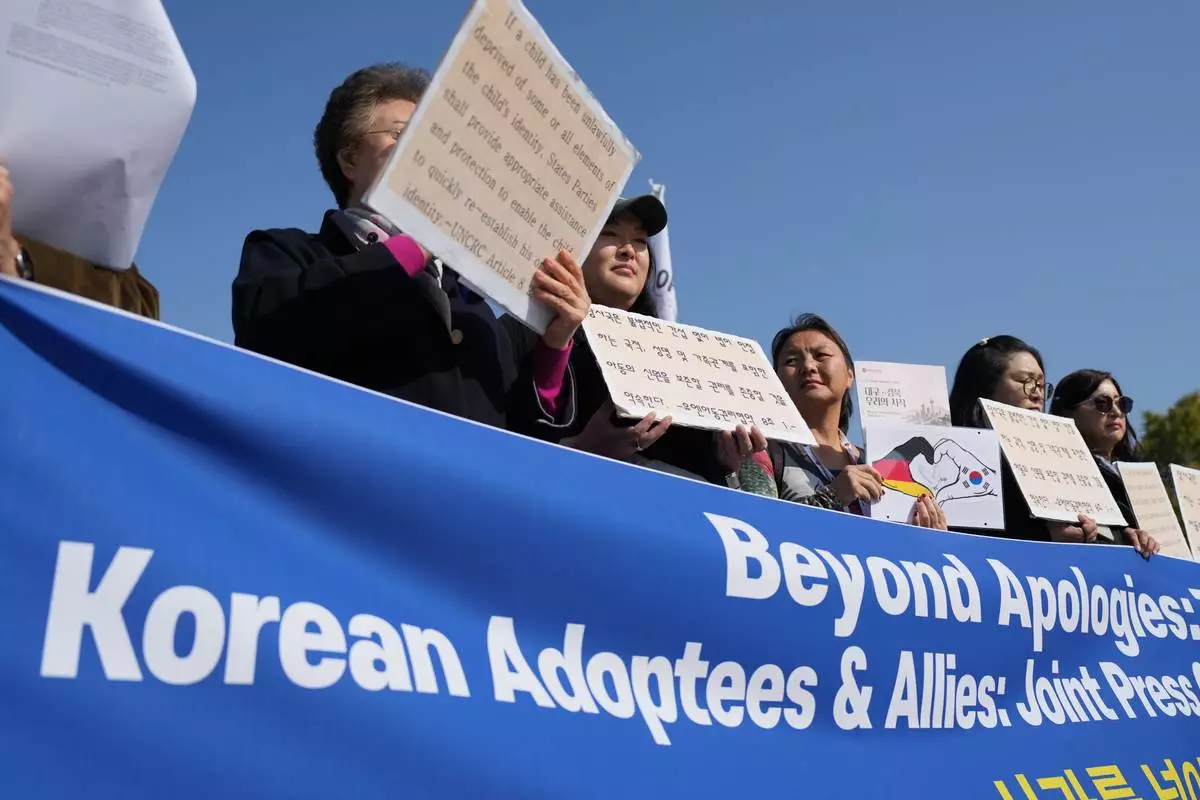
Kee Soon Jager, center, who was adopted to Germany as a four-year-old in 1976, attends a joint press conference in Seoul, South Korea, Friday, Oct. 30, 2026. (AP Photo/Lee Jin-man)
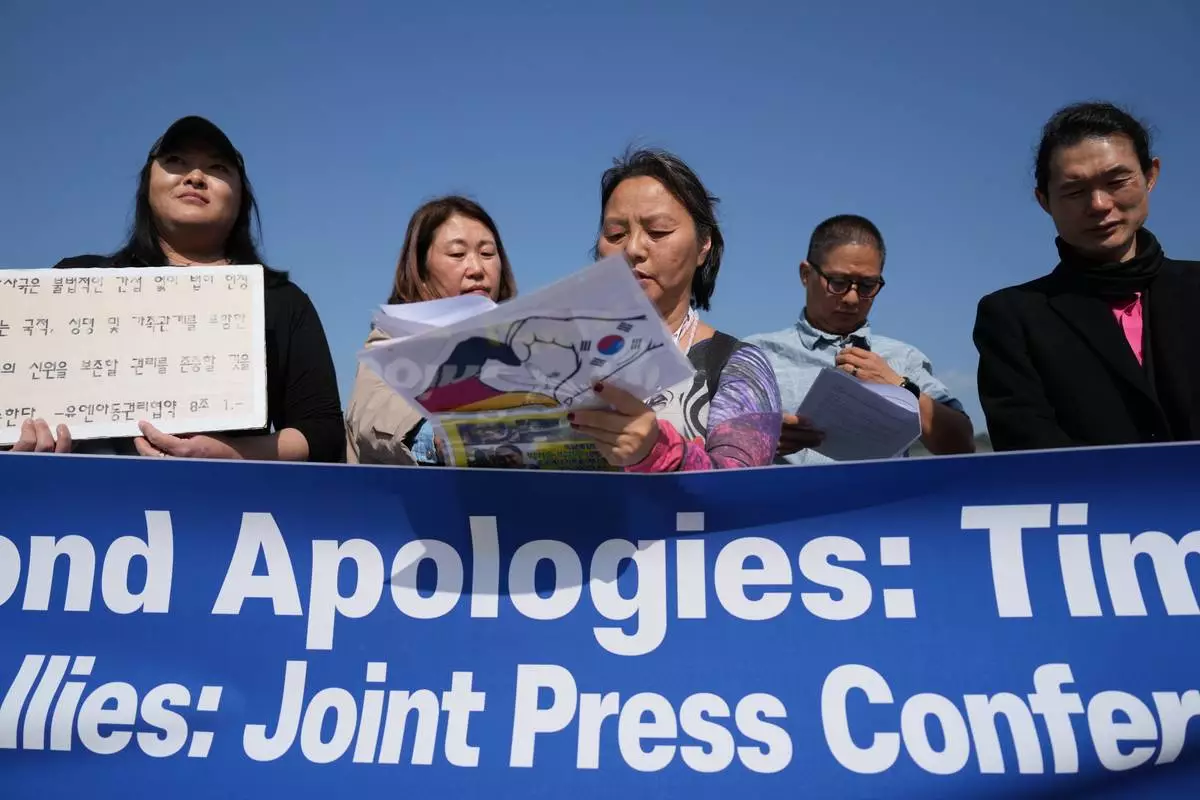
Kee Soon Jager, center, who was adopted to Germany as a four-year-old in 1976, speaks during a joint press conference in Seoul, South Korea, Friday, Oct. 30, 2026. (AP Photo/Lee Jin-man)