Damansara Specialist Hospital 2 achieves regional first with 35 robotic-assisted minimally invasive cardiac surgery cases in 90 days
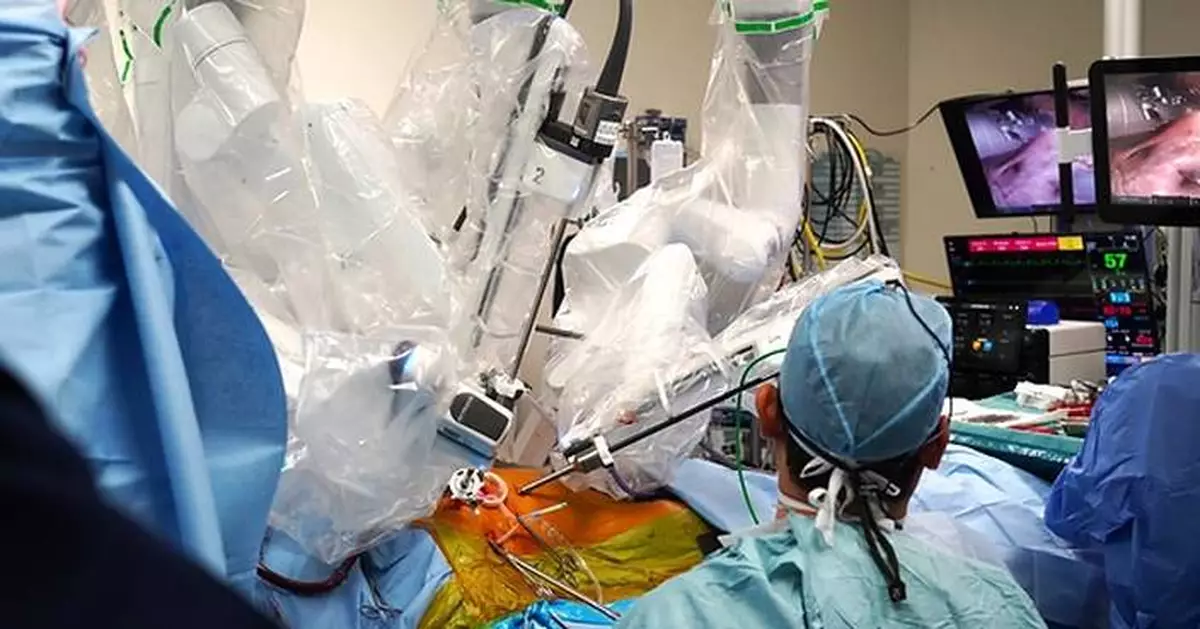
KUALA LUMPUR, Malaysia, Oct. 30, 2026 /PRNewswire/ -- KPJ Healthcare Berhad ("KPJ Healthcare" or "the Group") has set a Southeast Asian record in robotic-assisted minimally invasive cardiac surgery ("MICS"), with its specialist team at Damansara Specialist Hospital 2 ("DSH2") performing 35 procedures within 90 days. The achievement demonstrates the advanced cardiac care capabilities within KPJ Health System ("KPJHS"), Malaysia's first private academic health system.
The procedures were led by Professor Dr Shahrul Amry Hashim, Consultant Cardiothoracic Surgeon at DSH2, with support from a multidisciplinary team across surgery, anaesthesia, perfusion and postoperative care. DSH2 is also the first hospital in the Klang Valley, across both public and private healthcare sectors, to perform robotic-assisted MICS.
Unlike conventional open-heart surgery, which typically requires the breastbone to be divided, robotic-assisted MICS allows surgeons to perform selected cardiac procedures through small incisions between the ribs. The da Vinci Xi Robotic Surgical System provides magnified three-dimensional visualisation and enhanced instrument control, while the surgeon remains fully responsible for the operation.
For suitable patients, this approach may reduce surgical trauma and postoperative discomfort, with the potential for earlier mobilisation and a shorter hospital stay. However, the procedure is not suitable for every patient, and treatment decisions depend on individual clinical assessment.
Professor Dato' Dr Hanafiah Harunarashid, Officer-in-Charge of KPJ Healthcare Berhad said the regional record reflects the Group's progress in advanced specialist care.
"This is an important achievement for KPJ Healthcare and for the specialists at DSH2. Complex cardiac surgery demands considerable clinical expertise and the milestone demonstrates what our teams can achieve with the right experience, multidisciplinary support and advanced medical technology," he added.
Prof Hanafiah emphasised, "Our responsibility is to ensure that progress in specialist care is matched by strong clinical standards and sound medical judgement. As we develop these capabilities across KPJ Health System, our priority remains the quality of care patients receive. This is central to our Care for Life purpose."
Professor Dr Shahrul Amry Hashim, Consultant Cardiothoracic Surgeon at DSH2, said the choice of surgical approach depends on each patient's clinical condition.
"Not every patient who requires cardiac surgery is suitable for a robotic-assisted procedure. We assess each case carefully, taking into account the patient's condition and the complexity of the operation before deciding on the most appropriate approach. For our team, performing 35 procedures within 90 days is an important achievement. The measure of our work, however, remains the care we provide to each patient, from the initial assessment through surgery and recovery," he explained.
The milestone also supports KPJ Healthcare's wider strategy under KPJHS, which integrates Practice, Education, Research and Innovation. Robotic-assisted cardiac surgery is one area where the Group's investment in specialist expertise and advanced medical technology has enabled more complex procedures to be performed through a minimally invasive approach.
DSH2 received the Minimally Invasive Cardiac Surgery of the Year – Asia Pacific 2025 award at the GlobalHealth Asia-Pacific Awards 2025, in recognition of its expertise in this field. The hospital is also a member of the Mayo Clinic Care Network ("MCCN"), which provides its physicians with access to specialist consultations and clinical resources from Mayo Clinic.
For more information on DSH2, visit https://kpjhealth.com.my/damansara2/
ENDS
About KPJ Healthcare Berhad
KPJ Healthcare operates 30 hospitals across Malaysia and four Ambulatory Care Centres, serving 3.3 million patients annually with 1,491 medical consultants. Nineteen hospitals are accredited by MSQH and four by JCI. As Malaysia's first private healthcare provider to establish an Academic Health System, KPJHS integrates practice, education and research & innovation to drive clinical excellence and patient experience. Beyond hospitals, KPJ Healthcare operates Klinik Waqaf An-Nur (KWAN) clinics, dialysis centres and mobile clinics nationwide, and offers more than 40 academic programmes at KPJ Healthcare University (KPJU). KPJ Healthcare has been a constituent of the Bursa Malaysia FTSE4Good Index since 2016.
** This press release is distributed by PR Newswire through automated distribution system, for which the client assumes full responsibility. **
KPJ Healthcare Sets Southeast Asian Record in Robotic Cardiac Surgery
SINGAPORE, Oct. 30, 2026 /PRNewswire/ -- As Silicon Valley startups race to secure critical minerals and reduce dependence on China in the AI era, a company with deep academic roots from Stanford and MIT is taking a different approach: using AI to discover the next generation of mineral resources beyond the geopolitical fault lines dividing the world's major powers. Oxus Metals AI ("Oxus" or the "Company"), founded by David Zhen Yin, former director and co-founder of Stanford University's Mineral-X program, closed a nearly US$36 million initial funding round in late July, valuing the Company at US$180 million. The Singapore headquartered company plans to deploy the capital to accelerate AI driven mineral exploration across Central Asia and other resource rich regions, positioning itself at the intersection of Silicon Valley technology, global capital, and the growing strategic demand for critical minerals.
The Next Energy Crisis is a Mineral Crisis
Global demand for critical minerals is surging across power grids, renewable energy, electric transportation, and AI data centers, but supply is failing to keep pace. According to the International Energy Agency's (IEA) Global Critical Minerals Outlook 2026, supply from announced copper projects is projected to fall 25% short of demand in 2035. The IEA has also found that mining projects take an average of 16.5 years to move from discovery to first production. The long lead times and high costs of traditional exploration have created an urgent need for faster, more efficient technologies capable of locating deeper deposits. While much of the debate focuses on securing existing mineral supplies, Oxus is pursuing a different question: Can AI fundamentally transform the economics of mineral discovery while breaking free from the constraints of growing geopolitical rifts?
AI Redefines Exploration Economics
Pioneered by its founder and scientific team, Oxus builds on years of academic research in geoscience, artificial intelligence, and decision-making under uncertainty. Rather than relying on a single geological hypothesis, Oxus's proprietary AI platform generates thousands of plausible subsurface models consistent with available data evidence. As new drilling become available, the system eliminates inconsistent hypotheses and proposes exploration decisions that could most efficiently reduce mineral uncertainty in over a long time horizon.
"Our approach is like playing Go with planet Earth," said David Zhen Yin. "Our AI computes all scientific hypotheses about mineral deposits, and integrates complex multiphysics data to test every geological possibility to guide smarter exploration decisions. The result is much fewer drill holes, lower costs, and faster discoveries of the mineral resources needed to power the energy transition."
Central Asia as the Proving Ground
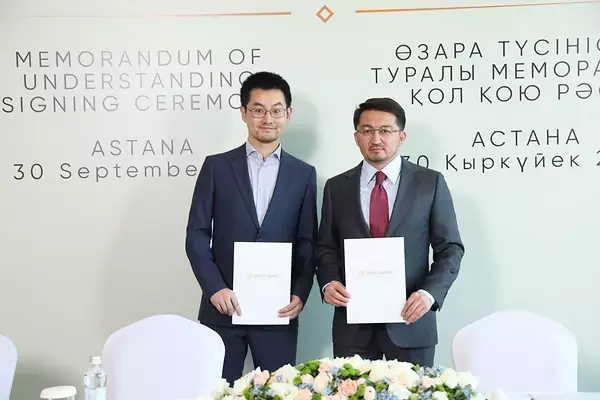
Kazakhstan is emerging as a major proving ground for Oxus's technology. The Company is working with one of Central Asia's largest mining operators to extend the life of a copper mine that has operated for nearly 80 years. Despite tens of thousands of historical drillholes, the location of additional mineralization at depth remains uncertain. Oxus's platform generates thousands of candidate models, rejects those that conflict with the data, and produces ranked drill targets with quantified risk. Oxus has also signed a memorandum of understanding with Kazakhstan's Ministry of Industry and Construction and Ministry of Artificial Intelligence and Digital Development to advance the nation's AI in mineral exploration.
Zhaslan Madiyev, Deputy Prime Minister and Minister of Artificial Intelligence and Digital Development of Kazakhstan, commented: "Energy, critical minerals, and data underpin every AI solution, and Kazakhstan has all three. Our task is to turn them into technological value inside the country rather than exporting them raw. The agreement between our two ministries and Oxus Metals AI is a practical example of the applied layer of the AI economy, where Kazakhstan stands to gain the most. A team with roots at Stanford and MIT will work with our geologists to make decades of geological data machine-readable, digitize drill cores, and train Kazakh specialists to apply AI in exploration. The data stays in Kazakhstan, as does the expertise. That is how we intend to shorten the path from exploration to investment decision."
The company also has a strong presence in Mongolia, Uzbekistan, Pakistan, and Brazil, expanding the deployment of its AI platform across major mineral exploration frontiers.
A Team Bridging Silicon Valley and Global Mining
Oxus brings together world-class academic and industrial expertise across AI, geoscience, and the global mining industry. David Zhen Yin as a senior research scientist at Stanford, has over 15 years of experience at the intersection of geoscience, subsurface exploration, and data science. His co-authored book Data Science for the Geosciences, won the 2025 PROSE Award in Earth Science. The book served as a textbook for Stanford's graduate-level course Data Science for Geoscience (EPS 240), which Yin taught.
The Company's leadership and advisory team includes Dr. Robert Quartermain, a Canadian Mining Hall of Fame inductee and global strategy advisor with over 45 years building and leading public mining companies; Prof. Jef Caers, Stanford Earth and Planetary Sciences professor and technical advisor, a global leader in geostatistics and AI-enabled exploration; and Dr. Pablo Mejia Herrera, Chief Geologist, a 20-plus year veteran of porphyry copper-gold exploration with a track record of major discoveries at Ero Copper and NorthIsle Copper and Gold.
"AI is fundamentally transforming how we make discoveries under geological uncertainty," said Prof. Caers. "Oxus is pairing rigorous academic research with real-world exploration expertise to translate cutting-edge AI into practical discoveries across the world's most important mineral frontiers."
About Oxus Metals AI
Headquartered in Singapore, Oxus Metals AI builds proprietary AI platforms that integrate multimodal exploration data to advance critical mineral discoveries. The company works with asset owners, governments and strategic partners to lift exploration success rates while reducing costs, timelines and environmental impacts. Oxus' model extends beyond conventional mining software or technical services. The Company partners with asset owners via joint ventures that combine AI technology, capital, and local execution to fully capture the upside from new discoveries.
CONTACT: info@oxusmetals.ai
** This press release is distributed by PR Newswire through automated distribution system, for which the client assumes full responsibility. **
From Stanford to Central Asia: Oxus Metals AI Raises US$36 Million to Transform Mineral Discovery Beyond Geopolitical Fault Lines