President of the Swiss Confederation Guy Parmelin said on Friday that his country's partnerships with China extend far beyond trade and investment and cover key areas such as research, innovation, and science.
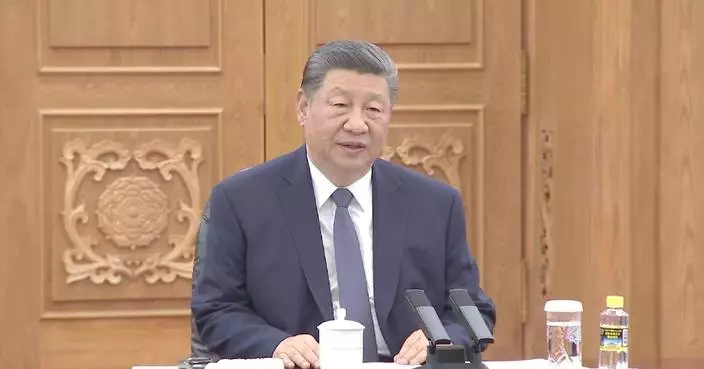
Parmelin arrived in Beijing on Friday to begin a three-day working visit to China. During his meeting with Chinese President Xi Jinping at the Great of the Hall of the People, Parmelin stressed the broad nature of cooperation between the two countries.
"Our partnership today goes far beyond trade and investment. It also covers research, innovation and science, as well as issues related to labor and employment," said Parmelin.
After their meeting, the two leaders witnessed the signing of a protocol on upgrading the free trade agreement and multiple cooperation documents in areas such as scientific research, employment and the media.
The upgraded agreement comes as this year marks the 10th anniversary of the establishment of the China-Switzerland innovative strategic partnership.
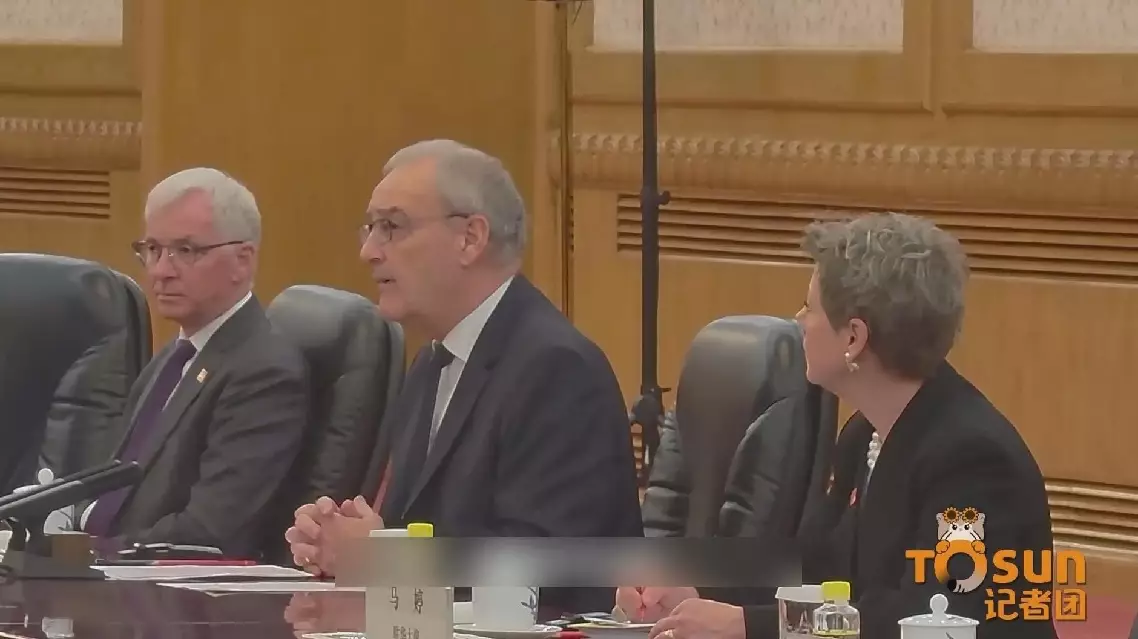
A Swiss official attending the ceremony said he believes there is significant room to further deepen cooperation between the two sides.
"I represent my country's tourism industry here. So, I can talk with Chinese televisions about some tourism-related topics showcasing Switzerland and China. I think there are many opportunities for win-win outcomes, like introducing the lives of the people in the two countries -- there are many stories covering that," said Simon Bosshart, chief markets officer East at Switzerland Tourism.
Swiss-China partnerships go far beyond trade, investment: Swiss president
The Bank of Japan (BOJ) decided to leave its benchmark interest rate unchanged at around 1.25 percent after concluding its two-day monetary policy meeting on Friday.
The widely expected decision came after the central bank raised the key rate by 0.25 percentage points to a 31-year high of 1.25 percent at its previous policy meeting in September.
In its quarterly economic outlook report released after the meeting, the BOJ said that with the policy interest rate now higher than in the past, it is important to examine how financial conditions change under such circumstances.
The BOJ also said that Japan's underlying inflation has "generally" reached its 2 percent price stability target, nearly 14 years after the goal was set as part of efforts to end decades of deflation.
At a post-meeting press conference, BOJ Governor Kazuo Ueda said the central bank's monetary policy will increasingly focus on keeping underlying inflation firmly anchored around 2 percent, signaling that the BOJ could raise rates further to prevent price increases from overshooting the target.
The BOJ cited higher prices of crude oil, semiconductors and other items, as well as the yen's depreciation, among the factors currently pushing up prices and likely to keep doing so for some time. It said it will closely monitor the impact of the situation in the Middle East, global demand related to artificial intelligence, and foreign exchange rate movements on Japan's economic activity and prices.
In the outlook report, the BOJ raised its core consumer price inflation forecast for fiscal 2027 to 2.6 percent from 2.4 percent, while lowering its real GDP growth projection to 0.7 percent from 0.8 percent.
The BOJ first adopted its 2 percent inflation target in January 2013, initially aiming to achieve it in about two years.
In April that year, under then-Governor Haruhiko Kuroda, the central bank launched an aggressive monetary easing program, but the target remained out of reach, with the BOJ repeatedly pushing back the timeline.
Japan's recent inflation has been fueled largely by external factors such as higher energy prices, and analysts said sustained wage growth would be key to creating a virtuous cycle of rising wages and prices.
The BOJ has one more policy meeting this year, scheduled for Dec. 17-18, at which markets increasingly expect another rate hike.

Japan's central bank keeps interest rate unchanged