By investigating an Alaska Democratic Senate hopeful over her campaign’s reported involvement in recruiting a candidate with the same name as the Republican incumbent, President Donald Trump’s administration is targeting a political trick that has been used in American politics for decades.
The practice goes back at least to 1946, when a four-term Boston city councilman named Joe Russo ran in a Democratic primary for a congressional seat against a 27-year-old janitor with the same name. He was recruited to the ticket by supporters of the third candidate in the race and its eventual winner, John F. Kennedy.
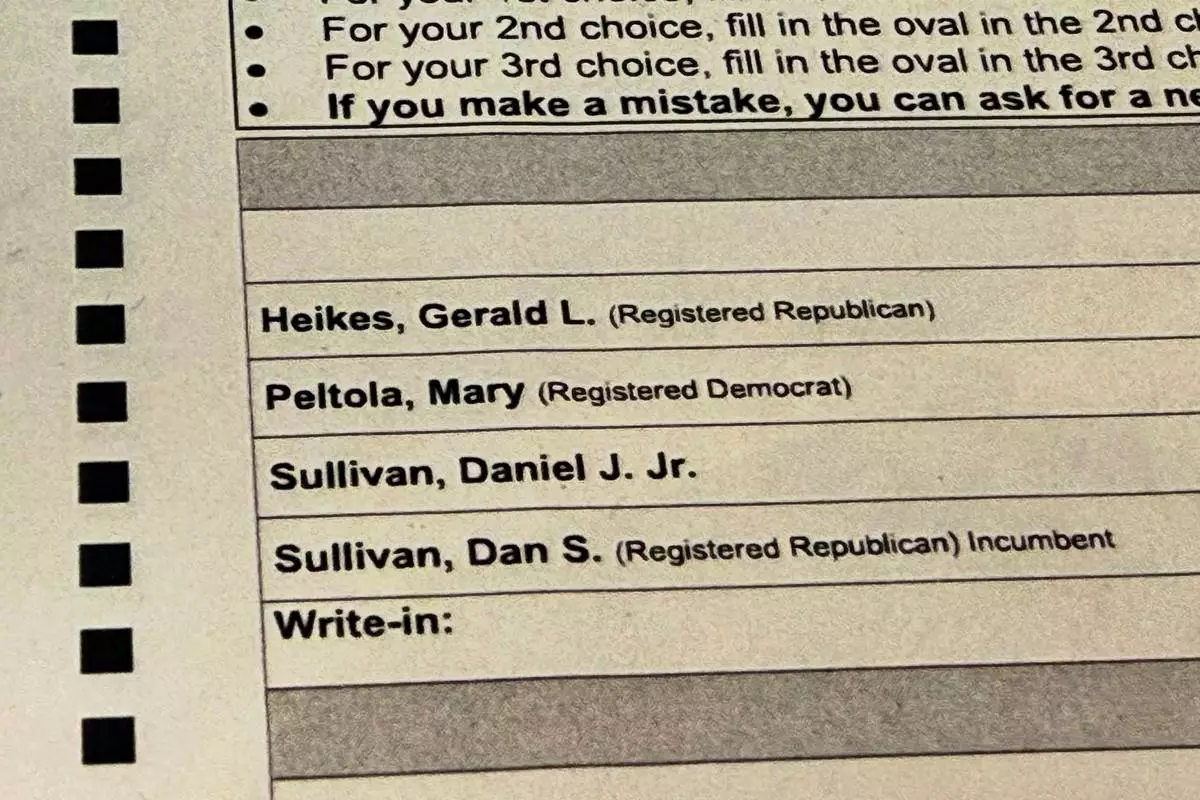
In Alaska, Republican Sen. Dan Sullivan is facing three other challengers on the state's final ballot in a race that could determine control of the Senate — Democrat Mary Peltola, who was previously the state's lone House member, and two candidates who have barely campaigned, including a retired school teacher named Daniel J. Sullivan Jr.
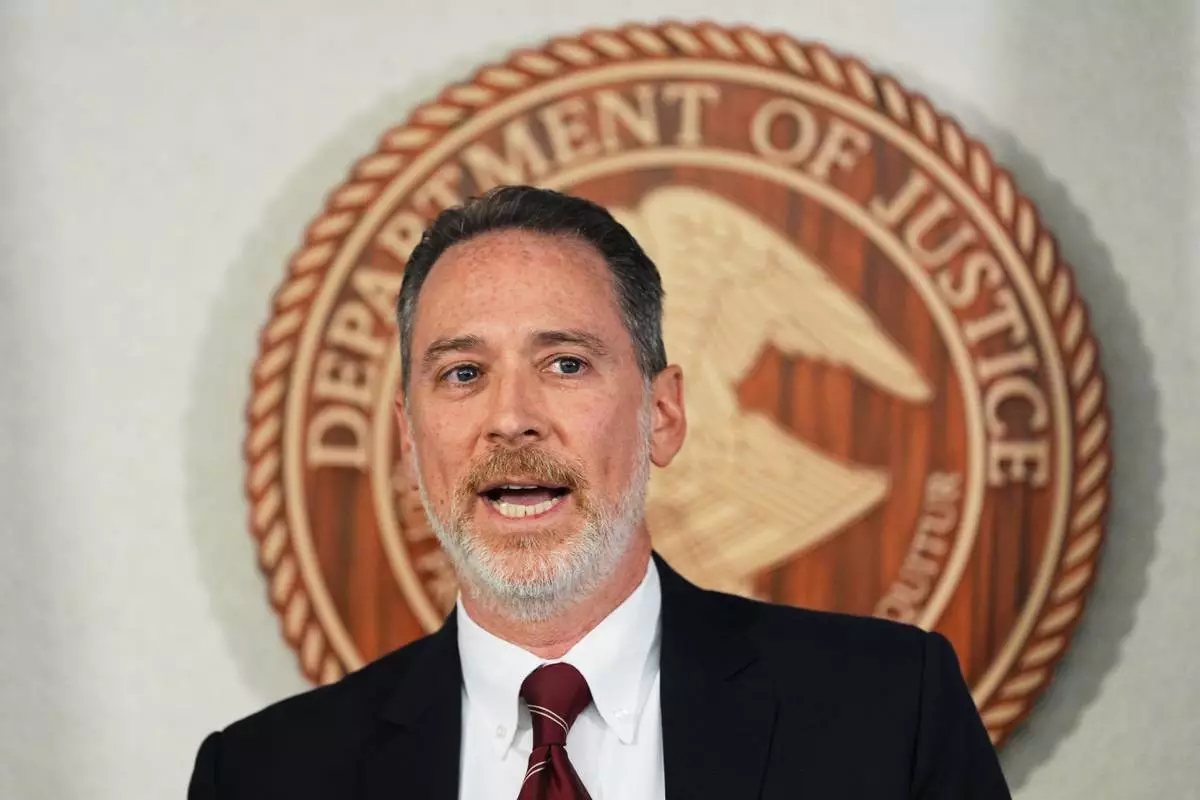
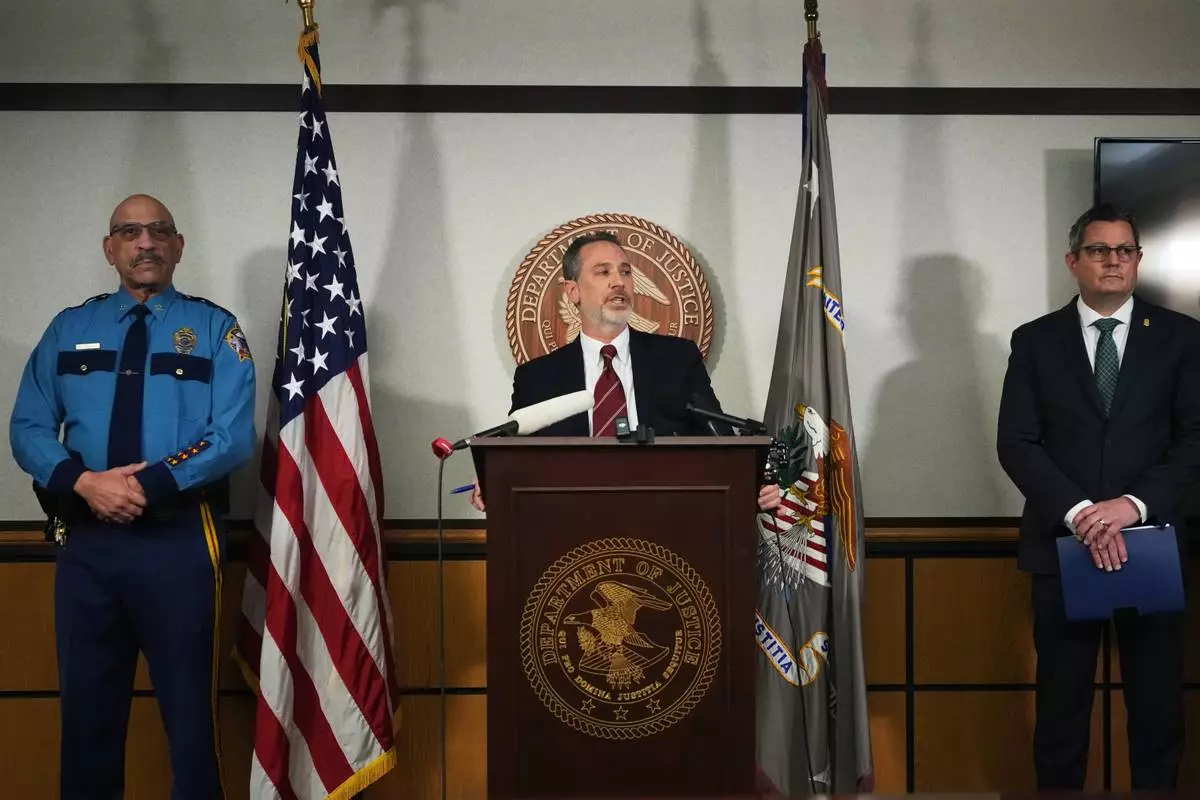
Alaska Republicans have long suspected the second Sullivan of being a Democratic plant, and the Trump administration took the unusual step last week of suing to prevent certification of a possible Peltola victory until it could be determined if voters were confused.
The New York Times this week reported that internal campaign texts and communications showed the Peltola campaign recruited the second Sullivan, leading the president to call for the Democrat's prosecution and his Justice Department to issue a flurry of subpoenas in a criminal investigation.
Peltola has denied involvement in the scheme, as has the Democratic Senatorial Campaign Committee.
Critics say Trump has used the Justice Department as an extension of his own personal political operation, targeting his enemies with investigations and indictments and intervening in the election in ways not seen before in modern memory.
The Justice Department has historically avoided taking overt investigative actions within 60 days of an election. But there has been a burst of activity in politically sensitive matters in recent weeks, including the search of Democratic Rep. Ilhan Omar’s home. Trump’s Justice Department has defended the timing of its recent investigative moves, saying in a statement Wednesday that it is “following the facts and the law, not anyone’s political timetable.”
Justin Levitt, a Justice official during the Biden administration, said that appeared unlikely given how often campaigns recruit or boost so-called spoilers.
“It may be distasteful, but it happens all the time,” said Levitt, a law professor at Loyola Marymount University in Los Angeles. “There is no behavior that has been disclosed that is in violation of federal law.”
Using such candidates is a tactic that Trump’s own political operation has employed in this very election.
In Ohio's Senate race, a group tied to the president's political operation is urging voters to support a socialist candidate to pull votes from the Democrat challenging that state's Republican incumbent. In Nevada, a political operation with ties to Republicans is boosting an independent candidate for governor named Danielle Ford, who has the same last name as the Democratic candidate challenging that state's GOP governor. Trump's allies tried to recruit Kanye West onto the 2020 presidential ballot as a third-party candidate.
The New York Times story detailed an effort reaching back to 2025 to recruit another Dan Sullivan to the Alaska Senate ballot. The story detailed the use of a Democratic strategist from outside Alaska who was paid by a political organization backing Peltola, who announced her Senate run in January 2026.
In Peltola's 2024 reelection bid for the House, Republicans supported keeping on the ballot a New York inmate who was a registered Democrat and filed to run in Alaska. Peltola lost that race.
Jason Torchinsky, a veteran Republican campaign finance attorney and former Justice Department official, said in an interview that the Times story pointed to possible crimes involving the financing of the operation to run the second Sullivan.
But the bigger point, he argued, is that Alaska's unusual ranked-choice voting system is particularly prone to manipulation. Anyone who pays a $100 filing fee can end up on a lengthy primary ballot, and the top four finishers make it to November, where voters can rank three of them.
“This is just Exhibit A for how ranked-choice voting systems can be manipulated by various actors,” said Torchinsky, noting that in traditional systems candidates must secure the nomination of a political party that already has access to the ballot, gathering sometimes tens of thousands of voter signatures.
Still, defenders of Alaska's voting system, which Republicans have supported trying to repeal through a ballot measure this election, contend that it is harder to manipulate because voters can simply pick both Sullivans and not Peltola. That is what Sullivan's own campaign is urging Alaskans to do.
In states with more traditional voting methods, a vote for a third-party candidate is one fewer for a Democrat or Republican. That's why many in the GOP this year are concerned about Libertarian candidates pulling votes from their Senate candidates, and why the Republican Party often advocates on behalf of Green Party candidates fighting to get on the November ballot in various states.
Finding candidates with the same name is a variant on the trick, and it can have criminal consequences.
In Florida in 2020, a Democratic state senator named Jose Javier Rodriguez faced a challenge from a Republican and another candidate named Alex Rodriguez. The second Rodriguez won 6,382 votes as an independent, and the Democrat Rodriguez lost his seat to his Republican challenger by 32 votes.
A Republican former state senator, Frank Artiles, was later convicted of illegal campaign contributions and falsifying a candidate form for his role in helping the second Rodriguez run. Artiles was sentenced to 60 days in jail. The Republican victor in the state Senate race, Ileana Garcia, denied any knowledge of Artiles' scheme. She remains in that seat.
David Becker, executive director of the Center for Election Innovation and Research in Washington, said he expects a judge will very soon reject the Justice Department's “frivolous” lawsuit seeking to stop certification if Sen. Sullivan doesn’t win.
“If both parties wanted to come together in Congress and try to figure out a way to regulate these kinds of things so that neither party does them and they constantly do them both," Becker said, "that wouldn’t be the worst thing in the world.”
Associated Press writer Marc Levy in Harrisburg, Pa., contributed.
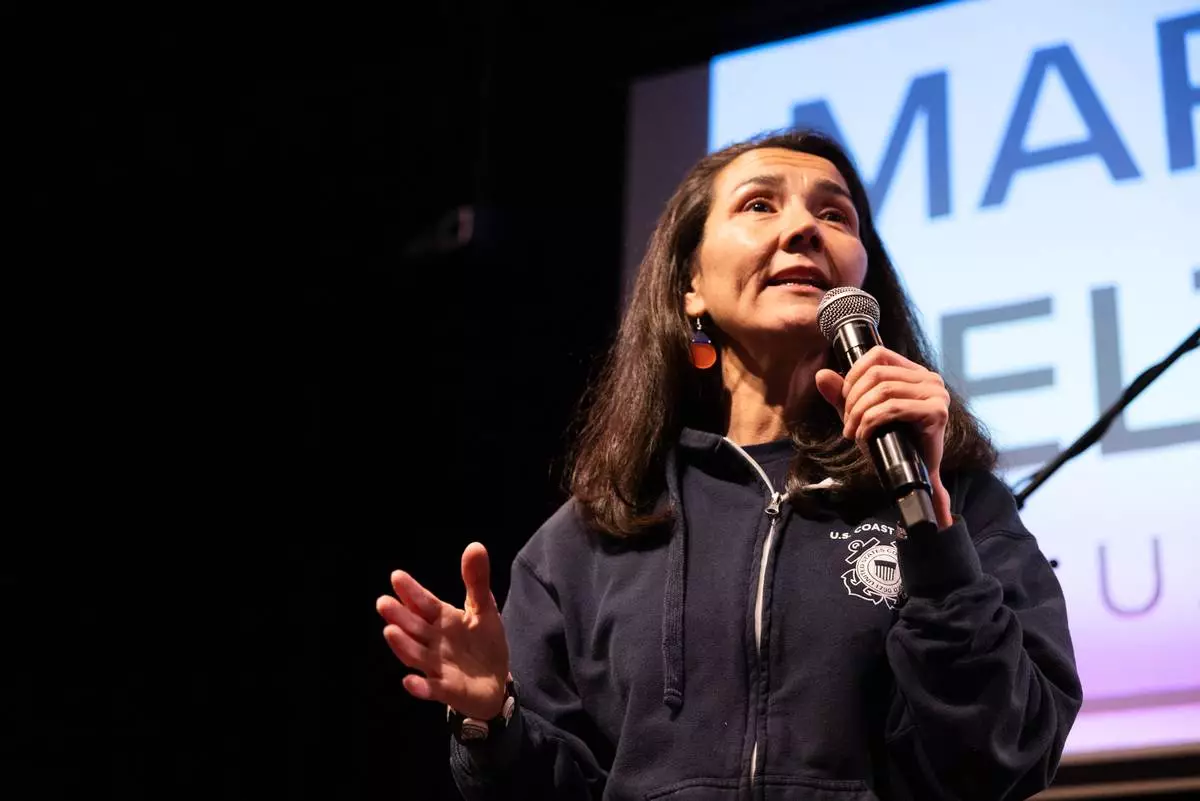
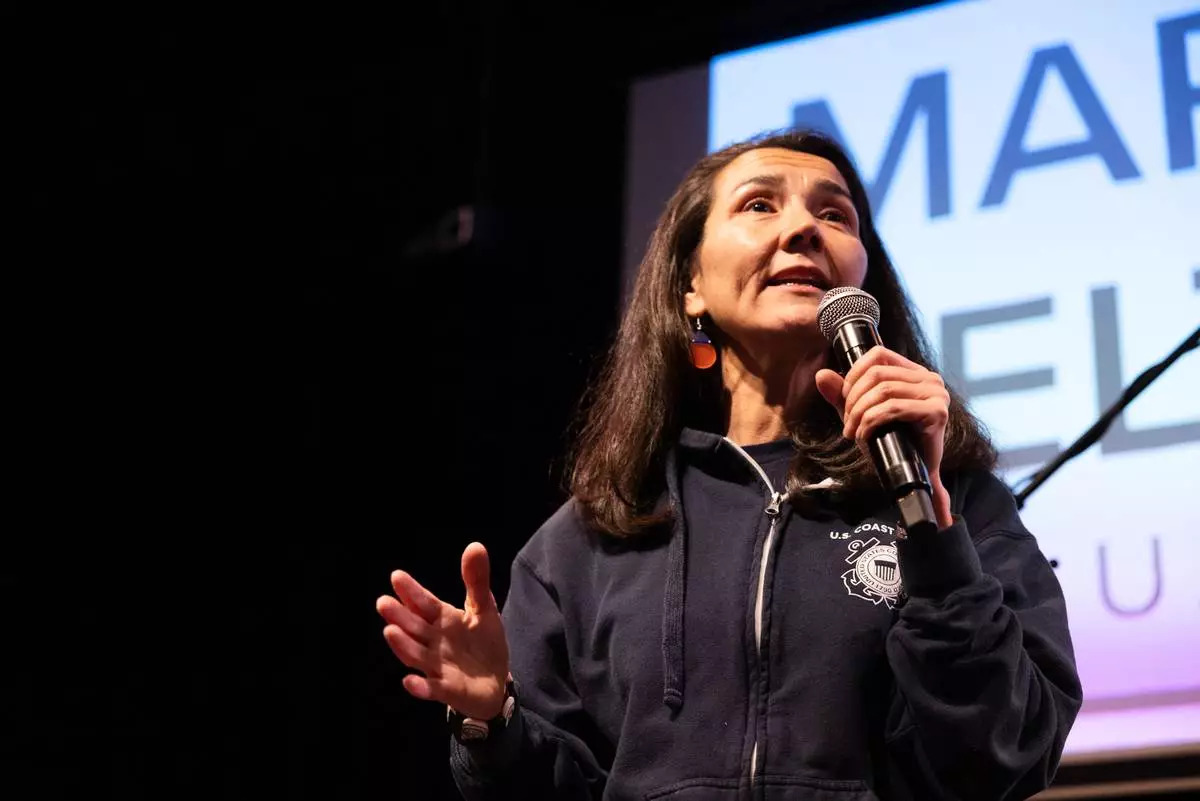
Democratic Senate candidate Mary Peltola speaks during a campaign event Thursday, Oct. 29, 2026, in Juneau, Alaska. (AP Photo/Chloe Anderson)

FILE - This combination photo shows Sen. Dan Sullivan, R-Alaska, left, in Palmer, Alaska, Aug. 17, 2026, and a candidate in Alaska's Senate race, Dan Sullivan, right, in Petersburg, Alaska, July 3, 2026. (AP Photos/Mark Thiessen/Becky Bohrer, File)