New York (AP) — The theft of billions of dollars from Binance within a matter of minutes, the biggest crypto heist in history, was orchestrated by North Korean hackers, the FBI said Saturday.
The bureau said in a statement that this week's attack was tied to “malicious cyber activity” by an entity known as TraderTraitor, the same actors behind a $1.5 billion Bybit hack last year.
The FBI asked crypto exchanges, blockchain analytics companies and others to block transactions linked to various addresses to make sure the money is not laundered to cover up its origins.
It also said its probe found that TraderTraitor was converting stolen assets primarily into a cryptocurrency called ethereum. The FBI expects that TraderTraitor will now attempt to convert the assets using DeFi and “instant swap services.”
Asked by reporters as he appeared on Saturday night during a Halloween party at his Mar-a-Lago estate in Florida, however, President Donald Trump suggested investigators weren't yet certain that North Korea was involved.
“I’m not concerned. We’re learning about it," Trump said of the case. “We don’t know if it’s North Korea.” Though he added that, it could yet be determined that it was.
Crypto expert Ari Redbord said he expects the hackers will break the stolen assets into pieces and try to launder them through smaller exchanges to evade detection, a process that could unfold over months.
“It’s bank robbery, in this case, at the speed of the Internet,” said Redbord, chief policy officer at blockchain intelligence firm TRM Labs. “However, we can also track and trace those funds in real time in order to build investigations, to disrupt and to seize back funds.”
He added: “It’s just this cat and mouse game.”
On Thursday, $6.3 billion in bitcoin and other digital currency was stolen from Binance, the world's largest crypto exchange, in what several crypto experts said bore the hallmarks of a North Korean hack.
The company said Saturday that it had enough set aside in the same digital currency that was stolen to cover 90% of the missing assets and promised that customers would be fully reimbursed.
Associated Press writer Russ Bynum in Savannah, Georgia, contributed.

FILE - The Binance logo is seen on a smartphone, Feb. 28, 2023, in Marple Township, Pa. (AP Photo/Matt Slocum, File)
MONTEVIDEO, Uruguay (AP) — Lucía Pintos is training to become a teacher in Borro, a Uruguayan neighborhood hit hard by the spread of drug trafficking, where a parish that will welcome Pope Leo XIV in a few days serves as a fragile but much-needed refuge from violence.
“It’s a painful reality, because the children have to go to school to have lunch or an afternoon snack,” the 21-year-old Pintos said. “You can’t let your child go out to play or do the shopping because there’s gunfire.”
Leo will visit the neighborhood on the north side of Uruguay's capital, Montevideo, at the start of his Nov. 6-17 tour of Uruguay, Argentina and Peru, which he confirmed despite his recent cancer diagnosis. The pontiff will visit the Our Lady of Guadalupe Parish, which builds homes, promotes job creation and supports addicts in their recovery.
Neighborhoods like Borro live with the sound of gunfire and territorial disputes between drug dealers. Concerns about violence have led the government to begin patrols with armored vehicles, which were originally donated by the United States for U.N. peacekeeping missions.
“Families know that at a certain time they have to go inside,” said Rev. Pablo Coimbra, the head of the Our Lady of Guadalupe parish. “When the shootings start, they throw themselves to the ground, because a stray bullet can hit anyone. It’s bursts of machine-gun fire, and the bullets land wherever they land.”
The Archbishop of Montevideo, Daniel Sturla, said that there is no other place in the South American country with such a strong Catholic presence as Borro. A day after receiving a Vatican delegation in preparation for Leo’s visit, he toured the neighborhood with The Associated Press.
According to an official count, of the 98 homicides registered up to September in Montevideo — 13.5% more than in the same period last year — more than 46% occurred in Borro and surrounding neighborhoods. Uruguay still has a low homicide rate for the region, with about 10 homicides per 100,000 people last year.
In October 2025, Interior Minister Carlos Negro said that Uruguay had “epidemic homicide rates” and vowed to reduce them.
As the dirt roads descend toward a stream adjacent to Borro, mud becomes omnipresent. It often seeps into nearby houses.
That landscape is now cut by a concrete road prepared for the papal visit. The narrow streets converge on a soccer field restored by the parish, where Lautaro Martínez, a promising young player, practices. However, training has been suspended these days as a precaution following recent shootings.
In this context, the church has become a refuge. Neighbors bring the wounded there because ambulances will only go as far as the church. Coimbra said that gangs used to expel families at gunpoint to set up drug dens, forcing them to seek refuge in the parish.
To combat crime, the parish is leading social housing projects in which residents are building more than 100 units with sanitation systems — an effort that in turn generates local employment.
“The presence of the church makes the difference between drug use and nonuse, between continuing to study and not,” the priest said.
Many young people seeking to leave a life of crime find solace in faith. On Mondays, the parish celebrates a Mass for homeless people, drawing dozens from all over the city.
“They come for the bathroom and two meals, but mainly to be heard,” Coimbra said.
When Holy Communion is given, most remain with their arms crossed over their chests, a sign indicating they haven't been baptized. According to data from the Catholic Church, in 2025 only 2,200 of the 30,000 newborns in Uruguay were baptized.
Pablo Acosta, 28, was born in the neighborhood and got mixed up in crime. Today he spends his days between shelters and the streets, works informally in local markets, and sends money to his 10-year-old son, whom he doesn’t see because of his addictions.
“I have a gunshot wound in my stomach and stab wounds. I owed money, I was involved where I shouldn’t have been, but for the past month I’ve been trying to quit using drugs,” he said.
Extending a hand to those who have strayed down dark paths and preventing youth from taking that road, Coimbra said, is the church’s task.
“They have no other opportunities, no club, no English classes, no rugby, and in some cases, barely any soccer,” Coimbra said. “So there is a lot of idleness, and that’s where we need to intervene.”
Follow AP’s Latin America coverage at https://apnews.com/hub/latin-america
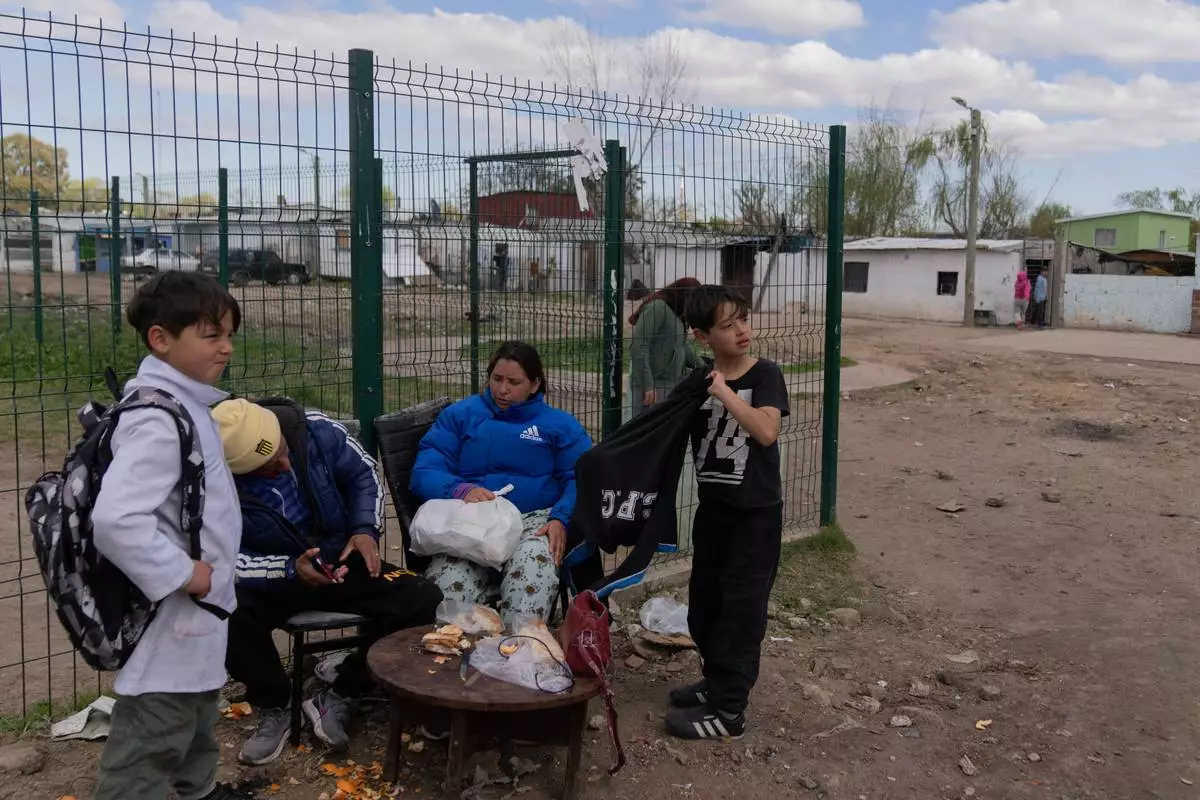
A family gathers in the Borro neighborhood in Montevideo, Uruguay, Monday, Sept. 7, 2026. ahead of Pope Leo XIV's scheduled visit in November. (AP Photo/Matilde Campodonico)
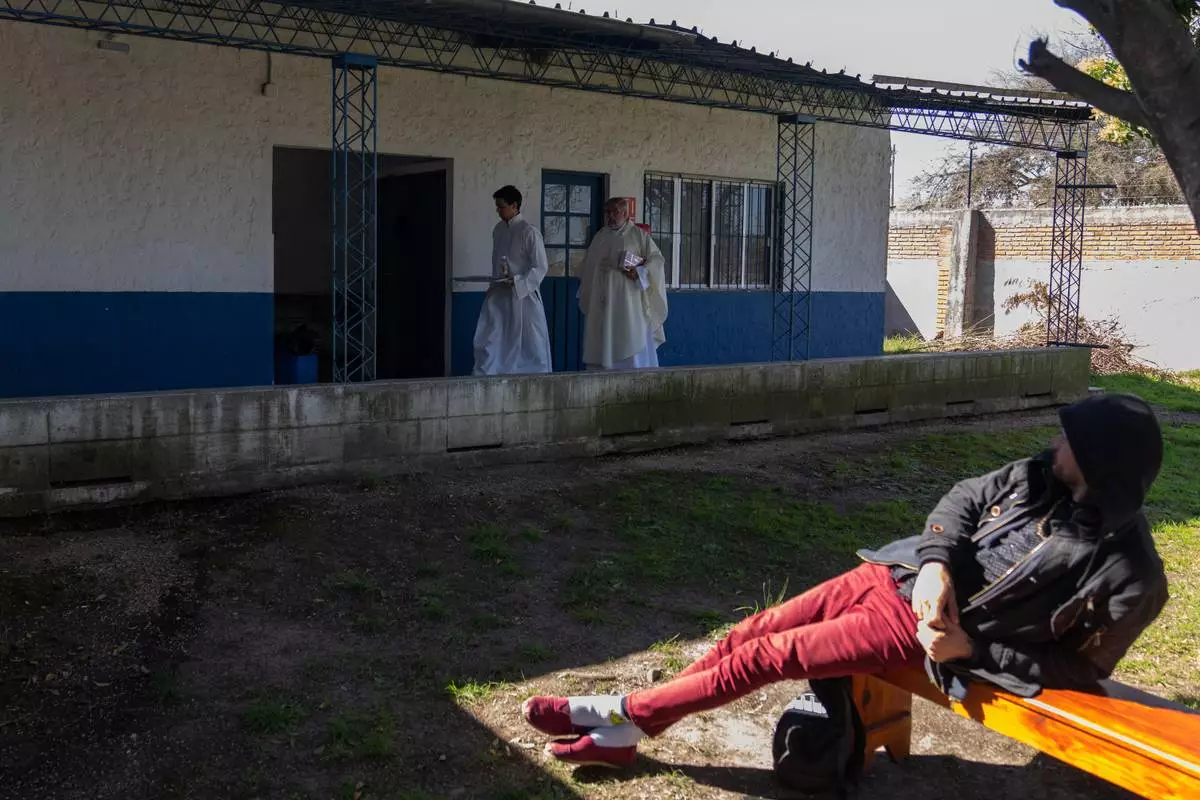
A person sits on a bench as Father Pablo Coimbra walks past on his way to celebrate a weekly Mass for the homeless organized by Our Lady of Guadalupe Parish, which Pope Leo XIV is scheduled to visit in November, in the Borro neighborhood of Montevideo, Uruguay, Monday, Sept. 7, 2026. (AP Photo/Matilde Campodonico)
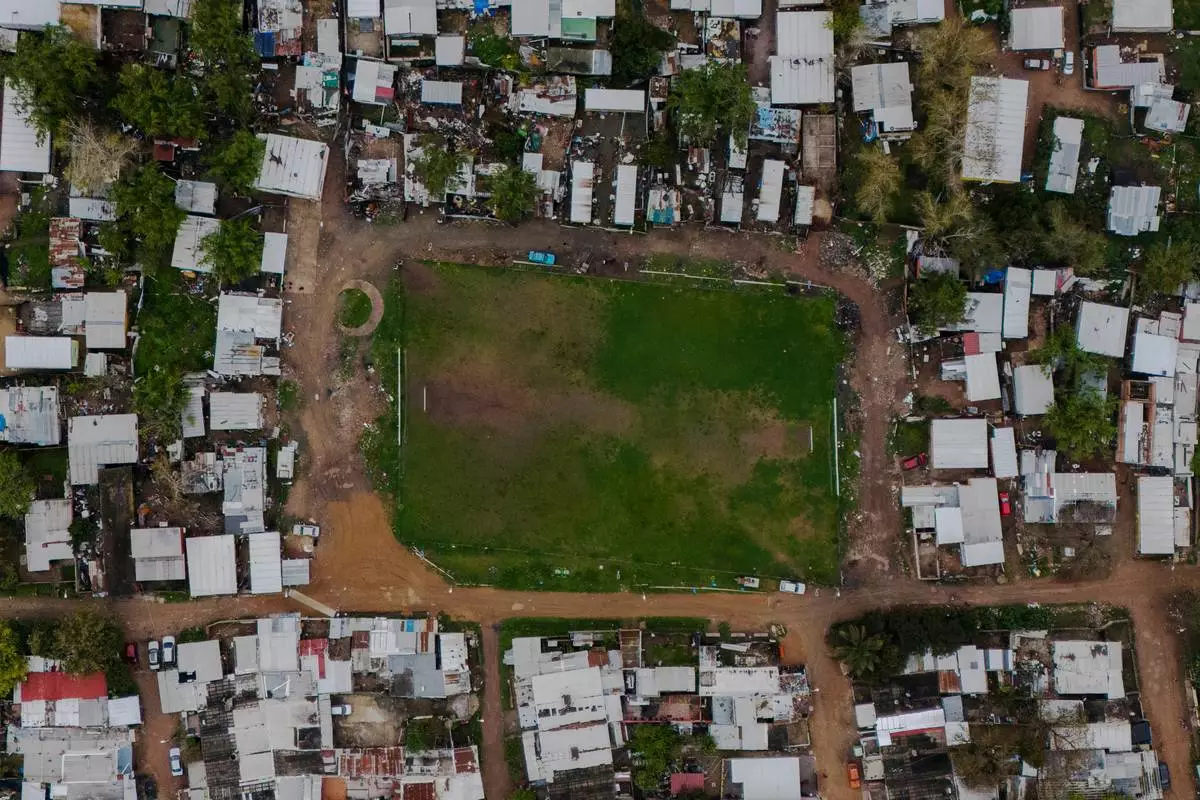
An aerial view of the Borro neighborhood in Montevideo, Uruguay, Sunday, Oct. 4, 2026, ahead of Pope Leo XIV's scheduled visit in November. (AP Photo/Matilde Campodonico)
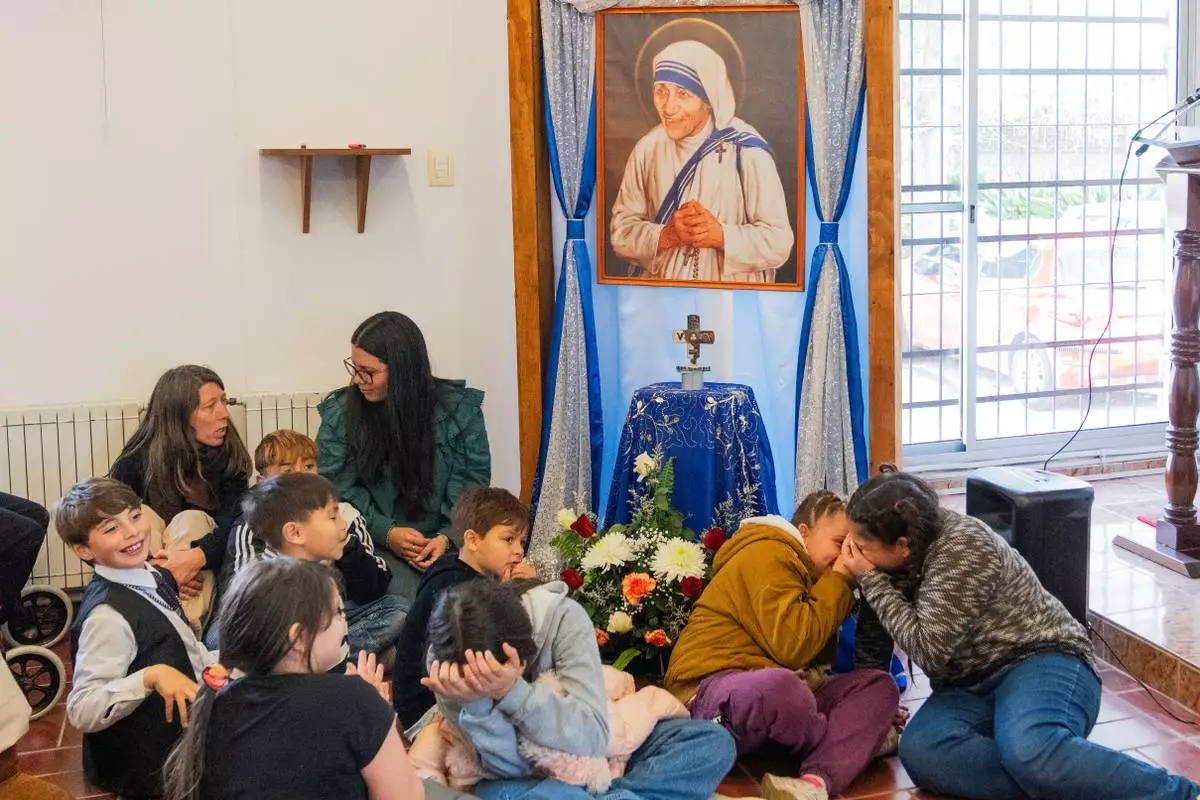
Teacher trainee Lucia Pintos, center back left, attends a Mass honoring Mother Teresa at Our Lady of Guadalupe Parish in the Borro neighborhood of Montevideo, Uruguay, Saturday, Sept. 5, 2026, ahead of Pope Leo XIV's scheduled visit to the parish in November. (AP Photo/Matilde Campodonico)
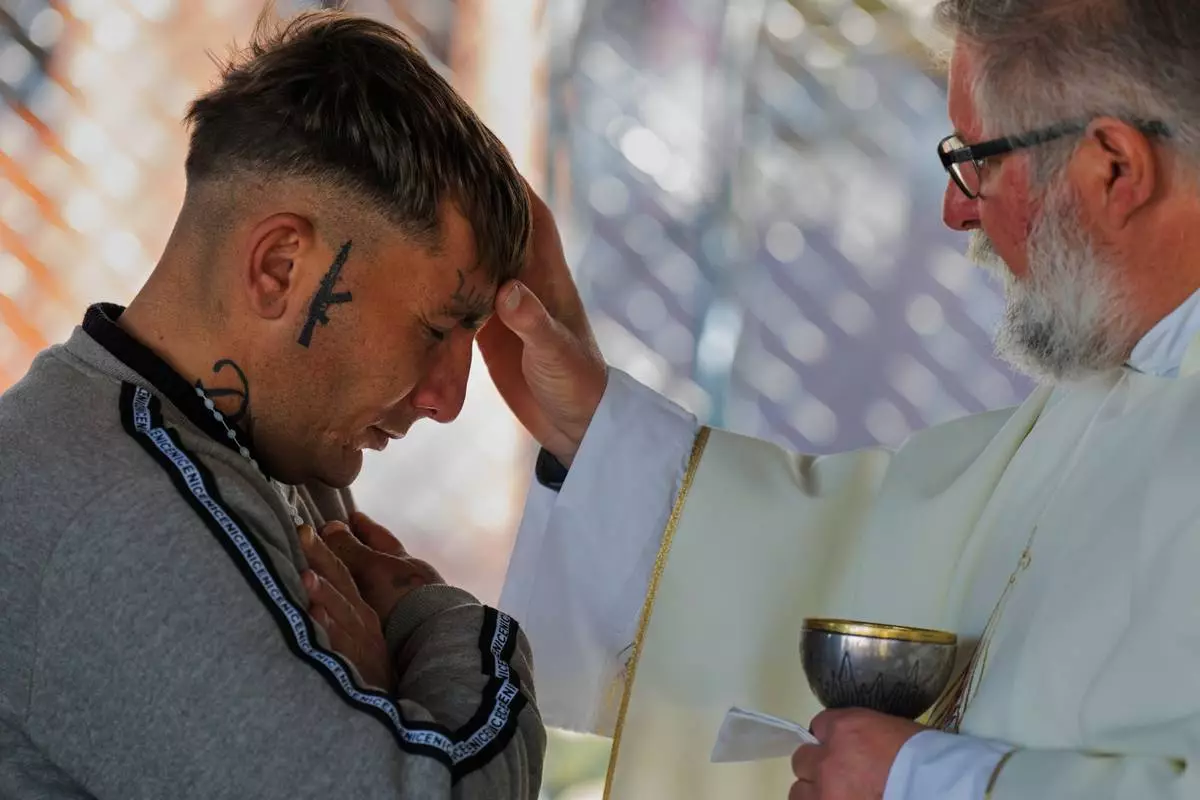
Father Pablo Coimbra blesses a person with crossed arms during a weekly Mass for the homeless at Our Lady of Guadalupe Parish, which Pope Leo XIV is scheduled to visit in November, in the Borro neighborhood of Montevideo, Uruguay, Monday, Sept. 7, 2026. (AP Photo/Matilde Campodonico)