SOFIA, Bulgaria (AP) — Bulgarians voted on Sunday in a presidential runoff marked by regional security threats and economic worries at home.
Acting President Iliana Yotova — who would become Bulgaria’s first elected female president if she wins — faces opposition candidate and former interim Prime Minister Andrey Gyurov. Yotova beat Gyurov by a narrow margin of 2.8 percentage points in the first round of voting on Oct. 25, which drew record low turnout — only 23% of eligible voters cast a ballot, according to election officials.
Polls opened at 7 a.m. for another highly polarized contest in which the candidates will be trying to attract voters with contrasting political visions. The first exit poll results are expected after polls close at 8 p.m., with official results to be announced Monday.
Bulgarians are voting against a backdrop of growing economic hardship and increased drone attacks on Black Sea shipping, which have left several sailors dead or missing.
Yotova is running as an independent. As vice president, she automatically became acting president earlier this year when the former head of state, Rumen Radev, resigned to lead his party to victory in the general election.
The vote is the first major test for Prime Minister Radev’s Moscow-friendly Progressive Bulgaria party, which has endorsed Yotova.
Yotova is expected to continue Radev’s policy of keeping Bulgaria on its European path, while also supporting better relations with Russia and the lifting of sanctions.
Both Yotova and Radev have called for a diplomatic solution to end the war in Ukraine but remain evasive about possible Russian involvement in drone attacks in the Black Sea region.
During a TV debate between the two presidential contenders this week, Yotova advocated a settlement involving both Ukraine and Russia, saying that “peace could come only through negotiations.” She also proposed a security meeting involving all six Black Sea countries to sign a moratorium on hostilities.
Observers say that a victory for Yotova would keep the presidency in the hands of the ruling majority. Such a concentration of power could prevent the effective maintenance of checks and balances on policy decisions by institutions, they say.
Yotova’s challenger is economist Gyurov, a former deputy governor of the central bank and caretaker prime minister who led the country in early 2026. He is backed by the pro-Western, reformist opposition.
Gyurov has often expressed firm support for Ukraine and signed a security cooperation agreement with Kyiv during his premiership.
Gyurov said he wants Bulgaria to be a reliable NATO ally able to stand for up its interests with strong diplomacy and a firm position.
Gyurov criticized the government for being reluctant to name Russia as the aggressor in the Russia-Ukraine war. He called for identifying the threat and for Bulgarian participation in EU decisions from the outset.
“When you have no position and are not at the table, you are in fact on the menu,” he said.

Front pages of Bulgarian newspapers display the results of the first round of the presidential election in Sofia, Bulgaria, Monday, Oct. 26, 2026, as incumbent leftist Iliana Yotova and pro-Western reformist Andrey Gyurov advance to a Nov. 1 runoff following record-low voter turnout amid widespread political distrust. (AP Photo/Valentina Petrova)
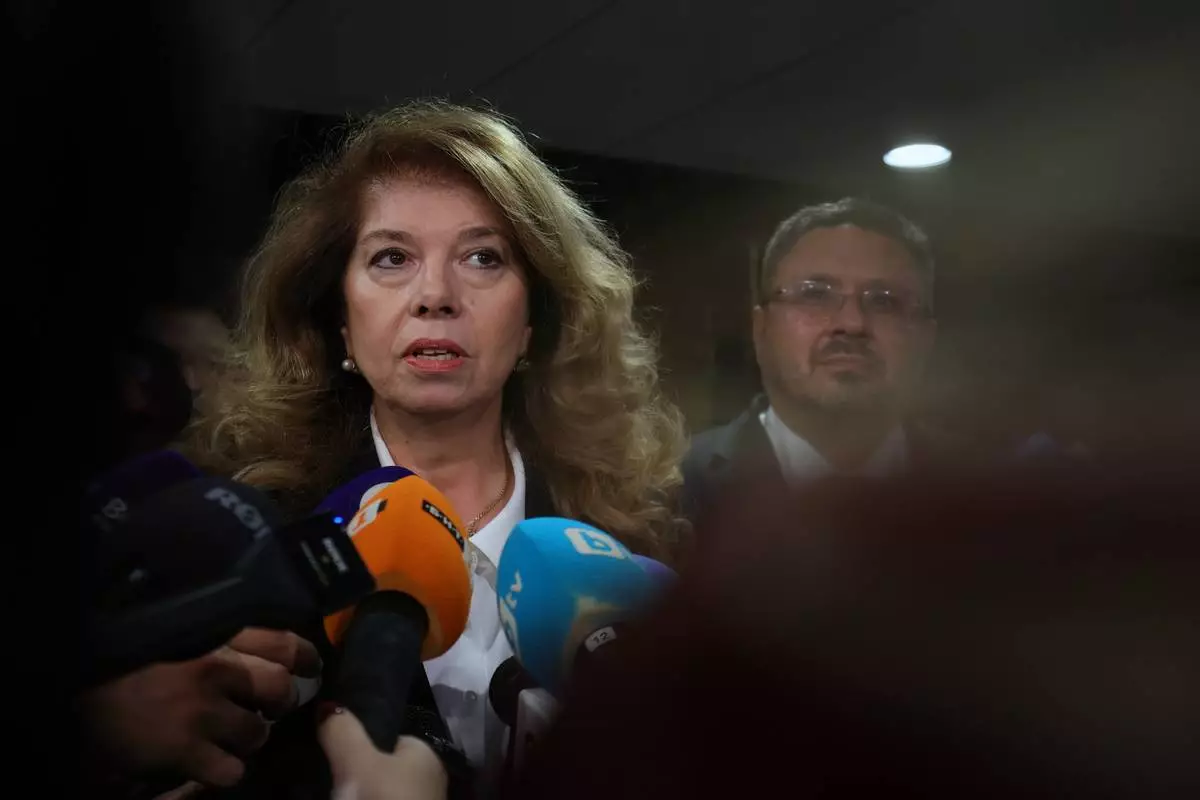
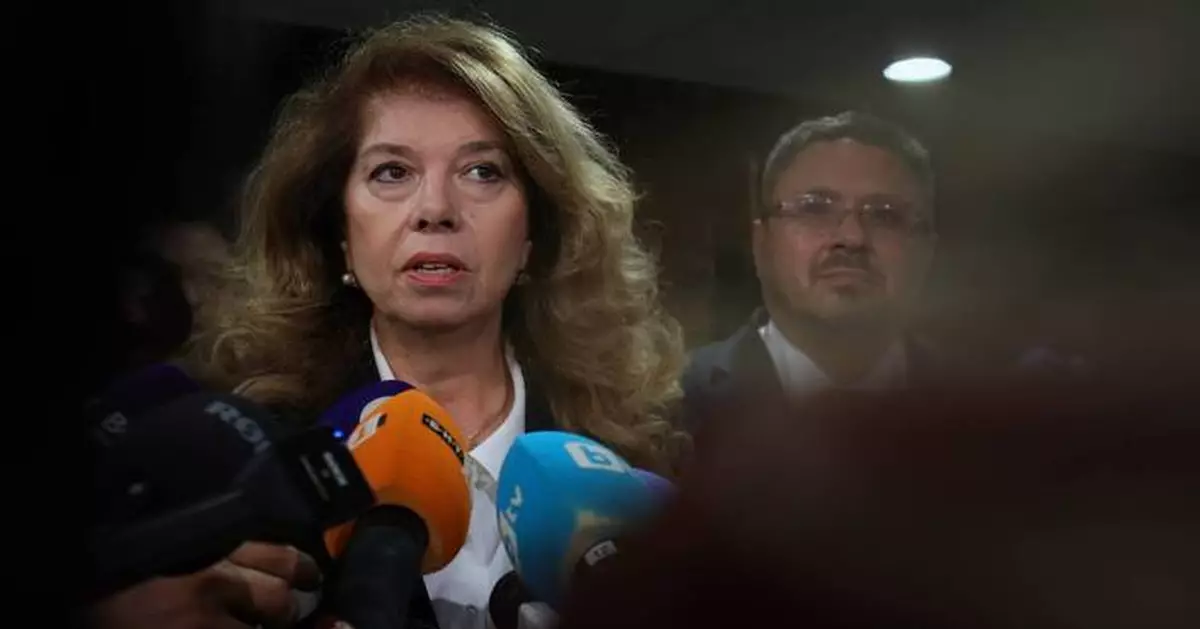
Incumbent President and presidential candidate Iliana Yotova speaks to journalists after polls close in Sofia, Bulgaria, Sunday, Oct. 25, 2026. (AP Photo/Valentina Petrova)
NEW DELHI (AP) — India’s opposition parties on Sunday renewed calls for the resignation of the country’s election chief, staging fresh protests in the latest display of public dissent against Prime Minister Narendra Modi’s government.
The protest, called by opposition bloc INDIA, drew thousands of demonstrators, some carrying musical instruments and waving various flags, as they chanted slogans against the policies of the central government. Several opposition parties of the alliance, formed in 2023 to unseat Modi, mobilized their cadres from different states for the protest, which comes weeks after a police crackdown on protesters in New Delhi.
Led by Rahul Gandhi, leader of the main opposition Congress party, and backed by the youth “Cockroach” movement, the protesters called for the safeguarding of India’s democracy while demanding the resignation of Chief Election Commissioner Gyanesh Kumar over a contentious voter roll revision.
The protesters gathered at Ramlila Maidan, a sprawling public square in New Delhi, after police last month withdrew Jantar Mantar from the list of officially designated venues for demonstrations. The historic observatory had long served as the capital’s main protest site.
Authorities deployed thousands of police and paramilitary soldiers and mounted extensive surveillance, with more than 200 CCTV cameras, drones and body-worn cameras at the venue and along the protest route, officials said.
The ongoing review of voter lists has removed more than 130 million names since last year. Critics say the exercise is politically motivated, threatens to disenfranchise millions more, and has disproportionately affected minorities, particularly Muslims.
The Election Commission and Modi’s administration deny the allegations and say the revision is intended to remove duplicate and ineligible entries.
Human Rights Watch on Thursday said the accusations over the voter roll revision raise “serious questions about the fairness of future Indian elections.”
“The authorities should immediately scrap the voter roll revision process that has denied India’s most marginalized people their right to vote and other government services,” said Elaine Pearson, the group’s Asia director, in a statement.
The call for Kumar’s resignation has for weeks been a rallying cry for opposition parties and supporters of the Cockroach Janta Party seeking to challenge Modi’s Hindu nationalist Bharatiya Janata Party.
Modi has not publicly commented on the protests. Some of his party leaders have dismissed the demonstrators as “anarchists” and suggested, without offering evidence, that they are backed by foreign powers.
In July, protests led by the youth “cockroach” movement forced the resignation of Modi’s education minister, a rare setback for Modi, who has been in power for more than 12 years. The movement began as an online satirical campaign this summer after India’s chief justice compared unemployed young people to parasites.
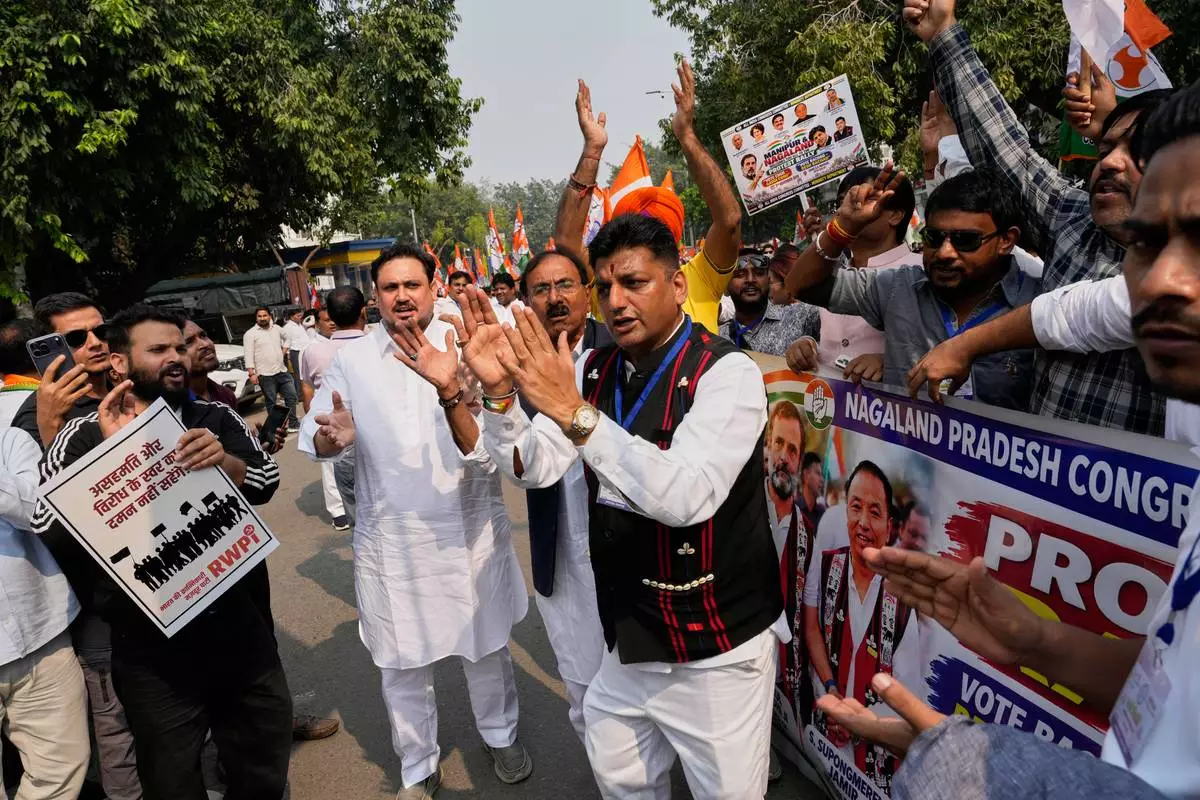
People shout slogans at a protest called by the Congress party and its allies against the revision of electoral rolls begins in New Delhi, Sunday, Nov. 1, 2026. (AP Photo/Manish Swarup)
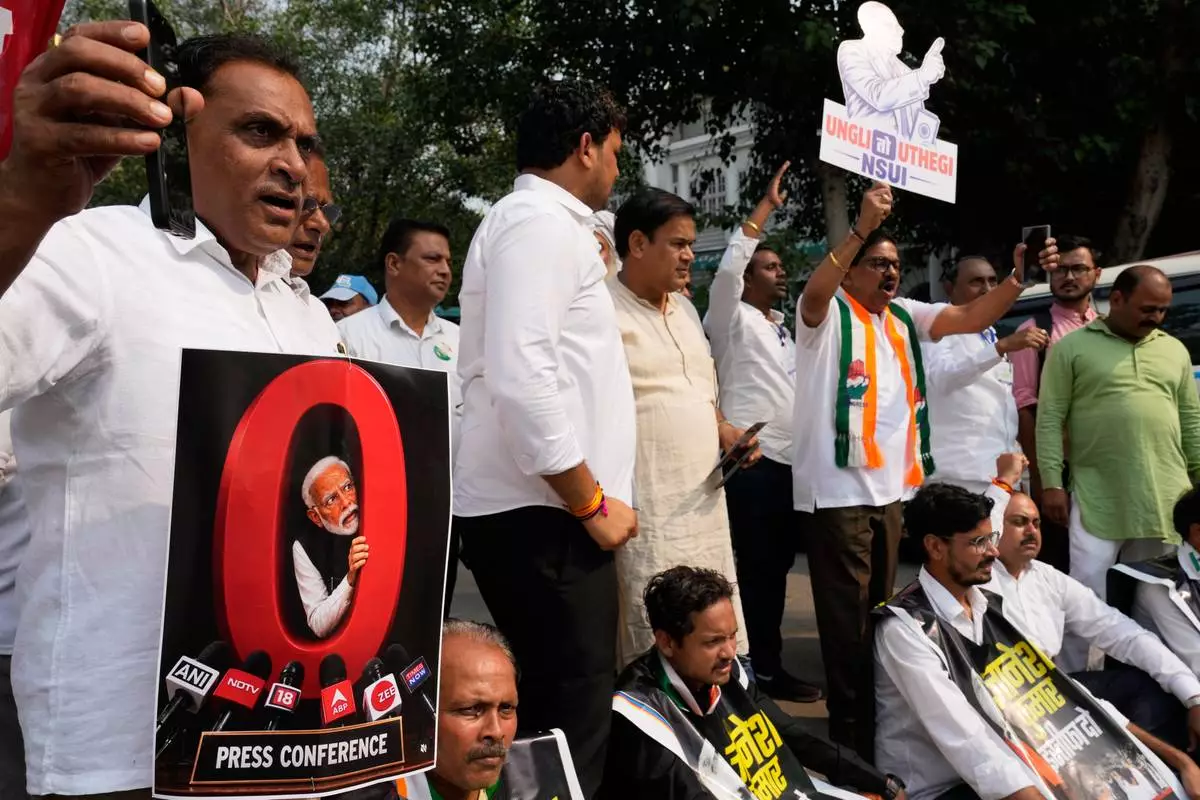
People shout slogans at a protest called by the Congress party and its allies against the revision of electoral rolls begins in New Delhi, Sunday, Nov. 1, 2026. (AP Photo/Manish Swarup)
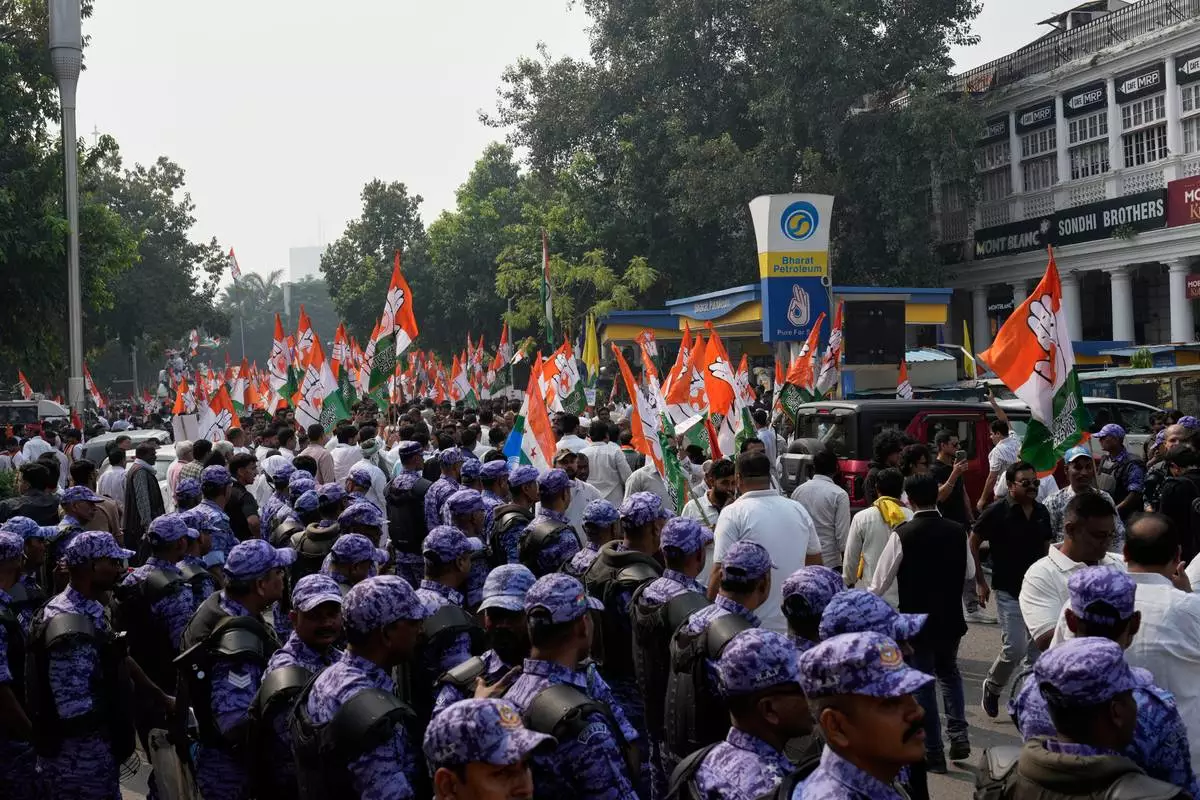
Security personnel keep watch as a protest called by the Congress party and its allies against the revision of electoral rolls begins in New Delhi, Sunday, Nov. 1, 2026. (AP Photo/Manish Swarup)
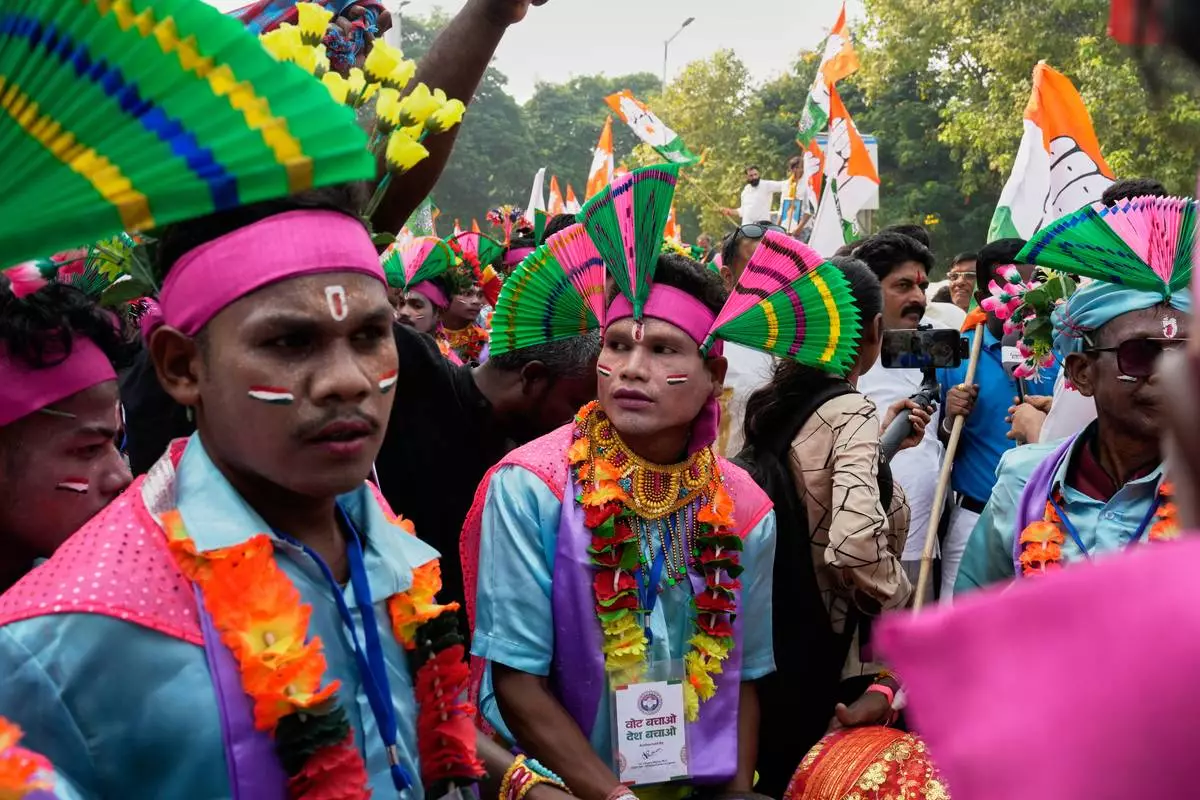
Protesters in traditional costumes wait to start a march called by the Congress party and its allies against the revision of electoral rolls in New Delhi, Sunday, Nov. 1, 2026. (AP Photo/Manish Swarup)
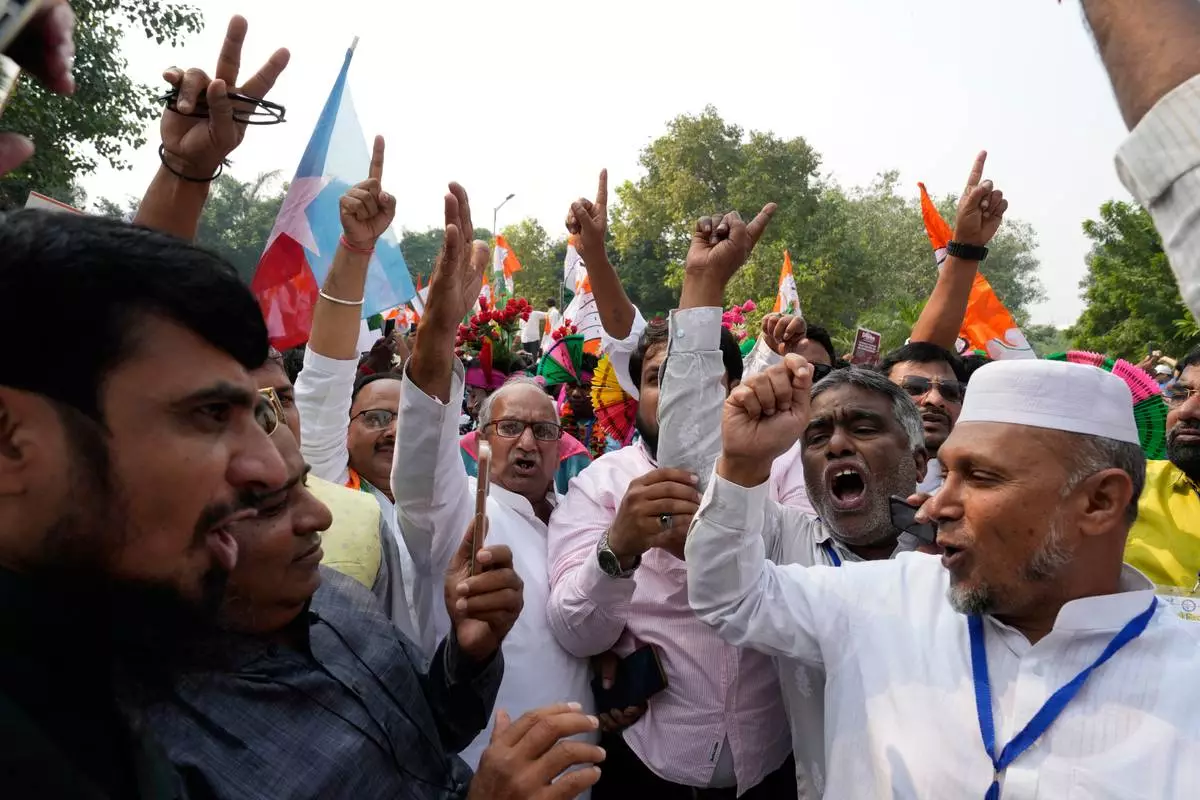
People shout slogans at a protest called by the Congress party and its allies against the revision of electoral rolls begins in New Delhi, Sunday, Nov. 1, 2026. (AP Photo/Manish Swarup)