Skip to Content Facebook Feature Image

With the Power of Light, Safeguarding Life in All Its Forms: State Grid's Biodiversity Conservation Practices Draw Expert Attention at COP17

Business

With the Power of Light, Safeguarding Life in All Its Forms: State Grid's Biodiversity Conservation Practices Draw Expert Attention at COP17
Business

Business

With the Power of Light, Safeguarding Life in All Its Forms: State Grid's Biodiversity Conservation Practices Draw Expert Attention at COP17

2026-11-01 23:23 Last Updated At:11-02 01:45

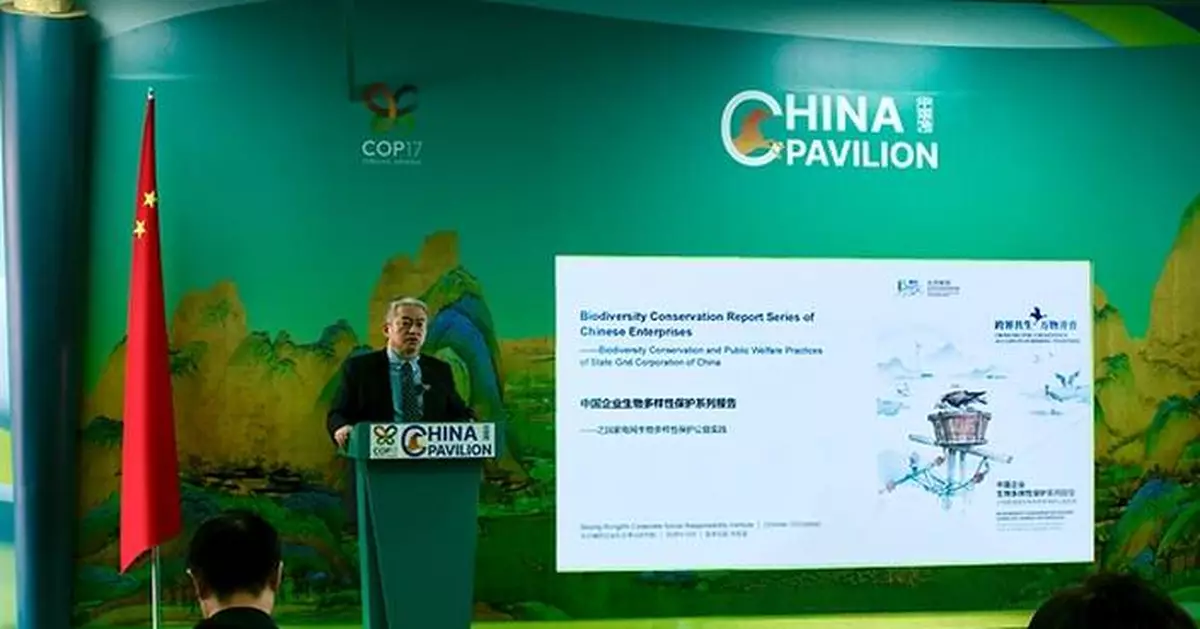
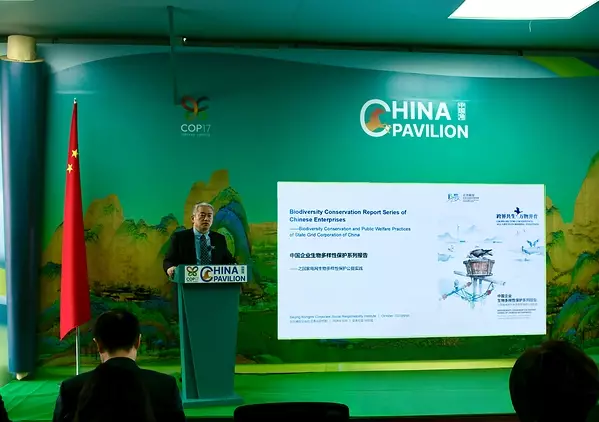
YEREVAN, Armenia, Nov. 1, 2026 /PRNewswire/ -- The 17th Conference of the Parties to the Convention on Biological Diversity (COP17) is underway in Yerevan, Armenia — the first global stocktake of the Kunming-Montreal Global Biodiversity Framework since its adoption. At the China Pavilion side event "Cross-Border Symbiosis: Diverse Narratives Inspire Biodiversity Action," hosted by the Center for Environmental Education and Communications of the Ministry of Ecology and Environment (CEEC) on October 29 (local time), the Series of Reports on Biodiversity Conservation by Chinese Enterprises* was officially released, together with Coexistence of All Life – Shanghai Chapter: State Grid's Biodiversity Conservation Practices in a Megacity*. With State Grid Corporation of China ("State Grid") as a case study, the reports present a Chinese solution for power grids and nature thriving side by side.

The reports spotlight State Grid's matrix of three public welfare brands. "Migratory Bird Lifeline" now covers 24 Chinese provinces and over 40 key migratory bird habitats. "Life Nests" has extended standardized management of artificial bird nests to plateau grasslands across six provincial-level regions. "Green Ark" delivers zero-carbon power to remote habitats through wind-solar-storage microgrids and has reached 17 national nature reserves across nine provinces. By embedding biodiversity requirements throughout grid construction and operation, and harnessing nature-based solutions to engage stakeholders, State Grid offers the world a replicable Chinese model for the long-term coexistence of infrastructure and biodiversity.

Case studies shared at the event revealed full-scenario coverage spanning plateaus, wetlands, coastal waters and megacities. In Anhui, "Migratory Bird Lifeline" created a flexible "prevent, protect, guide, renovate" approach, with a three-tier rescue channel that saved and released over 100 Oriental storks. In the Sanjiangyuan region of Qinghai Province, "Life Nests" has installed 6,053 artificial nests, recording more than 3,100 successful nestings and raising the number of bird species in the reserve from 61 to 111. In Jiangsu, "Green Ark" built a dual flagship spanning "land and water," using zero-carbon power to monitor Yancheng's milu deer and Zhenjiang's Yangtze finless porpoise without disturbing them. In Shanghai, the Company wove biodiversity into every stage of megacity grid operations, building a multi-stakeholder network spanning government, research institutions, NGOs and the public — proof that urban energy security and life in all its forms can go hand in hand.

Experts hailed the practices. Tu Ruihe, Vice Chairman of the All-China Environment Federation and former UNEP Representative in China, called the report "high-caliber" — "a success story of turning bird deterrence into bird protection," delivering production, development and conservation all at once. Li Penghui of the CEEC described the brands as "an innovative exploration of multi-stakeholder biodiversity governance." Penildon Silva Filho, Vice President of the Federal University of Bahia and member of the Central Committee of Brazil's Workers' Party, said the practices show how developing countries can pair economic growth with nature. Michael Crook, founder and honorary chairman of the Jane Goodall Environmental and Cultural Exchange Center, called the three brands "far-reaching in value" and encouraged deeper cooperation among businesses, institutions and experts.

About State Grid Corporation of China

State Grid Corporation of China is a state-owned enterprise that builds and operates power grids, delivering safe, reliable and clean electricity while championing biodiversity conservation.

** This press release is distributed by PR Newswire through automated distribution system, for which the client assumes full responsibility. **
With the Power of Light, Safeguarding Life in All Its Forms: State Grid's Biodiversity Conservation Practices Draw Expert Attention at COP17

With the Power of Light, Safeguarding Life in All Its Forms: State Grid's Biodiversity Conservation Practices Draw Expert Attention at COP17
GUANGZHOU, China, Nov. 1, 2026 /PRNewswire/ -- This is a news report from South.

A worn bamboo basket with a missing piece of its rim may not look like much. But nearly a century ago, it helped sustain Red Army soldiers fighting in the mountains along the Jiangxi–Guangdong border.

The basket is displayed to the public for the first time as a featured artifact at A Magnificent Epic, an Enduring Monument: Traces of the Long March Etched in Time, an exhibition that opened at Guangdong Museum on October 17, 2026, commemorating the 90th anniversary of the victory of the Chinese Workers' and Peasants' Red Army in the Long March.

A small basket, a remarkable story

The basket belonged to Xie Ximei, a local woman who used it to carry meals to Chen Yi, a Red Army commander, in the Youshan area.

In March 1935, Chen Yi and other Red Army leaders arrived in the Jiangxi–Guangdong border region and joined local Communist Party organizations and guerrilla forces. As they continued their guerrilla campaign, local residents played an important role in supporting them.

Delivering food was risky. Xie sometimes encountered patrols of Kuomintang troops on her way up the mountain, but she repeatedly found ways to avoid danger and get the meals through. She also kept watch when Chen Yi held meetings at her home.

Today, the basket offers a tangible reminder of the courage and care shown by ordinary people during a turbulent period in Chinese history.

A promise kept decades later

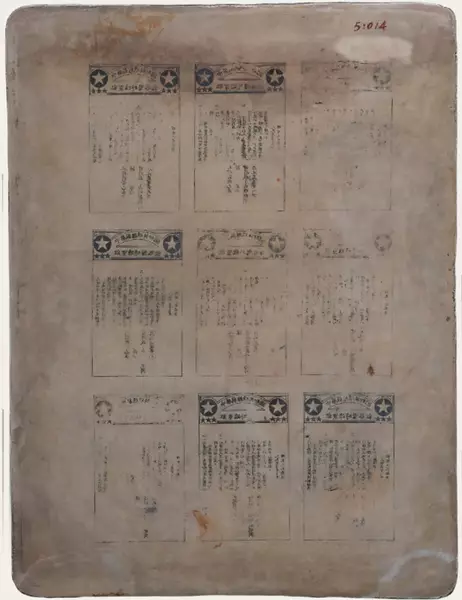
Another exhibit tells the story of grain-loan certificates issued in the 1930s by the Chinese Soviet Republic.

Facing severe food shortages, the Red Army organized three grain-borrowing campaigns in the Central Soviet Area between 1933 and the eve of the Long March. Local residents contributed grain and received certificates recording the loans. The principle was simple: anything borrowed from the people had to be returned.

After the founding of the People's Republic of China in 1949, the government honored this commitment by redeeming verified, unpaid certificates, providing grain at prevailing market prices or making cash payments. The certificates and their printing plate preserve a story of sacrifice, trust and a promise fulfilled long after the original loans were made.

The Long March through art

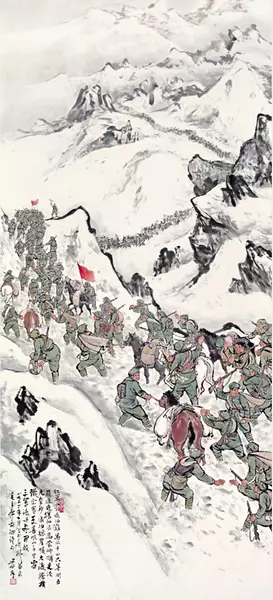
The exhibition also features The Long March, a traditional Chinese painting by Guan Shanyue. Depicting Red Army soldiers climbing snow-covered mountains, the painting uses winding compositions, vigorous brushwork and vivid colors to convey the scale of their journey and their determination to overcome adversity.

Bringing together historical artifacts and artworks, the exhibition traces the Red Army's journey from its difficult beginnings to eventual victory.

From a simple food basket to documents recording wartime loans, these objects reveal a human side of the Long March: a history shaped not only by soldiers, but also by the ordinary people who stood behind them.

** This press release is distributed by PR Newswire through automated distribution system, for which the client assumes full responsibility. **

New exhibition at Guangdong Museum commemorates 90th anniversary of Long March victory

New exhibition at Guangdong Museum commemorates 90th anniversary of Long March victory

New exhibition at Guangdong Museum commemorates 90th anniversary of Long March victory

New exhibition at Guangdong Museum commemorates 90th anniversary of Long March victory

New exhibition at Guangdong Museum commemorates 90th anniversary of Long March victory

New exhibition at Guangdong Museum commemorates 90th anniversary of Long March victory

Recommended Articles