JOHANNESBURG (AP) — South Africans are preparing to vote in local government elections that will determine control of the country’s largest cities and test whether the African National Congress continues its electoral decline.
Voters on Wednesday will elect councilors, who will then choose mayors to oversee municipal services, including water, sanitation and rubbish collection.
Click to Gallery
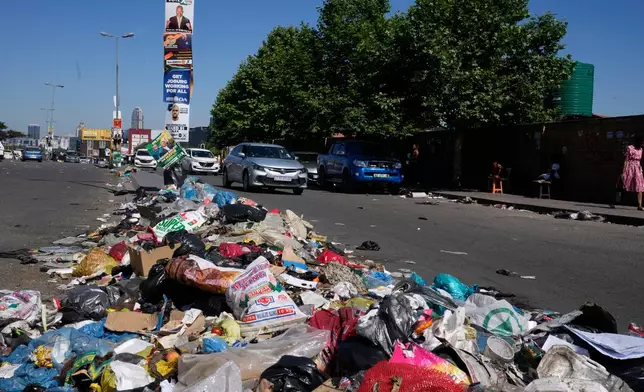
A pile of rubbish is seen along the street in Alexandra township, on the outskirt of Johannesburg, South Africa, Saturday, Oct. 31, 2026. (AP Photo/Themba Hadebe)
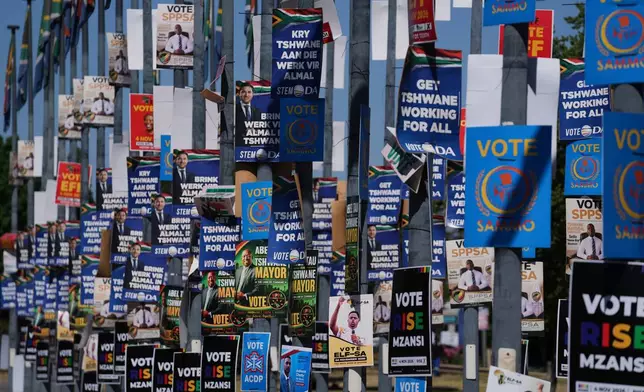
Election posters hang on a street lamp post in Soweto, South Africa, Thursday, Oct. 29, 2026. (AP Photo/Themba Hadebe)
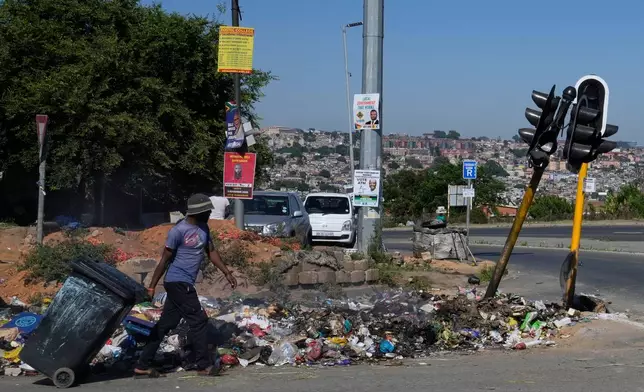
A man is pulling a rubbish bin next to a pile of rubbish along the street in Alexandra township, on the outskirt of Johannesburg, South Africa, Saturday, Oct. 31, 2026. (AP Photo/Themba Hadebe)
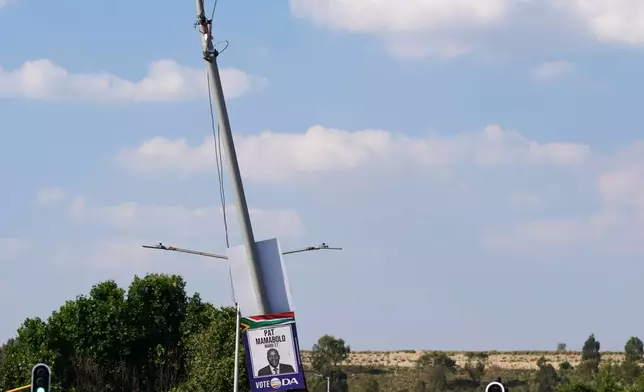
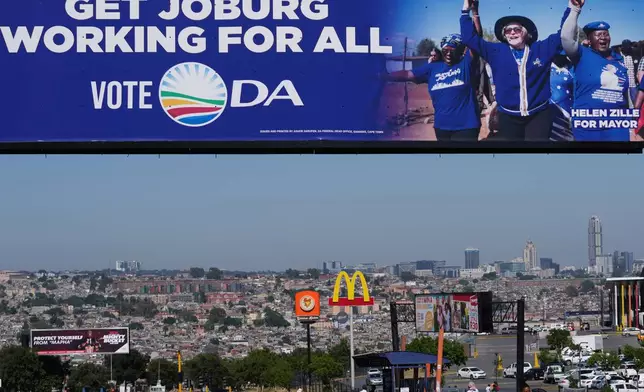
A Democratic Alliance (DA) mayoral candidate Helen Zille is seen on election billboard in Alexandra township, on the outskirt of Johannesburg, South Africa, Saturday, Oct. 31, 2026. (AP Photo/Themba Hadebe)
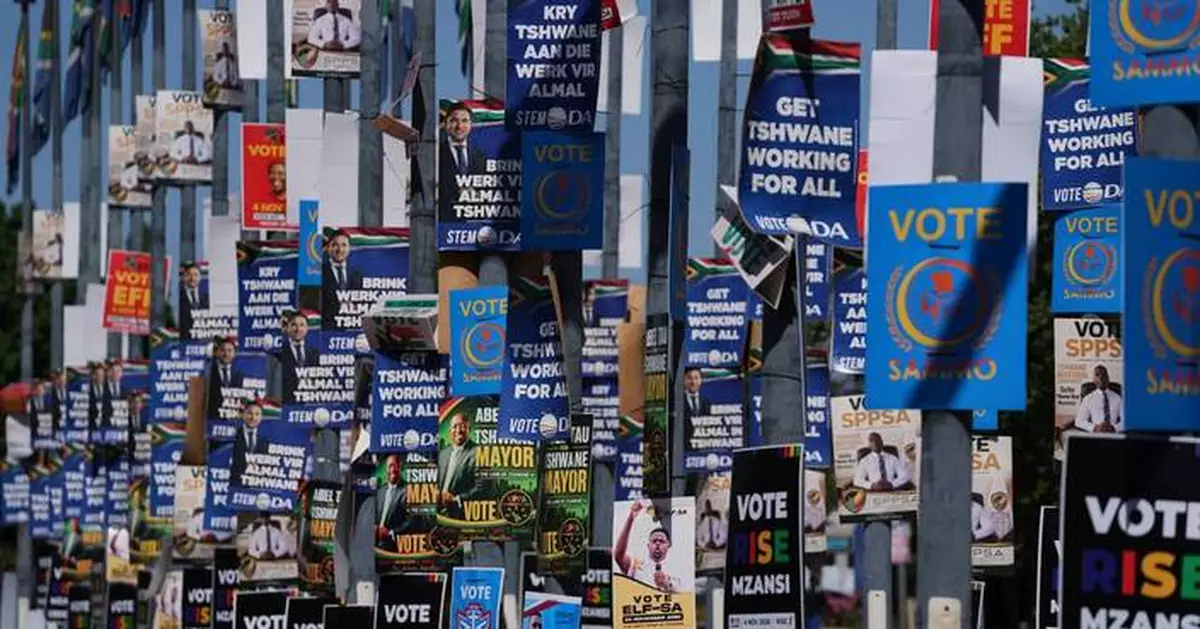
Election posters from multiple political parties in Pretoria, South Africa, Friday, Oct. 30, 2026. (AP Photo/Themba Hadebe)
But politicians campaigning this year have also faced questions about national issues, including illegal immigration, high unemployment and crime.
“I think for most voters, they assess the situation of where they are, that’s their immediate reaction. But for a party, the image that you have at national level might make your candidate at local level be overlooked,” said Sandile Mnguni, a political analyst at the University of KwaZulu-Natal.
The ANC lost its parliamentary majority in 2024 and formed a unity government with the Democratic Alliance (DA), the second-largest party, and smaller parties.
In the last municipal elections in 2021, the ANC lost control of several major cities. It governs others through coalitions.
Home to nearly 5 million people and most of South Africa’s corporate headquarters, Johannesburg is a key economic hub and a major prize for competing parties.
The city, which is currently governed by a fragile ANC-led coalition, has had nine mayors in 10 years. Political instability has been widely blamed for deteriorating infrastructure, financial mismanagement and the broader decline of the “city of gold.”
Burst water pipes, cracked roads, hijacked buildings, broken traffic lights, unreliable electricity and piles of rubbish have become common sights in parts of the city.
Several parties have fielded high-profile mayoral candidates and mounted extensive campaigns.
The DA, which is South Africa’s second-largest party, has nominated 75-year-old political veteran Helen Zille. Her campaign has included snorkeling in a large, water-filled trench, spinning a modified BMW and DJing at a local club to rally support.
“Well, the big thing is, the ANC is certainly collapsing, it is in free fall, and suddenly we don’t have a competitor anymore,” Zille told The Associated Press at a campaign event near Alexandra township, northeast of Johannesburg.
The Economic Freedom Fighters have turned to Dr. Tlaleng Mofokeng, who recently completed a six-year term as the United Nations special rapporteur on the right to health.
Herman Mashaba, the opposition ActionSA’s candidate, is seeking another term as mayor of Johannesburg after resigning in 2019 when he left the DA.
Politicians campaigning across South Africa have faced complaints about a water crisis affecting impoverished townships and affluent suburbs alike.
At an election debate in the capital, Pretoria, politicians across party lines faced blame after more than 500 people were treated for stomach illnesses last week after drinking contaminated water. All major parties in the city have participated in its successive coalition governments since 2016.
“It is interesting to hear them (political parties) promising to solve the water problem, but it has been there when all of them were in power,” said Lesego Moshate, a Mamelodi resident who attended a town hall debate featuring mayoral candidates last week.
About 600 miles (966 kilometers) away in the Eastern Cape, ANC provincial leader Oscar Mabuyane faced similar complaints on the campaign trail. Residents blamed his party for inadequate drainage, water leaks, blocked sewers and a poor response to flooding.
Mabuyane recently appointed a team to investigate whether an outbreak of gastrointestinal illness was linked to poor water quality in parts of the province. More than 110 students at a local university required medical treatment.
“These are everyday issues that affect families and require focused attention. Our campaign is rooted in the people, listening to their concerns, engaging directly and taking forward the issues they raise,” Mabuyane said.
Protests against illegal immigration have swept South Africa in recent months, making the issue a prominent election talking point.
More than 500 soldiers have been deployed to KwaZulu-Natal province, where violence against foreign-owned businesses and foreign nationals has been reported. More than 178,000 foreign nationals have reportedly left South Africa in recent months.
Opposition parties including ActionSA and the Patriotic Alliance have made opposition to illegal immigration central to their campaigns. Their message has resonated with some voters who blame immigrants living in the country illegally for unemployment, strained public services and high crime rates.
Meanwhile, Economic Freedom Fighters candidates have faced criticism over the party’s support for a more integrated Africa with fewer trade barriers and fewer restrictions on movement.
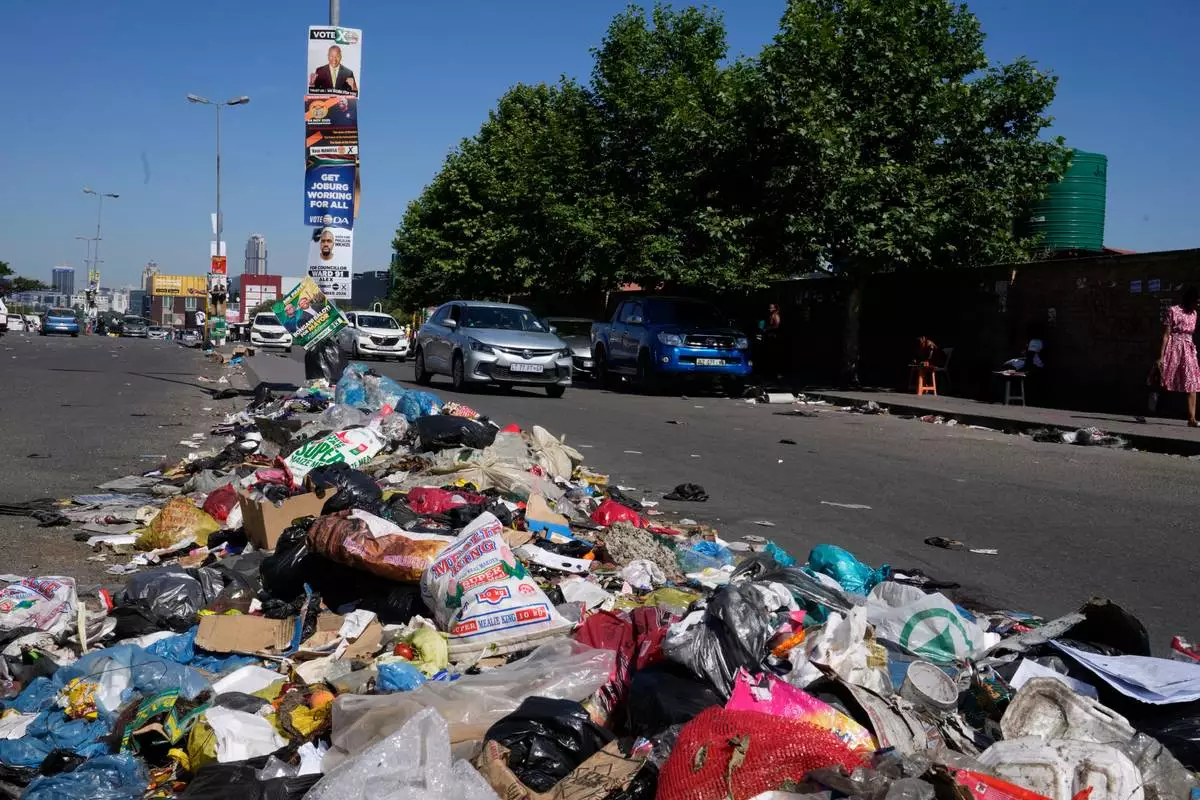
A pile of rubbish is seen along the street in Alexandra township, on the outskirt of Johannesburg, South Africa, Saturday, Oct. 31, 2026. (AP Photo/Themba Hadebe)
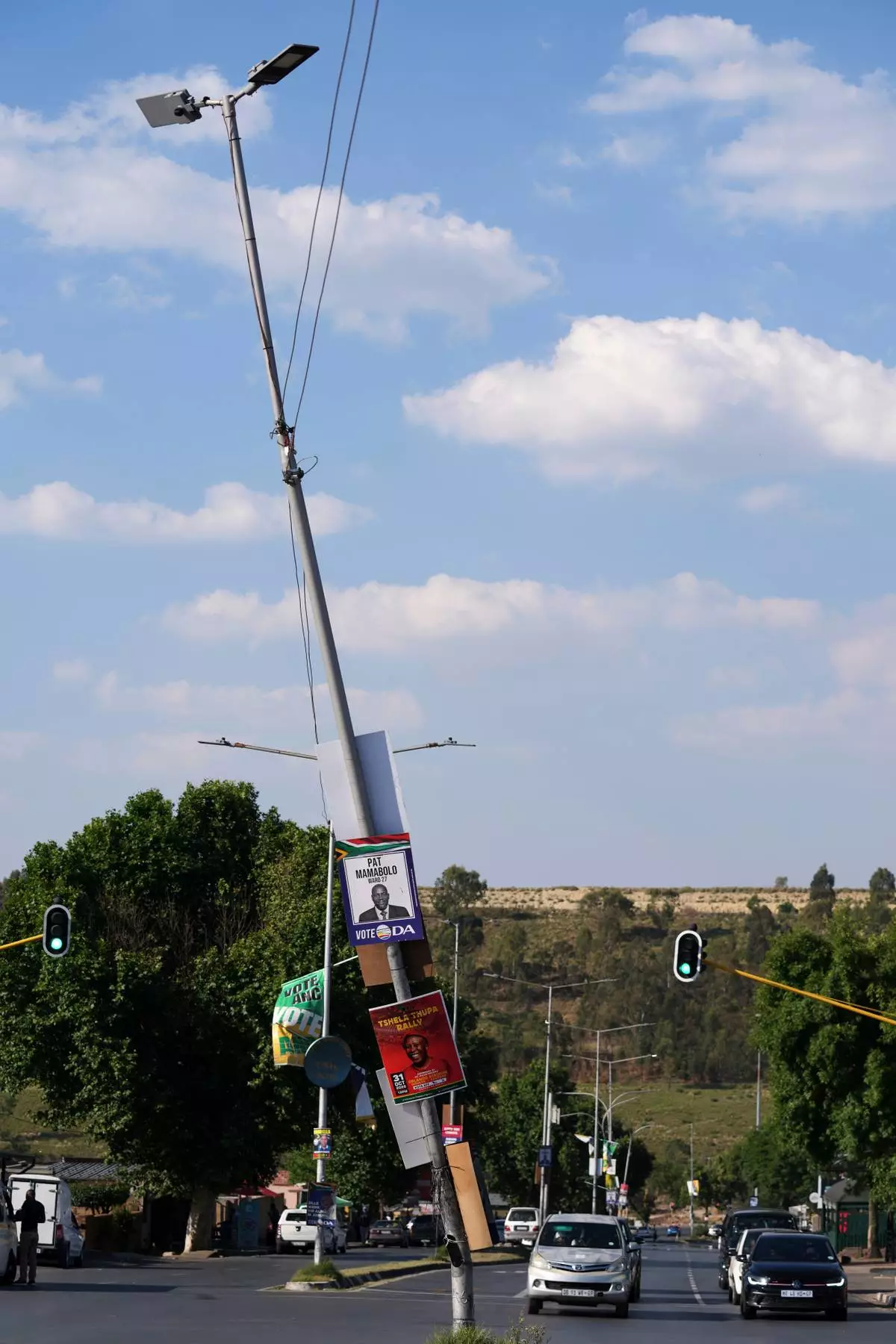
Election posters hang on a street lamp post in Soweto, South Africa, Thursday, Oct. 29, 2026. (AP Photo/Themba Hadebe)
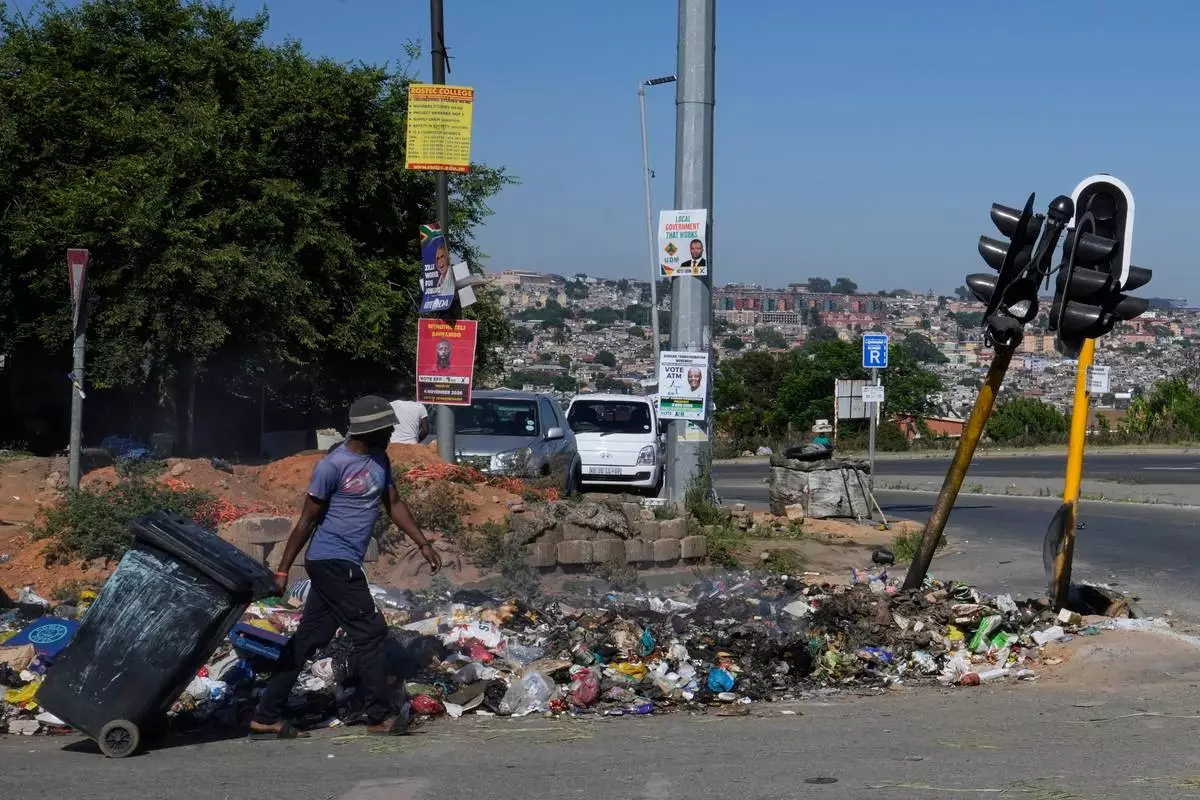
A man is pulling a rubbish bin next to a pile of rubbish along the street in Alexandra township, on the outskirt of Johannesburg, South Africa, Saturday, Oct. 31, 2026. (AP Photo/Themba Hadebe)
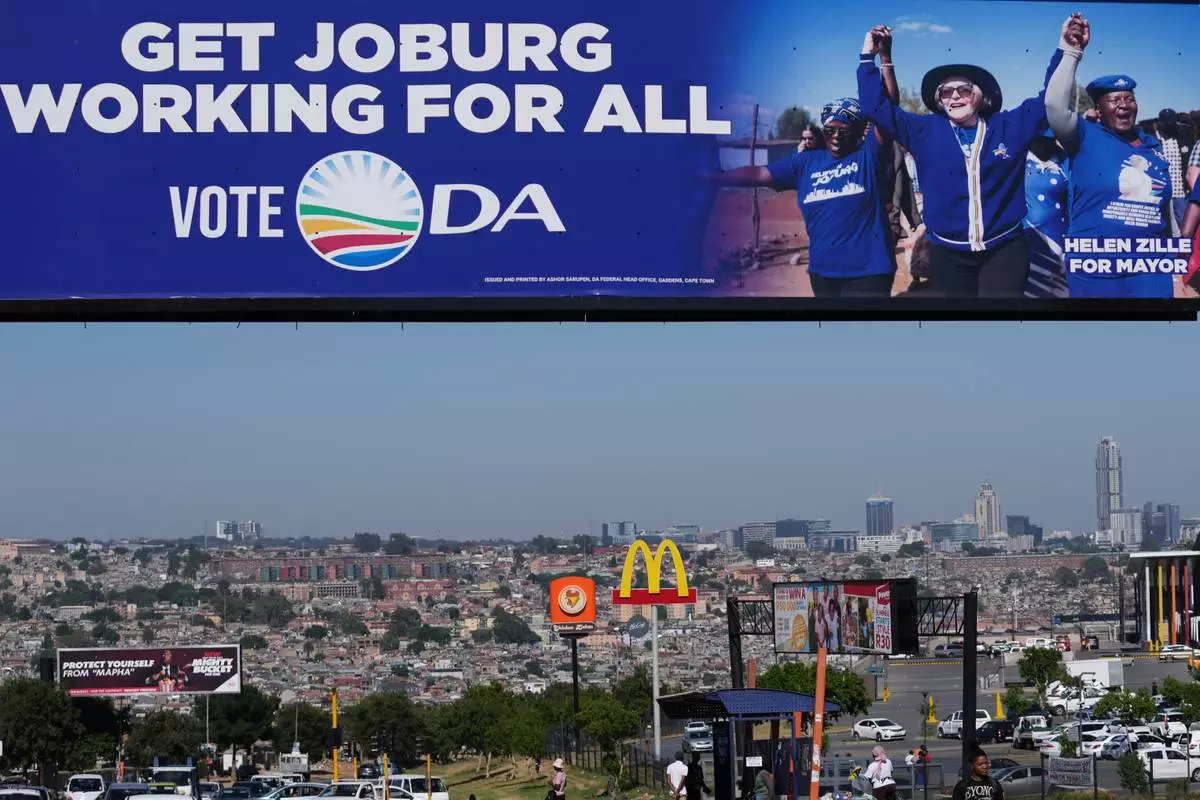
A Democratic Alliance (DA) mayoral candidate Helen Zille is seen on election billboard in Alexandra township, on the outskirt of Johannesburg, South Africa, Saturday, Oct. 31, 2026. (AP Photo/Themba Hadebe)
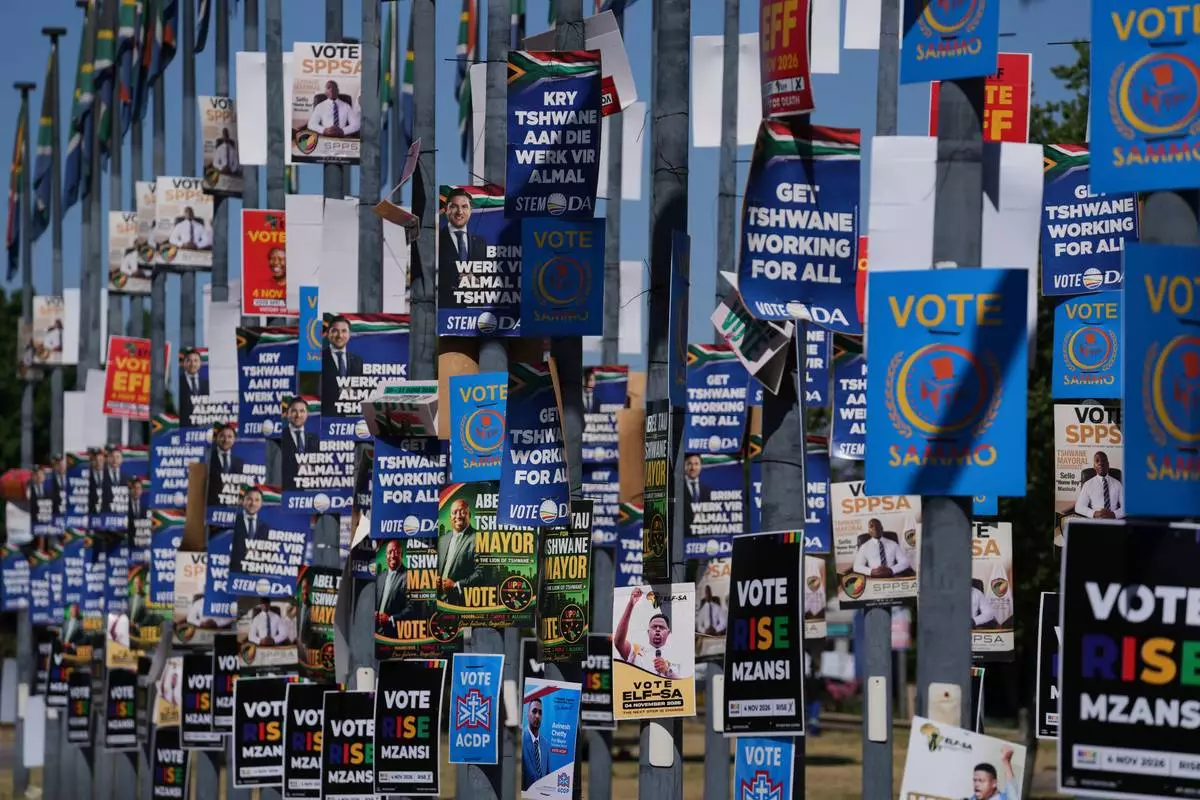
Election posters from multiple political parties in Pretoria, South Africa, Friday, Oct. 30, 2026. (AP Photo/Themba Hadebe)
DUBUQUE, Iowa (AP) — President Donald Trump closed out the final weekend of a turbulent midterm campaign with rallies in two states he has handily won in the past while Democrats began to fracture in Michigan, risking their effort to retake the Senate.
The president was in Salina, Kansas, and Dubuque, Iowa, on Sunday. Republicans in both states are fending off robust challenges from Democrats, threatening GOP majorities in the Senate while they're already at risk in the House.
But in Iowa, Trump insisted Republicans were on the verge of sweeping victories on Election Day on Tuesday.
“We're going to elect ‘America first’ Republicans up and down the line,” he said near the start of a speech that lasted two hours, long even for Trump, who is known for his lengthy, free-wheeling rallies.
Later, he arrived tardy in Kansas, where Air Force One performed a theatrical flyover before landing for an outdoor, airport rally. Hundreds of people started leaving midway through his nearly 90-minute speech in rural central Kansas, which didn’t end until nearly 10 p.m. local time.
“This is our last stop. We’re closing it down tonight," Trump said. He has crisscrossed the country since Oct. 1, holding more than two-dozen rallies in 19 states to lift up the GOP. He is scheduled to give his closing pitch of the midterm elections Monday in Washington at the Lincoln Memorial Reflecting Pool.
With more than 54 million votes already cast, the trips reflect the GOP's defensive posture as the elections become a referendum on Trump's White House second term.
They are a reminder of how starkly the political environment has changed since Trump’s last campaign. In 2024, he worked to flip states that had previously backed Democrat Joe Biden in 2020. This year, Trump has focused largely on states he has dominated before as voters, including previous supporters, question the economic fallout of his decision to impose tariffs and launch the war in Iran.
But Democrats who have become increasingly bullish on their prospects were confronting challenges of their own.
In Michigan, Democrat Abdul El-Sayed's onetime opponent in the Senate primary, Haley Stevens, appeared with Republican Mike Rogers at a church service and later endorsed his campaign. Stevens, a congresswoman who has criticized El-Sayed as being insufficiently supportive of Israel, said she backed Rogers after an invitation to a Democratic event was rescinded.
“Our Democratic nominee for Senate said I was no longer welcome in his campaign and that I should stay away,” Stevens said in a video announcing the endorsement. “And he’s right. And that’s why I am endorsing Mike Rogers for the United States Senate today.”
The stunning move forced other Democrats to reiterate their support for El-Sayed. Chuck Schumer of New York, the top Democrat in the U.S. Senate, said the party was “united in our support.” U.S. Sen. Kirsten Gillibrand of New York, who leads the Democratic Senatorial Campaign Committee, said the party would “stand firmly” behind El-Sayed and “reject any efforts to divide Democrats.”
Earlier, U.S. Sen. Bernie Sanders, a top supporter of El-Sayed, dismissed concerns about a Democratic divide.
“Haley Stevens lost a very, very close primary. I can understand being upset about that,” the Vermont independent said on CBS' “Face the Nation.” “But from what I can see, all over the state, people are standing up, they’re gonna stand with Abdul.”
Michigan plays a key role in the Democratic effort to retake control of the U.S. Senate. If they don't keep that seat on Tuesday, they would face additional pressure to win races in deeper Republican territory such as Texas, Kansas, Ohio or Iowa.
The campaign's closing stretch has largely become a test of Trump’s enduring strength in a Republican Party he reshaped in his image a decade ago. He's hoping to energize voters like Jon Lutz, a Dubuque resident who watches videos of Trump all the time but attended his first rally on Sunday.
Lutz said he's happy with Trump's second-term record and wants Republicans to keep control of the House and Senate so his agenda will advance.
“He’s done what he’s said he’s going to do,” the 60-year-old civil engineer said. “I want him to keep going.”
Wendy Kuenzler was also seeing Trump for the first time on Sunday. Waiting in line at the concession stand, the 44-year-old from Burlington said she felt that Iowa was at a crossroads with multiple competitive elections. She plans to support Ashley Hinson, the U.S. Senate nominee.
Kuenzler said she doesn't blame rising gas and grocery prices on Trump. "He's on the path to correcting it,” she said.
In Kansas, Liz Wagner, a 59-year-old restaurant owner, traveled 165 miles (266 kilometers) from her hometown of Atchison, to attend Trump’s outdoor rally at the airport in Salina, Kansas. She said she agrees “with everything he says.”
“I want people to get up and go to work and stop sticking their hands out,” she said while waiting to get into the rally. “The Democrats like to hand things out.”
Trump is betting that he can overcome the headwinds facing Republicans this year by relentlessly appearing before his most loyal supporters. But the more than two dozen rallies he held in October were occasionally overshadowed by Trump's meandering asides and sometimes graphic descriptions of the physique of the male politicians he was supporting.
Trump paused the rallies on Saturday and spent the evening at his Mar-a-Lago resort in Florida at a jungle-themed Halloween party, where he bragged about the wealth of his guests and dismissed concerns about the country's direction.
“The country has never done better,” he said.
Outgoing Rep. Don Bacon, R-Neb., raised concerns on Sunday that the president's policies, particularly tariffs, could weigh down the GOP.
“Tariffs are not popular here in the Midwest,” he told CNN's “State of the Union.” “I tried telling the president that.”
Bacon predicted “there will be a debate in the party” about its future if there are significant losses this week.
Sen. Tim Scott of South Carolina was more optimistic. The chair of the National Republican Senatorial Committee said he was confident Republicans would keep the Senate and embraced Trump's role in the campaign.
“There's no doubt that President Trump has said himself that the midterm election is about him," he told NBC's “Meet the Press.” “His agenda, without any question, is on the ballot.”
Sloan reported from Washington and Hanna from Salina, Kansas. Associated Press writers Corey Williams in Detroit and Will Weissert, Joey Cappelletti and Jonathan J. Cooper in Washington contributed to this report.
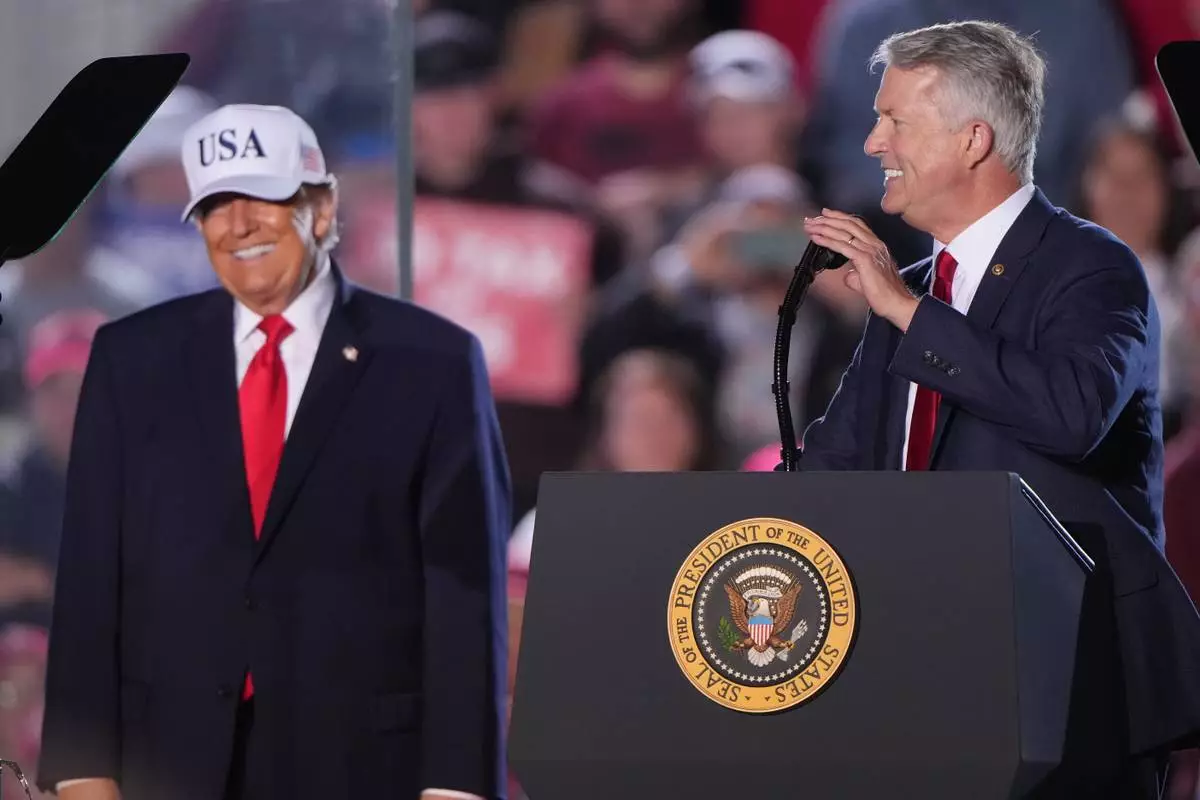
President Donald Trump listens as Sen. Roger Marshall, R-Kan., speaks at a campaign rally at the Salina Regional Airport, Sunday, Nov. 1, 2026, in Salina Kan. (AP Photo/Charlie Riedel)
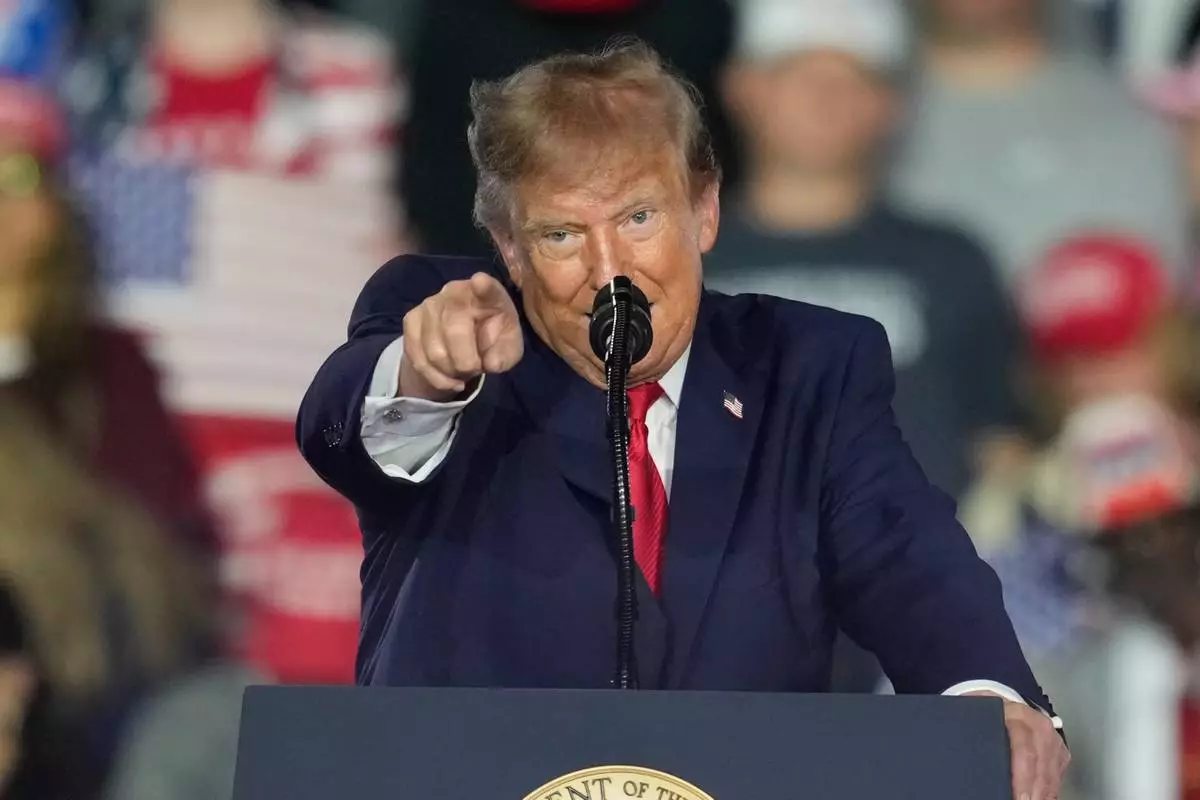
President Donald Trump points as he speaks during a campaign rally at the Five Flags Event Center, Sunday, Nov. 1, 2026, in Dubuque, Iowa. (AP Photo/Charlie Neibergall)

Senate candidate Rep. Ashley Hinson, R-Iowa, greets attendees before President Donald Trump arrives to speak during a campaign rally at the Five Flags Event Center, Sunday, Nov. 1, 2026, in Dubuque, Iowa. (AP Photo/Charlie Neibergall)
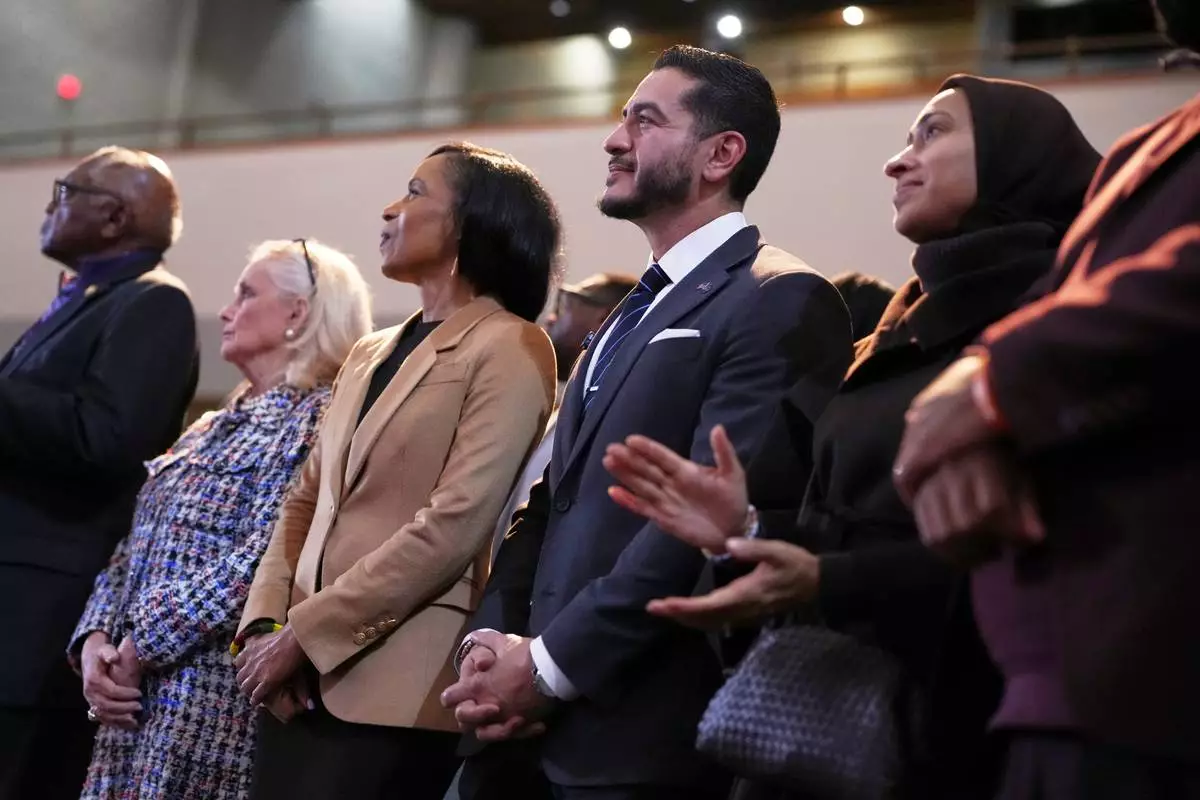
Rep. James Clyburn, D-S.C., left, Rep. Debbie Dingell, D-Mich., Sen. Angela Alsobrooks, D-Md., Michigan Democratic Senate candidate Abdul El-Sayed and his wife Sarah Jukaku, attend a church service at Greater Emmanuel Institutional Church of God in Christ, Sunday, Nov. 1, 2026, in Detroit. (AP Photo/Julia Demaree Nikhinson)
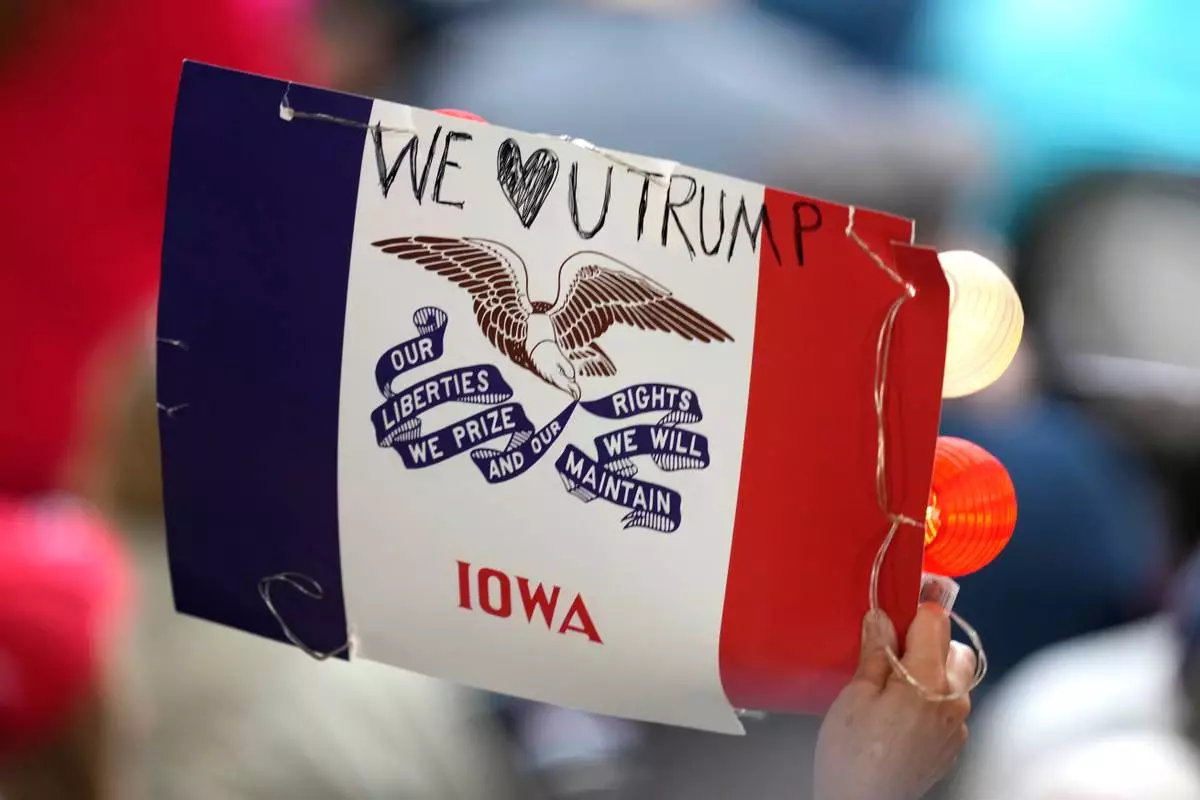
A supporter holds up a sign beforePresident Donald Trump arrives to speak during a campaign rally at the Five Flags Event Center, Sunday, Nov. 1, 2026, in Dubuque, Iowa. (AP Photo/Charlie Neibergall)
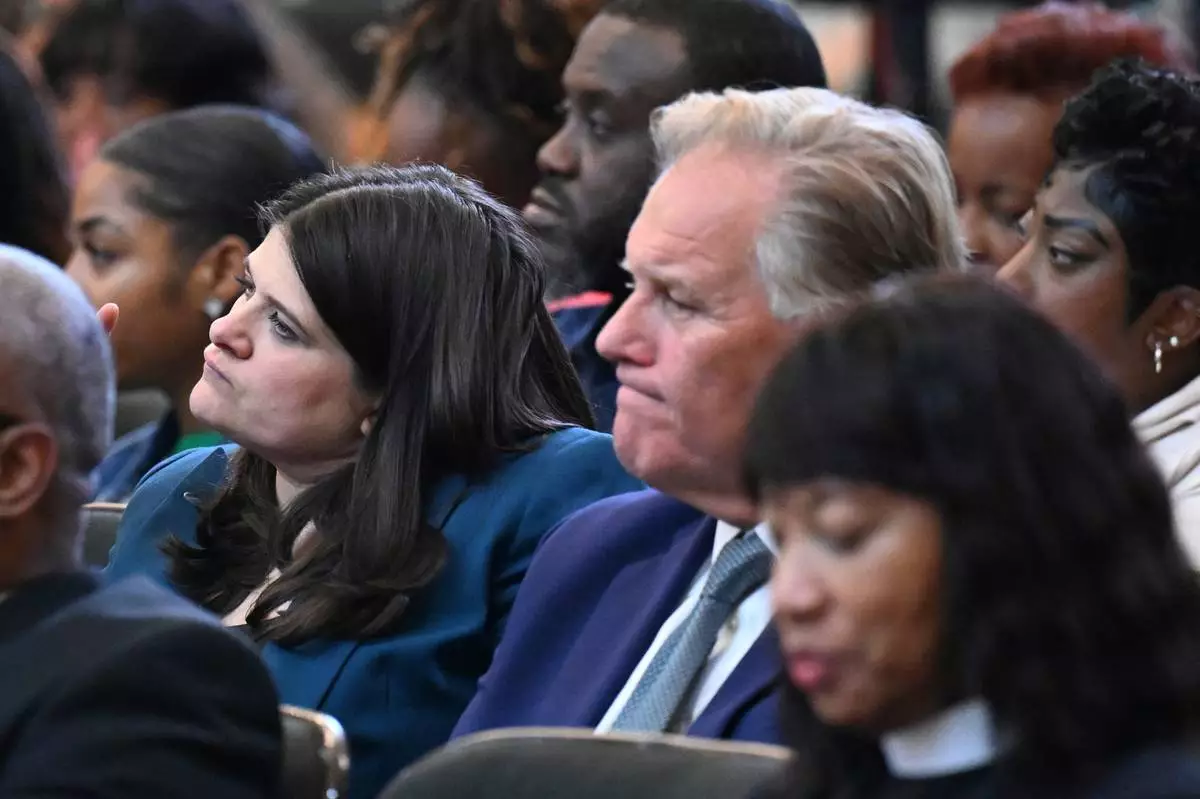
Michigan Republican Senate candidate Mike Rogers, right, and Rep. Haley Stevens, D-Mich., attend a service at Perfecting Church, Sunday, Nov. 1, 2026, in Detroit. (AP Photo/Jose Juarez)
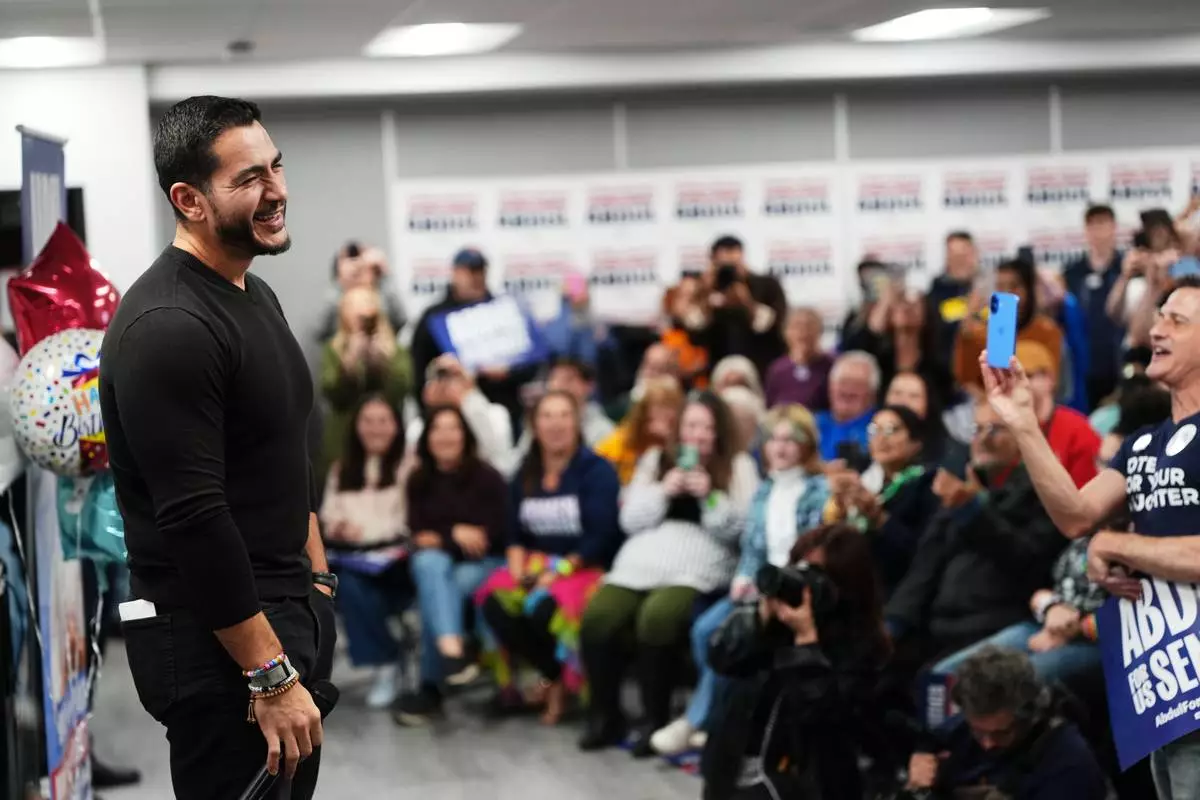
Michigan Democratic Senate candidate Abdul El-Sayed speaks at a campaign rally, Saturday, Oct. 31, 2026, in Sterling Heights, Mich. (AP Photo/Julia Demaree Nikhinson)
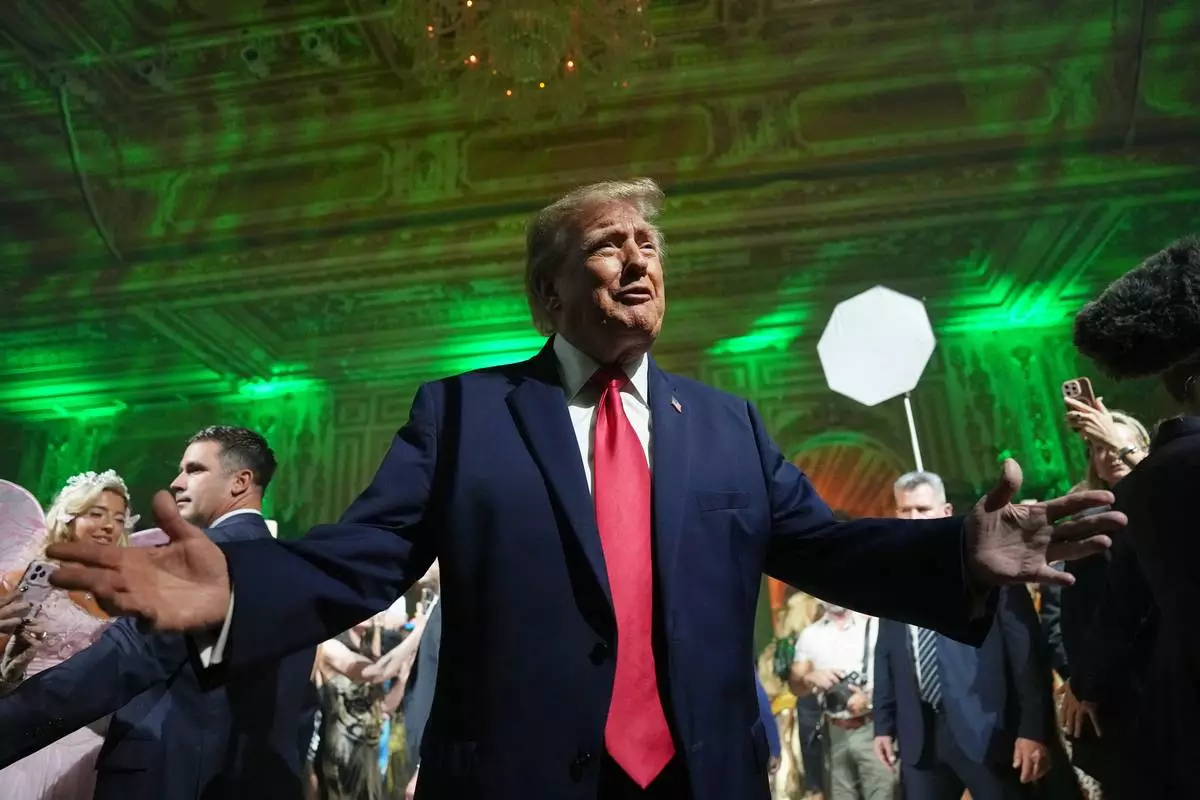
President Donald Trump speaks at a Halloween party at his Mar-a-Lago estate in Palm Beach, Fla., Saturday, Oct. 31, 2026. (AP Photo/Jacquelyn Martin)