Keynote speech by FS at Women Chief Executives Summit 2026
Following is the keynote speech by the Financial Secretary, Mr Paul Chan, at the Women Chief Executives (WCE) Summit 2026 today (November 2):
Mary (Chief Executive Officer of the Hong Kong and Greater China & North Asia, Standard Chartered, Ms Mary Huen), Amy (Chairman of UBS Global Wealth Management Asia and Head and Chief Executive of UBS Hong Kong, Ms Amy Lo), distinguished members of WCE, Consuls-General, ladies and gentlemen,
Good morning. My sincere thanks to Mary and Amy, and to their teams, for bringing together leaders from finance, technology and beyond. It was a pleasure to join your inaugural summit last year. I am delighted to return under this year’s theme, "Female Voices of Impact and Innovation".
In recent weeks, Hong Kong has welcomed a series of international financial gatherings. In October, we hosted the APEC (Asia-Pacific Economic Cooperation) Finance Ministers' Meeting for the first time. This week, we welcome the Global Financial Leaders' Investment Summit. Today, your summit adds an important voice to these conversations.
While their agendas differ, these gatherings share a concern over how finance can support growth in a changing world. For the leaders here this morning, the central question is how to build institutions that can succeed through uncertainty and change.
In my view, two principles are essential. The first is drawing on the widest possible pool of talent. The second is managing capital with a long-term perspective.
Let me begin with talent.
In the financial world, capital is important. But an institution's strength depends ultimately on its people and their judgement. They must navigate uncertainty, distinguish lasting trends from short-term market movements, and take responsibility for decisions with multiyear impact.
Sound judgement is not confined to any gender, background or generation. Institutions that draw on a wider pool of talent are better equipped to navigate change, make sound decisions and seize opportunities. Broadening access to leadership is not only fair. It makes our financial sector stronger.
Hong Kong has made encouraging progress in this respect. For the first time in their respective histories, the CEOs (Chief Executive Officers) of both the Securities and Futures Commission and the Hong Kong Stock Exchange (HKEX) are women. Bonnie (CEO of the HKEX, Ms Bonnie Chan) is among us this morning.
We all remember the joint study by WCE Hong Kong, KPMG and the Women's Foundation. It found that women held 45 per cent of senior leadership positions in the financial institutions studied, up from 34 per cent in 2018.
These achievements deserve recognition. They reflect individual endeavour, backed by education, family support, workplace opportunities and a culture that values ability. Yet barriers remain, particularly for women in the middle of their careers.
We need to remove all these barriers so that more women can advance and lead. The same principle applies to people from different backgrounds and cultures. Our institutions thrive when talent has every opportunity to flourish.
The second principle concerns how far ahead capital looks.
A major transfer of wealth is under way. In the United States alone, the baby boomer generation holds some US$30 trillion in financial assets. As this wealth gradually passes to spouses and younger generations, women are expected to control a substantial share of wealth by 2030. This is more than a change in ownership. It is a shift in who makes investment decisions and where capital is directed.
As wealth changes hands, investment priorities will change too. Financial institutions need to respond to the goals of a new generation, not simply repeat what worked for the last.
Nowadays, wealth management goes beyond transactional product sales to building multigenerational advisory relationships. Investment strategies should look beyond quarterly performance to opportunities and risks across market cycles. Institutions that respond well will be better placed to earn the lasting trust of their clients.
For those seeking to develop talent and manage capital for the long term, Hong Kong has much to offer.
Our economy grew by 5.1 per cent in the first half of this year. Tomorrow, we will announce our third-quarter figures, which will mark our 15th consecutive quarter of growth. We will also likely revise upwards our full-year GDP (Gross Domestic Product) growth forecast, putting Hong Kong on course for its strongest annual growth in five years.
But the case for Hong Kong extends beyond the current economic cycle. Our common law legal system, free flow of capital and deep professional expertise provide a reliable foundation for investors looking to commit capital for the long term.
Our connections with the Chinese Mainland and the world bring together people, ideas and investment opportunities. They make Hong Kong a place where international institutions can build diverse teams and serve clients across markets.
This year marks the beginning of our country's National 15th Five-Year Period. In September, Hong Kong also announced our own very First Five-Year Plan.
These plans also provide a longer-term framework for Hong Kong's development. Together with our institutional strengths, they give businesses and investors a basis for planning ahead.
In short, Hong Kong offers both access to growth and the continuity that long-term investment requires.
We will continue to strengthen our role as a trusted platform for international capital entering the Chinese Mainland, and for Mainland enterprises and investors reaching out to the world.
Looking ahead, technological disruption will test both our approach to talent and our management of capital.
Later today, you will discuss the "Human-AI Financial Institution". I believe the question is not simply how many AI tools an institution adopts, but how it becomes truly AI-native. That means rethinking how decisions are made, services are delivered and teams are organised. That means how AI is built into the way the institution works as a whole.
That also places demanding choices before leaders. They need to decide where to invest, which skills to develop and how to redesign roles. They need to balance innovation with the need to protect clients and maintain trust. And they need to ensure that responsibility remains clear as technology becomes more complex.
There are no easy answers. But we are more likely to find sound answers when different experiences and views inform the decisions.
Women must have a full part in shaping this transformation. A wider pool of talent brings more ideas and perspectives to the table, challenges familiar assumptions and helps institutions prepare for what comes next.
Ladies and gentlemen, the future of finance and business will be shaped by the choices leaders make today. Who should be given the opportunity to lead, how we invest for tomorrow and how responsibly we use technology will determine the strength of our institutions.
Let us open more doors to talent, take the longer-term view of capital and turn investment into lasting value. Hong Kong treasures your leadership and aspiration as we build that future together.
I wish the summit every success and all of you the best of health and business. Thank you.
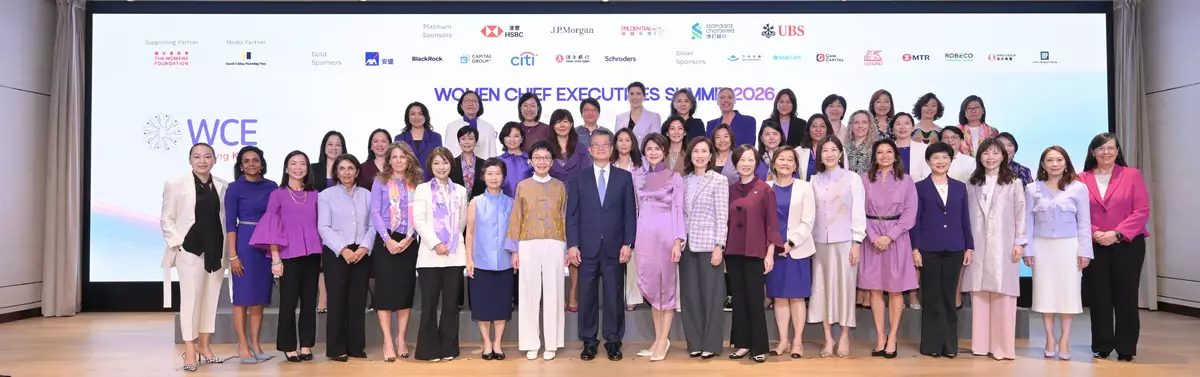
The Financial Secretary, Mr Paul Chan, attended the Women Chief Executives Summit 2026 today (November 2). Photo shows (from front row, ninth left) Mr Chan; the Chairman of UBS Global Wealth Management Asia and Head and Chief Executive of UBS Hong Kong, Ms Amy Lo; the Chief Executive Officer of the Hong Kong and Greater China & North Asia, Standard Chartered, Ms Mary Huen, and other guests at the summit. Source: HKSAR Government Press Releases
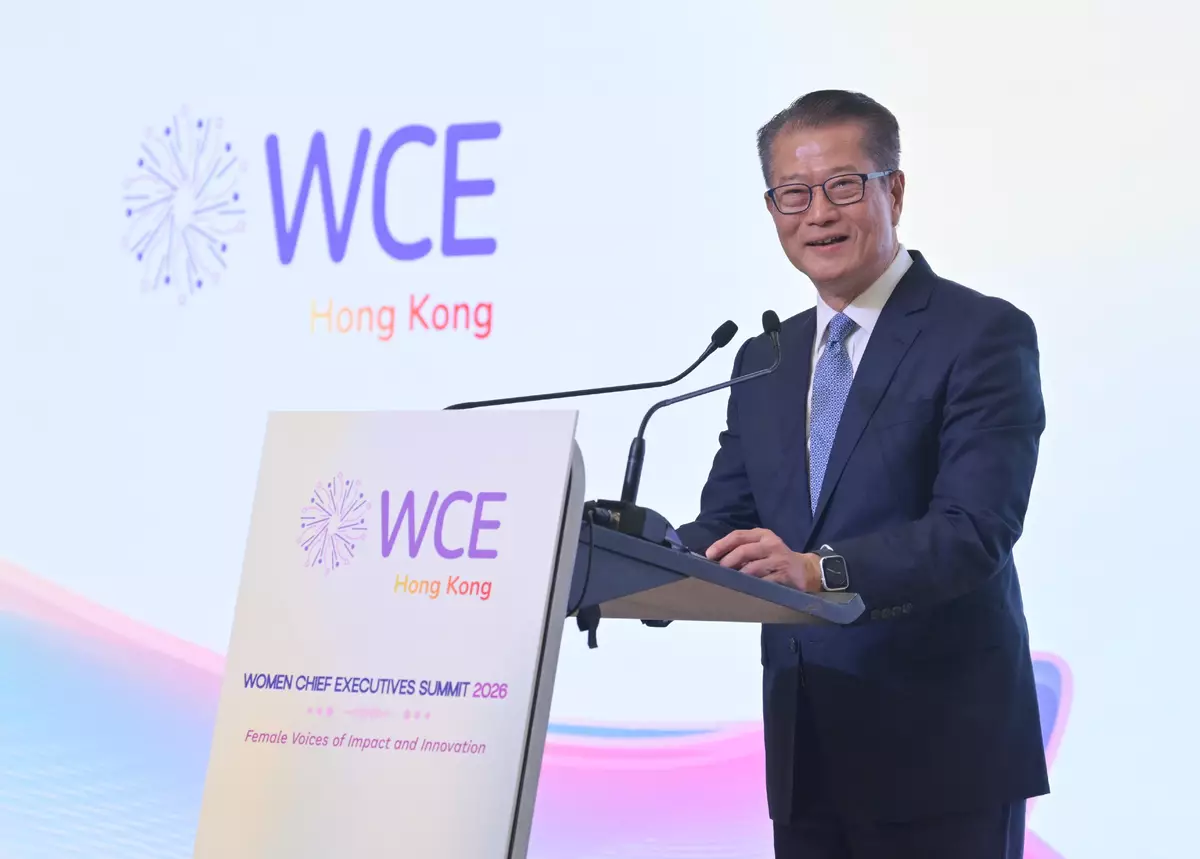
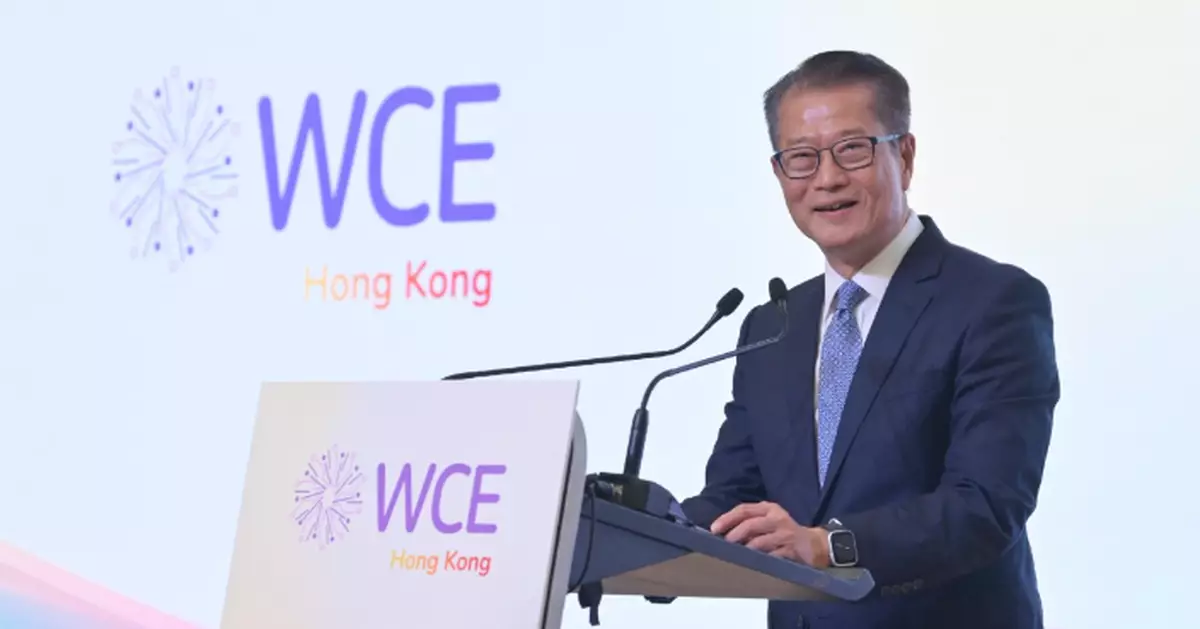
The Financial Secretary, Mr Paul Chan, speaks at the Women Chief Executives Summit 2026 today (November 2). Source: HKSAR Government Press Releases