Russian President Vladimir Putin has never refused to talk with Ukrainian President Volodymyr Zelensky, said Kremlin aide Yury Ushakov on Sunday.
Ushakov said negotiations to resolve the Ukraine crisis should be held in the form of tripartite talks between Russia, the United States and Ukraine. There may also be European representatives at the negotiating table, but in the initial stage of negotiations, it must be in the form of Russia, the United States and Ukraine.
He also revealed that Zelensky is sending signals that Ukraine is willing to talk to Putin through different channels.
On the same day, Zelensky said in an interview that he is willing to hold a face-to-face meeting with Putin in Türkiye and hopes that Turkish President Recep Tayyip Erdogan could use his communication channels with Putin to facilitate this direct negotiation.
Zelensky said the delegations and technical teams could not decide on some issues, and that the two countries' top leaders, who hold decision-making power, could resolve these issues through direct dialogue. He expressed support for holding the meeting in Türkiye and said he valued the communication channel between Erdogan and Putin.
Zelensky stressed that he wants direct talks with Putin himself, because the final decision-making power on relevant matters rests with Putin.
Putin never refused to talk with Zelensky: Russian official
Putin never refused to talk with Zelensky: Russian official
Civic group representatives and residents gathered in Kumamoto City on Sunday to protest moves by Prime Minister Sanae Takaichi's government to expand Japan's military capabilities.
Over the past year, the Takaichi government has pursued a series of military expansion measures, including deploying domestically developed long-range missiles and lifting restrictions on exports of lethal weapons.
The indoor protest took place in a local civic center, with activists and members of the public speaking on stage against the government actions.
The event, co-hosted by local civic groups, brought together representatives from Kumamoto, Oita, Saga and Nagasaki, among other places. The groups introduced local efforts to oppose the government's military buildup efforts and voiced concern over the Takaichi government's push for remilitarization.
"I believe Japan's military expansion is gathering pace, and I hope we can put a stop to it. I hope the public will see carefully with their own eyes what the Takaichi government is actually doing. Buying missiles won't put food on our tables," said Akiko So, a representative of a civic group in Fukuoka City.
"I have personally witnessed how military expansion is steadily advancing across Japan, and how it is being advanced with utter disregard for the lives and interests of local residents," said Tatsuo Sekiguchi, head of a civic group in Nagasaki city.
Participants warned that the strengthening of military deployments across Japan threatens local residents' safety and living environment. They condemned the government for ignoring the voices of opposition.
"I believe the Japanese government keeps invoking the so-called emergency essentially to pave the way for constitutional revision. By doing so, they continuously foster the idea among the public that such an emergency could truly happen at any moment," said a participant in the protest.
"Before deploying the missiles, the government promised to provide detailed and thorough explanations to local residents and seek their understanding. But it has failed to do so, not even showing a little bit of sincerity. Instead, it has persistently pushed forward with military expansion at its will. I am deeply angered by this and believe such an approach is wrong. Japan inflicted immense suffering upon Asian nations in the past -- a truly shameful chapter in its history. Yet, the government has neither seriously reflected upon that period of history nor offered a sincere apology. Now, it seems determined to repeat the same mistakes. I find this infuriating and deeply regrettable," another participant said.
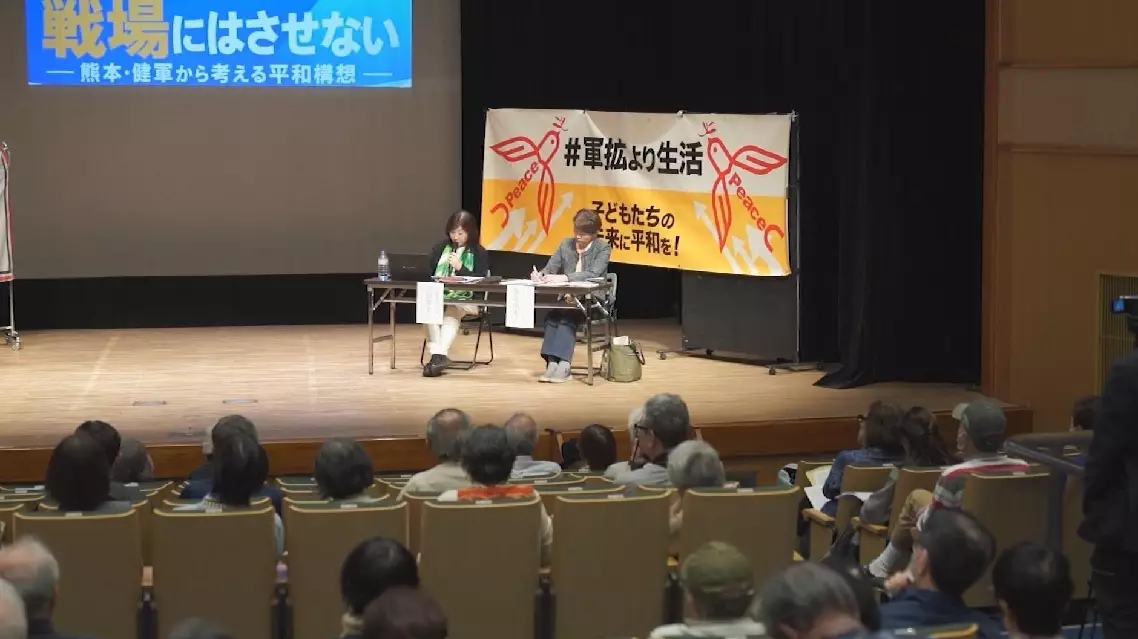
Japanese civic groups protest Takaichi government's push to expand military capabilities