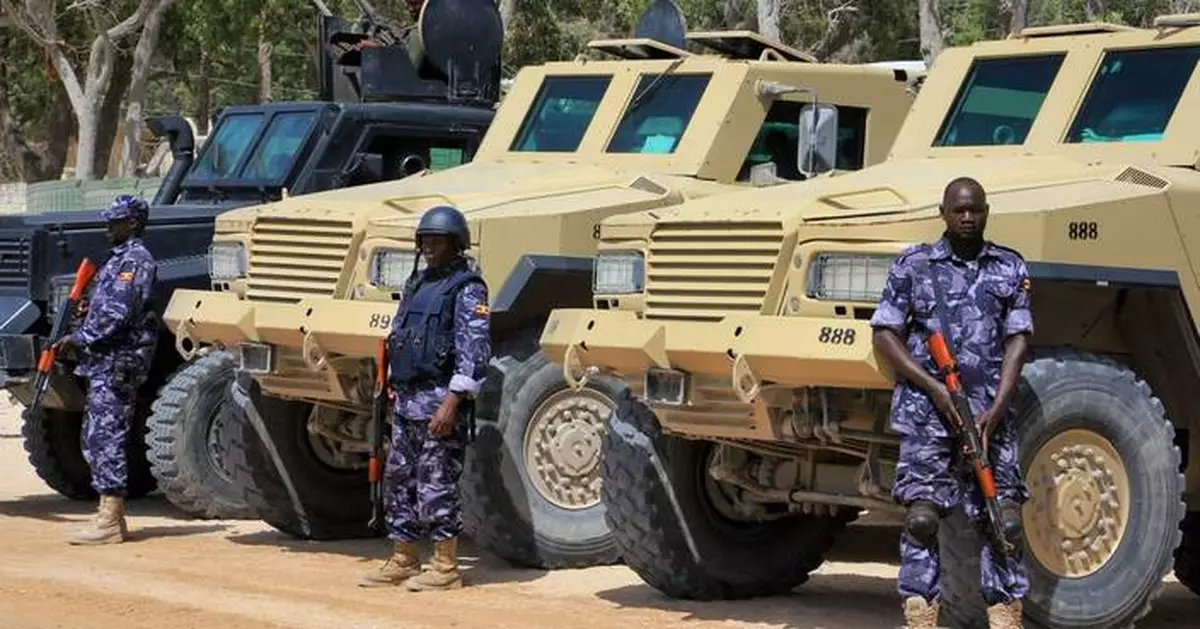
KAMPALA, Uganda (AP) — Uganda is withdrawing troops deployed for years in Somalia under an African Union peacekeeping force that helped repel militants in the Horn of Africa nation, military authorities said on Monday.
Ugandan troops are returning home under the terms of a bilateral agreement with Somali authorities, military spokesman Col. Chris Magezi said in a statement.
“The first cohort of troops under the phased withdrawal operation have already arrived back in Uganda,” the statement said.
All Ugandan troops are expected to depart Somalia by the end of 2027. Magezi told The Associated Press that thousands of Ugandans remain deployed in Somalia.
Ugandan troops were first deployed to Somalia in 2007 under the banner of an African Union mission presently known as the AU Support and Stabilization Mission in Somalia, or AUSSOM.
It was a very dangerous deployment at a time when the extremist rebels of al-Shabab had to be dislodged from markets and other public areas in the Somali capital of Mogadishu. Many Ugandan peacekeepers were killed or wounded over the years, although authorities have not said precisely how many. Other peacekeepers came from countries such as Burundi and Kenya.
The exit from Somalia of Ugandan peacekeepers coincides with the end of the United Nations’ political mission there and as Somali authorities assert a need to take more charge of internal security arrangements.
The United Nations Transitional Assistance Mission in Somalia closed on Saturday after more than three decades of successive missions that helped rebuild a country shattered by civil war. The mission advised Somali leaders and helped resolve political disputes over the years.
Somali authorities see the closure as a milestone in the country’s ability to manage its own affairs. But opposition figures and analysts warn that it comes at a time when the president’s right to remain in office is contested and al-Shabab persists in its campaign.
United Nations aid agencies will remain in Somalia and a separate U.N. office will continue providing supplies, transport and other support to African Union troops and some Somali security units.
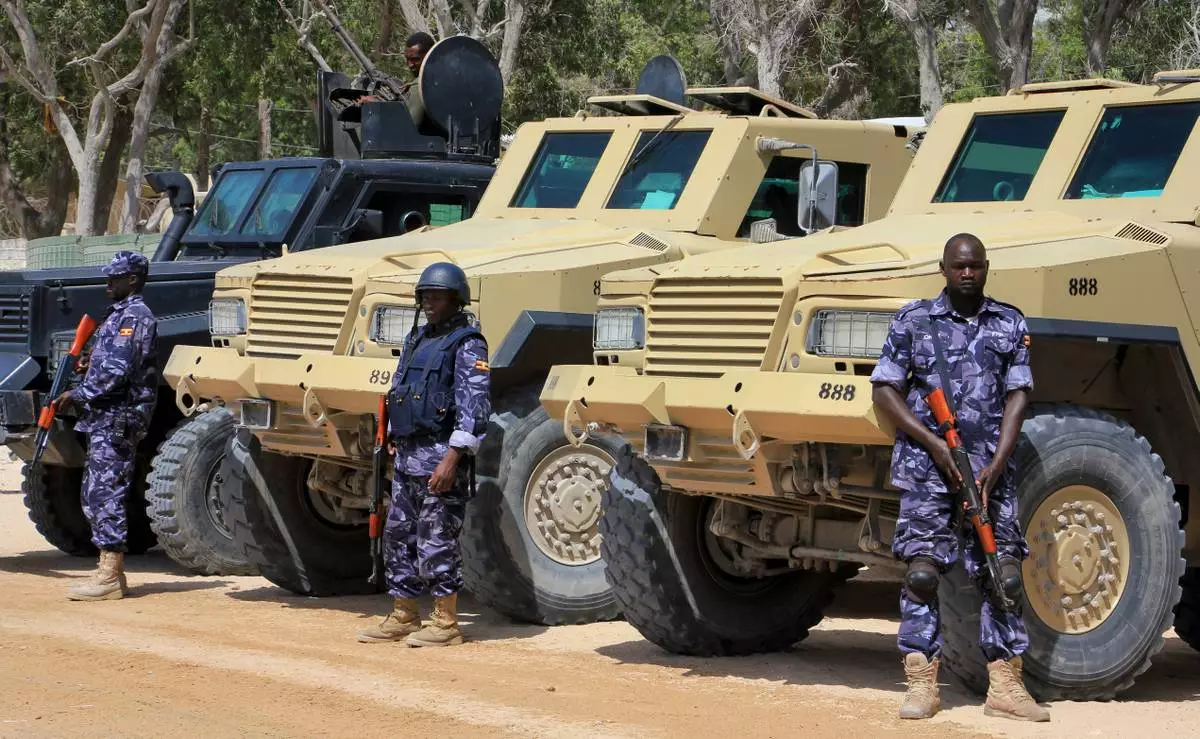
FILE - African Union (AU) soldiers stand with their armored vehicles near a checkpoint in Mogadishu, Somalia, on Feb. 7, 2017. (AP Photo/Farah Abdi Warsameh, File)
TOKYO (AP) — Japan on Monday launched a new national agency focused on disaster management to improve the country's preparedness if there's a megaquake along the Pacific coast or in Tokyo, or an eruption of Mount Fuji.
More than 350 workers at the National Disaster Management Agency will oversee preparedness, emergency response and reconstruction efforts.
The agency was not created in anticipation of any specific calamity, but to address concerns about whether the nation is prepared for a crisis on the scale of the 2011 quake and tsunami in northern Japan, which killed nearly 20,000 people, and the subsequent Fukushima nuclear disaster.
Japan, which lies along the Pacific "Ring of Fire,” is one of the most disaster-prone countries but it has never had an agency dedicated to the task.
“As the command center of disaster response, we will do everything to strengthen our preparedness to protect people's lives and properties ... and aim to become the world's most prepared,” Reconstruction Minister Goshi Hosono said. He will manage the agency headed by Japanese Prime Minister Sanae Takaichi.
“Though we cannot prevent natural disasters, we can reduce damages by being prepared," Takaichi told agency staff at a launch ceremony.
Hosono on Monday issued “emergency requests” urging municipalities and residents to check the quake resistance of their homes, make sure their furniture is safely anchored, evaluate their evacuation procedures and stock up on water and portable toilets for at least three days.
“Please think about it for yourself and take action,” he said.
Hosono, who was the minister in charge of the Fukushima nuclear crisis, said he wants to use his expertise from the 2011 disaster to strengthen the agency.
A reconstruction agency was established to help northern Japan recover from the 2011 disaster, including support for decontamination and decommissioning at the Fukushima nuclear plant. Those efforts required long-term support, but there was no centralized disaster agency.
Less than half of municipal officials in Japan have received disaster management training in the past five years. Only 15% of municipalities have evacuation contingency plans for older residents and people with disabilities who require assistance, Hosono said.
Japan has relied on temporary disaster response units assembled from different ministries and departments, without a permanent cross-department command center.
Experts have warned of the possibility of major quakes in the coming decades and, although their specific timing and locations cannot be predicted, officials want people to be prepared.
The biggest worry is a megaquake linked to the Nankai Trough, an undersea trench in the Pacific off southeastern Japan, which could cause an estimated 298,000 deaths, force 6.5 million to evacuate and destroy 2.35 million homes, according to government assessments.
“If this actually hits, our future will be at stake,” Hosono said.
The government also estimates nearly 200,000 deaths could result from a megaquake from two troughs off Japan’s northern coasts. A separate major quake striking metropolitan Tokyo could cause an estimated 18,000 deaths, 4.1 million evacuees and the loss of 400,000 homes. A Mount Fuji eruption could affect 790,000 people, disrupt transportation, power lines and key infrastructure, according to official estimates.
Japan has long been criticized for its poorly equipped evacuation centers, where people are typically crowded into gymnasiums, community centers and classrooms that lack adequate privacy, bedding, clean toilets or hot food — harsh environments that experts have linked to health problems and deaths.
The agency aims to change that by bringing in clean portable toilets, kitchens that can serve hot food, facilities for hot baths and cardboard beds.
The magnitude 9 earthquake and massive tsunami that hit northern Japan in March 2011 killed nearly 19,800 people, including 3,810 deaths linked to subsequent harsh living conditions.
In July, a magnitude 7.1 earthquake that struck the southwestern prefecture of Kumamoto killed 38 people and destroyed or damaged more than 69,000 homes, leaving wide areas without water and power for weeks.
Under punishing heat, evacuees sheltered in gymnasiums and community centers that often lacked air conditioning. Many people shunned the shelters and stayed in their vehicles outside their homes or in parking lots.
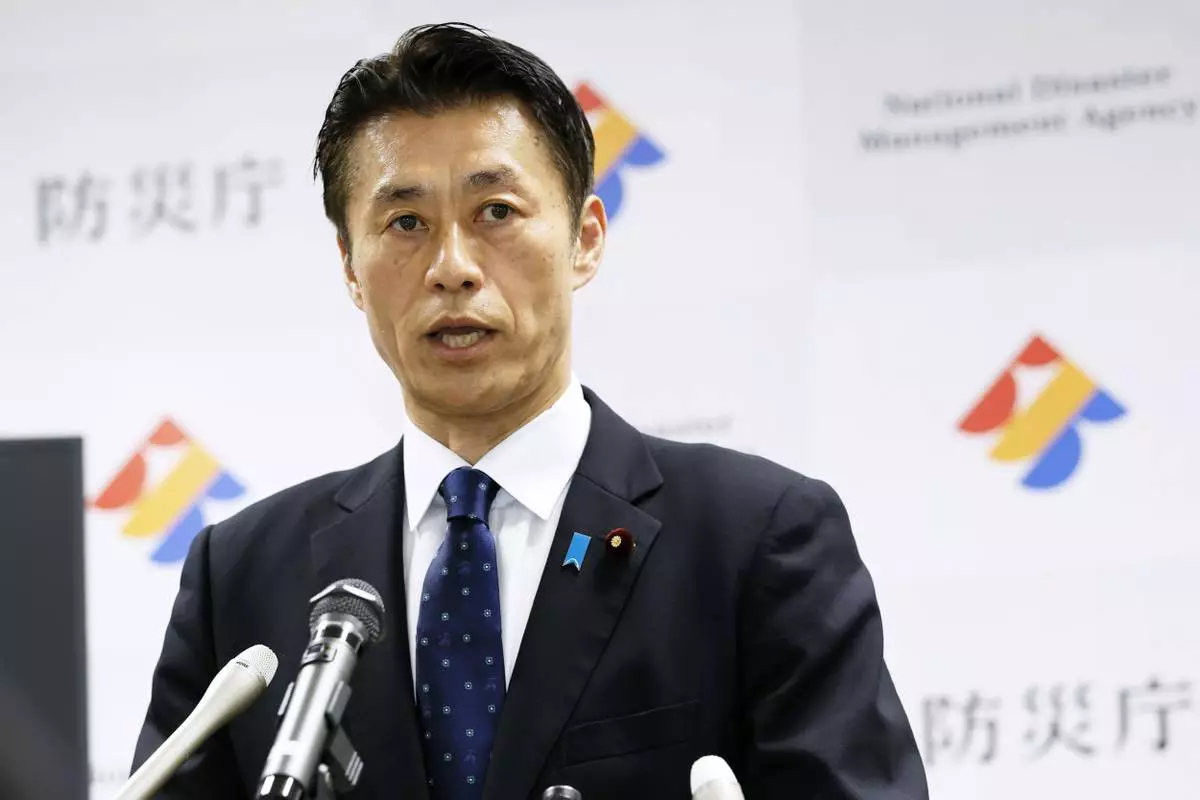
Japan's Reconstruction Minister Goshi Hosono speaks at a news conrefence at the National Disaster Management Agency in Tokyo Monday, Nov. 2, 2026. (Kenzaburo Fukuhara/Kyodo News via AP)
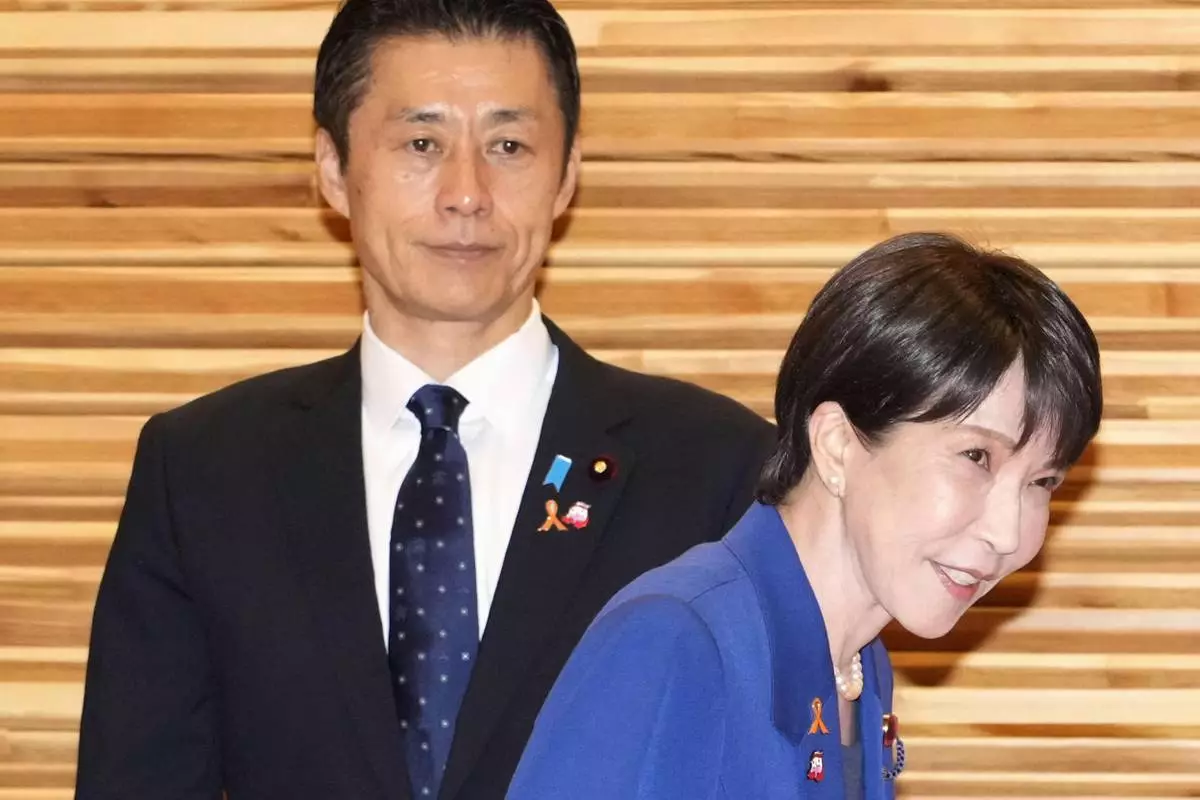
Japan's Prime Minister Sanae Takaichi, right, and Reconstruction Minister Goshi Hosono attend a cabinet meeting at the prime minister's office in Tokyo Monday, Nov. 2, 2026. (Kenzaburo Fukuhara/Kyodo News via AP)