Skip to Content Facebook Feature Image

Is El Niño making storms and flash floods in the Southwest worse?

News

Is El Niño making storms and flash floods in the Southwest worse?
News

News

Is El Niño making storms and flash floods in the Southwest worse?

2026-11-03 05:21 Last Updated At:05:30

NEW YORK (AP) — A chaotic climate phenomenon is intensifying heavy rains and floods in the Southwest, experts say.

A natural warming cycle called El Niño is sizzling Pacific Ocean waters, leaking moisture into the air that can fuel passing storms. Such El Niño events can happen irregularly every couple of years, but scientists say the latest iteration is particularly extreme — and it's just getting started, with impacts expected for several more months.

More Images
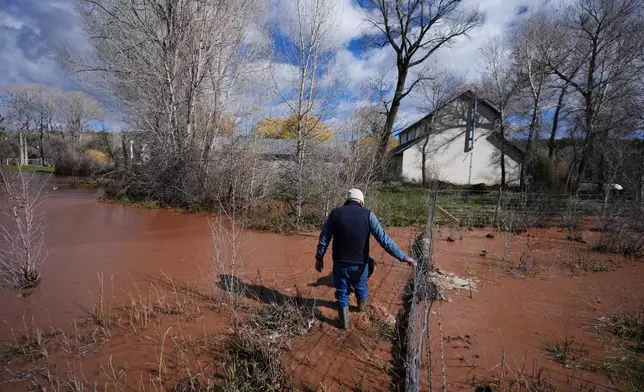
Allen Lynn surveys flooding on his property after a series of storms on Monday, Nov. 2, 2026, in Durango, Colo. (AP Photo/Gregory Bull)
Allen Lynn surveys flooding on his property after a series of storms on Monday, Nov. 2, 2026, in Durango, Colo. (AP Photo/Gregory Bull)

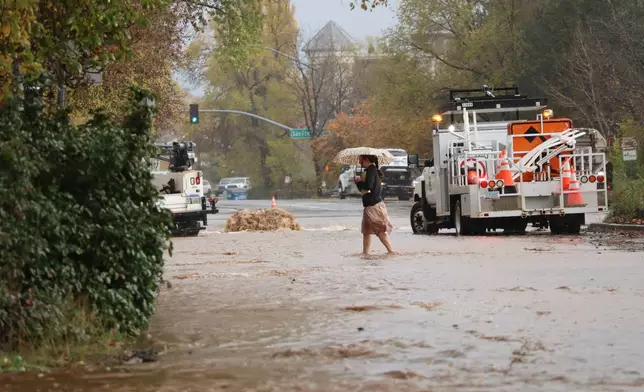
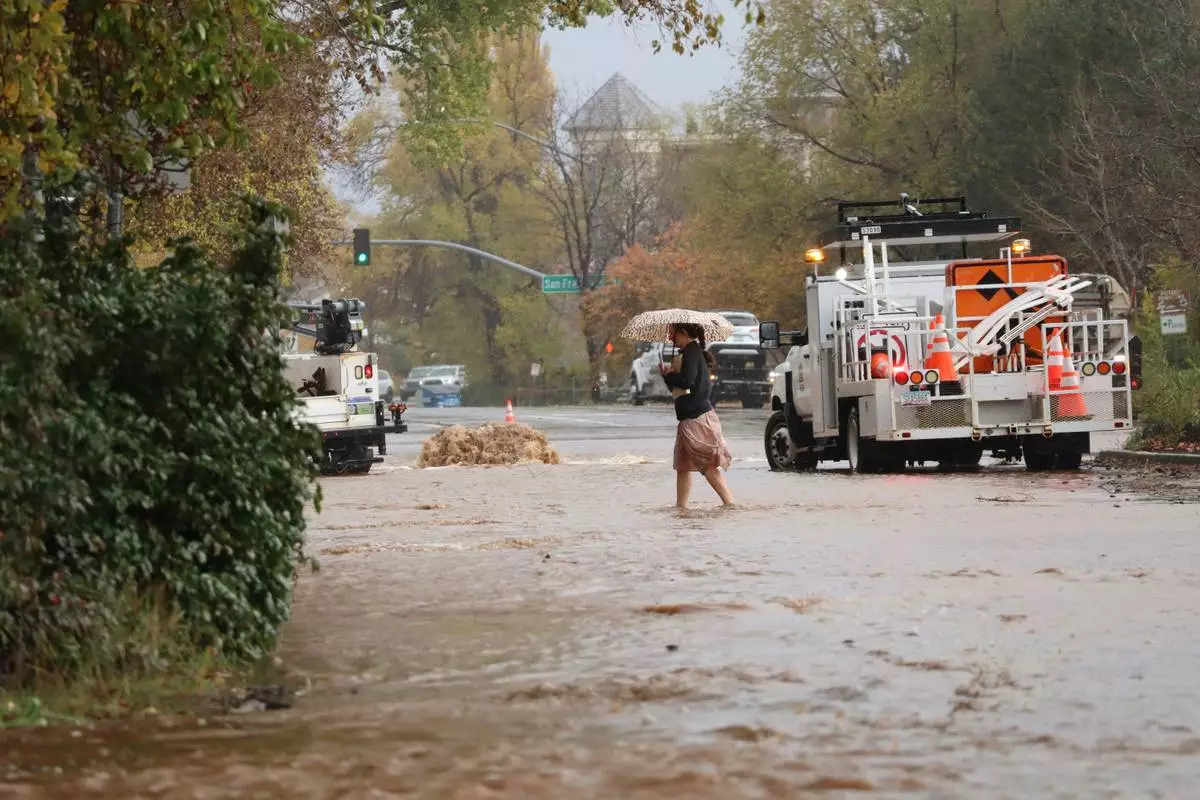
A pedestrian crosses a flooded road in Flagstaff, Ariz., Sunday, Nov. 1, 2026. (AP Photo/Felicia Fonseca)
A pedestrian crosses a flooded road in Flagstaff, Ariz., Sunday, Nov. 1, 2026. (AP Photo/Felicia Fonseca)

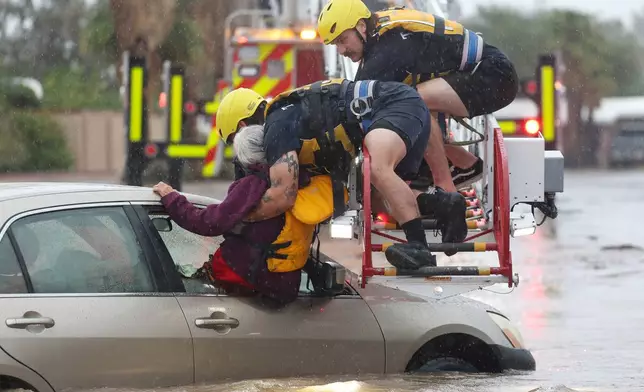
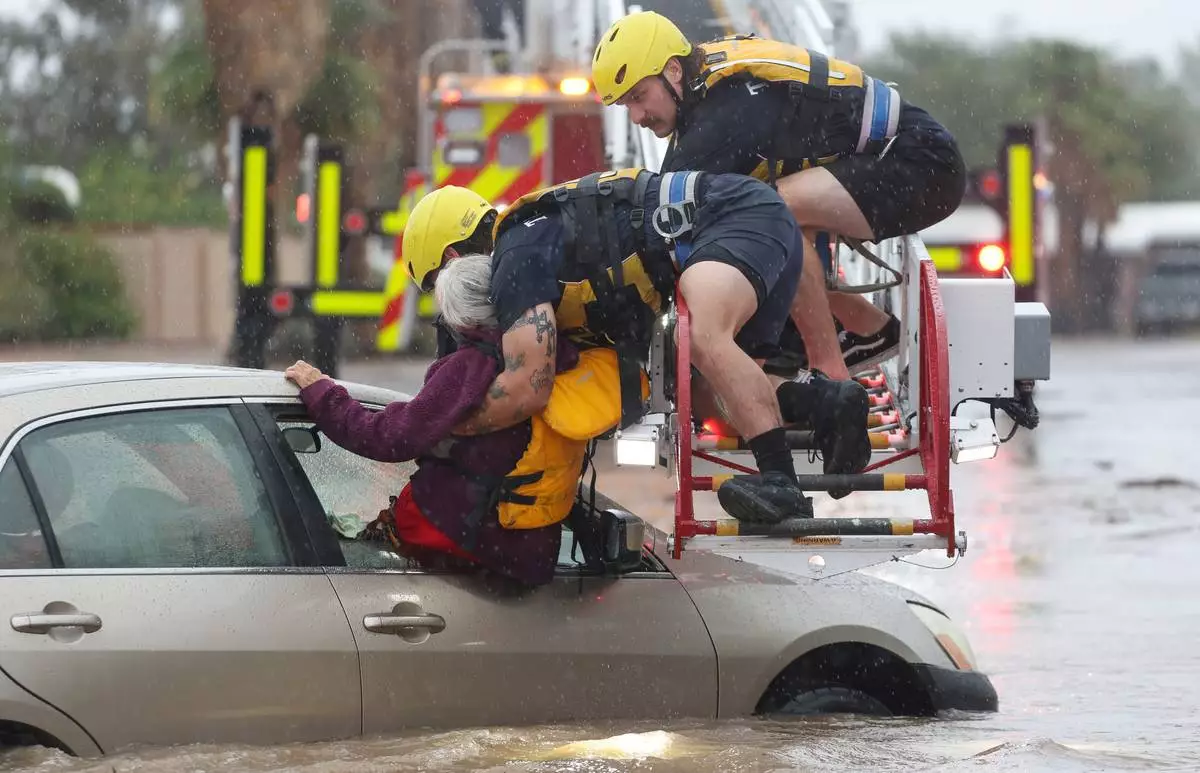
Members of the Tucson Fire Department's Technical Rescue Team pull a woman from her car after it became stuck in a flooded wash in Tucson, Ariz., Sunday, Nov. 1, 2026. (Mason Kumet/Arizona Luminaria via AP)
Members of the Tucson Fire Department's Technical Rescue Team pull a woman from her car after it became stuck in a flooded wash in Tucson, Ariz., Sunday, Nov. 1, 2026. (Mason Kumet/Arizona Luminaria via AP)

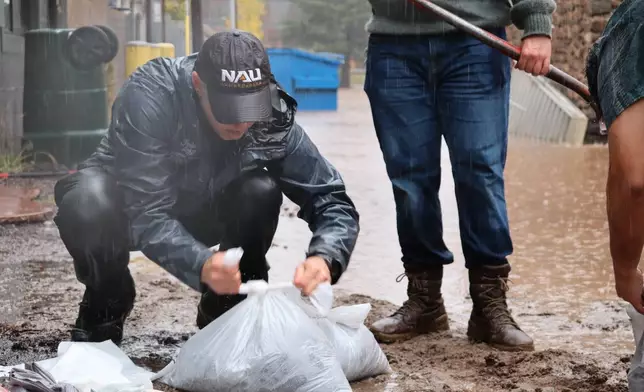
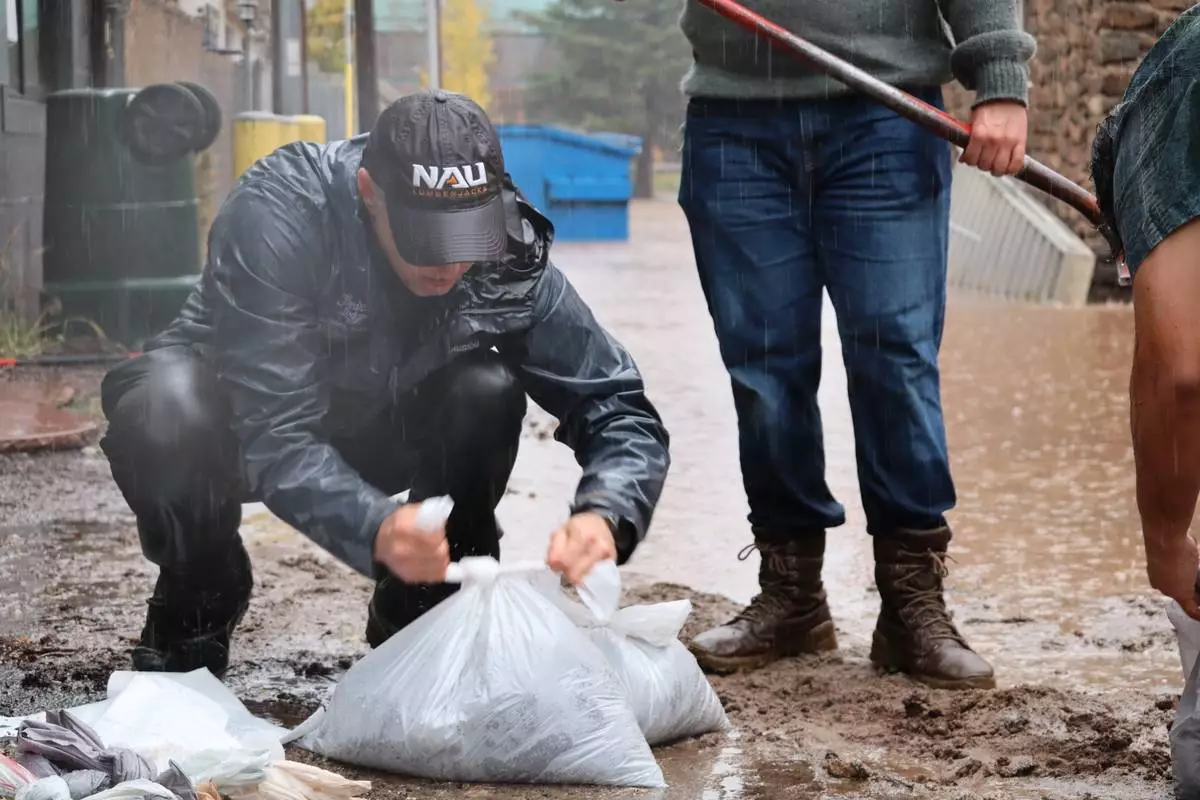
Fr. Matt Lowry ties a bag of sand to help with flooding Sunday, Nov. 1, 2026, in Flagstaff, Ariz. (AP Photo/Felicia Fonseca)
Fr. Matt Lowry ties a bag of sand to help with flooding Sunday, Nov. 1, 2026, in Flagstaff, Ariz. (AP Photo/Felicia Fonseca)

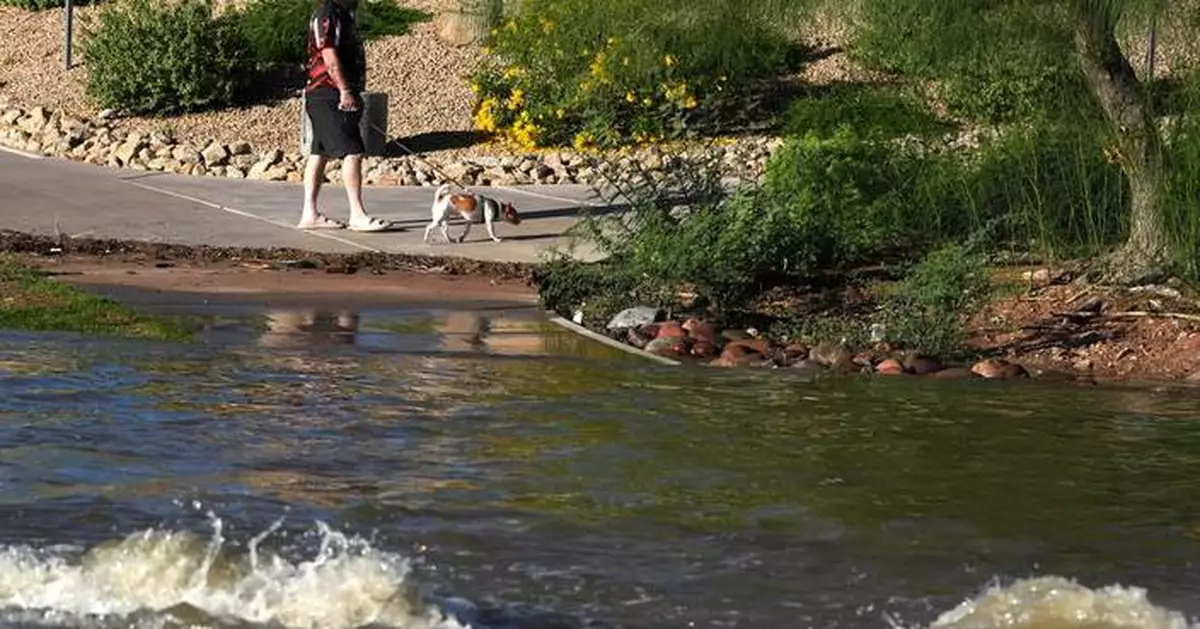
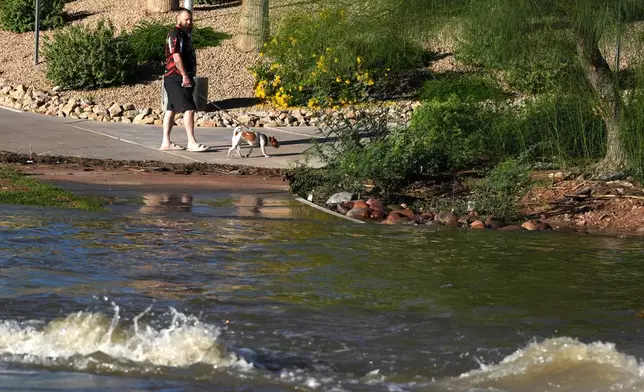
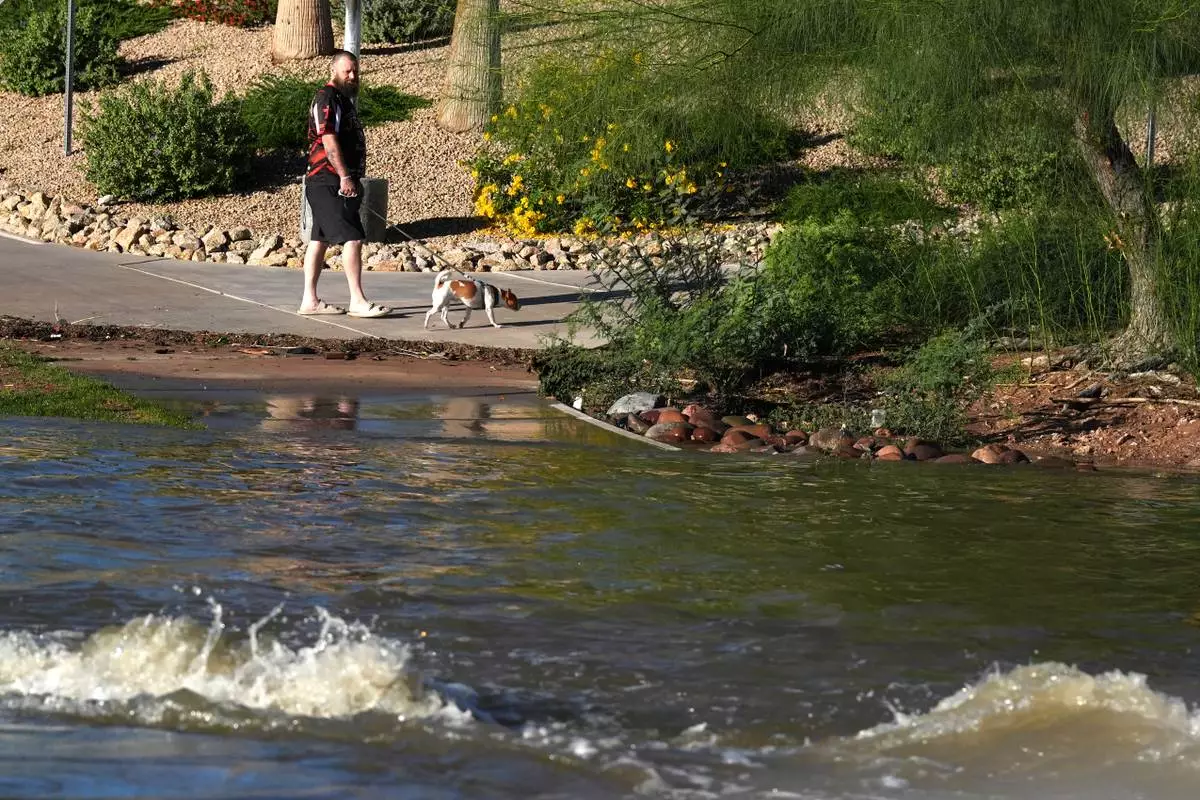
A dog walking pedestrian is unable to use one of the walking paths after heavy rains flood the Continental Golf Club in Scottsdale, Ariz., Monday, Nov. 2, 2026. (AP Photo/Ross D. Franklin)

A dog walking pedestrian is unable to use one of the walking paths after heavy rains flood the Continental Golf Club in Scottsdale, Ariz., Monday, Nov. 2, 2026. (AP Photo/Ross D. Franklin)

“We’ve had super El Niños in the past, but this is a super duper El Niño,” said meteorologist Jeff Masters of Yale Climate Connections.

The phenomenon wasn't the only cause of the severe storms and it's difficult to attribute any single event to it. Still, scientists say this supercharged El Niño is making heavy rains more likely and intense across the Southern U.S. The effects of those storms can be felt more strongly in desert regions, where the land doesn't absorb water as well.

Flash floods on Sunday prompted evacuations across northern New Mexico and central Arizona, and a Colorado ski town braced for its main river to rise to catastrophic levels. And just last week, another wet storm subjected southwestern states to days of flooding.

Over 20 trillion gallons of water have fallen on the Four Corners states and Nevada in the past two weeks, according to calculations by former National Oceanic and Atmospheric Administration chief scientist Ryan Maue.

Experts say this year's extreme El Niño is creating more ideal conditions for storms. It's adding more moisture to the air, which is perfect fodder for downpours to draw upon. And it's shifting wind patterns across the globe, redirecting strong air currents toward the Southwest that can stir up that moisture.

“The likelihood of big precipitation in the Southwest interior does go up this time of year, but we’re seeing it to a degree we actually haven’t seen before,” said climate scientist Daniel Swain with the University of California Agriculture and Natural Resources.

This El Niño is sloshing warmer waters into new places, but the world's oceans are already hotter than they used to be because of human-caused climate change. That means even more sweltering extremes are possible.

“The fact that the ocean temperatures are already warmer than they were, say, 100 years ago, makes these El Niño situations even more intense,” said meteorologist Randy Cerveny with Arizona State University.

The phenomenon is changing weather patterns around the world: regions including Peru and Ecuador are also seeing record-breaking flooding, Swain said. Parts of southeast Asia, like Indonesia, are drier than usual.

The El Niño event is expected to peak in December, when it can more strongly harness certain air currents called jet streams to produce more extreme storms across the western U.S. After that, experts say its onslaught could continue for months.

“The dice are certainly loaded for more heavy storms this winter and spring,” said Park Williams with UC San Diego's Scripps Institution of Oceanography in an email.

The impacts of an El Niño aren't wholly bad, Cerveny said: it can bring rainfall and moisture to drier areas like the Southwest and fill up reservoirs. At the same time, storms and floods can pose a danger to people and property.

To stay safe, experts recommended watching the forecast, planning ahead and heeding evacuation warnings from local authorities.

“We’re not at the peak of the heating in the Pacific Ocean. So yes, we will see more of these particular events,” Cerveny said.

—-

The AP’s climate and environmental coverage receives financial support from multiple private foundations. The AP is solely responsible for all content. Find AP’s standards for working with philanthropies, a list of supporters and funded coverage areas at AP.org.
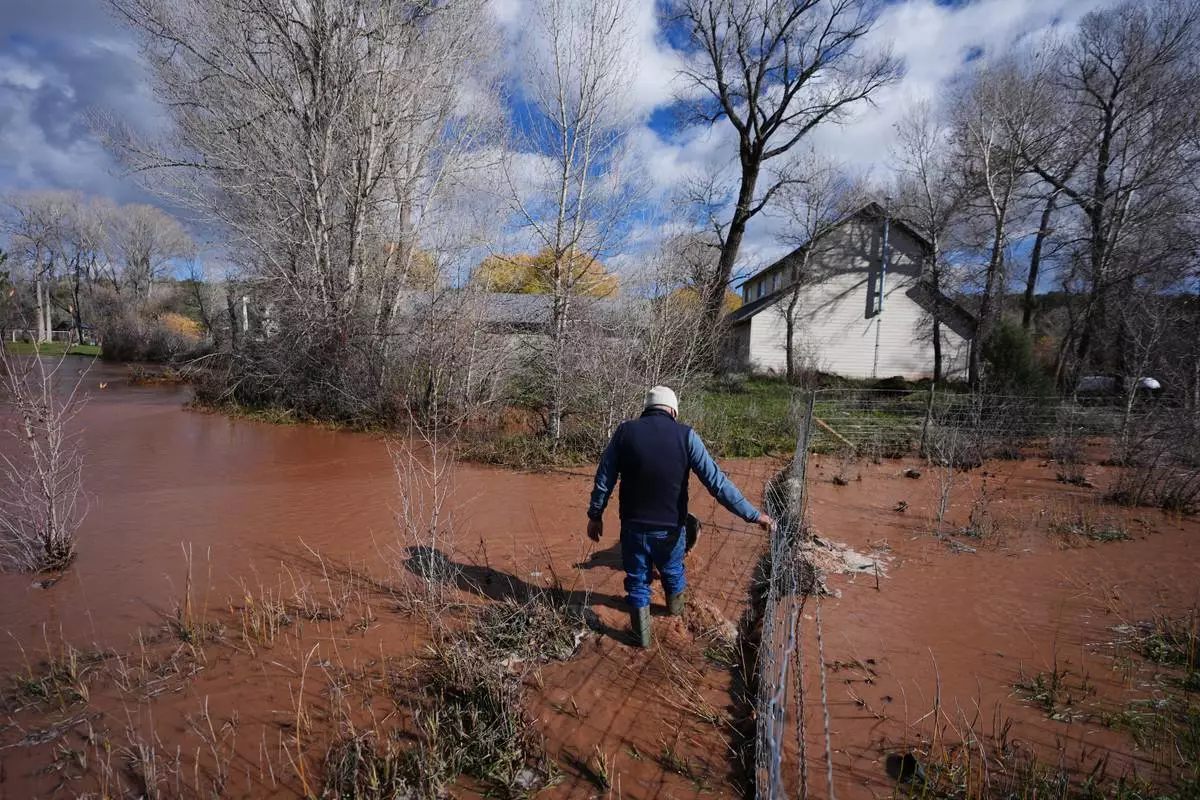
Allen Lynn surveys flooding on his property after a series of storms on Monday, Nov. 2, 2026, in Durango, Colo. (AP Photo/Gregory Bull)
Allen Lynn surveys flooding on his property after a series of storms on Monday, Nov. 2, 2026, in Durango, Colo. (AP Photo/Gregory Bull)

A pedestrian crosses a flooded road in Flagstaff, Ariz., Sunday, Nov. 1, 2026. (AP Photo/Felicia Fonseca)
A pedestrian crosses a flooded road in Flagstaff, Ariz., Sunday, Nov. 1, 2026. (AP Photo/Felicia Fonseca)

Members of the Tucson Fire Department's Technical Rescue Team pull a woman from her car after it became stuck in a flooded wash in Tucson, Ariz., Sunday, Nov. 1, 2026. (Mason Kumet/Arizona Luminaria via AP)
Members of the Tucson Fire Department's Technical Rescue Team pull a woman from her car after it became stuck in a flooded wash in Tucson, Ariz., Sunday, Nov. 1, 2026. (Mason Kumet/Arizona Luminaria via AP)

Fr. Matt Lowry ties a bag of sand to help with flooding Sunday, Nov. 1, 2026, in Flagstaff, Ariz. (AP Photo/Felicia Fonseca)
Fr. Matt Lowry ties a bag of sand to help with flooding Sunday, Nov. 1, 2026, in Flagstaff, Ariz. (AP Photo/Felicia Fonseca)

A dog walking pedestrian is unable to use one of the walking paths after heavy rains flood the Continental Golf Club in Scottsdale, Ariz., Monday, Nov. 2, 2026. (AP Photo/Ross D. Franklin)

A dog walking pedestrian is unable to use one of the walking paths after heavy rains flood the Continental Golf Club in Scottsdale, Ariz., Monday, Nov. 2, 2026. (AP Photo/Ross D. Franklin)
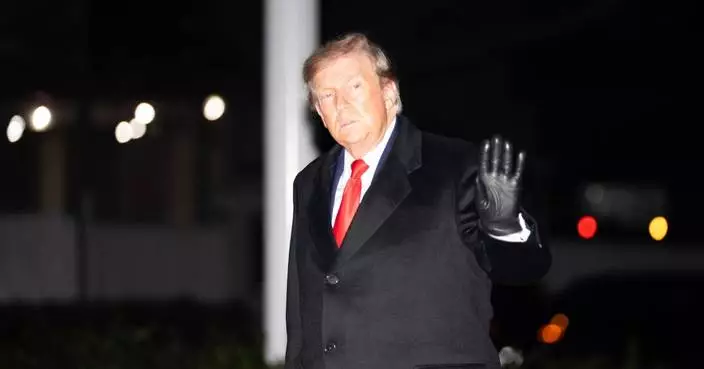
WASHINGTON (AP) — President Donald Trump's administration appealed to the Supreme Court on Monday in its push to sideline thousands of disputed California mail ballots the day before the pivotal midterm elections.

The emergency appeal came after a divided appeals court rejected the request to set aside ballots from some 20,000 people the federal government suspects may not be citizens. It also came just hours before another federal judge ruled against the administration's efforts to make last-minute changes in California's election.

The federal government says those ballots should not be counted until the voters’ status can be verified. California officials say the list is highly unreliable and likely includes many people who are U.S. citizens.

The Republican Trump administration has prioritized identifying noncitizen voters this year, despite them being rare.

A district court judge had previously denied the Justice Department's request and warned that the demand could disenfranchise citizens in Tuesday's midterm elections to determine control of Congress.

Also on Monday in Washington, Chief Judge James Boasberg ordered the Trump administration to stop making its demands, finding they violated the U.S. Constitution.

“The Executive Branch has likely violated the Constitution’s Elections Clause, which commits authority over election rules to the states and Congress alone,” wrote Boasberg.

At the high court, the Justice Department asked for a “limited injunction” that would direct California to set aside the ballots while the case plays out.

“Once California commingles the challenged ballots with lawful ones, there is no way to get the challenged ballots back,” Solicitor General D. John Sauer wrote.

Voting has been underway in California, a largely Democratic state, since early October. All of the state’s roughly 23 million registered voters are mailed a ballot. Hundreds of thousands of ballots have already been processed. California election officials have said that finding and setting aside the challenged ballots now would be logistically impossible.

California Attorney General Rob Bonta, a Democrat, said the appeal “reeks of desperation and is another attempt to undermine our elections and trample on the rule of law.”

Lower courts have sided with the state, with a district judge warning that segregating ballots would “wreak havoc” on the midterm elections and erode trust in the democratic process.

“If the Executive can discount votes and threaten an ongoing election due to unproven allegations, then our democracy is in danger,” wrote U.S. District Judge David O. Carter, who was nominated by President Bill Clinton, a Democrat.

A 2-1 appeals court panel upheld his order, with one judge appointed by Trump and another appointed by President Joe Biden, a Democrat, voting in favor. The third judge on the panel, also appointed by Trump, argued in a dissent that California’s unwillingness to separate the ballots encourages the “violation of federal law.”

The Justice Department has sought to move the case along quickly, unsuccessfully asking an appeals court to intervene early.

Trump's administration has racked up a series of wins in emergency appeals before the Supreme Court in his second term, but the justices previously rejected the president’s push to restrict mail ballots ahead of the midterms.

__

Associated Press writer Sophie Austin in Sacramento contributed to this report.

Follow the AP's coverage of the U.S. Supreme Court at https://apnews.com/hub/us-supreme-court.

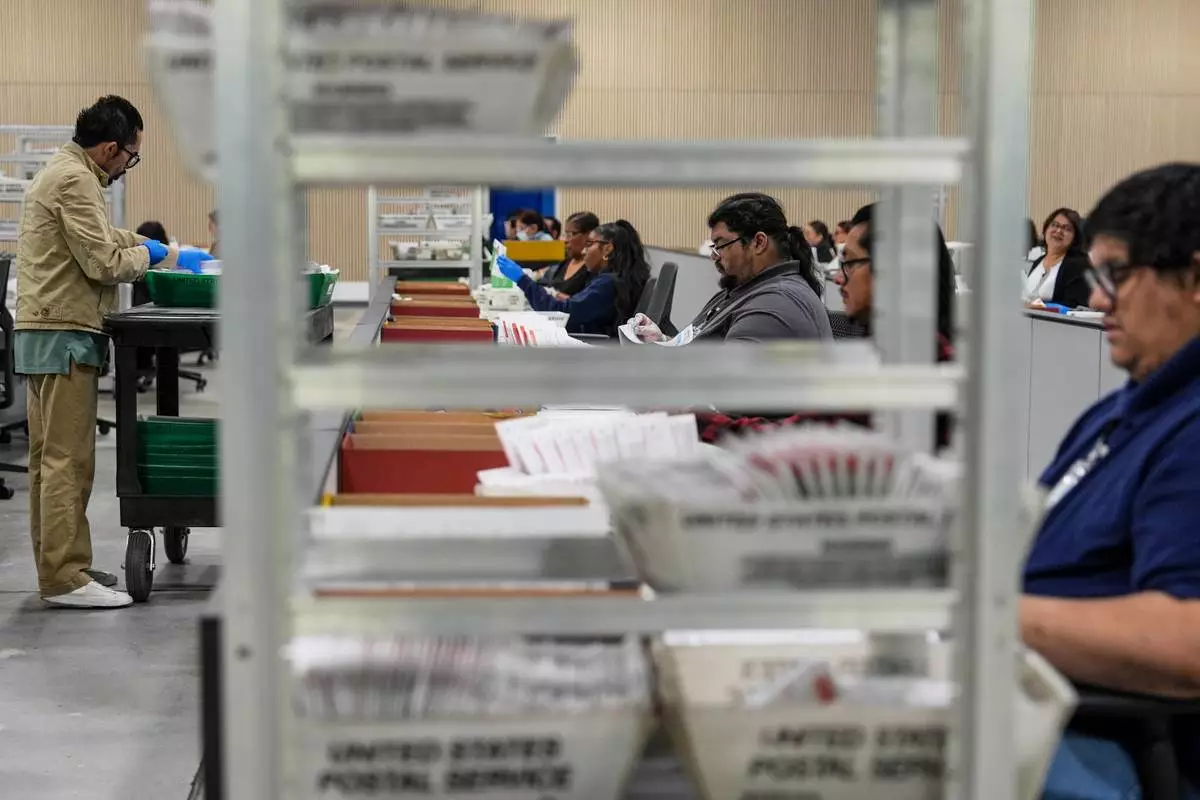
FILE - Ballots are inspected the day after California's primary election at the Los Angeles County Ballot Processing Center, June 3, 2026, in City of Industry, Calif. (AP Photo/Jae C. Hong, File)

FILE - Ballots are inspected the day after California's primary election at the Los Angeles County Ballot Processing Center, June 3, 2026, in City of Industry, Calif. (AP Photo/Jae C. Hong, File)

Recommended Articles