SAN JUAN, Puerto Rico (AP) — One of Haiti’s most powerful gang leaders confirmed to The Associated Press on Monday that he wrote the U.N. Secretary General and requested that the organization send a delegation to Haiti for dialogue and mediation amid fears that Salvadoran troops deployed after the disappearance of four aviation technicians from that country could escalate violence.
Wilson Joseph, best known as Lanmò Sanjou and leader of the 400 Mawozo gang, told the AP in his first interview with a major international media company that the technicians are dead and that the Oct. 18 attack occurred while they were in the territory of Chen Mechan, another gang. He did not provide evidence; Haiti's government has said the four Salvadorans were abducted, and the Salvadoran government believes they are alive.
Click to Gallery
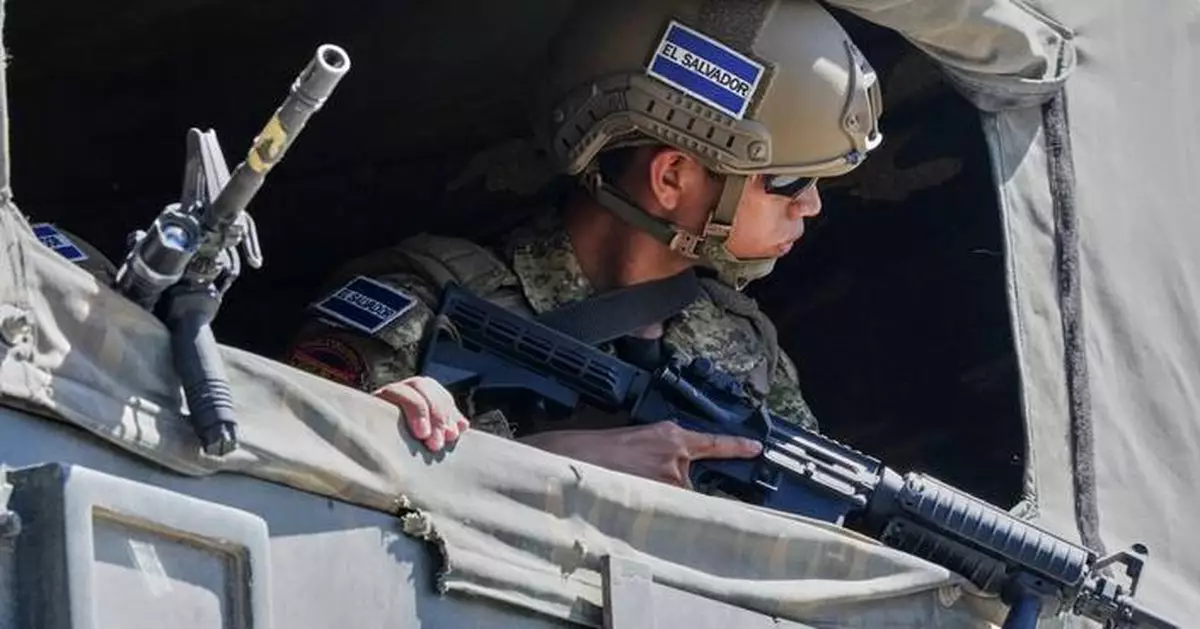
A soldier from El Salvador looks out while riding in a convoy of armored vehicles transporting troops and equipment from the airport to the base in the Tabarre neighborhood of Port-au-Prince, Haiti, Saturday, Oct. 31, 2026. (AP Photo/Odelyn Joseph)
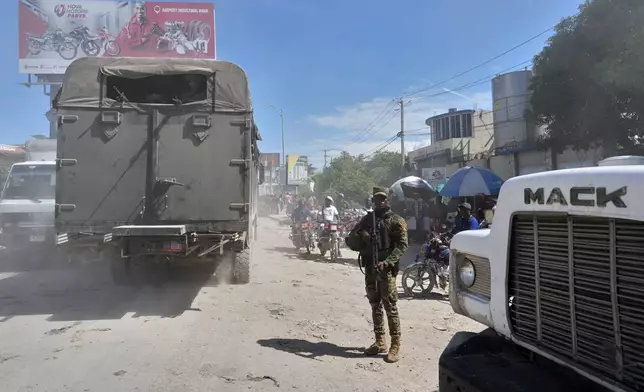
A Haitian soldier escorts a convoy of armored vehicles carrying soldiers from El Salvador in the Tabarre neighborhood of Port-au-Prince, Haiti, Friday, Oct. 30, 2026. (AP Photo/Odelyn Joseph)
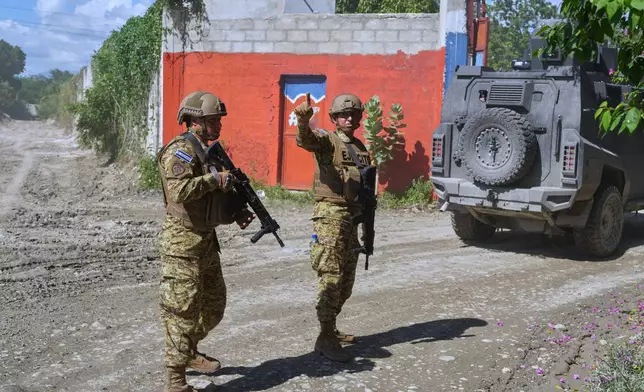
Soldiers from El Salvador stand guard as a convoy of armored vehicles carrying military personnel arrives in the Tabarre neighborhood of Port-au-Prince, Haiti, Friday, Oct. 30, 2026. (AP Photo/Odelyn Joseph)
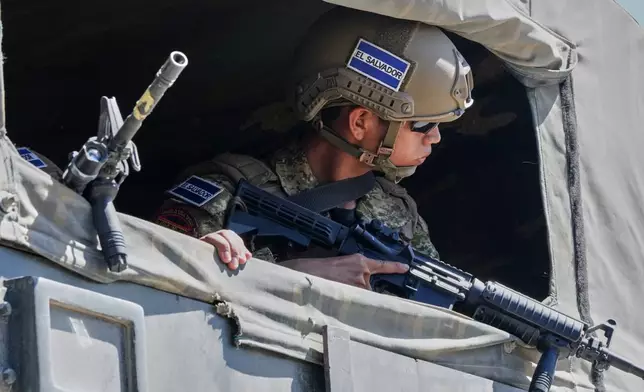
A soldiers from El Salvador looks out from a convoy of armored vehicles carrying military personnel in the Tabarre neighborhood of Port-au-Prince, Haiti, Friday, Oct. 30, 2026. (AP Photo/Odelyn Joseph)
Joseph said he is upset that drone attacks are killing civilians in the area, with clashes intensifying ever since a U.N.-backed gang-suppression force working with Haitian police and soldiers, as well as Vectus Global — the private security firm founded by former U.S. Navy SEAL and Blackwater founder Erik Prince — began fighting armed men in Plaine du Cul-de-Sac near Port-au-Prince following the attack on the Salvadorans.
Joseph said that the same Haitian politicians who armed gangs in Haiti are bringing foreign troops “to destroy us.”
He said he had a message for El Salvador’s president, Nayib Bukele, who recently deployed 2,000 troops to Haiti: “The Haitian politicians are the father of the gangs and the rebels. ... The politicians don’t want this to stop.”
In his letter, Joseph wrote: “Given Mr. Nayib Bukele’s vengeful remarks, expectations, and threats, I fear this situation will lead to an escalation of violence and a logic of reprisals, of which the Haitian people would be the first victims.”
Joseph alleged in his interview with the AP that politicians are warning him about any security operations headed his way.
He added that he doesn’t have a problem with forces arresting gang members, but he accused forces of dropping drones and killing children and the elderly.
Joseph said he’s ready to have a dialogue and lay down guns, although when asked what he wanted in exchange, he declined to say, adding he would talk about that when he sits down with a peace commission. He also rejected accusations that 400 Mawozo has killed innocent Haitians.
In a statement late Monday, U.N. spokesperson Stéphane Dujarric said they had received a letter with Joseph's signature: “However, receipt of such a letter does not constitute endorsement of its contents, recognition of its author, or a position by the United Nations.”
He noted that the vast majority of Salvadoran military personnel are not deployed under the U.N.-backed gang suppression force, “and therefore fall outside” the U.N. mandate and reporting.
“We want to underscore that the United Nations remains concerned that communities continue to bear the brunt of the situation in Haiti,” he said, adding that any type of security operation “must be carried out in full accordance with applicable international law.”
Joseph asserted in his letter that recent events in Plaine du Cul-de-Sac, especially where another gang, Chen Mechan, operates, “are causing serious concern.”
Joseph wrote that he was “officially available” to receive the delegation that he “respectfully” requested and would “participate in any meeting aimed at finding a peaceful solution, a dialogue agreement and a sustainable stabilization process.”
“I remain convinced that dialogue must prevail over force,” he said. “The protection of civilians, particularly children and vulnerable families, must be at the heart of any international initiative,” Joseph wrote.
More than 5,700 people have been killed or injured across Haiti from January to mid-September, according to the U.N.
In the two-page letter sent Nov. 1, Joseph said he has “officially raised the white flag” since Aug. 20 and seeks a “peaceful solution to the national crisis, in particular through the opening of a dialogue between the international forces present in Haiti and the 400 Mawozo group.”
The group, which roughly translates to “400 Simpletons,” operates largely in Croix-des-Bouquets, a community near Port-au-Prince. A spokesperson for the gang who declined to be identified accused the government of abandoning that area and asserted that’s why Joseph took charge of it. The gang is known for carrying out kidnappings, including those in October 2021 of 17 missionaries, 16 of them from the U.S. and one from Canada. There were five children in that group, and all were eventually released.
The spokesperson denied they were kidnappings but rather a “justice” measure given sexual abuse charges against a former missionary. The spokesperson also said that 400 Mawozo is not a terrorist organization, and that young people lacking education who are allegedly being used by politicians are being killed.
The U.S. government has issued a $1 million reward for Joseph, who was indicted in the U.S. in 2022 on charges of hostage taking and conspiracy to commit hostage taking.

A soldier from El Salvador looks out while riding in a convoy of armored vehicles transporting troops and equipment from the airport to the base in the Tabarre neighborhood of Port-au-Prince, Haiti, Saturday, Oct. 31, 2026. (AP Photo/Odelyn Joseph)
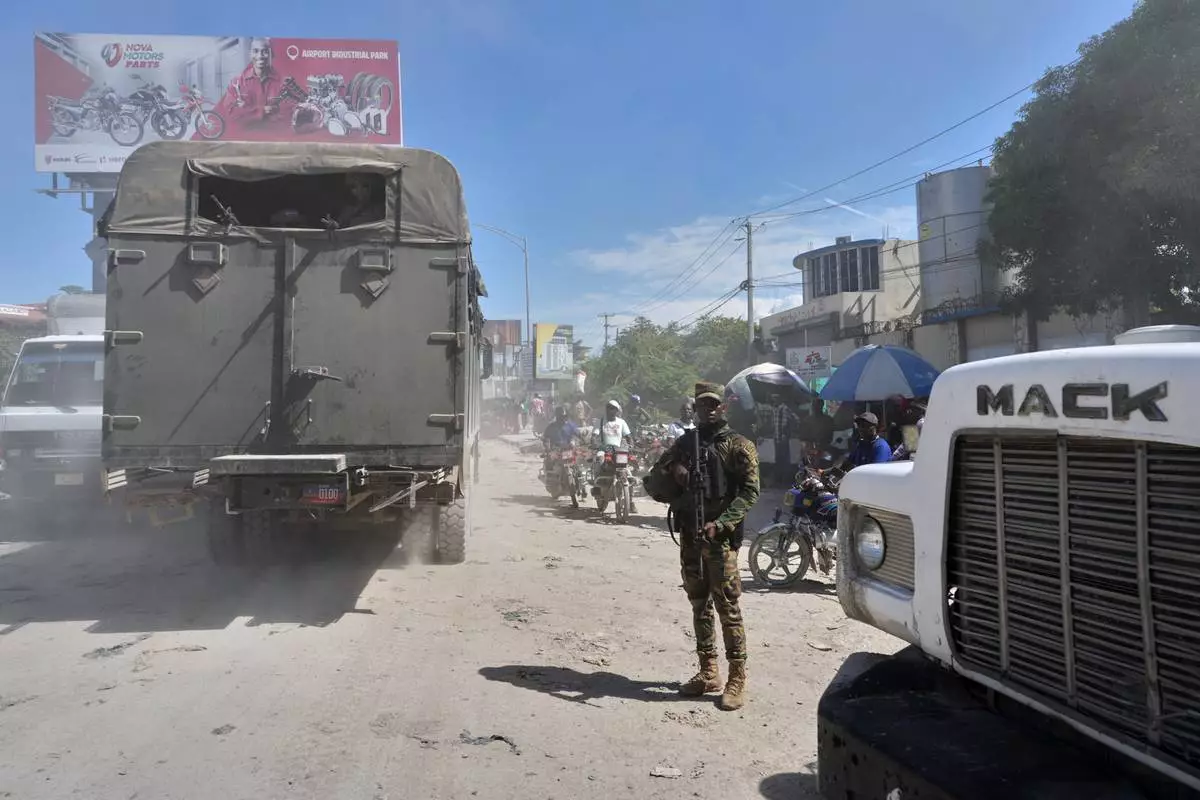
A Haitian soldier escorts a convoy of armored vehicles carrying soldiers from El Salvador in the Tabarre neighborhood of Port-au-Prince, Haiti, Friday, Oct. 30, 2026. (AP Photo/Odelyn Joseph)
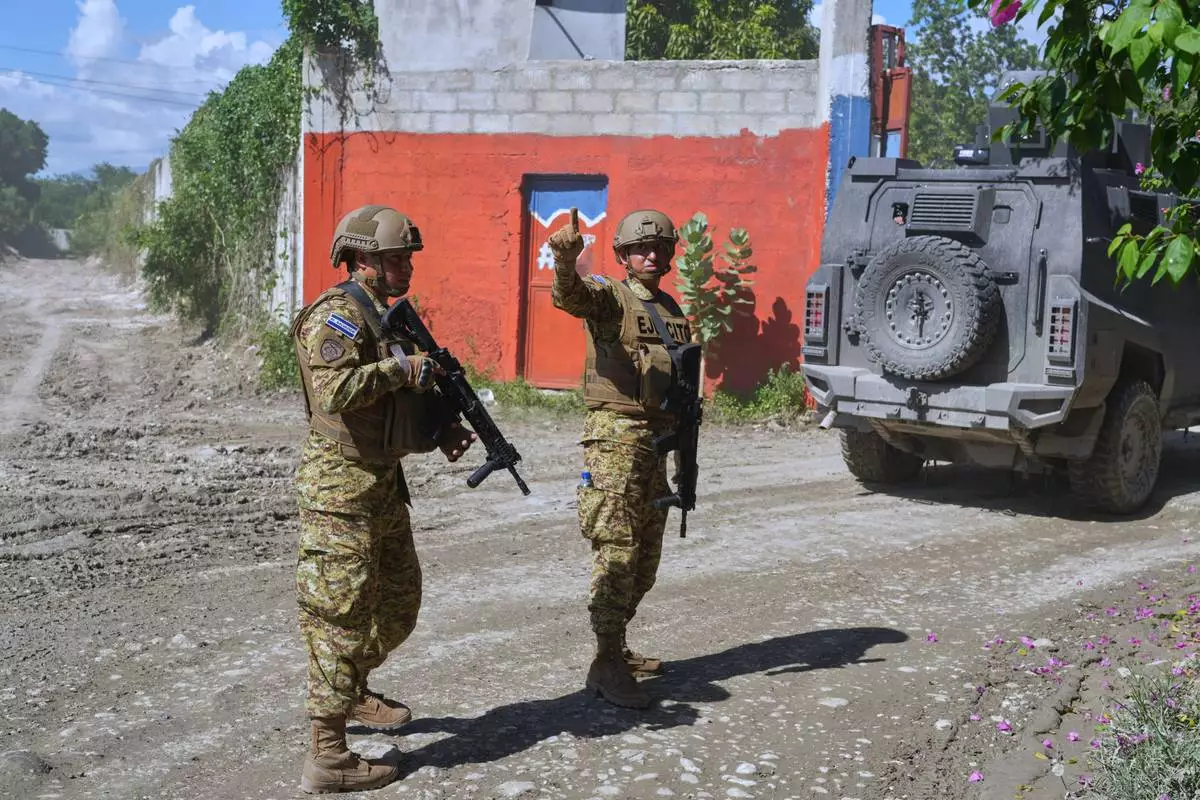
Soldiers from El Salvador stand guard as a convoy of armored vehicles carrying military personnel arrives in the Tabarre neighborhood of Port-au-Prince, Haiti, Friday, Oct. 30, 2026. (AP Photo/Odelyn Joseph)
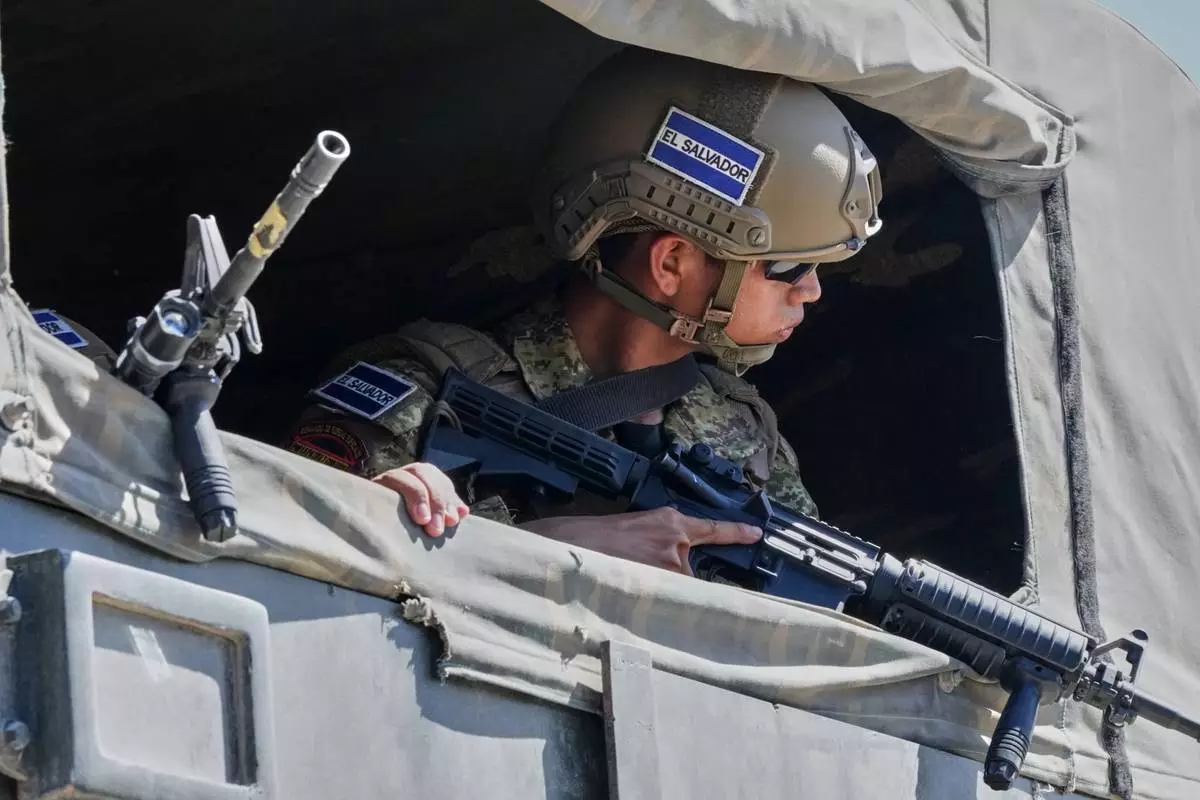
A soldiers from El Salvador looks out from a convoy of armored vehicles carrying military personnel in the Tabarre neighborhood of Port-au-Prince, Haiti, Friday, Oct. 30, 2026. (AP Photo/Odelyn Joseph)
LAWRENCE, Kan. (AP) — The college basketball season tipped off in earnest Monday with something never before seen in the century-plus history of the game: Dozens of players across the country suited up after winning court orders against the NCAA's new eligibility rules.
The bizarre situation meant some teams had talented fifth-year players back, some of whom had played in the NBA's summer league, while others had to fill in gaps after players they were counting on were left in limbo by a loss in a courtroom.
“I’m just a kid from Rochester, New York. Love the game of basketball,” said Kansas guard Melvin Council Jr., who along with Tre White and Trey Kaufman-Renn were cleared to play for the No. 17 Jayhawks against Fordham on Monday night. “I never thought I’d be going to court about the rest of my life."
White, Council and Kaufman-Renn combined for 41 points, 16 rebounds and 10 assists in their 95-65 win over the Rams.
Most lawsuits have centered on the NCAA's new five-year eligibility model, which gives athletes five seasons to play in a five-year period, beginning when they turn 19 or graduate from high school, whichever is earlier. But that rule did not apply to those from the high school class of 2022, who were completing four seasons of eligibility when it was adopted earlier this year.
So, many of those players went to court asking for a fifth season. Others added their names to existing lawsuits. In most of the cases, a series of judges — in Ohio, Indiana, Kentucky and elsewhere, many of them involving plaintiffs from out of state — have granted them injunctions, allowing them to play once more, at least for now.
“Every game could be my last,” White admitted. “That’s how I’m feeling.”
There are subtle wrinkles to most of the cases. Some players competed at junior colleges and believe they should have another year of eligibility. Others took redshirt seasons, or had to medically redshirt, and asked for that year of eligibility back.
Many players left college believing their careers were over, or signed with professional teams, and suddenly are back in college.
As of last week, the NCAA reported some 200 lawsuits filed since its approval of the new eligibility model in June, encompassing 850 plaintiffs in a variety of sports. Of that total, 362 men's and 62 women's basketball players were involved in lawsuits, with nearly half of those — 171 men, 30 women — having received some type of judicial relief allowing them to play.
Last Friday, the NCAA was denied an emergency injunction by a Kentucky Court of Appeals judge, leaving eligible 30 athletes, a list that includes Missouri basketball player Mark Mitchell and LSU’s Skyy Clark. That ruling came one day after the Ohio Supreme Court kept in place a ruling allowing two dozen players involved in an eligibility case there to remain available.
Not every ruling has gone in favor of the athletes, though.
RJ Godfrey of fifth-ranked Arizona withdrew from a “five-for-five” case in Georgia and joined a Texas lawsuit in an attempt to gain eligibility. But a judge there indicated during a hearing last week that he would not grant temporary restraining orders to those who had sought injunctive relief in other states, leaving Godfrey out for Monday night's game against No. 22 UCLA.
“We have a court system in the U.S. that's going to impact our game this year, and you wish cooler heads would prevail and give these kids the opportunity they deserve,” Arizona coach Tommy Lloyd said. "These kids did nothing wrong, and they're missing out on a life-changing opportunity, not only experience-wise but financially, just because of the year they graduated from high school.
“Somebody,” Lloyd said, “has to explain to me why that's OK.”
Defending national champion Michigan put Roddy Gayle in the starting lineup Monday night and he made a jumper early in the No. 16 Wolverines’ game against Oakland, taking advantage of his chance after spending two years at Ohio State and two in Ann Arbor.
Gayle ended up with 17 points in the Wolverines' 84-68 victory.
“I felt every bit of 23 (years old),” he said.
Keyshawn Hall had a game-high 26 points for No. 13 St. John’s in its 78-63 win over Monmouth; Darrion Williams played 24 minutes in Texas Tech’s 76-42 win over Jackson State; Javon Bennett had five points in 13 minutes to help No. 15 Gonzaga beat Purdue 78-72; Malik Reneau played 23 minutes in No. 14 Miami’s 77-67 loss to top-ranked Florida; and Xavier’s Filip Borovicanin, the lead plaintiff in an Ohio case, had eight points, seven rebounds and six assists in the Musketeers’ 97-52 rout of Mount St. Mary’s.
“The NCAA screwed up on this deal,” Gonzaga coach Mark Few said. “You've got to be fair and let these (class of) 22's in.”
Minnesota coach Niko Medved would have loved to put forward Cade Tyson, who was sixth in the league in scoring last season, into his lineup against North Dakota. But while Tyson has been practicing with the Gophers, he remains ineligible after a lawsuit that he is part of filed in Colorado was halted by a temporary injunction and routed toward an appeals court.
Making things even more frustrating for Medved, the Gophers play St. Thomas and Kendall Blue — who's been granted eligibility after transferring back from Nebraska — on Monday, then play Cincinnati and similarly eligible guard MJ Collins next week.
“It’s really been admirable to see how (Tyson) has handled it, kept a great attitude and always been around and willing to do whatever you need him to do to help the team,” Medved said. “He’s got to sit and watch those guys play against us? That’s got to be hard.
"It should be hard for everybody in college basketball, honestly.”
The unpredictable nature of court rulings — and whether appeals by the NCAA ultimately will rule out those currently eligible — have left coaches throwing up their hands in frustration. All they can do is coach the players available, for as long as they're available, and hope they have the team they expected to have on the court this season.
“I think these cases are going to go well into the season,” said Duke coach Jon Scheyer, whose team opened against Army on Monday night. “I think no question you’re going to have cases where certain players get an injunction, they’re eligible for a certain period, and then they’re not. And so how is that viewed from an NCAA Tournament standpoint?”
Add that to the list of questions for which nobody seems to have an answer.
“If we lose sleep over this nightly because we're worried about something we have absolutely no control over, we're worried about the wrong things,” Jayhawks coach Bill Self said, when asked about his trio of players granted injunctions. “That would be like going to bed every night worrying about someone getting hurt every day. I don't think you can coach defensively.
“If something does happen that's negative in our eyes, you know, somebody is going to have to fill the void,” Self added. "But we're certainly hopeful. And it is a concern. But we're certainly hopeful.”
AP Basketball Writer Aaron Beard and AP Sports Writers Larry Lage, Dave Campbell and Mark Anderson contributed.
Sign up for Top 25 poll alerts here, visit the Top 25 here and see AP’s full men’s basketball coverage here
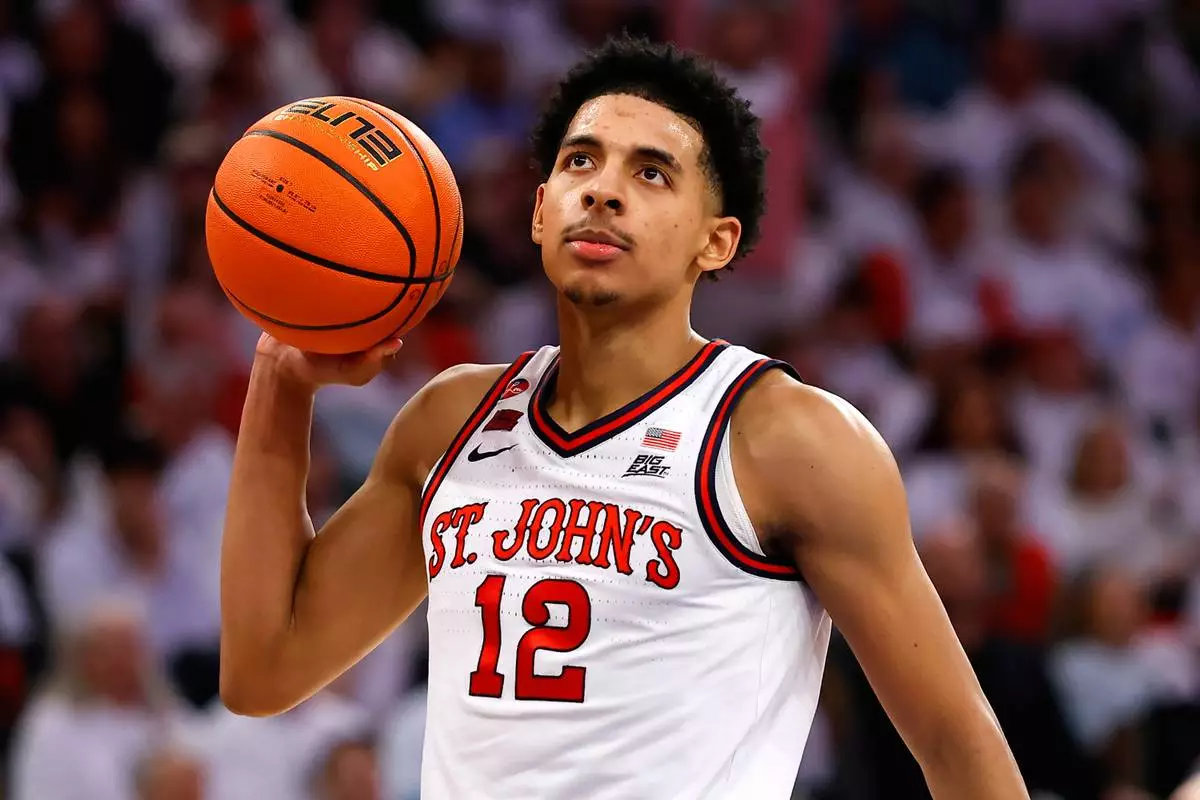
FILE - St. John's guard RJ Luis Jr. (12) holds the ball during the second half of an NCAA college basketball game against Seton Hall, March 1, 2025, in New York. (AP Photo/Noah K. Murray, File)
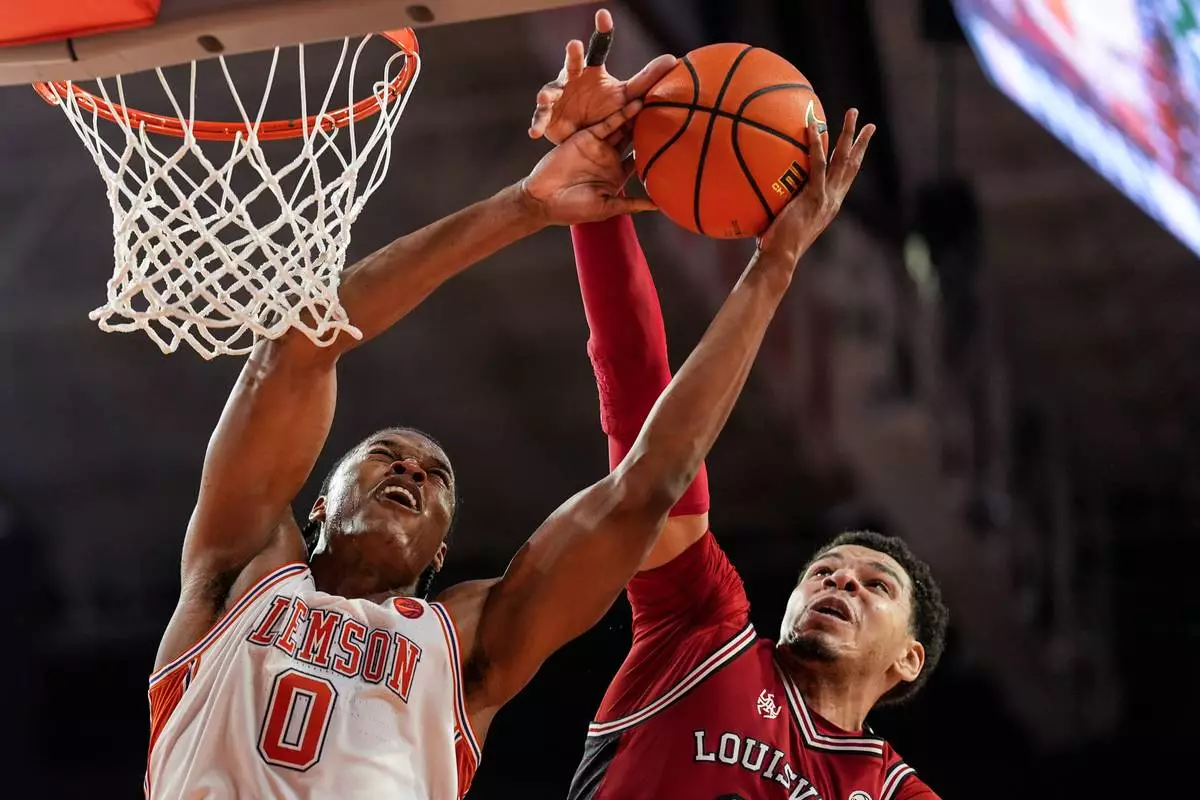
FILE - Clemson forward RJ Godfrey (0) shoots against Louisville forward Sananda Fru (13) during the second half of an NCAA basketball game, Feb. 28, 2026, in Clemson, S.C. (AP Photo/Mike Stewart, File)