JACKSON, Miss. (AP) — The parents of a 1-year-old boy who was shot and killed by a police officer in Mississippi led a protest Monday at the office of the state's attorney general, who ruled last month that the shooting was justified.
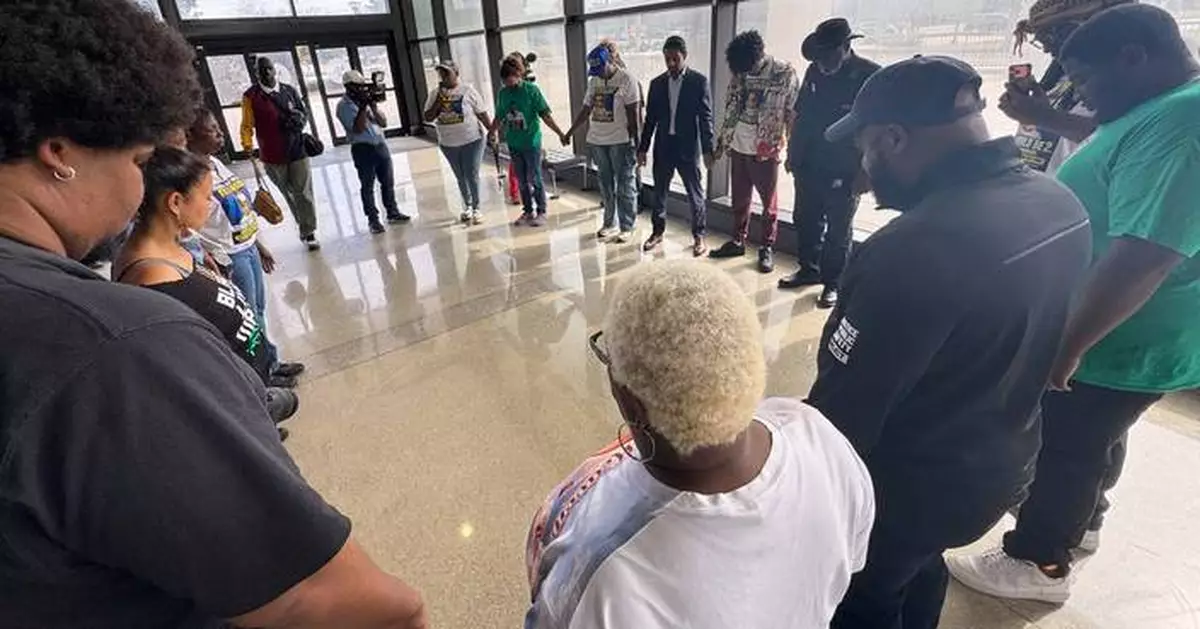
Cries of “our baby’s life mattered” echoed through the office's lobby as Kohen Wiley's parents and a small group of activists demanded to speak to Mississippi Attorney General Lynn Fitch.
Marquell Bridges, an activist who has been working with Kohen’s parents, said they wanted Fitch to look Kohen’s parents in the eyes and tell them why the shooting was justified.
“These people work for us. We pay their salaries. We vote. We put them in office, and our people have to understand that we have the power,” he said.
They were met in the lobby by Fitch’s chief of staff, who said Fitch was not in the office. An email seeking comment was sent to the attorney general's office Monday.
Kohen Wiley was killed in June when a police officer in the small town of Senatobia, about 40 miles (65 kilometers) south of Memphis, Tennessee, fired his gun into a moving vehicle while responding to a shoplifting call.
Body-worn cameras show Kohen’s mother, Vellesiya Wiley, holding Kohen as she and a friend run across the parking lot of a Senatobia Walmart and enter their vehicle. Wiley and the friend, who was driving, are Black.
Five officers approach the parked car with guns drawn. The car reverses away and crashes into a parked vehicle nearby as officers yell for it to stop.
The vehicle then accelerates forward as Senatobia Sgt. Hunter Foster steps toward it, directly in front, with his gun drawn. The wheels turn away from him, and he appears to put his hands on the hood as he jumps out of the way. He fires his gun, shattering the window of the front passenger side, where Kohen was seated on his mother’s lap.
The shooting sparked months of mourning and calls for justice, both nationally and in Senatobia.
Kohen would have turned 2 on Sunday.
Sitting outside the attorney general’s office, Kohen’s father, Davion Williams, said the passing of Kohen’s birthday was “the worst feeling ever.”
“It’s hard. It’s just hard to even express and talk about,” said Williams. “Now we have to keep his name alive.”
Williams said he wants Foster prosecuted and Fitch out of office. He wore a t-shirt with Kohen’s face that read “Kohen should be 2. Vote in his honor.”
Foster’s attorney, Martin Zummach, has said his client had “no choice” but to shoot at the vehicle because it was going to hit him. The Mississippi Attorney General’s office said its monthslong probe found that Foster’s use of force was appropriate.
The U.S. Bureau of Alcohol, Tobacco, Firearms and Explosives, meanwhile, was investigating an arson fire on Saturday that damaged the Senatobia police building. It was unclear what caused the fire. An email to the ATF on Monday was not immediately returned.
The State Fire Marshal’s Office is assisting in the investigation, spokesperson Beth Reiss said in an email, adding a reward is being offered of up to $5,000 for information leading to an arrest and conviction.
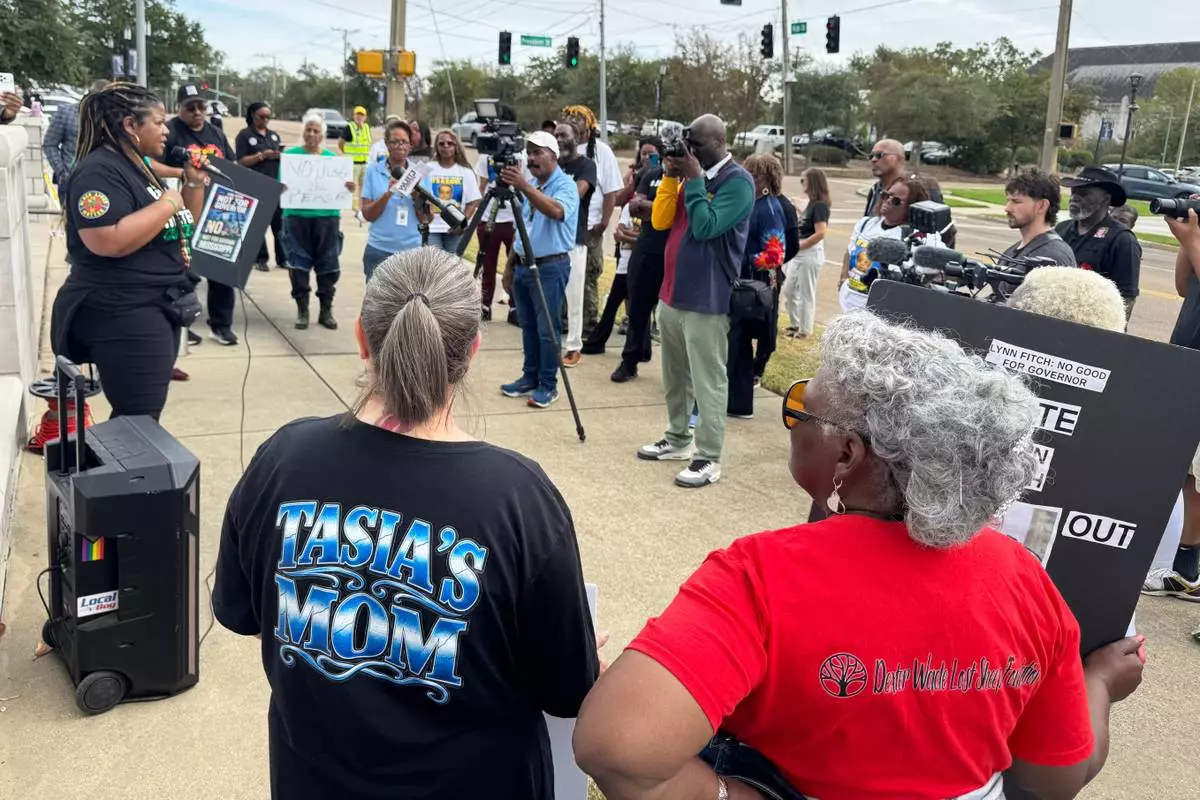
Protestors gather outside the Mississippi Attorney General's Office to protest the fatal police shooting of Kohen Wiley, Monday, Nov. 2, 2026, in Jackson, Miss. (AP Photo/Sophie Bates) Photo taken with smartphone.
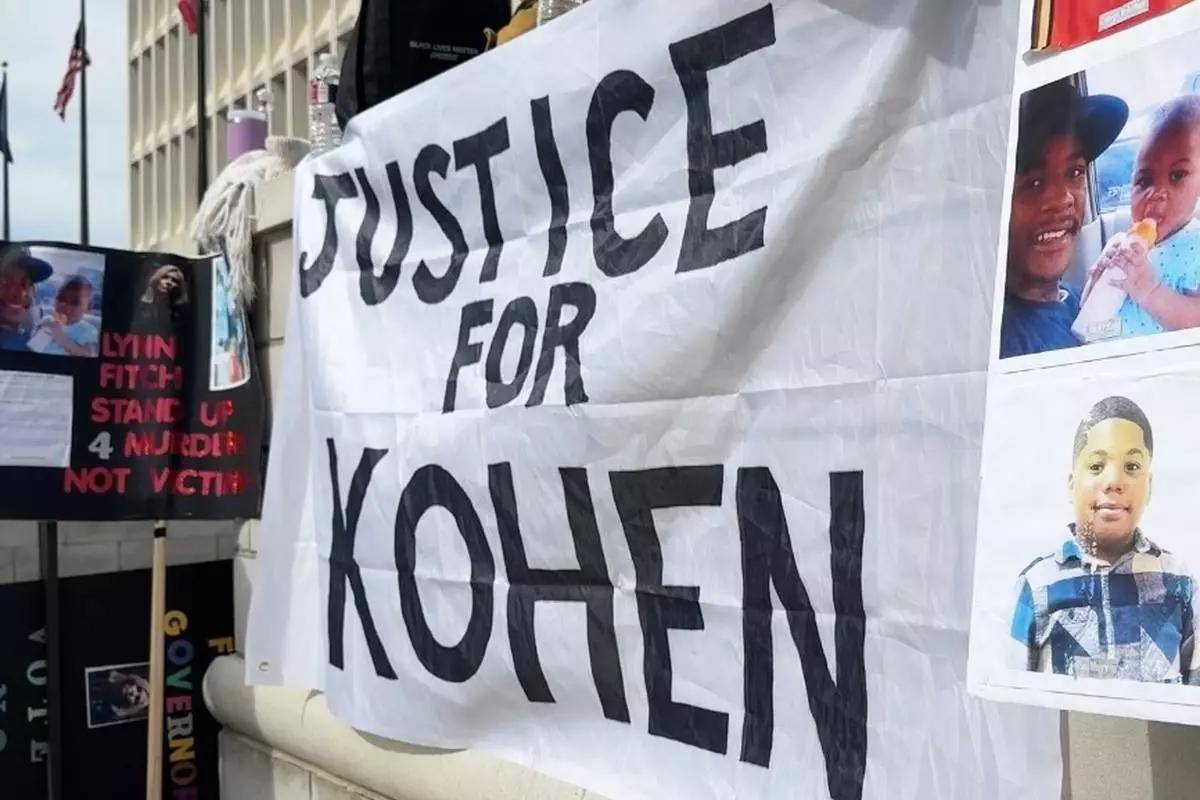
A banner reading, "Justice for Kohen," is hung outside the Mississippi Attorney General's Office in Jackson, Miss. on Monday, Nov. 2, 2026. (AP Photo/Sophie Bates) Photo taken with smartphone.
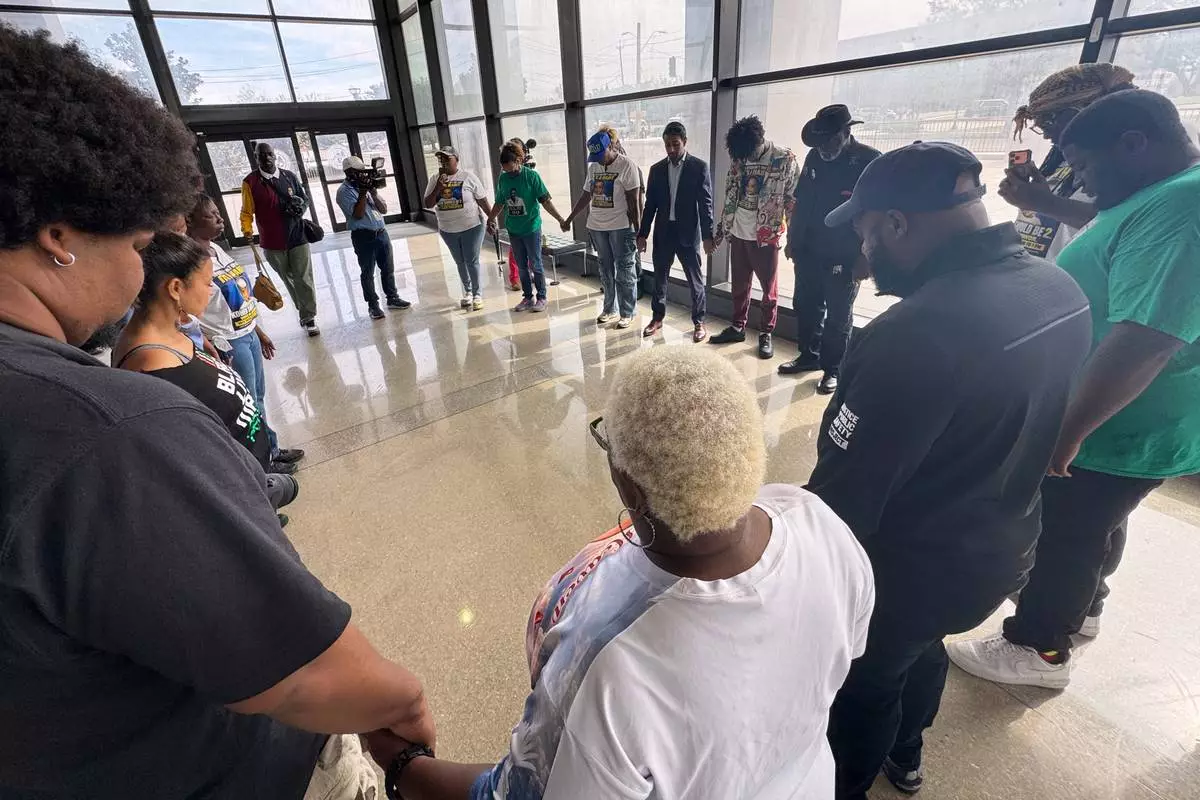
A group of activists pray inside the Mississippi Attorney General's Office to protest the fatal police shooting of Kohen Wiley, Monday, Nov. 2, 2026, in Jackson, Miss. (AP Photo/Sophie Bates) Photo taken with smartphone.
WASHINGTON (AP) — Voters struggling with high prices and angry over an unpopular war with Iran will decide whether to drastically shift power in Washington in midterm elections Tuesday that will serve as a referendum on President Donald Trump ’s second term.
Democrats were cautiously optimistic about their prospects as they watched Republicans spend the campaign's final stretch pumping tens of millions of dollars into states and districts that Trump won handily just two years ago. They are betting that discontent over Trump’s failure to deliver on his promise to tackle rising costs, and perceptions that he has been more focused on gilding the nation’s capital than their pain at the pump, will depress Republican turnout and drive their own voters to the polls.
Republicans held out hope that their overwhelming money advantage would help stem the tide, but they were bracing to lose control of the U.S. House and fighting to hang onto the U.S. Senate — an outcome that seemed unlikely earlier this year, given a map widely seen as favoring the party.
Still, the margins are tight in both chambers and just one or two seats could tip the balance. Democrats need a net gain of four seats in the Senate to win the majority, an uphill climb because many of the most competitive races are in historically red states. In the House, they only need three.
More than 57 million people had already cast ballots as of Monday, with turnout surpassing the early vote four years ago in many closely watched states.
Trump, whose party has struggled when he is not running to turn out the low-propensity voters who have fueled his victories, has told voters to act like he is, even as many Republican candidates have tried to keep their distance.
“I really want you to pretend I’m on the ballot,” he told the crowd in Salina, Kansas, Sunday evening at the final of several dozen rallies in the closing weeks of the campaign.
Trump's aggressive schedule included stops in the reddest states, including Mississippi, South Carolina and Texas, underscoring his party's challenges.
The president has also continued to make false claims about voting fraud, such as insisting noncitizens are casting ballots en masse. His administration has already filed lawsuits in Alaska and California, and Democrats fear interference and voter intimidation as his Justice Department threatens to prosecute local election officials.
The results will shape the final two years of Trump’s second term after the Republican-controlled Congress acted as a rubber stamp to much of his agenda. While Trump has proven adept at steamrolling efforts to rein him in, Democrats taking control of even one chamber of Congress would open the floodgates to investigations as well as possible impeachments. Defense Secretary Pete Hegseth and tech titan Elon Musk are among the possible targets.
An especially strong showing for Democrats would also provide a boost to the crop of potential presidential candidates waiting in the wings, from California Gov. Gavin Newsom to Illinois Gov. JB Pritzker to former Transportation Secretary Pete Buttigieg. It could also complicate the paths of Vice President JD Vance and other Republicans who may be looking to turn their loyalty to the president into momentum.
Republicans had tried to buck historical precedent — a president’s party almost always loses seats during the midterms — with an aggressive redistricting effort aimed at creating a more favorable congressional map. But the plan may fall short as new districts drawn in Florida and other states to be safely red may not vote that way.
Other Trump choices could prove costly. In Texas, Trump worked to oust longtime incumbent Sen. John Cornyn in favor of scandal-plagued Attorney General Ken Paxton, setting the stage for an extraordinarily expensive race against Democratic nominee James Talarico, who Democrats hope may finally help them realize their dream of flipping the state.
And in North Carolina, Sen. Thom Tillis chose to retire after clashing with Trump. The president's chosen replacement, former Republican National Committee Chair Michael Whatley, has struggled to gain traction against the Democrats' candidate, former Gov. Roy Cooper.
“Everything depends on turnout. If we turn out our voters we win and that's what we've been planning for," said Republican National Committee Chairman Joe Gruters, expressing optimism on the eve of the election.
“Although there’s a lot of doom and gloom out there, I think we can defy history. We just need our voters to turn out," he said. “We still think we can lift the nose up and win."
The vast majority of Republican television ad spending in the general election — 88.1% — was spent in states and districts that Trump won in 2024, according to an Associated Press analysis of data from AdImpact, a media tracking firm. That included more than $850 million spent on ad reservations in states and districts Trump won by 10 points or more.
Polling shows that only 35% of U.S. adults approve of Trump's performance as president, according to the most recent polling from The Associated Press-NORC Center for Public Affairs Research. And most blame him for high prices as they struggle to afford gas and groceries.
What was once his strongest issue is no longer. Only 25% of U.S. adults now say they approve of Trump's handling of the economy. Overall, about 7 in 10 say the country is heading in the wrong direction.
“The American people are angry. They want change. They want folks who are going to stand up for them,” said Rep. Suzan DelBene, chair of the Democratic Congressional Campaign Committee, who said momentum was on her party’s side, despite what seemed like Republicans’ infinite money supply.
The results, she said, “should deliver a very resounding messaging that people have soured on his agenda.”
Republicans currently hold a 53-47 Senate majority.
Democrats have been most confident in their chances of picking up North Carolina and holding Georgia, where Sen. Jon Ossoff is facing Rep. Mike Collins. Other key battlegrounds include Ohio, where Democratic former Sen. Sherrod Brown is challenging Republican Sen. Jon Husted, and Alaska, were the administration has filed a lawsuit to block certification of the state’s Senate results if Republican incumbent Dan Sullivan loses the race, citing the presence of a second candidate named Dan Sullivan on the ballot.
Republicans, meanwhile, are hoping they can keep hold of seats in states like Iowa, Kansas and Maine, and pick up Michigan, where Mike Rogers is facing progressive Abdul El-Sayed — one of a crop of left-wing candidates who prevailed in Democratic primaries this election season. El-Sayed's former primary opponent, Haley Stevens, upended the race Sunday by endorsing Rogers, renewing focus on tensions over Israel and the direction of the party that dominated Democratic primaries.
In the House, Republicans, who had hoped to pick up seats with their redistricting efforts, are now trying to hang on to their narrow majority, as Democrats try to flip seats in states Trump has repeatedly carried, from Florida to Texas to Iowa.
Beyond Washington, 36 states will be electing governors. Democrats are hoping to take over a majority of statehouses for the first time in two decades as they ride a wave of voter discontent. Competitive races include those in heavily populated states such as Texas and Florida, plus reliably red states such as Iowa.
In Ohio, Republican Vivek Ramaswamy’s campaign faced backlash for an ad featuring Democrat Amy Acton’s estranged mother, who lost custody of Acton decades ago after her husband, Acton’s stepfather, was indicted for raping Acton as a child.
Trump’s final two years in office will likely be defined in part on the outcome of the race for control of Congress.
House Democratic Leader Hakeem Jeffries, who is in line to make history as the nation’s first Black speaker of the House if his party sweeps to power, has outlined an ambitious 100-days agenda focused on lowering the cost of living and aggressive oversight of the Trump administration, as he puts it, to “hold the crooks accountable.” Impeachment is not off the table.
The Senate, where leadership is unlikely to change, could emerge as a key backstop for Trump’s priorities if Republicans retain control, or a new power center for Democrats who could use it to halt presidential nominees and challenge the White House agenda.
The 2026 elections will likely go down as the most expensive in history. Republican committees have dramatically outraised and outspent their Democratic counterparts thanks, in large part, to money from Trump-affiliated groups and Musk. But at the candidate level, Democratic candidates outraised their Republican opponents.
Associated Press data writer Aaron Kessler contributed to this report.
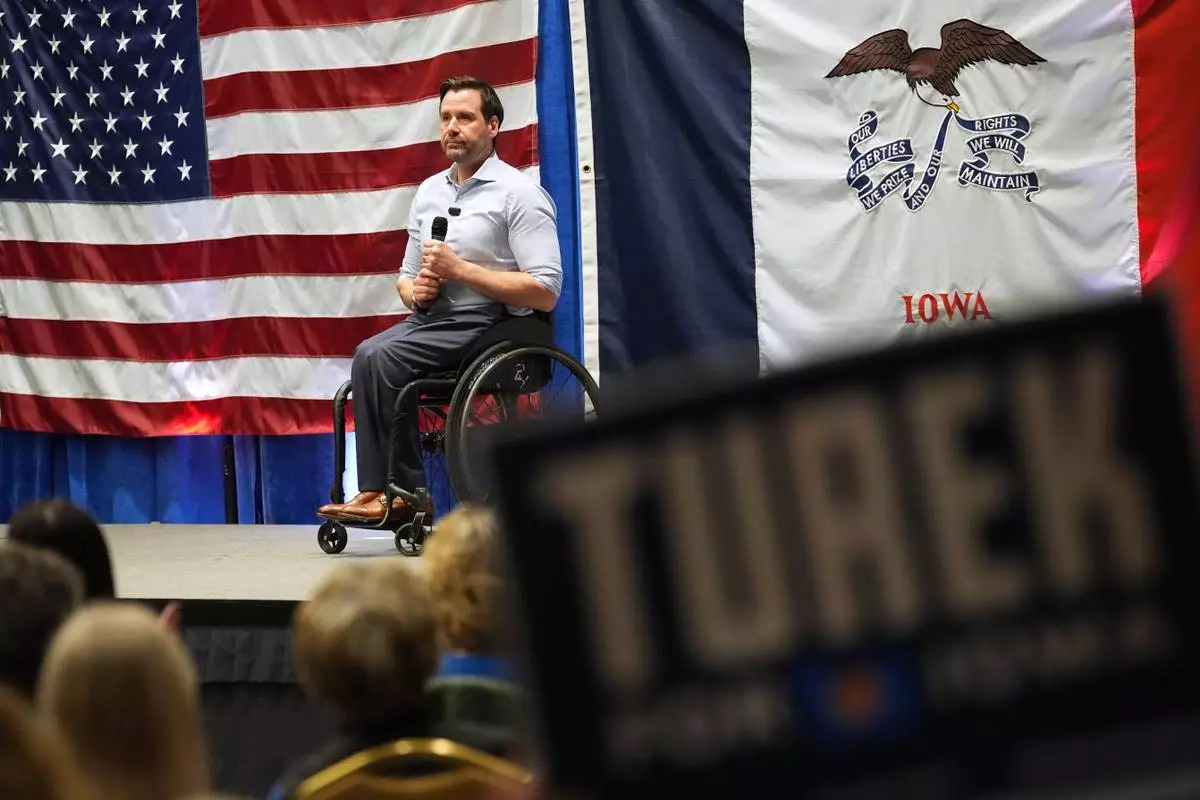
Democratic U.S. Senate candidate Rep. Josh Turek speaks during a campaign rally, Sunday, Nov. 1, 2026, in Council Bluffs, Iowa. (AP Photo/Ellen Schmidt)
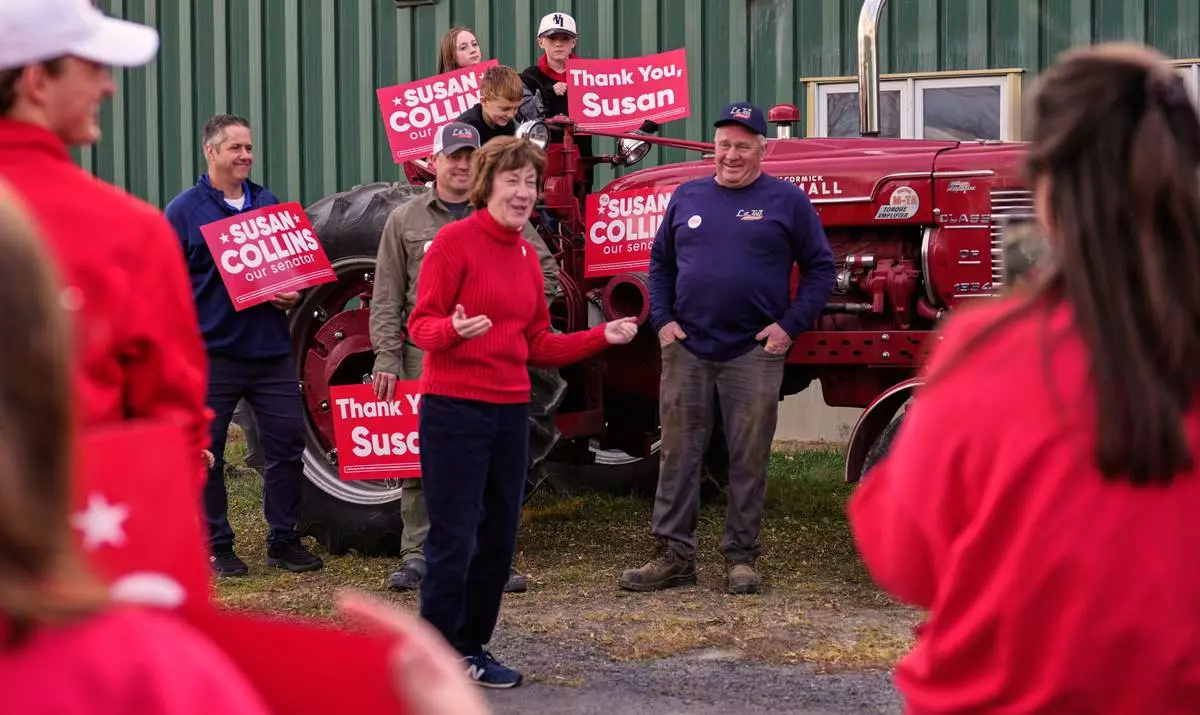
People listen to Sen. Susan Collins, R-Maine, who is running for reelection, outside an agricultural business as she makes a campaign stop, Monday, Nov. 2, 2026, in Van Buren, Maine. (AP Photo/Charles Krupa)
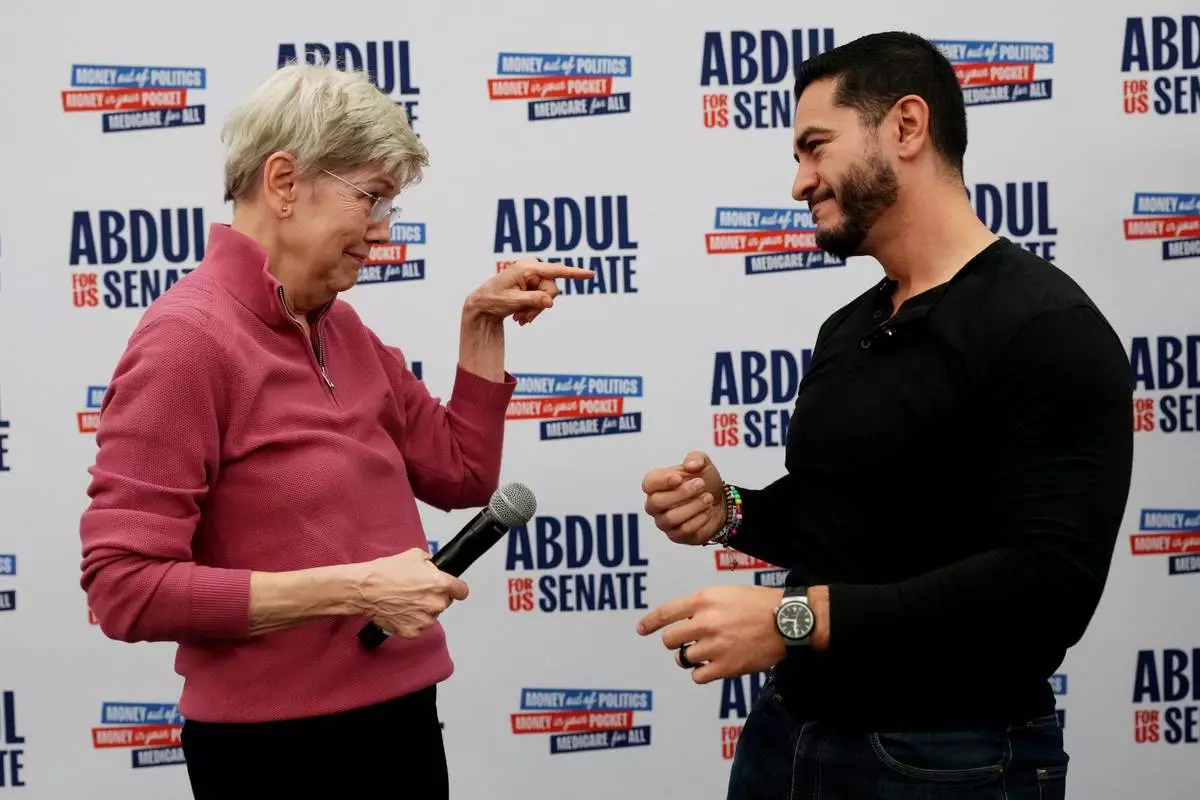
Sen. Elizabeth Warren, D-Mass., introduces Michigan Democratic Senate candidate Abdul El-Sayed during a campaign rally at Eastern Michigan University, Monday, Nov. 2, 2026, in Ypsilanti, Mich. (AP Photo/Julia Demaree Nikhinson)

Sen. Dan Sullivan, R-Alaska, speaks to members of the media before sign-waving with supporters at the edge of Midtown Mall, Monday, Nov. 2, 2026, in Anchorage, Alaska. (AP Photo/Lindsey Wasson)
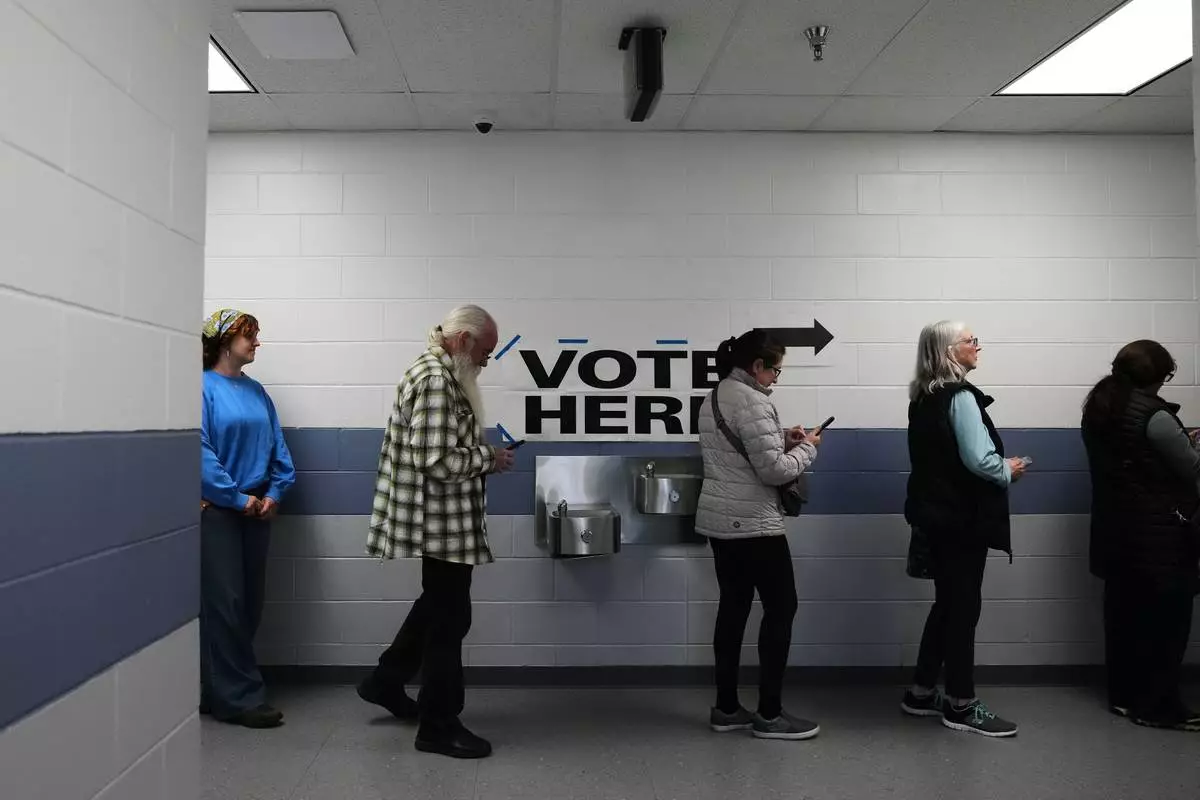
People wait in line to cast their ballot at a polling location open for early voting at the Curtis D. Menard Memorial Sports Center, Sunday, Nov. 1, 2026, in Wasilla, Alaska. (AP Photo/Lindsey Wasson)