ATLANTA (AP) — Democrat Keisha Lance Bottoms and Republican Rick Jackson are running to be Georgia's next governor in a race that could reshape control of a crucial battleground state and even make some history along the way.
Bottoms, 56, could become the first Black woman elected governor in the country. She’s also a former Atlanta mayor asking for a promotion in a state whose voters have long been reluctant to hand more political power to Georgia’s largest city.
Click to Gallery
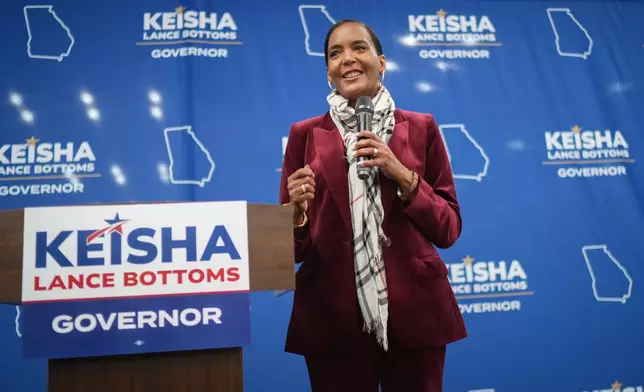
Democratic gubernatorial candidate for Georgia, Keisha Lance Bottoms speaks during a campaign event on Sunday, Nov. 1, 2026, in Macon, Georgia. (AP Photo/Ryan Murphy)
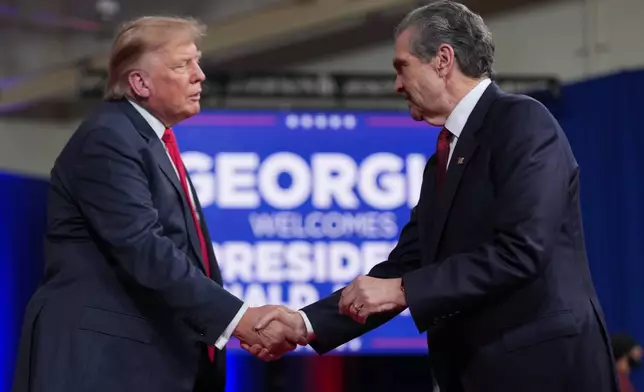
President Donald Trump shakes hands with Georgia gubernatorial candidate Rick Jackson at a campaign rally at Guardian Centers of Georgia, Saturday, Oct. 24, 2026, in Perry, Ga. (AP Photo/Mark Schiefelbein)
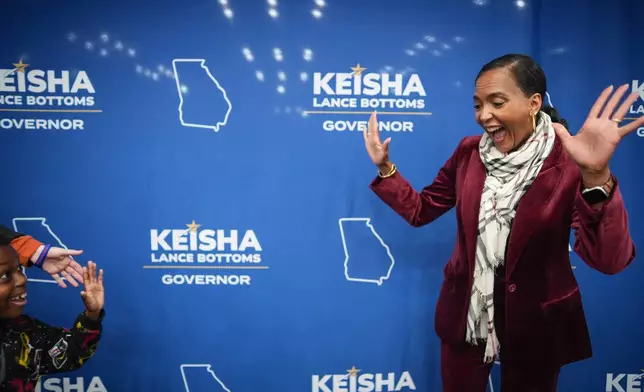
Georgia Democratic gubernatorial candidate Keisha Lance Bottoms greets a young supporter during a campaign event, Sunday, Nov. 1, 2026, in Macon, Georgia. (AP Photo/Ryan Murphy)
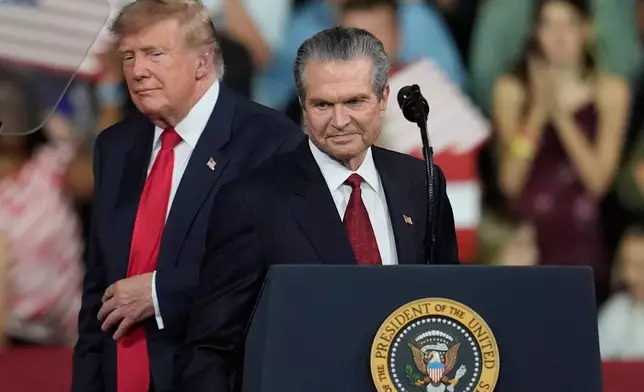
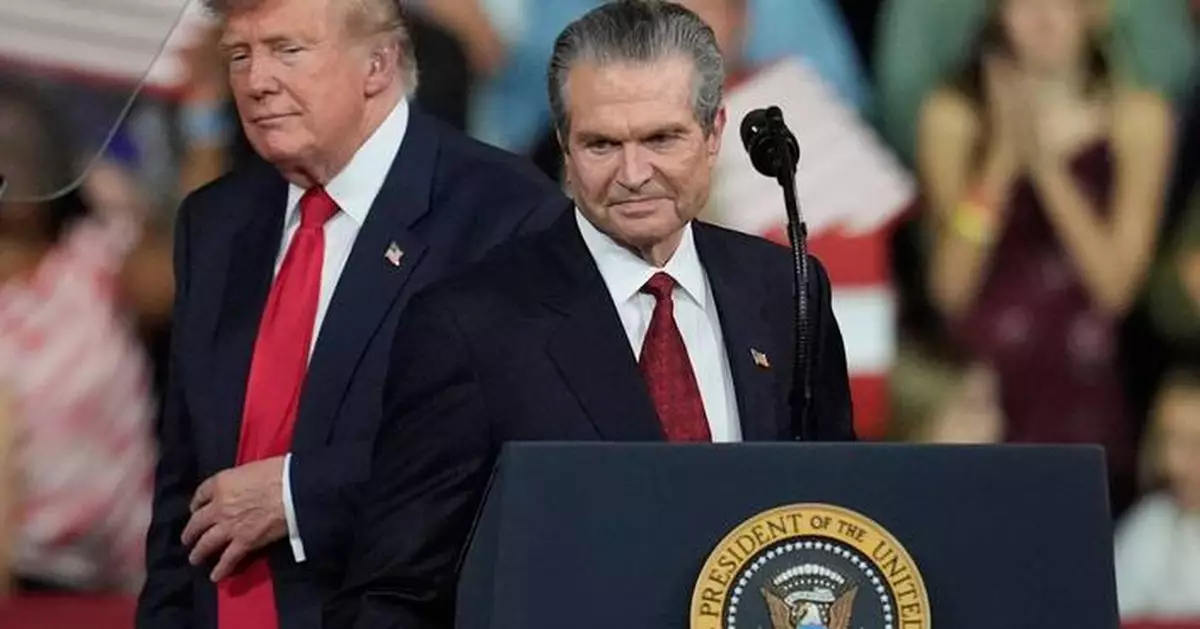
President Donald Trump invites Georgia gubernatorial candidate Rick Jackson to speak at a campaign rally at Guardian Centers of Georgia, Saturday, Oct. 24, 2026, in Perry, Ga. (A5P Photo/Mike Stewart)
Jackson, 72, is a healthcare magnate and investor who has largely self-funded his campaign. He won the Republican nomination by comparing himself, as a first-time candidate, to his fellow billionaire in the White House. But he's been less effusive about President Donald Trump — despite attending rallies with him — during the general election as voters remain frustrated about the Iran war and an inflationary economy.
Jackson used his personal fortune to blanket the state with television and digital advertising showing clips of street protests in Atlanta after the 2020 police killings of Atlanta resident Rayshard Brooks and Minneapolis resident George Floyd, both Black men, by white officers in their respective cities.
“Bad mayors don’t make good governors,” he said repeatedly in the closing weeks of the campaign.
Bottoms, meanwhile, did not miss a chance to remind voters that Jackson had promised to govern like “Trump but with a Southern tone” and become the president's “favorite governor.”
“I’m not running to be his favorite governor,” Bottoms told voters during their lone debate. “I’m running to work on behalf of people like you.”
Bottoms wants to do what Democrats’ most recent nominee, Stacey Abrams, another Black woman, could not do in 2018 or 2022. Abrams lost general elections to Republican Gov. Brian Kemp, who is barred from seeking a third consecutive term. Unlike Abrams, Bottoms never became a national fundraising phenomenon. That’s left Jackson to dominate television airwaves and digital advertising spaces with more than $200 million of his own money.
Bottoms called for expanding Medicaid insurance eligibility, pausing data center development, blocking the expansion of AI-powered Flock surveillance cameras used by law enforcement and raising the pay of teachers, firefighters and police officers.
She rarely acknowledged the historic nature of her candidacy, but nodded at the circumstances as she recounted her family history. “I am at least a fifth-generation Georgian,” she has said on the campaign trail. “I say ‘at least’ because we can only trace our family back five generations — to a plantation in Crawfordville.”
Jackson has promised public employee raises if elected, saying he can do it while still phasing out the state income tax. He’s pledged that if he could not cut the personal income tax in half by the end of his first term, he would not run for a second. He’s argued for expanding healthcare coverage through partnerships with private insurers. His plan would require a waiver from the federal government and a level of federal financial support no administration has provided to a state that hasn’t expanded Medicaid directly.
Jackson has leaned heavily on his biography, tracing his path from being a teen in foster care and someone who dropped out of college, to the pinnacle of Jackson Healthcare, his firm that provides contract healthcare personnel to hospitals and health systems.
“I had seven stepfathers before I was 12. I lived in the projects, went to 13 different schools, and lived in five different foster homes,” he said. “I couldn’t afford to go to college, so I started my own business at 21.”
He has sometimes teared up telling the story. “You never forget what it feels like to be hungry,” he has recalled, saying he understands the struggles of the poor and working class. And he’s emphasized his personal financial support for hundreds of Georgians who aged out of foster care and state support when they turned 18.
Jackson has criticized Bottoms for her decision not to seek a second term as mayor, arguing she “abandoned Atlanta.” Bottoms went on to serve in President Joe Biden’s West Wing as a senior adviser.
Bottoms likewise has tried to poke holes in Jackson’s pitch, saying he’s trying to “buy this election” and is out of touch with the Georgians he says he understands. She’s highlighted the lucrative state contracts Jackson Healthcare has won, disputing Jackson’s assertions that he’s a self-made outsider. Her campaign mocked how Jackson sometimes talked about the economy.
Discussing vocational education, Jackson said during their debate that “my plumber drives a Mercedes.” Acknowledging inflation, he referred to drivers’ sticker shock at “the gas store,” and after one voter at a town hall lamented Georgia’s $7.25 per hour minimum wage, Jackson replied, “Hopefully, you’re not the one that is getting the $7.50 an hour.”
Bottoms has proposed raising Georgia’s minimum hourly wage to $15.
Bottoms was always the favorite in a crowded Democratic field. But she dominated the primary, winning nearly all of Georgia’s 159 counties and claiming the nomination without a runoff.
Jackson began his campaign as an unknown figure but outspent all of his primary opponents combined, outpacing Georgia's attorney general, secretary of state and lieutenant governor, the latter having garnered Trump’s early endorsement.
The president took note.
“I watched this man run,” Trump said at a suburban Atlanta rally with Jackson. “He’s really phenomenal actually.”
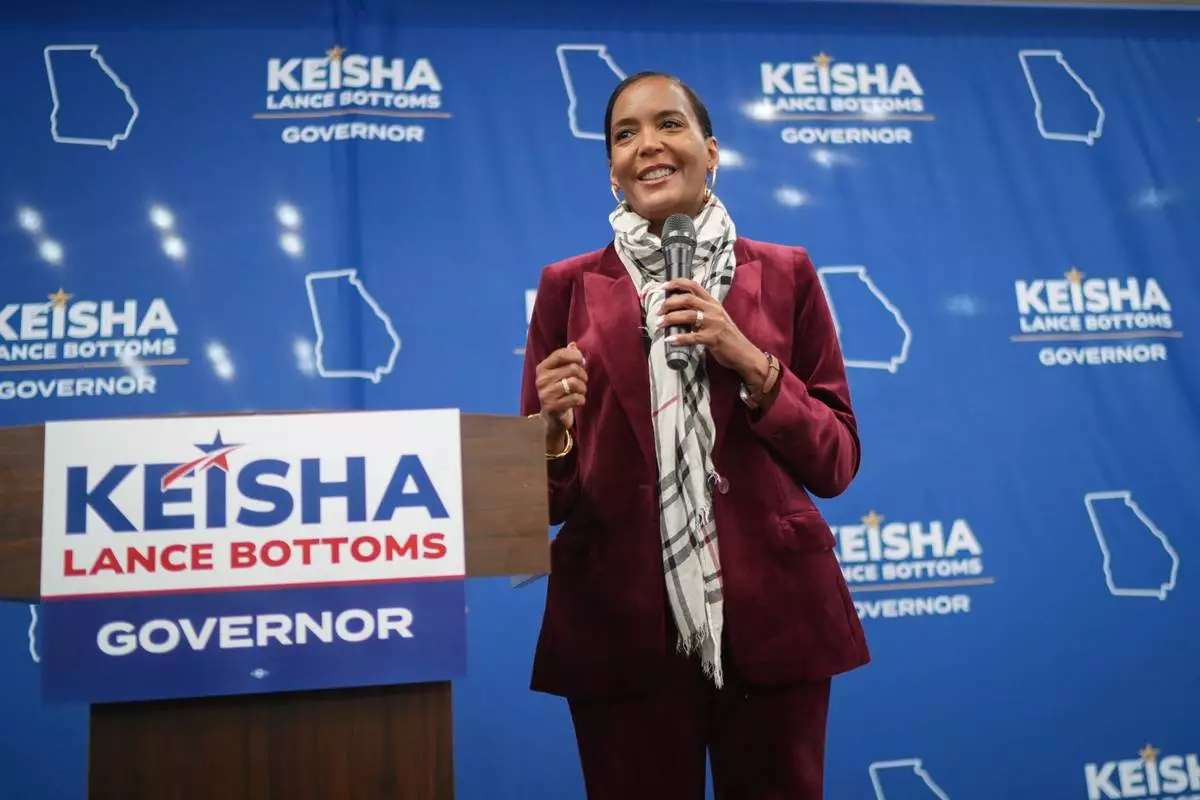
Democratic gubernatorial candidate for Georgia, Keisha Lance Bottoms speaks during a campaign event on Sunday, Nov. 1, 2026, in Macon, Georgia. (AP Photo/Ryan Murphy)
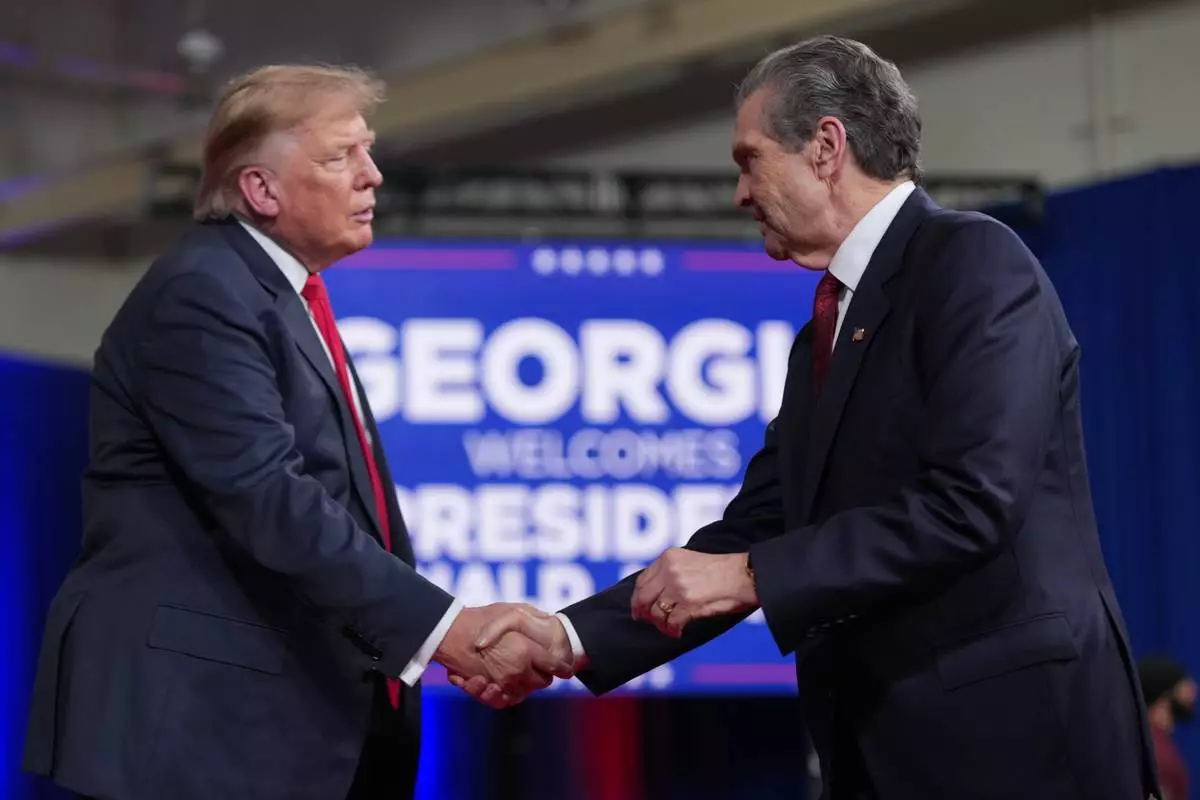
President Donald Trump shakes hands with Georgia gubernatorial candidate Rick Jackson at a campaign rally at Guardian Centers of Georgia, Saturday, Oct. 24, 2026, in Perry, Ga. (AP Photo/Mark Schiefelbein)
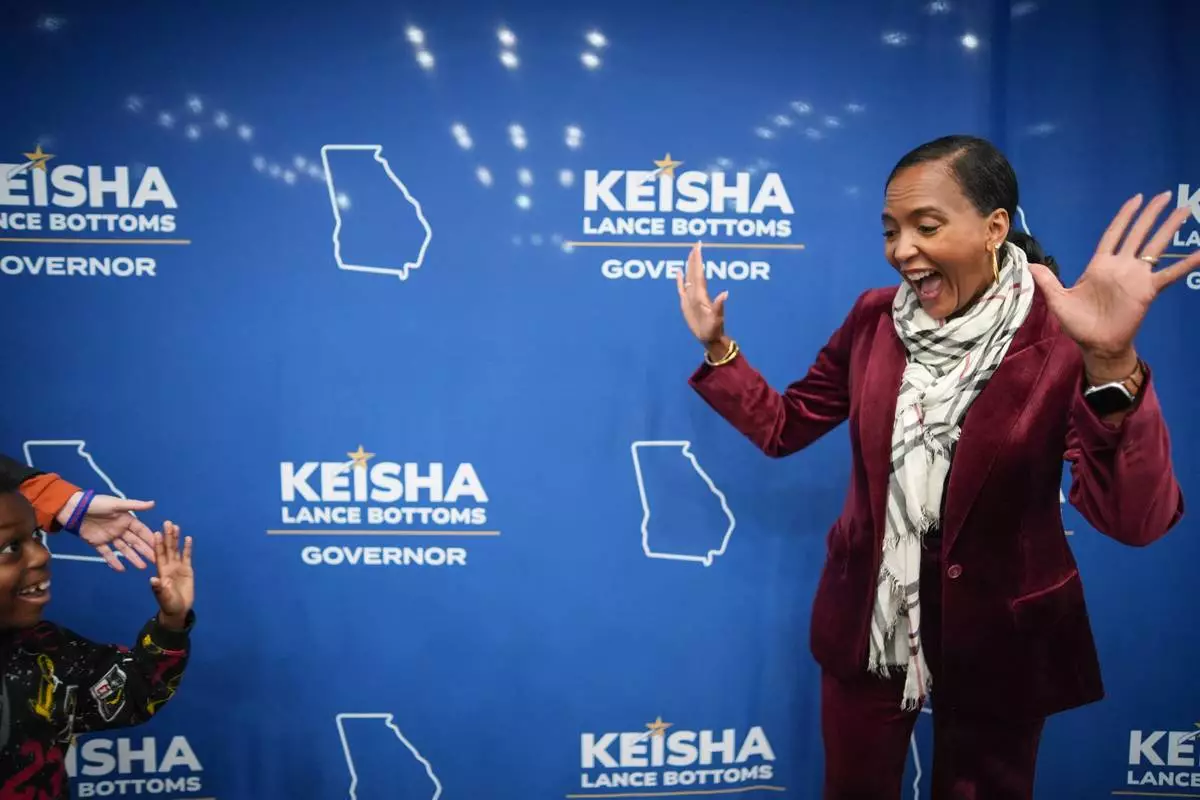
Georgia Democratic gubernatorial candidate Keisha Lance Bottoms greets a young supporter during a campaign event, Sunday, Nov. 1, 2026, in Macon, Georgia. (AP Photo/Ryan Murphy)
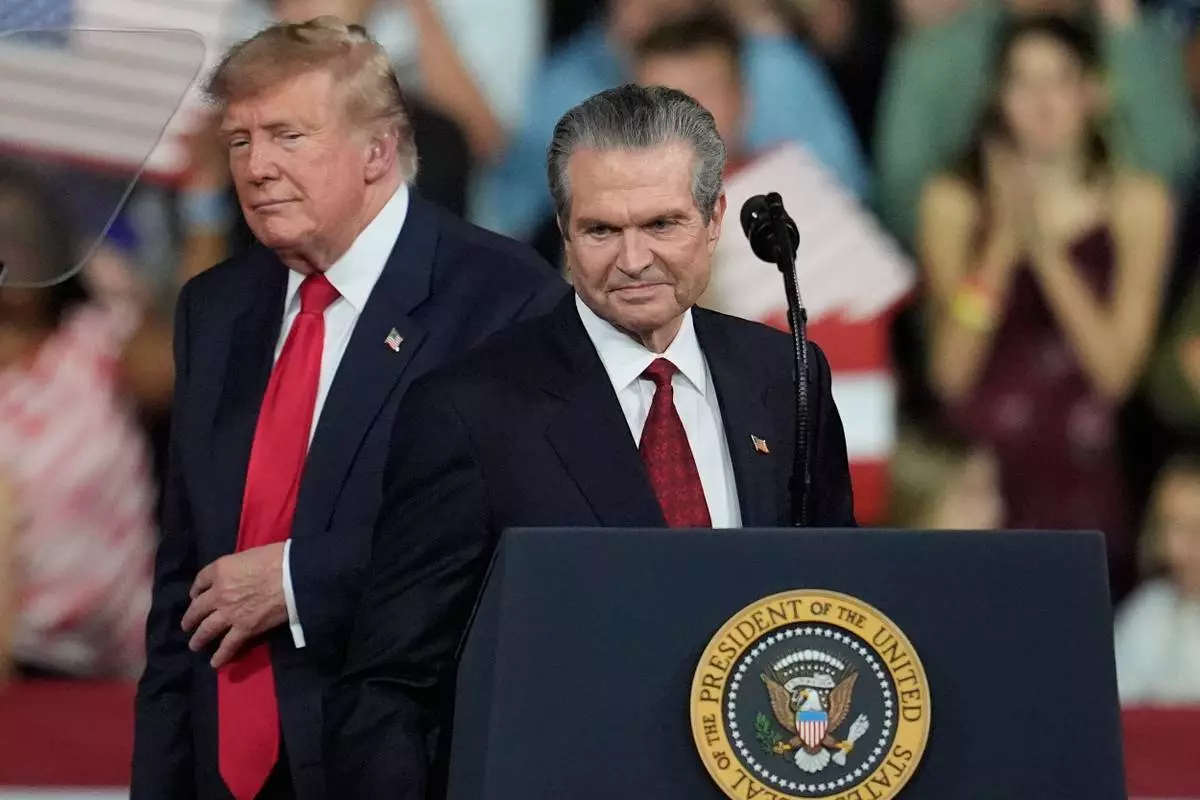
President Donald Trump invites Georgia gubernatorial candidate Rick Jackson to speak at a campaign rally at Guardian Centers of Georgia, Saturday, Oct. 24, 2026, in Perry, Ga. (A5P Photo/Mike Stewart)