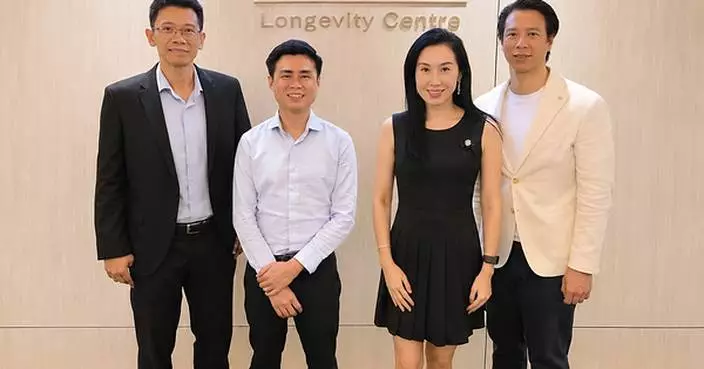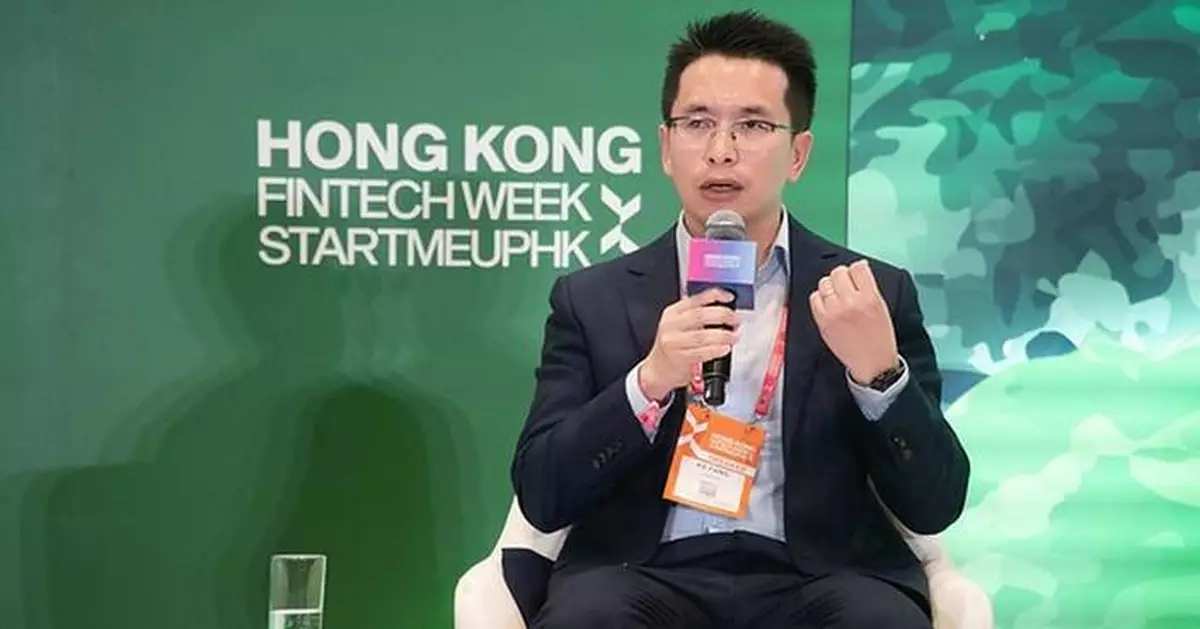
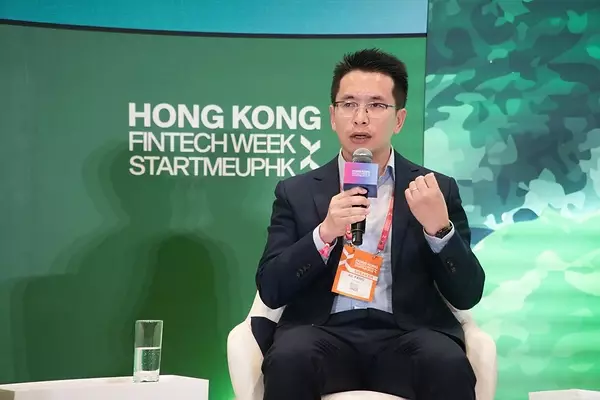
HONG KONG, Nov. 3, 2026 /PRNewswire/ -- Alex Fang, Co-founder and Chief Financial Officer of Astribot, an embodied AI company, attended the China-Global Innovation Forum during Hong Kong FinTech Week x StartmeupHK 2026, alongside industry and investment representatives from Kinetix AI, KEENON Robotics and Yunqi Partners. Under the theme "From Components to Systems: Identifying the Primary Bottleneck in Robotics Industrialization," they jointly explored the core bottlenecks in robotics industrialization, pathways to large-scale deployment, and sustainable business models.
As AI moves beyond the digital world into physical environments, the embodied AI industry is reaching a pivotal stage in its transition from technological demonstrations to commercial deployment at scale. The industry's next test is whether robotics companies can deliver products consistently in volume, secure repeat business and balance heavy research and development spending with commercial returns.
At the forum, Fang said Astribot has prioritized product development and commercialization since its founding. The company has moved through successive stages of technological demonstrations, small-batch manufacturing and repeat orders, while making progress on hardware gross margins for certain products. Looking ahead, Astribot will focus on scaling its operations, improving cost efficiency, strengthening delivery capabilities and accelerating technological development.
Thousand-Unit Orders Across Multiple Applications Put Commercial Viability to the Test
According to Fang, Astribot has secured multiple repeat orders from developer and commercial service customers since beginning mass production in 2025. Delivery volumes for certain customers have also grown steadily in specific applications. Meanwhile, the company is exploring paid software offerings as a way to generate additional revenue beyond hardware sales.
Fang noted that higher delivery volumes could help the company reduce supply chain costs, improve manufacturing consistency and better manage after-sales expenses. Applying the same underlying technologies across different use cases could also support stronger gross margins.
From the outset, Astribot has sought to position robots as a gateway to Physical AI. By developing its robotic hardware, operating system and AI models together, the company aims to make it easier for users and developers to build a wider range of applications. As deployments expand, Astribot plans to draw on operational data and experience from real-world settings to refine its products and AI models, laying the groundwork for broader adoption.
Astribot previously disclosed that its flagship S-series robots began securing orders at the thousand-unit scale in September 2025. Shipments of its next-generation T1 humanoid robot began in June 2026, with prices starting at RMB 89,900. The company has also stated that its S and T series have a combined production capacity of around 10,000 units, providing a manufacturing base for further expansion.
Astribot's products are already being used across retail, tourism and cultural services, industrial operations, research and education. Its in-house-developed Robot MART has been rolled out in six Chinese cities, including Beijing, Shanghai and Guangzhou, since November 2025, as the company tests the operational and commercial viability of robot-powered retail services. Astribot is also working with partners including Jinma Rides, SEER Robotics and ThunderSoft to bring its technologies into commercial and industrial environments.
Beyond commercial services, Astribot is building a developer ecosystem around standardized robotic platforms, skill modules and development tools. These resources are designed to help research institutions and AI companies deploy models and develop new applications. Fang explained that, particularly in industrial settings, Astribot focuses on supplying the underlying platforms and technical capabilities, while partners customize the platforms and deploy them for specific applications. This approach allows partners to develop their own applications and create opportunities for value-added services.
Beyond Cable-Driven Robotics: Building a Competitive Edge Through a Full-Stack AI Architecture
Astribot describes itself as the world's first company to have achieved mass production of cable-driven AI robots. Its approach uses flexible cables to transmit mechanical power, with cost efficiency and reliability among the key advantages the company attributes to the technology.
Fang explained that Astribot's choice of cable-driven robotics was guided by the requirements of AI. The company considered several factors, including the ability to capture feedback from interactions with the physical environment, safety during human-robot contact and the cost of hardware.
For robots to become a practical gateway to Physical AI, Fang said, the hardware must be both affordable and easy to use. The operating platform must allow users to control and train robots with relative ease, while the AI models must be capable of handling a diverse range of tasks. Together, these capabilities would enable software and applications to generate greater value over time.
Addressing cost and durability, Fang said cable-driven systems can reduce reliance on components such as gear reducers. He estimated that Astribot's current robot production costs could be roughly one-third of those of industry peers. On reliability, Fang said third-party service-life testing had indicated that the company's robots could operate reliably for more than six years, while after-sales expenses for products already delivered have remained relatively low.
This AI-first approach underpins Astribot's broader research and development strategy. Guided by its "Design for AI" philosophy, the company has built an integrated, full-stack architecture combining three core elements: its Lumo embodied foundation model, Astribot OS, and a cable-driven robotic body.
By integrating AI models, an embodied operating system and physical hardware, the architecture creates a continuous feedback loop between the robot, real-world data and AI models.
Each layer serves a distinct function. The cable-driven robotic body enables flexible, precise physical manipulation. The Lumo foundation model supports environmental understanding, task reasoning and action generation. Astribot OS brings these capabilities together into applications that users and developers can access and deploy.
Astribot expanded its AI capabilities in July 2026 with the introduction of Lumo-2, its embodied foundation model. This was followed in September by SmoothRL, an online reinforcement learning framework designed to help robots refine their behavior as they perform tasks and adapt more effectively to changes in real-world environments.
Fresh Funding Supports Astribot's Next Stage of Commercial Expansion
As Astribot scales product deliveries and expands commercial applications, it is stepping up investment in research and development, talent acquisition and manufacturing capacity.
In October 2026, Astribot completed a new RMB 1 billion funding round, bringing its valuation to RMB 15 billion. The financing marked Astribot's fourth funding round since March 2026, providing additional capital to support technological innovation and the expansion of its commercial operations.
The round was led by Shenzhen Toposcend Capital, an affiliate of Shenzhen Investment Holdings, with participation from Hongtai Aplus, the Guanghua Sunshine-managed Ninghai Xingtaihe Fund, Soliton Capital and other investors. Existing investor Xianmu also participated in the round.
The proceeds are intended primarily for further AI model development, recruitment, commercial deployment and manufacturing capacity expansion, supporting the company's efforts to strengthen product development and deliver at scale.
Astribot's participation in Hong Kong FinTech Week also provided a platform for dialogue with international technology companies, investors and other industry stakeholders. This year's event highlights three engines of growth — Finance+, AI+ and Global Expansion — bringing together businesses and investment institutions from markets around the world.
With its international financial networks and strong cross-border business connections, Hong Kong offers Chinese technology companies a gateway to global resources and opportunities to develop partnerships in overseas markets.
Looking ahead, Astribot plans to continue pursuing commercialization through two complementary paths: commercial services and its developer ecosystem.
Fang said the company aims to further increase product deliveries in 2027 while exploring the introduction of AI robots designed for individual consumers, gradually expanding into household applications.
As Astribot's robots enter more real-world environments, the company intends to improve their manipulation and human-robot interaction capabilities further, supporting the broader transition of embodied AI from specialized applications into everyday life.
** This press release is distributed by PR Newswire through automated distribution system, for which the client assumes full responsibility. **
Astribot Reaches RMB 15 Billion Valuation After Four Funding Rounds, Highlights Scaling Deliveries and Profitability at Hong Kong FinTech Week