PAGOSA SPRINGS, Colo. (AP) — Skies began to clear Tuesday, but while floodwaters from almost two weeks of on-and-off heavy rain still inundated parts of the U.S. Southwest, other areas left mud-caked by receding torrents presented homeowners and businessowners with the filthy work of cleanup.
Jack Ellis, a retired schoolteacher, surveyed damage along the San Juan River in Pagosa Springs, Colorado, which has suffered through multiple rounds of severe flooding in recent weeks.
Click to Gallery
A resort along the San Juan River is damaged by heavy flooding Tuesday, Nov. 3, 2026, in Pagosa Springs, Colo. (AP Photo/Brittany Peterson)
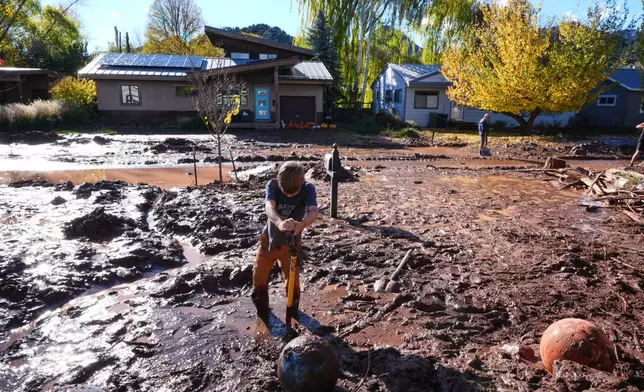
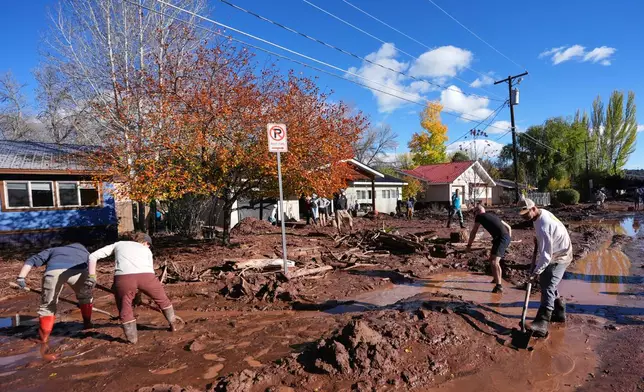
Finnley Ewing uses a shovel to dig mud from a street in his neighborhood after a series of storms on Monday, Nov. 2, 2026, in Durango, Colo. (AP Photo/Gregory Bull)
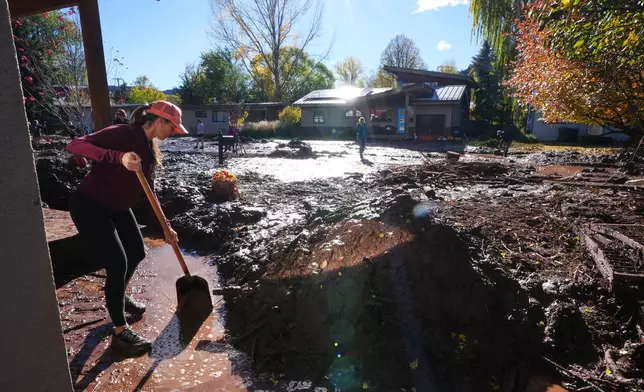
Maggie Emerson clears mud from her property after a series of storms on Monday, Nov. 2, 2026, in Durango, Colo. (AP Photo/Gregory Bull)
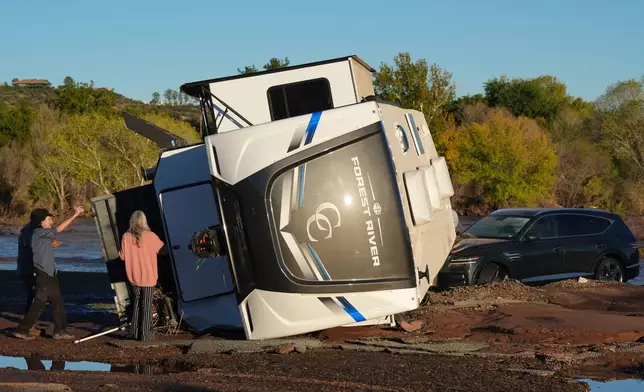
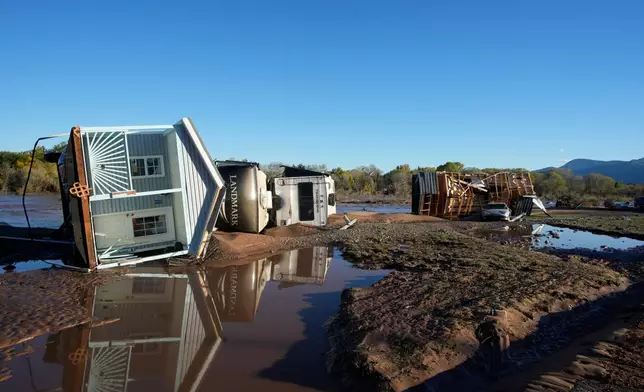
Residents at a local RV park survey the damage of their mobile home after flooding along the Verde River in Camp Verde, Ariz., Monday, Nov. 2, 2026. (AP Photo/Ross D. Franklin)
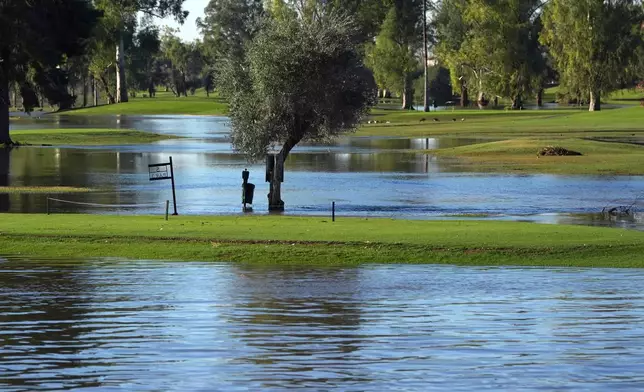
After heavy rains flood waters flow through the Continental Golf Club in Scottsdale, Ariz., Monday, Nov. 2, 2026. (AP Photo/Ross D. Franklin)
Mobile homes, cottages and vehicles are strewn along the Verde River after severe flooding at a local RV park in Camp Verde, Ariz., Monday, Nov. 2, 2026. (AP Photo/Ross D. Franklin)
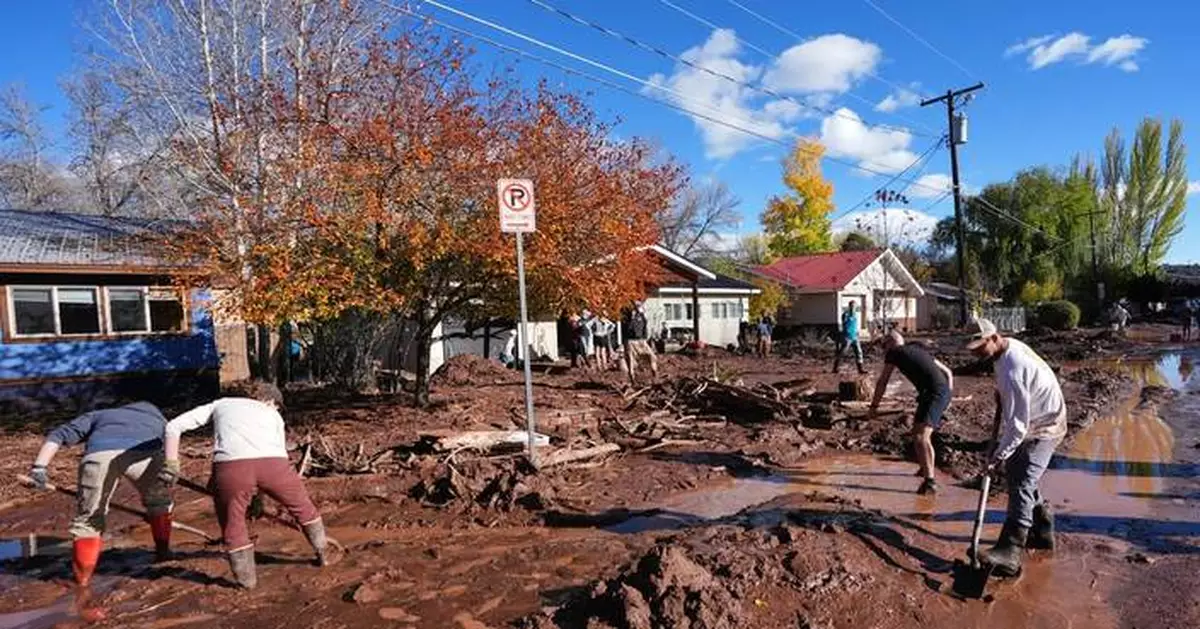
Neighbors clear mud and debris from a street after a series of storms on Monday, Nov. 2, 2026, in Durango, Colo. (AP Photo/Gregory Bull)
“This is quite a disaster for everybody, especially in the low-lying areas,” Ellis said. “We dig in and dig out, and that’s what it’s going to take."
In all, more than 20 trillion gallons (76 trillion liters) of rain — 10 months of the flow over Niagara Falls — have fallen on the Four Corners states and Nevada in the past two weeks, according to former National Oceanic and Atmospheric Administration chief scientist Ryan Maue.
The U.S. Southwest has endured two recent major rounds of storms, with rain falling on ground already saturated from an especially wet fall.
One person died in floodwaters, and police suspect a second death was weather-related.
Skies were clearing after some rivers crested at levels lower than forecasted overnight, offering a measure of relief to areas that were bracing for more catastrophic flooding, including Shiprock and Farmington in northwestern New Mexico. Devin Neeley, a spokesperson for San Juan County, New Mexico, said major rivers in the area remained above flood stage.
“Now it’s a waiting game for the waters to recede,” Neeley said, adding that the county would likely soon lift evacuation orders impacting at least 20,000 residents and begin to focus on recovery.
The situation wasn’t unique to the region. As downpours swamped eastern Florida, at least 20 polling places were changed in at least eight counties after Gov. Ron DeSantis issued an emergency declaration.
Flooded areas included Brevard County on the east-central coast, where over 2 feet (61 centimeters) of rain has fallen since Sunday. In Palm Beach County in southeast Florida, over 20 inches (51 centimeters) fell, cutting off access to condominiums and submerging cars in parking places.
Some communities in Colorado and Utah, too, had to make alternative Election Day voting plans because of the flooding.
Alyssa Gallegos, a contract mail carrier for the U.S. Postal Service, spent Tuesday morning helping get mail-in ballots from mailboxes to the post office in time for a 7 p.m. deadline for counting.
“Regardless if we’re in a crisis and having a hard time, the world doesn’t stop turning,” Gallegos said. “They’re not gonna wait for us, so we just gotta stay with it.”
In Rock Point, Arizona, in the Navajo Nation, officials were forced to relocate a polling place because of flooding impacts. Valinda Shirley, vice president of the Rock Point Chapter, the local seat of tribal government, said hundreds of voters are still unable to cast ballots in both the U.S. midterms and the Navajo Nation presidential election because a major bridge closure and washed-out dirt roads have left them stranded on election day.
“I have people that are still texting me asking how I can get them out so they can vote,” Shirley said Tuesday afternoon.
An eighth-generation Pagosa Springs local, Gallegos said her ancestors went through a catastrophic flood in 1911 but no one alive in her family expected anything like it in their lifetimes.
She was watching videos of the devastation on social media Monday when she spotted her stepfather’s home swept off its foundation by raging floodwaters. Inside, she knew, were old photographs and other treasured possessions from her childhood.
“My heart’s crushed,” Gallegos said. “And it’s not just him, it’s all the people.”
Cleanup and repairs could take weeks or more in Pagosa Springs, a tourist town famous for hotels with riverside hot springs.
The downtown area remained closed to traffic Tuesday while workers used heavy equipment to clear mud, water and debris from roads.
Walkways and bridges collapsed or were heavily damaged. Outside a resort entrance stacked with sandbags, a sign read “Love Pagosa.”
In Durango, about 60 miles (96.5 kilometers) to the west, Willow Bradner's ranch-style home was surrounded by about 2 feet (60 centimeters) of mud. Nearly 5 feet (1.5 meters) of water from an overflowing creek poured inside at one point.
“Our basement became a soup bowl,” she said.
The basement had been a selling point when she bought the property in 2024. Bradner said she and her husband once asked if they needed flood insurance and were told they were not in a flood zone.
They and their teenage daughter had been offered a place to stay through the end of the year. But the loss of their home and uncertainty about the future were overwhelming, Bradner said.
"The majority of our savings is in this house,” she said. “We have to dig deep, and we have to rebuild.”
Peters reported from Santa Fe, New Mexico, and Gruver from Fort Collins, Colorado. Kathy McCormack in Concord, New Hampshire contributed.

A resort along the San Juan River is damaged by heavy flooding Tuesday, Nov. 3, 2026, in Pagosa Springs, Colo. (AP Photo/Brittany Peterson)
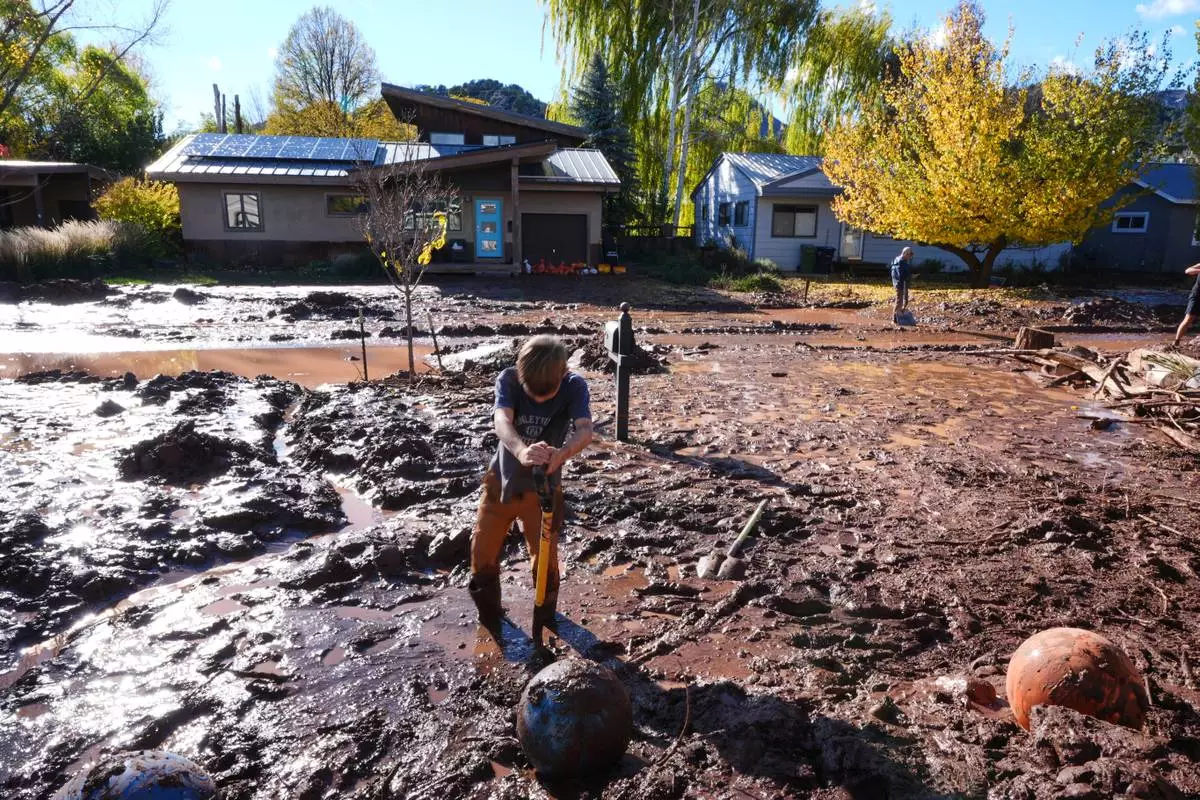
Finnley Ewing uses a shovel to dig mud from a street in his neighborhood after a series of storms on Monday, Nov. 2, 2026, in Durango, Colo. (AP Photo/Gregory Bull)
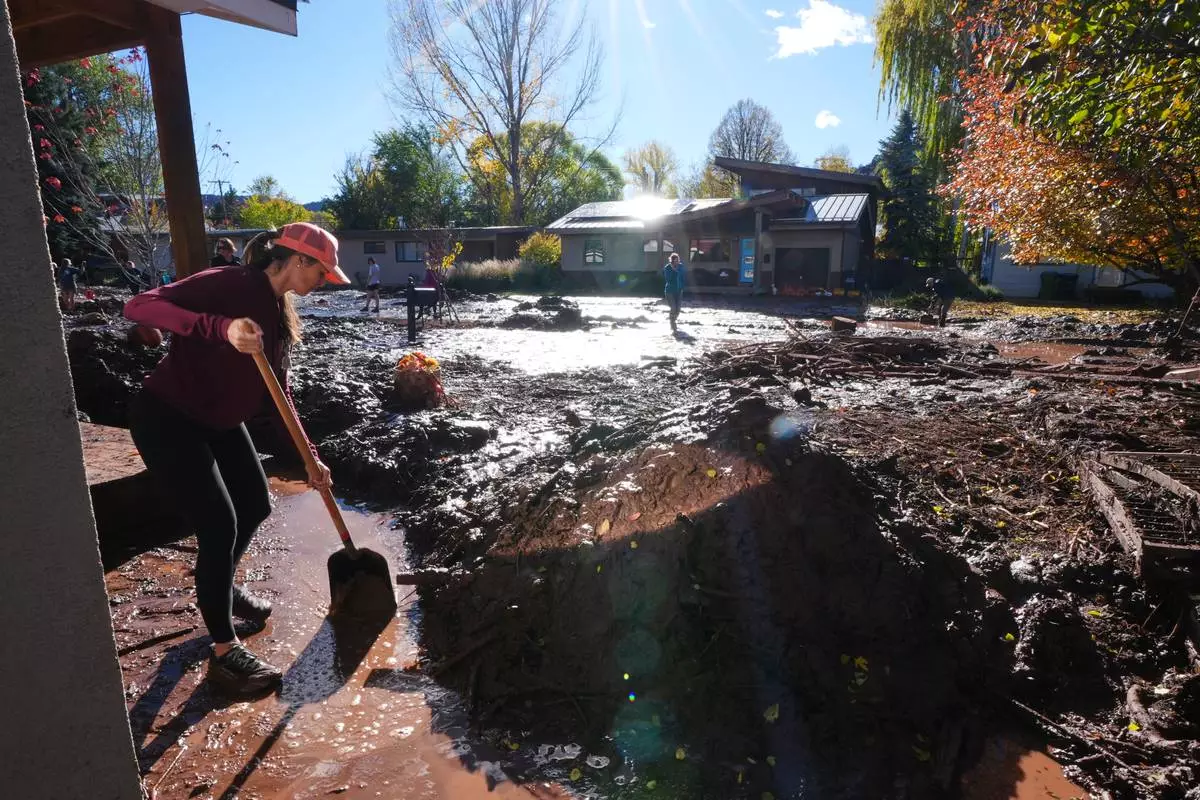
Maggie Emerson clears mud from her property after a series of storms on Monday, Nov. 2, 2026, in Durango, Colo. (AP Photo/Gregory Bull)
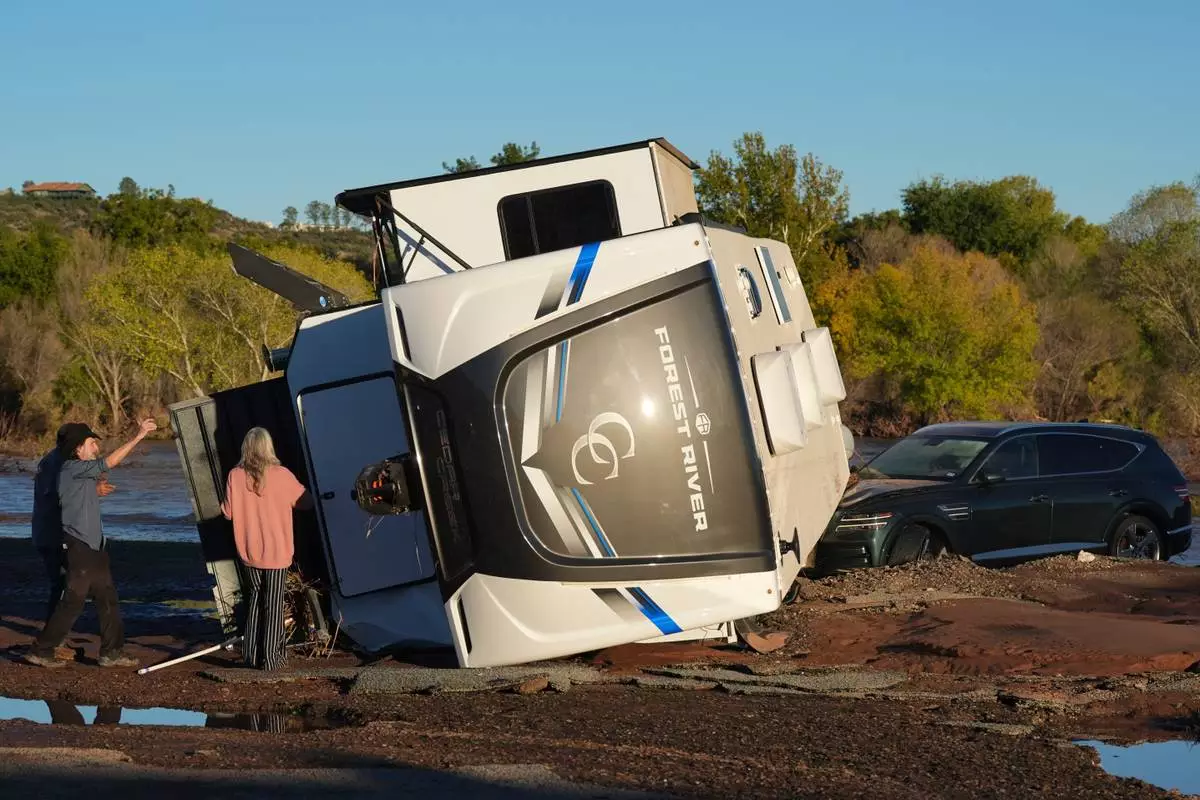
Residents at a local RV park survey the damage of their mobile home after flooding along the Verde River in Camp Verde, Ariz., Monday, Nov. 2, 2026. (AP Photo/Ross D. Franklin)
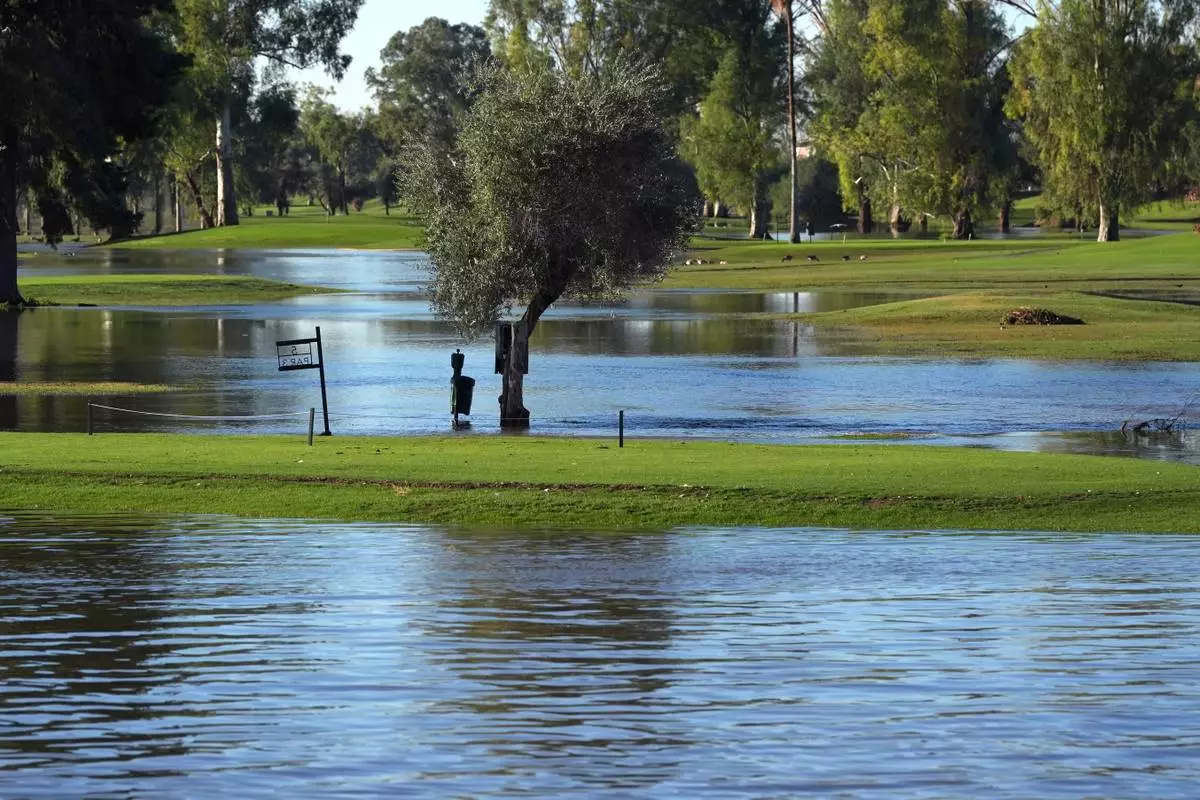
After heavy rains flood waters flow through the Continental Golf Club in Scottsdale, Ariz., Monday, Nov. 2, 2026. (AP Photo/Ross D. Franklin)
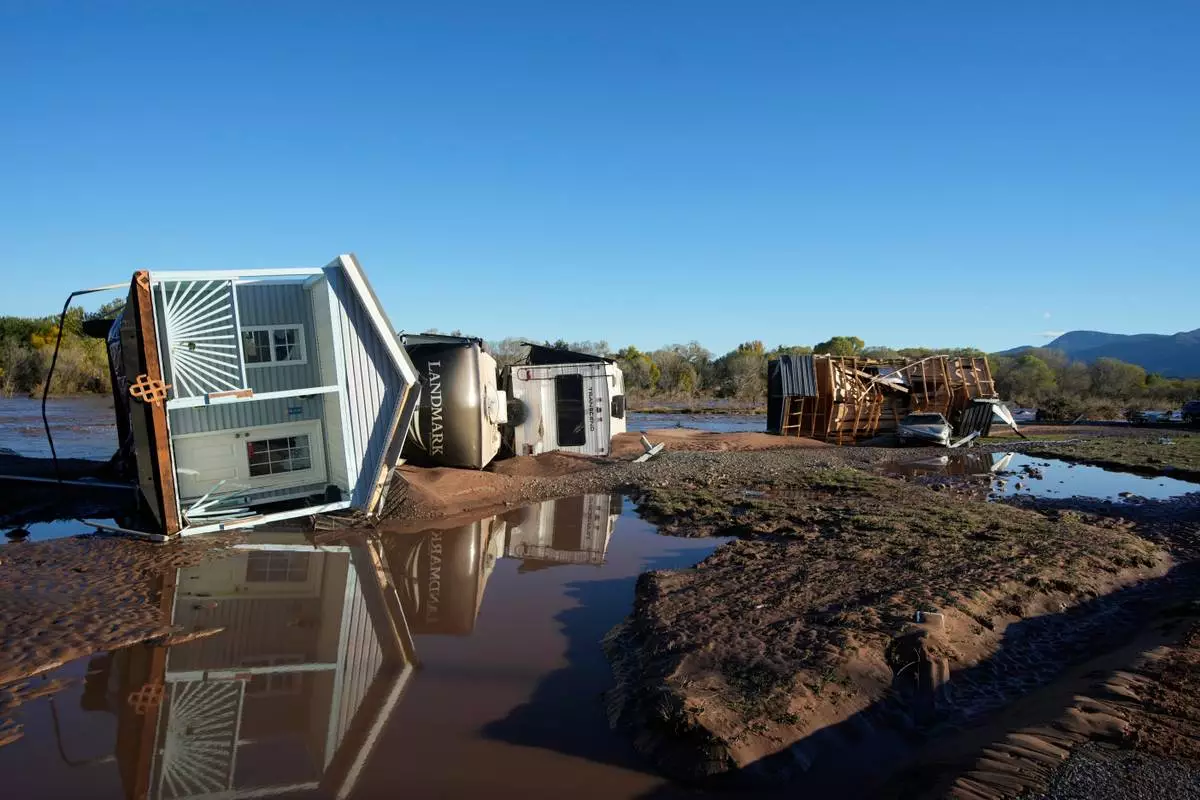
Mobile homes, cottages and vehicles are strewn along the Verde River after severe flooding at a local RV park in Camp Verde, Ariz., Monday, Nov. 2, 2026. (AP Photo/Ross D. Franklin)
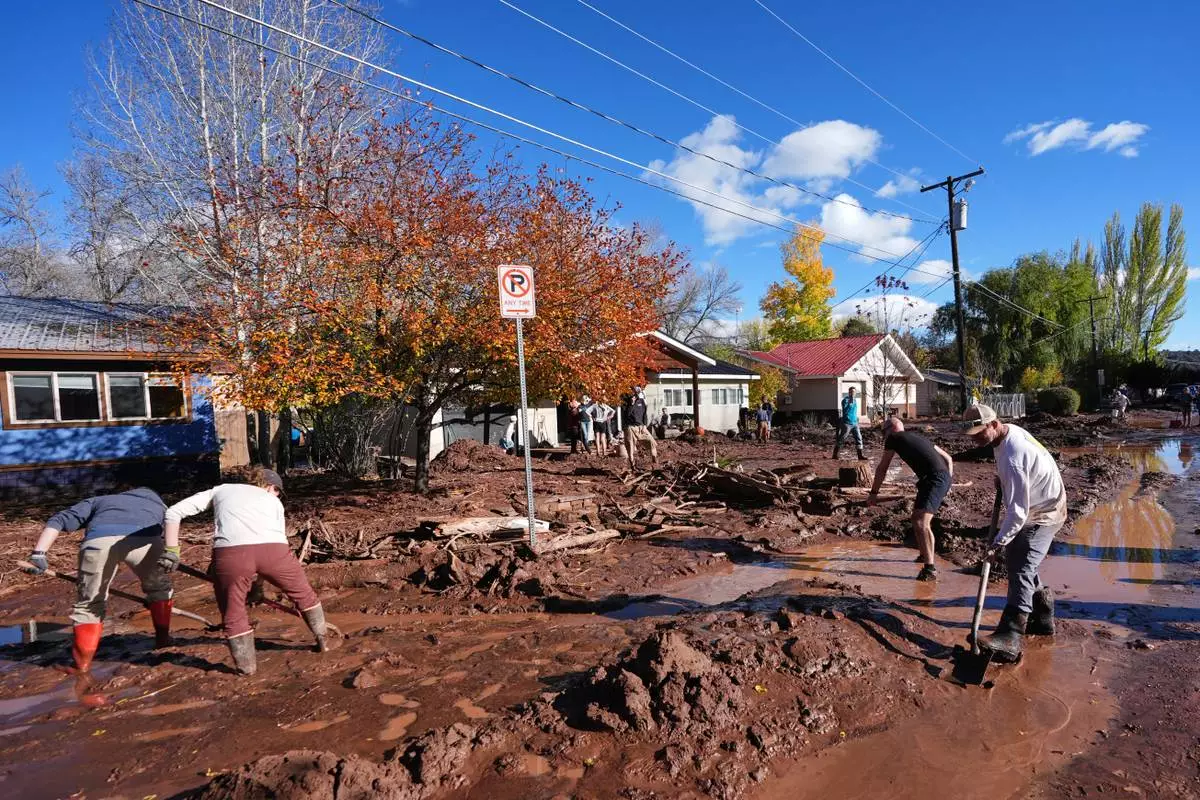
Neighbors clear mud and debris from a street after a series of storms on Monday, Nov. 2, 2026, in Durango, Colo. (AP Photo/Gregory Bull)
Election Day is here. Voters nationwide will decide control of the U.S. House and Senate. Democrats must flip four seats in the Senate and three seats in the House to wrest control of the chambers from Republicans. Control of Congress would give Democrats a way to push back against President Donald Trump’s agenda during the final two years of his term. The battle for control is playing out mostly in states and districts Trump previously won by wide margins.
All eyes are on Senate contests in Alaska, Iowa, Kansas, Maine, Michigan, Ohio and Texas, while House battlegrounds are scattered across the country.
Democrats have homed in on Trump’s poor approval rating, public dissatisfaction with the war in Iran and affordability concerns. Republicans have focused on social issues, while Trump has made himself the central character of the midterms.
Here's the latest:
House Democrats have opened a phone bank in Washington with dozens of volunteers calling voters in key House races across the country before polls close.
They’re encouraging voters to cast ballots as Democrats work to wrest control of the House from Republicans.
Some Chicago polling places ran out of paper ballots.
Chicago Board of Elections spokesperson Julie Metea said more ballots would be printed and that everyone in line by the time polls close would be able to vote — though it might be a long wait for an electronic voting machine. Voters could also go to one of the city’s universal voting centers.
In the Logan Square neighborhood, Jenna Roggensack, 37, said poll workers told her in the morning to return later. Because she’s a teacher who had the day off, that was possible — if inconvenient. When she returned, she said she had to wait an hour and a half, though ultimately did get to vote.
Later in the afternoon, though, a poll worker emerged and told those waiting outside that they had run out of paper ballots again.
Voters overwhelmingly feel frustrated with the way things are going in the U.S. today, according to The AP Voter Poll, which points to a midterm electorate that is deeply unhappy with the country’s direction and pessimistic about the future.
About three-quarters of voters say they feel “angry” or “dissatisfied” with the country’s current trajectory. Only about one-quarter feel “satisfied” or “enthusiastic.” Dissatisfaction was particularly high in blue states like California and Massachusetts, but even in deep-red states, a majority of voters were at least “dissatisfied.”
Voters are also displeased with the condition of the economy, with roughly three-quarters saying it is “not so good” or “poor.” That’s in line with what U.S. adults have said in recent months in AP-NORC polling.
Voters say the economy and the state of democracy are the top issues facing the country, with high costs and government corruption weighing heavily on many Americans’ minds as they cast a ballot in Tuesday’s midterm elections.
About 4 in 10 U.S. voters nationally say the economy is the most important issue facing the country, as most express concern about gas prices and the cost of groceries. About 3 in 10 say the state of democracy is the top issue. Only about 1 in 10 say the same about immigration or health care, and few name foreign policy or crime.
Roughly half of U.S. voters say government corruption and the cost of living are “crucial” to their vote for Congress, much higher than the share who say that about immigration enforcement policies, the war in Iran or AI data centers.
The handful of House members who flipped the toughest seats in 2024 all face challenging races again this year. Can they avoid a sophomore slump?
Most of these districts flipped to the GOP in 2024, riding Trump’s coattails as he clinched a second term. The good news for these Republicans is that it’s almost always easier to win a seat that you already represent. The bad news is that many of them won their seats by tiny margins and are facing a much tougher national environment this time around.
See other House races to watch in the AP’s guide to battleground congressional districts here.
Relatively few voters have positive things to say about Trump’s economic leadership.
About two-thirds of U.S. midterm voters say Trump’s policies have worsened economic conditions in the U.S., while only about 3 in 10 say they’ve improved things. Similarly, about two-thirds of voters said Trump’s tariff policies have hurt the national economy.
Views of Trump’s priorities more broadly — and his capabilities as a leader — are also mostly negative. More than half of voters say Trump is not a strong leader, does not fight for people like them, does not have the right priorities and does not have the mental capability to serve effectively as president.
About 6 in 10 voters said Trump places a higher priority on his own personal interests than the country’s interests, while about 4 in 10 said he puts more weight on the country’s interests.
The Trump administration notified prominent Democratic attorney Marc Elias and others that they may be targets of the inquiry, which focuses on a Senate candidate who shares a name with the Republican incumbent.
That’s according to two people familiar with the matter, who spoke on condition of anonymity to discuss an ongoing investigation.
Trump’s DOJ is investigating retired teacher Dan J. Sullivan’s decision to run for Senate, which the president says will confuse voters because he shares a first and last name with Republican incumbent Dan S. Sullivan. The New York Times reported that Democrat Mary Peltola’s campaign appeared to be involved in recruiting Dan J. Sullivan.
“This administration has repeatedly weaponized the DOJ against the President’s political enemies despite zero evidence of wrongdoing, and we are the latest targets,” Elias said in a statement Tuesday.
▶ Read more
Most voters want to see Congress provide more checks and balances on the presidency and disapprove of how Congress is handling its job.
The AP Voter Poll shows roughly 7 in 10 voters say Congress is doing “not enough” to provide checks and balances on the presidency. Only about 2 in 10 say it’s doing “about the right amount,” and about 1 in 10 say Congress is doing “too much.”
The survey reflects deep unhappiness with the president and Congress. About 6 in 10 voters disapprove of how Donald Trump is handling the presidency, while about three-quarters of voters disapprove of the way Congress is handling its job.
Voters are in the mood for change, according to the AP Voter Poll, which found that roughly three-quarters of voters say they feel “angry” or “dissatisfied” with the way things are going in the country today. Most appear to blame the Trump administration for high costs. About 6 in 10 say higher-than-usual prices are “more because of Trump’s policies” rather than “more because of factors outside Trump’s control.”
Additionally, about 70% of voters want Congress to provide more checks and balances on the presidency.
The AP Voter Poll, an expansive survey of the electorate, suggests most are deeply unhappy with Trump, with roughly 6 in 10 saying they disapprove of how he’s handling the presidency.
About 4 in 10 say the economy is the most important issue facing the country, while 3 in 10 say the most important issue is democracy, according to the poll, well above the number who said the same about crime, health care and immigration.
▶ Read more
Federal immigration officials took to social media on Election Day to warn against illegal voting by noncitizens.
In a message on X, U.S. Immigration and Customs Enforcement wrote: “If you vote illegally, we will find you. We will track you down, arrest you, and prosecute you. There will be no escape.”
The agency did not return messages seeking comment about the post. Throughout Tuesday, it also posted about arrests of noncitizens accused of voting.
While that has been a major emphasis for the agency this year, the number of arrests and earlier investigations in the states demonstrate the problem is rare.
David Becker, executive director of the Center for Election Innovation & Research, called the post unfortunate but said heavy early voting suggested the administration’s tactics appeared to have no effect on turnout.
“If there were individuals in this administration who thought that they could scare voters away from this election, they’re going to be disappointed,” he said.
Many incumbents running for reelection in redrawn districts are facing a very different set of voters than they currently represent.
Several districts went from being majority-nonwhite to majority-white after mid-decade redistricting. These are also some of the places that shifted the most toward Trump when comparing the 2024 vote margin under old and new congressional boundaries.
Similarly, a number of districts shifted from being majority-white to being majority-nonwhite. Many of these districts also shifted toward Harris, but some in Texas and Florida moved further to the right.
Michigan election officials objected after hearing that federal poll monitors in Dearborn and Flint were asking workers about their training or requesting to see training materials, a spokesperson said.
“This is not permitted under the law,” said Angela Benander of the Department of State.
The U.S. Justice Department agreed and pledged to inform the election monitors, Benander said.
Separately, she said federal monitors in Lansing were trying to talk to voters, which is OK if the exchange happens after a ballot is cast and is outside the polling place.
“We don’t have any concerns,” Benander said.
Officials in Pennsylvania’s Chester County say they’re extending voting hours in three precincts after “machine set-up issues” delayed the opening of polling sites just west of Philadelphia.
The Chester County Court of Common Pleas granted the three precincts a 30-minute extension, meaning voters will be able to cast ballots until 8:30 p.m. EST, according to the county.
Voters casting ballots at these three sites after 8 p.m. EST — when polling stations close statewide — will use provisional ballots.
Election officials extended voting hours at each location after county election supervisors reported delays caused by technical problems with computers.
The longest extension granted by the North Carolina State Board of Elections was 45 minutes at one location in Columbus County, where officials said computer problems forced election workers to switch to backup paper poll books, slowing lines Tuesday morning.
Two precincts in Hertford County and one each in Lenoir and Wilson counties also will stay open an extra 15 to 30 minutes. The five-member board approved each extension unanimously.
The extended hours mean state election officials in North Carolina won’t begin reporting results until after the last polling site closes at 8:15 p.m. ET, said Adam Steele, an attorney for the election board. He said county election officials will tally their votes without delay.
Polls in North Carolina close at 7:30 p.m. ET, unless extended by the board.
At least half of U.S. adults have a negative opinion of the two parties, according to AP-NORC polling.
About half have a “very” or “somewhat” unfavorable view of the Democratic Party in an AP-NORC poll from October, while just over half say that about the Republican Party.
Roughly 7 in 10 Democrats hold a favorable view of their own party, which is down from 85% in September 2024. Republicans, however, feel about as positively as they did two years ago, with 85% in the latest polling saying they have a favorable view of the Republican Party.
Only about 2 in 10 U.S. adults feel “very” or “somewhat” optimistic about the future of the Democratic Party or the Republican Party. Republicans are a bit more optimistic about their party’s future than Democrats are — slightly fewer than half of Republicans, 46%, say they are feeling positive, compared to 35% of Democrats.
In southeastern Texas, Juventino Sáenz accompanied a relative to the polls in McAllen.
The 91-year-old Korean War veteran who said he’d voted early shared his feelings about Trump’s decision to go to war with Iran.
Sáenz blamed Iran but also blamed Trump, saying the president should have gone to Congress for permission.
“He couldn’t do it just because he’s the president,” Sáenz said.
He said he’s backed Republicans in the past, citing his votes for Ronald Reagan and George H.W. Bush for president.
But in the closely watched Texas U.S. Senate race, Sáenz said he voted for Talarico, the Democrat, because he didn’t like Paxton’s record or that Paxton’s own Republican Party impeached him.
“He was doing a lot of things that were not right,” he said of Paxton.
Gas prices have shot up by nearly a third since Trump launched his war against Iran, fueling voter distress about the economy and high prices. But another fuel source has risen even higher and caused potentially more pain.
That’s diesel fuel, which powers not just a whole bunch of farming and industrial equipment but the ships and trucks that transport a range of goods and services to voters’ doors.
Diesel prices have nearly doubled since the start of the Iran war. A disproportionate share of the oil that comes through the Strait of Hormuz is used to make diesel. Ukrainian strikes on Russian refineries that produce the fuel added to the shortage.
That pushed Trump to take controversial action to try to lower the price of diesel, cutting a deal with Russian President Vladimir Putin to sell diesel from his country to the U.S. But even that hasn’t significantly brought diesel prices down.
Maryland’s Wes Moore is the only Black governor in the U.S., and he’s only the third elected Black governor in history, all of them Democrats and men.
But Moore, who’s heavily favored for reelection, could soon have company.
There are seven additional Black major-party nominees for governor. They include Republicans and Democrats, men and women. Each would be the first Black chief executive in their respective states.
Georgia’s Keisha Lance Bottoms, the former Atlanta mayor and a Democrat, and Minnesota’s Lisa Demuth, a former state legislative leader and a Republican, could each make history. No Black woman has ever been elected as governor.
Two Black Republican men are on gubernatorial ballots: Byron Donalds in Florida and John James in Michigan. Both are U.S. representatives currently.
Three other Black men, all Democrats, round out the slate: Aaron Ford in Nevada, Jermaine Johnson in South Carolina and David Crowley in Wisconsin.
More than 59 million people have voted so far, according to an Associated Press analysis.
The advance vote has spiked ahead of Election Day compared to 2022. There were 59.7 million ballots cast as of Tuesday, compared to a little over 58 million in 2022.
The tally includes early in-person and mail balloting.
The election will determine which party controls the House and Senate.
At Trump’s urging, Republicans in eight states adopted new congressional districts to try to gain an edge in the midterm elections. But after a long legal battle, Missouri’s new map was blocked by both the U.S. Supreme Court and the Missouri Supreme Court because of a referendum petition.
Voters are now deciding whether to uphold or reject the new map. If approved, it could be used in the 2028 election.
Maryland voters are deciding a constitutional amendment that also could pave the way for a new House map in the 2028 election. Democratic proponents have urged a “yes” vote as a means to “stop Trump.”
Some Colorado Democrats also want to redistrict. But a citizen initiative on the ballot there would prohibit any potential redistricting for 2028 from favoring one political party and require approval from both an independent commission and the state Supreme Court.
Democrats’ path to winning the House could rest with progressive candidates challenging Republicans in districts that swung between Trump and Joe Biden.
In California’s 22nd District, incumbent Rep. David Valadao faces Democratic challenger Randy Villegas, who has Sen. Bernie Sanders’ endorsement.
In Colorado’s 8th District, Rep. Gabe Evans faces Democrat Manny Rutinel, who had campaigned with New York City Mayor Zohran Mamdani.
In Michigan’s 7th District, Rep. Tom Barrett is up against Will Lawrence, a longtime liberal activist and former member of the Democratic Socialists of America.
Republicans are hoping their rivals’ political backgrounds are a mismatch in districts that are by and large evenly divided politically.
Astronaut Anil Menon’s sleeping compartment aboard the International Space Station doubled as his voting booth. Menon said in a brief video posted via X on Tuesday that he used his computer to fill out and submit an electronic ballot to Harris County, Texas. Crewmates Jessica Watkins and Luke Delaney did the same.
Harris County is home to NASA’s Johnson Space Center and Mission Control.
U.S. astronauts have been voting in space since 1997.
The last time California elected a Republican to statewide office, George W. Bush was president, entertainer James Brown was still alive and the second “Pirates of the Caribbean” movie was the biggest film of the year.
Republican Steve Hilton is trying to defy those odds and end his party’s 16-year drought in a state with 4.5 million more registered Democratic voters than Republicans.
He’s tried to win over Californians who rarely vote Republican by repeating the motto “Just try it!”; blaming Democratic leadership for the state’s high cost of living; and releasing splashy ads, sometimes using AI to mock his Democratic rival, Xavier Becerra.
Becerra, meanwhile, has campaigned on a promise to uphold the state’s status as a liberal counterweight to Trump’s policies. He’s tried to tie Hilton to Trump, who endorsed him in the primary.
The ballot measure, known as Proposition 40, has racked up support from progressives like Vermont Sen. Bernie Sanders, who has framed it as a monumental step toward reining in deep wealth inequality, while also drawing criticism from Gov. Gavin Newsom and other Democrats, who say it will trigger wealthy people to flee the state.
The ballot fight has also been defined by the copious amount of money tech moguls and venture capitalists have poured into it. Google co-founder Sergey Brin alone has donated more than $100 million to a political committee working to defeat the proposal.
The first-in-the-nation measure would levy a one-time, 5% tax on the wealth of Californians whose net worth exceeds $1 billion. Most of the money would be used to backfill federal funding cuts to healthcare, while 10% would go toward education and food assistance programs.
Abortion is on the ballot in four states including Missouri, where voters are being asked to erase the constitutional right to abortion they adopted two years ago.
The Republican-dominated state legislature advanced the measure, which also would write into the state constitution a ban on much gender-affirming healthcare for transgender minors.
Conservative Idaho’s question would remove a ban if it were adopted.
A measure in Nevada would ensure access until at least fetal viability and one in Virginia would create a right to abortion for the first two trimesters of pregnancy.
Since the Supreme Court overturned Roe v. Wade in 2022 and allowed enforcement of state abortion bans, abortion-rights supporters have prevailed on 14 of the 17 ballot measures across the U.S.

Election official Heather Russell, right, assists a voter at the Nolensville Recreation Center polling place Tuesday, Nov. 3, 2026, in Nolensville, Tenn. (AP Photo/George Walker IV)

A voter casts their ballot at El Mansour, a Moroccan restaurant, on Election Day Tuesday, Nov. 3, 2026, in San Francisco. (AP Photo/Jeff Chiu)
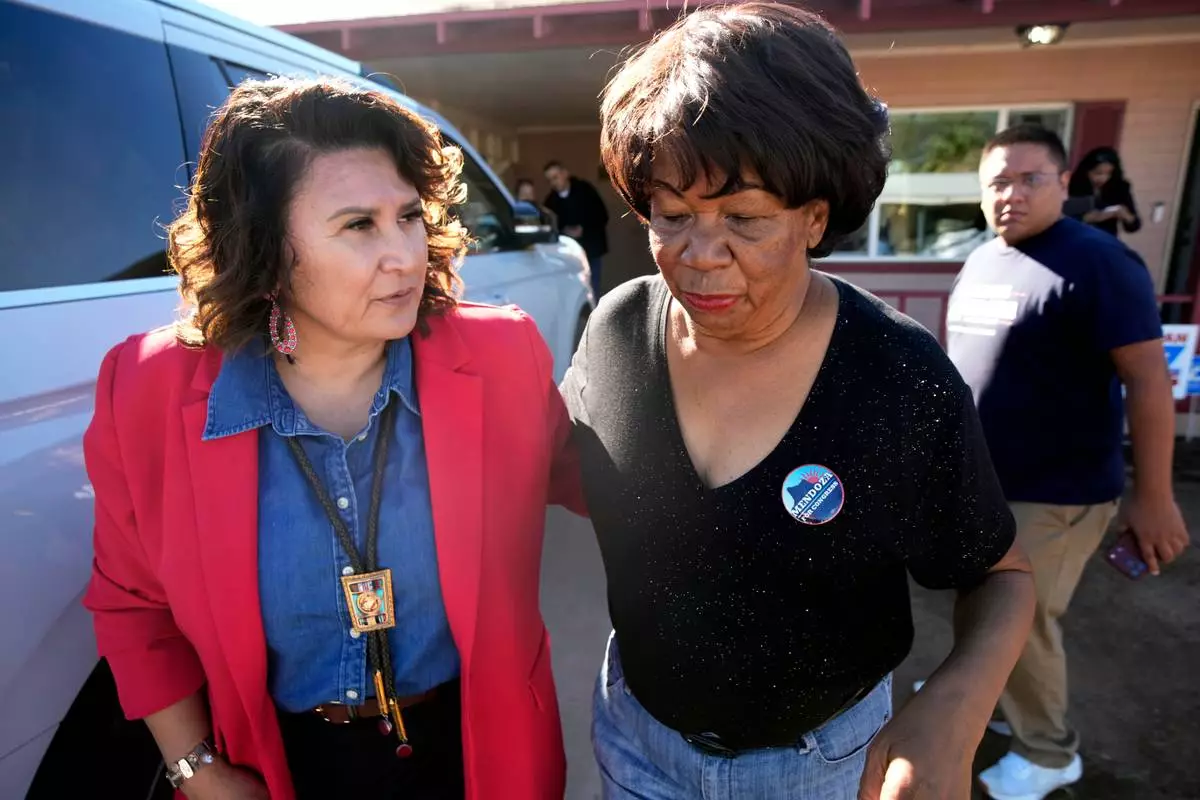
JoAnna Mendoza, left, Democratic candidate for Arizona's Sixth Congressional District, talks with supporter Brenda Robbins in Casa Grande, Ariz., Tuesday, Nov. 3, 2026. (AP Photo/Ross D. Franklin)
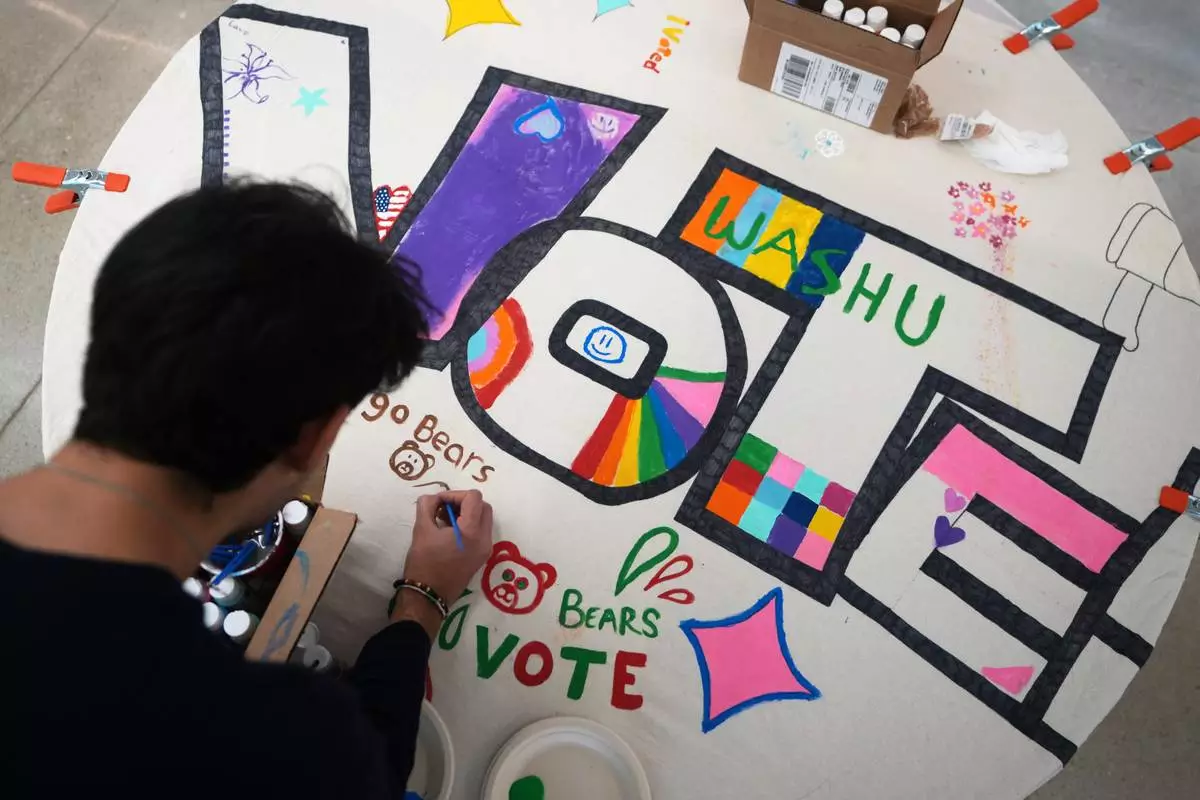
Santiago Rivera paints on a sign outside a polling place after casting his ballot on Election Day during the midterm election Tuesday, Nov. 3, 2026, in Clayton, Mo. (AP Photo/Jeff Roberson)
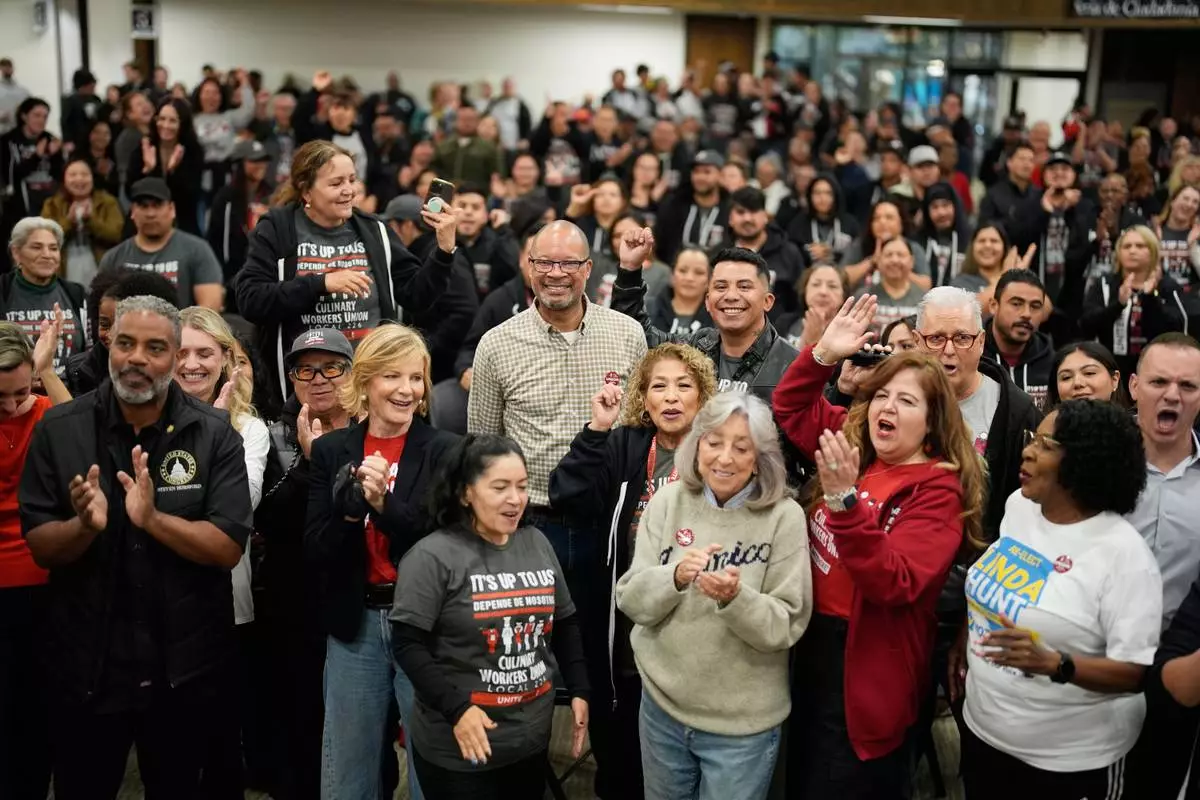
Rep. Susie Lee, D-Nev, and Democratic gubernatorial candidate Nevada Attorney General Aaron Ford join members of the Culinary Workers Union on Election Day Tuesday, Nov. 3, 2026, in Las Vegas. (AP Photo/John Locher)

A voting location is seen at the Greater Middle Baptist Church on Nov. 3, 2026 in Memphis, Tenn. (AP Photo/Kevin Wurm)

Jerry Lorimer votes at the Kanwaka township hall Tuesday, Nov. 3, 2026, near Lawrence, Kan. (AP Photo/Charlie Riedel)
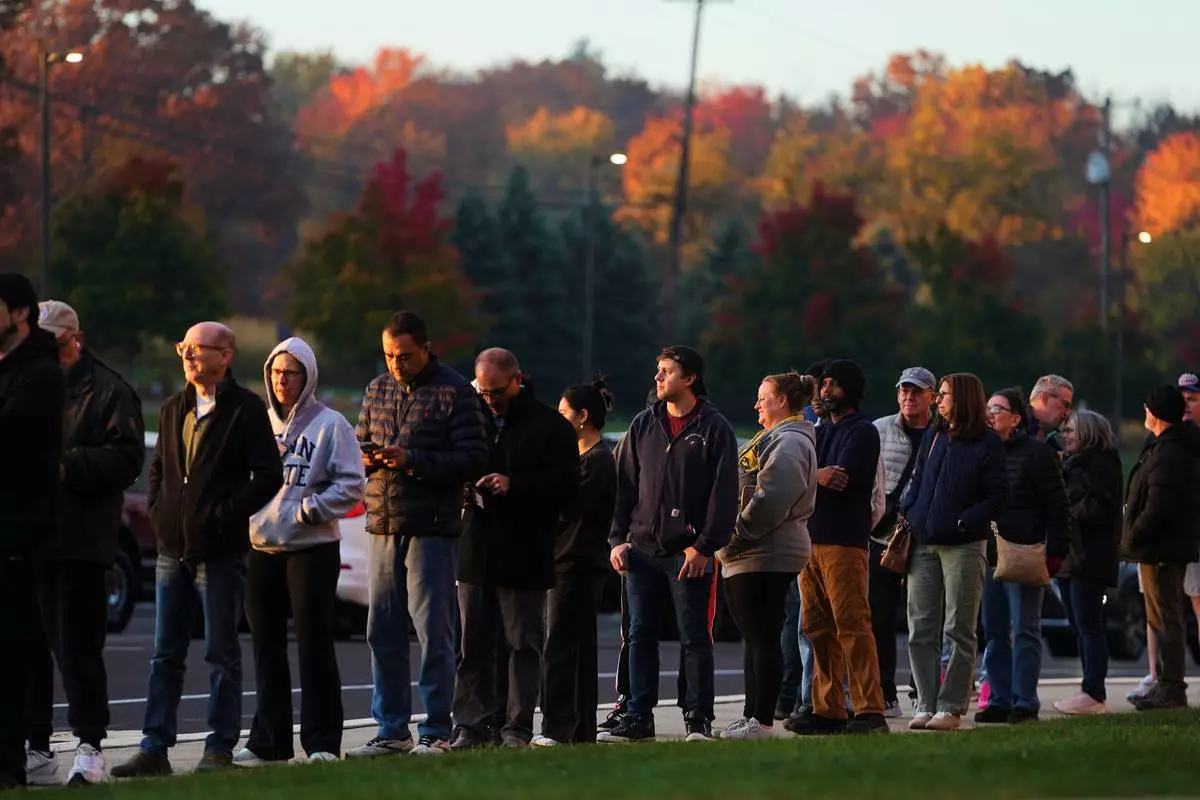
Voters wait in line to cast their ballots at a polling place at Central Bucks South High School on Election Day in Warrington, Pa., Tuesday, Nov. 3, 2026. (AP Photo/Matt Rourke)
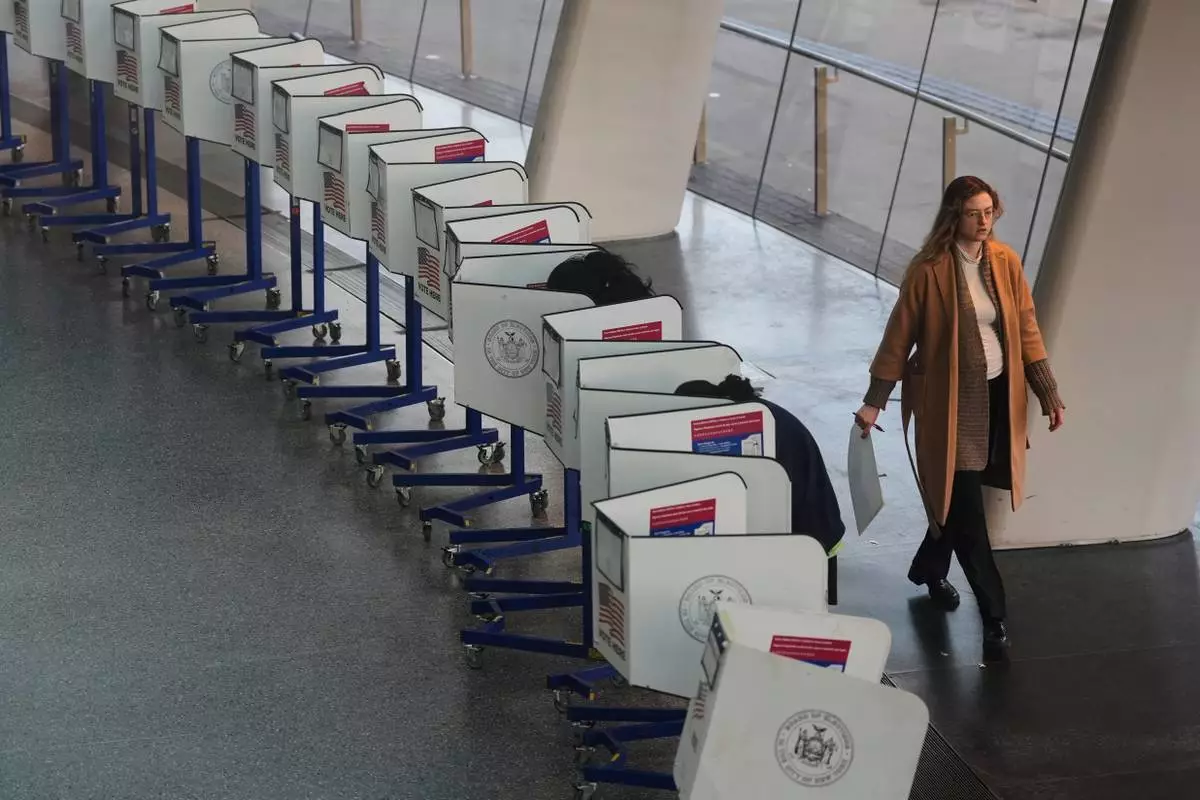
A voter carries their ballot at the Brooklyn Museum in New York on Election Day, Tuesday, Nov. 3, 2026. (AP Photo/Yuki Iwamura)
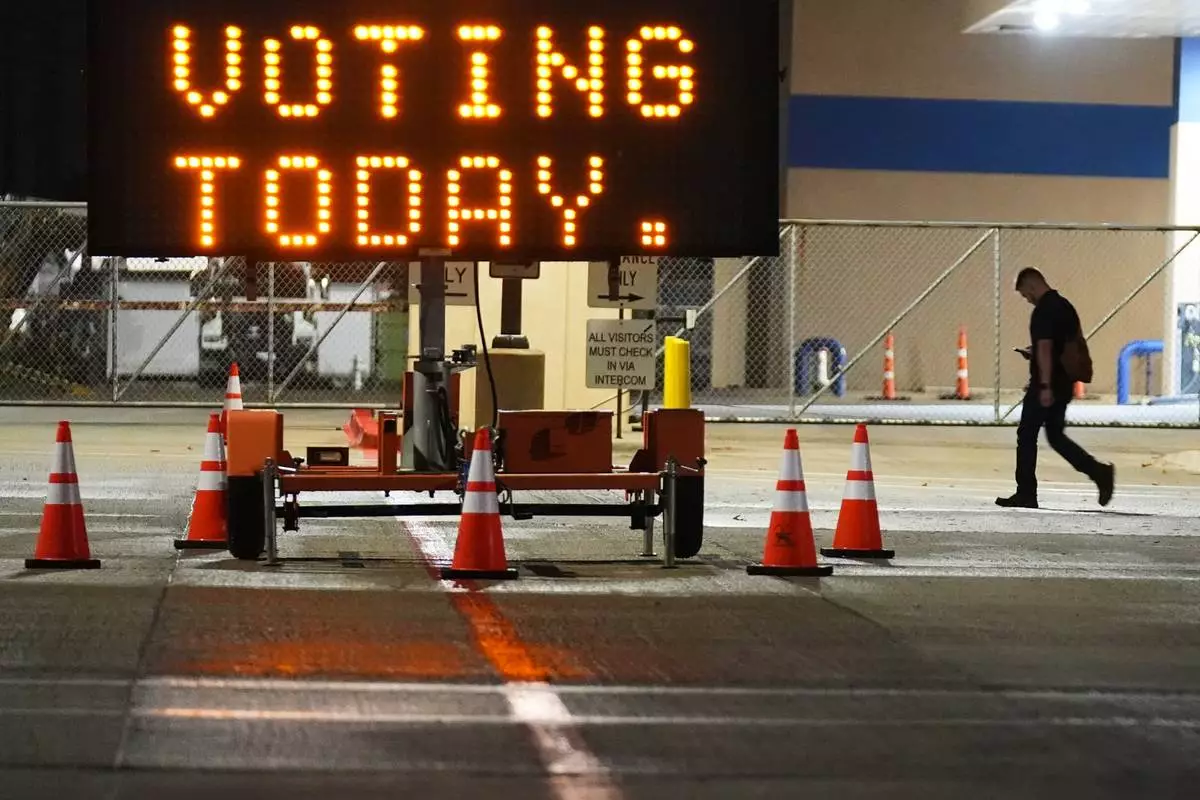
A person walks to the City of Arlington South Service Center ahead of the polling place opening on Election Day, Tuesday, Nov. 3, 2026, in Arlington, Texas. (AP Photo/Julio Cortez)