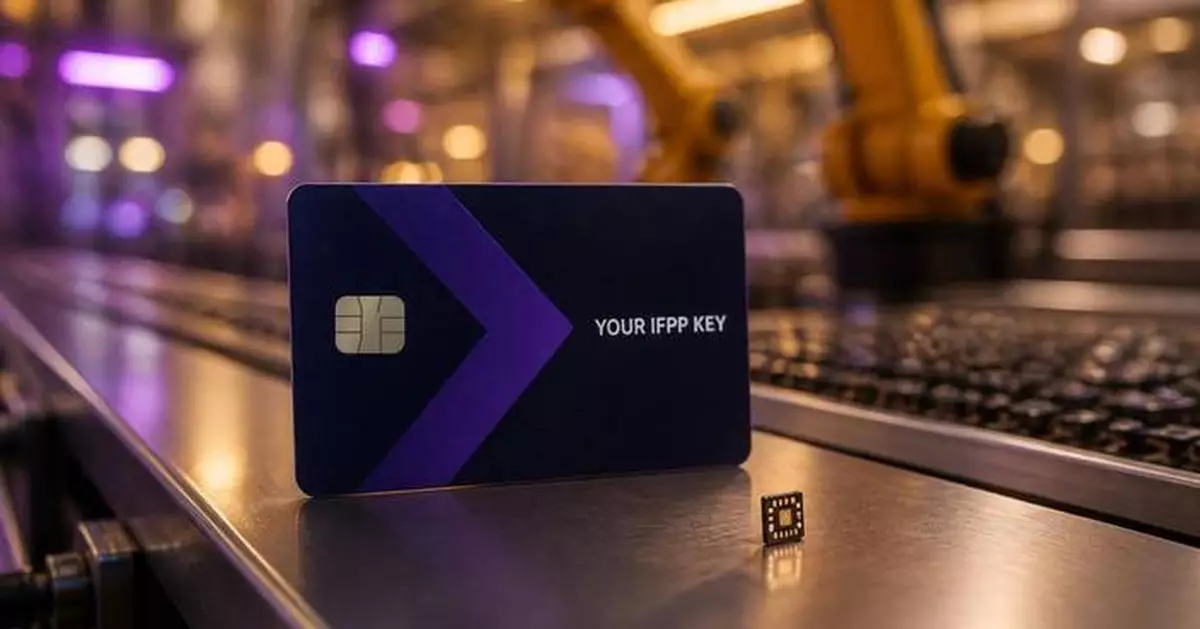
AMSTERDAM--(BUSINESS WIRE)--Nov 4, 2026--
Orange, one of the world’s leading telecom operators, has joined the global quantum-safe In-Factory Profile Provisioning (IFPP) program, jointly launched by Acceleronix and IDEMIA Secure Transactions at MWC Barcelona in February.
This press release features multimedia. View the full release here: https://www.businesswire.com/news/home/20261104070181/en/
The program enables device makers to build a single product for every market and connect it to the Orange network before it leaves the factory. Acceleronix and IDEMIA Secure Transactions will demonstrate the solution live at electronica 2026, the international electronics trade fair, at Messe München, Hall C2, Stand 601, from 10 to 13 November.
Most connected devices share the same weak spot: provisioning and testing on the production line. In-Factory Profile Provisioning (IFPP) addresses this challenge by enabling connectivity provisioning at scale, including in air-gapped manufacturing facilities.
With IFPP, OEMs can load the operator profile onto the eSIM at the end of their own production line, so every device leaves the factory tested, provisioned and ready to connect. Quantum-safe binding protects operator credentials throughout production, and IFPP works across all eSIM form factors.
One SKU. Every market. Today, connectivity is decided at the design stage and locked in through SIM variants, regional SKUs and separate stock. IFPP moves that decision to the very end of production. Manufacturers build one hardware platform and assign the operator profile on the line, order by order. Fewer SKUs. Less stock tied up in regional variants. Faster entry into new markets.
“With IFPP, connectivity becomes a production setting, made on the line, as late as the order allows. Multiple SIM SKUs are the next thing manufacturers get to stop managing. Sharing the same vision of manufacturing and IoT connectivity with our partners in the IFPP Early Access Program allows us to transform the IoT landscape,” saidGal Olshinka, Director, Acceleronix.
Why MFF4 needs IFPP
Compact eSIM form factors such as MFF4 are attracting growing interest from OEMs seeking to build smaller, more integrated connected devices. At just 2 x 2 mm, MFF4 is the smallest standardised eSIM, around 87% smaller than the widely used MFF2. As manufacturers explore these new form factors, provisioning flexibility becomes a key consideration.
The smallest devices, such as trackers, sensors and wearables, have the least room for error. Limited power and battery space make in-field profile downloads harder in certain use cases. IFPP addresses this need by enabling secure operator profile provisioning directly on the production line. By allowing connectivity selection later in the manufacturing process, IFPP helps OEMs adopt form factors such as MFF4 while reducing inventory complexity and supporting a common hardware platform across markets.
“As connected devices become smaller and more power-constrained, avoiding unnecessary in-field profile downloads becomes increasingly important. With IFPP, IDEMIA Secure Transactions brings its eSIM security expertise to both MNOs and device manufacturers: our quantum-safe profile management solution protects MNO credentials beyond their secure environment, while giving manufacturers greater flexibility in how they provision connected devices, across eSIM form factors,” saidPhilippe De Oliveira, SVP Auto/IoT Connectivity Services, IDEMIA Secure Transactions.
Built on the GSMA framework, ready today
The program follows GSMA SGP.41, the industry’s common architecture and requirements for in-factory profile provisioning. It runs on existing eSIM IoT (SGP.32) infrastructure, so OEMs can deploy now and upgrade to SGP.42 once the detailed technical specification is published.
How the partners work together
IDEMIA Secure Transactions delivers an IFPP-ready eSIM with quantum-safe profile binding and secure delivery. Acceleronix provides the IFPP Loader and factory orchestration tools that plug into existing production lines, with full traceability per device, and manages connectivity and devices once they are in the field. Orange supplies the operator profiles and managed IoT global connectivity through its own network and roaming partners, so devices join the network from first power-on.
“IFPP makes cellular connectivity simpler for our customers. The operator profile is provisioned in the factory, so the device is ready to connect from day one. That removes a real barrier for IoT manufacturers and opens cellular to many more devices and use cases. Together with IDEMIA Secure Transactions and Acceleronix, Orange is making IoT simpler to deploy, easier to scale and secure by design. The solution is already quantum safe,” saidPhilippe Lucas, EVP Partnerships, Content and Devices, Orange.
Availability
With Orange, the program brings together a leading global operator, a trusted eSIM security provider and an end-to-end IoT platform. IFPP trial kits are available for OEMs and device makers who want to evaluate factory provisioning with Orange profiles on their own production lines.
First live demonstration at electronica
Visitors can see IFPP live at electronica 2026, Messe München, 10 to 13 November, Hall C2, Stand 601, and sign up for an IFPP trial kit to test it on their own production line.
Book a meeting: https://www.linkedin.com/events/7521139497112342529/
About Acceleronix
Acceleronix is the end-to-end IoT partner trusted by global innovators to move faster with less complexity. From concept to global deployment, we handle design, connectivity, SIM/eSIM lifecycle, AI, cloud, and compliance so you launch faster and scale smarter. www.acceleronix.io
About IDEMIA Group
IDEMIA Group is a global technology leader with more than 10,700 employees worldwide. Its two market-leading divisions deliver mission-critical solutions that simplify and secure interactions in the physical and digital realms:
For more information, please visit www.idemia.com.
About Orange
Orange is one of the world’s leading telecommunications operators. As of the end of 2025, Orange connects 340 million customers (including MasOrange) across 26 countries and generated 40.4 billion euros in revenues. Orange is listed on the Euronext Paris (ORA).
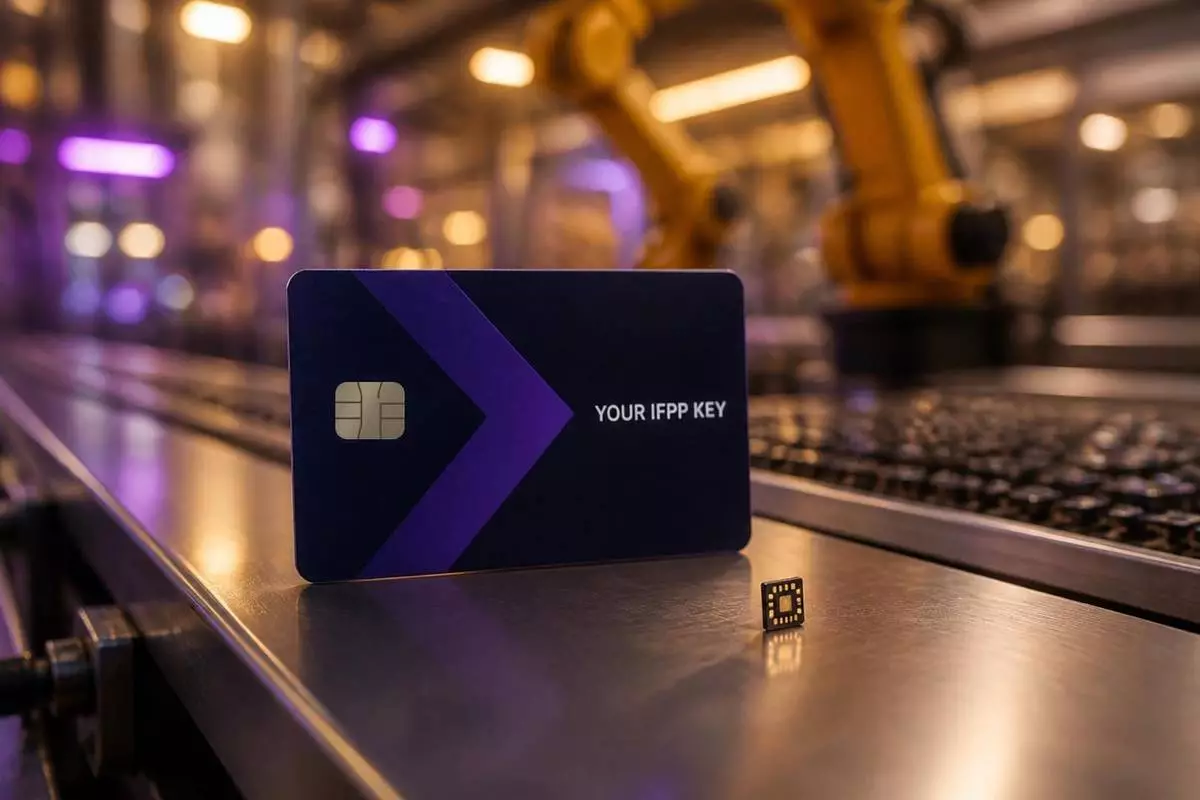
Acceleronix, IDEMIA Secure Transactions and Orange announce flexible, single-SKU manufacturing with quantum-safe IFPP