BELLEVUE, Wash.--(BUSINESS WIRE)--Nov 4, 2026--
Smartsheet, the AI-powered enterprise work management platform, today announced new platform capabilities at ENGAGE 2026, its annual customer conference. The company introduced new AI agents, agentic workflows, system integrations and security controls built to end execution drift: the costly gap between what an organization sets out to deliver and what it actually delivers.
This press release features multimedia. View the full release here: https://www.businesswire.com/news/home/20261104562370/en/
AI has helped teams move faster, but it is also widening execution drift. As AI agents join people, partners and systems in doing the work, three problems keep that distance from closing. Data is scattered across disconnected tools, so no one sees the full picture. AI is arriving faster than IT can govern it, so leaders hesitate to scale it. Most AI also lacks the context to know who owns what, what is stuck and what changed yesterday. That leaves people with generic answers and homework instead of finished work.
“Most organizations have AI in one place, their data in another and governance as an afterthought. Teams still spend hours on status reports and follow-ups, and IT struggles to see what AI is doing with company data,” said Pratima Arora, chief product and technology officer at Smartsheet. “Today we’re putting AI agents on that routine work, connecting data across the tools teams already use, and adding the security and governance controls that keep every AI action inside the rules you set.”
“Enterprises are discovering that the hard part of AI is not productivity gains; it is keeping work aligned with their plans,” according to Wayne Kurtzman, research vice president at IDC. “As agents, systems, integrations, and partners multiply, teams need AI to draw on real data, content and context across the tools they already use, under the governance they've already set. Smartsheet is addressing this challenge directly, helping organizations move AI from experimentation to dependable, strategic work.”
AI Agents and Workflows: Taking on Routine Work So Teams Can Focus on Decisions
Teams still spend too much of their week on status reports, data checks and project setup. Smartsheet announced new Agentic Workflowsand specialized AI agents that take on this routine work, using live project data and existing permissions so what they produce reflects what is actually happening.
Available today, Agentic Workflows turn a plain-language request, such as a weekly project summary or a check on risks and dependencies, into a recurring task that runs on its own and delivers results to the right people before small issues grow.
Specialized agents take on more complex work on request. People ask Smart Assist or a connected AI tool, and the right agent picks it up, with nothing to set up or manage. Available today:
Integrations: Connecting Your Data to Everyday Workplace Tools
When work data is spread across dozens of systems, small mismatches between them go unseen until a result is missed. Connecting them has meant weeks of work that breaks when someone changes a field. Smartsheet announced new integrations that make connecting a system as simple as asking, so people and AI work from the same picture. Smartsheet already connects 277 billion rows of work data each month.
New integrations include:
Security And Governance: Scaling AI Without Losing Control of Your Data
As AI takes on more of the work, it can quietly move outside the rules IT has set. IT and security leaders want to know what it can see, what it can change and what controls they need to have in place. Many organizations aren’t there yet: IBM’s 2026 Cost of a Data Breach Report found that 68% of breached organizations lacked the AI governance to manage AI or detect unauthorized use. Smartsheet announced new certifications and controls to help customers scale AI with confidence.
Announcements include:
Smartsheet also introduced vsActual, an AI-native planning and execution product that shows leaders whether work is on track against their priorities, so they can catch execution drift while it’s still fixable. To learn more or sign up for updates, visit www.smartsheet.com/vsactual.
To see everything announced at ENGAGE 2026, read the full recap or visit www.smartsheet.com.
About Smartsheet
Smartsheet is an AI-powered enterprise work management platform. Teams use it to plan programs, track work across groups, automate routine processes and give leaders real-time visibility into how work is progressing. It sits between spreadsheets, which are flexible but hard to govern, and rigid project tools built for a single team. Smartsheet is used by millions of people at organizations, including the majority of the Fortune 500, with enterprise-grade security, administration and compliance controls. To learn more about Smartsheet, visit www.smartsheet.com.

Today, Smartsheet introduced new AI agents, agentic workflows, system integrations and security controls built to end execution drift.
WASHINGTON (AP) — Trump speaks at White House on ballroom construction after GOP midterm losses where voters said he didn't focus on them.
THIS IS AN APNewsAlert. Check back for updates. AP's earlier story is below.
After a flurry of rallies where he implored supporters to pretend that he was on the ballot, President Donald Trump led his Republican Party to a stunningly complete wipeout in the midterm elections.
Now he may work just as tirelessly to insist it wasn’t his fault.
Republican losses swept Democrats into control of Congress with a wave of Senate victories that once seemed far-fetched in GOP strongholds. There were wins in South Carolina and Kansas, which had not elected a Democratic senator since 1932. In Texas, Democrats had been shut out of every statewide race for more than three decades, until Tuesday.
Trump was already backpedaling even before the full extent of his party's defeat was known. On election night, he sounded more humble than usual, pledging to work with Democrats and to accept the election results. But he was still seeking to deflect responsibility.
“I don’t like to consider it a defeat for me. I wasn’t on the ballot," he told Fox News. Voters, he said, just “didn't like the candidates” on the ballot.
In fact, The AP Voter Poll suggests that Trump was a drag on GOP candidates. Only 4 in 10 voters nationwide approved of how Trump was handling the presidency. In losing Ohio, Iowa, Maine and North Carolina, majorities said the Republican Senate candidates were “too supportive” of the unpopular president.
Going further, on his social media site, the president nonetheless insisted that if he had been running, "We would have won IN A LANDSLIDE!”
Trump has a long history of passing the buck, on issues large and small, but especially when there are ballot-box failures.
After Republicans lost the House in the 2018 midterms during Trump's first term, he blamed defeated members of his own party.
Utah Rep. Mia Love, who had tried to distance herself from him, “gave me no love, but then she lost. Too bad," the president said.
He mocked other losing lawmakers for not embracing him — Florida's Carlos Curbelo, Colorado's Mike Coffman, Virginia's Barbara Comstock, and Illinois' Peter Roskam — with the same words he would use eight years later: “My name wasn’t on the ballot."
Now he's trying to deflect blame once more, despite having urged voters to “pretend I’m on the ballot.”
An Associated Press analysis of the 39 Trump speeches and rallies Trump staged since Sept. 1 showed the president used a version of the phrase in 30 of them. In some addresses he returned to the subject more than once, though, meaning there were at least 40 instances where he appealed to voters to engage in that bit of make-believe.
After their parties take hits in midterm elections, most White Houses engage in some soul-searching, with the president publicly shouldering at least part of the responsibility.
A day after big Republican congressional gains in 2010, Democrat Barack Obama said he took “a shellacking." Republican George W. Bush described Democratic victories in the 2006 midterms as “a thumping.”
But Trump, known for defying all kinds of presidential norms, began laying the groundwork for avoiding blame this cycle well before balloting began.
He told Punchbowl News in August that voters were angry at Republicans “but they’re not angry at me.”
Trump posted on his social media site last month that should Texas Republican Senate candidate Ken Paxton lose — and he did — "it will be because of WEAK and INEFFECTIVE Political Hacks like John Cornyn and Karl Rove.” That's despite Trump's risky endorsement of scandal-marred Paxton in the primary over incumbent Cornyn, who first got to the Senate in 2002 and was considered the safer bet. Rove is a political strategist who helped Bush win the White House.
Also losing was Texas Gov. Greg Abbott, a Trump ally. Trump posted on social media that if Abbott “hadn’t become a RINO in the last six months of his Political Life, he wouldn’t have lost,” suggesting the governor had backed away from his staunchly conservative credentials and become "Republican in Name Only."
One thing Trump didn't do in the immediate aftermath of Tuesday's results, however, was level accusations of widespread election fraud. Trump has done that after past defeats.
After he lost in 2020, Trump falsely claimed that his opponents had cheated, even though a parade of recounts, audits and scores of lawsuits on his behalf were tossed, confirming Democrat Joe Biden's victory. Trump's own attorney general said there was no evidence of widespread voter fraud.
This year, Trump showed restraint despite calling, before voting even began, for the criminal prosecution of Democratic Senate candidate Mary Peltola in Alaska. That followed revelations that Peltola's campaign appeared to be involved in recruiting a candidate with the same name as Republican Sen. Dan Sullivan. Peltola denies involvement.
Trump's focus went beyond Alaska.
At a recent rally in Youngstown, Ohio, Trump said “the only way” Democrats "can win elections is to rig the election." Democrats won races for governor and Senate in the state. Similarly, he posted on social media that “the only way” Minnesota Republican Senate candidate Michele Tafoya “can lose is if they cheat by playing games with the Ballots." She lost.
Trump has sought to avoid responsibility for a long list of negative outcomes during his time in politics.
“The buck stops with everybody,” Trump said in 2019, during a lengthy government shutdown. Trump had first bragged that he would be proud to own the shutdown as he unsuccessfully sought to pressure congressional Democrats to approve additional border security money.
The following year, on the same day he declared the coronavirus pandemic a national emergency, the president said, “I don’t take responsibility at all” for a lack of COVID-19 testing.
Since returning to the White House, it's been more of the same.
In February, when bipartisan backlash forced him to delete a racist social media post featuring Obama and former first lady Michelle Obama as primates, Trump refused to apologize. “I didn’t make a mistake,” he said.
As the midterms approached, Trump faulted Biden, who by that time had been out of office for more than 18 months, for Americans' concerns about inflation. Trump also kept insisting that the delayed, costly and problem-plagued revamp of the Lincoln Memorial Reflecting Pool was marred by vandalism when the office of the federal prosecutor he put in the job blamed the damage on shoddy workmanship.
Trump has even faulted other presidents for the war in Iran that he started with Israel in February, saying he was making up for earlier administrations squandering nearly 50 years of opportunities to curb Tehran’s nuclear ambitions.
That view marked even a break with his own Vice President, JD Vance, who wrote on Wednesday, “The reason we lost is the war.”
None of those justifications helped Republicans much on Tuesday. That was an outcome even Trump seemed to foresee last month, while shifting blame to voters who hadn't yet cast ballots.
“If we don’t win the midterms, they’re going to blame me,” he warned during a rally in Clarksville, Tennessee, on Oct. 10, before adding, “You better get out there and vote.”
Associated Press writers Josh Boak and Aaron Kessler contributed to this report.
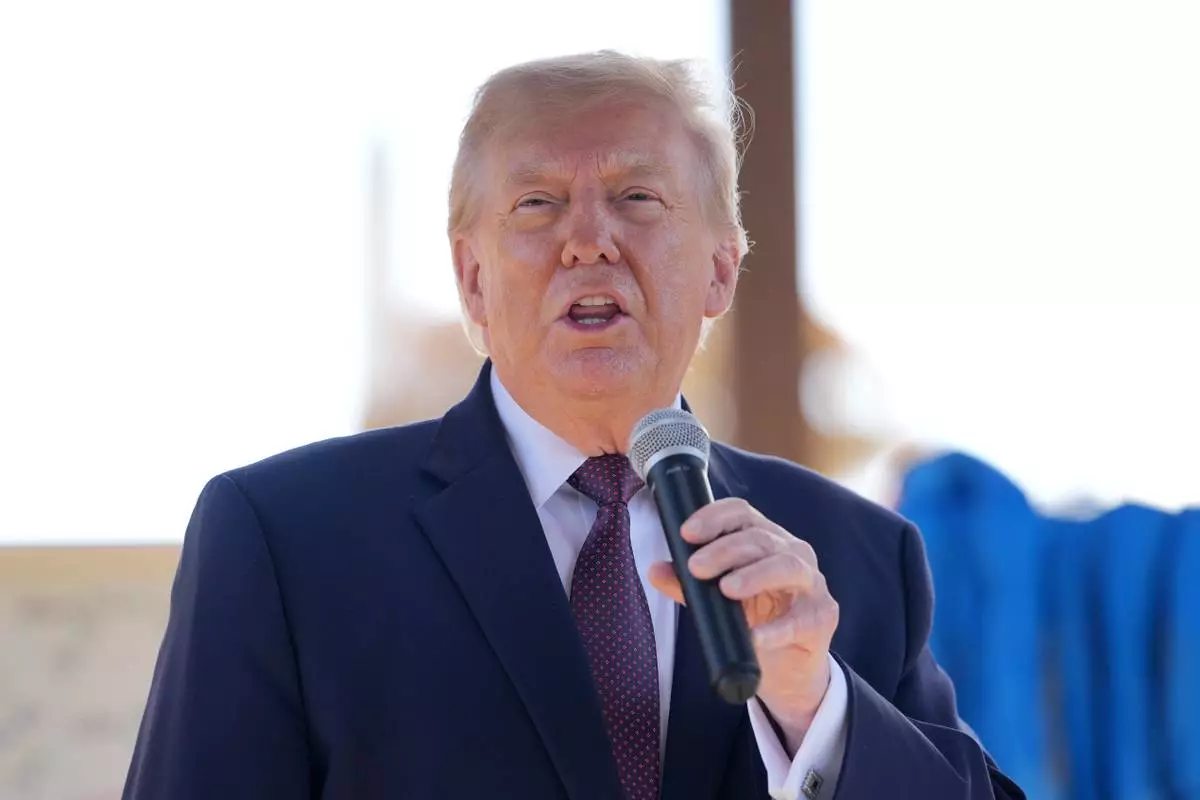
President Donald Trump speaks during a tour of construction of the White House ballroom, Wednesday, Nov. 4, 2026, in Washington. (AP Photo/Alex Brandon)
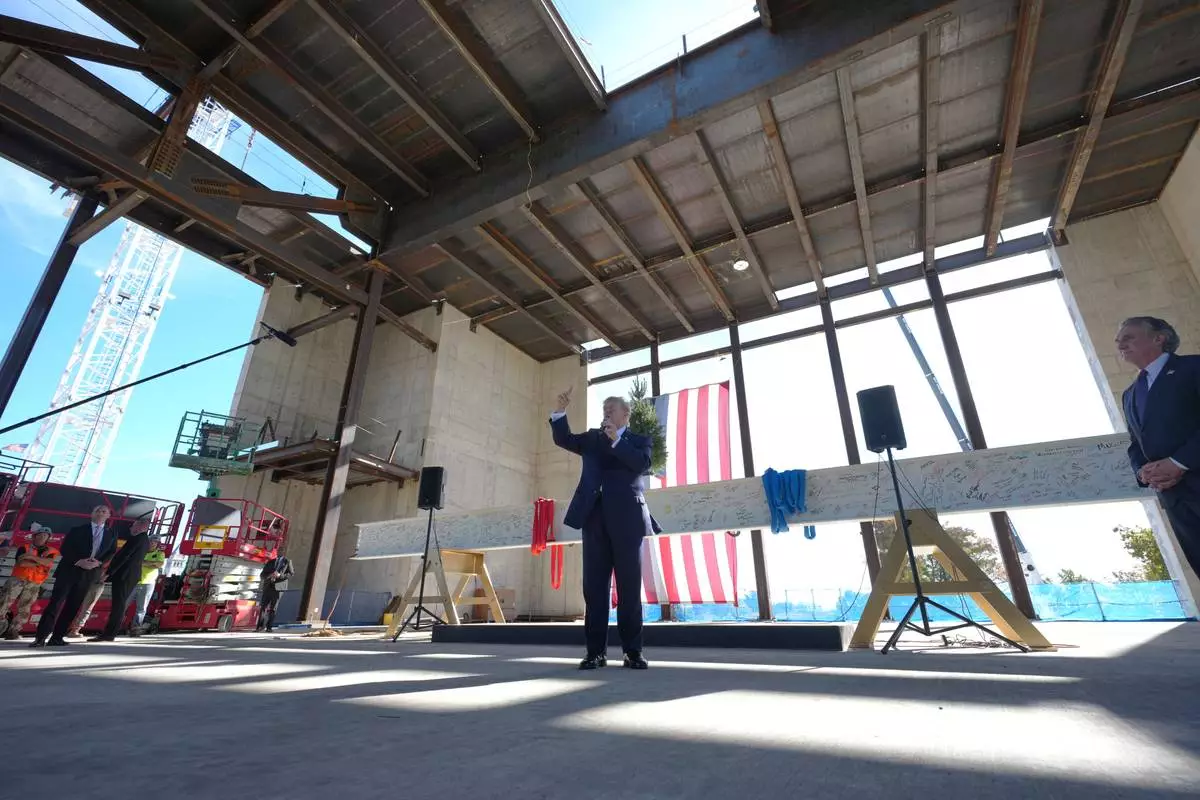
President Donald Trump speaks during a tour of the White House Ballroom construction at the White House, Wednesday, Nov. 4, 2026, in Washington, as Interior Secretary Doug Burgum listens at right. (AP Photo/Alex Brandon)

Texas Gov. Greg Abbott speaks to supporters at an election night event in Austin, Texas, Tuesday, Nov. 3, 2026. (AP Photo/ David J. Phillip)
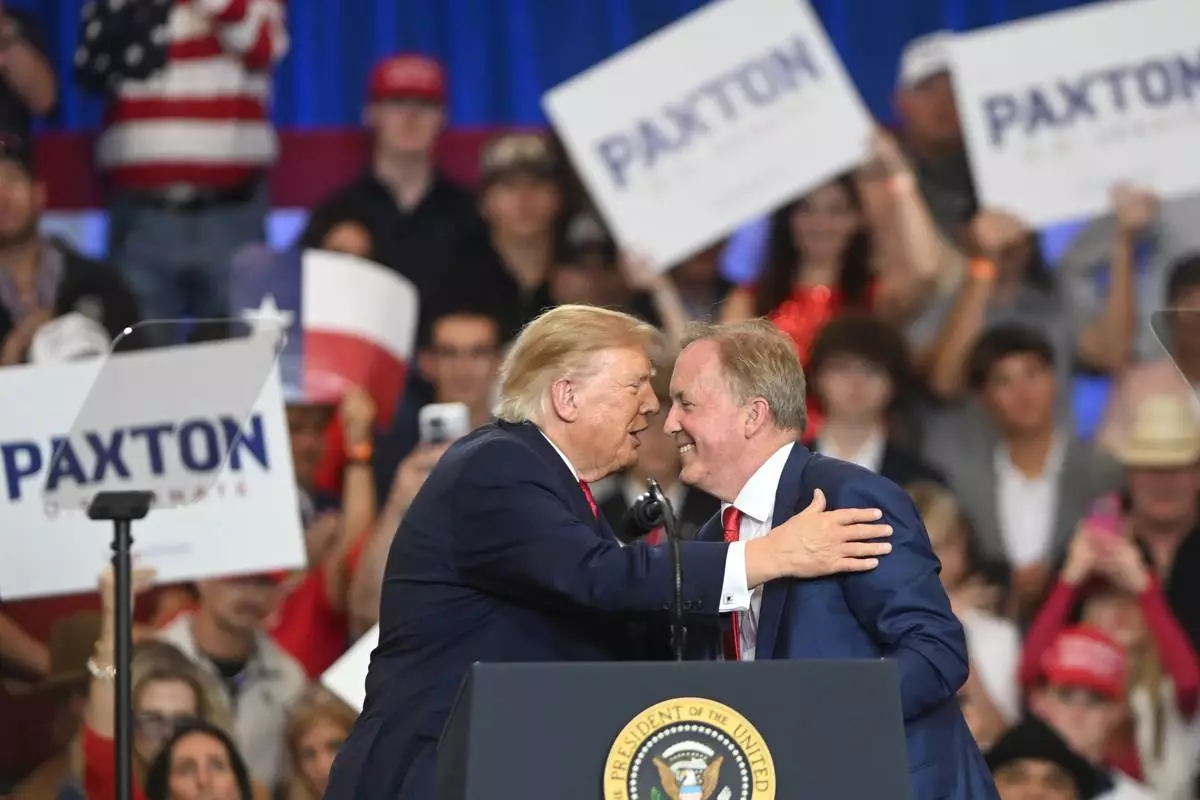
President Donald Trump talks with Senate candidate Texas Attorney General Ken Paxton at a campaign rally at Lubbock Memorial Civic Center, Tuesday, Oct. 27, 2026, in Lubbock, Texas. (AP Photo/Annie Rice)
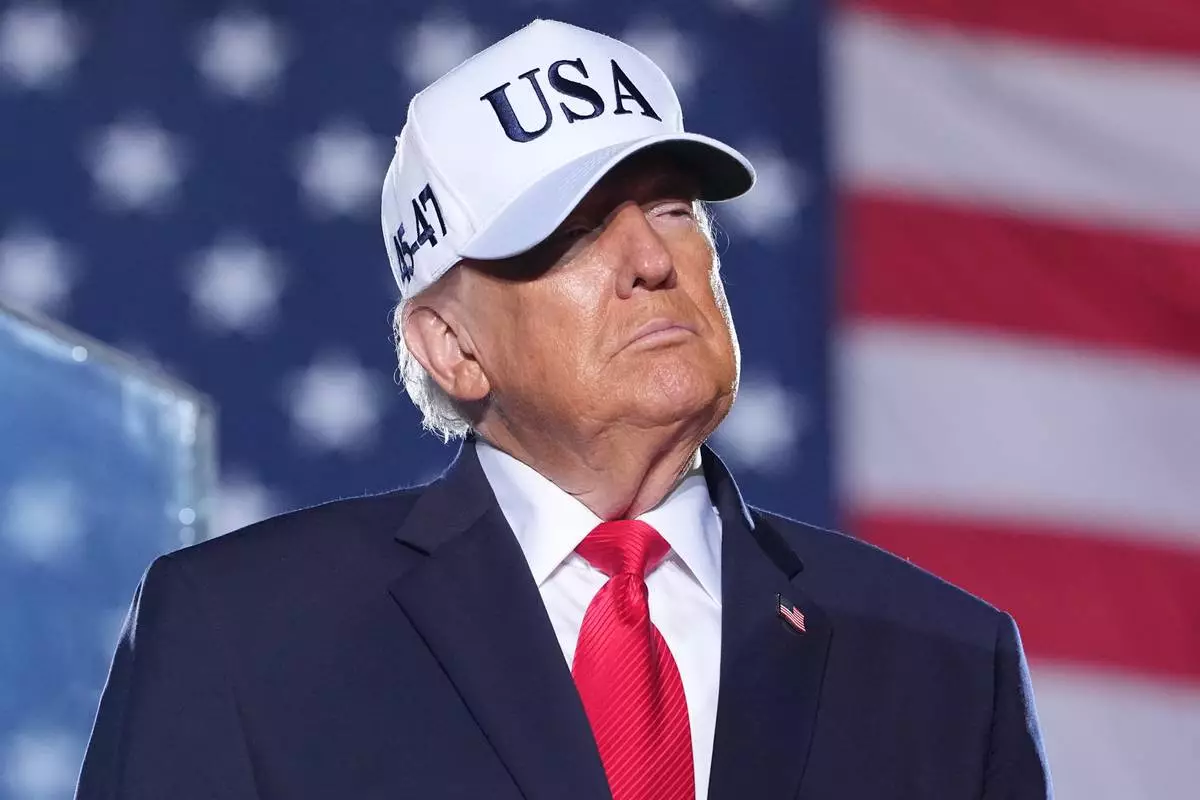
President Donald Trump stands on stage after speaking at a campaign rally at the Salina Regional Airport, Sunday, Nov. 1, 2026, in Salina Kan. (AP Photo/Jacquelyn Martin)