Renowned figure skating coach John Nicks, who won a world pairs championship for Britain with his sister Jennifer Nicks and went on to tutor the likes of Olympic champions Peggy Fleming and Kristi Yamaguchi, died Monday. He was 97.
U.S. Figure Skating, which worked closely with Nicks over the course of his career, confirmed his death in a statement Tuesday.
“The skating community has lost a tremendous ambassador,” U.S. Figure Skating chief executive Matt Farrell said. “John helped shape generations of American figure skaters and his influence extended well beyond the champions he coached.”
Nicks was born on April 22, 1929, in Brighton, England, and began skating at the age of 9 in part because his father wanted to sell skating equipment at his retail store. Nicks soon paired up with his younger sister, who died of a heart attack in 1980, and the two of went on to win six British pairs titles, appear in two Winter Olympics and win four world championship medals.
It was as a coach that Nicks truly excelled, though.
He had already relocated to Canada when Sabena Flight 548 crashed near Brussels, Belgium, killing the U.S. team on its way to the 1961 world championships. After the crash, Nicks was offered several coaching positions in the U.S., ultimately accepting a job at the Iceland Arena in Paramount, California, owned by Frank Zamboni — the inventor of the ice resurfacer that carries his name.
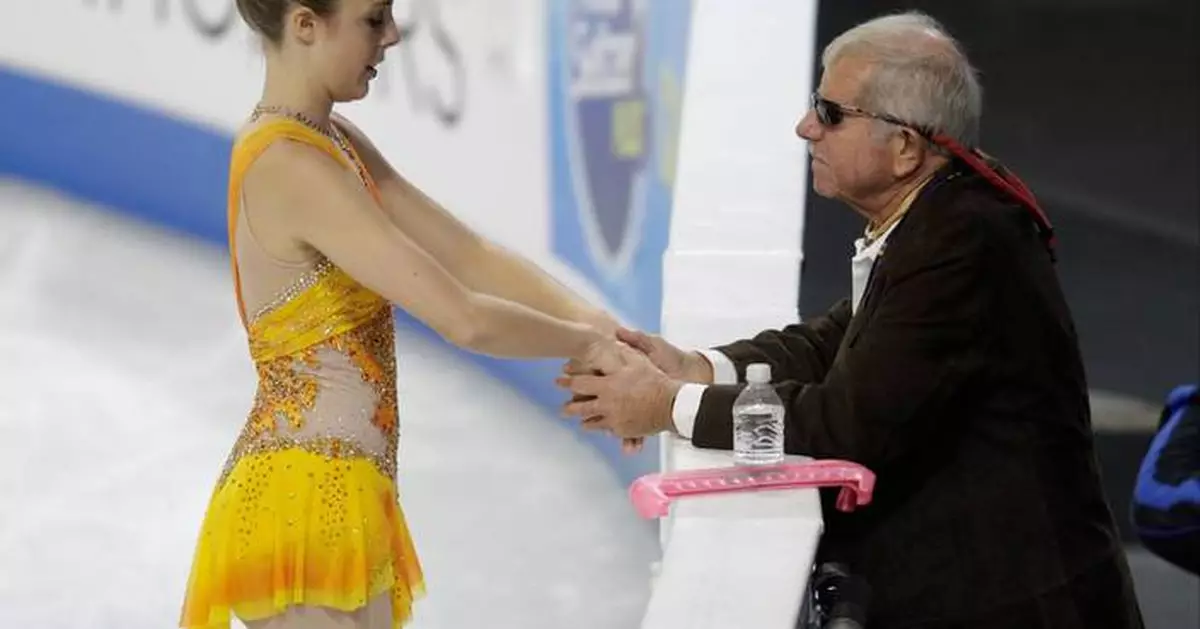
Nicks coached more than 1,200 skaters, including world pairs champions Tai Babilonia and Randy Gardner; world pairs medalists Jenni Meno and Todd Sand; Olympic silver medalist Sasha Cohen; and Olympic bronze medalist Ashley Wagner.
“Mr. Nicks, you were a champion maker,” Wagner wrote Wednesday. “I will forever be grateful for my time with you, the lessons learned and the athlete that you transformed me into. You made me understand that I had to skate for the person sitting in the last row, at the top of the arena. You made me a performer, a skater who learned to care so much more about the total package.”
Nicks was inducted into the U.S. Figure Skating Hall of Fame in 1993 and the World Figure Skating Hall of Fame in 2000.
Along with coaching, Nicks served as the national director of the Ice Capades chalets, a nationwide organization of rinks operated by the ice show company of the same name. And in recent years, a lower-level International Skating Union event co-hosted by the Skating Club of New York and the Skating Club of Boston was titled the John Nicks Pairs Challenge in his honor.
Nicks had a son, Christopher, and daughter, Carolyn, with his first wife, Denise. He later married U.S. ice dancer Yvonne Littlefield, who won the 1962 national championship with her former husband, Peter Betts.
“(Nicks) earned the deep respect of the skating community through a lifetime of dedication to his athletes and to the sport,” Farrell said. "We are grateful for all he gave to U.S. Figure Skating, and our thoughts are with his wife, Yvonne, his son, Christopher, and the many skaters, colleagues and friends mourning his loss.”
See AP’s full sports coverage here
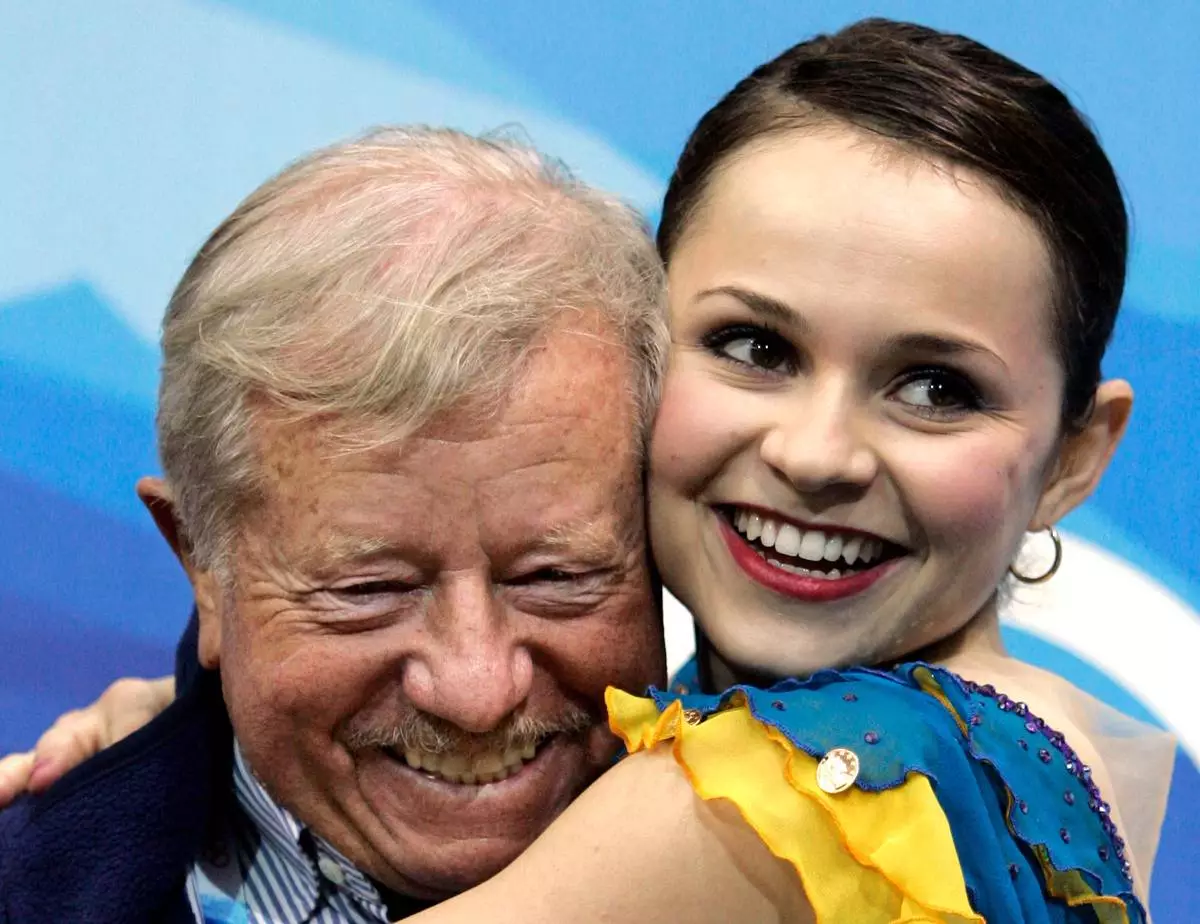
FILE - Sasha Cohen of the United States, right, hugs her coach John Nicks after finishing in first place following her routine in the women's short program figure skating at the 2006 Winter Olympic Games in Turin, Italy, Feb. 21, 2006. (AP Photo/Eric Gay, File)
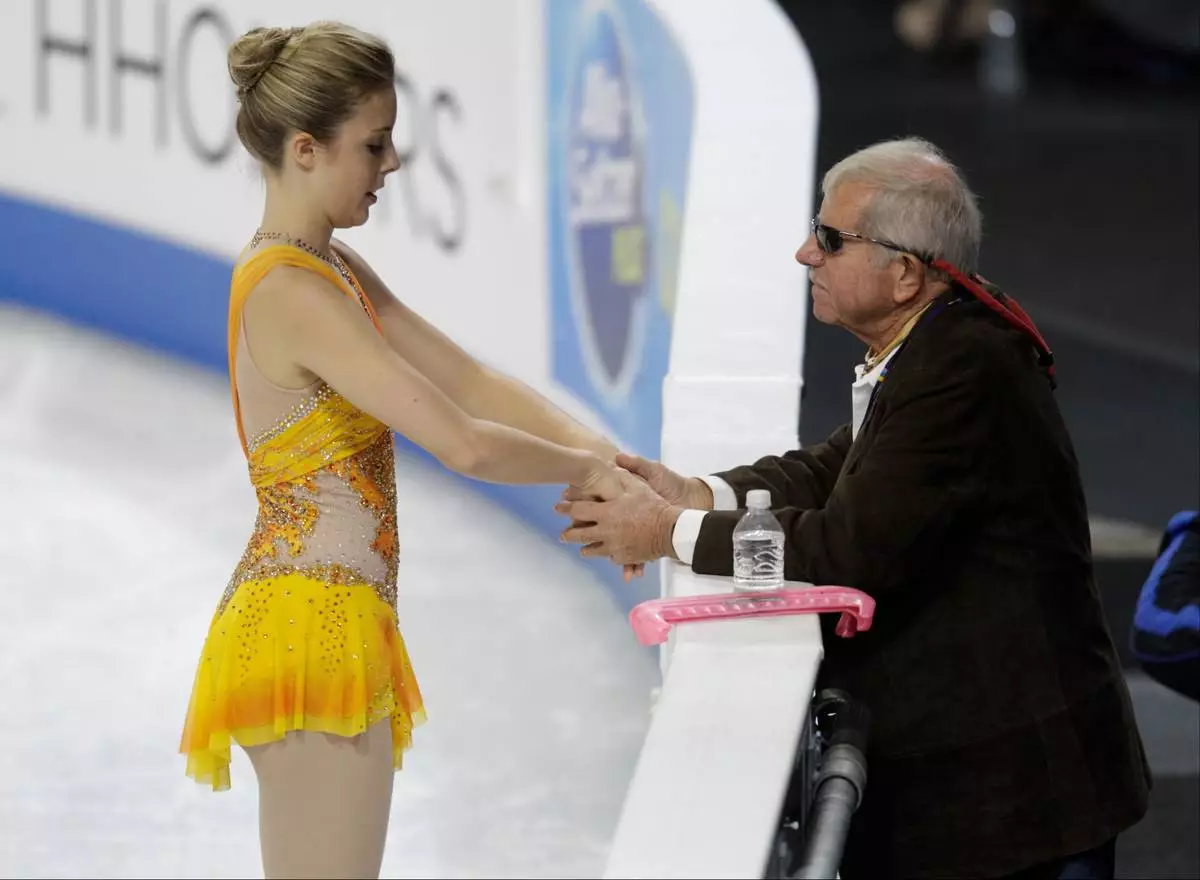
FILE - USA's Ashley Wagner, left, talks to her coach, John Nicks, right, before competing in the ladies free event in the Skate America figure skating competition, Oct. 21, 2012, in Kent, Wash. (AP Photo/Ted S. Warren, File)
WASHINGTON (AP) — For a decade, the political map has been largely stagnant, locked into the same half-dozen or so political battlegrounds, reflecting a polarized, evenly divided country. On Tuesday, voters took a wrecking ball to that map, electing Democrats in states that were long considered reliably Republican.
Kansas, South Carolina, Texas, Ohio and Iowa — all states that President Donald Trump easily won two years ago — backed Democrats for the U.S. Senate and, in several of them, for governor, too.
Though it's unclear whether the results represent a durable tectonic shift, they at least open the conversation about whether the country may move beyond its geographic deadlock, and whether Democrats can compete in nominally red states in the next presidential campaign, most notably in Republicans' electoral stronghold of Texas.
“Even though Democrats haven't won Texas in a presidential race since Jimmy Carter, last night's historic results may entice them to make a real run at the state's robust 40 electoral votes,” said Texas Republican strategist David Polyansky. Only California has more electoral votes.
“At a minimum, that would cost Republicans countless millions of dollars and untold manpower to defend against,” he added.
Such a shift would also signal a sea change in the way political parties function, said Joshua Huder, a Georgetown political scientist. For Democrats to hold onto their gains in the red center of the country, they would likely need to embrace causes like the farm bill that are vital to voters there but not on the mind of your typical liberal activist.
“Are they willing to compete in places like Kansas, Iowa and Texas?” Huder asked of Democrats. “That fundamentally changes politics if they do.”
The path to the presidency will not be redrawn overnight, Democratic strategists cautioned. Most of Tuesday's results stemmed from Trump’s deep unpopularity and voters’ unhappiness with the cost of living.
But Democrats' widespread, statewide and down-ballot victories in conservative states and onetime swing-states like Iowa and Ohio allow the party to start building an organizational structure they've not had for more than 10 years.
Democrats won their first Texas Senate race in 38 years, but they also knocked off three-term Republican Gov. Greg Abbott and won control of the state House. It was part of an electoral shock wave that swept across the entire country, knocking out incumbents in long-safe conservative strongholds, flipping reliably right-leaning statehouses in places like Arizona and Wisconsin and delivering the biggest shift in political power since the post-Watergate election of 1974.
“It clearly was some type of a breakthrough; the level of discontent with Trump and his policies was so strong,” said Alan Abramowitz, a political scientist at Emory University. He doesn't expect it to last. “We remain very polarized, despite what happened in this election,” Abramowitz added. “Supporters of each party perceive the other side as a threat to their way of life.”
But Abramowitz and others noted that the dynamic that fueled the historic election will still be around in 2028. Democrats have for months hoped to repeat the successes of the 2006 and 2008 elections, when they won back Congress and then, two years later, expanded their margins in Barack Obama's first presidential run.
Jim Messina, who worked on that 2008 campaign and managed Obama's 2012 reelection team, said Democrats will now be able to build up their local apparatus in Texas while taking a careful look ahead of 2028.
“Texas is a hundreds-of-millions-of-dollars decision for a presidential campaign manager, and you're going to wait as long as you can to decide,” Messina said.
That's why the analysis begins now in states such as Ohio, Iowa and Texas, said Democratic pollster John Anzalone, President Joe Biden's chief pollster and senior adviser in 2020 and pollster for Obama's 2008 and 2012 campaigns.
“What we'll do is research it. We'll go into these states, do polling and focus groups and see what the rate of return might be,” said Anzalone, who polled for and advised former North Carolina Gov. Roy Cooper's winning Senate campaign. “It's all about the resources.”
Still, the Democratic wins were about more than resources. The party was outspent across much of the country, but still racked up wins, including gains among demographics that normally favor Republicans.
Democrats nationwide fared better this year, relative to 2024, among white voters without college degrees, according to The AP Voter Poll and AP VoteCast, although Republicans still won them overall. This group was critical to Trump's success in onetime battlegrounds like Iowa and Ohio after Obama carried them twice.
The erosion of Republican support in rural areas was especially pronounced in Iowa, where Trump had dominated in his three presidential races. About 6 in 10 Iowa voters who say they live in a rural area or small town backed Republicans in 2022, but their vote was more closely split this year as tariffs and high fuel prices weighed on farmers’ profits. Republican candidate Ashley Hinson won just over half of rural or small-town voters this year, The AP Voter Poll found, while Democratic candidate Josh Turek won about 4 in 10 voters in this group.
Turek also triumphed in lightly populated, rural counties in eastern Iowa that no Democratic Senate candidate had carried since former five-term Sen. Tom Harkin won in 2008 before retiring.
“We’re in a very volatile political era,” said Florida Gov. Ron DeSantis, a Republican who is finishing his second term, during a news conference Wednesday.
DeSantis will be replaced by Rep. Byron Donalds, a fellow Republican who was only narrowly elected as his successor despite the state’s recent reputation as a conservative stronghold.
“Things shift quickly, and leaders just got to recognize that,” said DeSantis, “and don’t act like whatever worked even two years ago in a campaign is necessarily going to work today or would work going forward.”
Republican strategist Kristin Davison said her party shouldn't panic, urging members to dig into the results, learn what happened and chart a path forward.
“I think anyone immediately presuming 2028 implications as the dust settles today will need to make revisions,” she said.
Josh Boak contributed to this report. Follow the AP's coverage of the 2026 elections at https://apnews.com/hub/elections.

Democratic Congressional candidate Justin J. Pearson's canvassers work in District 9 ahead of the U.S. midterm election on Monday, Nov. 2, 2026, in Memphis, Tenn. (AP Photo/Kevin Wurm)
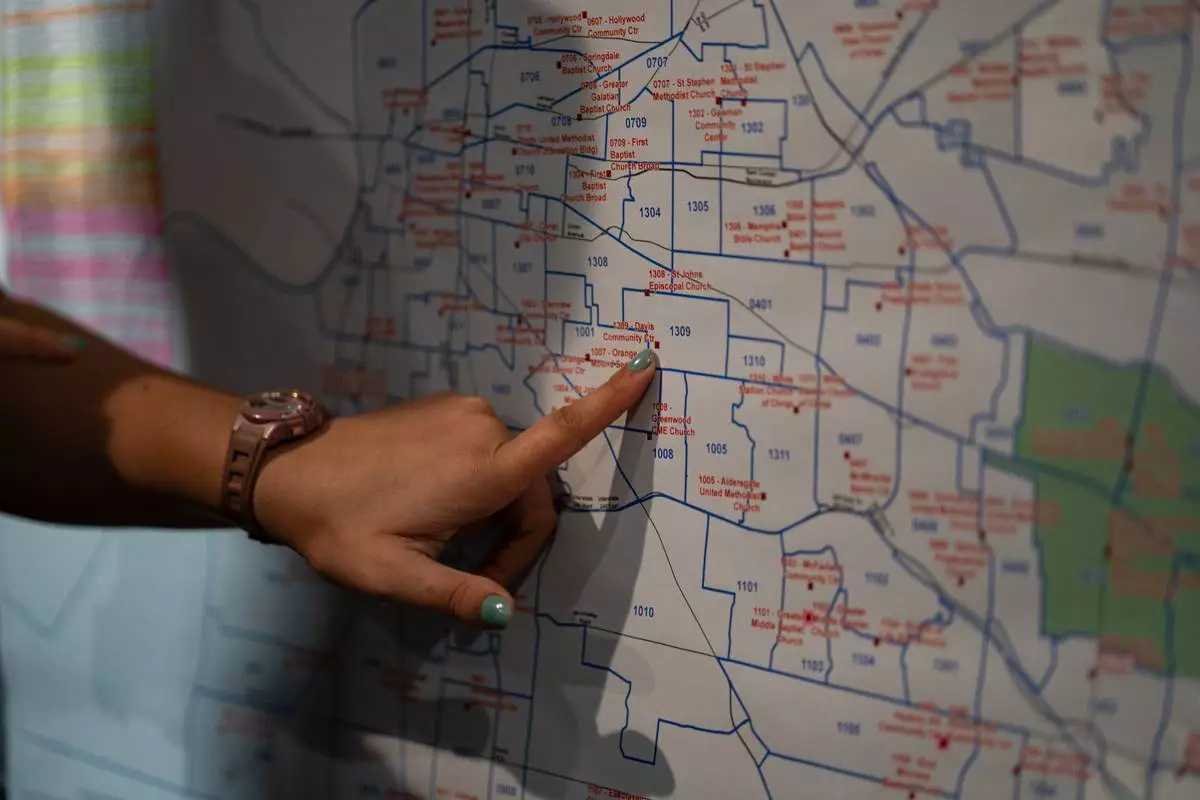
A campaign volunteer points at a map inside Democratic Congressional candidate Justin J. Pearson's campaign headquarters ahead of the U.S. midterm election on Monday, Nov. 2, 2026 in Memphis, Tenn. (AP Photo/Kevin Wurm)

Ohio Democratic gubernatorial candidate Dr. Amy Acton raises her arms while speaking during an election night event Tuesday, Nov. 3, 2026, in Columbus, Ohio. (AP Photo/Carolyn Kaster)

A supporter of Democratic Senate candidate Adam Hamilton celebrates at an election night event, Tuesday, Nov. 3, 2026, in Overland Park, Kansas. (AP Photo/Charlie Riedel)

Supporters of South Carolina Democratic Senate candidate Dr. Annie Andrews cheer during her election night watch party, Tuesday, Nov. 3, 2026, in Charleston, S.C. (AP Photo/Mic Smith)
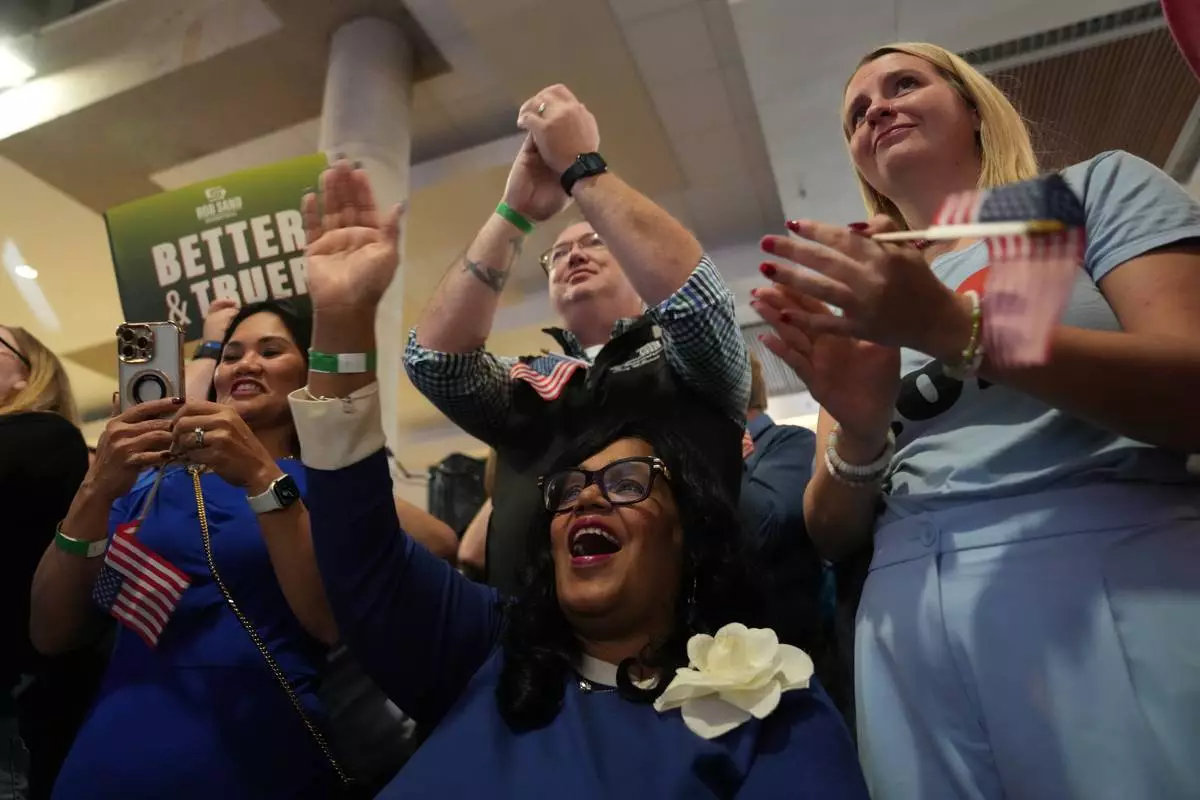
Supporters cheer during an election night event for Iowa Democrats Tuesday, Nov. 3, 2026, in Des Moines, Iowa. (AP Photo/Ellen Schmidt)
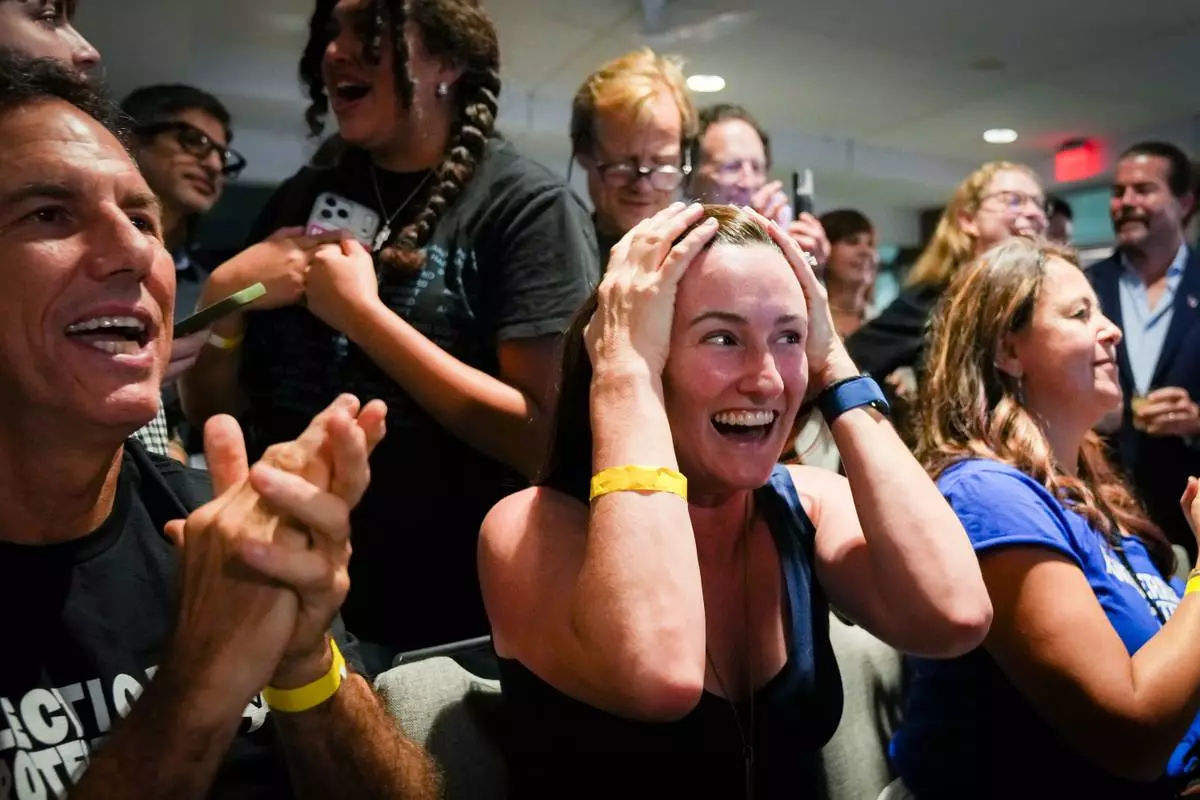
Michelle Hurtado reacts during the Texas Democrats Watch Party at the Hyatt Recency in Austin, Texas, Tuesday, Nov. 3, 2026. (Sara Diggins/The San Antonio Express-News via AP)