MRIMA, Kenya (AP) — Farmers fear losing the land that feeds them. Community elders worry about damage to a forest where their ancestors are buried. Both are demanding answers about Kenya's plans to mine valuable minerals beneath Mrima Hill, a forested area rich in niobium and rare earth elements.
The proposed development comes as countries race to secure supplies of rare earth minerals used in electric vehicle motors, wind turbines and defense technologies, seeking alternatives to China’s dominance of mineral processing.
Residents near Kenya’s Indian Ocean coast and the Tanzanian border say they have received little information about where mining would take place or how it could affect their farms, livelihoods and a sacred site.
“We haven’t been informed about the process at all," said Justus Mwero, chairman of the Mrima Farm Owners Community-Based Organization, which has about 500 registered farmers. “We don’t know how people are going to be looked after, or what impact the project will have.”
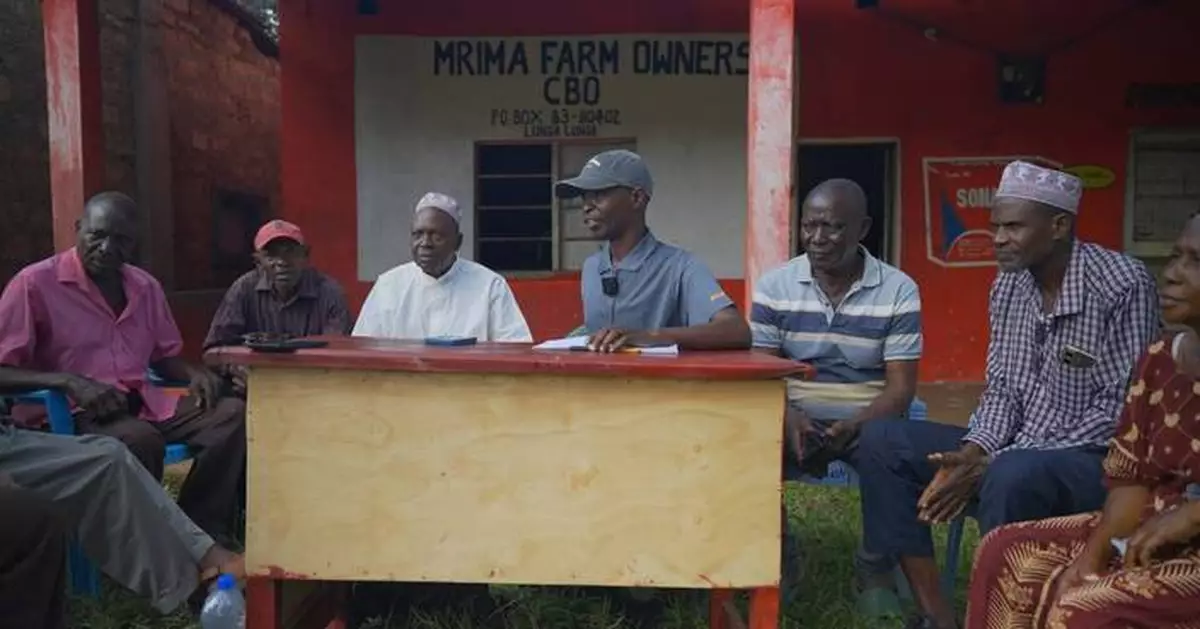
On a recent morning, farmers gathered in a circle beside the main road in Mrima, discussing the mining plans as the wooded hill rose across the street.
“We are waiting to see what is going to happen,” Mwero said.
Kenya's Mining Minister Hassan Joho told The Associated Press earlier this week that a technical committee was evaluating five proposals and that an announcement would follow within two to three weeks.
While the ministry has not disclosed the nationalities of the bidders, citing confidentiality, Australian company RareX said its consortium with Iluka Resources — another Australian company — submitted a technical and financial proposal on Oct. 21.
Another company, Nasdaq-listed Critical Metals Corp., said in July that its consortium had been shortlisted for the final stage of bidding to develop the Mrima Hill rare earths and niobium project.
In a Sept. 28 interview with Semafor, a U.S.-based news outlet, Joho said the Kenyan government views mining and local mineral processing as a way to expand Kenya’s economy and create jobs. He said Kenya aimed to increase mining’s contribution to gross domestic product from about 1% to 10% within a decade. That target covers the entire mining sector.
In 2013, projections put the project's potential gross revenue at about $62 billion over 23 years, according to mining news website Extractives Daily. The estimate was based on commodity prices at the time, excluded development and operating costs and did not indicate how much Kenya would receive.
For members of the local Digo community, Mrima Hill’s value cannot be measured by its minerals alone. It contains a sacred forest known as a kaya, where residents say their ancestors are buried.
“Our traditions and practices are organized around the forest," said Masoud Suleiman Mwarizo, chairman of the Mrima Hill Digo Community Trust, formed in 2025 to defend the community's interests in the project. "All our ancestors are buried here. We will refuse any digging of the hill.”
The Mrima Hill Sacred Grove forest reserve was designated a national monument in 1992.
The National Museums of Kenya did not respond to a request for comment.
Farmers around the hill fear that relocation could leave them with less productive land, though it remains unclear whether the project would require residents to move.
“We all rely on farming to survive. This land is fertile, and if we are relocated to less fertile land, hunger could strike us,” Mwero said.
Rama Bindo, treasurer of the Digo Community Trust, said residents without formal ownership documents were particularly vulnerable. “Not all farmers have title deeds to prove ownership of their land, and that makes it easy for land grabbing to happen,” Bindo said.
Joho, the mining minister, told the AP in an interview that the ministry consulted with the community before advertising the tender for developing Mrima Hill, and that once a winner is chosen, the ministry will formally introduce the company to the community so they can reach agreements.
Under Kenya’s Mining Act, a mining licence holder must sign a community development agreement with the community where mining takes place, and cannot start mining until landowners have been compensated.
Harry Kimtai, principal secretary at Kenya's Mining Ministry, said that once a company is awarded the project, “communities will be encouraged to engage directly with the winner.” If disputes arise, he said, the government will explain residents’ rights and monitor whether the company complies with the law.
The Centre for Litigation Trust, a Kenyan civil society group, has challenged a proposed Kenya-U.S. agreement to develop Mrima Hill’s minerals. Details of that agreement have not been disclosed.
In a June 22 petition, the group said it asked the High Court in Kwale, a coastal town near Mrima Hill, to suspend the agreement until residents and their leaders are consulted. It argued that the bidding process lacked transparency and public participation. The government has not publicly explained how the agreement relates to the tender.
Kenya's attorney general challenged the court’s jurisdiction, according to the group’s lawyer. The group says a ruling on that objection is scheduled for Nov. 6 and that no court order currently blocks the implementation of the agreement.
Meanwhile, residents and advocates want details about how the minerals would be extracted.
“We don’t know anything about the extraction method. Will it be open-pit mining, and what will be the impact on the environment and on health?” said Fakii Omar of the Kwale Mining Alliance, an advocacy group for mining-affected communities.
The National Environment Management Authority did not respond to questions from The Associated Press about environmental assessment, public consultation and the approval process.
RareX, the Australian rare earths exploration company, said its consortium’s proposal called for securing community support before mining begins and protecting residents, the environment and cultural heritage. It also said it proposed further study to determine whether the deposit could support underground mining.
Mwero said residents want a voice in decisions about their future.
“We want an open forum to discuss our concerns. We are the custodians of this land, and we should be the ones negotiating over it,” he said.
The Associated Press receives financial support for global health and development coverage in Africa from the Gates Foundation. The AP is solely responsible for all content. Find AP’s standards for working with philanthropies, a list of supporters and funded coverage areas at AP.org.
For more on Africa and development: https://apnews.com/hub/africa-pulse
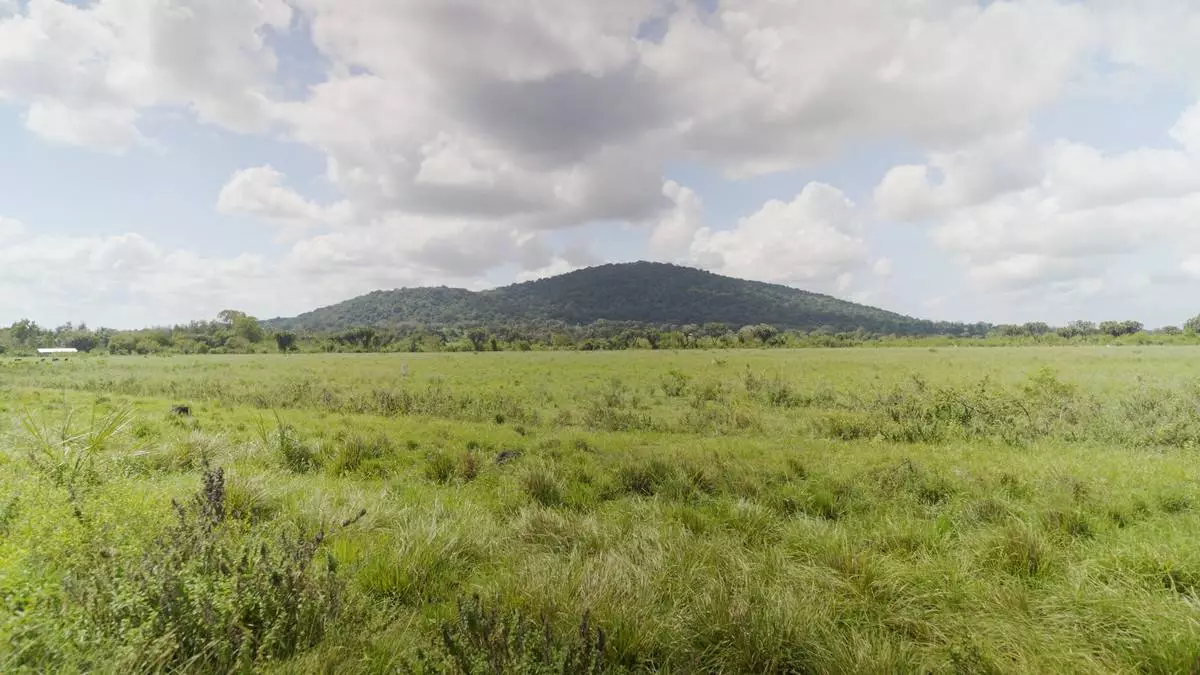
Mrima Hill is seen in Kwale County, Kenya, Wednesday, Sept. 23, 2026. (AP Photo/Eugenie Tenezakis)
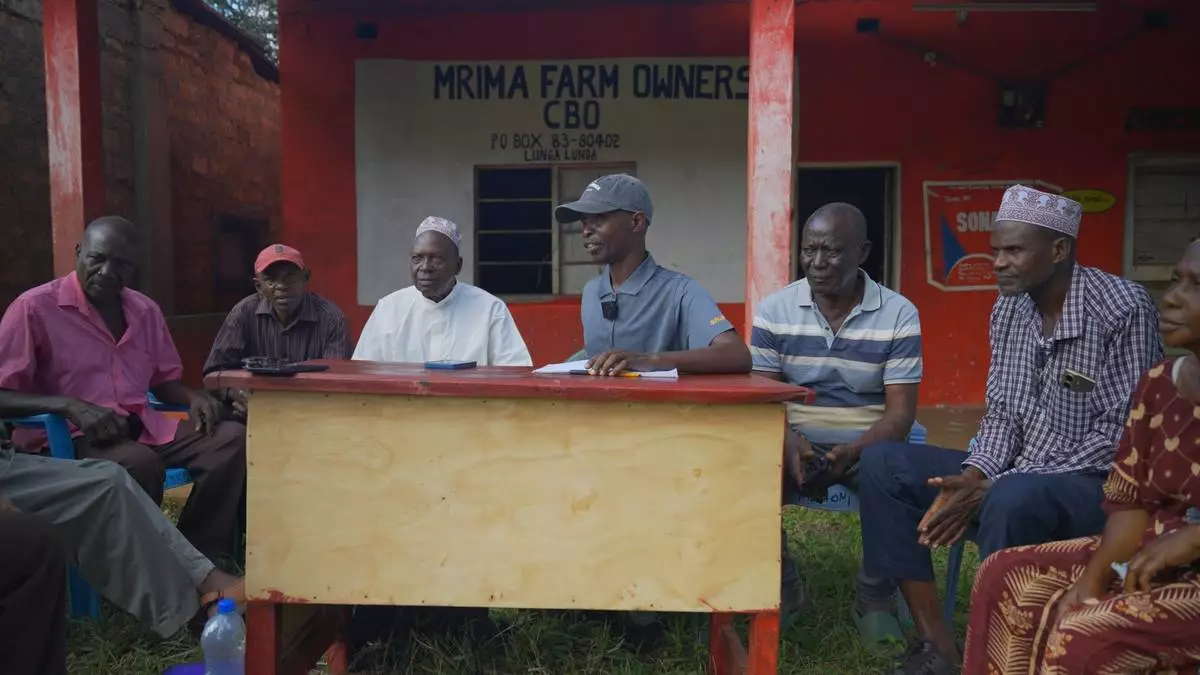
Members of the Mrima Farm Owners Community-Based Organization meet in Mrima, Kwale County, Kenya, on Thursday, Sept. 24, 2026. (AP Photo/Eugenie Tenezakis)