WASHINGTON (AP) — President Donald Trump was publicly humbled by inflation in Tuesday’s midterm elections, as rising prices provoked a blistering set of losses for Republicans in House, Senate and gubernatorial races.
Most voters said that Trump’s own policies had smothered growth and drove costs even higher, according to The AP Voter Poll, a survey of roughly 100,000 midterm voters. The president’s message that the fault lay with his predecessor, Democrat Joe Biden, didn't land. Americans saw prices start to climb with Trump’s chaotic rash of tariffs last year, and energy costs spiked after he launched a war with Iran in February.
Click to Gallery
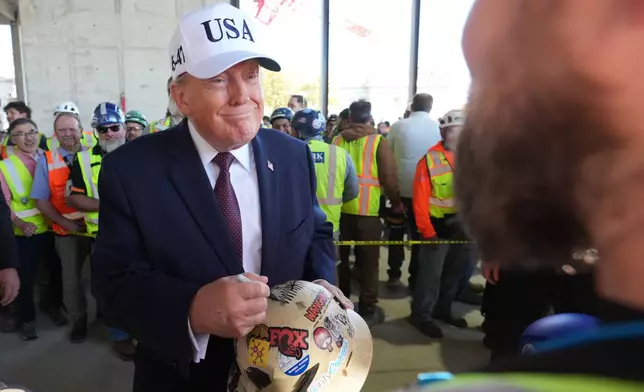
President Donald Trump signs a hard hat as he talks with workers at the White House Ballroom construction site at the White House, Wednesday, Nov. 4, 2026, in Washington. (AP Photo/Alex Brandon)
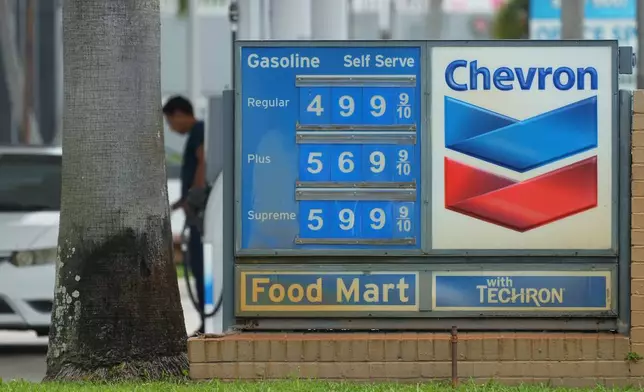
FILE - A customer pumps gas at a Chevron station, May 27, 2026, in North Miami, Fla. (AP Photo/Marta Lavandier, File)
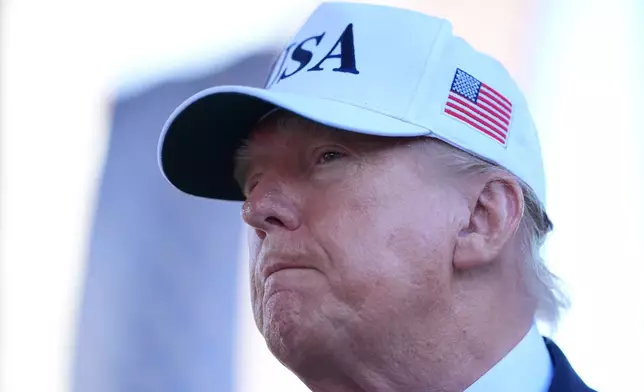
President Donald Trump talks to reporters during a tour of White House Ballroom construction at the White House, Wednesday, Nov. 4, 2026, in Washington. (AP Photo/Alex Brandon)

Michael Carman votes at a Checkers grocery store on Election Day, Tuesday, Nov. 3, 2026, in Lawrence, Kan. (AP Photo/Charlie Riedel)
About two-thirds of voters said Trump's own policies had fueled inflation. By contrast, only about half of 2022 midterm voters said this about Biden's policies, according to AP VoteCast.
Voters in states from California to Mississippi were broadly in agreement that Trump's taxes on foreign imports have done more harm than good.
The election results matched what voters had been telling pollsters for months, but Trump had campaigned with a decidedly deaf ear.
“I’ve done a great job,” Trump said at one of his final midterm rallies in Iowa. “Prices are coming way down.”
Democratic victories in Tuesday’s midterms signaled that most voters don’t believe the economy or Trump is working for them.
Consumer prices are up 3.7% over the past 12 months, compared to an inflation rate of 3% when Trump began his second term. The president told reporters on Wednesday that the Iran war “drove the gasoline up a little bit short-term,” but he felt the choice to fight Iran was worth it because of its push for nuclear weapons. “If I had to do it again, I'd have to do it again," he said.
There is no guarantee that a House and Senate with a Democratic majority can fix an economy pestered by uncomfortably high inflation. Trump and Congress would likely need to work on a bipartisan basis, or simply keep the economy stable enough to allow the Federal Reserve to ratchet down inflation through its setting of interest rates.
But voters did prefer Democrats to the status quo of a president who could govern with little to no congressional pushback from Republicans.
About 9 in 10 voters said the cost of living was a “crucial” or “major” factor in their vote for Congress. And about 6 in 10 of this group backed Democratic candidates in their local House races.
The underlying economy is stronger than many Americans think, with the S&P 500 stock index up more than 10% so far this year and the unemployment rate at a healthy 4.2%. Investors greeted the news of Democratic wins as a positive with stocks up on Wednesday.
Still, the major driver of growth has been the buildout of artificial intelligence — a boom that Trump has actively stoked by refusing to codify more aggressive federal oversight.
Voters don’t share Trump’s optimism about AI, which he has renamed “super intelligence” in federal documents.
Instead of buying the arguments that AI would increase productivity and accelerate growth, about 6 in 10 voters said AI will do more to hurt society.
The technology could displace workers as jobs get automated or it could be a financial bubble that if popped could wreak havoc on retirement savings. Despite the anxiety, only about one-quarter of voters said AI was a “crucial” factor.
Tech billionaires such as Meta's Mark Zuckerberg, Nvidia's Jensen Huang and Elon Musk have become frequent guests of Trump, attending state dinners or jetting aboard with the president. But the growing concentration of wealth has been disconcerting for voters.
Nationwide, about 7 in 10 voters said the economy favors the wealthy, while only about 3 in 10 said it's fair to everyday Americans. The wealth gap has become so extreme that even a majority of voters with a 2025 household income of $300,000 or more in the tech-heavy state of California felt the economy was tilted toward the rich.
Still, a slight majority of voters across the country had a “somewhat” or “very” favorable impression of capitalism, compared to about one-third who “strongly” or “somewhat" favor socialism.
But the election suggested that voters believe the government should use its heft to help reduce the cost of healthcare. About 6 in 10 said they wanted the government to play a “bigger role” in addressing medical expenses. Most voters said Trump's policies have made healthcare costs worse.
How voters felt about the overall economy generally depended on the size of their paychecks. While Trump campaigned on stats suggesting record low poverty, the working poor saw their own finances as crumbling.
For those earning less than $50,000 a year, about 6 in 10 said they were worse off now than they were two years ago before Trump became president.
People with higher incomes felt better about the economy, but that created a different problem for Trump. Higher-income voters were more concerned about the state of American democracy, and voters focused on democracy overwhelmingly broke for Democrats. Without congressional approval, Trump laid off thousands of federal workers, altered federal spending and imposed hundreds of billions of dollars in new tariffs that the Supreme Court earlier this year ruled were illegal.
About 4 in 10 households with 2025 household incomes above $200,000 said that democracy was their top issue, putting the issue about even with the economy. Voters in most lower-income categories, on the other hand, clearly prioritized the economy.
Overall, a slim majority of voters said government corruption was a crucial factor for their vote, while about half said this about high prices. Higher-income voters were much less likely than lower-income voters to see high prices as a key factor.
What most voters took away from the past 22 months of Trump’s presidency was that he brokered deals, took government stakes in private companies and acted in ways that put him at the center of the economy instead of America's workers.
Most voters — about 6 in 10 — said Trump's priorities were misplaced.
When voters were asked if Trump fought for people like them, most said he didn’t.
The AP Voter Poll is a survey of more than 100,000 voters conducted by SSRS for The Associated Press, ABC News, CBS News, CNN, FOX News Media, NBC News and Versant. The survey blends probability-based and non-probability-based interviews with registered voters in all 50 states conducted from Oct. 19 to Nov. 3 in Alaska and Oct. 22 to Nov. 3 in all other states. A detailed methodology statement is available here. The margin of sampling error is plus or minus 0.6 percentage points for the full sample.
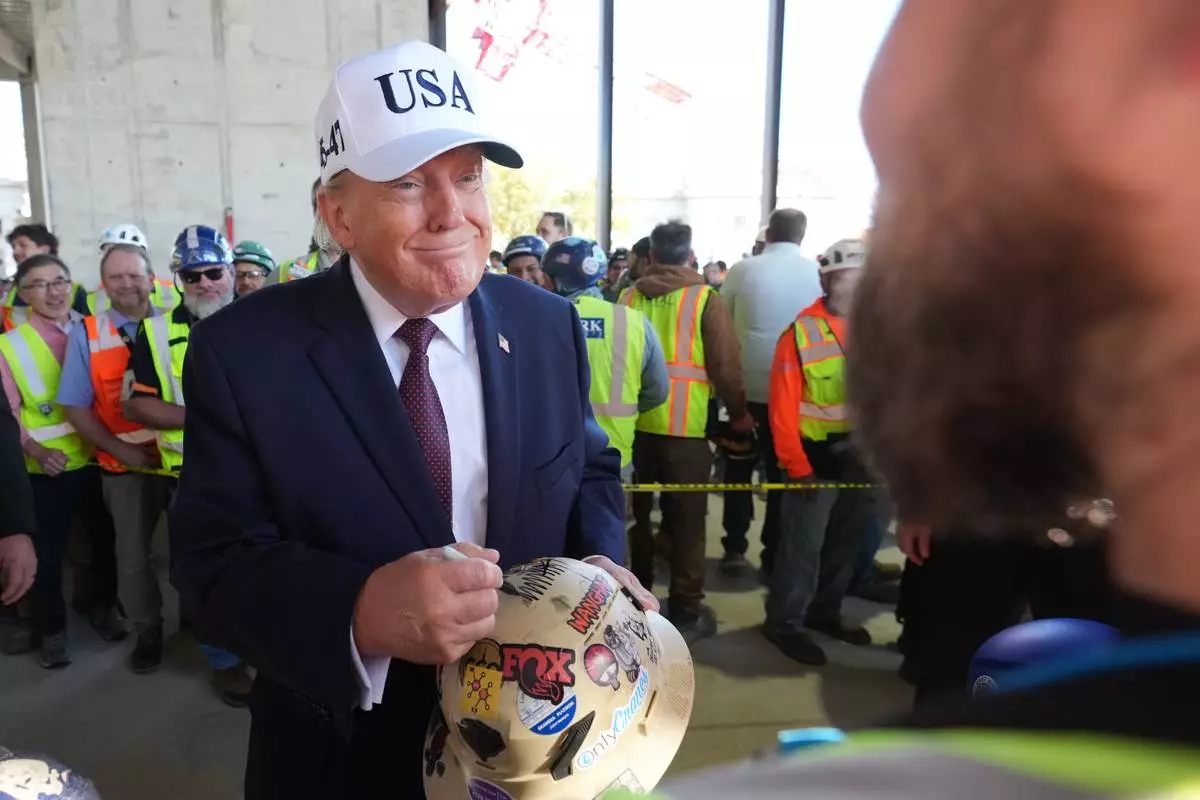
President Donald Trump signs a hard hat as he talks with workers at the White House Ballroom construction site at the White House, Wednesday, Nov. 4, 2026, in Washington. (AP Photo/Alex Brandon)
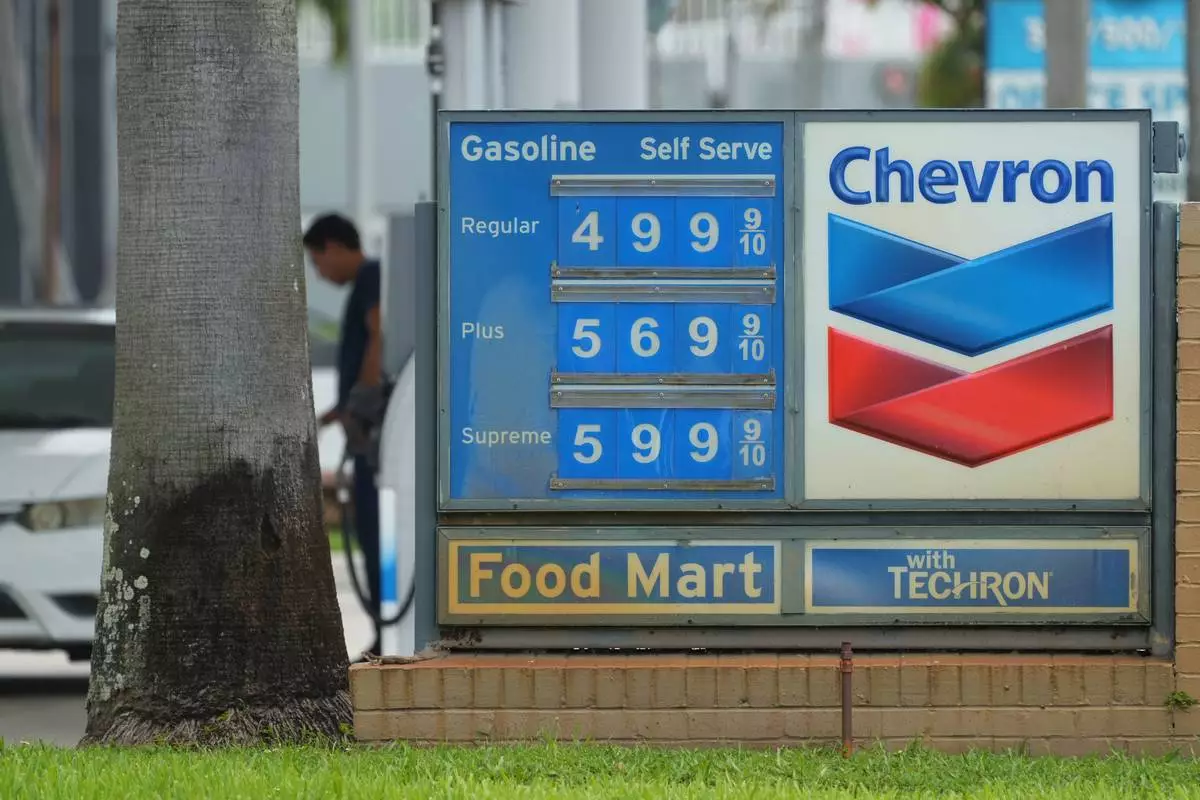
FILE - A customer pumps gas at a Chevron station, May 27, 2026, in North Miami, Fla. (AP Photo/Marta Lavandier, File)
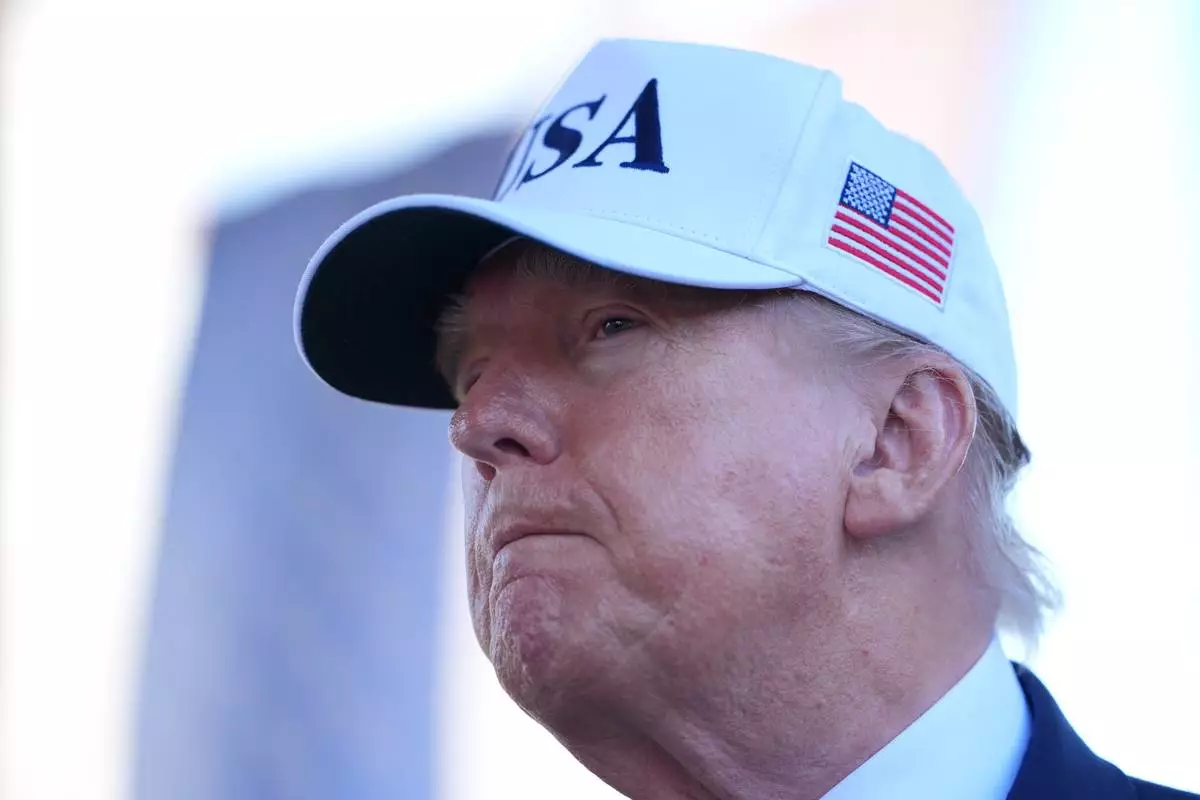
President Donald Trump talks to reporters during a tour of White House Ballroom construction at the White House, Wednesday, Nov. 4, 2026, in Washington. (AP Photo/Alex Brandon)

Michael Carman votes at a Checkers grocery store on Election Day, Tuesday, Nov. 3, 2026, in Lawrence, Kan. (AP Photo/Charlie Riedel)