BERLIN (AP) — Hubert Aiwanger, the leader of a conservative party that has become a mainstay of Bavarian politics and sought to expand its influence across Germany, has been found dead at a Berlin hotel.
Berlin police and prosecutors said the body of Aiwanger, who was Bavaria's deputy governor and the southern state's economy minister, was found in his hotel room in the center of the capital on Wednesday evening. An investigation into the cause of death was opened.
German news agency dpa reported, without naming sources, that the 55-year-old Aiwanger had planned to make a speech Wednesday afternoon at the opening of a Berlin office of his party, the Free Voters, but pulled out of the event for health reasons.
Aiwanger had been the party's leader in Bavaria since 2006 and its national leader since 2010.
The combative politician with a strong regional accent and a populist touch made his party a serious rival to Bavaria's long-dominant Christian Social Union, which is part of the center-right bloc that currently leads Germany. On his watch, it entered the state legislature in Munich in 2008. Ten years later, when the CSU lost its majority in the state legislature, it entered Bavaria's government as the junior coalition partner.
Shortly before Bavaria's 2023 election, Aiwanger faced a furor that started with allegations — denied by the politician — that he was responsible for an antisemitic flyer when he was a high school student 35 years earlier. The Free Voters emerged unscathed from the election, gaining support and remained part of the state government.
Aiwanger's party has made only limited inroads outside Bavaria and he wasn't able to lead it into the national parliament.
Bavarian governor Markus Söder wrote on X that “the sudden death of Hubert Aiwanger is an absolute tragedy.”
Aiwanger is survived by his partner, Free Voters politician Tanja Schweiger, and two children.
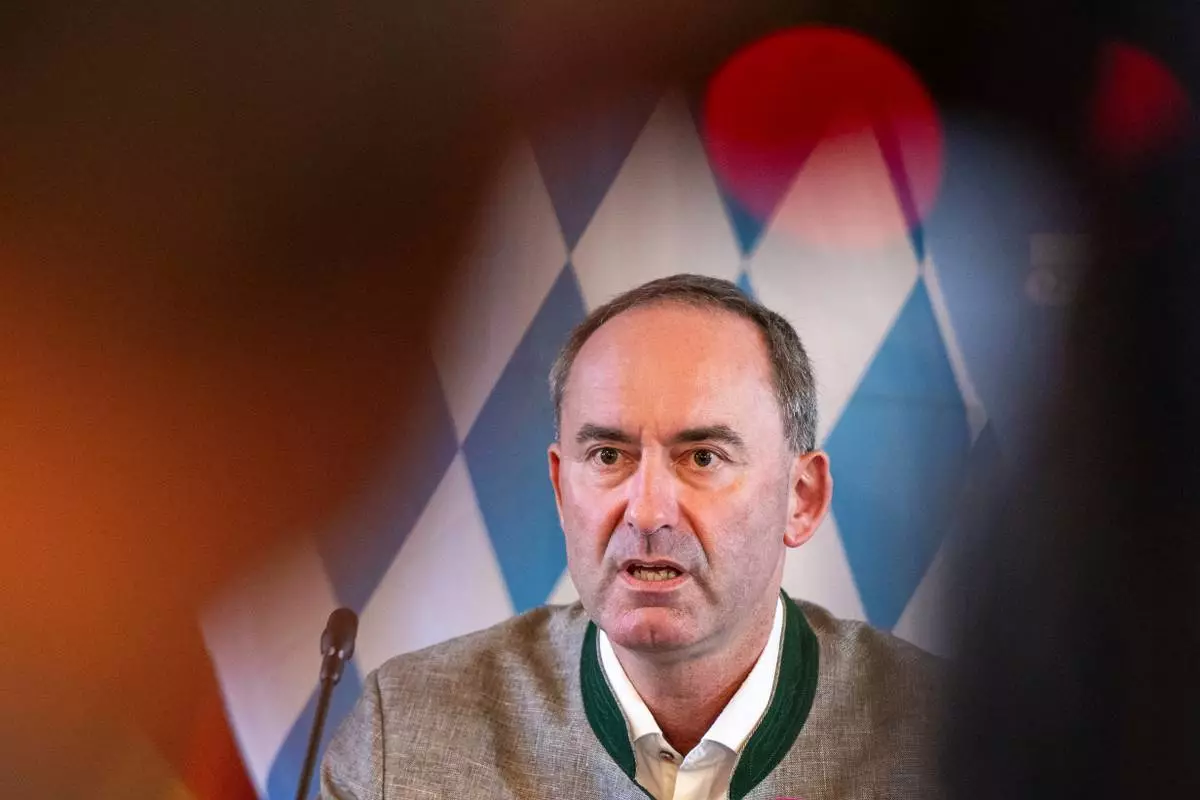
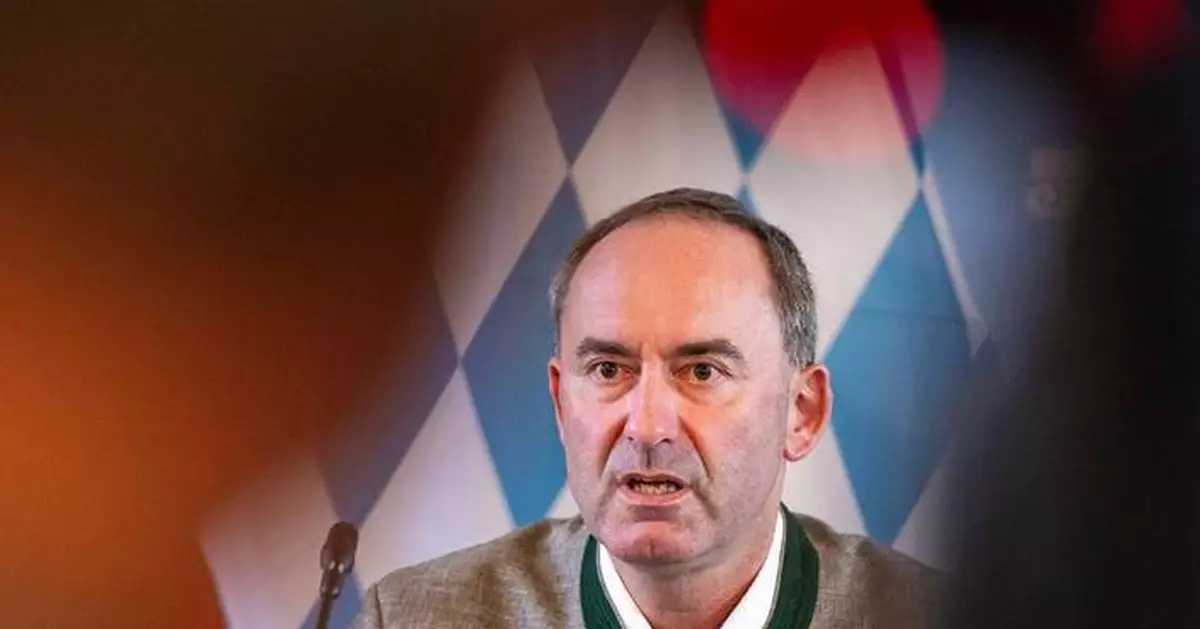
FILE -Hubert Aiwanger party leader of the Free Voters and Bavaria's Minister of State for Economic Affairs, Regional Development and Energy speaks at a press conference in Munich, Germany, Aug. 31, 2023.(Lennart Preiss/dpa via AP, File)
Cristiano Ronaldo won’t play for Portugal anymore, ending on Thursday a career that spanned six World Cups and included a European title and the men’s all-time international scoring record.
His announcement marked the end of a lauded career that began more than two decades ago before Euro 2004 and finished with him walking out on the national team after falling out with coach Jorge Jesus.
"To the Portuguese people, the day has come for me to hand back the No. 7 shirt of our national team,” the 41-year-old Ronaldo said in a long video message on social media. "I never felt it belonged to me alone but for 23 years I had the privilege and the responsibility of wearing it, defending it and carrying it with me into stadiums all around the world.
“Today the time has come to pass it on to the future. It was not an easy decision because some decisions are not made with the mind alone. They are also made with the heart. A journey that began in August 2003 and changed my life forever has come to an end.”
Ronaldo will keep playing at club level, which he is expected to finish at the end of this season with Al-Nassr in Saudi Arabia.
He is in pursuit of his 1,000th career goal and sits on 985. Of those, a record 146 goals came in 234 appearances with Portugal.
While long-time peer Lionel Messi finished his career with Argentina last month after a much anticipated farewell match, Ronaldo’s final appearance with Portugal has ended up being on Sept. 24 in a 1-0 home win over Wales in the Nations League.
Jesus kept him on the bench for the following match and said he didn’t plan to start him in the next one, so Ronaldo decided to leave the team’s training camp. Jesus later said Ronaldo would be welcome back and the decision to return was up to him.
The Portuguese soccer federation released a statement expressing “deep gratitude and immense admiration” for Ronaldo’s service to the country.
“Cristiano Ronaldo has raised Portugal’s profile and inspired generations of young people who dream of following in his footsteps; for many of us, he is the greatest player of all time!” the federation said.
It said it intends to organize a tribute to Ronaldo “in which the fans and the country can one more time applaud and celebrate a player who has given us so much.”
Before Ronaldo debuted for Portugal by replacing Luís Figo in a 2003 friendly against Kazakhstan, Portugal had never won any major trophies.
Then he and successive generations of talented teammates made Portugal a regular presence at major tournaments.
Portugal won its first major title at Euro 2016, and the Nations League in 2019 and 2025.
“Throughout my entire career with the national team, I always pushed myself beyond my limits," Ronaldo said. "I wanted to win. I wanted to be better. I wanted to make history.
“I always demanded the most of myself. I always wanted more. I always believed we could go further. And I gave everything I had for this shirt.”
Portugal qualified for the World Cup only three times before Ronaldo’s time — 1966, 1986 and 2002. On his watch, Portugal qualified every single time.
The same was true for the Euros, which Portugal had played only three times before Ronaldo — 1984, 1996 and 2000. After he arrived it played in the tournament every time. Portugal was runner-up in Ronaldo’s Euro debut in 2004 at home.
At the World Cup, Portugal went as far as fourth place with Ronaldo, in his tournament debut in 2006. It was among the title candidates nearly every time after that, though, with a best result a quarterfinal appearance in 2022.
“There were perfect afternoons and nights. There were victories I will never forget. There were defeats that still hurt to remember” Ronaldo said. “I made mistakes. I suffered. There were also moments when I couldn’t give the Portuguese people what they so desperately wanted. But I never gave up, I never stopped feeling proud to represent Portugal.”
Portugal’s best World Cup finish remains third place in 1966 with the great Eusébio in what was the team’s only World Cup participation until 1986.
Ronaldo was the first man to score in six World Cups. He reached an all-time 11 goals at this year’s World Cup, surpassing the previous Portugal record of nine from Eusébio.
He has scored for Portugal in 23 consecutive calendar years, from 2004-26.
He became the first player to reach 200 men’s international appearances, and his 234 appearances remain the most all-time in men’s international soccer.
Ronaldo also has the most Euro appearances with 30, and the most Euro goals with 14. His first ever international goal came at the start of Euro 2004, when host Portugal was runner-up to Greece.
AP Sports Writer Daniella Matar in Milan contributed.
See AP’s full soccer coverage here
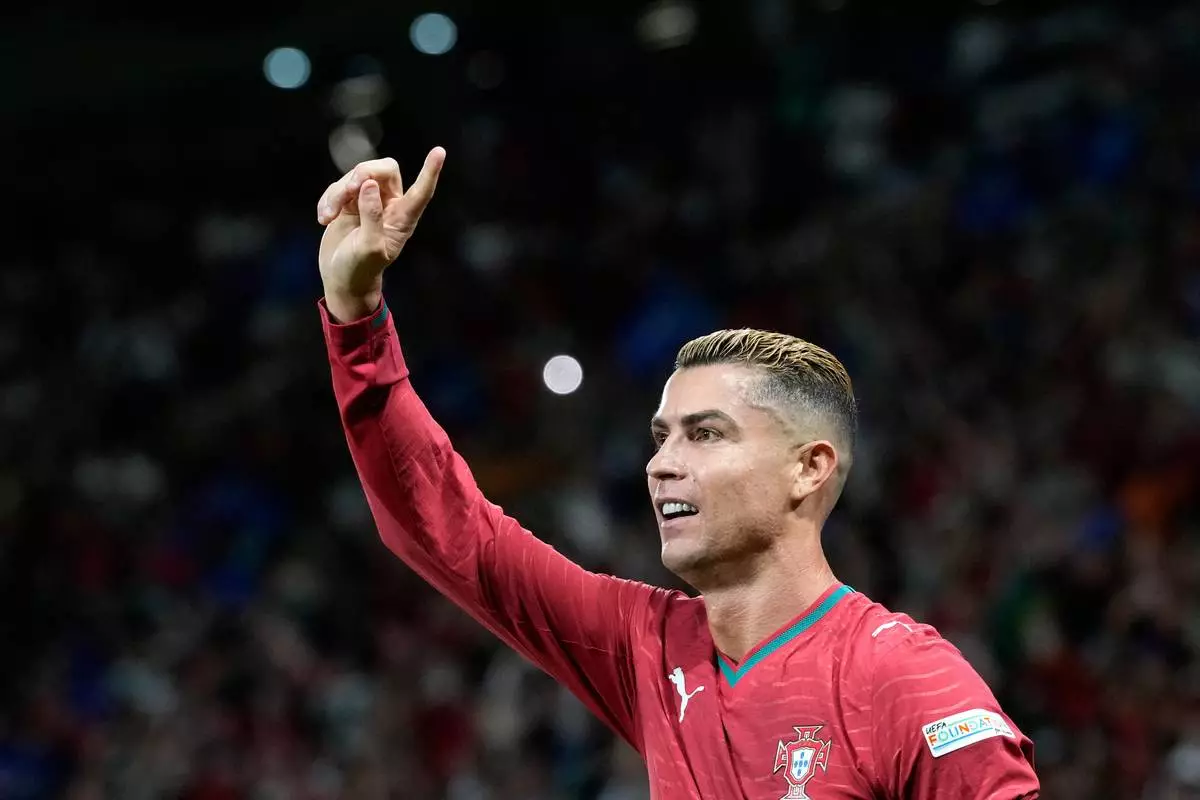
FILE - Portugal's Cristiano Ronaldo gestures after having a goal disallowed by the VAR during the Nations League soccer match between Portugal and Wales in Lisbon, on Sept. 24, 2026. (AP Photo/Armando Franca, File)