Dolly Parton ’s longtime manager moved Thursday to drop a complaint that accused the late singer’s nephew who acted as her head of security with threatening her estate and its employees.
The manager, Danny Nozell, who runs She’s Alive, an entity founded to manage and protect Parton’s estate, had secured a temporary restraining order against Bryan Seaver and his security company, Squadron Augmented Protection Services, in September. Nozell was seeking to turn the order into a permanent injunction against Seaver.
A very brief filing in a Tennessee court Thursday gives no reason why the complaint is being withdrawn.
It says only that a proposed order was being drafted for the judge’s approval to dismiss the case without prejudice, meaning it can be refiled again. A court filing from a day earlier said the two sides had reached an agreement, but that gave no details either.
The first public hearing on the matter, pushed several times over the course of a month, was slated for Tuesday.
The Associated Press sent emails seeking comment from lawyers for She’s Alive, Seaver and his company.
The case exposed a serious rift in Parton's inner circle that spilled into public view in the weeks after her Aug. 25 death.
She’s Alive terminated Seaver and SAPS in early September, and the following week petitioned for the restraining order against him, arguing that his “terrorizing conduct made their continued retention untenable.”
The petition said that starting shortly before Parton’s death and continuing after, Seaver made threats and aimed them directly at She’s Alive’s “personnel, counsel, and business partners. In writing, he vowed to ‘destroy the entire brand.'”
It says he “called himself ‘literally an international arms dealer and mercenary,’” and said everyone “needs to be worried about what I might do.”
In granting the temporary order, Chancellor I’Ashea L. Myles cited Seaver’s “claimed access to weapons, experience with violence, and intention to retaliate.”
Seaver said in court filings that he considered Nozell a close friend and ally before Nozell took out the restraining order.
In an affidavit, Seaver said text messages Nozell cited as evidence of his threats were a “private conversation between two friends who were both frustrated, grieving and discussing strategy.”
“I have never threatened physical harm to Mr. Nozell, to any SAL employee, contractor, attorney, advisor, or business partner, or to anyone else associated with SAL,” Seaver said. “I have no intention of doing so.”
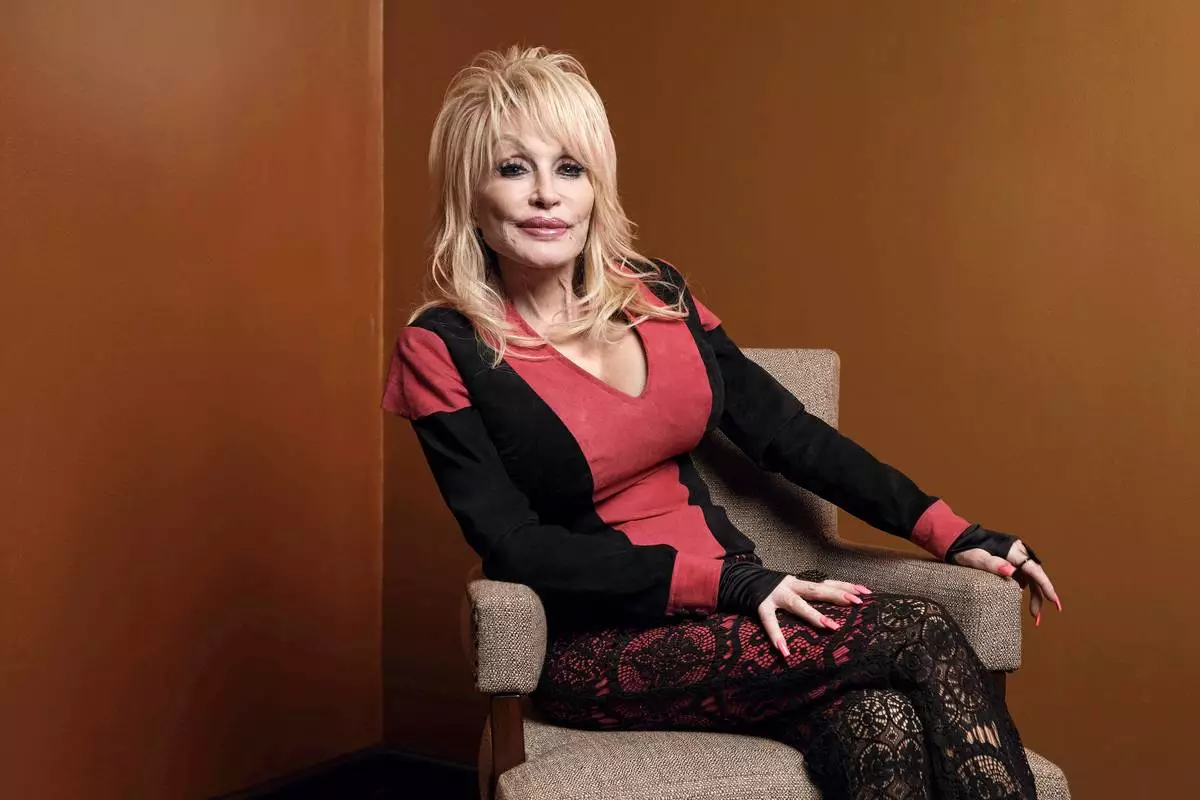
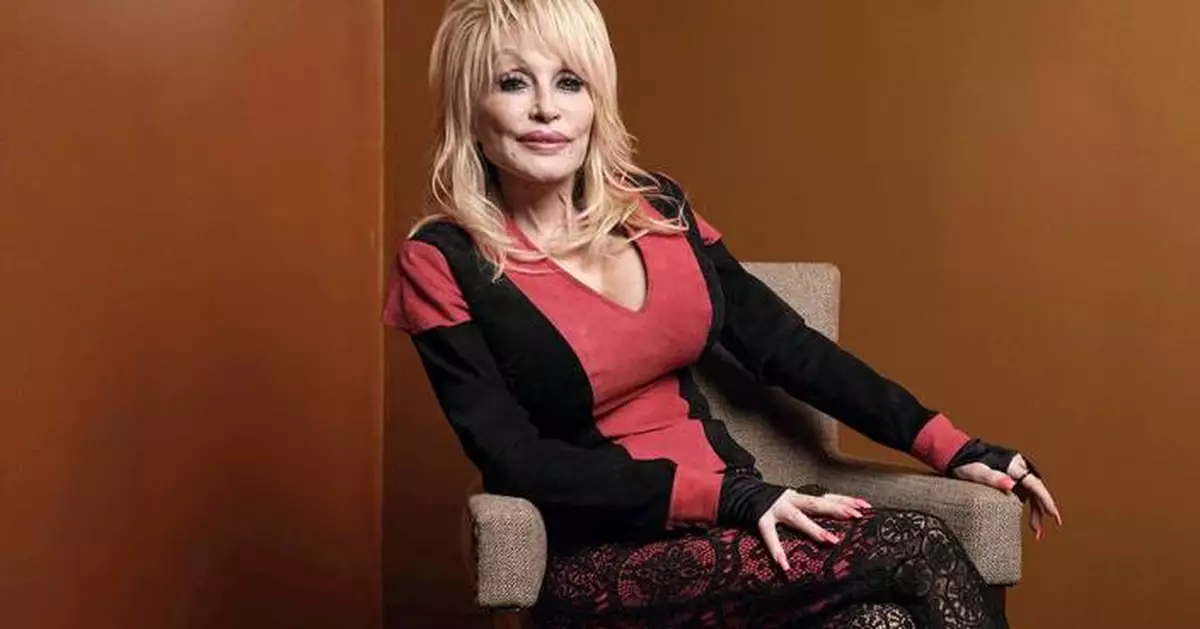
FILE - Dolly Parton poses at the Carnegie Medal of Philanthropy Ceremony in New York, on Oct. 13, 2022. (AP Photo/Andres Kudacki, File)
BEIRUT (AP) — From Michigan to the Middle East, Arabs are celebrating Abdul El-Sayed’s election win and delighting in his introduction of Arabic terms like “habibi” and “inshallah” to the American political lexicon.
After being the target of Islamophobic rhetoric on the campaign trail, the rising political star who will be the first Muslim American U.S. senator has mocked his critics on the right while championing the Palestinian cause and leaning into his faith and Egyptian heritage.
“JD, habibi,” El-Sayed said in his victory speech, addressing U.S. Vice President JD Vance, who had warned that the candidate would lead rioters in burning down Detroit. “There is this delicious irony in the fact that you’re constitutionally obligated to swear me in in January.”
“Habibi” literally translates to “my beloved” and is peppered through Arab pop songs. In everyday speech, it often means “buddy,” “pal,” or “bro.” El-Sayed's supporters have sported shirts reading “Habibi for Abdul.”
El-Sayed, the son of Egyptian immigrants, said his campaign had turned “inshallah” — “God willing” — into “hamdulillah,” which means “thank God.”
Arabs thrilled to the gentle ribbing of the vice president, with many posting music video clips featuring “habibi” to social media. It was a rare outpouring of joy in a region traumatized by past and present conflicts — which have also fueled negative stereotypes in the West.
One user on X posted a video of Egyptian diva Shireen Abd El-Wahab dancing to one of her most popular songs, joking that El-Sayed would make it the new national anthem.
Egyptians are renowned in the Arab world for their sense of humor and are known for cracking jokes in the face of life's difficulties, a spirit that has been popularized in films and by famous comedic actors.
Riffing off El-Sayed's victory speech, some shared a meme from an Egyptian film in which a man attends a funeral while high and is unable to stop laughing. “I came here to crack jokes,” read the caption, quoting a line from the film.
An Egyptian academic, Khalil al-Anani, praised El-Sayed on X, saying: "'Habibi' is the sweetest word.” He thanked the senator-elect for bringing joy to Egyptians.
Arab and Muslim Americans have faced prejudice for decades, with popular films depicting them as terrorists and politicians on the right fanning baseless fears about the imposition of sharia, or Islamic law.
During the campaign, U.S. President Donald Trump referred to El-Sayed as a “jihadist,” evoked the Sept. 11 attacks and deliberately misstated the candidate's name.
On social media, users responded to such attacks by posting light-hearted videos, including of Lebanese diva Haifa Wehbe belly dancing and young veiled women breakdancing in the streets.
“Donald, look, I know you've struggled with my name,” El-Sayed said in his victory speech. “So after JD swears me in in January, you can just go on and call me ‘senator.'”
Supporters cheer as Michigan Democratic Senate candidate Abdul El-Sayed departs a campaign cookout, Saturday, Oct. 31, 2026, in Pontiac, Mich. (AP Photo/Julia Demaree Nikhinson)

Michigan Democratic Senate candidate Abdul El-Sayed speaks at an election night event, early Wednesday, Nov. 4, 2026, in Detroit, as his wife Sarah Jukaku watches. (AP Photo/Julia Demaree Nikhinson)