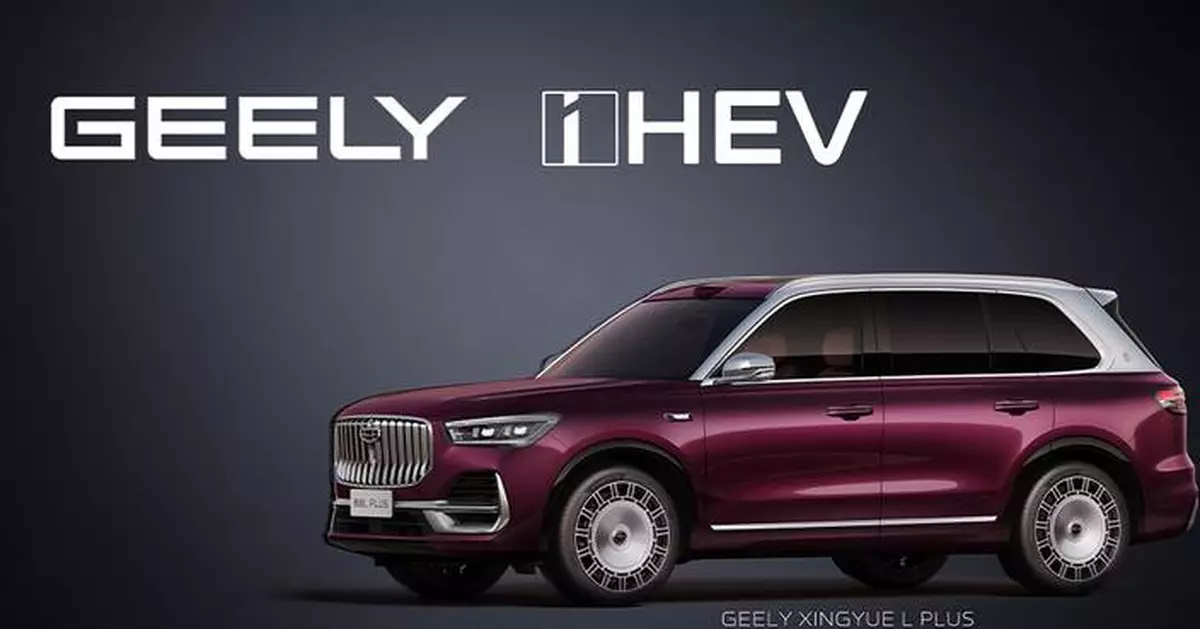
HANGZHOU, CHINA – Media OutReach Newswire – 6 November 2026 – As the global automotive industry accelerates its shift toward electrification, some have questioned the long-term role of gasoline-powered vehicles. Geely Auto Group sees a different path forward. Earlier this year, the group launched its i-HEV Intelligent Hybrid technology system, which brings together AI-powered energy management, a high-C-rate battery and a high-efficiency engine. This hybrid system is designed to improve fuel economy, driving performance, intelligent features, safety and reliability.
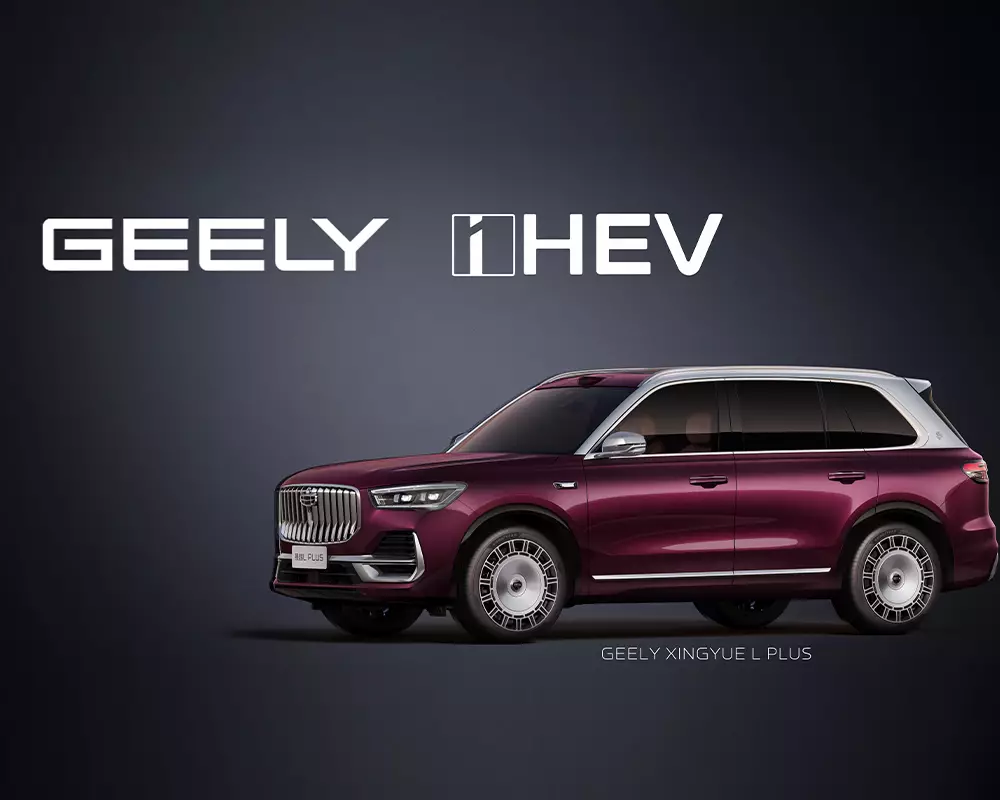
Geely's i-HEV Intelligent Hybrid Technology Offers a New Direction for Gasoline-Powered Vehicles
Gasoline-powered vehicles are unlikely to disappear in the near term, but their continued relevance will depend on becoming more efficient, more intelligent, and increasingly electrified. Hybrid electric vehicles (HEVs) offer one way to achieve that transition. Since the first-generation Prius debuted in 1997, Toyota has played a major role in bringing hybrid technology into the mainstream, with fuel efficiency and durability among its principal strengths. As battery, electric motor, power electronics and connected-vehicle technologies have advanced, however, hybrid development has expanded beyond fuel economy to encompass performance, intelligent features and safety. Geely i-HEV Intelligent Hybrid System is designed to build on that progress.
Fuel efficiency remains the primary consideration for hybrid vehicles buyers. Geely Auto Group has continued to improve the thermal efficiency of its internal combustion engines, and the engine developed for the i-HEV Intelligent Hybrid System achieves a peak thermal efficiency of 48.41%, which the group describes as the highest among engines currently in mass production.. The Group also reports fuel consumption 12% lower than that of the Japanese hybrid models used in its benchmark comparison. In a highway fuel-economy test on the Hainan Ring Expressway, the fifth-generation Emgrand i-HEV recorded fuel consumption of 2.22 L/100 km, a result that earned a Guinness World Records title. In a separate real-world test, the larger XINGRUI L PLUS recorded a combined fuel consumption of 2.58 L/100 km. These figures reflect specific tests rather than standardized combined-cycle ratings.
Unlike conventional hybrid layouts in which the engine and electric motor operate more closely together, the i-HEV system uses an architecture designed to allow the engine and electric motors to operate independently. This enable electric propulsion to take the lead when conditions allow, while helping the engine operate within a more efficient range. The system incorporates an 11-in-1 hybrid electric drive unit, with peak electric motor output of up to 230 kW. According to Geely Auto Group, electric drive provides propulsion for more than 80% of driving time under the WLTC test cycle, reducing engine operating time by more than 27% compared with the conventional hybrids used in its assessment. Geely also reports pure-electric operation at speeds of up to 66 km/h, acceleration from 0 to 30 km/h in 1.84 seconds and a power response time of 10 milliseconds. These capabilities are intended to combine fuel savings and responsive performance.
Intelligent energy management is another important element of the Geely i-HEV Intelligent Hybrid System Its AI-based platform analyzes conditions such as temperature, humidity and altitude in real time, then adjusts the balance between engine and electric power to improve overall energy efficiency by more than 10%. The Geely i-HEV also supports advanced electronic and electrical architectures, allowing compatible vehicles to incorporate intelligent cockpit systems and driver-assistance features.
The system also incorporates a patented power redundancy safety design intended to improve resilience. The engine, P1 motor, and P3 motor are configured to operate independently – if any one of these power sources becomes unavailable, the remaining two can continue to provide propulsion. Separate pathways for the fuel, electrical, coolant and exhaust systems are designed to reduce the risk of interference between systems. For reliability, Geely reports that the system has completed a cumulative 15,000 hours of bench durability testing, equivalent to approximately 4.8 million kilometers of vehicle mileage. The engine is also designed to accommodate different gasoline octane grades, supporting use across markets with varying fuel specifications.
Geely Auto Group is bringing i-HEV hybrid technology to multiple production models. The recently launched XINGRUI L PLUS hybrid sedan accelerates from 0 to 100 km/h in 7.7 seconds and has a WLTC combined fuel-consumption ratings of just 3.98 L/100 km. Additionally, the XINGYUE L PLUS, scheduled to launch in Nov 2026, is set to introduce the 2.0TD i-HEV hybrid technology, pairing an engine delivering a maximum power output of 160 kW with a P3 electric motor rated at 230 kW. Depending on the model and trim, the vehicles also offers technologies including radar and the G-ASD H5 driver-assistance system and the EVA smart robot, extending advanced vehicle features to the group's hybrid lineup.
In markets where charging infrastructure remains limited and running costs are a priority, HEVs can offer a particle route to lower fuel consumption without requiring external charging. Geely's i-HEV Intelligent Hybrid System reflects the group's approach to that opportunity: improving the efficiency of the internal combustion engine while using electrification and AI to enhance the performance, energy management and the driving experience. Rather than treating hybrid technology as a transitional solution focused solely on fuel savings, Geely Auto Group is developing it as a platform for broader advances in efficiency, intelligence and reliability.
Hashtag: #Geely
The issuer is solely responsible for the content of this announcement.
** This press release is distributed by Media OutReach Newswire through automated distribution system, for which the client assumes full responsibility. **
TONGXIANG, CHINA – Media OutReach Newswire – 6 November 2026 – A robot makes coffee. Others dance, patrol exhibition halls or trade mock blows in choreographed demonstrations. Scenes like these were on full display at this year's World Internet Conference Wuzhen Summit, which concluded on Nov 5 in the canal town of Wuzhen in eastern China.
Companies including Unitree Robotics, AgiBot and UBTECH used the "Light of Internet" Expo to show how far robots have come — and how close they may be to becoming part of everyday life.
But the expo was not only about spectacle. Many of the machines on display were being developed for tasks beyond the exhibition hall.
Evan Kail, an American content creator visiting the expo, paused in front of Unitree Robotics' GD01, a robot designed for emergency-response scenarios.
Kail said the machine captured the pace of China's progress in robotics. A few years ago, he said, Unitree robots were widely known for dancing in televised gala performances. Now, machines such as the GD01 pointed to more practical roles, including disaster response and search-and-rescue operations.
"The leaps of technology in China are very impressive," Kail said. "As climate change gets worse and worse, robots like this can make a difference if they are used to save lives."
The shift from eye-catching demonstrations to practical deployment was a recurring theme across the expo. But for robots to work reliably in crowded streets, disaster zones or industrial sites, the machine itself is only part of the equation. It also needs a network capable of carrying huge amounts of data, responding almost instantly and supporting AI decisions close to where they are needed.
At China Mobile's booth, a display highlighted one example: traffic-management robots deployed in Hangzhou, the eastern Chinese city that hosted the 2023 Asian Games.
Earlier this year, during a peak holiday travel period, Hangzhou deployed 15 robots at major intersections in tourist areas and downtown districts. Part of the Hangzhou Police Smart Mobility program, they can answer questions, guide pedestrians and vehicles, and warn people about traffic violations.
The deployment illustrates how connectivity is becoming central to the usefulness of intelligent machines. The current system uses 5G and 5G-Advanced connections and typically supports one camera on each robot. Future versions are expected to carry as many as six cameras and operate more independently within defined areas.
That will require latency below 10 milliseconds, uplink speeds above 100 Mbps and positioning accurate to within centimeters — demands that are helping shape the development of 6G.
The next generation of mobile technology is still years from commercial deployment. But its ambitions extend beyond faster download speeds. Industry plans for 6G include combining communications with sensing, edge computing and satellite connectivity.
"With 6G, networks will effectively gain radar-like eyes — the ability to sense and understand their surroundings — while AI will give them a brain," said Liang Zeshuai, a network optimization engineer at China Mobile Zhejiang.
In this vision, a base station would do more than transmit data. Equipped with radar-like sensing capabilities, it could detect a nearby drone, identify obstacles around a blind corner or provide an autonomous machine with a more detailed understanding of its surroundings. Edge computing, meanwhile, would allow AI tasks to be processed closer to the user, rather than sending every request to a distant data center.
That could matter especially in the kinds of situations Kail had in mind: complex and dangerous environments where time, connectivity and situational awareness can make a difference.
Satellite connectivity could provide another layer of resilience when typhoons, earthquakes or other disasters damage ground-based infrastructure. China Mobile has launched a direct-to-handset service using the Tiantong and BeiDou satellite systems.
For now, 5G-Advanced — a network that goes beyond 5G in speed and performance — has already been widely rolled out across China. In Wuzhen, a 5G-Advanced "super uplink" network with upload speeds of up to 1,000 Mbps covered the conference venue for the first time. Robot dogs used the network to patrol the area, transmitting 4K video and location data in real time.
The same combination of connectivity, computing and AI is moving into industries where the gains may be less visible than a dancing robot, but potentially more consequential.
China Mobile and Sinopharm, China's state-owned pharmaceutical and healthcare conglomerate, for example, have developed an AI-enabled cold-chain logistics platform that has reduced delivery costs by 65% and cut delivery times by 70%. The system is designed to help manage the transport of temperature-sensitive products, where delays or poor monitoring can lead to waste.
At Ningbo-Zhoushan Port, China Mobile has built what it describes as the world's largest 5G private network for port operations. Such networks can support real-time coordination among cranes, vehicles, cameras and control systems across a vast, fast-moving industrial site.
The company is also applying AI and connected systems to public safety and emergency management, including flood-control planning and drone inspections of buildings. The aim is not only to respond faster after an emergency, but to identify risks before they become crises.
At Wuzhen, the robots remained the most visible attraction. They made coffee, danced for visitors and posed for cameras. Yet the more consequential story was happening behind them — in the networks, computing systems and satellite links that could determine how quickly AI moves from a trade-show novelty into a tool for cities, industries and, potentially, lifesaving work.
Hashtag: #TongxiangNewsOffice
The issuer is solely responsible for the content of this announcement.
** This press release is distributed by Media OutReach Newswire through automated distribution system, for which the client assumes full responsibility. **
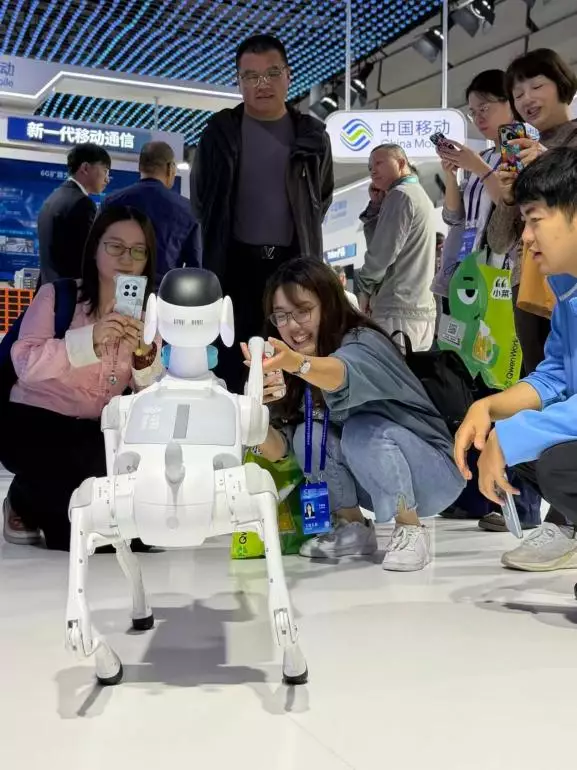
A girl reaches out to shake hands with a robot dog used for patrol demonstrations at the summit.
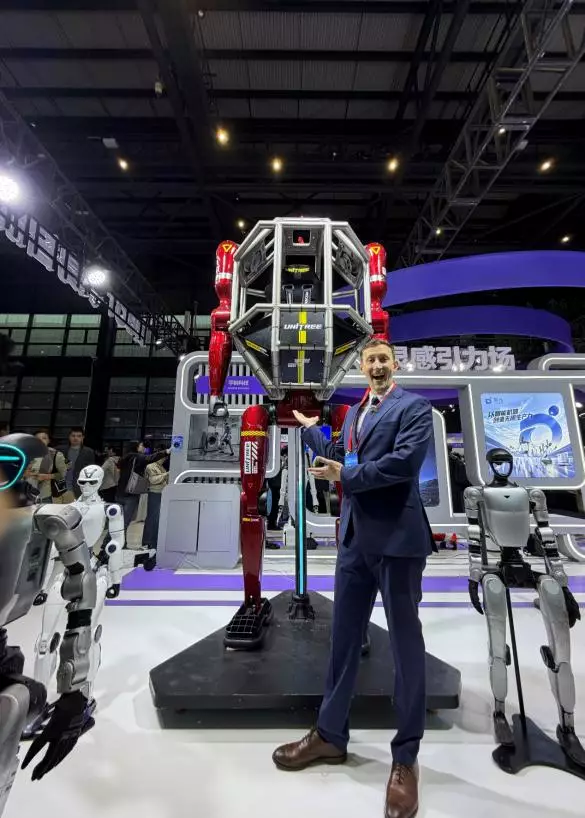
American content creator Evan Kail poses for a photo with Unitree Robotics' GD01, a robot designed for emergency-response scenarios, at the summit.