CHAMPAIGN, Ill. (AP) — Andrej Stojavovic scored 25 points and Quentin Coleman had 19, including 15 in the second half, to lead No. 3 Illinois to a 112-70 victory Thursday over Penn.
Zavier Zens had 18 points, Ethan Brown had 13 points and 10 rebounds, Lincoln Williams had 12 points and nine rebounds in his collegiate debut and Stefan Vaaks tossed in 11 points for the Illini (2-0), who shot 59% from the field (43 of 73) and outrebounded Penn 62-33.
Illinois also scored in triple figures in its opener, beating Fairleigh Dickinson 120-45 on Monday.
Michael Zanoni scored 16 points for Penn (0-1) and Lucas Lueth had 14 points and three blocked shots.
Illinois led 53-30 at halftime. Stojakovic scored 21 points in the first half and Illinois outscored Penn 30-8 over the last 10:22 to break open a tight game.
The Illini played without returning starters David Mirkovic, an AP preseason All-American, and Jake Davis. Each is out indefinitely.
Mirkovic is recovering from foot surgery in August and an appendectomy Saturday. Davis suffered a separated shoulder early in the game vs. Fairleigh-Dickinson and underwent surgery Wednesday.
The Illini beat Penn 105-70 in a first-round NCAA Tournament game last season with Mirkovic scoring 29 points and collecting 17 rebounds and went on to play in the Final Four.
Ivy League preseason favorite Penn has four returning starters and seven of its top nine scorers back from last year's team, which won the league tournament and earned its first NCAA Tournament berth since 2018.
Ex-Iowa coach Fran McCaffery is in his second year as the Quakers’ coach. Illinois was 16-11 against McCaffery in his 15 years in charge of the Hawkeyes.
Penn: Hosts Howard on Monday.
Illinois: At No. 19 Texas Tech on Tuesday.
Sign up for Top 25 poll alerts here, visit the Top 25 here and see AP’s full men’s basketball coverage here

Illinois guard Andrej Stojakovic goes up to the basket during the first half of an NCAA college basketball game against Penn Thursday, Nov. 5, 2026, in Champaign, Ill. (AP Photo/Craig Pessman)
KUALA LUMPUR, Malaysia (AP) — Nur Sadek was once on track to become an Islamic scholar. His mother dreamed of raising a son who would serve as a faith leader in their western Myanmar village.
Sadek’s family belongs to the Rohingya ethnic minority. The predominantly Muslim group shares an area in Myanmar's Rakhine State with Buddhists and a smaller Hindu population. Ethnic and religious divisions have long shaped the region’s history.
He fled alongside loved ones in 2017 after soldiers opened fire on his community and bullets struck the tin roof of his home. He ran with nothing but the clothes on his back and never returned.
Around 700,000 Rohingya escaped a military crackdown that year and crossed into neighboring Bangladesh, according to the U.N. refugee agency, known as UNHCR. More have sought refuge in other countries across Asia, including India, Indonesia and Thailand.
As of February 2026, about 126,000 Rohingya were registered with UNHCR in Malaysia, a Muslim-majority country where Sadek now studies law and advocates for Rohingya rights.
The Southeast Asian nation does not legally recognize refugees, leaving them vulnerable to detention. But the challenges extend beyond immigration status. Many Rohingya struggle to practice their faith and find a sense of belonging.
CSW, a religious freedom advocacy group, said in a statement to The Associated Press that Rohingya refugees in Malaysia cannot officially register their own places of worship. Most pray at local mosques, but some face discrimination or avoid them for fear of immigration detention.
“Religious solidarity is often overtaken by social and cultural differences between the two groups,” CSW said.
Nurul Hakim was the first of 10 siblings to flee Myanmar, leaving in 2010. He arrived in Kuala Lumpur after days of traveling on foot, by car and by boat, passing through Thailand.
His family was not directly attacked. Yet years of violence and discrimination had made life increasingly difficult for his community.
Rohingya Muslims in Rakhine faced restrictions on religious gatherings, access to mosques and Islamic education for years. Authorities have closed mosques and imposed limits on communal prayer, according to reports by the United Nations and Amnesty International.
Hakim can now pray freely and feels welcomed by local Muslim faith leaders. But he has heard from Rohingya elsewhere in Malaysia who have been barred from doing so.
Rohingya Rights Response, an organization co-founded by Sadek that monitors issues affecting refugees in Malaysia, has also documented restrictions on religious practices.
Banners declaring that Rohingya are unwelcome have been displayed outside mosques in some neighborhoods. And even where they can pray freely, some aspects of their religious life remain difficult to recreate far from home.
“Most of the Rohingya don’t have their own imam leading the prayers because the mosques are run by Malay imams,” Sadek said.
There is much Hakim misses about home: his days pulling a rickshaw, trading goods with his neighbors, learning about Islam alongside fellow Rohingya.
“There is no difference in praying at a different mosque, but there are differences with who you are praying with,” Hakim said. “When I was back in Myanmar and I went to pray, I could pray with my neighbors, with my villagers, and I don’t have that here.”
Others face a more immediate obstacle to practicing their faith: fear of detention over their lack of legal status.
Mohammed Rafique said he now prays mostly at home and rarely visits a mosque because he worries about encountering immigration authorities.
He fled Myanmar in 2009 with his wife and five children, but they stayed in Bangladesh while he continued to Malaysia. He has not seen them since.
Living alone in a foreign land has been tough, Rafique said. He earns just 30 ringgit ($7.50) a day collecting scrap materials, barely enough to pay for needed medication. Yet the hardest moment he has faced was learning that his wife had died and he'd been unable to say goodbye.
Sadek knows that pain, too. He lost his mother in Bangladesh and has yet to visit her grave.
“I always wanted to do a lot of stuff, but now I just want to visit her cemetery and that has become like a dream for me,” he said.
Sadek’s organization advocates for changes that would improve the lives of his community in Malaysia.
His main focus is safety. Beyond the risk of immigration detention, his team has documented harassment by social media content creators who mock and demean Rohingya refugees. He also pushes for fair wages, access to healthcare and education.
For Zahidah Begum, those challenges are part of everyday life. Her husband struggles to work because of health problems. Her school-age children cannot attend formal classes.
“I don’t know what the future holds for us,” Begum said.
She fled Myanmar in 2013, carrying her own memories of religious persecution.
Her father, an imam, was a respected religious leader in their village. He taught Islamic studies every day from 8 a.m. to 4 p.m.
“I love my father because of what he did,” she said. “He is the one who raised me, who taught me everything, including the Islamic teachings.”
It was her father who introduced her to the Quran. Who taught her to read and understand its verses. To distinguish between what her faith permitted and forbade.
During a raid on her village, soldiers tried to arrest him. He fell and broke his leg as he tried to escape. He eventually fled to Bangladesh, but was unable to receive medical treatment. His injury became infected and he died.
“I miss every moment of my father,” Begum said.
She keeps a part of him alive through lessons she passes on to her two daughters. Begum teaches them to pray, to recite verses from the Quran and to make duas, or personal supplications to God, just as her father taught her.
“I still feel the same connection to my faith that I felt back home,” Begum said. “Even here, I remain connected to my religion.”
Associated Press religion coverage receives support through the AP’s collaboration with The Conversation US, with funding from Lilly Endowment Inc. The AP is solely responsible for this content.
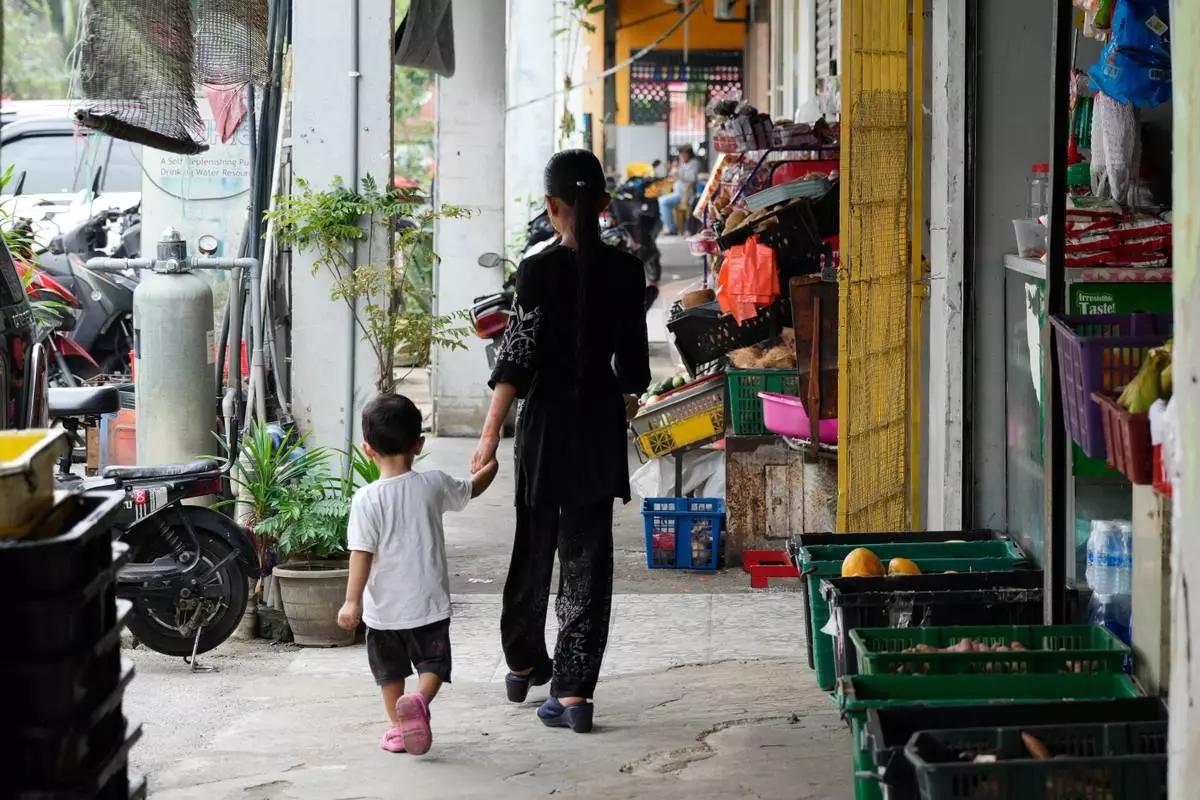
A woman walks with a child past shops in a Rohingya community neighborhood in Kuala Lumpur, Malaysia, Monday, Sept. 21, 2026. (AP Photo/Vincent Thian)
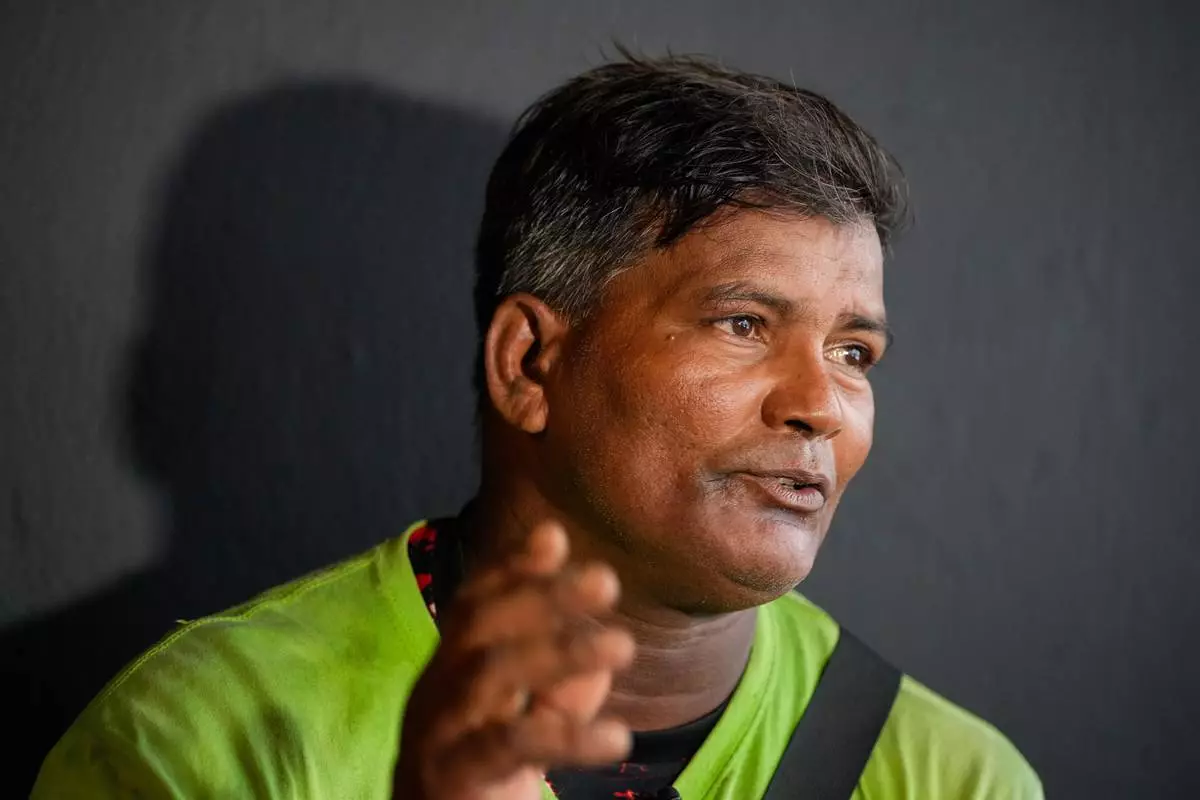
Mohammed Rafique speaks during an interview with The Associated Press in Kuala Lumpur, Malaysia, Monday, Sept. 21, 2026. (AP Photo/Vincent Thian)
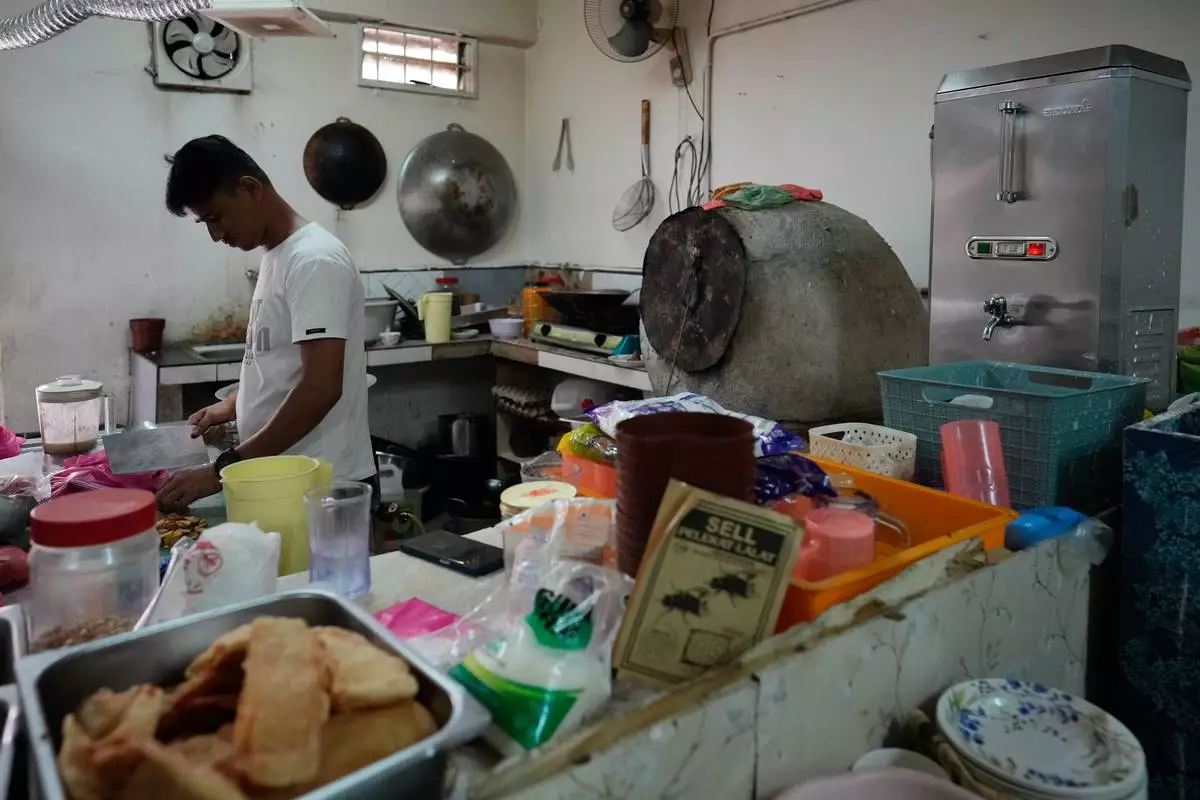
A man prepares food in a restaurant kitchen at a Rohingya community in Kuala Lumpur, Malaysia, Monday, Sept. 21, 2026. (AP Photo/Vincent Thian)
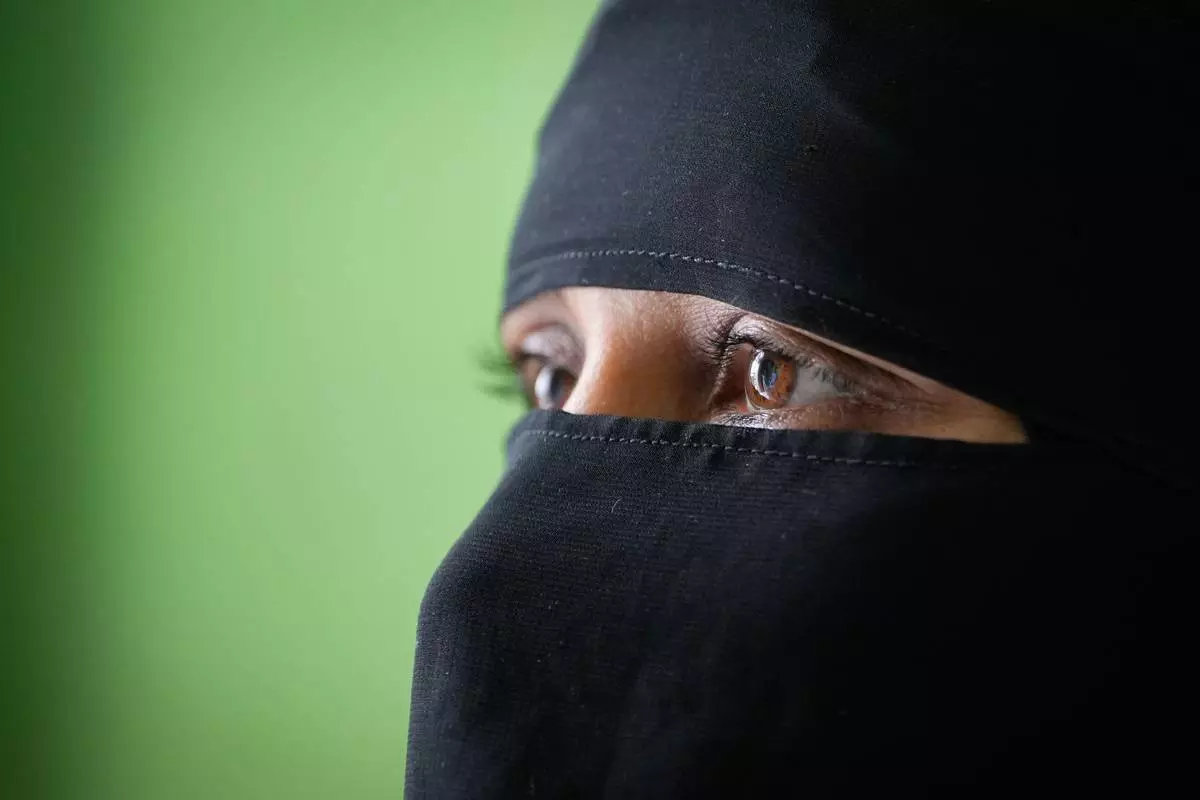
Zahidah Begum sits for an interview with The Associated Press in Kuala Lumpur, Malaysia, Monday, Sept. 21, 2026. (AP Photo/Vincent Thian)
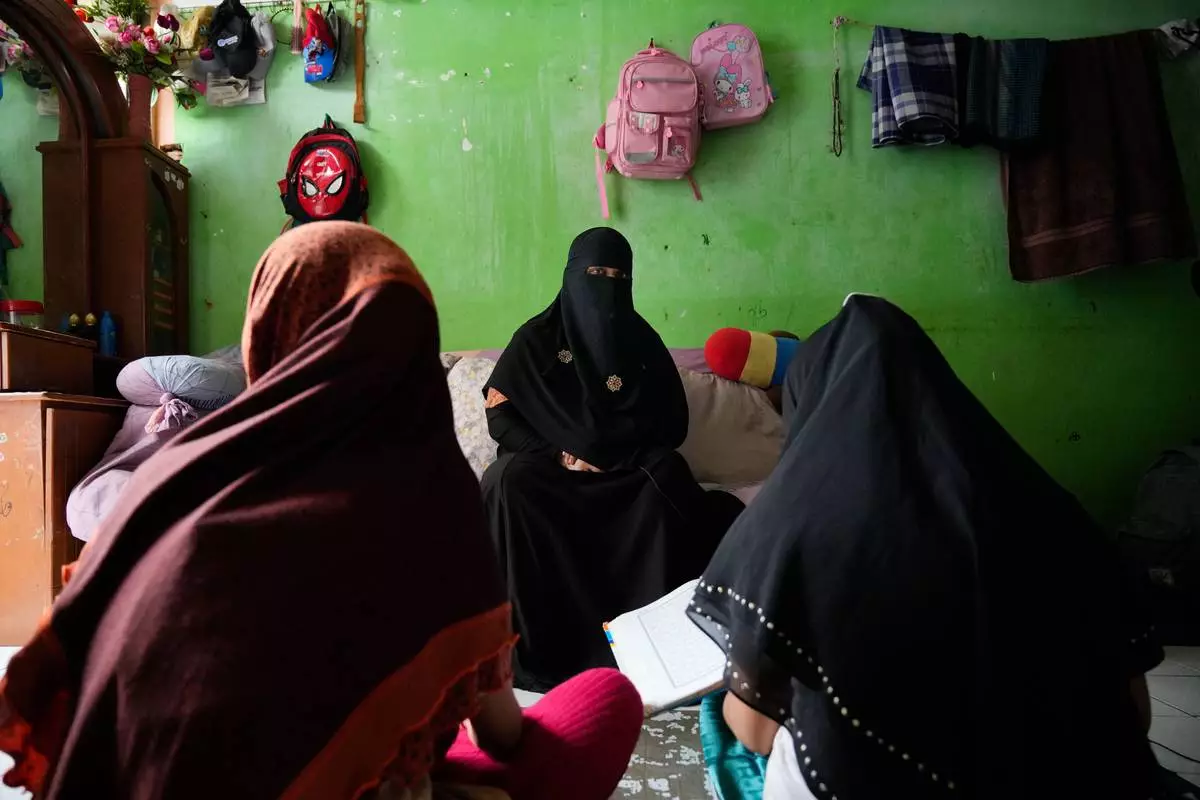
Zahidah Begum teaches her children the Quran at their home in Kuala Lumpur, Malaysia, Monday, Sept. 21, 2026. (AP Photo/Vincent Thian)