A string of bomb hoaxes hit multiple flights across several European countries on Thursday, forcing fighter jet escorts and emergency landings before authorities confirmed the alerts were false and activated regional security mechanisms.
Several inbound and outbound flights in Italy faced consecutive bomb hoaxes on Thursday, prompting the Italian Air Force to scramble fighter jets for escort.
An Aer Lingus flight traveling from Dublin, Ireland to Rome received a bomb threat alert and diverted to France, landing safely at the Evreux airbase. All 151 passengers and six crew members were evacuated to a safe area as bomb disposal teams responded to the scene.
Additionally, a flight from Helsinki, Finland to Rome received a bomb threat before landing safely at Rome's Fiumicino Airport under Italian fighter jet escort. Police bomb disposal experts inspected the aircraft and luggage, finding no suspicious items, and airport operations remained unaffected.
Inbound and outbound flights at the Milan Malpensa Airport were also targeted by security threats the same day. A Warsaw-bound passenger plane diverted to Vienna, Austria, with no explosives found on board, while another flight to Bucharest landed safely, where the Romanian Intelligence Service confirmed that bomb technicians found no explosive devices.
Meanwhile, bomb alerts affected at least four flights to and from Madrid, Spain on Thursday, according to reports from Spanish public broadcaster RTVE and news agency EFE.
These included a flight from Madrid to Paris, two incoming flights from Rome and Milan to Madrid, and a departure from Madrid to Sofia, Bulgaria. Inspections of the aircraft and luggage revealed no explosives.
All affected flights have been safely cleared, and search teams confirmed that all alerts were false threats, with no casualties reported.
Addressing the series of bomb hoaxes targeting European aircraft, Apostolos Tzitzikostas, European Commissioner for Sustainable Transport and Tourism, stated on Thursday that airport security, threat assessments, and relevant investigations are primarily led by national authorities, with investigations currently ongoing.
He noted that the European Union has activated its aviation security information-sharing mechanism, adding that it is too early to conclude whether these incidents are linked, and there is currently no information to determine whether they involve cyberattacks.
This wave of flight bomb hoaxes comes at a time when supermarket refrigeration systems across several European countries have suffered cyberattacks involving remote temperature tampering, alongside similar attacks targeting plasma storage facilities in France.
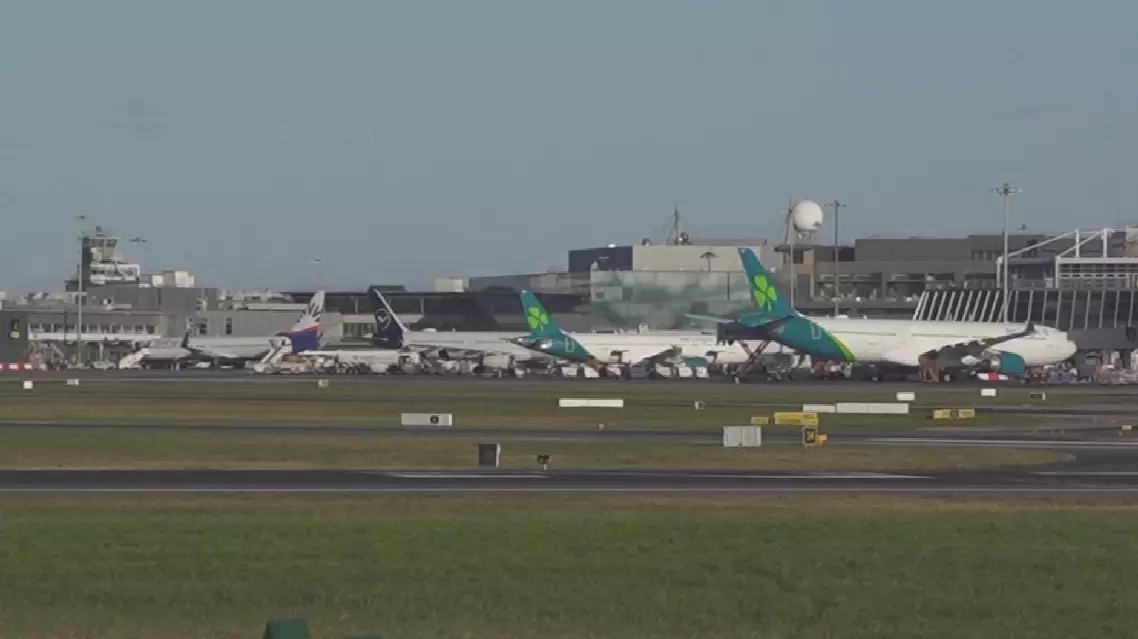
Bomb hoaxes disrupt multiple flights across Europe