Miguel Nicolelis, widely known as the "father of brain‑computer interface (BCI)" and a pioneer of invasive BCI research, has recently warned about the risks of invasive BCI implants.
Although prominent tech figures such as Elon Musk see brain implants as a transformative technology for human‑machine interaction, Nicolelis, who is Professor Emeritus of Neuroscience at Duke University, cautioned against the approach, saying that patient safety should come first in a recent interview with the China Global Television Network in Beijing.
Nicolelis' warning carries extra weight given his own foundational work in the field. He said his medical background and feedback from paralyzed patients drove his shift away from invasive implants.
"Well, it's kind of ironic, because John Chapin and I created the brain-machine interface approach, and we were known for that. And everybody asked me that question: 'Why? You spent 20 years of your life publishing papers in animals, hundreds of papers in animals, about invasive approaches.' However, as I said in the discussion today, I went to medical school. I'm a doctor by training, and I learned since very early with the best doctors in Brazil, who were my professors in the '80s. They told me, 'Look, it doesn't matter if the technology is phenomenal. If in the laboratory it looks like the most spectacular thing you may have, if it doesn't help the patient, and if it's not safe enough, it's not worth it,'" said Nicolelis.
Those clinical principles were reinforced when Nicolelis interviewed prospective participants for his research project. Their reluctance toward brain surgery prompted his team to pursue alternative technical solutions.
"So when I started talking to paraplegic patients in Brazil, and I interviewed several to my project, the Walk Again Project, most of them said, 'Oh, I don't want a surgical procedure. I don't want an invasive device. I don't want to take the chance.' The chances of complications are very small. It's not a trivial procedure, but nevertheless, they exist," said Nicolelis.
"Imagine you're paralyzed from the chest down for a decade, and suddenly someone says, 'Oh, I'm going to put something in your head.' Well, if it goes bad, the only thing you have is your brain at this point, right? So most of the patients in 2012 that I interviewed would look at me and say, 'No, we want to participate if we have a non-invasive approach, something that is 100 percent safe.' And I said, 'Well, if this is what the patients want, I had to scratch my head and find a way to create the non-invasive approach.' And we spent a year thinking about it, and eventually it did work," he said.

"Father of brain-computer interface" warns about risks of invasive BCI
Hiyane Yusuke, a photographer from Japan, uses his photography and short videos to connect with Japanese audiences and bridge the cultural gap across the Asia-Pacific region.
Having studied and worked in China for about four years, he now focuses on photographing China's natural landscapes and historic cities with their centuries-old streets and alleyways, as well as the everyday lives of local people. Yusuke shares these moments and stories through social media.
"Through photography and video, I hope to introduce China to a wider Japanese audience and showcase the many beautiful sides of the country that are still waiting to be discovered. I look forward to exploring more of China, seeing the country through my own eyes and experiencing it firsthand, then sharing the unique beauty and character of this land with people around the world through my work," Yusuke said.
"Over the years, I've had the chance to travel to many parts of China. From bustling modern cities like Shanghai and Chongqing, with their impressive skylines, to places like Yunnan and Qinghai provinces, where nature reveals its breathtaking beauty. I've come to realize that what makes China so fascinating is the way its dynamic modern cities coexist with its vast and magnificent natural landscapes. Beyond that, each region has its own distinctive history and culture. Together, they make China a country of extraordinary diversity and richness," he said.
Yusuke believes firsthand experiences and digital cooperation, especially social media and short videos, can deepen Japan-China cultural understanding, and he hopes to continue fostering these connections through his photography.
"While photography and video have allowed me to share the beauty of China, I believe there's something irreplaceable about visiting a place in person. It's through these firsthand experiences that we can truly come to understand one another. One area I'm particularly interested in is digital cooperation between Japan and China. I believe that introducing the unique appeal of both countries through social media and video content can create more opportunities for younger generations to learn about each other's cultures and engage in deeper exchanges," Yusuke said.
"Through Chinese social media platforms, I can easily discover travel destinations and get useful information about visiting China. I have also noticed that more and more Japanese people, even if they don't speak Chinese, are turning to Chinese social media to discover content related to beauty, entertainment and other interests. Social media and short-form videos have the power to transcend borders and language barriers. They allow people from different countries to discover each other's cultures and see the beauty in their differences. For young people across the Asia-Pacific, I believe (social media) creates exciting new opportunities to share their own cultures with the world and connect with people from other countries. As a photographer, I hope to continue using my work to help build greater understanding and stronger connections between Japan and China," he said.
He's just as likely to be found capturing how a baseball game brings together people of different ethnic backgrounds in Pu'er, southwest China's Yunnan Province, or exploring the digital ties between China and Japan. And after all these years, he said the secret to real exchanges is to understand the differences and find the common ground.
Yusuke hopes that Asia-Pacific Economic Cooperation (APEC) will open up more doors for people across the region to share their cultures, build connections and truly understand each other. "Looking ahead, I hope APEC will create more opportunities for people from Japan, China and other economies across the Asia-Pacific region to learn about one another's cultures and further strengthen mutual understanding and exchange," he said.
China will host the 33rd APEC Economic Leaders' Meeting in Shenzhen in south China in November this year, which will mark the country's third hosting of the event following Shanghai in 2001 and Beijing in 2014. The theme of this year's summit is "Building an Asia-Pacific Community to Prosper Together," while China has identified openness, innovation and cooperation as the three priority areas for this year's APEC cooperation.
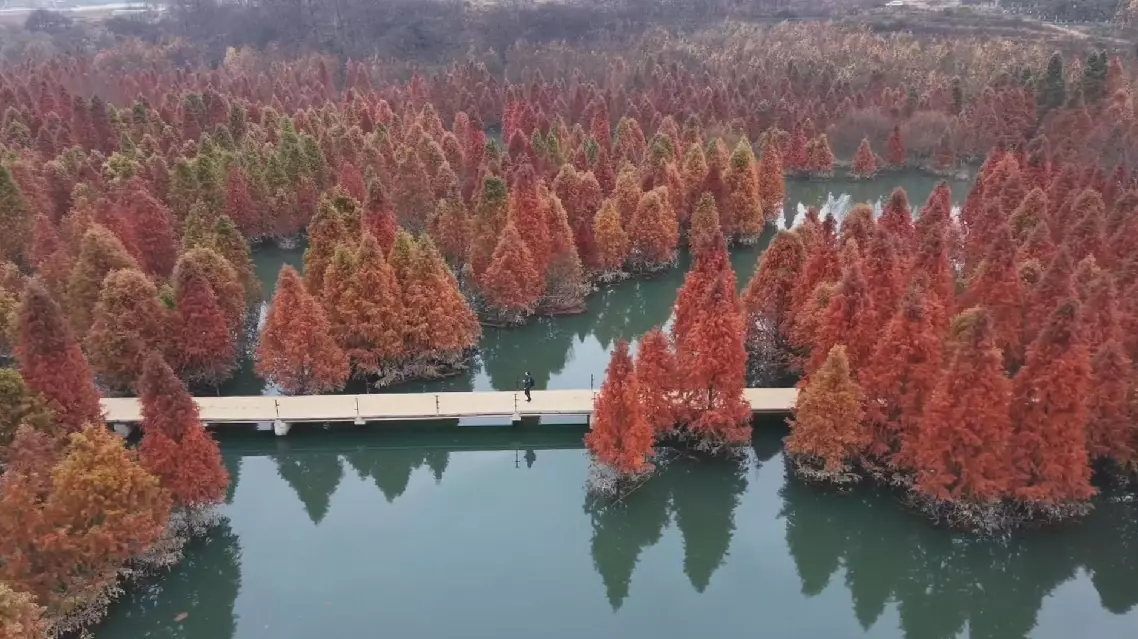
Japanese photographer shares snapshot of Asia-Pacific friendship