LONDON (AP) — An amateur cricketer in England has been banned for two years in a cheating scandal caught on video.
The allegations came to light in July when a video showed a fielder clicking his fingers to imitate the sound of a bat connecting with the ball before a player is called out.
The North Yorkshire & South Durham Cricket League launched an investigation into the player and the second-division Saltburn team. It spent weeks interviewing players and reviewing video footage.
“Charges were subsequently brought against the player and Saltburn C.C.,” the league said in a statement Friday. “Both admitted the charges.”
The player, identified across British media as Brian Devine, was suspended from all cricket under the jurisdiction of the England and Wales Cricket Board for a two-year period through late September 2028.
“This covers playing, coaching, umpiring, scoring and managing junior teams,” the league said.
The Saltburn team was relegated to division three and will start next season with 60-point deduction. The club also has been fined 300 pounds ($400).
“The league recognizes the strain this has placed on many people, especially those who were abused online and in person. We ask everyone to respect that the formal process is now complete,” the league said.
Cricket has had its share of scandals, ranging from the so-called “Sandpapergate” ball-tampering episode in 2018 that led to suspensions for three Australian international players, to spot fixing scandals that have led to lengthy bans.
But at the amateur levels, such as this so-called village cricket competition in England, umpires have no access to video replays to make decisions and there’s a level of trust required from players when claiming catches.
A cricket umpire could be fooled into calling a player out if they believed they heard the sound of the ball clipping the edge of a bat before being caught.
British media dubbed the case “Clicky Ponting,” a play on the name of Australian great Ricky Ponting.
Saltburn was asked for comment Friday.
AP cricket: https://apnews.com/hub/cricket

FILE - View of cricketer's hands catching a cricket ball during day four of the first Ashes Test cricket match, in Cardiff, Wales, Saturday, July 11, 2015. (AP Photo/Rui Vieira, file)
BERLIN (AP) — Officials across Europe reported a fresh slew of bomb threats against multiple flights on Friday, following a string of hoaxes that have caused flight diversions this week. Two broadcasters also received security threats, in a possible sign the menace was spreading beyond the skies.
No suspicious items have been found and no one has been injured, but the threats have raised concern because they came on the heels of other European disruptions — including attacks on supermarket refrigeration systems and drone incursions.
Overall, the threats have caused minimal disruption to aviation, according to the European air traffic authority. Eurocontrol said it was aware of bomb threats against 14 flights on Thursday — only 0.05% of all of the nearly 26,300 flights across the European network that day — and seven on Tuesday.
Even so, airlines have to take every threat seriously because they are ultimately responsible for the lives of their passengers, said Robert Jordan, research director at Britain's Royal United Services Institute think tank.
Jordan told the BBC that there are more ways than ever to make threats against flights, and secure messaging apps have allowed for greater anonymity.
“The risk appetite for airlines is always going to be incredibly low,” he said, noting the great strides that have been made in airport security in recent years. “It is baked into their safety procedures, and it’s baked into their security procedures.”
In Hungary, the defense minister said fighter jets escorted three passenger planes Friday through the country’s airspace within an hour after each received a bomb threat. Romulusz Ruszin-Szendi said the escorts were for flights from Brussels to Sofia, and from Prague to Cyprus and Romania.
French Prime Minister Sébastien Lecornu’s office said four bomb threats were made against aircraft flying over France. The planes landed safely at Paris’ Orly Airport and bomb disposal experts conducted inspections. The office didn’t specify which flights were affected.
Threats were also made against a Prague-to-Bucharest flight operated by Romanian carrier Tarom, and a Ryanair flight from Lisbon to Rome. A WizzAir flight from Prague to Rome was diverted to Venice after a bomb alert, and passengers were evacuated after the aircraft landed.
Eurocontrol said Friday it was monitoring the situation and working closely with airlines, airports, navigation service providers and other groups across Europe “to mitigate any disruption to air traffic flows.”
At Prague's Václav Havel Airport, spokesperson Denisa Hejtmánková said nine flights were threatened, including flights from Denmark, Spain and Britain, and departures to the Netherlands, Cyprus, Romania, Italy and Britain. Czech police said security measures were taken that had “a minimal impact on the normal operations at the airport.”
Diverting and inspecting flights is costly, though.
“I think it’s a big problem for aviation that this is happening," Torstein Nymoen, a 52-year-old Norwegian traveler, said at the Prague airport. "It must cost a lot for the companies, the aviation companies. And I think that it’s sad that some people are doing this.”
In Denmark, police deployed to Copenhagen airport for a second consecutive day as a precautionary measure over threats directed at air traffic, and deemed there was not danger to passengers or others at the airport.
More than two dozen flights were affected by threats earlier in the week, with some diverted as authorities scrambled to rule out any danger.
Fake bomb threats are relatively common but it is unusual to see so many in such a short period.
It remains unclear who is behind the airline threats, which come at a time of increased geopolitical tensions and warnings from authorities that Russia may be ramping up so-called hybrid threats in Europe.
Authorities have not attributed the threats to any group or state actor, and no evidence has emerged linking the hoaxes to a government. An email containing the threat sent Thursday to airport authorities in Rome and reviewed by The Associated Press purported to come from a group describing itself as anti-feminist and claiming it was targeting a “feminist regime.” Another European airport received a threat with similar wording, but it was unclear if it came from the same sender.
Bomb threats are on pilots’ minds and create unnecessary tension, but crews are prepared to respond professionally, said Paul Reuter, vice president of the European Cockpit Association. Pilots review procedures with cabin crews, identify airports where they could divert and may carry extra fuel, he said.
Reuter called the use of civil aviation for geopolitical disruption or hoaxes “totally unacceptable.”
In Ireland, the Dublin headquarters of national broadcaster RTE was evacuated Friday because of a bomb threat, and live broadcasts were replaced with prerecorded programs. Staff returned to the building after a few hours, once police with sniffer dogs had searched the area and declared it safe.
Ireland’s police force, An Garda Síochána, said it has been liaising with Irish media organizations and that the threat will be investigated.
Irish Prime Minister Micheál Martin said the threats to RTE and others “just illustrates how relatively simple it can be to cause disruption and to undermine the normal operation of society through unconventional activities of this kind, which are designed to cause fear and anxiety.”
He said there would be a “very significant security operation” in place next week when Dublin hosts meetings of the European Political Community and European Union leaders.
Separately, U.K.-based broadcaster Sky said it had also received a “security threat.” In a statement reported by Sky News channel, it said that “we are working closely with authorities to ensure our people and operations remain secure.” Sky News remained on air.
It's not clear if the incidents were linked.
These Associated Press reporters contributed: Jill Lawless in London; Suman Naishadham in Madrid; Stephen McGrath in Leamington Spa, England; Giada Zampano in Rome; Karel Janicek and Stanislav Hodina in Prague; Sylvie Corbet in Paris; and Mark Carlson in Brussels.
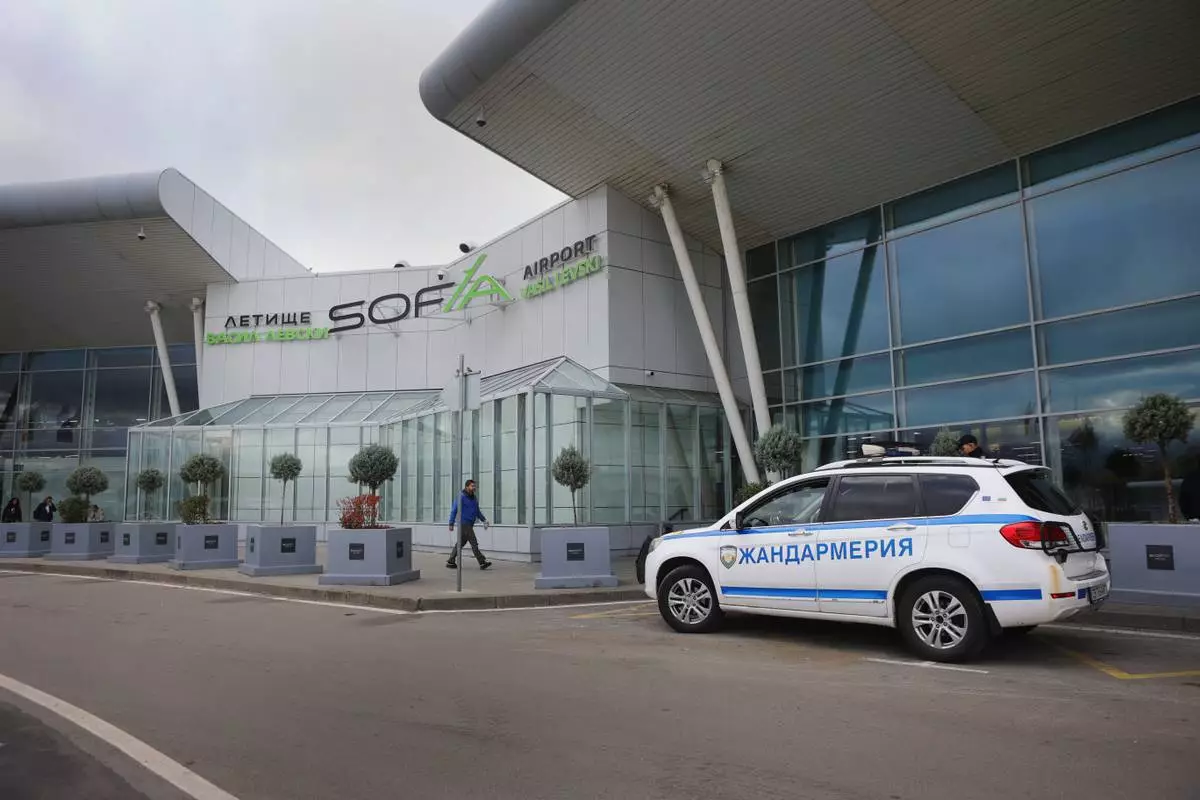
A police car is seen in front of Vasil Levski Sofia Airport after three Ryanair flights bound for Sofia, Bulgaria, made emergency landings following bomb threats on board, Thursday, Nov. 5, 2026. (AP Photo/Valentina Petrova)
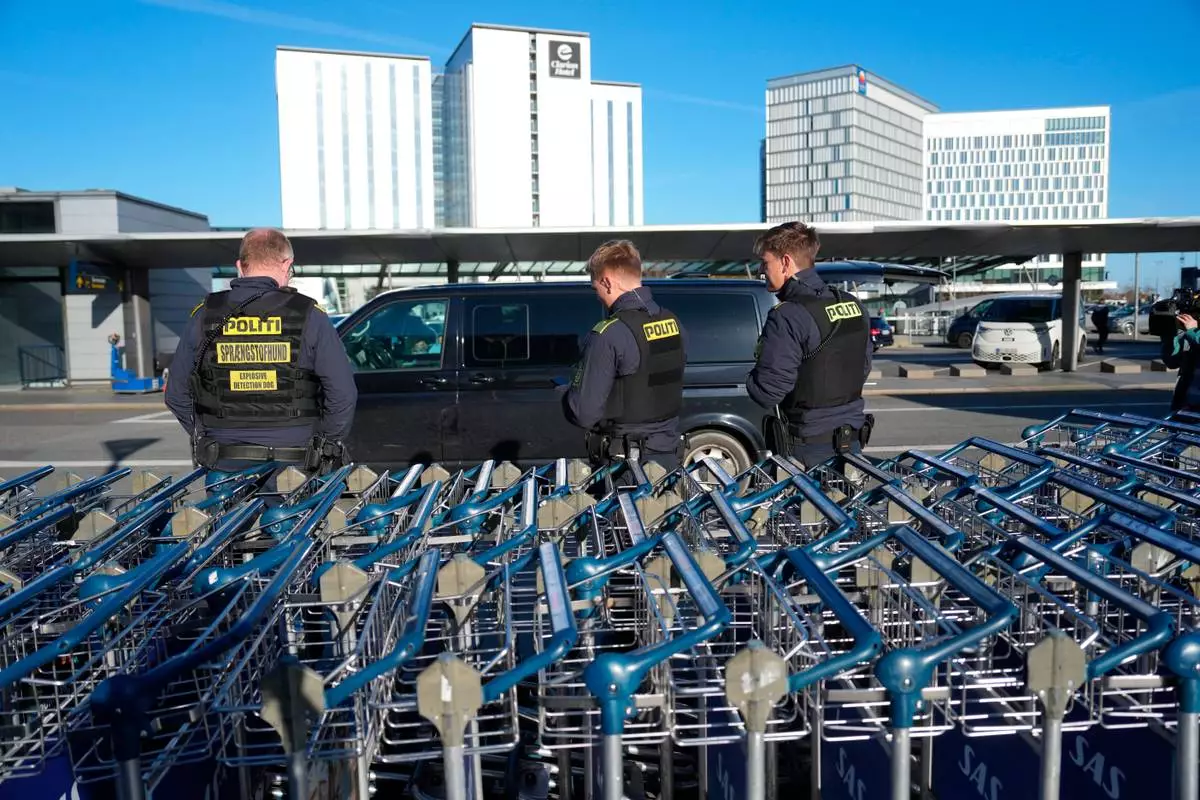
Police patrol the Copenhagen Airport, Denmark, Friday, Nov. 6, 2026. (Liselotte Sabroe/Ritzau Scanpix via AP)
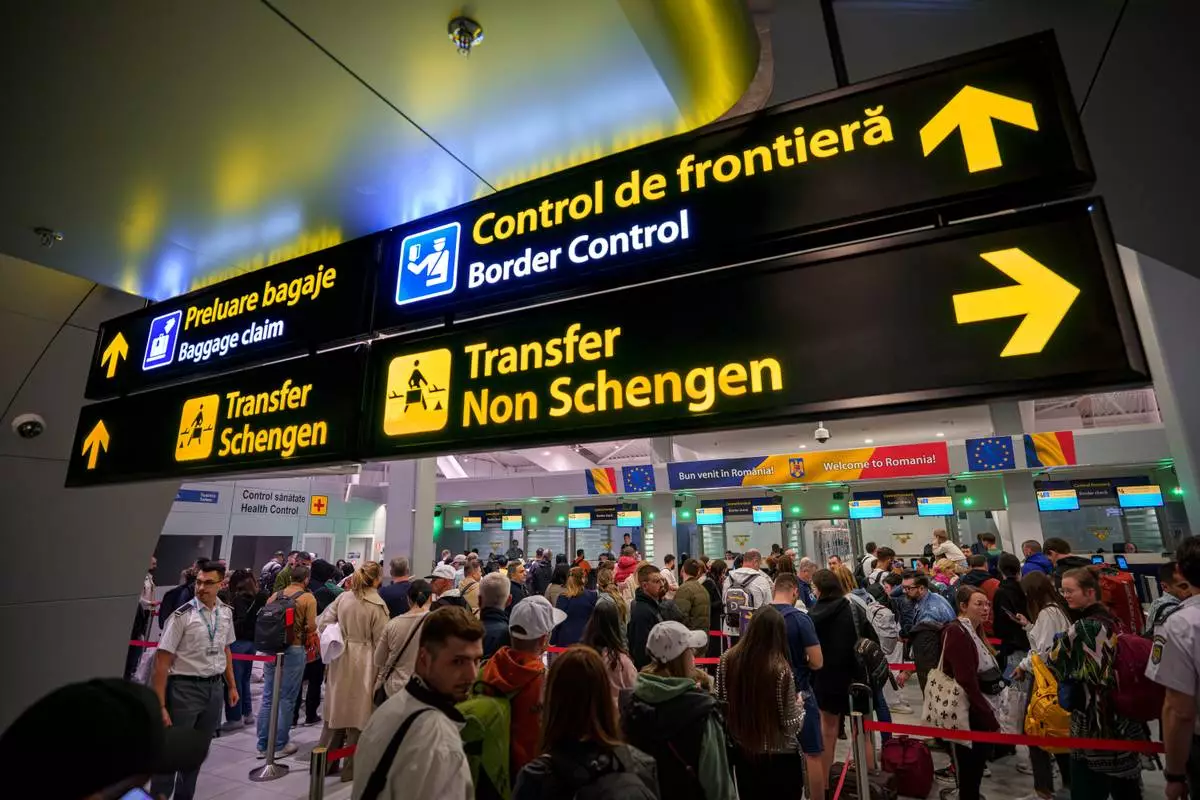
FILE - Passengers arriving at the Henri Coanda International Airport pass under a Schengen Information sign, in Otopeni, near Bucharest, Romania, on March 31, 2024. (AP Photo/Andreea Alexandru, File)
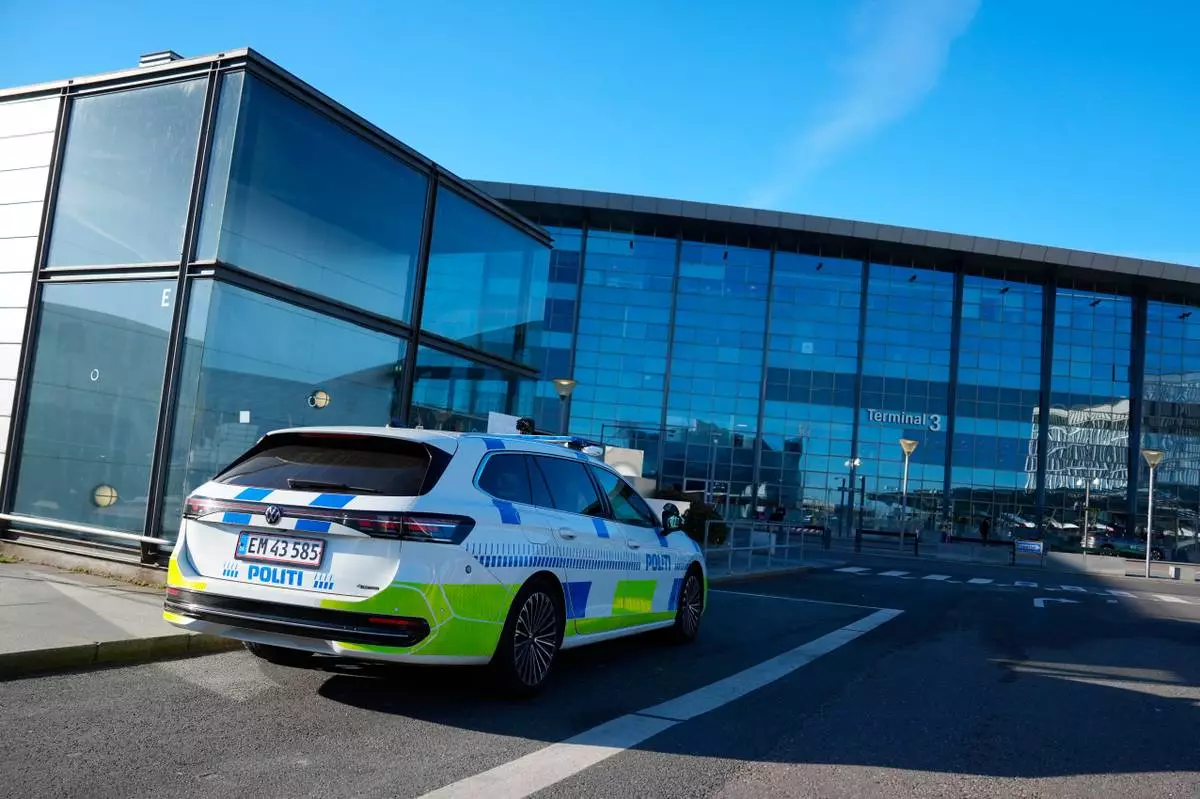
Police patrol the Copenhagen Airport, Denmark, Friday, Nov. 6, 2026. (Liselotte Sabroe/Ritzau Scanpix via AP)