KYIV, Ukraine (AP) — Missile explosions struck Kyiv and left at least five people wounded early on Saturday as Ukraine prepared for new talks next week with Russia and the United States.
Negotiators from Russia, Ukraine and the U.S. are to meet on Tuesday in Abu Dhabi, the capital of the United Arab Emirates, for talks aimed at ending the war. The new round of negotiations would be the fourth brokered by the Trump administration, following the most recent round in Geneva in February.
Western governments backing the peace initiative are seeking a new formula to break the impasse while acknowledging that territorial and security questions remain unresolved.
The Russian missiles that hit the Ukrainian capital overnight damaged homes and commercial properties, closed traffic on a Kyiv bridge over the Dnipro River and triggered new power and water outages, national and city authorities said.
“As a result of the enemy’s night attack, energy facilities in the Kyiv and ... Zhytomyr regions were damaged,” Kyiv Mayor Vitali Klitschko said. “The situation with the capital’s energy supply is extremely difficult, affecting the city’s heating and water supply systems.”
Russia’s Ministry of Defense confirmed Saturday that it had targeted the Northern Bridge, saying that it facilitated the transport of weaponry, military hardware and specialist equipment for Ukraine’s armed forces.
It also said that it had targeted an industrial facility in the capital producing Flamingo missiles, as well as a power station, an electrical substation, and a plant producing ammunition, explosives and gunpowder in the wider Kyiv region. It also confirmed striking an electrical substation in the Zhytomyr region.
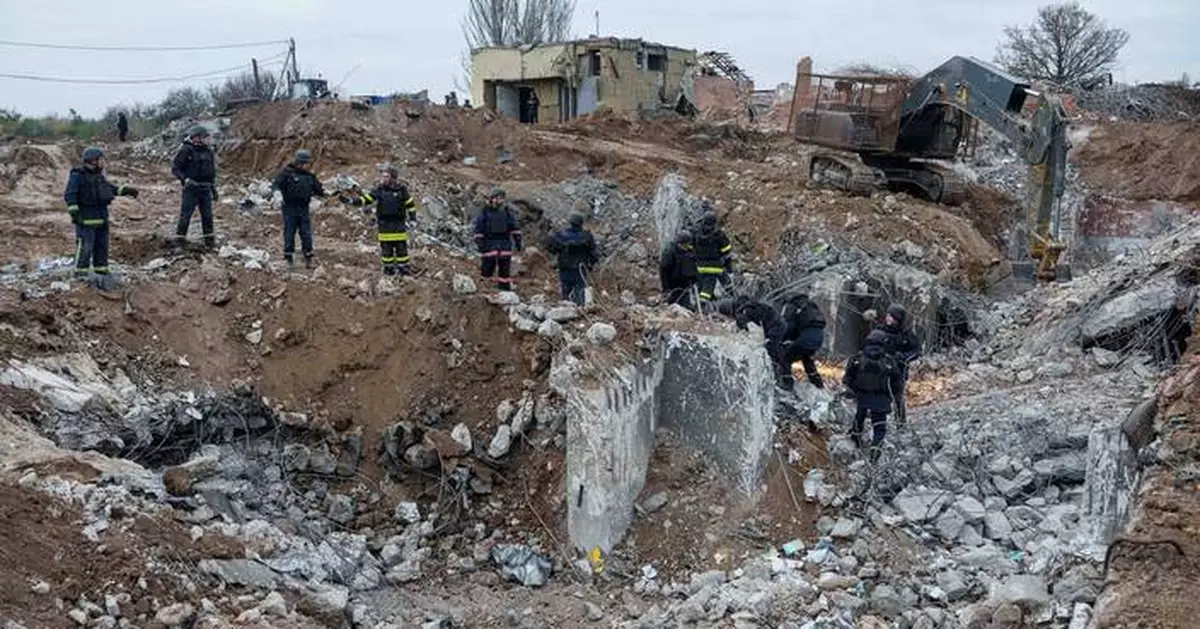
Meanwhile, in southern Ukraine, a recovery operation continued into its sixth day in the village of Komyshuvakha, devastated on Monday when multiple Russian guided bombs slammed into a former school and nearby shelter as residents waited for humanitarian aid.
Emergency services said they had recovered nine more bodies in the previous 24 hours, bringing the death toll early Saturday morning to 55. Dozens of people remain missing.
Village resident Mykola Krasnov, 72, said he was still looking for his wife but had heard no word from rescuers.
“She went to get humanitarian aid, and a three-ton bomb was dropped there. Where is she?” he said. “She didn’t come home, and they didn’t find her body there. She isn’t in the morgue, and she isn’t here alive.”
The village of Komyshuvakha is located near the front line in the Zaporizhzhia region.
A Ukrainian attack killed one person in Russia’s Belgorod region when a drone hit a private home in the town of Grayvoron, local officials said Saturday.
Russia’s Ministry of Defense said Saturday that its forces shot down 411 Ukrainian drones overnight over 10 Russian regions, including Belgorod. Drones were also destroyed over the annexed Ukrainian peninsula of Crimea and the Black and Azov Seas, it said.
The head of Russia’s southwestern Saratov region, Gov. Roman Busargin, wrote on social media that a drone attack damaged “civilian infrastructure” and several residential buildings in the area. Russian media outlets later reported that the Saratov Oil Refinery had been hit and shared images of plumes of smoke over the city.
The head of Russia’s Oryol region, Gov. Andrey Klychkov, also said Saturday that a Ukrainian attack had damaged commercial warehouse and production sites in the regional capital, as cited by state media.
Russian media outlets reported that a Ukrainian attack sparked a blaze at Oryol’s Proton-Electrotex plant, which produces components for military equipment.
Associated Press writer Vasilisa Stepanenko in Komyshuvakha, Ukraine, contributed to this report.
Follow the AP’s coverage of the war in Ukraine at https://apnews.com/hub/russia-ukraine
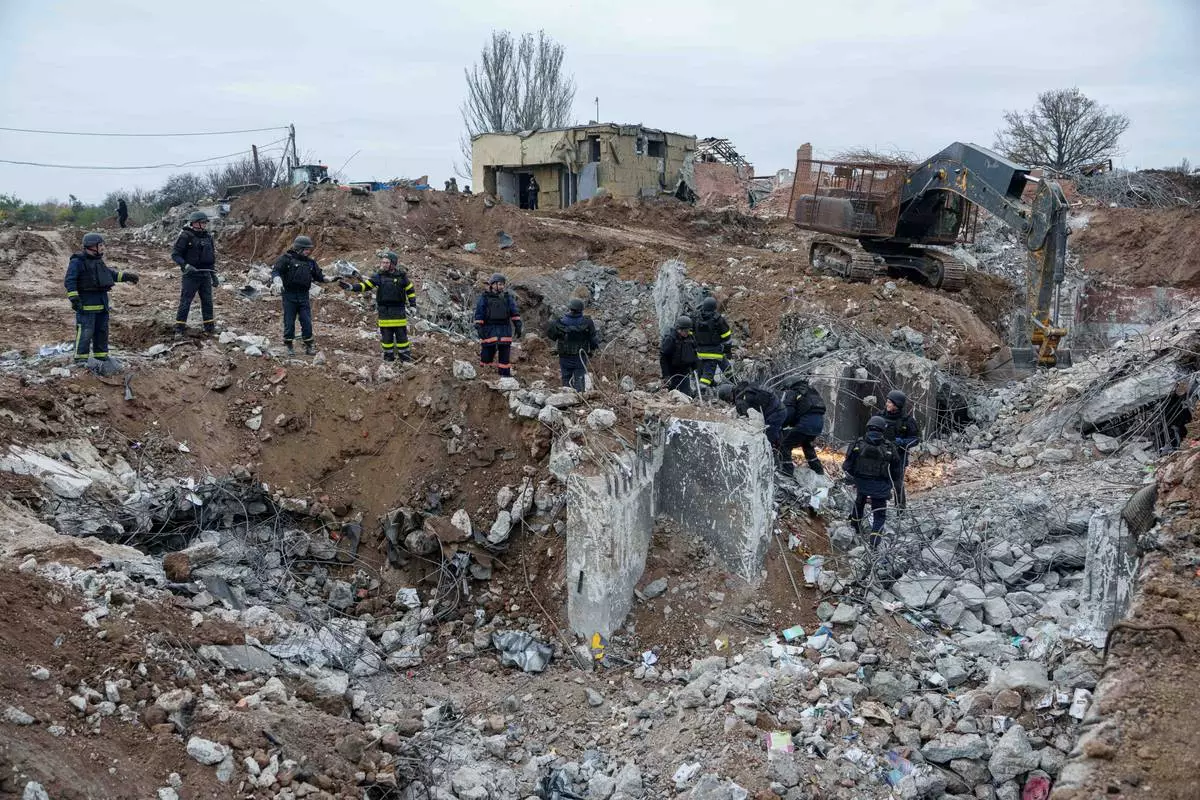
Rescue workers clear rubble to recover bodies from an underground school destroyed in a Russian airstrike in Komyshuvakha, Zaporizhzhia region, Ukraine, Friday, Nov. 6, 2026. (AP Photo/Evgeniy Maloletka)
PARIS (AP) — A decade ago, U.S. President Donald Trump ’s victory sent a populist shock wave across the West. Now, Europe is asking whether the midterm rout of his Republican Party will send one back.
European opponents of right-wing populism see the U.S. vote as the latest sign of its faltering advance. Since April, voters have ousted Hungary’s Viktor Orbán, ended Aleksandar Vučić’s long grip on Serbia and blocked the Bolsonaro family’s return in Brazil.
“When cracks in power become more visible, this can trigger a cascade effect,” said Péter Krekó, director of Budapest’s Political Capital Institute.
Nowhere would such a cascade matter more than in France, where nationalist Marine Le Pen is the front-runner in a presidential election six months away that could put the European Union’s only nuclear arsenal, and a U.N. Security Council veto, in far-right hands.
The populist right’s recent defeats could rattle the woman vying to become France’s first Madame la Présidente. But the anger punishing populists in power from Budapest to Belgrade could carry her to power — precisely because her National Rally party has never governed France.
Le Pen also faces a legal cliffhanger. France’s highest court aims to rule on her appeal against an embezzlement conviction by early April, just weeks before the first round of voting; if it rules against her, she could campaign and face voters wearing an electronic tag.
“She could still be barred from running, and now Americans delivered this sort of rebuke to Trump’s kind of populism,” said Carmen Artaza, 31, a Paris resident educated in the United States. “That’s bound to rattle her — unsettle her campaign.”
But in France, "the far right still has the wind in its sails,” said Sciences Po political scientist Gilles Ivaldi.
Analysts say voters who handed Democrats control of the U.S. House and Senate may have punished Trump’s record, especially on the economy, more than his “America First” ideas.
Populists are still winning some elections, too. Such candidates have taken presidencies in Poland, Chile and Colombia since mid-2025.
“The trend toward the far right has been the defining feature of 21st-century politics,” said Daphne Halikiopoulou, a politics professor at Britain’s University of York.
But lately, defeats for the illiberal populist camp have been piling up.
“The midterms are a very favorable result for the center left, and this could hinder the far right,” she said.
Leaders or parties espousing nationalist, anti-immigration policies have suffered at least eight national election setbacks in roughly 18 months: in Romania, the Netherlands, Portugal, Hungary, Sweden, Serbia, Brazil and now the United States.
And many were emphatic: Portugal elected moderate Socialist António José Seguro over hard-right populist André Ventura by two to one; Hungary ended Orbán’s 16 years in power; Serbia’s Vučić conceded defeat last month to a student-led protest movement; and Romania chose pro-European centrist Nicușor Dan over nationalist George Simion.
Last month, Brazilian President Luiz Inácio Lula da Silva narrowly beat Flávio Bolsonaro, son of former President Jair Bolsonaro.
Other votes thinned the ranks of anti-immigration parties. Geert Wilders’ party lost 11 seats in the Netherlands as the centrist party surged. In Sweden, the hard-right Sweden Democrats lost 11 seats as the left-leaning opposition won a narrow majority.
The results “show clearly that far-right politics are not popular,” said Aurélien Mondon, a politics expert at Britain’s University of Bath.
Even some on the populist right see a pattern. The U.S. midterms “join the defeats of Bolsonaro and Orbán,” Markus Frohnmaier, a senior lawmaker with the far-right AfD, wrote on X.
Each defeat can make the next one easier to imagine. Voters need to believe that “an increasingly authoritarian regime with vast resources can be defeated,” Krekó said. “The midterm results helped create that sense.”
The French left seized on the result, while the far right gave it a Gallic shrug.
“There is no inevitability in politics,” said Raphaël Glucksmann, the French center-left presidential candidate, calling it “a message of hope for all.”
The National Rally, which cheered Trump’s return to power last year, is now keeping him at arm’s length.
“What happens in other countries is none of my business,” party president Jordan Bardella told RTL radio.
Sébastien Chenu, who leads the far-right party’s lawmakers in the National Assembly, called the vote “a rejection of Donald Trump’s policies” in a statement to The Associated Press, blaming inflation and fuel prices driven by a war with Iran “that he himself started.”
In Germany, AfD co-leader Alice Weidel blamed “the disastrous consequences of the Iran war.”
The message from Europe’s nationalists: The defeat was Trump’s, not theirs.
After three failed bids, Le Pen has never looked stronger, according to French pollsters.
Yet the race to be her main challenger is wide open, with hard-left leader Jean-Luc Mélenchon, center-right former Prime Minister Édouard Philippe and Glucksmann among the contenders.
“Losing an election is definitely a sign of decline. But it’s not sudden death,” Halikiopoulou said. “In many cases, far-right parties are losing because their competitors are adopting their positions."
In Britain, Labour hardened its stance on immigration, especially under former Prime Minister Keir Starmer, to fend off Nigel Farage’s Reform UK.
In France, the Senate last week approved a bill from President Emmanuel Macron’s government that could make anyone who knowingly joins a violent group pay up to 10,000 euros ($11,200) for what others destroy, and let the state dock family benefits to cover it — long a Le Pen idea.
The real danger, Mondon said, is “the failure of the mainstream elite” to counter the far right. A decade under Macron has brought “the mainstreaming of far-right talking points.”
For Le Pen, the lesson of the midterms may be less that populists lose than that incumbents do.
Anger at incumbents has been building for years. In 2024, for the first time since records began, every governing party that faced a national election in a developed country lost vote share, according to ParlGov, a University of Bremen database.
The far right is rising where it sits in opposition and centrists rule, as in France, Austria and Germany, where the AfD took a record 43.8% in Saxony-Anhalt’s state election in September.
Anger and a hunger for radical change, embodied by both Le Pen and Mélenchon, now dominate French politics, Ivaldi said.
The election will show whether there is “still a barrier against the far-right,” he said. Voters across the political spectrum rallied behind Macron to block her in 2017 and 2022.
For now, he said, France “could well experience its own ‘Trump moment,’ like the U.S. in 2016.”
Voters have shown they can turn populists out of power. France will show whether they can keep one from winning it.
Halikiopoulou put it simply: “Were the midterms a massive blow to Trump? Yes. Were they important? Absolutely. But the fact remains that Trump is still in power.”
Associated Press writer Geir Moulson in Berlin contributed to this report.

FILE - President Donald Trump shakes hands with Prime Minister of Hungary Viktor Orban, left, during a signing ceremony on his Board of Peace initiative at the Annual Meeting of the World Economic Forum in Davos, Switzerland, Jan. 22, 2026. (AP Photo/Markus Schreiber, File)
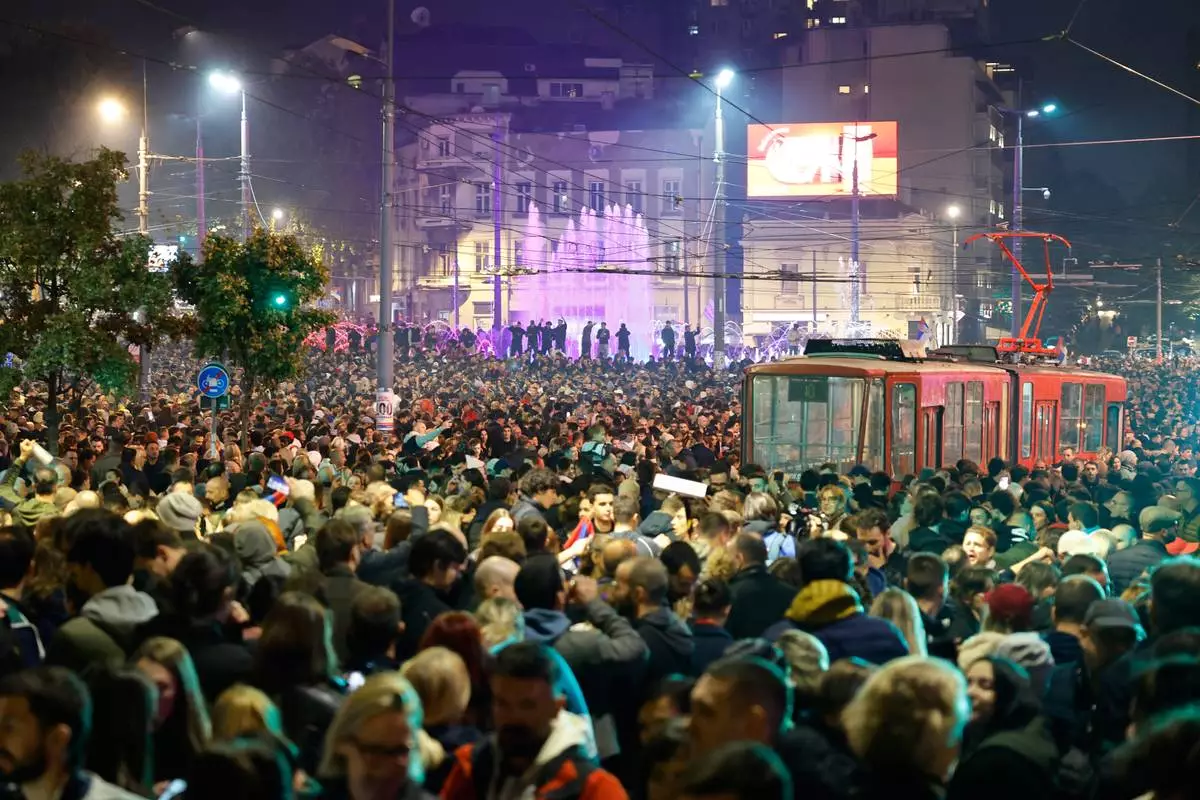
People celebrate after Aleksandar Vucic, leader of the right-wing Serbian Progressive Party (SNS) conceded defeat in the parliamentary election in Belgrade, Serbia, Sunday, Oct. 25, 2026. (AP Photo/Marko Drobnjakovic)
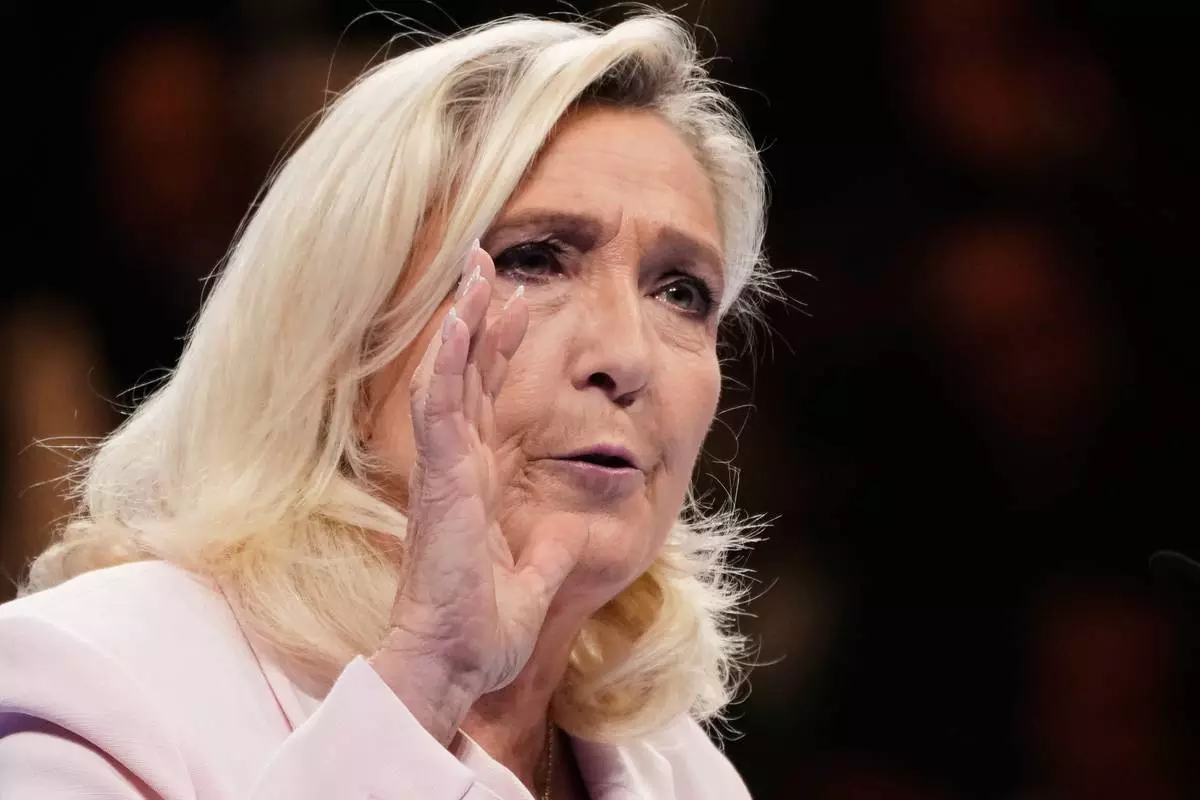
Leader of France's far-right National Rally (RN) party, Marine Le Pen, delivers a speech during the party's 19th Congress, in Orleans, France, Sunday, Oct. 25, 2026. (AP Photo/Teresa Suarez)

Jordan Bardella, president of France's far-right National Rally party, center right, and Leader of France's far-right National Rally (RN) party, Marine Le Pen, center, applaud at the end of the party's 19th Congress, in Orleans, France, Sunday, Oct. 25, 2026. (AP Photo/Teresa Suarez)